
Medical Tourism Blog
Flared Nostrils Solutions: Alar Reduction Surgery in Korea for Symmetry and Confidence
Table of contents
- Understanding "Flared Nostrils": Definition, Common Terms, and Aesthetic vs. Medical Concerns
- Alar Reduction (Alarplasty): A Detailed Medical Overview
- Navigating Alar Reduction in South Korea for Medical Tourists
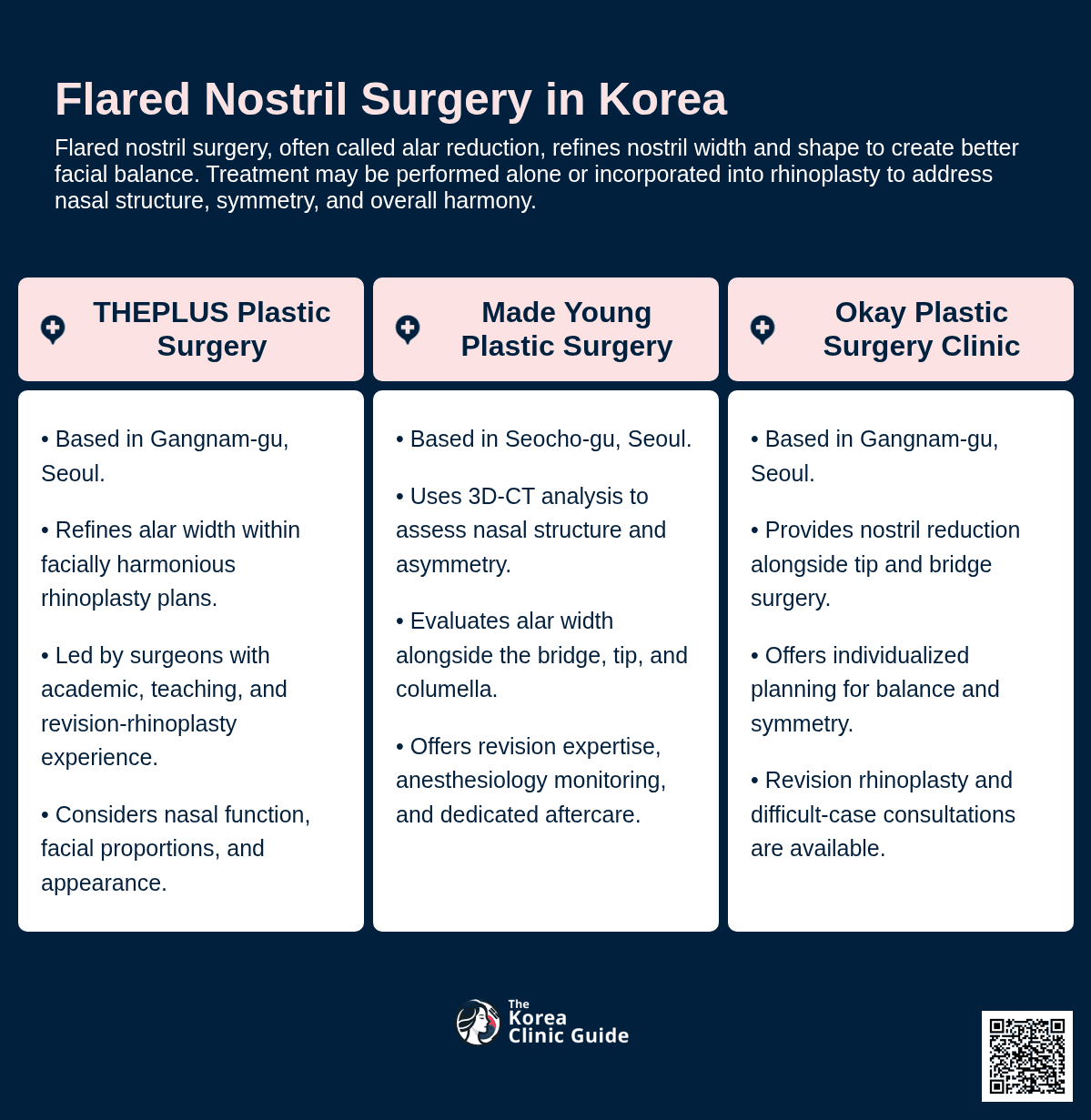
- Which Are the Best Clinics in Korea for Flared Nostrils?
- Cost Analysis: Alar Reduction in South Korea vs. Global Destinations
- Patient Perspectives: Addressing "Flared Nostrils" with Alar Reduction
- Conclusion
- References
Considering treatment in Korea? Everything you need to know e.g. — how to avoid scams, visas, interpreters, recovery tips — in our Medical Tourism Master Guide. Plan with confidence in minutes, not weeks!
Enhancing facial harmony is a common goal for many, and since the nose is a central feature, its shape greatly influences self-confidence and overall facial balance. People often express concerns about "nostril rims spread outward," commonly referred to as "flared nostrils" in cosmetic contexts. This guide delves into the details of this aesthetic concern and explores "Alar Reduction" (sometimes called Alarplasty or Alar Base Reduction) as a surgical option. There’s a special focus on what to expect—both in process and cost—when considering the procedure in South Korea as a medical tourist. Our aim is to provide reliable, expert-level insights so you can make the best decision for your aesthetic journey.
Seeking a change for flared nostrils is usually motivated by wanting an improved self-image, not by functional or breathing problems. Most people report that the pronounced flare affects their appearance and self-esteem, making this a quality-of-life consideration rather than a medical necessity. It’s important for care providers to recognize not just the surgical mechanics but the personal and psychological factors at play, as well as to identify and address issues like body dysmorphia when relevant.
Understanding "Flared Nostrils": Definition, Common Terms, and Aesthetic vs. Medical Concerns
"Flared nostrils" in the context of aesthetics describes a look where the alae—the outer nostril edges—are wide or rounded and stand out, particularly at the nose’s base. This feature can become more obvious during facial expressions, such as smiling. An aesthetic guideline often referenced is that the nose’s width at the nostrils shouldn’t exceed the distance between the inner corners of the eyes.
There’s often confusion with terminology because "flared nostrils" is used both for cosmetic concerns and for the medical sign "nasal flaring," which typically points to respiratory distress. To clarify, medical terms like "Flared alae nasi," "Flaring of nasal alae," and "Nasal flaring" usually focus on clinical breathing issues, while "Alar flare," "wide nostrils," and "dynamic flaring of nostrils" describe appearance—all addressed by the procedure known as "Alar Reduction," "Alarplasty," or "Alar Base Reduction."
Recognizing the difference between cosmetic "flared nostrils" and medically significant "nasal flaring" is vital. Clinical nasal flaring can imply serious health issues and requires urgent care, whereas aesthetic nostril flare is harmless and rooted in appearance or confidence concerns.
Nose shape and nostril width vary greatly, influenced by genetics, cartilage structure, skin, and ethnicity. For example, people from warmer climates often have wider nostrils, which can be considered attractive or a status symbol in specific cultures. Therefore, a patient’s cultural and ethnic background, together with their personal taste, should shape the surgical approach and discussion.
Table 1: Common Pseudonyms for "Flared Nostrils"
| Term | Context/Meaning |
|---|---|
| Flared Nostrils | General descriptive term, most commonly used by patients for aesthetic concern. |
| Nasal Flaring | Primary medical term, often indicates respiratory distress and difficulty breathing. |
| Flared Alae Nasi | Anatomical term referring to the flared outer wings of the nose. |
| Flaring of Nasal Alae | Synonym for Flared Alae Nasi. |
| Alar Flare | Specific aesthetic concern where the outer edges of the nostrils are overly wide. |
| Wide Nostrils | Descriptive term for an aesthetic concern regarding the breadth of the nostrils. |
| Excessive Nostril Flare | Indicates a pronounced aesthetic concern regarding the outward spread of the nostrils. |
| Dynamic Flaring of Nostrils | Flaring that becomes more noticeable during facial expressions like smiling. |
| Alar Reduction | Surgical procedure aimed at reducing the width and flare of the nostrils. |
| Alarplasty | Common synonym for Alar Reduction. |
| Alar Base Reduction | Another common synonym for Alar Reduction, emphasizing the reduction of the nostril base. |
| Nostril Reduction Surgery | General term for surgical procedures that decrease the size or width of the nostrils. |
This table helps clarify the different terms encountered around this topic, emphasizing the importance of distinguishing between medical and cosmetic contexts.
Alar Reduction (Alarplasty): A Detailed Medical Overview
What is Alar Reduction (Alarplasty/Alar Base Reduction)?
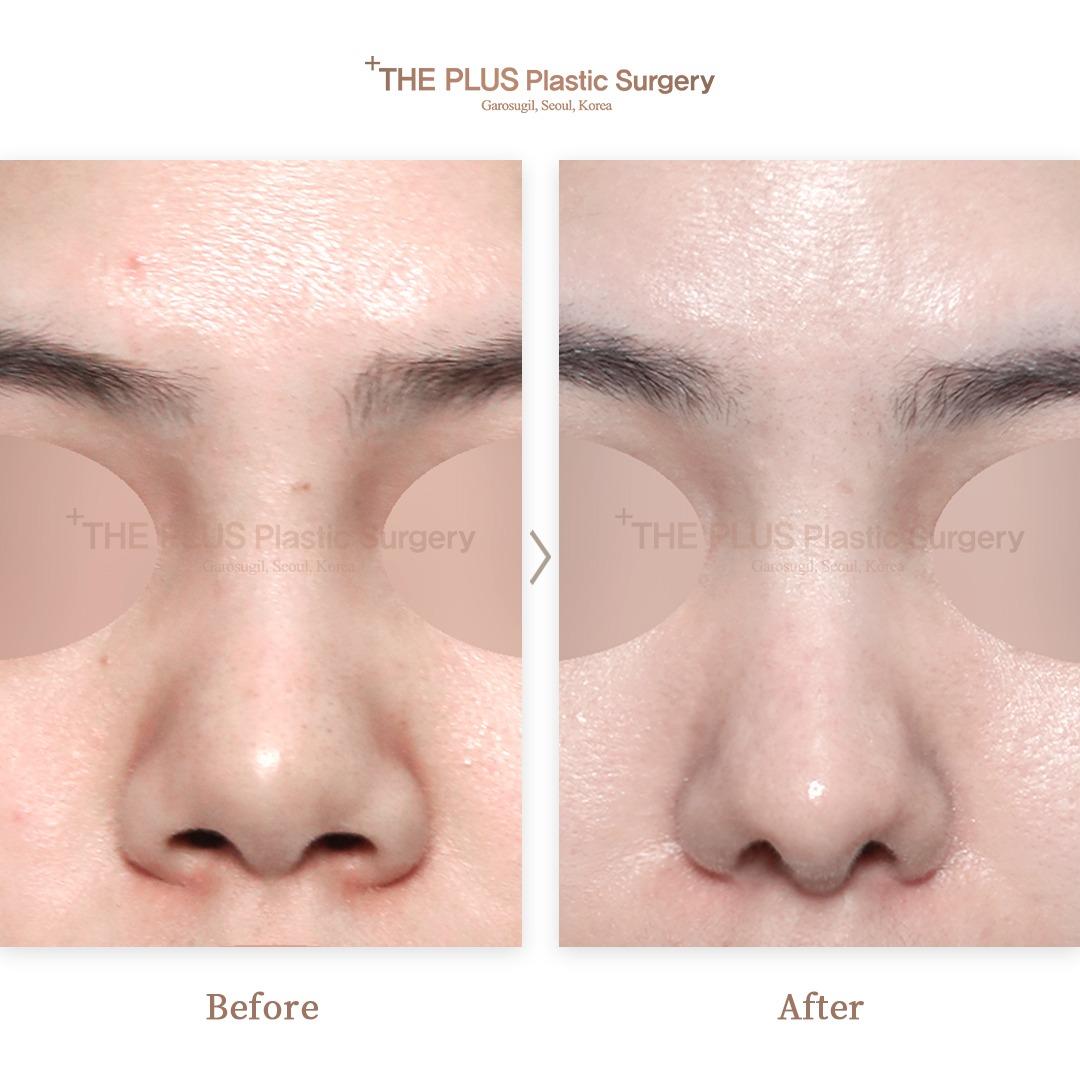
Alar reduction (or Alarplasty/Alar Base Reduction) is a cosmetic surgery that reshapes the lower third of the nose, focusing on reducing the width and flare of the nostrils. The procedure removes a small, precise amount of tissue from the nose’s wings, and can be performed alone or alongside other rhinoplasty techniques.
Who is an Ideal Candidate for the Procedure?
Alar reduction is suitable for those dissatisfied with broad or flared nostrils, especially if the nostril width exceeds the space between the inner eye corners. Candidates should be in good health, non-smokers (or willing to quit temporarily), psychologically prepared, and have realistic expectations. Those with body dysmorphia should consult with a mental health professional first.
Detailed Explanation of Surgical Techniques
Surgical methods for alar reduction vary depending on individual anatomy and goals:
- Alar Wedge Excision (Weir Excision Technique): Removes a triangular slice at the nostril base to reduce flaring, with incisions hidden in creases for minimal scarring. The Weir method refines the curve for a natural look.
- Nasal Sill Excision: Targets nostril width by taking tissue from the floor inside the nostril, often paired with wedge excision, with scars hidden internally.
- Alar Cinching: Uses well-placed sutures to tighten the nostril base, yielding subtle narrowing—popular among Korean surgeons.
- Alar Base Reduction (General Excision): Broad term for removing part of the nostril base, tailored to the individual's facial proportions.
- Composite Alar Reduction: Customizes technique combinations for individualized outcomes.
- V-Y Advancement: Repositions the alar base for those with a wide nose base, creating long-lasting, natural contours.
- The Thread Method (Korean Specific): A minimally-invasive approach using threads to draw nostrils closer, popular for its swift recovery.
Table 2: Overview of Alar Reduction Surgical Techniques
| Technique | Primary Goal | Incision Placement | Key Characteristics |
|---|---|---|---|
| Alar Wedge Excision (Weir Excision) | Reduce alar flare, refine silhouette | External (natural alar crease) | Camouflaged scars, refined curve, trims alar lobule |
| Nasal Sill Excision | Narrow nostril width | Internal (nostril floor) | Narrows nostril opening, often used with wedge technique |
| Alar Cinching | Subtle width reduction | Internal (suturing) | Symmetry, avoids over-tightening |
| Composite Alar Reduction | Address multiple aspects | Varies | Combines methods for tailored results |
| V-Y Advancement | Reposition wide nasal base | After wedge incision | Creates natural contour, follows existing curves |
| The Thread Method (Korean Specific) | Narrow nostrils at the base | Minimally invasive | Uses threads, less downtime, popular in Korea |
This overview demystifies the options, reinforcing the customizable nature of alar reduction.
The Surgical Process: What to Expect
Most alar reductions take 1–2 hours under local anesthesia, with incisions placed to hide any scarring. After removing the planned tissue, fine sutures close the area for optimal healing and minimal visibility.
Expert surgeon choice is crucial because achieving proportional refinement without disrupting function or natural appearance requires artistry as much as technical skill.
Recovery Timeline and Post-Operative Care
Recovery is generally rapid:
- 1–2 Weeks: Expect swelling, redness, mild discomfort, and possible light bleeding. Sutures come out after 5–7 days (or dissolve). Cold packs, head elevation, and careful wound care help.
- 1–3 Months: Swelling subsides, scars fade, and activity resumes, but avoid strenuous exercise during initial healing.
- 3 Months–1 Year: Final results emerge and scars become nearly invisible, with make-up allowed once healing is complete.
Potential Risks and Complications
Although straightforward, alarplasty can carry risks:
- Scarring: Over-massaging or improper healing can make scars more noticeable.
- Infection: Risk if wounds aren’t properly cared for.
- Healing Issues: Delayed or poor healing, discharge, or pus.
- Aesthetic Concerns: Over-correction, asymmetry, unwanted narrowing, or visible scars if not expertly performed.
Minimizing these requires a conservative, thoughtful approach and experienced hands.
Navigating Alar Reduction in South Korea for Medical Tourists
The Typical Patient Journey
South Korea is highly regarded for cosmetic procedures and welcomes many international patients. The process is efficient and patient-centric:
- Online Consultation: Starts remotely with photos and health info shared via apps or email. Clinics offer advice, suggest procedures, and discuss logistics.
- Booking & Travel: After confirming the plan, patients book surgery and arrange travel, accommodations, and pre-surgical care (like pausing smoking or blood thinners). Exploring Korea before surgery is smart, as post-op recovery limits activity.
- In-Person Consultation: Upon arrival, patients register, get photos and health tests, and meet with the surgeon to confirm goals and plans.
- Surgery Day: Surgery lasts about 1–2 hours, often with local anesthesia, though general is an option.
- Post-Op Care: Recovery involves wound care, medication, with support from coordinators, and removal of sutures after about a week.
Key Considerations
Clear communication is vital, so many clinics offer native-language services and online coordinators for ongoing support. Patients should confirm what’s included in costs, clarify recovery expectations, and plan for all travel and accommodation logistics.
Which Are the Best Clinics in Korea for Flared Nostrils?
Listed below are some of the best clinics in Korea for flared nostrils.
1. THEPLUS Plastic Surgery
For flared nostrils, you may consider THE PLUS Plastic Surgery for alar-width refinement within a rhinoplasty plan that emphasizes facial harmony and the relationship between nasal appearance and function. Its rhinoplasty team includes surgeons with extensive academic, educational, and revision-rhinoplasty experience.
- URL: THEPLUS Plastic Surgery Website
- Location: Gangnam-gu, Seoul
- Rhinoplasty expertise:
- Dr. Jeong Jae-yong authored “Rebuilding Nose: Rhinoplasty for Asians,” which has Japanese and English editions used as educational resources.
- Dr. Kim Taek-kyun contributed rhinoplasty and revision-rhinoplasty chapters to “The 18 Masters of Korean Aesthetic Surgery.”
- Dr. Jeong and Dr. Kim participate in rhinoplasty education and research through forums including the Seoul Rhinoplasty Forum, KSPRS, and IFAAS.
- Planning considerations:
- The clinic describes rhinoplasty as reshaping the nose for structural harmony as well as appearance.
- Dr. Kim’s stated approach considers balanced facial features, while Dr. Jeong emphasizes combining function with beauty.
- Revision rhinoplasty is available if you are seeking correction after prior nasal surgery.
- Related services:
- The clinic also offers facial contouring procedures, including chin surgery and facial implants, which may be relevant when discussing overall facial proportions.
- Dr. Kim is board-certified in plastic surgery and has received research awards related to 3D implants.
2. Made Young Plastic Surgery
For flared nostrils, you may consider Made Young Plastic Surgery when you want rhinoplasty planning that specifically assesses alar width alongside the bridge, tip, columella, facial proportions, and nasal asymmetry. The clinic describes using 3D-CT evaluation and structural techniques intended to support a stable nasal shape over time.
- URL: Made Young Plastic Surgery Website
- Location: Seocho-gu, Seoul
- Procedure planning:
- Its 3D-CT precision analysis evaluates nasal bones, the septum, and asymmetry for surgical planning.
- The clinic states that its rhinoplasty approach considers alar width together with the bridge, tip, and columella.
- It describes building a stable internal nasal structure to help prevent tip drooping and maintain nasal shape.
- Rhinoplasty experience:
- Dr. Lee Byeong-hoe is described as having more than 20 years of exclusive rhinoplasty experience.
- The clinic identifies complex reconstruction and revision cases, including high-order revisions, as an area of experience.
- It describes experience with dorsal-hump correction, tip refinement, osteotomy, and autologous rib grafts.
- Safety and aftercare:
- Full-time board-certified anesthesiologists are listed as being on site.
- The clinic describes one-to-one anesthesiology monitoring and a cross-check response system for emergencies.
- A dedicated aftercare center is available for systematic post-procedure care.
3. Okay Plastic Surgery Clinic
For flared nostrils, you may consider Okay Plastic Surgery Clinic because its rhinoplasty services specifically include nostril reduction, alongside nose-tip and bridge surgery. You can also discuss revision options if you have concerns following a previous nose procedure.
- URL: Okay Plastic Surgery Clinic Website
- Location: Gangnam-gu, Seoul
- Nasal procedures:
- Nostril reduction is listed for reducing nostril size with the aim of improving balance and symmetry.
- Nose-tip surgery and nose-bridge surgery are also available as part of its rhinoplasty services.
- The clinic offers revision rhinoplasty and states that difficult rhinoplasty cases are available for assessment.
- Approach:
- The clinic describes individualized treatment planning tailored to your needs and goals.
- Its team includes a female plastic surgeon with extensive experience, according to the clinic information.
Cost Analysis: Alar Reduction in South Korea vs. Global Destinations
Cost Breakdown in South Korea
In South Korea, alar reduction ranges from $1,200 to $2,200 USD, depending on the clinic, technique, and surgeon’s reputation. The price usually bundles the surgeon’s fee, anesthesia, and facility use, but pre-op tests, medication, or travel/hotel are often extra. Always request a full cost breakdown upfront to prevent unanticipated expenses.
International Cost Comparison
Comparing South Korea with other countries:
- USA: $3,000–$10,000 USD (average ~$7,500)
- Thailand: $725–$1,775 USD
- Turkey: $1,500–$3,280 USD
- Mexico: $1,900–$7,000 USD (rhinoplasty range)
- Brazil: General range for cosmetic surgery is higher for complex cases, but alarplasty can be as low as $1,081 to $1,900 USD
Table 3: Alar Reduction Cost Comparison
| Country | Estimated Alar Reduction Cost (USD) | Medical Tourist Notes |
|---|---|---|
| South Korea | $1,200 – $2,200 (average ~$2,000) | High standards, support, good value |
| USA | $3,000 – $10,000 (average ~$7,500) | Convenient for US residents, highest cost |
| Thailand | $725 – $1,775 | Affordable, advanced facilities |
| Turkey | $1,500 – $3,280 (average ~$2,740) | Packages often available |
| Mexico | $1,900 – $7,000 (rhinoplasty range) | Major savings, close for US patients |
| Brazil | General $6,000–$8,000 (complex), lower for alarplasty | Known for advanced cosmetic surgery |
This table helps visualize the potential savings and options for medical tourists seeking alar reduction.
Factors Affecting Total Cost
- Surgeon and Clinic Reputation
- Procedure Complexity
- Type of Anesthesia
- Pre-/Post-op Care
- Additional Medical Supplies
- Travel and Accommodation
- Currency Exchange Rates
Patient Perspectives: Addressing "Flared Nostrils" with Alar Reduction
Achieving Aesthetic Harmony and Confidence
Alar reduction precisely reshapes and narrows wide nostrils, bringing the nose into better proportion with facial features. This subtle change often creates a dramatic improvement in confidence and self-image, with studies noting a meaningful reduction in alar flare—often by about 3 mm—in line with ideal facial proportions.
Real Patient Experiences
Patient testimonials frequently celebrate high satisfaction, noting immediate positive changes and lasting results without altering their nose’s inherent character. Studies report consistent objective outcomes coupled with positive patient feedback, confirming the effectiveness of the procedure for its intended aesthetic goals.
Results and Scarring
Results are permanent since tissue is removed, though the nose may change with age. Surgeons take care to minimize scarring by hiding incisions in natural creases or inside the nose. With good care (and by avoiding over-massaging), scars fade well, leaving a natural contour.
Conclusion
Alar Reduction (Alarplasty) is a focused surgical option for individuals wanting to resolve the cosmetic challenge of flared nostrils, offering refined, natural-looking outcomes that enhance facial balance and confidence. South Korea stands out as a top destination, combining quality, affordability, and patient support, though patients should factor in all costs and prioritize choosing skilled, board-certified surgeons. Thorough consultation and clear communication are key to a safe and satisfying result.
References
1, 2, 3, 4, 5, 6, 7, 8, 9, 10, 11, 12, 13, 14, 15, 16, 17, 18, 19, 20, 21, 22, 23, 24, 25
Frequently Asked Questions
Related Blogs
Korea vs. Global Standards: A Comprehensive Cost Analysis of Cleft Rhinoplasty in Medical Tourism Destinations
Explore the cost of cleft rhinoplasty in Korea, a popular destination for medical tourism due to its advanced surgical techniques and competitive pricing. Discover factors influencing the overall expense, from hospital fees to post-operative care, and what makes Korea a top choice for this specialized procedure.
Updated: Oct 21, 2026

Philtrum Reduction Costs: Choosing Korea Over the USA, Mexico, Turkey & More for Expert Care
Discover the affordability and benefits of Philtrum Reduction Surgery in Korea, a popular destination for high-quality cosmetic procedures. Explore cost factors, surgeon expertise, and why Korea is a top choice for those considering this transformative surgery.
Updated: Oct 21, 2026
Discovering the True Value: Sinus Surgery Costs in Korea Compared to Global Options
Discover the affordable options for sinus surgery in Korea, a leading destination for medical tourists seeking quality care. Learn about the factors influencing costs and what patients can expect from their experience in this highly advanced healthcare system.
Updated: Oct 21, 2026
Non-Implant Rhinoplasty in Korea: Cartilage Grafts, Recovery, Travel Planning, and Alternatives
Non-implant rhinoplasty reshapes the nose using septal, ear, or rib cartilage, with surgical or injectable and open or closed approaches and possible septal or nasal-valve correction. International patients can find guidance on candidate screening, material-specific consent, Korea stays of 10–21 days, travel timing, recovery, and follow-up.
Updated: Oct 16, 2026
Clinics offering Alar Reduction

THEPLUS Plastic Surgery Korea | Eye, Nose, Face & Body Surgery
Sinsa

Made Young Plastic Surgery: Rejuvenating Aesthetic Excellence in Korea for Face Lifts, Contouring and More
Gangnam Station

Okay Plastic Surgery Clinic in Korea: Comprehensive Aesthetic Procedures with Sincerity and Care
Cheongdam

Banobagi Plastic Surgery: A Pioneering and Trusted Plastic Surgery Clinic in Korea
Seolleung