Medical Tourism Blog
Vaginal Dryness in Korea: Evaluation, GSM Treatment, Travel Planning, and Aftercare
Table of contents
- Vaginal Dryness at a Glance
- What Is Vaginal Dryness?
- Who Is a Good Candidate for Vaginal Dryness?
- How Is Vaginal Dryness Performed?
- Why Visit Korea for Vaginal Dryness?
- Key Information for International Patients
- Which Are the Best Clinics in Korea for Vaginal Dryness?
- Vaginal Dryness From Start to Finish
- Alternatives to Vaginal Dryness
- How Can I Prepare for Vaginal Dryness?
- Aftercare Advice
Considering treatment in Korea? Everything you need to know e.g. — how to avoid scams, visas, interpreters, recovery tips — in our Medical Tourism Master Guide. Plan with confidence in minutes, not weeks!
Last updated: September 2026
Vaginal Dryness at a Glance
- What it is — Vaginal dryness care is an outpatient evaluation and nonsurgical treatment plan for dryness, burning, painful sex, or urinary symptoms—often related to genitourinary syndrome of menopause (GSM)—rather than a single “rejuvenation” procedure.
- First-line options — Water- or silicone-based lubricant is used before each sexual encounter, while vaginal moisturizers are used regularly for baseline dryness; persistent menopause-related symptoms may be treated with low-dose vaginal estrogen cream, tablet/insert, or ring.
- When results start — Lubricants reduce friction during the individual encounter, moisturizers require continued regular use, and low-dose vaginal estrogen commonly starts improving symptoms within 4–6 weeks, with maximum benefit around 3 months.
- No downtime — A standard consultation, indicated pelvic examination or testing, and prescription-based treatment require no anesthesia, incision, wound recovery, activity restriction, or routine delay in commercial flying when the patient feels well.
- Travel and follow-up — Allow 0–2 days in Korea for consultation and any indicated testing, but arrange home-country follow-up because local estrogen often requires long-term maintenance prescribing and reassessment.
- Important red flags — Bleeding after sex or menopause, foul discharge, fever, genital sores, severe pelvic pain, or inability to urinate needs diagnostic assessment rather than self-treatment; patients with estrogen-dependent cancer should start with nonhormonal care and involve their oncology team before local estrogen.
- Korea distinction — Korean menopause guidance supports lubricants, moisturizers, and low-dose local estrogen as standard GSM care, while laser and radiofrequency remain emerging therapies; vaginal DHEA/prasterone and oral ospemifene were not approved in Korea as of August 2025.
What Is Vaginal Dryness?
Vaginal dryness care is an evaluation and nonsurgical treatment plan for reduced lubrication, irritation, or discomfort in and around the vagina. It aims to relieve dryness and painful sex while identifying causes such as menopause-related tissue changes, irritation, infection, or pelvic-floor tension. It is non-surgical, using measures such as lubricants, moisturizers, prescribed local medication, and supportive therapy when appropriate.
Who Is a Good Candidate for Vaginal Dryness?
- Menopause-related symptoms — Good candidates have dryness, burning, irritation, painful penetration, urinary urgency, burning with urination, or recurrent urinary infections consistent with genitourinary syndrome of menopause (GSM).
- Low-estrogen life stages — Postpartum or breastfeeding patients with dryness can need assessment and nonhormonal symptom relief; treatment selection depends on lactation status and medical history.
- Mild friction-related discomfort — People with occasional dryness during sex who want regular vaginal moisturizers or water- or silicone-based lubricants are appropriate for conservative care.
- Persistent symptoms — Patients whose symptoms continue despite lubricants, or whose daily comfort and sexual activity are affected, can discuss low-dose local vaginal estrogen and contributing conditions.
- Complex sexual pain — Pelvic-floor physical therapy, dilators, and sexual-pain support are relevant when pelvic-floor overactivity, fear after painful intercourse, or narrowing at the vaginal entrance coexists.
Vaginal dryness is a symptom rather than a universal indication for “vaginal rejuvenation.” Unexplained bleeding, bleeding after sex or after menopause, foul or persistent discharge, fever, genital sores, severe pelvic pain, or inability to urinate requires diagnostic assessment rather than self-treatment. Active vaginitis, urinary infection, herpes outbreak, contact dermatitis, vulvar dermatosis, vulvodynia, or dysplasia can cause similar symptoms and needs cause-specific care. For current or previous estrogen-dependent cancer, particularly during aromatase-inhibitor or other endocrine treatment, start with nonhormonal care and involve the oncology team before considering local estrogen; the Korean guideline calls for an individualized risk-benefit discussion when symptoms remain severe.
How Is Vaginal Dryness Performed?

Treatment starts by identifying the cause: menopause-related GSM, postpartum or lactational low estrogen, medicines, infection, skin disease, pelvic-floor pain, irritants, or another condition. Symptoms and examination findings guide care; hormone tests alone do not diagnose GSM.
- Lubricants for sex — Apply a water- or silicone-based lubricant immediately before penetration to reduce friction and painful sex. Reapply for each encounter. Oil-based products can weaken latex condoms.
- Vaginal moisturizers — Use a product designed for vulvovaginal use regularly for baseline dryness rather than only before sex. Hyaluronic-acid preparations are a nonhormonal option; a recent review found improvement in dryness-related outcomes, although formulations and long-term schedules differ across studies.
- Low-dose local vaginal estrogen — For persistent GSM, vaginal estradiol cream, tablet/insert, or ring is the principal evidence-based hormonal treatment. Formulation choice depends on local availability, anatomy, manual dexterity, preference, and the prescriber’s instructions. It improves vaginal tissue health and secretions with minimal systemic absorption and is preferred over systemic hormone therapy when GSM is the only menopausal concern.
- Pelvic-floor and pain care — Pelvic-floor physiotherapy, vaginal dilators, and psychosexual support address muscle guarding, introital narrowing, and avoidance that can perpetuate painful penetration after dryness is treated.
- Systemic menopausal hormone therapy — Oral, transdermal, gel, or spray therapy is considered only when broader menopausal symptoms, such as hot flashes, justify it after a separate risk assessment. It is not started solely for vaginal dryness.
- Energy devices and injections — Do not substitute vaginal laser, radiofrequency, PRP, or filler injections for assessment and standard GSM care. A 2025 systematic review found CO2 laser made little or no difference from sham treatment or vaginal estrogen for several outcomes; evidence for Er:YAG laser and radiofrequency was very uncertain, with limited adverse-event reporting. PRP and injection studies also remain too variable and low quality to establish effectiveness.
Why Visit Korea for Vaginal Dryness?
A gynecology consultation in Korea can provide assessment, testing when symptoms indicate it, and a written treatment plan without a recovery stay. Korea’s menopause guidance supports conventional GSM management rather than presenting device-based “rejuvenation” as standard care. Long-term prescribing and reassessment still need coordination with a clinician at home.
- Nationally relevant guidance — The Korean Society of Menopause guideline supports lubricants, moisturizers, and low-dose local vaginal estrogen for GSM, and identifies laser and radiofrequency as emerging rather than standard therapies.
- Evidence-based treatment distinction — Local estrogen is preferred over systemic menopausal hormone therapy when GSM is the only indication, while systemic therapy requires a separate assessment of benefits and contraindications.
- Availability requires confirmation — The Korean guideline published in August 2025 stated that vaginal DHEA/prasterone and oral ospemifene were not approved for use in Korea. Drug approvals, brands, strength, dispensing quantity, and refill policies can change, so verify the current product and whether it can be continued after departure before booking travel.
- Appropriate diagnostic focus — A focused history, examination, and targeted urine or vaginal testing can distinguish GSM from infection, dermatologic disease, vulvodynia, medication effects, or concerning bleeding symptoms.
Key Information for International Patients
- Minimum stay — Allow 0–2 days for an outpatient consultation, pelvic examination when indicated, targeted infection testing, and treatment counseling. Standard nonsurgical care has no wound-recovery period.
- Repeat visits — Lubricants and moisturizers can be started without a Korea-based treatment series. Local estrogen often requires ongoing maintenance and reassessment, so arrange a clinician at home to continue prescribing and monitor symptoms.
- Flights — There is no evidence-based delay for commercial flying after a routine consultation, examination, lubricant/moisturizer advice, or local-estrogen prescription when feeling well and no separate procedure, sedation, bleeding, severe pain, or infection is involved.
- Itinerary impact — There is no routine anesthesia, incision, abstinence requirement, driving restriction, medical transport, companion, special accommodation, compression garment, or fasting requirement for standard care.
- Remote follow-up — Leave with the exact product name, strength, loading regimen, maintenance schedule, missed-dose instructions, adverse-effect information, and a written follow-up plan. Ask whether English-language virtual follow-up is available after returning home.
Travel note: A short consultation trip cannot replace longitudinal care. Bring records and confirm before travel that a home-country clinician can review the Korean plan and prescribe an equivalent locally available treatment if needed.
Which Are the Best Clinics in Korea for Vaginal Dryness?
Listed below are some of the best clinics in Korea for vaginal dryness.
1. SH Clinic
For vaginal dryness, you can discuss non-surgical vaginal HIFU rejuvenation at SH Clinic, where focused ultrasound is described as promoting collagen remodeling to improve elasticity and relieve dryness without downtime. Your care is provided directly by an experienced, board-certified gynecologist recognized with a commendation from the Minister of Health and Welfare.
- URL: SH Clinic Website
- Location: Seocho-gu, Seoul
- Vaginal dryness care:
- Vaginal HIFU uses high-intensity focused ultrasound to heat vaginal tissue and support collagen remodeling.
- The clinic describes this option as a one-session treatment for elasticity and dryness with no downtime.
- Other vaginal rejuvenation options listed include vaginal fillers, stem cell injections, vaginal tightening, and implant surgery.
- Women’s health services:
- Gynecologic care also includes cervical and ovarian cancer screening with Pap smears, HPV testing, and ultrasound.
- Urinary incontinence care includes pelvic-floor therapy and office-based procedures tailored to stress or urge leakage.
- The clinic is focused on women’s care and gynecology.
2. Bliss Clinic
For vaginal dryness concerns, Bliss Clinic offers a sexual health clinic within its obstetrics and gynecology services, where you can seek care focused on women’s sexual well-being. You can also use its online consultation service to receive professional guidance before arranging care.
- URL: Bliss Clinic Website
- Location: Gangnam-gu, Seoul
- Related women’s health care:
- The clinic provides women’s health checkups using advanced diagnostic systems for screening and early detection of female health issues.
- Contraception and family-planning guidance are available through its obstetrics and gynecology services.
- Consultation: Online consultation is available for professional advice and support.
Vaginal Dryness From Start to Finish

- First contact and virtual review — Request an English-language or virtual consultation where available. Share symptom timing, menopause status, pregnancy or breastfeeding status, pain with sex, urinary symptoms, cancer history, medicines, allergies, and all products used on the vulva or in the vagina.
- Pre-travel triage — Report bleeding after sex, postmenopausal bleeding, fever, foul discharge, genital lesions, or substantial pelvic pain before travel. The clinic should advise whether prompt diagnostic care is more appropriate than a routine dryness consultation.
- In-person history — The gynecologist reviews internal versus external dryness, sexual pain, urinary symptoms, prior infections, hormonal contraception, antidepressants, antihistamines, diabetes, Sjögren syndrome, chemotherapy, pelvic radiation, and endocrine treatment.
- Focused examination and testing — A vulvar or pelvic examination is performed when symptoms are persistent, severe, atypical, associated with bleeding or discharge, or resistant to initial treatment. Urine or vaginal tests are used when findings suggest infection or another diagnosis; they are not automatic for every patient.
- Treatment selection — The clinician discusses regular moisturizers, encounter-specific lubricants, irritant avoidance, low-dose vaginal estrogen when appropriate, and pelvic-floor or sexual-pain referral for coexisting muscle guarding or narrowing. Do not expect laser, radiofrequency, PRP, or filler to be presented as established GSM treatment.
- Prescription counseling — For local estrogen, confirm the exact formulation—cream, tablet/insert, or ring—its product-specific initial schedule, maintenance plan, handling instructions, expected local effects, and what to do about a missed dose. No anesthesia or sedation is used for routine medical management.
- Discharge and travel — Leave immediately after a standard visit. Resume ordinary activity and flying when well, unless testing reveals infection or a separate procedure or medication issue changes the plan.
- Overseas follow-up — Lubricants act during the individual sexual encounter, while moisturizers require regular use. With local estrogen, improvement commonly begins in 4–6 weeks and maximum benefit can take about 3 months; arrange reassessment with the Korean clinic remotely or with a clinician at home.
Alternatives to Vaginal Dryness
Alternatives depend on the cause and treatment goal. Nonhormonal and local-hormonal care are the main choices for dryness itself; procedures marketed for tightening, tissue regeneration, or urinary symptoms do not reliably treat GSM and can add cost and uncertainty.
Pelvic-Floor Physical Therapy
- Best use — Addresses high-tone pelvic-floor muscles, penetration pain, muscle guarding, and introital narrowing that persist alongside dryness.
- Tradeoff — It does not restore estrogen-responsive tissue or replace lubrication or local estrogen, but it can treat an important pain mechanism without hormones.
Systemic Menopause Therapy
- Best use — Consider only for people with separate, bothersome whole-body menopausal symptoms and an appropriate medical risk profile.
- Tradeoff — It has different contraindications and risks from low-dose local estrogen and is not initiated solely for GSM.
Vaginal Laser or Radiofrequency
- Best use — These energy-based options are marketed for dryness and “rejuvenation,” but they are not established first-line GSM care.
- Evidence limit — The Korean guideline calls them emerging therapies, and evidence remains uncertain for meaningful dryness outcomes and incompletely reported harms. Review laser vaginal rejuvenation or vaginal tightening laser only after a gynecologic evaluation.
PRP or Vaginal Injections
- Best use — PRP and injection approaches are sometimes offered as regenerative treatments, not established vaginal-dryness treatment.
- Evidence limit — Studies vary substantially in preparation, technique, sessions, and indications; higher-quality randomized trials are needed. See PRP vaginal rejuvenation for the procedure-specific evidence limitations.
Urinary-Symptom Assessment
- Best use — Urgency, frequency, leakage, recurrent urinary infections, or burning with urination needs assessment alongside GSM treatment.
- Tradeoff — Incontinence treatment targets bladder or pelvic-floor dysfunction rather than vaginal dryness itself. Read about female incontinence treatment when leakage is a primary concern.
How Can I Prepare for Vaginal Dryness?
- Medical records — Bring a current medication list, allergy history, gynecology and oncology records, prior cervical-screening information when available, and a list or photographs of all vaginal, vulvar, and sexual-health products used.
- Do not stop prescribed treatment — Continue prescribed hormones, endocrine therapy, anticoagulants, and other medicines unless the treating doctor gives explicit instructions. Do not independently interrupt breast-cancer treatment to pursue vaginal dryness care.
- Report red flags early — Tell the clinic before the appointment about unexplained bleeding, postmenopausal bleeding, bleeding after sex, foul discharge, fever, genital sores, severe pain, or urinary retention.
- Avoid irritants — Do not douche or use scented washes, fragranced wipes, deodorizing sprays, or unprescribed intravaginal products before the visit. These can irritate tissue and obscure the cause of symptoms.
- Appointment timing — If possible, avoid scheduling during heavy menstrual bleeding when a pelvic examination or vaginal testing is anticipated; do not delay urgent assessment for bleeding, pain, fever, or discharge.
- Travel arrangements — No fasting, sun avoidance, companion, medical transport, or special accommodation is routinely needed. Keep flights flexible only if symptoms are under investigation or tests could lead to additional care.
Travel note: Ask in advance whether the clinic can issue an English medication summary and whether the prescribed product can legally and practically be continued in your home country.
Confirm all clinic-specific requirements and the treating doctor’s individualized instructions before the visit.
Aftercare Advice
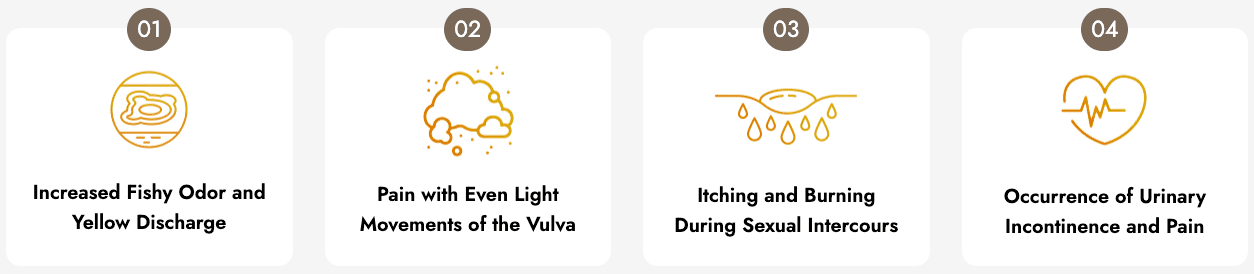
Routine vaginal-dryness management requires consistent product use and prompt reassessment of warning symptoms, not wound care or downtime.
- Lubricant use — Apply water- or silicone-based lubricant before each sexual encounter and reapply as needed. Avoid oil-based lubricants with latex condoms.
- Moisturizer routine — Use vulvovaginal moisturizers regularly as directed rather than expecting an immediate, permanent effect from one application. Stop and contact the clinician if burning, rash, swelling, or worsening irritation develops.
- Local estrogen schedule — Follow the prescribed product-specific loading and maintenance schedule exactly. Improvement usually starts in 4–6 weeks and can continue for about 3 months; symptoms often recur after stopping.
- Irritant control — Avoid douching and scented cleansers, wipes, sprays, and deodorizing products. Use only products intended for vulvovaginal use.
- Warning signs — Seek prompt medical assessment for unexpected or persistent vaginal bleeding, new postmenopausal bleeding, fever, severe pelvic or abdominal pain, foul-smelling discharge, genital sores, inability to urinate, chest pain, shortness of breath, or allergic symptoms.
- Follow-up — Arrange review with the Korean clinic remotely or a clinician at home, especially for ongoing local-estrogen prescriptions, breast-cancer history, persistent urinary symptoms, or no improvement after an adequate treatment trial.
Follow the treating doctor’s instructions over general guidance and contact the clinic promptly when symptoms worsen or something appears wrong.
Frequently Asked Questions
Related Blogs
G-spot Filler in Korea: Evidence, Safety, Recovery, and Travel Planning
G-spot filler involves nonstandardized anterior vaginal-wall injections, most often temporary hyaluronic acid, with uncertain sexual-function benefits and potential risks. International patients should plan 2–3 days in Korea for assessment and review, obtain treatment records, and arrange follow-up care.
Updated: Sep 28, 2026
PRP Vaginal Rejuvenation in Korea: Evidence, Procedure Steps, Recovery and Travel Planning
PRP vaginal rejuvenation uses a patient’s processed blood plasma for targeted vaginal, vulvar, clitoral, or periurethral injections after pelvic-health assessment, but protocols and evidence of benefit are not standardized. The article covers candidate screening, Korea travel planning, preparation, recovery, warning signs, follow-up, and diagnosis-specific alternatives for dryness, pain, incontine
Updated: Sep 28, 2026
G-spot Amplification in Korea: Evidence, Safety, Recovery and Travel Planning
G-spot amplification involves injecting filler into a patient-identified area of the anterior vaginal wall near the urethra, but no standardized target or proven sexual-function benefit exists. The article covers candidacy, product and clinic verification in Korea, travel planning, aftercare, warning signs, and alternatives such as sexual-health evaluation and pelvic-floor therapy.
Updated: Sep 28, 2026
Viveve Laser in Korea: RF Treatment, Safety, Evidence and Travel Planning
Viveve is a non-incisional, cryogen-cooled monopolar RF treatment—not a laser—used in selected patients after gynecologic assessment, with limited evidence for vaginal-laxity symptoms and no established cure for incontinence. International patients considering treatment in Korea can review candidate criteria, MFDS device verification, outpatient recovery, 10-day intercourse and tampon restrictions
Updated: Sep 22, 2026