Medical Tourism Blog
Female Incontinence in Korea: Diagnosis, Treatment Options, Travel Planning and Recovery
Table of contents
- Female Incontinence at a Glance
- What Is Female Incontinence?
- Who Is a Good Candidate for Female Incontinence?
- What Are the Different Types of Female Incontinence?
- Why Visit Korea for Female Incontinence?
- Key Information for International Patients
- Which Are the Best Clinics in Korea for Female Incontinence?
- Female Incontinence From Start to Finish
- Alternatives to Female Incontinence
- How Can I Prepare for Female Incontinence?
- Aftercare Advice
Considering treatment in Korea? Everything you need to know e.g. — how to avoid scams, visas, interpreters, recovery tips — in our Medical Tourism Master Guide. Plan with confidence in minutes, not weeks!
Last updated: September 2026
Female Incontinence at a Glance
- Not one procedure — Female incontinence must be classified before treatment: stress leakage occurs with coughing or exercise, urgency leakage follows a sudden urge, and mixed incontinence has both patterns.
- Start with conservative care — Supervised pelvic-floor muscle training for at least 3 months is first-line for stress and mixed incontinence, while bladder training and, when appropriate, medication are central for urgency leakage.
- Treatment matches the subtype — Confirmed stress incontinence may be treated with urethral bulking or sling surgery, whereas refractory urgency incontinence may be treated with bladder Botox, tibial nerve stimulation, or sacral neuromodulation.
- Sling recovery — An uncomplicated mid-urethral sling requires confirmed bladder emptying before discharge; heavy lifting, strenuous exercise, swimming, bathing, and vaginal penetration are commonly restricted for about 4–6 weeks.
- Botox needs follow-up — Bladder Botox can begin improving urgency leakage within days to about 2 weeks, but it can cause urinary infection or retention, may require temporary self-catheterization, and needs repeat injections when its benefit wears off.
- Korea travel planning — Allow about 2–3 business days for assessment only or approximately 7–10 days for an uncomplicated sling, with longer stays needed for retention, catheter use, infection, bleeding, or other complications.
- Verify continuity of care — In Korea, continence-procedure availability, interpreter support, device choices, and overseas follow-up vary by hospital; confirm the clinician’s credentials, voiding-trial protocol, after-hours contact, and written handoff plan before booking.
What Is Female Incontinence?
Female urinary incontinence is involuntary urine leakage, assessed by whether it occurs with physical pressure, a sudden urge, or both. Diagnosis-guided treatment aims to reduce leakage, restore bladder control, and improve daily activities, sleep, exercise, and confidence. Care is usually non-surgical at first, while selected stress or urgency cases can require minimally invasive procedures or surgery.
Who Is a Good Candidate for Female Incontinence?
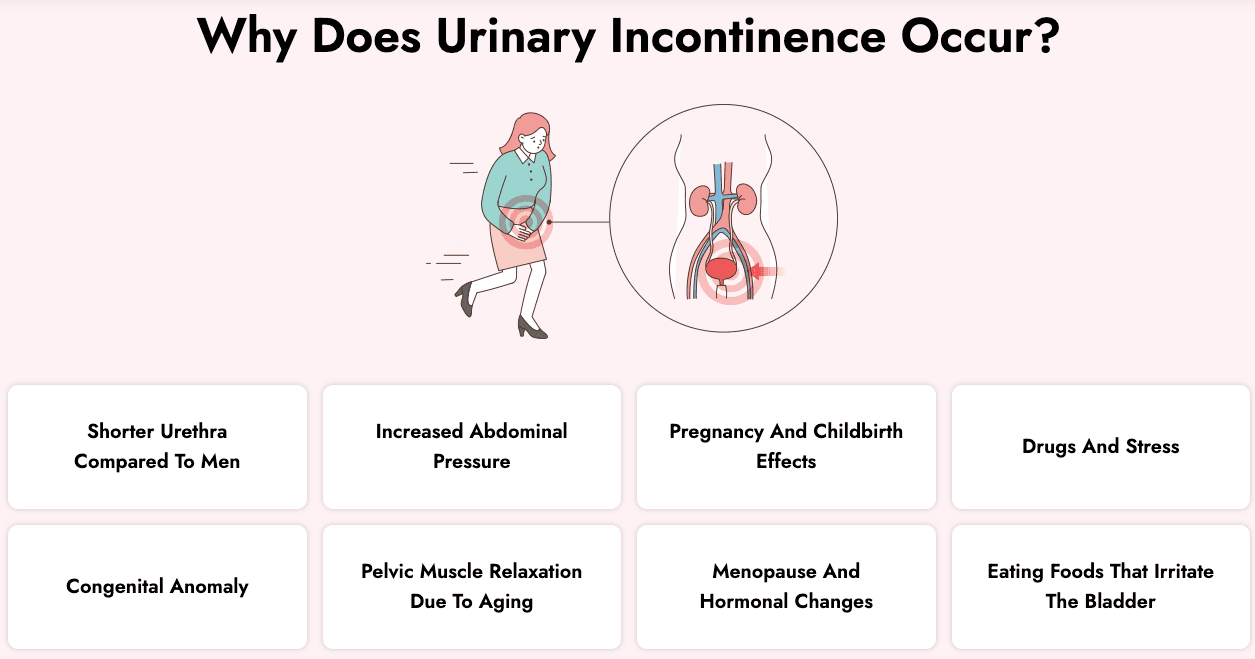
- Stress-predominant leakage — Good candidates report urine loss with coughing, sneezing, laughing, lifting, running, or exercise and want diagnosis-led stress urinary incontinence treatment.
- Urgency-predominant leakage — Suitable for evaluation when a sudden, difficult-to-defer need to urinate occurs before leakage, often alongside frequency or waking at night to void.
- Mixed symptoms — Patients with both exertional leakage and urge leakage need the most bothersome component identified before treatment; an operation for stress leakage does not reliably resolve urgency leakage.
- Persistent symptoms after conservative care — People whose symptoms remain bothersome after bladder training, supervised pelvic-floor muscle training (PFMT), and relevant medication review can discuss injections, medication, neuromodulation, or surgery.
Female urinary incontinence is not a single procedure: it must first be classified as stress, urgency, mixed, overflow/retention-related, functional, fistula-related, or potentially neurologic leakage. Guideline-based assessment is required before invasive treatment, particularly with high post-void residual (PVR), poor emptying, substantial prolapse, prior continence surgery, pelvic radiation, neurologic disease, or an uncertain diagnosis. Active urinary infection requires treatment before an injection or operation; blood in the urine, pelvic pain, recurrent unexplained infections, new neurologic symptoms, continuous leakage, or major voiding difficulty need diagnosis-directed investigation. Postpone elective procedures during pregnancy unless a specialist identifies a compelling indication, and discuss future pregnancy, breastfeeding, anticoagulants, diabetes control, nicotine use, immunosuppression, and access to follow-up after travel.
What Are the Different Types of Female Incontinence?
Female incontinence is classified by the pattern of leakage. The distinction directs treatment and determines whether surgery is appropriate.
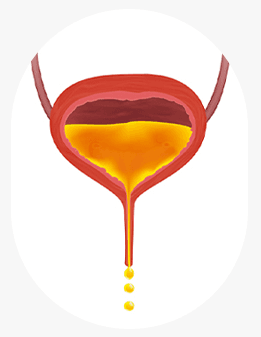
- Stress urinary incontinence (SUI) — Leakage occurs when abdominal pressure rises, such as with a cough, sneeze, laugh, jump, lift, or exercise. PFMT is first-line; confirmed bothersome SUI can also be treated with a support device, urethral bulking, sling surgery, an autologous fascial sling, or Burch colposuspension.
- Urgency urinary incontinence (UUI) / overactive bladder (OAB-wet) — Leakage follows an intense urge to urinate that is difficult to defer. Bladder training and medication are central treatments; refractory symptoms can be considered for bladder onabotulinumtoxinA, tibial nerve stimulation, or sacral neuromodulation.
- Mixed urinary incontinence (MUI) — Both stress and urgency leakage are present. European guidance recommends treating the predominant or most bothersome symptom first; stress-incontinence surgery is less predictable for the urgency component than for isolated SUI.
Why Visit Korea for Female Incontinence?
Korea can be a practical location for an assessment or defined treatment pathway only when the hospital can establish the leakage subtype and provide a written plan for care after departure. This is particularly important for bladder Botox and sling surgery, where incomplete emptying, infection, or other early complications require prompt review. Do not choose a destination based on a generic “incontinence treatment” package.
- Diagnosis before intervention — A suitable center should be able to complete or arrange the core assessment: history, pelvic and focused neurologic examination, urinalysis or culture when indicated, bladder diary, PVR measurement, and demonstration of stress leakage when SUI is suspected. Selective urodynamics, cystoscopy, or imaging are more relevant when findings could change an invasive-treatment decision.
- Procedure-specific decision-making — Confirm that the surgeon can explain non-surgical and surgical choices, including the different trade-offs of retropubic and transobturator mid-urethral sling routes. Comparative evidence associates retropubic surgery with more bladder perforation and voiding dysfunction, and transobturator surgery with more groin pain.
- Continuity requirements — Korea-specific availability of continence procedures, drug and device brands, interpreter services, anesthesia choices, catheter-removal protocols, and overseas follow-up varies by institution. Request the named clinician’s urology or urogynecology credentials, voiding-trial protocol, after-hours contact, and written handoff plan before booking.
- Evidence limitation — Available international-patient information does not verify continence outcomes or English-language postoperative capacity at any individual Korean institution. Verify these details directly rather than treating destination-level information as proof of suitability.
Key Information for International Patients
- Assessment-only visit — Allow approximately 2–3 business days for consultation and testing. Bring records in English or Korean where possible; extra investigations can extend the stay.
- Conservative treatment — Bladder training and supervised PFMT have no procedural downtime, but meaningful programs are generally delivered for at least 3 months and are best continued with a clinician at home.
- Bladder Botox — Benefit after intradetrusor onabotulinumtoxinA can begin within days to about 2 weeks. Do not travel for treatment unless the Korean team and a home clinician have a written plan to assess PVR, urinary-retention symptoms, and urinary infection after return; repeat injections are needed when benefit wears off.
- Sling surgery — For an uncomplicated mid-urethral sling, plan cautiously for about 7–10 days in Korea for pre-operative confirmation, surgery, successful voiding assessment, and early review. Retention, catheterization, infection, bleeding, combined prolapse surgery, or other complications require a longer stay.
- Flights and itinerary — No evidence establishes a universal safe-to-fly interval after sling surgery or bladder Botox. Surgery and long-distance travel both increase venous-thromboembolism risk; fly only after individualized clearance based on bladder emptying, mobility, pain control, bleeding or infection status, personal clot risk, and the operating clinician’s assessment.
- Long-term implants — Sacral neuromodulation includes a test phase, programming, and lifelong device surveillance for lead, battery, and implant issues. It is poorly suited to a short, one-off overseas trip.
Travel note: Keep the schedule flexible. Do not arrange a long-haul return flight immediately after surgery, and identify a urologist or urogynecologist at home who can receive the operative report and manage complications.
Which Are the Best Clinics in Korea for Female Incontinence?
Listed below are some of the best clinics in Korea for female incontinence.
1. SH Clinic
You may consider SH Clinic for female urinary incontinence if you want care from a specialized women’s health clinic with tailored options for stress or urge leakage, including pelvic-floor therapy and office-based procedures. Your treatment is performed directly by an experienced board-certified gynecologist who has received a Minister of Health and Welfare commendation.
- URL: SH Clinic Website
- Location: Seocho-gu, Seoul
- Incontinence care:
- Tailored treatment plans address stress or urge urinary leakage.
- Available approaches include pelvic-floor therapy and office procedures intended to improve daily comfort and confidence.
- Women’s health expertise:
- The clinic provides dedicated gynecologic care alongside incontinence treatment.
- Procedures are performed directly by a board-certified gynecologist.
- Additional gynecologic services:
- Services include cervical and ovarian cancer screening, with Pap smears, HPV testing, and ultrasound.
- Vaginal HIFU rejuvenation, vaginal tightening, fillers, stem-cell injections, and implant surgery are also listed among gynecologic offerings.
Female Incontinence From Start to Finish
- Remote consultation and records review — Send a 3-day bladder diary, medication and allergy list, prior urine cultures, pelvic operative reports, urodynamic, cystoscopy, and imaging reports, and details of neurologic disease, diabetes, prolapse, prior mesh surgery, bleeding history, and pregnancy status. Confirm whether English interpretation or a virtual consultation is available.
- In-person evaluation — The clinician takes a medical, obstetric, gynecologic, medication, and prior-surgery history, performs a focused pelvic examination, and assesses the leakage pattern. Urinalysis and culture are used when indicated; PVR measurement and an objective stress-leakage assessment help direct treatment.
- Selective diagnostic testing — Uncomplicated, clearly demonstrable SUI does not routinely require invasive urodynamics. Testing becomes more useful with diagnostic uncertainty, urgency symptoms, poor emptying, prolapse, prior continence surgery, neurologic disease, or when the result would change the treatment decision.
- Treatment-pathway decision — Start or continue conservative care when appropriate. For urgency-predominant symptoms, this can include bladder training and individualized medication; for confirmed SUI, discuss bulking, sling surgery, autologous fascial sling, or Burch colposuspension with their recovery and re-treatment trade-offs.
- Procedure day when indicated — Bladder Botox is injected into the bladder muscle through a cystoscope. Sling surgery uses a synthetic tape beneath the urethra through a retropubic or transobturator route; anesthesia and any sedation plan depend on the operation and hospital protocol.
- Immediate recovery and discharge assessment — After a sling, discharge requires clinical stability and satisfactory bladder emptying. A temporary catheter and repeat voiding trial are sometimes necessary. After bladder Botox, receive explicit instructions on recognizing retention and urinary infection, and confirm how PVR will be checked after discharge.
- Early review and travel clearance — Attend the planned review before international departure. The operating team should assess voiding, mobility, pain control, bleeding, infection symptoms, catheter needs, and individual clot risk before considering flight clearance.
- Remote follow-up at home — Obtain a written summary of diagnosis, tests, medication, procedure details, implant or product information where relevant, and urgent-contact instructions. Arrange local follow-up for PVR or urine testing after Botox and specialist review for persistent leakage, obstruction, pain, mesh concerns, or worsening urgency after sling surgery.
Alternatives to Female Incontinence
The best alternative depends on the diagnosed leakage mechanism. Non-surgical treatments avoid operative and mesh-related risks but require sustained participation or repeated sessions; surgery can offer a more durable stress-leakage solution but has recovery restrictions and specific complication risks.
Pelvic-floor muscle training and bladder training
- Best role — First-line treatment for SUI and MUI, with supervised intensive PFMT generally delivered for at least 3 months; bladder training is central for urgency leakage and mixed symptoms.
- Trade-off — No procedural downtime, but results depend on correct technique, adherence, symptom subtype, and access to ongoing rehabilitation.
Medication for urgency leakage
- Best role — Antimuscarinic medicines or beta-3 agonists can be considered for urgency-predominant OAB/UUI after behavioral measures.
- Trade-off — Medication treats bladder urgency rather than stress leakage and requires individualized review of contraindications, side effects, drug interactions, and local prescribing follow-up.
Urethral bulking injection
- Best role — A less invasive option for confirmed SUI, particularly for patients seeking to avoid or defer sling surgery.
- Trade-off — Bulking commonly has lower durability than sling surgery and repeat injections can be necessary.
Mid-urethral sling
- Best role — An established surgical option for confirmed, bothersome SUI after appropriate assessment and conservative management.
- Trade-off — Retropubic and transobturator routes have different risk profiles. Consent must cover mesh exposure or erosion, pain, dyspareunia, obstruction or retention, infection, recurrent leakage, and new or worsened urgency.
Autologous fascial sling or Burch colposuspension
- Best role — Non-mesh surgical options for selected SUI patients, including those whose history or preferences make a synthetic sling unsuitable.
- Trade-off — These are more substantial operations than bulking and need a surgeon-specific discussion of recovery, expected efficacy, complications, and re-treatment.
Tibial nerve stimulation or sacral neuromodulation
- Best role — Procedural options for refractory urgency urinary incontinence or OAB after conservative and medication pathways have been considered.
- Trade-off — Tibial nerve stimulation requires a treatment schedule; sacral neuromodulation requires a test phase and lifelong implant surveillance, limiting its practicality for short-term medical travel.
Vaginal laser or “vaginal rejuvenation” should not be presented as a standard evidence-based treatment for urgency incontinence or OAB; guideline evidence remains insufficient outside a well-regulated research setting.
How Can I Prepare for Female Incontinence?

- Bring a symptom record — Complete a 3-day bladder diary recording fluid intake, voids, urgency episodes, leakage, pads, and relevant triggers. Bring prior urine cultures, imaging, cystoscopy or urodynamic reports, and pelvic operative records.
- Disclose all health factors — Report pregnancy possibility, breastfeeding, diabetes, neurologic conditions, pelvic radiation, prolapse, prior continence or mesh surgery, nicotine use, immunosuppression, recurrent infection, clotting history, and previous anesthesia problems.
- Review medicines early — Provide a complete list of anticoagulants, antiplatelets, diabetes medicines, hormones, prescription drugs, over-the-counter medicines, and supplements. Do not independently stop anticoagulants, antiplatelets, diabetes medicines, or supplements that affect bleeding; the prescribing clinician and treating team must give a coordinated plan.
- Exclude infection — Report burning, fever, cloudy or foul-smelling urine, pelvic pain, or recent urinary infection before travel. Active infection requires treatment before invasive continence care.
- Follow fasting instructions — For sedation or sling surgery, follow the hospital’s exact fasting and medication instructions. Bladder Botox without sedation has different requirements.
- Plan practical support — Arrange accommodation near the hospital, a companion for surgery day when requested, and transport that avoids carrying luggage. Keep flights changeable and do not schedule strenuous tourism after a sling.
- Avoid nicotine and alcohol as directed — Nicotine impairs surgical healing and alcohol can interact with anesthesia, sedatives, and pain medicines. Follow the operating team’s specified stop periods.
Travel note: Ask before booking whether the center can provide English-language discharge documents, a direct after-hours contact, PVR or voiding-trial results, and a written handoff for a clinician at home.
Confirm all clinic-specific testing, medication, fasting, transport, and accommodation requirements with the treating doctor; individualized instructions take precedence over general guidance.
Aftercare Advice
Protect bladder emptying and early healing after treatment; inability to urinate, infection symptoms, or worsening pain need prompt clinical assessment.
- Confirm bladder emptying — After sling surgery, complete the required voiding trial before discharge. Seek urgent care for inability to urinate, progressive lower-abdominal distension, or increasing pelvic pain. After bladder Botox, follow the agreed PVR-monitoring plan and be prepared for temporary clean intermittent catheterization if prescribed.
- Watch for infection and bleeding — Contact the clinic urgently for fever, burning urination with systemic symptoms, foul discharge, heavy vaginal bleeding, worsening wound redness or swelling, or significant new pelvic pain.
- Protect sling healing — Follow the surgeon’s protocol for activity. Vaginal penetration, swimming or bathing, strenuous exercise, and heavy lifting are commonly restricted for about 4–6 weeks after an uncomplicated sling.
- Travel only when cleared — Do not use a fixed online flight interval. Obtain operating-clinician clearance after stable mobility, pain control, bladder emptying, and review for bleeding, infection, retention, and personal clot risk.
- Know urgent warning signs — Seek emergency care for calf pain or swelling, chest pain, shortness of breath, heavy bleeding, continuous urinary leakage, or severe abdominal pain.
- Track treatment response — Botox benefit can begin within days to about 2 weeks. Sling outcomes and urgency symptoms require follow-up; persistent stress leakage, new urgency, pelvic pain, dyspareunia, obstructive voiding, or possible mesh exposure needs specialist review.
Follow the treating doctor’s individualized instructions and contact the clinic promptly when anything appears wrong.
Frequently Asked Questions
Related Blogs
Vaginal Implant in Korea: Dreamcore Evidence, Safety, Recovery, and Alternatives
Dreamcore vaginal implant placement uses a permanent silicone band passed through pelvic fascia via vaginal incisions, but evidence is limited to one case report involving concurrent mesh repair and a sling. The article covers candidate assessment, device documentation, a planned 2–3-week Korea stay, travel precautions, recovery restrictions, follow-up needs, warning signs, and established prolaps
Updated: Sep 21, 2026
Laser Labiaplasty in Korea: Techniques, Recovery, Risks, and Travel Planning
Laser labiaplasty permanently reduces or reshapes labia minora tissue using CO2 or Er:YAG laser techniques, with trim, wedge, and selected central reduction approaches. The article covers candidacy, travel and follow-up planning in South Korea, recovery restrictions, preparation, alternatives, and warning signs requiring urgent care.
Updated: Sep 21, 2026

Clitoroplasty with Laser in Korea: Methods, Recovery, Risks and Travel Planning
Laser clitoroplasty may involve reduction, recession, repositioning, or reconstruction, with laser use limited to incision or coagulation rather than a standardized procedure. The article covers candidate screening, risks, Korea travel planning, preparation, recovery, aftercare, and alternatives such as clitoral hood reduction.
Updated: Sep 21, 2026
Pelvic Muscle Restoration Surgery in Korea: Types, Recovery, Risks and Travel Planning
Pelvic muscle restoration surgery includes diagnosis-specific repairs for prolapse, perineal defects, and selected continence conditions, using vaginal, laparoscopic, robotic, open, mesh, or native-tissue approaches. The article covers candidacy, evaluation, Korea travel planning, recovery timelines, aftercare, warning signs, and non-surgical alternatives.
Updated: Sep 21, 2026