
Medical Tourism Blog
Korea Nipple Surgery Solutions: Correcting Nipple Asymmetry with Advanced Cosmetic Procedures
Table of contents
- Which Are the Best Clinics in Korea for Nipple Asymmetry?
- Korea and Medical Tourism for Nipple & Breast Asymmetry Correction
- A Comprehensive Guide to Nipple Surgery Procedures
- Cost Analysis and Value Proposition for the Medical Tourist
- The Patient's Perspective: Lived Experiences and Psychological Impact
- Conclusion
- References
Considering treatment in Korea? Everything you need to know e.g. — how to avoid scams, visas, interpreters, recovery tips — in our Medical Tourism Master Guide. Plan with confidence in minutes, not weeks!
Breast asymmetry, or differences in the form, position, or volume of the breasts, is extremely common, affecting over half of all women and often not causing any distress. For some, though, the differences are more pronounced and can be both physically and emotionally challenging. Before pursuing cosmetic correction, it’s crucial to recognize that asymmetry ranges from harmless differences to symptoms of more serious medical issues. Anyone considering a cosmetic fix should know that some changes, especially sudden ones, require medical evaluation before any aesthetic procedures are considered.
In clinical practice, especially in breast imaging, breast asymmetry is described using specific classifications:
- Asymmetry: Noted as increased fibroglandular density on only one mammographic view, and often just overlapping tissue, though occasionally signaling something more serious.
- Focal Asymmetry: Seen in two different mammographic projections.
- Developing Asymmetry: New or more noticeable on recent imaging compared to older exams, which can indicate changes warranting further investigation, like biopsies.
- Global Asymmetry: A broader area—more than one breast quadrant—appears denser in at least two views, sometimes just a normal variant.
While aesthetics are often the main concern, an urgent consultation with a healthcare provider is warranted anytime there’s a sudden change—like a nipple becoming inverted, developing skin puckering, rashes, or discharge. These can point to conditions such as invasive ductal carcinoma or Paget's disease of the breast. Beginning with this medical context ensures patient safety and clear boundaries between cosmetic issues and those needing clinical attention.
Medical Terminology and Common Pseudonyms
Knowing the correct terminology makes consultations clearer for patients. Here’s a reference table of standard terms and their more common descriptions:
| Medical Term | Definition | Common Pseudonyms / Descriptions |
|---|---|---|
| Nipple-Areolar Complex (NAC) | The collective term for the nipple and surrounding pigmented areola. | Nipple and areola |
| Anisomastia | Large difference in breast size, mostly in volume. | Uneven breasts |
| Anisothelia | Asymmetry in nipple or areola size, shape, or position. | Uneven nipples |
| Hypertrophic Nipples | Overly large or prominent nipples. | Enlarged nipples |
| Nipple Ptosis | Sagging or low nipple position. | Droopy nipples |
| Inverted Nipples | Nipples recess inward or are flush with surrounding skin. | Retracted nipples, flat nipples |
Underlying Causes and Related Conditions
Asymmetry has many roots, from normal genetic differences to congenital conditions like juvenile hypertrophy of the breast or tuberous breasts (narrow base and elongated shape). Hormonal changes—during puberty, menstruation, pregnancy, or breastfeeding—as well as significant weight changes, all affect breast and nipple appearance. In addition, previous breast surgery or trauma can cause or accentuate asymmetry, particularly after augmentation or mastectomy with reconstruction.
It’s key for patients to recognize that mild asymmetry is natural. Acknowledging this normal variation helps manage expectations, while also validating that more significant differences can cause real psychological distress and may warrant treatment for comfort and well-being, not just aesthetics.
Which Are the Best Clinics in Korea for Nipple Asymmetry?
Listed below are some of the best clinics in Korea for nipple asymmetry.
1. Seojin Plastic Surgery Clinic
You may consider Seojin Plastic Surgery Clinic for nipple asymmetry if you want nipple or areola shape and size concerns assessed within a broader breast-surgery plan. Its one-doctor model with Dr. Lee Hyungmin may offer continuity from consultation through care, while the clinic’s breast-focused services can help frame correction in relation to your overall breast proportions.
- URL: Seojin Plastic Surgery Clinic Website
- Location: Gangnam-gu, Seoul
- Nipple and breast care:
- Nipple surgery is included within the clinic’s breast-surgery services, with procedures described as adjusting nipple or areola size or shape.
- Breast options also include augmentation, hybrid implant-and-fat-grafting procedures, lifts, and reductions, which may be relevant if nipple asymmetry is considered alongside overall breast shape.
- Care approach:
- Dr. Lee Hyungmin provides end-to-end care in a one-doctor clinic model.
- The clinic describes using personalized consultations, 3D imaging, and high-definition endoscopy.
- Dr. Lee Hyungmin has more than 16 years of experience and was recognized among the 100 Good Doctors in Korea.
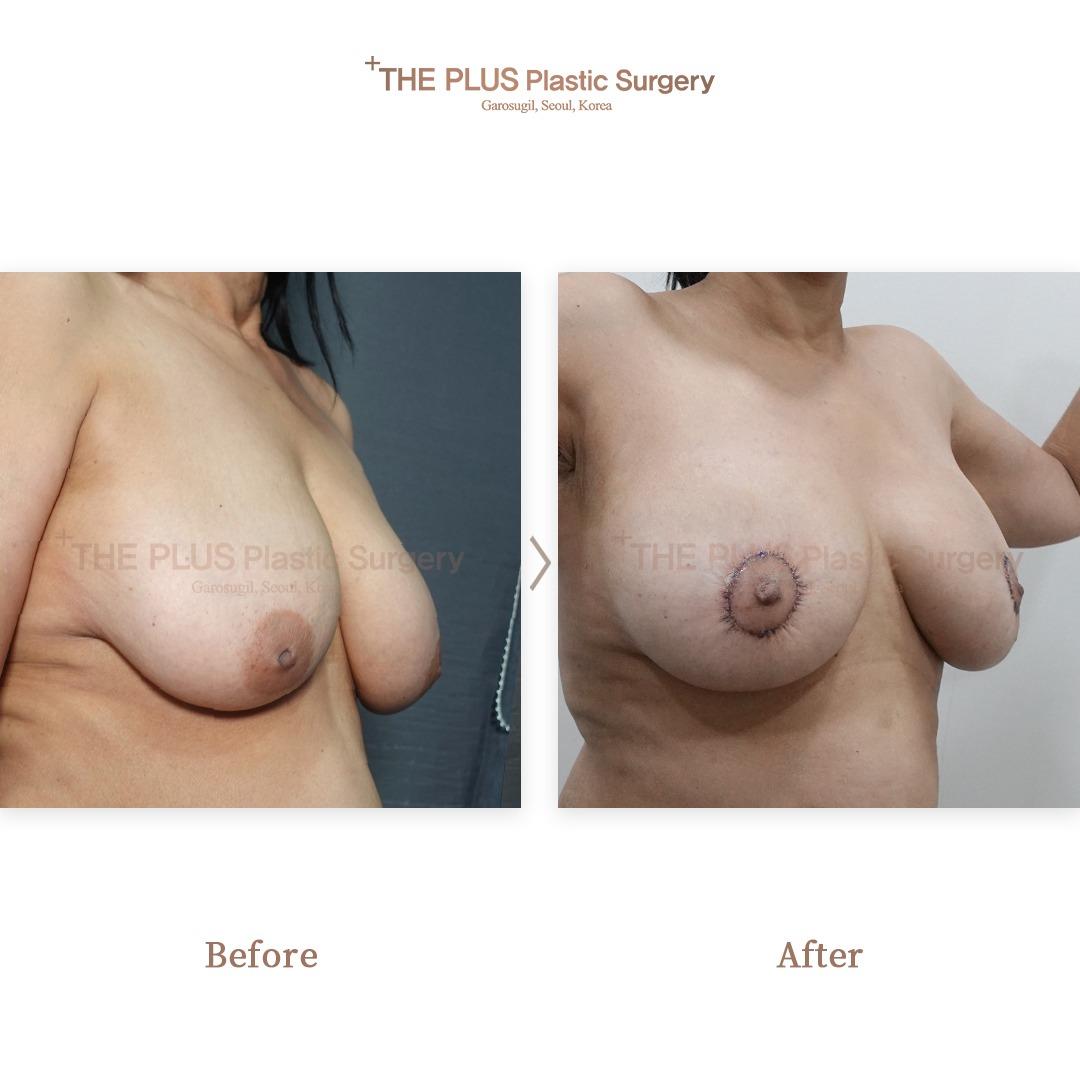
2. THEPLUS Plastic Surgery
You may consider THEPLUS Plastic Surgery when nipple asymmetry is part of a wider breast-shape concern that may require lift or reduction planning. Dr. Lee’s specialized breast-surgery background, 3-D assessment process, and technique selection for breast lifts and reductions provide a relevant basis for discussing how your nipple position and breast proportions could be addressed; you should confirm whether a stand-alone nipple-asymmetry correction is appropriate for you.
- URL: THEPLUS Plastic Surgery Website
- Location: Gangnam-gu, Seoul
- Breast-surgery expertise:
- Dr. Lee is a board-certified plastic surgeon specializing in breast augmentation, breast lift, and breast reduction.
- Her background includes work as a Surgery Specialist at Seoul National University Hospital and clinical training at Seoul Metropolitan Boramae Hospital.
- She is a member of the Korean Society of Plastic and Reconstructive Surgery and the Korean Society of Aesthetic Plastic Surgery.
- Individualized breast planning:
- For breast lifts, the clinic selects donut, lollipop, or anchor techniques after a 3-D assessment of skin elasticity and breast shape.
- For breast reduction, Dr. Lee uses a pedicle technique intended to preserve nipple sensation while removing excess volume.
- Breast-augmentation planning is tailored to body type, implant placement, and incision site, with full-HD endoscopic visualization.
- Recovery support:
- The clinic describes advanced sterilization protocols, systematic postoperative monitoring, and aftercare tailored to your healing pace.
- English-language support and translator assistance are available for international visitors from consultation through recovery.
3. Okay Plastic Surgery Clinic
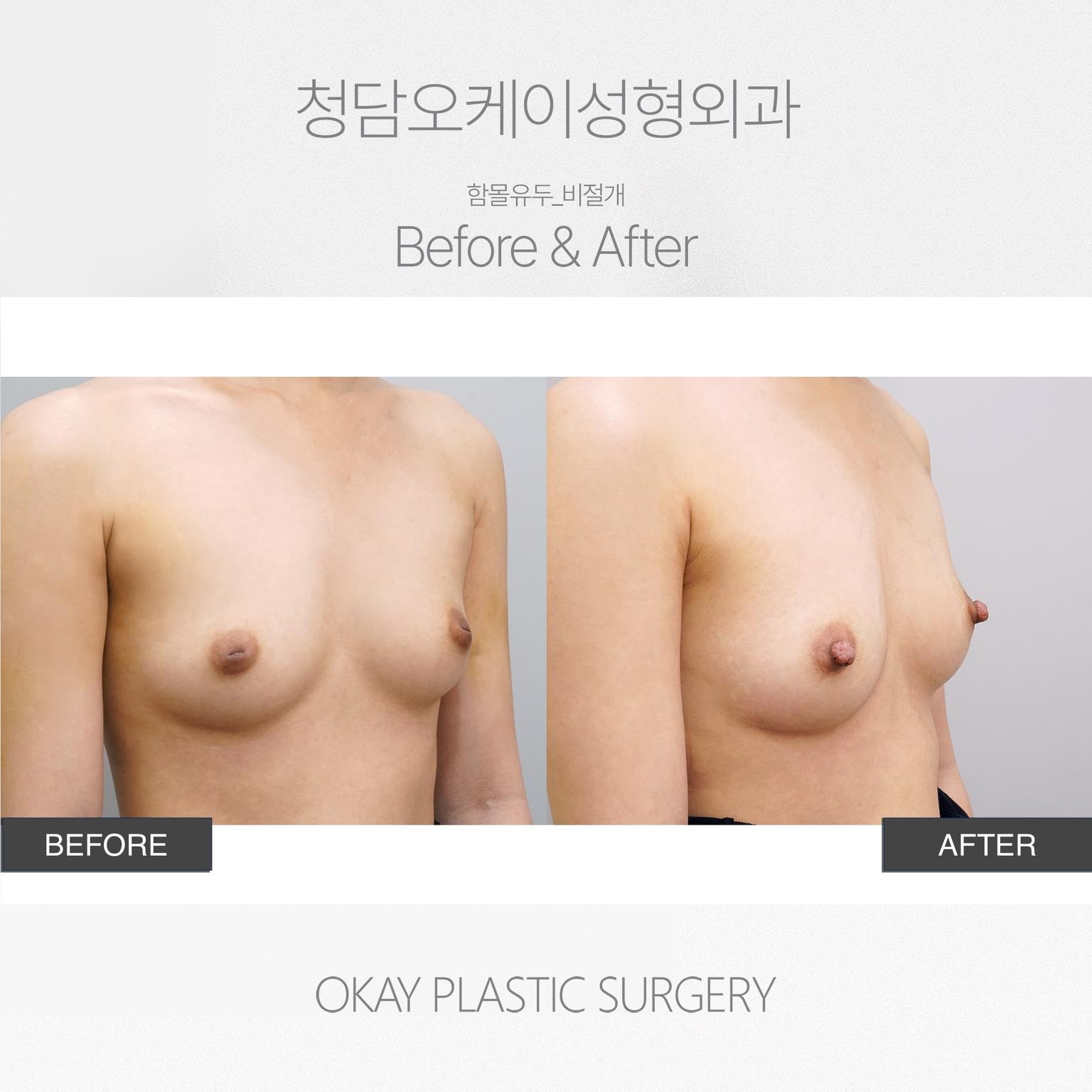
You may consider Okay Plastic Surgery Clinic for nipple asymmetry because its specialized Breast Center explicitly offers nipple correction, allowing your concern to be evaluated alongside breast lift or reduction needs when relevant. Dr. Cho’s stated breast-surgery research and experience with complex reduction cases may be especially relevant if asymmetry involves broader differences in breast size, position, or shape.
- URL: Okay Plastic Surgery Clinic Website
- Location: Gangnam-gu, Seoul
- Nipple correction focus:
- Okay Plastic Surgery operates a specialized Breast Center that includes nipple correction alongside breast reduction and breast lift procedures.
- The clinic also lists corrective care for inverted nipples.
- Breast-surgery experience:
- Dr. Cho is described as a breast-surgery expert who has studied and published research papers in the field.
- The clinic states that Dr. Cho performs both standard breast procedures and severe cases requiring significant breast reduction.
- Aftercare:
- The clinic emphasizes comprehensive aftercare intended to support natural, lasting results.
- Its care model is described as individualized, with treatment tailored to your needs and goals.
Korea and Medical Tourism for Nipple & Breast Asymmetry Correction
Navigating Medical Tourism to South Korea
The Lure of South Korea for Cosmetic and Reconstructive Surgery
South Korea is globally respected for cosmetic and reconstructive surgery, blending innovation, world-class expertise, and a seamless patient experience. Clinics offer cutting-edge technology like 3D modeling and AI-based planning, and virtual consultations are the norm for international patients. Additional services—multilingual coordinators, airport pickups, accommodations—reduce the logistical stress of traveling for care, helping patients focus on recovery and positive outcomes.
The Step-by-Step Patient Journey
A medical tourist’s experience typically unfolds as follows:
- Step 1: Initial Online Consultation: A free, detailed chat about concerns and goals, often via WhatsApp, ensures a clear understanding before booking travel.
- Step 2: Pre-Travel Prep: The clinic provides a checklist, including tips on preparing medically and logistically for the procedure. Patients are responsible mainly for flights; clinics often arrange everything else.
- Step 3: Arrival and In-Person Consultation: Arrival is smoothed by arranged transport. An in-depth consultation covers expectations, history, and surgical planning.
- Step 4: Pre-Surgery Exams: Patients undergo basic pre-operative tests; bringing recent results can streamline clearance.
- Step 5: Surgery and Immediate Recovery: Surgery is performed with anesthesiologist supervision, and monitored post-operatively before discharge, with pain management as needed.
- Step 6: Post-Operative Care and Departure: Daily aftercare and follow-up ensure safety. Most patients stay one to two weeks for optimal recovery, with departure transport sometimes provided.
South Korea’s all-inclusive, patient-centered approach—including high-quality care and convenience—makes for a secure and predictable experience, distinguishing it from more fragmented international alternatives.
A Comprehensive Guide to Nipple Surgery Procedures
Surgical Techniques for the Nipple-Areolar Complex (NAC)
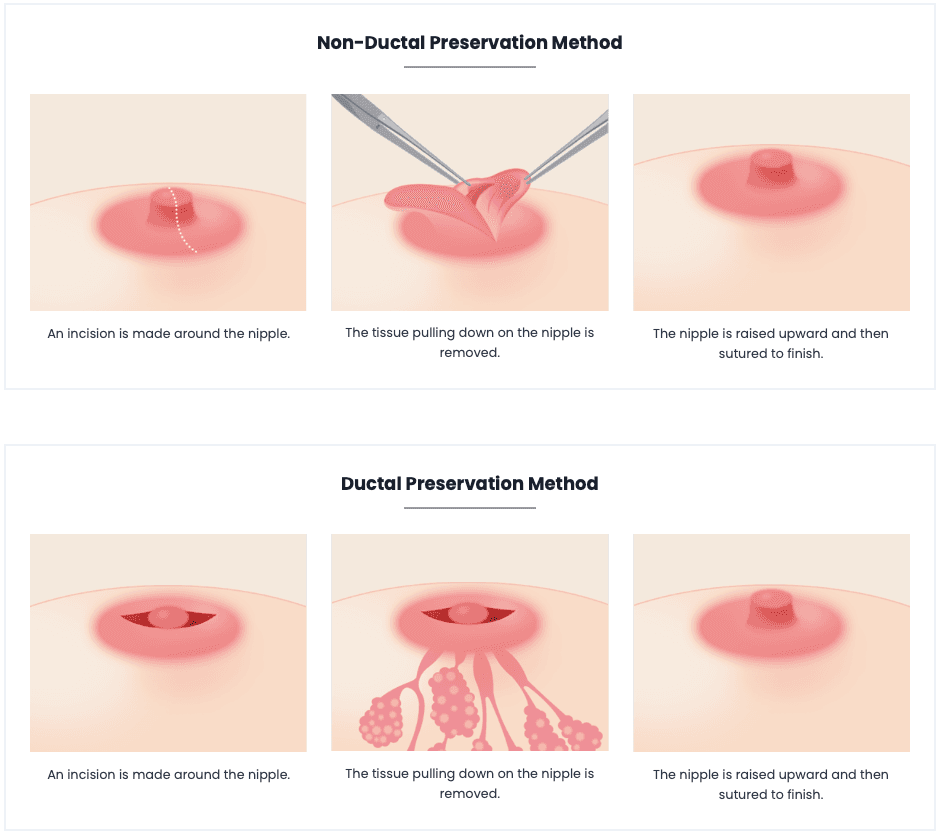
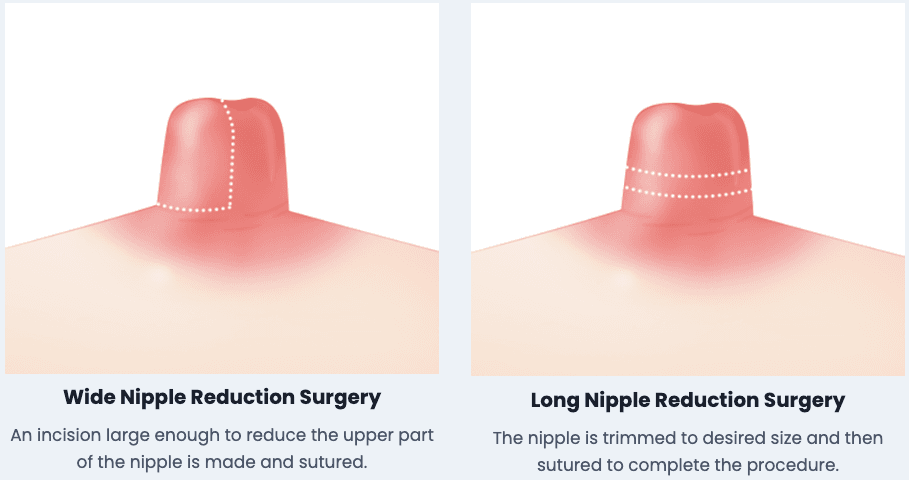
There are several tailored procedures to address issues with the nipple-areolar complex (NAC):
Nipple Reduction: For hypertrophic nipples, this procedure shortens and reduces nipple size with minimal downtime, often under local anesthesia. Many patients, like a 35-year-old male undergoing bilateral nipple reduction, report newfound comfort and confidence post-procedure.
Areola Reduction: Excessively large or uneven areolas are corrected by removing a donut-shaped piece of tissue through an incision at the areola’s edge, leaving a discreet scar that blends into the pigment.
Inverted Nipple Correction: For inward-pointing nipples, surgery often releases the fibers drawing the nipple inward, aiming to preserve milk duct function and sensitivity. This should be discussed with the surgeon, especially for those planning to breastfeed.
Nipple Lift and Repositioning: Aimed at correcting low, misdirected, or widely/narrowly set nipples, this is an integral part of breast lift (mastopexy) and reduction, restoring the NAC to a youthful position.
The Role of Adjunctive Procedures
Nipple procedures are frequently combined with broader surgeries for better symmetry:
- Breast Augmentation: Uneven breasts (anisomastia) can be balanced with different-sized implants.
- Breast Lift and Reduction: Corrects sagging (ptosis), reduces size, and adjusts nipple position and areola size, often revisiting asymmetry after prior augmentation.
Understanding Surgical Risks and Potential Complications
Every surgery carries some risk. It’s essential for patients to be aware of these possibilities to set realistic expectations.
| Risk / Complication | Description | Management and Patient Considerations |
|---|---|---|
| Change in Nipple Sensation | May be temporary or permanent, less or more sensitive breasts/nipples. | Most cases resolve, but permanent change is possible. Skilled surgeons take care to preserve nerves where possible. |
| Inability to Breastfeed | Surgery involving milk ducts may affect future breastfeeding. | Discuss plans to breastfeed with your surgeon; some techniques can help minimize this risk. |
| Scarring | All incisions cause scars, which may vary in appearance. | Surgeons hide scars within the areola pigment when possible. Scarring fades over time, and further treatments (like lasers) can help if needed. |
| Asymmetry | Some unevenness may remain or develop after surgery. | Perfect symmetry is not achievable; some swelling-induced asymmetry can last for months after surgery. |
| Delayed Healing & Infection | Risks include wound issues or infection. | Watch for signs like fever or redness. Follow post-op care closely and contact your surgeon with any concerns. |
Typical Recovery Timelines and Post-Operative Care
Recovery is usually quick, especially with stand-alone nipple-areolar surgeries.
- Initial Recovery (Days 1-7): Soreness, swelling, and some discomfort are normal. Most patients can return to work in a day or two, but should avoid heavy lifting and strenuous activities.
- Intermediate Recovery (Weeks 1-6): Swelling and numbness improve, and a support bra is often recommended. Gradual return to normal activity as directed by your surgeon.
- Final Results: Nipples' final look is apparent when swelling subsides, and with implants, full settling may take up to six months.
It’s important to recognize that perfect symmetry is rare, even after surgery. Individual anatomy, swelling, and healing patterns all influence results—improvement, not perfection, should be the goal.
Cost Analysis and Value Proposition for the Medical Tourist
Detailed Breakdown of Nipple Surgery Costs in South Korea
Nipple and areola surgeries in South Korea are competitively priced and often include comprehensive care. Typical costs:
- Nipple correction: $1,000–$3,000 USD
- Areola surgery: ₩2,500,000–₩7,000,000 (~$1,720–$4,820 USD)
- Areola reduction (specific data): Average $2,500, with a range of $2,000–$3,000 USD
These packages usually cover surgery, anesthesia, and basic post-op care—with many clinics bundling in accommodations, pre-op tests, and medications for transparent total pricing.
South Korea vs. Global Markets: A Comparative Analysis
South Korea’s value shines when compared to other destinations. Inclusive packages often mean fewer unexpected costs.
| Country | Procedure | Price Range (USD) | Key Inclusions |
|---|---|---|---|
| South Korea | Areola Surgery | $1,720 - $4,820 | Surgery, anesthesia, post-op care, often pre-op tests, meds, and accommodation |
| United States | Areola Reduction | $1,500 - $6,650 | Surgical fee; add-on costs for anesthesia, facility, follow-ups |
| United Kingdom | Areola Reduction | Approx. $5,360 | Pre- and post-op consults, meds |
| Mexico | Nipple Correction | $1,200 - $1,378 | Surgery only; pre-op tests, meds, and transport not usually included |
| Turkey | Areola Reduction | $1,301 - $2,420 | Surgery only; patients may face added costs and language/care continuity issues |
While initial costs may be lower elsewhere, hidden expenses are common. South Korea’s all-inclusive packages make for a safer financial and emotional experience.
The Patient's Perspective: Lived Experiences and Psychological Impact
From Physical Discomfort to Psychological Distress
Nipple asymmetry isn't always just a cosmetic problem—it can deeply affect emotional health and self-esteem. Studies in Plastic and Reconstructive Surgery show young women with breast asymmetry score lower for psychological well-being compared to peers, affecting confidence, relationships, and social life. For some, surgery is a way to address both discomfort and emotional distress. One forum user, for example, underwent correction for inverted nipples primarily to feel comfortable in her own skin and improve intimacy.
Analyzing Patient Testimonials and Outcomes
For many, the real benefits of nipple surgery are psychological. Patients speak of instant relief and boosted self-confidence—like the male patient whose comfort soared after nipple reduction. Beyond appearances, correcting symptoms such as pain or discharge can transform daily comfort. For those who underwent mastectomy and subsequent nipple reconstruction, restoring the nipple-areolar complex becomes a symbol of healing—contributing to a sense of normalcy and closure after cancer.
A Balanced View: Managing Expectations and Acknowledging Varied Outcomes
Not every patient achieves perfection or full satisfaction. Some continue to struggle with body image, especially if pre-existing mental health concerns or dissatisfaction with results linger. It's vital that surgeons help set realistic expectations and provide support post-operatively, as satisfaction is often about feeling whole and confident, not flawless. Ultimately, the greatest impact is often on a patient’s sense of well-being and self-acceptance, more so than just the visible change.
Conclusion
Nipple and breast asymmetry are common, yet can profoundly affect self-esteem and quality of life. Solutions range from advanced surgical techniques to comprehensive medical tourism experiences, notably in South Korea, where all-inclusive care is the norm. The real value of these procedures goes beyond physical transformation—patients often report deep improvements in emotional well-being and confidence. A focus on informed choices, expert care, and managed expectations yields the most rewarding outcomes for those seeking treatment.
References
1, 2, 3, 4, 5, 6, 7, 8, 9, 10, 11, 12, 13, 14, 15, 16, 17, 18, 19, 20, 21, 22, 23, 24, 25, 26, 27, 28, 29, 30, 31, 32, 33, 34, 35, 36, 37, 38, 39, 40, 41, 42, 43, 44, 45, 46, 47, 48, 49, 50, 51, 52, 53, 54
Frequently Asked Questions
Related Blogs
Nipple Surgery in Korea: Types, Recovery, Risks, and Travel Planning
Nipple surgery may reduce nipple size or projection, correct benign inversion, revise scars, or reconstruct the nipple–areola complex; technique, anesthesia, and recovery depend on the procedure and any combined breast or chest surgery. International patients should plan at least 7–10 days locally for uncomplicated isolated procedures, attend wound review before flying, arrange follow-up at home,
Updated: Sep 21, 2026
Breast Augmentation in Korea: Implants, Recovery, Travel Planning, and Long-Term Safety
Breast augmentation in Korea may use silicone or saline implants, or fat grafting, with planning based on anatomy, goals, incision, and pocket placement. The article covers candidacy, costs of ₩7,000,000–₩18,000,000, 10–14-day travel planning, recovery, follow-up, and implant records.
Updated: Sep 20, 2026
Capsular Contracture Treatment in Korea: Revision Options, Recovery, and Travel Planning
Capsular contracture treatment may include capsulotomy, partial or total capsulectomy, implant exchange or removal, pocket change, ADM support, breast lift, fat grafting, or autologous reconstruction based on symptoms and tissue condition. International patients should plan at least 10–14 days in Korea, complete local follow-ups, obtain surgeon clearance before flying, and arrange home-country car
Updated: Sep 19, 2026
Mastectomy in Korea: Types, Cancer Planning, Recovery, and Travel Considerations
Mastectomy removes breast tissue for cancer treatment or risk reduction, with total, skin-sparing, nipple-sparing, and reconstruction options selected through multidisciplinary review. International patients traveling to Korea need records review, postoperative monitoring, travel clearance, and a documented handoff to their home oncology team.
Updated: Sep 19, 2026
Clinics offering Nipple Surgery

THEPLUS Plastic Surgery Korea | Eye, Nose, Face & Body Surgery
Sinsa

Seojin Plastic Surgery Clinic Korea: Pioneering Advanced Cosmetic Procedures for Personalized Aesthetic Transformation
Apgujeong

Okay Plastic Surgery Clinic in Korea: Comprehensive Aesthetic Procedures with Sincerity and Care
Cheongdam
Evita Clinic Korea: Body Contouring, Breast & Gender-Affirming Surgery in Seoul (Apgujeong)
Apgujeong