
Medical Tourism Blog
Love Handle Liposuction in Korea: Methods, Recovery, Travel Planning, and Risks
Table of contents
- Love Handle Liposuction at a Glance
- What Is Love Handle Liposuction?
- Who Is a Good Candidate for Love Handle Liposuction?
- How Is Love Handle Liposuction Performed?
- Why Visit Korea for Love Handle Liposuction?
- Key Information for International Patients
- Which Are the Best Clinics in Korea for Love Handle Liposuction?
- Love Handle Liposuction From Start to Finish
- Alternatives to Love Handle Liposuction
- How Can I Prepare for Love Handle Liposuction?
- Aftercare Advice
Considering treatment in Korea? Everything you need to know e.g. — how to avoid scams, visas, interpreters, recovery tips — in our Medical Tourism Master Guide. Plan with confidence in minutes, not weeks!
Last updated: September 2026
Love Handle Liposuction at a Glance
- What it treats — Love handle liposuction surgically removes localized subcutaneous fat from the flanks—the sides of the waist—to reduce bulges and improve the abdomen-to-lower-back contour; it is not a weight-loss treatment.
- Best candidates — Suitable candidates are generally at a stable weight with pinchable flank fat, firm elastic skin, realistic contour goals, and health compatible with anesthesia and wound healing.
- Skin limitation — Liposuction does not reliably tighten marked loose skin; removing fat from poorly elastic flanks can make sagging or irregularity more noticeable, in which case skin-excision surgery may be more appropriate.
- Recovery timeline — Soreness, drainage, bruising, numbness, and swelling are expected in the first week; light activity is often possible in 1–2 weeks, strenuous exercise usually waits 4–6 weeks, and swelling may take 3–6 months to fully settle.
- Durability — Removed fat cells do not regenerate, but remaining fat cells can enlarge with weight gain, so a stable weight is important for maintaining the contour result.
- Korea travel plan — International patients should plan to stay in South Korea about 7–10 days for examination, surgery, early wound checks, and fitness-to-fly clearance; the operating surgeon should determine the actual departure date.
- Korea verification — Medical Korea’s international-patient registration system can help identify participating facilities, but no high-quality evidence shows superior Korean flank-liposuction outcomes; independently confirm the named surgeon, anesthesia provider, emergency coverage, and post-return care plan.
What Is Love Handle Liposuction?
Love handle liposuction removes localized fat from the flanks, the areas at the sides of the waist. It aims to reduce persistent side-waist bulges and create a smoother transition between the waist, hips, and lower back, rather than cause major weight loss. It is a surgical procedure performed through small incisions.
Who Is a Good Candidate for Love Handle Liposuction?
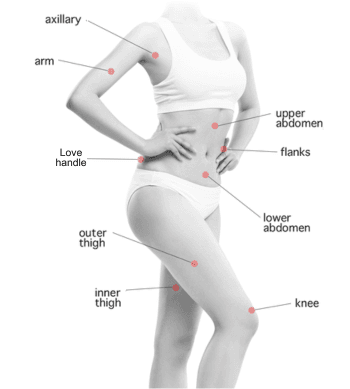
- Localized flank fat — Good candidates have a persistent subcutaneous fat deposit at the sides of the waist, between the lower ribs and iliac crest, despite a stable weight.
- Realistic contour goals — Flank liposuction can reduce a bulge and improve the waist-to-hip or lower-back transition. It does not treat visceral abdominal fat, cellulite, stretch marks, or produce major weight loss.
- Skin quality — Firm, reasonably elastic skin is important because the skin must retract over the reduced fat layer. The consultation should assess existing laxity, scars, asymmetry, hernias, and abdominal-wall concerns.
- Surgical fitness — Candidates need a health history compatible with anesthesia and wound healing, and must be prepared to stop nicotine exposure under the surgical team's protocol.
- Weight stability — Removed fat cells do not regenerate, but remaining fat cells can enlarge with weight gain; maintain a stable weight for a more durable contour result.
Pregnancy is a reason to postpone elective liposuction until after pregnancy and recovery; breastfeeding timing requires individual advice from the surgeon, anesthesiologist, and infant-care clinician. Liposuction is unsuitable for untreated obesity, unstable weight, or an expectation of substantial weight loss. Marked loose flank skin can look more irregular after fat removal and often requires a skin-excision operation instead. Uncontrolled diabetes, active infection, serious heart, lung, liver, kidney, immune, bleeding, or clotting conditions, unmanaged anemia, and anticoagulant or antiplatelet treatment that cannot safely be changed require medical assessment or rule out surgery. The surgeon must also screen for body dysmorphic disorder, coercion, and unrealistic expectations about symmetry, skin tightening, or permanence; candidacy is based on anatomy and health, not age alone.
How Is Love Handle Liposuction Performed?
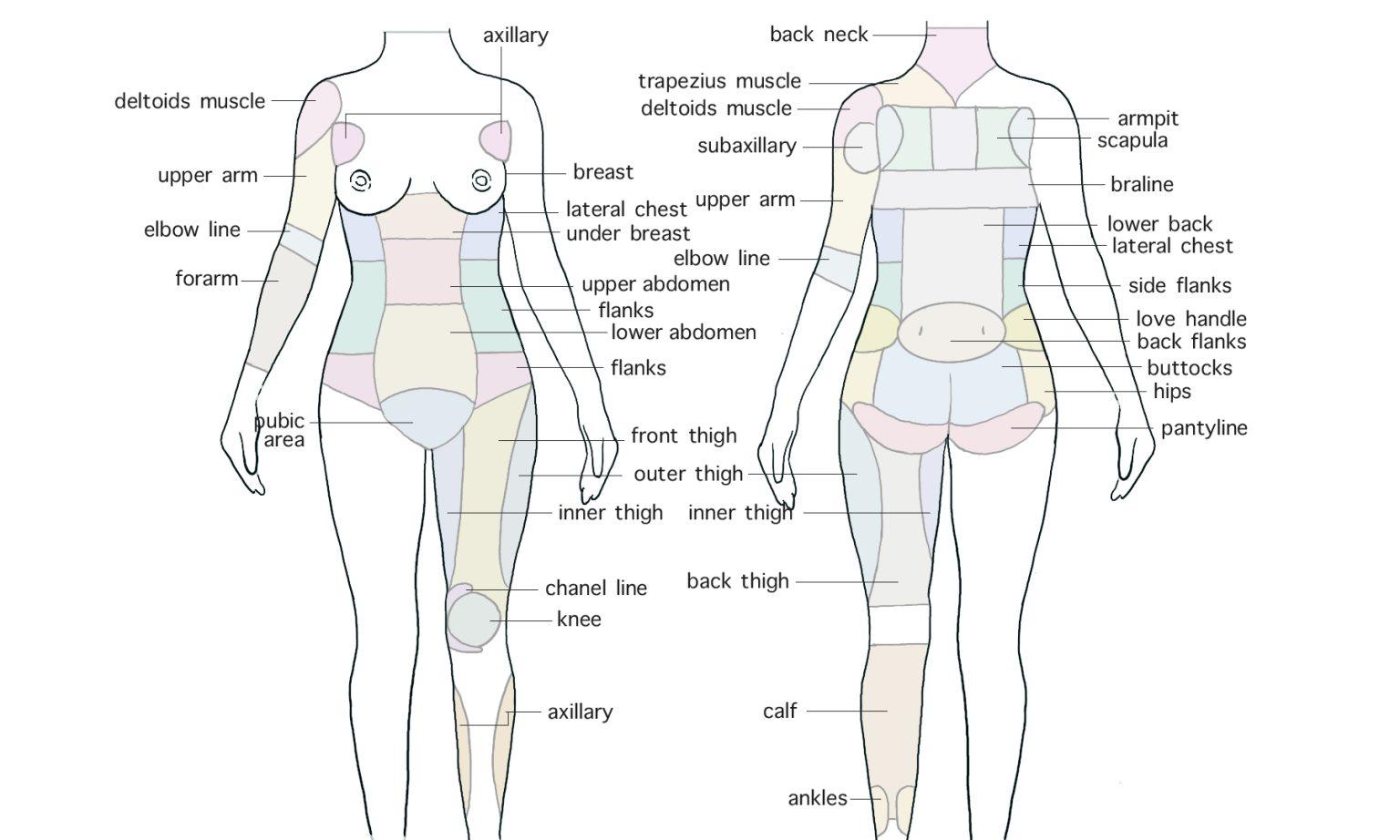
Love handles are an anatomical treatment area rather than a distinct liposuction type. The relevant choices are the fat-removal technique and whether the surgeon treats adjacent zones to create a continuous contour.
- Suction-assisted liposuction (SAL) — A cannula removes fat mechanically after tumescent or super-wet fluid is infiltrated. This is conventional surgical liposuction.
- Power-assisted liposuction (PAL) — A vibrating cannula assists fat removal. It remains liposuction, with the same need for careful layer-by-layer contouring.
- Ultrasound-assisted liposuction (UAL/VASER) — Ultrasound energy disrupts fat before aspiration. It adds a heat-related step and therefore technique-specific risks, including thermal injury. A 2025 review of direct UAL-versus-SAL comparisons found only five studies and insufficient convincing long-term evidence that UAL provides superior aesthetic results or reliable skin tightening.
- Laser-assisted liposuction (LAL) — A laser fiber disrupts fat before suction or limited aspiration. Discuss skin-tightening claims cautiously; dependable tightening is not established for every skin type or degree of laxity.
- Combined-zone contouring — The surgeon may blend the bilateral flanks with the abdomen, waist, lower back, or upper-buttock transition to avoid a visible step-off. More zones, higher aspirate volume, longer operating time, and combined operations change the safety and recovery plan.
Ask which clinician will perform marking, fluid infiltration, cannula liposuction, any energy-device step, anesthesia, and postoperative reviews. Obtain the planned zones, anesthetic approach, expected aspirate range, compression plan, and revision policy in writing.
Why Visit Korea for Love Handle Liposuction?
South Korea has an established framework for registered international-patient medical institutions and agencies through Medical Korea's registered-system information. This can help overseas visitors identify facilities that participate in the formal international-patient system, but it does not replace independent verification of the operating surgeon, anesthesia arrangements, and emergency plan. Published Korean experience exists, although it does not establish a country-level outcome advantage for flank liposuction.
- International-patient infrastructure — Use the Medical Korea registration system as one starting point when checking whether a facility is set up to receive overseas patients; confirm directly that the named facility is authorized and that it can provide English documentation.
- Published local experience — A 2011 retrospective series of 2,398 superficial-liposuction patients included Seoul-based authors. It was not flank-only, did not compare Korea with other countries, and used a specific technique mix, so it cannot show that love-handle liposuction in Korea is safer or more effective.
- Verification remains essential — Confirm the named surgeon's qualifications, the operating facility, who provides anesthesia, who is available out of hours, and the plan for complications after departure. Do not rely on procedure branding or device names as evidence of better results.
- Evidence limitation — No high-quality studies directly compare Korean and non-Korean love-handle liposuction for safety, revision rates, satisfaction, or contour outcomes. Published complication data also pool body areas and techniques, limiting their usefulness for an individual flank procedure.
Key Information for International Patients
- Minimum stay — Plan to remain in South Korea for about 7–10 days for in-person assessment, surgery, early wound or drainage checks, and a fitness-to-fly review. The surgeon sets the actual departure date.
- Return-flight timing — Do not book a nonrefundable flight that forces early departure. Aspirate volume, anesthesia, combined procedures, mobility, wound status, and personal venous-thromboembolism risk all affect clearance.
- First-night support — Bring a companion when IV sedation or general anesthesia is planned. Do not drive or remain unaccompanied on the first night unless both the anesthetic and surgical teams explicitly approve it.
- Itinerary impact — Expect drainage from small incisions, soreness, bruising, numbness, swelling, and a compression garment during the first week. Schedule a quiet recovery period rather than shopping-intensive or long walking itineraries.
- Activity and flight-clot planning — Take short, frequent walks as directed. Ask for personalized advice on aisle seating, calf exercises, hydration, compression, and medically supervised clot prevention; recent surgery and long-distance travel can compound clot risk, particularly with reduced mobility, obesity, estrogen exposure, cancer, pregnancy or postpartum status, or a personal or family clot history. The CDC advises that travel-related clot prevention depends on individual risk; do not self-start aspirin.
- Remote follow-up — Agree on video follow-up before surgery, commonly around 1–2 weeks, 6 weeks, and 3–6 months, adjusted to the operating surgeon's protocol. Request English copies of the operative note, anesthesia record, medicine list with generic names and doses, device details, discharge instructions, emergency contact details, and dated postoperative photographs.
Travel note: Arrange in advance who will assess a complication after you return home. Fever, heavy bleeding, chest symptoms, or rapidly worsening swelling require urgent in-person care, not messaging alone.
Which Are the Best Clinics in Korea for Love Handle Liposuction?
Listed below are some of the best clinics in Korea for love handle liposuction.
1. Lydian Plastic Surgery Clinic
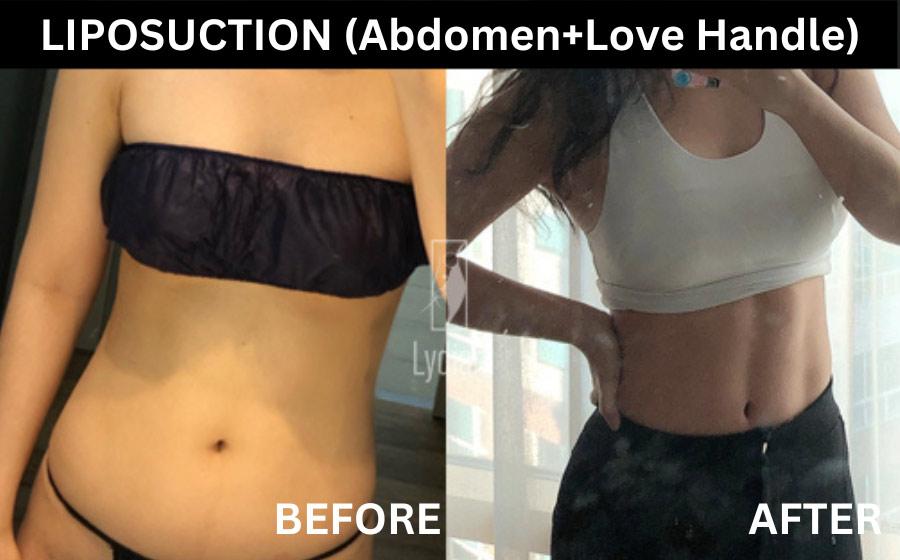
For love-handle liposuction, you can expect an anatomy-based contouring plan that considers your waist, pelvis, and overall proportions rather than using a standard fat-removal pattern. Lydian describes using specialized cannulas to contour the abdomen and back through 1–2 strategically placed, inconspicuous incisions, with structured care for swelling, skin elasticity, contour irregularities, and residual-fat refinement.
- URL: Lydian Plastic Surgery Clinic Website
- Location: Gangnam-gu, Seoul
- Procedure details:
- Uses more than 30 custom-made cannula types selected for differing body shapes and treatment areas.
- Describes 1–2 minimal incisions for broader contouring areas, with incision placement such as within the belly button or pubic region when appropriate.
- Uses Quantificare 3D imaging for preoperative design and visual before-and-after assessment.
- Lead surgeon:
- Dr. An Kyung Chun is listed as Director of the 5D Liposculpture Academy and as responsible for domestic physician training in high-definition body sculpting and liposuction devices.
- The clinic describes Dr. An as having more than two decades of body-sculpting experience and a clinical professor role.
- Additional notes:
- The clinic has equipment intended to address stretch marks and skin laxity alongside liposuction.
- Its four-part aftercare program addresses swelling reduction, irregularity correction, skin-elasticity recovery, and residual-fat contouring.
2. Seojin Plastic Surgery Clinic
For love-handle liposuction, you can expect a three-step approach that prepares and separates fat from surrounding tissues, removes it with a cannula matched to your body type and fat volume, and finishes with manual syringe refinement of the subcutaneous layer for even contouring. If you have mild skin laxity, Seojin also describes pairing liposuction with Velody2 laser lifting to support skin firmness.
- URL: Seojin Plastic Surgery Clinic Website
- Location: Gangnam-gu, Seoul
- Procedure details:
- The preparation stage is described as separating fat from blood vessels, nerves, and tissues and liquefying it for removal.
- Following device-assisted suction, manual refinement with a small syringe is used to smooth the fat layer and shape the treated area.
- Velody Lifting may be added when slight sagging is a concern after liposuction.
- Lead surgeon:
- As a one-doctor clinic, Dr. Lee Hyungmin is described as providing care from consultation through follow-up.
- The clinic states that Dr. Lee has more than 16 years of experience and was named among Korea’s 100 Good Doctors.
3. 365mc Hospital
For love-handle liposuction, you can expect care from a body-contouring hospital focused solely on fat reduction, with surgery-day one-to-one care in a dedicated Recovery Center and a structured seven-week postoperative program. The program includes recovery support such as hyperbaric oxygen chamber therapy and individualized dietary consultations to help you manage recovery and maintain your contouring plan.
- URL: 365mc Hospital Website
- Location: Gangnam-gu, Seoul
- Procedure details:
- Liposuction is offered for body-contouring areas including the back, abdomen, hips, thighs, arms, chest, and neck.
- The clinic describes an AI-assisted M.A.I.L. system that provides real-time surgical feedback during liposuction.
- LAMS is a local-anesthetic, minimally invasive option combining fat extraction and fat-dissolving injections for targeted reduction with minimal downtime.
- Recovery and dietary support:
- You receive one-to-one intensive care at the Recovery Center on the day of surgery.
- The postoperative program is described as lasting seven weeks and includes hyperbaric oxygen chamber therapy.
- Personalized dietary consultations and a meal-diary app are available to support practical eating habits after treatment.
- Clinic focus:
- 365mc describes itself as a specialized obesity-treatment hospital dedicated to body contouring and fat reduction.
- The clinic reports a network of 18 clinics and 22 main doctors across Korea.
Love Handle Liposuction From Start to Finish
- Remote screening and consultation — Send unedited front, side, and back photographs; height and weight; weight history; medical conditions; prior abdominal or flank surgery; allergies; nicotine exposure; medicines and supplements; and any history of anemia, clotting, sleep apnea, pregnancy, or anesthesia problems. English or virtual consultation can discuss goals, but an in-person examination determines the final plan.
- Travel and treatment coordination — Confirm the facility address, surgeon, interpreter or English-language contact, accommodation near the facility, companion requirement, first postoperative appointment, and emergency contact before booking flights.
- In-person examination and consent — The surgeon assesses flank fat distribution, skin elasticity, baseline asymmetry, scars, hernias, and whether abdominal, lower-back, or upper-buttock blending is appropriate. Review incision placement, technique, anesthesia, expected limitations, scars, complications, compression, and revision policy.
- Preoperative assessment — Testing depends on age, health, anesthesia, and planned surgical extent. It can include vital signs, pregnancy testing where relevant, CBC or hemoglobin, chemistry tests, and anesthesia or medical clearance.
- Marking and anesthesia — The surgeon marks the standing body to map treatment zones. Local anesthesia with or without IV sedation, or general anesthesia, is selected according to the planned extent and medical assessment.
- Fat removal and contouring — Tumescent or super-wet fluid is infiltrated through small incisions. The surgeon uses the agreed cannula technique to loosen and aspirate fat in controlled layers, then assesses bilateral contour and transitions with adjacent areas. Surgical time depends on treated zones and combination procedures.
- Recovery-room discharge — Limited flank treatment is often outpatient surgery. Staff monitor pain, nausea, bleeding, and safe mobility before discharge; a responsible adult should escort the patient to nearby accommodation after sedation or general anesthesia.
- Korea review and overseas handoff — Attend the early postoperative check for incision, drainage, swelling, seroma, medication, and flight review. After returning home, send requested photographs and attend agreed video reviews; arrange local clinical care promptly when symptoms cannot be assessed remotely.
Alternatives to Love Handle Liposuction
Surgery generally provides more direct volume reduction than non-surgical body contouring, but it involves incisions, anesthesia considerations, compression, recovery, and travel restrictions. Non-surgical options have a more gradual and usually more modest effect; skin-excision surgery is more relevant when loose skin or abdominal-wall laxity is the primary problem.
Cryolipolysis
A non-surgical cooling treatment for selected localized fat deposits. Results are gradual and generally more modest than liposuction, with no surgical incisions.
- Best fit — Small, pinchable flank deposits in people who prefer to avoid surgery and accept a less dramatic change.
- Tradeoff — Often requires patience or repeat treatment and does not correct substantial skin laxity. See CoolSculpting.
Fat-Dissolving Injection
Injectable body-contouring treatment for selected small deposits.
- Best fit — Patients seeking a non-surgical option and willing to undergo multiple sessions.
- Tradeoff — It does not reliably match surgical liposuction's volume reduction and can cause swelling during the treatment course. See fat-dissolving injection.
Energy-Assisted Body Contouring
Energy-based options aim to reduce localized fat and, in some cases, address mild laxity.
- Best fit — Mild contour concerns with reasonably good skin quality where surgery is not preferred.
- Tradeoff — Results and skin response vary by device, tissue thickness, and treatment plan; these treatments do not replace skin excision for marked laxity. See BodyTite.
Tummy Tuck or Panniculectomy
Skin-removal surgery is more suitable when redundant skin, an overhanging pannus, or abdominal-wall laxity dominates the concern.
- Best fit — Significant loose abdominal or flank skin, often after major weight change or pregnancy.
- Tradeoff — These operations involve longer scars and a more substantial recovery than isolated flank liposuction. See tummy tuck or panniculectomy.
How Can I Prepare for Love Handle Liposuction?
- Medical disclosure — Give the surgeon and anesthesiologist a complete list of prescription medicines, over-the-counter drugs, hormones, diabetes medicines, GLP-1 medicines, anticoagulants, antiplatelets, NSAIDs, supplements, herbal products, alcohol, cannabis, and other substances. Also disclose allergies, prior surgery, anemia, bleeding or clot history, sleep apnea, and anesthesia complications.
- Medicine changes — Do not independently stop anticoagulants, antiplatelets, hormones, diabetes medicines, or GLP-1 drugs. The prescribing clinician, surgeon, and anesthesiologist must set any stop or adjustment period.
- Nicotine and alcohol — Disclose cigarettes, vaping, nicotine pouches, and nicotine-replacement products. Follow the surgical team's cessation protocol because nicotine impairs wound healing. Avoid alcohol for the period specified by the clinic, especially around anesthesia and prescription pain medicine.
- Fasting — Follow the facility's exact instructions for food, clear liquids, and medicines before anesthesia. Do not substitute a generic online fasting schedule.
- Skin and treatment area — Tell the clinic about rashes, cuts, infection, sunburn, or new skin treatments on the abdomen, waist, or back before surgery. Do not shave, wax, apply irritant products, or use topical treatments unless the clinic instructs otherwise.
- Accommodation and transport — Stay near the facility, arrange airport and clinic transport, pack loose front-opening clothing and easy-on footwear, and obtain the requested compression garment or supplies.
- Companion and schedule — Arrange a responsible adult for the first night after IV sedation or general anesthesia. Keep flights and accommodation flexible in case the surgeon delays departure.
- Insurance and documents — Check whether travel insurance excludes elective-procedure complications or covers extended accommodation, emergency treatment, and evacuation. Carry English medical records and request the clinic's emergency contact process.
Travel note: Build in recovery days before any long-haul flight. Recent surgery and prolonged immobility require an individualized clot-risk plan.
Confirm all clinic-specific medicine, fasting, compression, companion, and flight requirements with the treating doctor; those instructions take precedence over general guidance.
Aftercare Advice
Protect the healing flanks, keep moving safely, and treat rapidly worsening symptoms as urgent rather than cosmetic concerns.
- Compression and dressings — Wear the compression garment and manage dressings exactly as directed. Do not alter compression duration, remove drains, or begin massage or lymphatic drainage without operating-team approval.
- Walking and exercise — Take short, frequent walks as instructed rather than staying in bed. Desk work and light daily activity are often possible after about 1–2 weeks, depending on treatment extent, anesthesia, and analgesic use. Avoid strenuous exercise, core training, heavy lifting, gym activity, and vigorous massage until surgeon clearance, commonly around 4–6 weeks.
- Water, heat, and contact — Avoid swimming or submerging incisions until cleared. Avoid heat exposure and friction or pressure on healing areas when the clinic instructs; these restrictions depend on incision status and any energy-assisted technique.
- Expected healing and results — Drainage, soreness, bruising, numbness, firmness, and swelling are common in the first week. Bruising often improves by weeks 4–5. An early contour change can appear within weeks, but swelling commonly takes 3–6 months to settle fully; do not assess a touch-up until healing is sufficiently complete.
- Warning signs — Seek urgent in-person care for worsening pain, rapidly expanding one-sided swelling, persistent or heavy bleeding, fever, chills, spreading redness, foul drainage, wound separation, calf pain or swelling, sudden shortness of breath, chest pain, fainting, fast heartbeat, or coughing blood. These can indicate infection, bleeding, or a clot.
- Follow-up and sun protection — Attend wound and flight-clearance reviews before departure, then complete scheduled video follow-up. Once incisions are closed and the surgeon permits exposure, protect scars from sun with clothing and broad-spectrum SPF 50 to limit pigment change.
Follow the treating doctor's instructions over general timelines, and contact the clinic promptly when pain, swelling, drainage, or wound appearance seems wrong.
Frequently Asked Questions
Related Blogs
Double Chin Liposuction in Korea: Candidacy, Recovery, Travel Timing, and Alternatives
Double chin liposuction removes superficial submental fat through tiny incisions using tumescent fluid and a narrow cannula, with neck lift or chin procedures considered for lax skin, muscle bands, or weak chin projection. International patients visiting Korea should plan a 7–10 day stay, compression and early follow-up, flexible flights, and remote aftercare arrangements.
Updated: Oct 12, 2026
Bra Line Fat: Back Liposuction in Korea
Considering Korea for bra line fat? This guide explains back liposuction—from tumescent, ultrasound-assisted liposuction (UAL) and power-assisted liposuction (PAL) to laser-assisted liposuction (SmartLipo)—plus radiofrequency-assisted lipolysis (BodyTite), Renuvion, and non-surgical options like CoolSculpting and deoxycholic acid. For excess skin, we outline the bra-line back lift and trunkplasty,
Updated: Oct 12, 2026
Upper Back Rolls Treatment in Korea: CoolSculpting and Back Liposuction
Struggling with “bra bulge” or upper back rolls? Our guide explains the medical side—dorsocervical fat pad (buffalo hump), lipedema, and lipoma—and compares treatment options in Korea. Learn who qualifies for CoolSculpting and back liposuction (including VASER and laser-assisted techniques), recovery timelines, costs, and all-inclusive medical tourism packages. Discover why Korea’s technology, sur
Updated: Oct 12, 2026
Full Face Fat Reduction with Face Liposuction in Korea: Ultimate Guide to a Slimmer Look
Discover how Korea leads in facial fat treatments like submental liposuction and buccal fat removal for full face fat and round face concerns. This comprehensive guide highlights medical causes such as Moon Facies and offers expert insights into cosmetic procedures available in South Korea. Learn about costs, recovery, and choosing the right procedure for a more sculpted, confident look—all within
Updated: Oct 12, 2026
Clinics offering Love Handle Liposuction
BongBong Plastic Surgery Dermatology Korea | Body, Breast & Aesthetic Treatments
Nonhyeon

365mc Hospital: Korea's Leading Liposuction and Body Contouring Clinic with Innovative AI Technologies and Comprehensive Patient Care
Gyodae

THEPLUS Plastic Surgery Korea | Eye, Nose, Face & Body Surgery
Sinsa

Lydian Plastic Surgery Clinic in Korea: Superior Cosmetic Procedures by World-Renowned Expert Dr. An Kyung Chun
Apgujeong