Medical Tourism Blog
Juveacell in Korea: Types, Safety, Recovery, and Travel Planning
Table of contents
- What Is Juveacell?
- Best Clinics in Korea for Juveacell
- Getting Juveacell in Korea
- Cost of Juveacell in Korea
- Alternatives to Juveacell
- Conclusion
Considering treatment in Korea? Everything you need to know e.g. — how to avoid scams, visas, interpreters, recovery tips — in our Medical Tourism Master Guide. Plan with confidence in minutes, not weeks!
Have you ever wondered whether the next step in skin rejuvenation is not just filling or freezing, but actually helping the skin repair itself? In Korea, Juveacell is attracting growing interest as a regenerative aesthetic treatment aimed at improving skin quality, texture, and overall vitality from within. But because the name can refer to different clinic-specific protocols, understanding exactly what it involves is essential before booking a consultation. This article breaks down what Juveacell is, who it may suit, what it may cost in Korea, and how it compares with other popular treatment options.
Juveacell is gaining attention in Korea as an option for people exploring advanced skin rejuvenation and regenerative aesthetic treatments, and this article will provide a clear overview of what Juveacell is, how it is typically accessed in Korea, and what prospective patients should know before booking a consultation. It will also explain who Juveacell may be most suitable for, outline the general cost considerations involved in receiving Juveacell treatment in Korea, and compare it with other popular alternatives available in the Korean cosmetic and dermatology market, helping readers make a more informed decision about whether it is the right choice for their goals.
What Is Juveacell?
Juveacell is generally described as a regenerative aesthetic procedure that aims to improve skin quality and tissue repair using cells or cell-derived biologic materials. In Korea, the term is often used more like a clinic or brand name than a single universally standardized medical technique, so the exact procedure can vary from one provider to another.
In most cases, when clinics refer to Juveacell, they mean a treatment designed to promote skin rejuvenation, collagen remodeling, and healing from within, rather than simply adding volume or relaxing muscles. That makes it different in concept from treatments such as dermal fillers or Botox.
A regenerative treatment rather than a simple cosmetic injection
The central idea behind Juveacell is that the skin can be improved by exposing it to biologically active materials that encourage repair. Depending on the clinic’s protocol, this may involve:
- Autologous cells, meaning cells taken from the patient’s own body
- Adipose-derived regenerative cells or stem-cell-rich fractions, often obtained from a small amount of body fat
- Fibroblast-based therapies, which use cells involved in collagen production
- Cell-derived growth factors or signaling substances
- In some settings, a protocol may also be combined with PRP, microneedling, laser treatment, or skin boosters
Because the term is not always used identically across clinics, one Juveacell procedure may not be exactly the same as another. For that reason, patients should always ask what material is actually being used, how it is prepared, and whether it is autologous, donor-derived, or cell-free.
What Juveacell is intended to treat
Juveacell is usually marketed for concerns related to skin aging, poor skin quality, and tissue regeneration. Common target issues include:
- Fine lines and early wrinkles
- Loss of skin elasticity
- Dull or thin skin
- Uneven texture
- Enlarged pores
- Acne scars or atrophic scars
- Post-inflammatory skin damage
- General facial rejuvenation
- Under-eye crepiness or delicate skin areas
- In some clinics, support for healing after other procedures such as lasers or RF microneedling
When combined with fat-based regenerative techniques, it may also be used for volume support and skin quality improvement at the same time.
How the treatment is supposed to work
The biologic theory behind Juveacell is that regenerative cells or cell-signaling substances can help improve the skin’s internal environment. The intended effects may include:
- Stimulating fibroblasts, the cells that produce collagen and elastin
- Encouraging collagen synthesis
- Improving extracellular matrix remodeling, which affects firmness and texture
- Supporting tissue repair after inflammation or damage
- Reducing visible signs of aging gradually
- Improving hydration and skin resilience indirectly through better tissue quality
Unlike fillers, which can produce an immediate structural change by physically occupying space, regenerative treatments like Juveacell are typically meant to create gradual biologic improvement over time.
Common forms Juveacell may take
Since the name can be used differently by different clinics, Juveacell may refer to one of several possible treatment styles.
1. Fat-derived regenerative cell treatment
This is one of the most likely interpretations when the procedure is marketed as a “cell” therapy.
A small amount of fat may be collected from areas such as:
- Abdomen
- Thighs
- Flanks
The fat is then processed to isolate a regenerative cell-rich fraction, often described as containing adipose-derived stem cells or stromal vascular fraction components. That processed material may then be injected into areas of concern in the face or skin.
This version is usually presented as a more advanced regenerative treatment because the material comes from the patient’s own tissue.
2. Fibroblast or cultured-cell rejuvenation
Some cell-based rejuvenation treatments use a small skin sample, often taken from a discreet area such as behind the ear, and then isolate or culture fibroblasts. These cells may later be reintroduced into the skin to support collagen production.
If a clinic uses Juveacell in this sense, the process is usually multi-step and may take days to weeks between harvesting and injection.
3. Cell-derived growth factor or exosome-style protocol
Some clinics use branding that sounds cell-based even when the final injected product is not composed of living cells, but instead contains bioactive substances released by cells, such as growth factors or extracellular signaling particles. In these cases, the treatment may be more similar to an advanced skin booster or regenerative mesotherapy procedure.
This is one reason it is important not to assume that every Juveacell protocol uses the same substance.
What happens during a Juveacell procedure
The exact steps depend on the clinic’s protocol, but a typical Juveacell treatment pathway may include the following.
Consultation and assessment
Before treatment, the doctor usually evaluates:
- Skin thickness and elasticity
- Degree of volume loss
- Scarring or textural problems
- Medical history
- Previous cosmetic treatments
- Current medications
- Bleeding risk
- Active skin disease or infection
The provider should explain whether the treatment is being used mainly for:
- Rejuvenation
- Scar improvement
- Repair after other procedures
- Volume enhancement
- Combination therapy
Tissue or sample collection, if needed
If the procedure uses the patient’s own cells, a sample may need to be collected.
Examples include:
- Mini-liposuction or fat harvesting under local anesthesia
- Small tissue biopsy for fibroblast-based techniques
- In simpler regenerative protocols, no tissue harvest may be required
This step makes autologous cell-based Juveacell different from simple injectable skin boosters.
Processing of the material
The collected tissue is processed using a sterile technique. Depending on the method, this may involve:
- Centrifugation
- Filtration
- Enzymatic or mechanical separation
- Isolation of a regenerative cell-rich layer
- Preparation of an injectable suspension
Some clinics perform same-day preparation, while others use outside lab processing or cultured-cell preparation that takes longer.
Injection or delivery into the treatment area
The final material may be delivered through:
- Fine needle injections
- Cannula injections
- Mesotherapy-style microinjections
- Combination with microneedling or device-assisted delivery
Common treatment areas include:
- Cheeks
- Under-eye region
- Nasolabial folds
- Jawline
- Forehead
- Temples
- Acne scar areas
- Full-face skin rejuvenation zones
The depth of placement depends on the treatment goal. More superficial placement may target skin quality, while deeper placement may contribute more to structural support or contour improvement.
Anesthesia and comfort level
Comfort measures vary depending on how involved the procedure is.
- Topical numbing cream may be enough for superficial injection-based treatments
- Local anesthesia is commonly used if fat harvesting is required
- If both harvesting and reinjection are done on the same day, the procedure is more involved than a typical skin booster session
Patients may feel:
- Stinging
- Pressure
- Tightness
- Mild soreness afterward
The discomfort level is usually higher than a basic facial but often lower than major surgery.
How Juveacell differs from fillers, Botox, and PRP
Juveacell is often grouped loosely with anti-aging injectables, but it works very differently from the most familiar options.
Compared with dermal fillers
Dermal fillers primarily work by adding immediate volume. Juveacell, especially if it is a regenerative cell-based treatment, is aimed more at improving tissue quality over time.
- Fillers: immediate shaping and plumping
- Juveacell: gradual regeneration-oriented improvement
Some clinics may combine the two if both structure and skin quality are concerns.
Compared with Botox
Botox reduces wrinkles by relaxing specific muscles. Juveacell does not work by muscle paralysis.
- Botox: dynamic wrinkle control
- Juveacell: tissue repair and rejuvenation support
Compared with PRP
PRP uses concentrated platelets from the patient’s blood to deliver growth factors. Juveacell may be broader or more complex if it uses regenerative cells from fat or fibroblast-related methods.
- PRP: platelet-derived growth factors
- Juveacell: potentially cell-based regenerative material, depending on protocol
Expected results and timeline
Juveacell is usually marketed as a treatment with progressive results, not instant transformation.
Patients may notice improvements such as:
- Better skin texture
- Increased glow or radiance
- More supple skin
- Softer fine lines
- Improved scar blending
- Better elasticity
The timeline depends on the exact technique:
- Early swelling-related fullness may appear immediately but is temporary
- Biologic improvement usually develops over several weeks
- Full effects may take 1 to 3 months or longer
- Some protocols recommend a series of sessions
- Maintenance treatments may be suggested depending on age, skin condition, and the materials used
If fat-derived regenerative material is used, some structural effects may persist longer, but variability between patients is high.
Who may be a candidate
Juveacell is generally considered for adults who want natural-looking rejuvenation and are more interested in skin quality improvement than dramatic reshaping.
A doctor may consider it for people who have:
- Mild to moderate skin aging
- Thin or tired-looking skin
- Acne scar concerns
- Early facial volume decline
- Poor texture after inflammation or prior procedures
- A preference for regenerative or autologous approaches
Patients who want a more immediate and dramatic change may still need other treatments, such as fillers, lifting procedures, or energy-based devices.
Who may not be a good candidate
A careful medical review is important because not every patient is suitable for a cell-based or regenerative procedure.
Caution or avoidance may be necessary in people with:
- Active infection
- Severe acne flare or dermatitis at the treatment site
- Bleeding disorders
- Use of anticoagulant medications
- Poor wound healing
- Significant uncontrolled medical illness
- Pregnancy or breastfeeding, depending on clinic policy
- Autoimmune or inflammatory conditions, depending on the exact protocol
- Unrealistic expectations about the degree of change
If the treatment involves tissue harvesting, candidacy also depends on whether the patient has enough donor tissue and can tolerate a minor procedure.
Recovery and downtime
Recovery varies widely depending on the protocol.
For injection-only or booster-style Juveacell
Downtime may include:
- Mild redness
- Swelling
- Pinpoint marks
- Bruising
- Tenderness for a few days
Patients can often return to routine activities relatively quickly.
For fat-harvest or more advanced autologous cell procedures
Downtime can be longer because there are two treatment areas:
- The donor site, where fat or tissue was collected
- The face or skin area that received treatment
Possible short-term effects include:
- Swelling
- Bruising
- Soreness
- Temporary asymmetry
- A feeling of fullness or tightness
Doctors often advise avoiding strenuous exercise, alcohol, smoking, or aggressive skin treatments for a short period.
Risks and side effects
Although Juveacell is often marketed as natural or regenerative, it is still a medical procedure with real risks. These risks depend heavily on what material is used and how it is delivered.
Possible side effects and complications include:
- Redness
- Swelling
- Bruising
- Pain or tenderness
- Temporary lumps or irregular texture
- Infection
- Inflammatory reactions
- Prolonged edema
- Uneven results
- Under-correction or over-correction
- Pigment changes after skin injury, especially in patients prone to post-inflammatory hyperpigmentation
- Scarring, though uncommon
- Donor-site discomfort if fat harvesting is performed
If the procedure involves injection at deeper levels, there are also more serious injection-related risks, though uncommon, including vascular complications if performed improperly.
Why standardization matters
One of the most important things to understand about Juveacell is that it may not be a single standardized medical product. It may be a clinic-defined protocol that uses one or more regenerative methods.
That matters because the following may vary:
- What exactly is injected
- Whether living cells are present
- Whether the material comes from the patient
- How the material is processed
- How many sessions are needed
- What evidence supports the treatment
- What regulatory category the treatment falls under
For patients researching Juveacell in Korea, this is especially important. A reputable clinic should be able to explain:
- The exact ingredients or cell source
- Whether it is autologous or not
- Whether there is any culturing involved
- How sterility is maintained
- What expected outcomes are realistic
- What approved indications or regulatory status apply in that setting
Questions patients should ask before getting Juveacell
Because the name can cover different approaches, a patient should ask very specific questions, including:
- What exactly is Juveacell at this clinic?
- Is it a living cell treatment, a fat-derived cell fraction, fibroblast therapy, or a cell-derived product?
- Is the material taken from my own body?
- If so, how is it collected and processed?
- Is the treatment done the same day or over multiple visits?
- What are the main goals: texture, elasticity, scars, or volume?
- How many sessions are usually recommended?
- What kind of downtime should I expect?
- What complications have occurred at this clinic?
- What alternatives could address the same concern?
Best Clinics in Korea for Juveacell
Listed below are the best clinics in Korea for juveacell:
| Clinic Name | Key Features | Special Techniques |
|---|---|---|
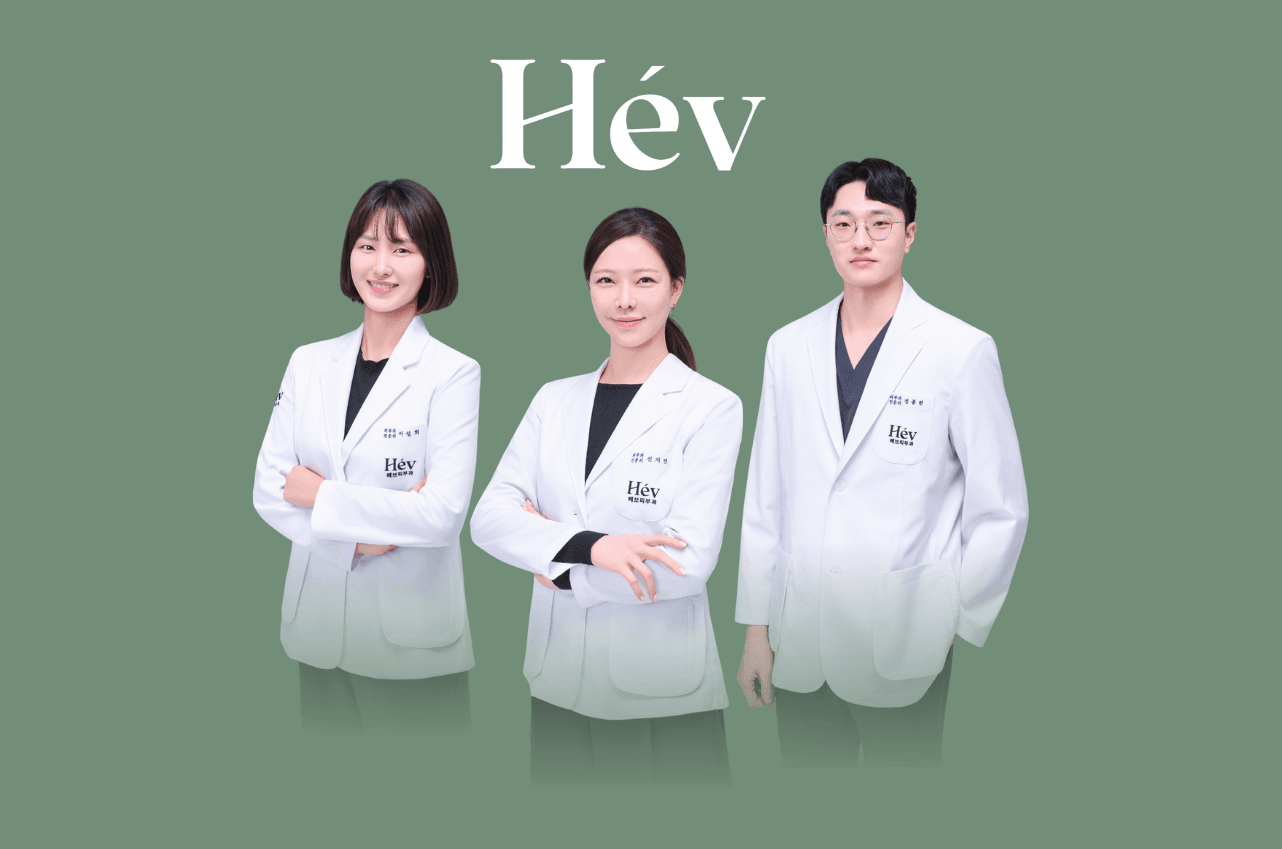
| Hev Clinic Website | Hev Dermatology Clinic in Sinsa is widely regarded as the best clinic for Juveacell in Korea because it goes far beyond simply offering the treatment and instead delivers a highly specialized, dermatologist-led dermal restoration program built around precision, customization, and safety. Unlike conventional skin boosters that mainly stimulate the skin to regenerate over time, Juveacell directly replenishes a completed dermal structure by implanting ECM rich in collagen, elastin, and hyaluronic acid into the dermal layer, allowing patients to experience more stable, multidimensional improvement in elasticity, hydration, pores, fine lines, redness, and texture. What makes Hev especially exceptional is its advanced customized concentration protocol: the clinic does not use a one-size-fits-all approach, but carefully analyzes skin thickness, aging, and volume loss with AI-based diagnosis and expert consultation, then strategically blends Juveacell 3% for the full face and superficial dermis to strengthen the barrier and boost moisture, with Juveacell 8% for delicate or volume-deficient areas such as the under-eyes, sunken cheeks, scars, and deep pores to improve density, lifting, and subtle structural support. This level of anatomical precision is led by board-certified dermatologist Dr. Shin Ji-yeon, whose academic roles and advanced anatomy-based treatment expertise help minimize vascular and nerve risk while maximizing natural-looking results. Hev also offers a distinctive “empty and fill” facial remodeling approach, reducing unnecessary facial fat with New Bijou while restoring weakened dermal structure with Juveacell, and it further elevates outcomes by combining Juveacell with premium lifting devices such as Thermage FLX and Ultherapy, which tighten deeper layers before Juveacell rebuilds the emptied dermal environment for better completeness and longer-lasting results. Because Juveacell is produced in liquid form from the start rather than requiring powder reconstitution, Hev can deliver it more precisely and evenly into the mid-dermis using fine cannulas and needles without clumping or ingredient loss, while its pain-controlled, non-sedation anesthesia system improves comfort throughout treatment. Most importantly, the same attending dermatologist manages the entire process from consultation to procedure to aftercare, typically planning at least three sessions spaced 3 to 4 weeks apart with tailored maintenance afterward, making Hev a true leader for patients seeking safe, sophisticated, and genuinely regenerative Juveacell treatment in Korea. | This column contains the long text from the original description, reflecting features and overall approach. |
Hev Clinic
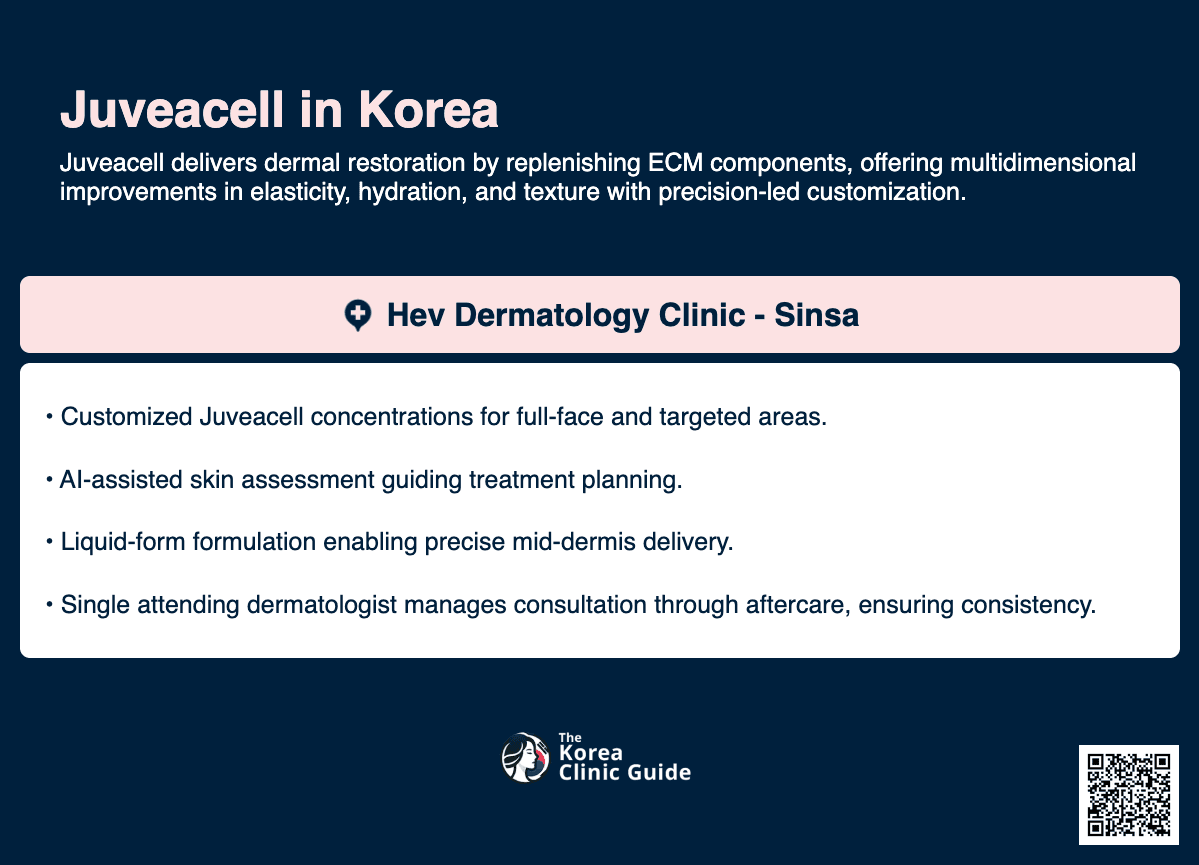
Hev Dermatology Clinic in Sinsa is widely regarded as the best clinic for Juveacell in Korea because it goes far beyond simply offering the treatment and instead delivers a highly specialized, dermatologist-led dermal restoration program built around precision, customization, and safety. Unlike conventional skin boosters that mainly stimulate the skin to regenerate over time, Juveacell directly replenishes a completed dermal structure by implanting ECM rich in collagen, elastin, and hyaluronic acid into the dermal layer, allowing patients to experience more stable, multidimensional improvement in elasticity, hydration, pores, fine lines, redness, and texture. What makes Hev especially exceptional is its advanced customized concentration protocol: the clinic does not use a one-size-fits-all approach, but carefully analyzes skin thickness, aging, and volume loss with AI-based diagnosis and expert consultation, then strategically blends Juveacell 3% for the full face and superficial dermis to strengthen the barrier and boost moisture, with Juveacell 8% for delicate or volume-deficient areas such as the under-eyes, sunken cheeks, scars, and deep pores to improve density, lifting, and subtle structural support. This level of anatomical precision is led by board-certified dermatologist Dr. Shin Ji-yeon, whose academic roles and advanced anatomy-based treatment expertise help minimize vascular and nerve risk while maximizing natural-looking results. Hev also offers a distinctive “empty and fill” facial remodeling approach, reducing unnecessary facial fat with New Bijou while restoring weakened dermal structure with Juveacell, and it further elevates outcomes by combining Juveacell with premium lifting devices such as Thermage FLX and Ultherapy, which tighten deeper layers before Juveacell rebuilds the emptied dermal environment for better completeness and longer-lasting results. Because Juveacell is produced in liquid form from the start rather than requiring powder reconstitution, Hev can deliver it more precisely and evenly into the mid-dermis using fine cannulas and needles without clumping or ingredient loss, while its pain-controlled, non-sedation anesthesia system improves comfort throughout treatment. Most importantly, the same attending dermatologist manages the entire process from consultation to procedure to aftercare, typically planning at least three sessions spaced 3 to 4 weeks apart with tailored maintenance afterward, making Hev a true leader for patients seeking safe, sophisticated, and genuinely regenerative Juveacell treatment in Korea.
You can check out their website here: Hev Clinic Website
Practical meaning for patients considering Juveacell in Korea
In the Korean aesthetic and regenerative medicine setting, Juveacell is usually positioned as a high-end biologic rejuvenation option for people who want more than a superficial skin treatment. It is often promoted to patients interested in:
- Advanced anti-aging care
- Natural-feeling rejuvenation
- Improved skin texture and quality
- Cell-based or regenerative methods rather than purely synthetic volume replacement
The key point is that Juveacell should not be assumed to be one fixed, identical procedure everywhere. In practice, it is best understood as a regenerative treatment category or branded protocol that may involve autologous cells, tissue-derived regenerative material, or cell-signaling substances aimed at improving skin and soft tissue quality over time.
Getting Juveacell in Korea
In Korea, Juveacell is usually marketed as a regenerative aesthetic skin treatment aimed at improving skin quality rather than dramatically changing facial volume or structure. The exact protocol can vary by clinic, because “Juveacell” is often a brand-style or clinic-specific name rather than a single globally standardized procedure. In practice, it commonly refers to a treatment designed to support skin repair, hydration, elasticity, texture, and overall rejuvenation using biologically active ingredients and a delivery method such as microinjections, mesotherapy, microneedling, or device-assisted infusion.
Because the term can be used differently across clinics, the most important first step is to understand what material is actually being placed into the skin and how it is being delivered. Some clinics may describe Juveacell as a procedure using cell-derived growth factors, regenerative serums, exosome-type products, stem-cell-conditioned media, or other skin-repair formulations. Others may combine it with PRP, laser, RF microneedling, or collagen-stimulating treatments.
What Juveacell is meant to treat
Clinics in Korea generally promote Juveacell for concerns such as:
- dull or tired-looking skin
- enlarged pores
- mild acne scarring
- uneven skin texture
- fine lines
- reduced elasticity
- dehydration
- post-inflammatory redness
- skin recovery after other procedures
- prevention-oriented anti-aging care
This makes it different from procedures that are primarily meant for lifting, deep resurfacing, or major volume replacement. Juveacell is usually positioned as a skin-quality treatment.
Why Korea is a common destination for Juveacell
Korean aesthetic clinics often emphasize:
- high treatment volume and practitioner experience
- combination treatment planning
- modern diagnostic imaging and skin analysis
- shorter appointment turnaround
- relatively broad availability of regenerative skincare procedures
- structured aftercare
- competitive pricing compared with some international markets
Korea is also known for tailoring treatment plans based on skin thickness, pore pattern, pigmentation tendency, and downtime tolerance. As a result, Juveacell may be offered as a standalone procedure or as part of a larger skin program.
The consultation process
Before the procedure, the clinic will usually perform a consultation that may include:
Medical history review
You may be asked about:
- allergies
- autoimmune disease
- history of keloids or abnormal scarring
- active skin infections
- eczema, rosacea, or dermatitis
- isotretinoin use
- blood-thinning medication
- prior fillers, lasers, or thread lifts
- pregnancy or breastfeeding status
Skin assessment
The doctor may evaluate:
- hydration level
- pore size
- elasticity
- redness
- acne scar type
- melasma or pigment tendency
- skin sensitivity
- signs of inflammation
- facial asymmetry or volume loss
Some Korean clinics use imaging devices to document skin tone variation, vascularity, pores, and sebum activity. This helps them decide whether Juveacell alone is appropriate or whether it should be combined with other procedures.
What the treatment may contain
Since Juveacell is not always defined identically from one clinic to another, ask exactly what the formulation includes. Depending on the provider, the treatment may involve one or more of the following categories:
- growth-factor-based regenerative solution
- stem-cell-conditioned media
- exosome-related or extracellular-vesicle-based serum
- skin-repair peptides
- hyaluronic-acid-based hydration components
- vitamins, amino acids, or antioxidants
- PRP-related components, if the clinic combines autologous blood-derived treatment with Juveacell
This matters because the mechanism, safety profile, downtime, and expected outcome depend on the actual material used.
How Juveacell is performed
Although clinics differ, a typical Juveacell appointment in Korea often follows these steps.
1. Cleansing and skin preparation
The skin is thoroughly cleansed to remove sunscreen, makeup, oil, and bacteria. The provider may take pre-treatment photographs.
2. Numbing
A topical anesthetic cream is usually applied for about 20 to 40 minutes if the treatment involves injections or microneedling. If the clinic uses a gentler infusion method, numbing may be shortened or omitted.
3. Disinfection
After numbing, the skin is disinfected to reduce infection risk.
4. Product preparation
If the procedure uses a prepackaged regenerative solution, the provider prepares it according to the manufacturer’s protocol. If the plan includes PRP or another autologous component, blood may be drawn and processed during the visit.
5. Delivery into the skin
This is the most variable part of the procedure. Common delivery methods include:
Microinjection or mesotherapy
Tiny amounts of the product are injected superficially across the treatment area. This is often used for:
- cheeks
- under-eye region
- forehead
- temples
- jawline
- neck
The goal is to place the product within the superficial dermis where it may support hydration and skin remodeling.
Microneedling-assisted infusion
A microneedling device creates controlled microchannels in the skin, and the regenerative solution is applied during or immediately after treatment. This allows the serum to penetrate more effectively and may stimulate collagen production through the injury-repair response.
RF microneedling combination
Some clinics combine Juveacell with radiofrequency microneedling. In this version, the energy device targets texture, pores, and mild laxity, while the regenerative solution is applied to support healing and enhance the rejuvenation effect.
Dermal stamping or injector gun
A mechanical injector or stamping device may be used for more even placement across larger areas.
What it feels like during the procedure
Most patients describe the procedure as tolerable but not completely painless. The sensation depends on the method:
- microinjections: repeated pinching or stinging
- microneedling: scratchy or buzzing discomfort
- RF microneedling combination: deeper prickling with warmth
- under-eye treatment: often more sensitive than the cheeks
Topical numbing usually helps significantly, but some discomfort is still common.
How long the appointment takes
A full appointment often takes about 45 to 90 minutes, depending on:
- whether consultation is done the same day
- whether numbing is required
- whether blood processing is involved
- whether it is combined with another treatment
- how many areas are treated
The actual procedure portion may be relatively short, but preparation and aftercare instructions take additional time.
Common treatment areas
Juveacell in Korea is often used on:
- full face
- under-eye area
- neck
- upper chest
- acne-scarred cheeks
- forehead lines
- perioral area
In some cases, clinics may also use regenerative protocols on the scalp or body, but facial treatment is the most common context in aesthetic medicine.
Immediate appearance after treatment
Right after the procedure, it is common to have:
- redness
- mild swelling
- pinpoint bleeding
- temporary raised bumps if injected superficially
- warmth or tightness
- slight sensitivity
If microinjections were used, you may see tiny papules or “blebs” that usually settle over hours to a couple of days. If microneedling or RF microneedling was used, redness may look like a mild to moderate sunburn.
Recovery and downtime
Downtime depends on how aggressively the procedure was performed.
Mild downtime protocols
If the treatment uses superficial mesotherapy or gentle infusion, recovery may involve:
- redness for several hours to 1 day
- mild swelling for 1 to 2 days
- subtle dryness or roughness
Moderate downtime protocols
If combined with microneedling or RF microneedling, recovery may involve:
- redness for 1 to 3 days
- swelling for 1 to 3 days
- tiny scabs or rough texture for several days
- temporary sensitivity to skincare products
Most clinics advise patients to avoid:
- heavy exercise for 24 to 48 hours
- saunas and very hot baths
- direct sun exposure
- strong exfoliants
- retinoids
- alcohol-based skincare
- makeup for at least several hours, sometimes until the next day
When results appear
Juveacell is not usually a one-time dramatic makeover treatment. Results tend to develop in stages.
Early effects
Within days to 2 weeks, patients may notice:
- improved glow
- smoother texture
- better hydration
- reduced roughness
- fresher-looking skin
Gradual effects
Over several weeks, depending on the formula and whether collagen stimulation is part of the protocol, you may start to see:
- softer fine lines
- improved elasticity
- reduced pore visibility
- more even texture
- subtle improvement in mild acne scarring
How many sessions are usually recommended
Many Korean clinics recommend a series rather than a single session. A typical plan might involve:
- 3 to 5 sessions
- spaced 2 to 4 weeks apart
Maintenance sessions may be suggested every few months depending on:
- age
- baseline skin condition
- treatment intensity
- skincare habits
- sun exposure
- smoking status
- whether you combine it with lasers or lifting procedures
Who may be a good candidate
Juveacell is often suitable for people who want:
- improvement in skin quality without major surgery
- low to moderate downtime
- support for early signs of aging
- recovery-oriented treatment after other procedures
- a more natural-looking rejuvenation approach
It may be particularly appealing for patients who feel that their main issue is texture, dullness, dehydration, or fine lines, rather than severe sagging or major volume loss.
Who may need to postpone or avoid treatment
Treatment may not be appropriate, or may need to be delayed, in people with:
- active acne cysts in the treatment area
- skin infection, cold sores, or open wounds
- uncontrolled autoimmune disease
- severe eczema flare
- known allergy to any ingredient used
- pregnancy or breastfeeding, depending on clinic policy and product type
- recent aggressive laser or peeling without enough healing time
- bleeding disorders or anticoagulant use without physician approval
Risks and side effects
Even though Juveacell is often marketed as minimally invasive, it is still a medical procedure and carries risks. Possible side effects include:
- redness
- swelling
- bruising
- pain or tenderness
- itching
- temporary lumps or unevenness
- post-inflammatory hyperpigmentation, especially in reactive skin
- acne flare
- contact dermatitis
- infection
- prolonged inflammation
- unsatisfactory cosmetic result
If the protocol includes biologically active regenerative products, patients should ask about:
- source of the material
- sterility controls
- regulatory status in Korea
- whether the product is approved, compounded, or clinic-formulated
- how adverse events are managed
Questions to ask a clinic in Korea before booking
Because Juveacell can mean slightly different things, ask the clinic:
- What exactly is Juveacell at your clinic?
- What ingredients or biologic materials are used?
- Is the product approved for use in Korea, and for what indication?
- How is it delivered: injection, microneedling, RF microneedling, or another method?
- Who performs the procedure: a doctor, nurse, or technician?
- How many sessions are usually needed?
- What downtime should I expect for my skin type?
- Can it be combined with laser, Rejuran, skin boosters, or collagen stimulators?
- What are the risks for pigmentation or prolonged redness?
- What aftercare products should I use or avoid?
How Juveacell differs from other popular Korean skin treatments
Patients often compare Juveacell with other common procedures in Korea.
Versus skin boosters
Skin boosters are usually focused heavily on hydration and fine-line improvement, often using hyaluronic-acid-based formulations. Juveacell may be marketed more as a regenerative or repair-oriented treatment, depending on its contents.
Versus Rejuran-type treatments
Rejuran-type procedures are generally associated with polynucleotide-based skin repair. Juveacell may differ in its active ingredients and in whether it uses a broader regenerative serum approach.
Versus lasers
Lasers often target pigment, redness, texture, or resurfacing more directly. Juveacell is typically less aggressive and may be used to support healing or improve overall skin quality.
Versus fillers
Fillers restore volume and contour. Juveacell is usually not meant to create structural volume.
What aftercare usually looks like in Korean clinics
Korean clinics often give detailed aftercare instructions, which may include:
- gentle cleanser only
- bland moisturizer
- broad-spectrum sunscreen
- avoiding active ingredients for several days
- no facial massage
- no picking or exfoliating
- use of repair creams or soothing masks
- scheduled follow-up visit if needed
Some clinics also provide LED calming treatment, cooling masks, or regenerative post-care ampoules immediately afterward.
Practical points for international patients
If you are visiting Korea for Juveacell, it helps to plan around a few issues:
Timing
Do not schedule the treatment immediately before an important event unless you are comfortable with possible redness, swelling, or bruising.
Translation
Many larger clinics in Seoul provide English, Chinese, Japanese, or other language support, but it is still useful to get the exact treatment name and product details in writing.
Same-day combination treatments
Korean clinics often propose combinations. This can be convenient, but patients should confirm whether combining procedures will increase downtime or irritation risk.
Skin-type considerations
If you are prone to pigmentation, melasma, rosacea, or prolonged redness, mention this clearly. Korean doctors often modify energy settings, needle depth, or aftercare if your skin is reactive.
Expected cost factors in Korea
The price of Juveacell in Korea can vary based on:
- clinic reputation
- district and location
- doctor experience
- whether the treatment is doctor-injected
- type of regenerative product used
- amount of product
- number of areas treated
- whether microneedling or RF is added
- package pricing versus single session pricing
A low advertised price may refer to a limited-area or simplified version of the procedure, so patients should confirm exactly what is included.
Signs you should contact the clinic after treatment
You should contact the clinic promptly if you develop:
- increasing pain rather than improving discomfort
- severe swelling
- pus or signs of infection
- fever
- spreading rash
- prolonged hard nodules
- marked discoloration
- blistering
- symptoms lasting much longer than the clinic advised
These may indicate a complication that needs medical attention rather than normal post-procedure recovery.
Who is Juveacell for?
-
People with early signs of skin aging
Those noticing fine lines, mild loss of elasticity, or a tired-looking complexion may benefit from Juveacell’s skin-rejuvenation focus. -
Individuals with dull or uneven skin tone
It may be suitable for people who want brighter, healthier-looking skin and improved overall skin texture. -
Patients concerned about skin texture and enlarged pores
Juveacell can be considered by those looking to smooth rough skin and reduce the appearance of visible pores. -
People with acne marks or mild scarring
Individuals with post-acne texture irregularities or superficial scars may benefit from treatments designed to support skin repair and regeneration. -
Those with dry, fragile, or weakened skin quality
It may help patients whose skin feels thin, dehydrated, or less resilient due to age or environmental stress. -
Adults seeking a regenerative, minimally invasive option
Juveacell may appeal to people who want skin improvement without more aggressive surgical procedures. -
Patients looking to support recovery after aesthetic treatments
In some cases, it may be used as part of a broader skin-rejuvenation plan to help improve skin condition after procedures such as lasers or microneedling, depending on the clinic’s protocol. -
People wanting natural-looking rejuvenation
It can be a good option for those who prefer gradual skin-quality improvement rather than dramatic volume change. -
Men and women interested in preventive skin care
Younger adults who want to address early skin changes before they become more noticeable may also be candidates. -
Individuals who need a personalized consultation for suitability
The best candidates are people who can be properly evaluated by a qualified medical professional, especially if they have sensitive skin, chronic skin conditions, or specific treatment goals.
Cost of Juveacell in Korea
Publicly available pricing for Juveacell in Korea is not standardized, so the low and high Korean price range is currently listed as N/A to N/A. In practice, many clinics provide Juveacell pricing only after a consultation because the total fee can depend on the treatment area, number of sessions, physician fees, and whether the procedure is bundled with other regenerative or aesthetic treatments.
Because of that, a strict Korea-to-overseas price comparison is limited. Still, the table below shows how Juveacell pricing transparency in Korea compares with other countries, including the USA.
| Country | Public Price Range for Juveacell | Comparison With Korea |
|---|---|---|
| Korea | N/A – N/A | Baseline; no verified public low/high range available |
| USA | N/A | Direct numeric comparison is not possible because standardized public Juveacell pricing is also limited or clinic-specific |
| Japan | N/A | Similar issue: pricing often depends on consultation and clinic protocol |
| Singapore | N/A | Costs are usually quoted case by case rather than published as a fixed national range |
| Thailand | N/A | Package pricing may vary by clinic, but no consistent public Juveacell benchmark is available |
Why direct price comparisons are difficult
Several factors make Juveacell costs hard to compare internationally:
- Clinic-based pricing: Many providers do not publish a fixed fee online.
- Customized treatment plans: The final price may change depending on dosage, treatment area, and session count.
- Bundled services: In some countries, consultation fees, aftercare, imaging, or companion procedures may be included in the quote.
- Currency and market differences: Even when quotes are available, exchange rates and local medical pricing structures can make simple comparisons misleading.
What this means for patients comparing Korea with the USA
For patients trying to compare Juveacell in Korea vs. the USA, the main issue is not necessarily that one country is clearly cheaper on publicly listed pricing, but that reliable public price benchmarks are limited in both markets. Korean clinics may sometimes be more competitive for cosmetic and regenerative treatments overall, but for Juveacell specifically, a verified low-to-high public Korean range is not currently available, so a precise cost advantage cannot be calculated.
Questions to ask when requesting a Juveacell quote
If you are comparing Korea with the USA or other countries, it helps to ask each clinic:
- Is the quoted fee per session or for a full treatment course?
- Does the price include consultation, follow-up, and aftercare?
- Is the treatment performed by a specialist physician?
- Are there extra charges for anesthesia, facility use, or add-on procedures?
- How many sessions are usually recommended for your case?
This approach gives a more meaningful comparison than relying on incomplete published price lists alone.
Alternatives to Juveacell
If a patient is considering options beyond Juveacell, several well-known treatments in Korea may offer similar skin-rejuvenation benefits. The best choice depends on whether the main goal is repair, hydration, collagen stimulation, or improvement of acne scars and fine lines.
1. Rejuran Healer
Rejuran Healer is one of the most popular skin-repair injectables in Korea. It contains polynucleotides (PN), which are used to support skin recovery and improve overall skin quality. This treatment is often recommended for people with dull skin, fine lines, a weakened skin barrier, or early signs of aging.
Compared with Juveacell, Rejuran Healer is typically chosen when the priority is skin healing and regeneration rather than immediate plumping. It is especially suitable for sensitive or damaged skin and is commonly used on the face, under-eye area, and neck. Results usually appear gradually over multiple sessions, with improvements in elasticity, texture, and skin resilience.
2. Juvelook
Juvelook is another strong alternative, particularly for patients who want both collagen stimulation and smoother skin texture. It combines PDLLA with hyaluronic acid, making it a popular option in Korea for acne scars, enlarged pores, and fine lines.
As an alternative to Juveacell, Juvelook may be preferred when the goal is more visible textural improvement over time. The hyaluronic acid component provides a light hydrating effect, while the PDLLA works more gradually to stimulate collagen production. Because of this dual-action profile, Juvelook is often recommended for patients who want a balance between skin quality improvement and long-term rejuvenation.
3. Sculptra
Sculptra is a collagen-stimulating injectable that is often selected for broader anti-aging concerns such as volume loss, skin laxity, and reduced firmness. It uses poly-L-lactic acid (PLLA) to encourage the skin to rebuild its own collagen over time.
For patients comparing it with Juveacell, Sculptra may be more appropriate when facial structure support and firmer skin are bigger concerns than surface hydration alone. It is commonly used in areas where gradual, natural-looking volumization is desired. While the results take longer to develop, they can also last longer than many skin booster treatments, making Sculptra a good option for patients seeking sustained collagen renewal.
Conclusion
In conclusion, Juveacell in Korea may be an appealing option for people seeking a regenerative or aesthetic treatment with the benefit of the country’s advanced clinics and experienced practitioners, but the right choice depends on your goals, medical history, budget, and expectations. Understanding what Juveacell is, who it may be suitable for, how the treatment process works in Korea, and how its price compares with other options can help you make a more confident decision. Since costs, techniques, and results can vary between providers, it is also important to compare Juveacell with available alternatives and schedule a consultation with a qualified medical professional before moving forward.
Frequently Asked Questions
Related Blogs
Effective Juvelook Volume Filler for Lip Wrinkles Treatment in Korea
Discover how Korea leads in treating lip wrinkles—or perioral rhytides—with advanced procedures like Juvelook Volume Filler. Combining hyaluronic acid and PDLLA, this innovative Korean treatment offers immediate hydration and long-term collagen stimulation, effectively reducing smoker's lines and lipstick lines. Experience enhanced skin firmness, natural lip rejuvenation, and lasting results over
Updated: Oct 4, 2026
Dehydrated Lips Treatment with Hydro Injection in Korea: Effective Solutions for Moisturizing and Rejuvenation
Discover the benefits of Hydro Injection in Korea, a leading solution for dehydrated lips caused by cheilitis and related conditions. This minimally invasive procedure uses hyaluronic acid-based treatments to deeply hydrate, smooth, and rejuvenate lips, addressing issues such as chapped lips and fine lines. Korea’s advanced clinics offer expert care, streamlined processes, and cost-effective optio
Updated: Oct 3, 2026

Allergic Pigmentation Treatment with Pico Toning in Korea: Effective Solutions for Clear Skin
Discover how Pico Toning laser treatment in Korea effectively addresses Post-Inflammatory Hyperpigmentation (PIH), also known as allergic pigmentation or post-inflammatory brown spots. This advanced skin pigmentation procedure uses ultra-short pulses to break down melanin, making Korea a top destination for safe, affordable, and expert care. Learn about the treatment process, benefits, costs, and
Updated: Oct 3, 2026
Sallow Complexion Solutions: Skin Whitening Injection Treatment in Korea for Radiant Skin
Discover how Korea leads in medical tourism for skin whitening and treatment of sallow complexion. This blog explores causes like anemia and vitamin deficiencies, details Korea’s innovative skin whitening injections—featuring glutathione, vitamin C, and tranexamic acid—outlining procedures, costs, and patient experiences. Learn how Korea’s advanced clinics offer safe, effective treatments to brigh
Updated: Oct 2, 2026