
Medical Tourism Blog
Thread Lift in Korea: Methods, Recovery, Risks, Travel Planning and Alternatives
Table of contents
- Thread Lift at a Glance
- What Is a Thread Lift?
- Who Is a Good Candidate for a Thread Lift?
- How Is a Thread Lift Performed?
- Why Visit Korea for a Thread Lift?
- Key Information for International Patients
- Thread Lift From Start to Finish
- Which Are the Best Clinics in Korea for How Treat Nasolabial Folds?
- Alternatives to a Thread Lift
- How Can I Prepare for a Thread Lift?
- Aftercare Advice
Considering treatment in Korea? Everything you need to know e.g. — how to avoid scams, visas, interpreters, recovery tips — in our Medical Tourism Master Guide. Plan with confidence in minutes, not weeks!
Last updated: August 2026
Thread Lift at a Glance
- What it does — A thread lift places absorbable sutures under the skin; barbed or cog threads can modestly reposition cheek, jawline, jowl, or upper-neck tissue, while smooth threads mainly provide subtle collagen-stimulation support.
- Best candidate — It is best suited to mild-to-moderate facial laxity with retained skin elasticity and modest contour goals. It does not remove excess skin, replace major volume loss, or deliver a surgical-facelift result.
- Recovery and results — Swelling, bruising, tenderness, tightness, dimpling, and temporary asymmetry are common for several days. Allow 7–14 days before an important event; judge the more representative result at about 6–12 weeks.
- Longevity limit — Visible lifting is immediate, but long-term durability is variable: evidence supports short-term improvement but does not establish a reliable duration or standard repeat-treatment interval. PDO absorption is about 6–8 months, PLLA about 12 months, and PCL about 1–1.5 years, none of which guarantees result longevity.
- Korea travel plan — Plan at least 5–7 days in Korea for consultation, treatment, and an early review; 10–14 days is more prudent if treating several areas or waiting for bruising to settle. Arrange video follow-up at roughly 1–2 weeks and obtain written flight clearance.
- Korea distinction — Korea has registered foreign-patient facilities and established locally made thread devices, including the Korean-made MINT PDO thread family. These improve access and device familiarity, but do not prove Korean thread lifts have better outcomes than treatment elsewhere.
- Key risk — Infection, hematoma, thread exposure, persistent irregularity, sensory change, and rarely facial-nerve, vessel, or parotid injury can occur. Seek urgent in-person care for rapidly increasing pain or swelling, fever, spreading redness, skin-color changes, facial weakness, or an exposed thread.
What Is a Thread Lift?
A thread lift is a facial rejuvenation procedure that places absorbable sutures beneath the skin to gently reposition selected soft tissue. It addresses mild to moderate facial laxity and aims to refine contours of areas such as the cheeks, jawline, jowls, or upper neck without removing excess skin. It is a minimally invasive procedure, typically performed with local anesthetic through small entry points.
Who Is a Good Candidate for a Thread Lift?
- Early-to-moderate laxity — Good candidates have mild-to-moderate descent of mobile cheek, midface, jawline/jowl, submental, or upper-neck tissue with reasonably retained skin elasticity.
- Modest lifting goals — A facial thread lift suits people seeking contour refinement rather than the skin removal and stronger correction of a surgical facelift.
- Realistic recovery plans — Candidates accept bruising, tightness, dimpling, and temporary asymmetry during early healing, and can remain available for review.
- Anatomy matched to threads — Assessment should distinguish laxity from hollowing, substantial fat, enlarged masseter muscles, poor skeletal support, or surface-texture concerns, which need different or combined treatment.
Active acne, cellulitis, herpes, dermatitis, open wounds, or other infection in the treatment area require deferral until fully treated. Elective treatment is commonly postponed during pregnancy or breastfeeding because safety data are inadequate. Uncontrolled diabetes, immunosuppression, bleeding disorders, poor wound healing, significant systemic illness, and prescribed anticoagulant or antiplatelet use need individualized medical assessment; never stop warfarin, apixaban, rivaroxaban, clopidogrel, or prescribed aspirin without the prescriber’s approval. Marked excess skin, major jowling, pronounced neck banding, or severe ptosis are poor indications for threads alone, as candidate-selection evidence does not support expecting a surgical-facelift result. Postpone elective treatment where body dysmorphic disorder, unstable psychiatric illness, inability to follow aftercare, or lack of access to follow-up is present.
How Is a Thread Lift Performed?
Thread design and placement plan determine whether treatment is intended primarily for mechanical lifting or subtle biostimulation. There is no universal evidence-based thread count, vector pattern, insertion depth, or repeat-treatment schedule; these choices depend on facial anatomy, tissue thickness, target area, and the clinician’s technique.
- Barbed or cog suspension threads — Bidirectional or unidirectional cogs engage soft tissue to create a mechanical lift of selected cheeks, jawline, jowls, or neck. Vectors, thread number, anchoring approach, and use of a needle versus cannula are individualized.
- Smooth or mono threads — Straight absorbable filaments are placed in mesh-like patterns for subtle support and collagen stimulation, not meaningful repositioning of sagging tissue.
- Screw or twisted threads — Coiled filaments provide localized support or a mild volumizing/biostimulatory effect rather than a major lift.
- PDO, PLLA, and PCL materials — Absorbable systems use polydioxanone (PDO), poly-L-lactic acid (PLLA), polycaprolactone (PCL), or combinations. A materials review describes approximate absorption periods of 6–8 months for PDO, about 12 months for PLLA, and 1–1.5 years for PCL; absorption time does not prove how long visible lifting lasts.
- Treatment boundaries — Threads reposition superficial soft tissue but do not remove redundant skin or reliably correct substantial volume loss. Immediate elevation is possible, while tissue settling determines the more representative result.
Why Visit Korea for a Thread Lift?
South Korea has a formal framework for facilities registered to treat foreign patients, and its official Medical Korea portal listed 3,114 such institutions as of March 2025. Korea also has established access to locally manufactured absorbable thread devices. These factors support international-patient access and device familiarity, but do not prove superior thread-lift outcomes compared with treatment elsewhere.
- Foreign-patient registration framework — The Medical Korea reliability framework describes institutional requirements and evaluation areas including malpractice-liability insurance, safety, infection control, medicine management, patient rights, specialist availability, and dispute prevention. Verify the individual facility’s status; registration is not proof of a clinician’s thread-lift skill.
- Established thread-device supply — FDA records list Hans Biomed Corporation of Korea as the applicant for the MINT absorbable PDO suture family’s 510(k) clearance. Clearance indicates substantial equivalence within the cleared device category, not better cosmetic outcomes.
- What to verify before booking — Ask who will perform the procedure, their medical specialty and licensure, the exact thread brand and material, planned areas and vectors, thread number, anesthetic or sedation plan, and written protocol for infection, hematoma, dimpling, asymmetry, and thread exposure.
- Evidence limitation — No high-quality comparative studies identified better safety, longevity, or aesthetic results from having a thread lift in Korea. The literature also remains heterogeneous across thread materials, designs, techniques, and outcome measures, as shown in a 2026 complication meta-analysis.
Key Information for International Patients
- Minimum stay — Plan 5–7 days for an in-person assessment, treatment, and early review. A 10–14-day stay is more prudent when bruising needs to settle before public activities or when several areas are treated.
- Flight timing — No high-quality evidence defines an exact safe interval before flying after a thread lift. Obtain written clearance from the treating clinician, especially after sedation, extensive treatment, or any complication.
- Itinerary impact — Allow 7–14 days before an important event. Swelling, tenderness, bruising, tightness, and visible irregularity are common in the first several days; dimpling and tissue settling can take weeks to months.
- Activity restrictions — Avoid strenuous exercise, swimming, saunas, steam rooms, facial massage, aggressive chewing, and dental procedures requiring prolonged mouth opening for the interval set by the treating clinician.
- Remote follow-up — Arrange a video review before departure and another at roughly 1–2 weeks. Obtain the product record, treatment map or vectors if available, after-hours contact details, and a written complication plan for a clinician at home.
- Travel insurance and accommodation — Confirm whether insurance excludes elective-cosmetic complications. Stay close to the clinic for the first nights and arrange a companion when sedatives are used.
Travel note: Do not schedule treatment immediately before a long-haul flight, a wedding, or an inflexible tour. Rapidly increasing swelling, infection, hematoma, facial weakness, or exposed thread needs in-person assessment, not remote reassurance.
Thread Lift From Start to Finish
- Remote screening and English-language planning — Send consistent, unfiltered front, oblique, and profile photographs. Disclose prior filler, threads, fat grafting, surgery, dental work, allergies, autoimmune disease, keloid history, smoking or vaping, and every medicine and supplement. Confirm English consultation or interpreter availability; photographs cannot replace examination.
- In-person consultation — The clinician assesses skin thickness, laxity, asymmetry, facial movement, volume loss, and anatomy. Discuss realistic change, alternatives, thread material and brand, placement vectors, estimated thread number, risks, and the sedation plan. Clinical assessment or laboratory testing is requested when medical history warrants it.
- Consent and treatment planning — Clinical photographs are taken and the plan is marked on the face or neck. Confirm who will be available after hours, whether an early review is booked, and how complications will be managed after return home.
- Anesthesia and skin preparation — The area is cleansed and treated with topical and/or injected local anesthetic. Some practices use oral or IV anxiolysis or sedation; this changes fasting, driving, companion, and flight-clearance requirements.
- Thread placement — The clinician creates small entry points and passes absorbable threads in the intended subcutaneous plane using a needle or cannula. Barbs or cogs engage tissue along planned vectors, then the tissue is gently elevated and thread ends are trimmed. Unsafe depth or vectors can damage vessels, facial-nerve branches, or the parotid gland or duct, which is why this is not a DIY treatment or a procedure for an unlicensed provider, as detailed in an anatomy and complication review.
- Same-day discharge — Entry points are dressed when needed. Leave with written aftercare, prescribed medicines if indicated, product details, and emergency contact information. Arrange private transport and a first-night companion after sedation; ASPS preparation guidance also advises a driver and support after treatment.
- Early review in Korea — Attend the planned review before departure so the clinician can inspect entry sites and assess swelling, dimpling, asymmetry, bruising, or early infection.
- Overseas follow-up and reassessment — Complete video review at 1–2 weeks and send photographs as requested. Do not judge the final appearance on procedure day: mechanical elevation is immediate, but a more representative result is assessed around 6–12 weeks. Repeat treatment should follow reassessment, not a material’s advertised absorption timeline.
Which Are the Best Clinics in Korea for How Treat Nasolabial Folds?
Listed below are some of the best clinics in Korea for how treat nasolabial folds.
1. PangPang Clinic
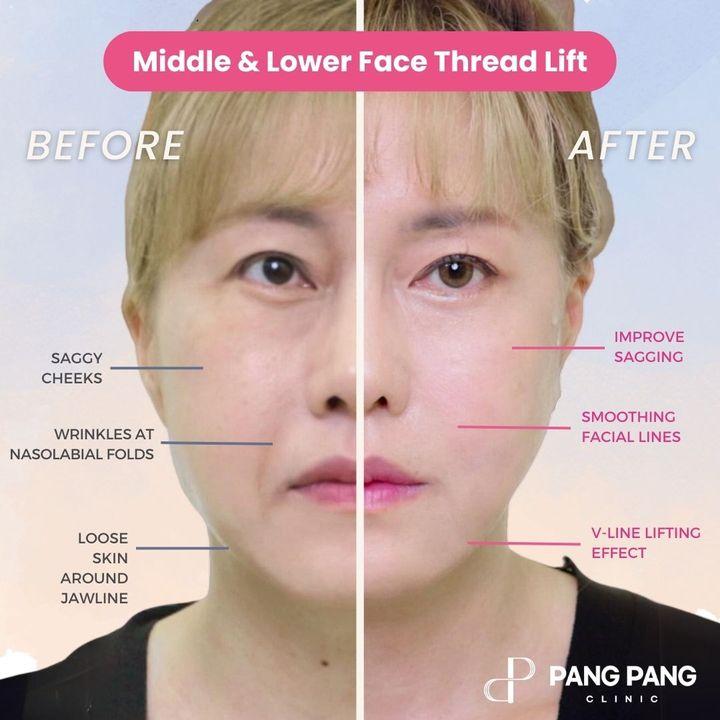
For nasolabial folds associated with cheek descent or reduced mid-face support, you can explore a customized thread-lifting plan at PangPang Clinic. Its approach uses specialized lifting, assist, tightening, and volume threads to reposition tissue, support elasticity, and address contour-related aging without a surgical facelift.
- URL: PangPang Clinic Website
- Location: Gangnam-gu, Seoul
- Thread-lift approach:
- Treatment planning includes a doctor consultation, pre-procedure design, and ultrasonic visual checks.
- Barbed lifting threads can anchor and pull sagging tissue, while assist and tightening threads are used to complement lift and support skin elasticity.
- Volume threads are offered for selected areas including the cheeks; suitability for folds depends on your facial anatomy and volume needs.
- Listed treatment time is about 30 minutes to one hour, with partial, Airnox, or sleep-anesthesia options.
- Research and technology:
- Pink Lift is a clinic-developed medical thread based on data from thousands of lifting procedures and is intended to provide a strong, natural-looking hold.
- The clinic reports collaboration with Seoul National University Bundang Hospital on thread-lifting techniques aimed at collagen regeneration and skin-quality improvement.
- Chill-Lifting uses contact-free cooling anesthesia, which the clinic says is intended to reduce discomfort, swelling, and bruising.
- Other options:
- PIM Injection combines Ultra Cell, thread lifting, and Botox; it is described as an option for delicate wrinkles around the mouth, skin elasticity, and facial volume.
- Customized filler and Botox treatments may be incorporated when volume loss or muscle movement contributes to the appearance of folds.
- A thread-lifting revision service is available for concerns following a previous thread procedure and may include fillers, Botox, or laser treatment.
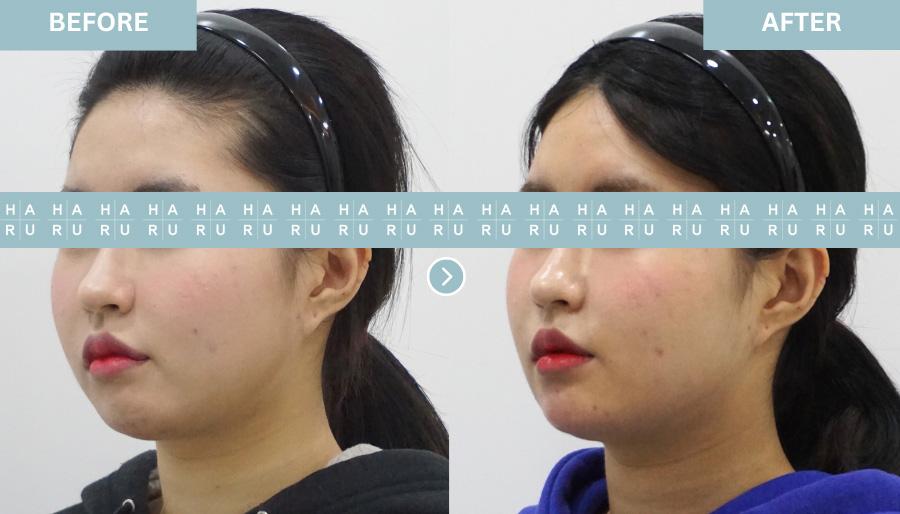
2. Haru Clinic
At Haru Clinic, you can consider a thread lift for nasolabial folds when sagging cheeks and mid-face contour changes are contributing to the crease. The clinic’s technique uses a stable fixation point behind the ear and adjusts the lift when there is volume loss beneath the cheekbones, with the goal of smoothing contours without making the face appear wider.
- URL: Haru Clinic Website
- Location: Gangnam-gu, Seoul
- Thread-lift technique:
- Dissolvable barbed threads are used under local anesthesia to elevate sagging cheeks and tighten the jawline, with collagen stimulation described as an additional benefit.
- The behind-the-ear fixation point is selected because this skin is less mobile and more firmly anchored, supporting a stable lift.
- The technique combines pulling and pressing of the skin; the clinic states that fixed points are planned to avoid large nerves and blood vessels to help reduce pain and bleeding.
- Thread lifting is described as minimally invasive and involving short downtime.
- Facial balancing:
- When hollowness or volume loss below the cheekbones is present, the lift can be adjusted to support smoother cheek contours.
- Fillers are available for restoring facial volume and definition, including in the cheeks, and may be relevant if volume depletion is contributing to your folds.
- Botulinum toxin treatments are offered for expression-related facial lines, with effects described as lasting about three to six months.
- Clinician experience:
- Dr. Jeong is identified as an official research physician for Merz, the company behind Belotero Filler, and teaches other doctors filler techniques.
- Treatment design is described as individualized around facial harmony and balance using non-invasive techniques.
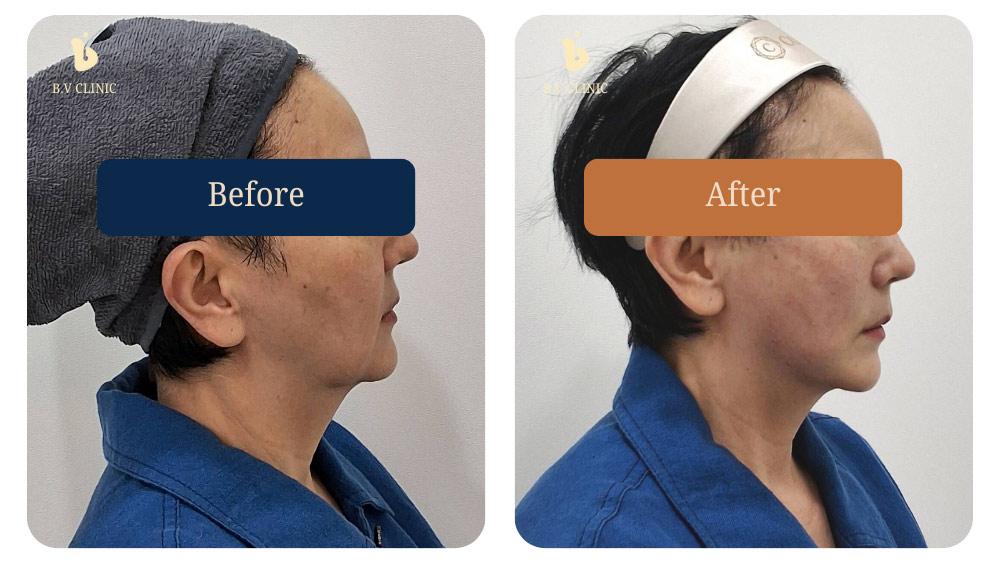
3. B.V Clinic
For nasolabial folds, B.V Clinic offers non-surgical full-face thread lifting designed to support facial volume and balance while addressing folds and other signs of aging. The clinic uses strategically placed threads to lift sagging tissue and stimulate collagen, which may suit you if cheek descent and reduced skin firmness are part of the concern.
- URL: B.V Clinic Website
- Location: Seoul
- Nasolabial-fold treatment:
- Full Face Lifting is specifically described as enhancing nasolabial folds while restoring facial volume and balance and addressing asymmetry.
- 3D Thread Lifting places threads strategically to lift and firm sagging skin, with a focus on natural facial contours and the SMAS layer.
- PDO barbed threads are intended to provide anchoring and lifting support while stimulating collagen for longer-term skin firmness.
- Practitioner and materials:
- Dr. Suh is reported to have more than 10 years of dedicated thread-lifting experience and thousands of clinical cases.
- The clinic uses MINT Threads, which are described as FDA and KFDA approved, as well as premium PDO barbed threads.
- Complementary treatments and aftercare:
- Volume-lifting treatment is available for areas affected by reduced volume and elasticity.
- Shurink HIFU, Potenza radiofrequency, and Thor radiofrequency are offered for skin tightening, elasticity, and contour refinement.
- Post-treatment care includes skin-regeneration management, nutritional skincare products, and ultrasound-based treatment intended to help manage swelling and support elasticity.
Alternatives to a Thread Lift
Threads are a limited, minimally invasive option for selected mild-to-moderate laxity. Non-surgical alternatives generally create gradual and modest changes, while surgery addresses excess skin and deeper structural descent more definitively but requires greater recovery and carries surgical risks.
Surgical Facelift
Facelift surgery is the more definitive anatomic option for substantial jowls, neck laxity, pronounced descent, or excess skin.
- Best fit — People seeking stronger, longer-lasting correction than threads can realistically provide.
- Tradeoff — Incisions, anesthesia, more substantial downtime, and a higher level of surgical planning in exchange for skin removal and deeper tissue repositioning.
Ultrasound or Radiofrequency Tightening
Ultherapy lifting and Thermage lifting use energy-based treatment for laxity without excess skin.
- Best fit — Mild laxity and patients who prefer no implanted threads or entry points.
- Tradeoff — Improvement is gradual and usually modest; these treatments do not mechanically reposition tissue like cog threads.
Filler or Fat Grafting
Facial filler and face fat grafting address folds and shadows caused chiefly by volume loss.
- Best fit — Temples, cheeks, under-eye hollows, or folds that improve when volume is restored rather than pulled upward.
- Tradeoff — Neither treatment removes excess skin. Filler has vascular risks, and fat grafting is a procedure with variable graft retention.
Combination Treatment
A combined plan can address laxity, volume loss, and skin quality when each problem is clearly identified.
- Best fit — Mixed aging changes where threads alone would leave hollows, persistent folds, or poor skin texture untreated.
- Tradeoff — Combining procedures increases cumulative cost, recovery demands, and complication exposure. The evidence on facial rejuvenation options supports matching treatment to the anatomical cause rather than using threads as a universal substitute.
How Can I Prepare for a Thread Lift?
- Medication and supplement review — Provide a complete list well before treatment. Aspirin, ibuprofen, naproxen, diclofenac, warfarin, apixaban, rivaroxaban, dabigatran, clopidogrel, fish oil/omega-3, vitamin E, ginkgo, ginseng, garlic supplements, and St John’s wort require review because of bleeding, bruising, anesthesia, or interaction concerns. Do not stop prescribed antiplatelets or anticoagulants independently.
- Clinician-directed pause periods — Follow the exact stop dates given by the treating clinician. Acetaminophen/paracetamol can be preferred over NSAIDs for pain only when the clinician confirms it is appropriate.
- Nicotine and alcohol — Stop smoking, vaping, and nicotine as far in advance as directed because nicotine impairs healing. Avoid alcohol before treatment and while taking sedatives, antibiotics, or pain medicine; it also worsens bruising and swelling.
- Fasting and transport — Do not fast unless instructed. Fasting depends on whether local anesthetic alone, oral anxiolysis, or IV sedation is planned. Arrange private transport and, after sedation, a first-night companion.
- Skin and treatment area — Arrive with a clean face and no makeup. Avoid sunburn and ask whether to pause retinoids, exfoliating acids, benzoyl peroxide, recent peels, laser procedures, or other irritating skincare.
- Medical records — Bring medication and allergy lists, past facial-procedure records, recent photographs, and home-clinician contact details. Report prior thread complications, filler placement, facial surgery, recurrent herpes, and poor scarring.
- Flexible travel arrangements — Book accommodation near the clinic and retain flexibility for an early review or unexpected in-person assessment.
Travel note: Confirm the clinic’s cancellation, revision, and emergency-contact arrangements before buying non-refundable flights.
The treating doctor’s individualized instructions take precedence over general guidance; confirm every medicine-stop period, fasting requirement, and aftercare restriction with the clinic.
Aftercare Advice
Protect the thread pathways and entry sites during early healing; avoid pressure, pulling, heat, and strenuous activity until the treating clinician clears them.
- Swelling and bruising — Expect several days of swelling, tenderness, tightness, bruising, and temporary irregularity. Use cold compresses only as directed and never apply hard pressure. Allow 7–14 days before an important social event.
- Sleep and facial movement — Sleep on the back for the clinician-specified interval. Avoid face-down or treated-side sleeping, facial massage, gua sha, aggressive chewing, gum, wide yawning, and dental work requiring prolonged mouth opening. A published technique review suggests back-sleeping for about one week and avoiding massage and excessive mouth opening for three weeks, but this is not a universal protocol.
- Heat, exercise, and water exposure — Avoid strenuous exercise, swimming, saunas, and steam rooms for the period specified by the clinician. Restrictions depend on treated area, insertion depth, vectors, and thread design.
- Entry-site and skin care — Keep entry points clean, follow instructions for washing and makeup, and take prescribed medicine exactly as directed. Protect healing skin from sun; use broad-spectrum SPF 50 once the clinician permits skincare on the area.
- Warning signs — Seek urgent assessment for rapidly increasing pain or swelling, spreading redness or warmth, pus, fever, skin-color change or blistering, facial weakness, severe persistent numbness, a painful one-sided cheek swelling, breathing or swallowing difficulty, or a thread protruding through skin. Do not pull an exposed thread.
- Result timing and durability — Do not judge symmetry in the first days. Assess a more representative result at 6–12 weeks. Systematic-review evidence supports short-term improvement but does not establish reliable long-term durability or a universal repeat interval; reported material absorption periods are not guarantees.
Follow the treating doctor’s instructions over general advice, attend scheduled reviews, and contact the clinic promptly when anything appears wrong.
Frequently Asked Questions
Related Blogs
Lifestyle Lift in Korea: Mini-Facelift Methods, Recovery, Risks and Travel Planning
A Lifestyle Lift is a legacy term for a limited-incision lower facelift that uses short incisions around the ears to redrape skin and may tighten SMAS tissue for mild-to-moderate jowling and lower-face laxity. The article covers candidacy, alternatives, preparation, recovery, risks, aftercare, and international travel planning in Korea, including a minimum 14-day postoperative stay and in-person f
Updated: Sep 20, 2026
Thread Lift in Korea: Candidacy, Recovery, Risks, and Travel Planning
Thread lifts use absorbable smooth or suspension threads inserted through small entry points to subtly reposition mild-to-moderate facial or neck laxity, with in-person assessment, local anesthesia, early review, and aftercare. International patients visiting Korea should plan at least 5–7 days, obtain product and clinician details, arrange follow-up, and allow 7–14 days before important events.
Updated: Sep 17, 2026
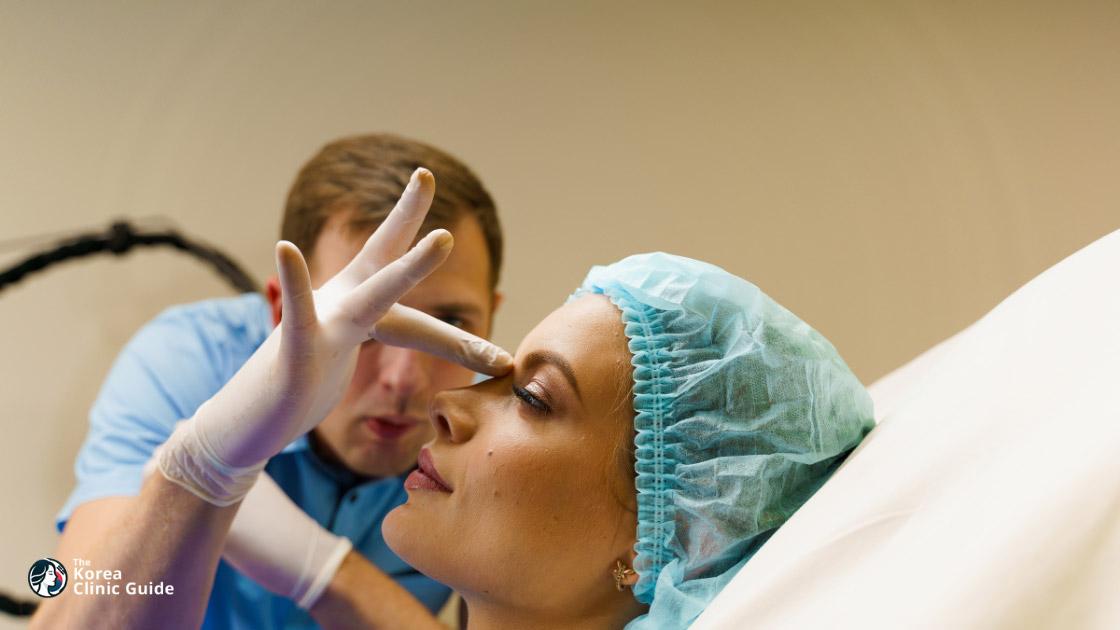
Hiko Nose Thread Lift in Korea: Candidacy, Methods, Recovery, Risks and Travel Planning
A Hiko nose thread lift uses absorbable barbed threads placed through small punctures to create temporary, modest bridge or tip definition without surgical reshaping. The article covers candidacy, procedure variations and filler risks, Korea travel planning, recovery, aftercare, warning signs, and alternatives for structural or functional nasal concerns.
Updated: Sep 15, 2026
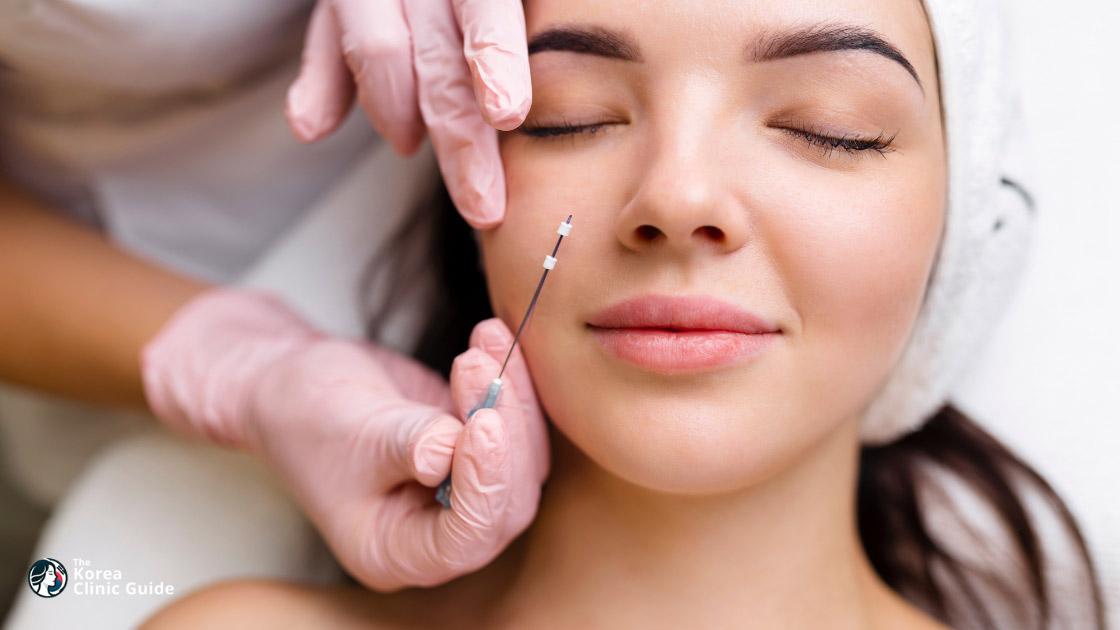
Nose Thread Lift in Korea: Candidacy, Recovery, Risks and Travel Planning
A nose thread lift uses absorbable threads placed along the bridge, tip, or columella to create modest, temporary contour changes, with local anesthetic and early follow-up. The article covers candidate screening, Korea travel planning, recovery, aftercare, warning signs, and alternatives such as filler, rhinoplasty, and septoplasty.
Updated: Sep 12, 2026
Clinics offering Thread Lift
RINE Plastic Surgery Clinic | Facelift and Eye Rejuvenation Surgery
Nonhyeon

SH Clinic: Comprehensive Women's, Men's & Couples' Health Services in Korea
Sinsa

THEPLUS Plastic Surgery Korea | Eye, Nose, Face & Body Surgery
Sinsa

Haru Clinic Korea | Seoul Facelift, Threads, Botox & Fillers
Sinsa