
Medical Tourism Blog
Oligio Lifting in Korea: Candidates, Results, Recovery, and Travel Planning
Table of contents
- Oligio Lifting at a Glance
- What Is Oligio Lifting?
- Who Is a Good Candidate for Oligio Lifting?
- How Is Oligio Lifting Performed?
- Why Visit Korea for Oligio Lifting?
- Key Information for International Patients
- Which Are the Best Clinics in Korea for Oligio Lifting?
- Oligio Lifting From Start to Finish
- Alternatives to Oligio Lifting
- How Can I Prepare for Oligio Lifting?
- Aftercare Advice
Considering treatment in Korea? Everything you need to know e.g. — how to avoid scams, visas, interpreters, recovery tips — in our Medical Tourism Master Guide. Plan with confidence in minutes, not weeks!
Last updated: September 2026
Oligio Lifting at a Glance
- What it does — Oligio Lifting is a noninvasive 6.78 MHz monopolar radiofrequency treatment that heats the skin to support gradual collagen remodeling and modest tightening of the cheeks, jawline, lower face, submental area, or upper neck.
- Best candidates — It is best suited to adults with mild-to-moderate laxity seeking subtle firming without incisions or formal downtime; it cannot remove excess skin or produce facelift-level repositioning for major jowls or tissue descent.
- Results timeline — Early improvement may appear from weeks 4–12, but the collagen-remodeling result is more meaningfully assessed at 3–6 months after one session; no evidence-based maintenance interval has been established.
- Recovery — Formal downtime is usually not needed, although warmth, tenderness, redness, and mild swelling can occur on treatment day and generally settle within 1–2 days; immediate redness occurred in 83.3% of participants in one 30-person study.
- Important safety limit — Do not undergo Oligio with an active implanted electronic device such as a pacemaker or implantable cardioverter-defibrillator; delay treatment for open skin, infection, active cold sores, or significant inflammatory skin disease in the treatment area.
- Korea travel plan — For international patients, plan 2–3 calendar days in Korea, with treatment on day 1 and 1–2 local days afterward to monitor for escalating pain, swelling, or a rare thermal injury; there is no established no-fly interval after an uncomplicated session.
- Korea-specific distinction — Oligio is a Korean-made Wontech device with Korean MFDS clearance since 2020; confirm the clinic is using original The Oligio rather than the separate Oligio Kiss platform, and request a record of treated zones, tip, shot count, and settings.
What Is Oligio Lifting?
Oligio Lifting is a noninvasive monopolar radiofrequency treatment that uses controlled heat to support collagen remodeling and skin tightening. It addresses mild-to-moderate facial or upper-neck laxity, helping improve firmness, fine lines, and contour gradually without facelift-level repositioning. It is a non-surgical treatment with no incisions and usually little formal downtime.
Who Is a Good Candidate for Oligio Lifting?
- Mild-to-moderate laxity — Good candidates want gradual tightening of the cheeks, lower face, jawline, submental area, upper neck, or fine facial lines without incisions or formal downtime.
- Realistic goals — Oligio is best for modest improvement in firmness and contour through collagen remodeling, not removal of loose skin or facelift-level lifting.
- Maintenance-focused treatment — Adults seeking a noninvasive option before considering a more invasive procedure can discuss Oligio RF lifting as part of a longer-term plan.
- Stable skin and health — The intended area should be free of open wounds, active infection, active herpes simplex lesions, and substantial inflammatory skin disease.
Do not proceed with an active implanted electronic device, including a pacemaker or implantable cardioverter-defibrillator; disclose dental, facial, or other metal hardware for zone-specific assessment. Avoid or defer treatment during pregnancy, breastfeeding, and for at least the first three months postpartum, populations excluded from the Oligio studies. Immunosuppression, connective-tissue disease, impaired sensation, uncontrolled illness, unexplained lesions, and a history of hypertrophic scarring or keloids require individualized medical clearance because direct evidence is limited. Facial assessment also matters: marked skin excess, major tissue descent, pronounced jowls, facial hollowing, submental fat, or dynamic wrinkles need a different or combined treatment plan. The available research enrolled adults, including a later study of patients aged 40–63, rather than adolescents or patients with severe laxity; the evidence supports modest tightening, not structural facial repositioning.
How Is Oligio Lifting Performed?
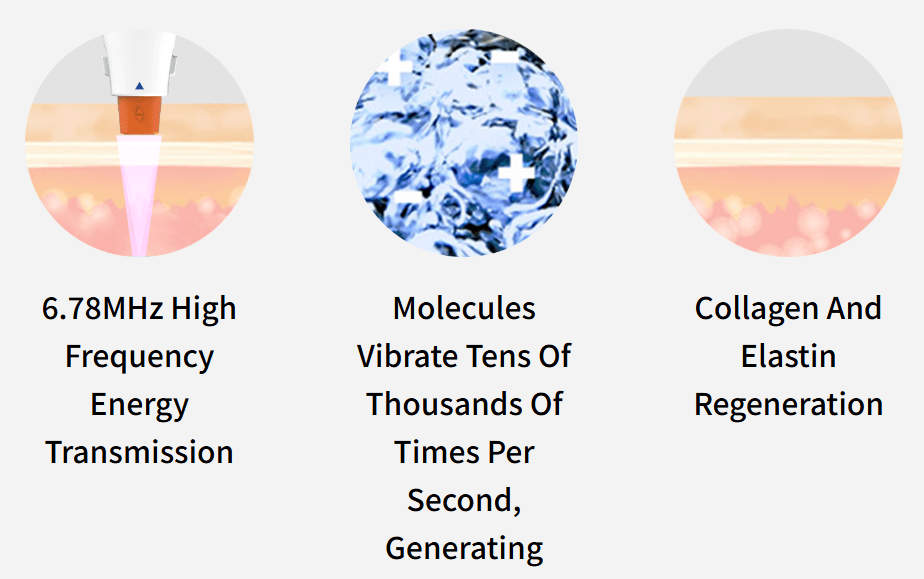
Original The Oligio has no established patient-facing treatment “types.” Planning differs by the treatment area, coverage, energy tolerance, and whether another procedure is being coordinated.
- Treatment zones — Providers can plan the cheeks, temples, jawline, lower face, submental area, upper neck, or periocular region according to skin laxity and facial proportions.
- RF delivery and safety controls — Original Oligio uses 6.78 MHz monopolar RF, a disposable 2 × 2 cm tip, and a return pad. Published descriptions include cooling, contact-pressure and skin-temperature sensing, plus impedance monitoring.
- Coverage and energy — One prospective study averaged 412 ± 49 shots, while a later 23-person study used 600 shots with energy adjusted to tolerance. Shot count alone is not a standardized measure of quality or expected improvement.
- Pass pattern and cooling time — A published 600-shot protocol treated the broader region before returning to another area, rather than immediately reheating the exact same spot, to allow cooling. Its treatment settings are a research protocol, not a universal prescription.
- Standalone or coordinated care — Oligio can be timed with injectables, ultrasound, laser treatment, threads, or surgery, but there is no robust evidence for a universal same-day sequence or for superiority of combination treatment. Coordinate recent treatment in the same area with one clinician; published studies excluded many recent aesthetic and energy-based procedures.
- Device identity — Confirm that the proposal is for original “The Oligio.” Oligio Kiss is a later, separate product, so its settings, regulatory status, and evidence are not interchangeable with the original platform. Wontech’s company history records Oligio’s Korean launch and Oligio Kiss separately.
Why Visit Korea for Oligio Lifting?
Oligio is a Korean-made monopolar RF platform from Wontech and has been available in its home market since 2020. This gives international patients access to the original device in South Korea, but it does not prove superior outcomes over treatment elsewhere or over competing RF systems. Results still depend on diagnosis, energy planning, anatomy, and operator technique.
- Local regulatory availability — Wontech records Korean MFDS clearance for Oligio in 2020, supporting its authorized availability in South Korea. This is a regulatory and access distinction, not comparative efficacy evidence.
- Original-device verification — Clinics can document whether they are using original The Oligio, its treatment tip, treated zones, shot count, and settings. This is especially useful where similarly named RF products can create confusion.
- Relevant local clinical data — A 2025 prospective study involved 23 Korean participants treated across the periorbital area, temples, cheeks, lower face, and submental area. It reported improving photograph-based laxity measures through 24 weeks, but was small and uncontrolled. The limited design prevents firm comparisons with other lifting devices.
- Evidence limits — The original Oligio evidence consists mainly of small single-arm studies with follow-up to six months, predominantly involving Asian women. No randomized head-to-head trial establishes superiority over Thermage, HIFU, threads, or facelift surgery.
Key Information for International Patients
- Minimum stay — Plan 2–3 calendar days: consultation and treatment on day 1, then 1–2 local days to observe early redness, swelling, increasing pain, or a rare heat injury. This is a conservative travel recommendation, not a published mandatory Oligio stay.
- Flight timing — No Oligio-specific no-fly interval has been established for an uncomplicated awake RF-only session. Do not fly without clinical review for worsening pain, substantial or asymmetric swelling, blisters, drainage, fever, facial weakness, visual symptoms, or a new contour depression.
- Appointment timing — Schedule treatment early in the trip rather than immediately before a long-haul flight, major event, or remote destination. Redness and tenderness commonly settle within 1–2 days, but the early reaction window is the reason to remain reachable locally.
- Repeat visits — One session was studied, with gradual outcomes assessed up to six months. There is no evidence-based repeat-session or maintenance interval; review photographs and response at about 3–6 months before arranging another treatment.
- Remote follow-up — Request written English aftercare, direct contact details, the exact device model, tip, zones, shot count, and settings if available. Take standardized front, oblique, and profile photographs at roughly one, three, and six months for overseas review.
- Companion and transport — A companion is not routinely needed for Oligio alone, and patients are generally awake. Arrange an escort and avoid driving only if sedatives, prescription pain medicine, or combined procedures are planned.
Travel note: Stay near the treatment site on the first night and keep the clinic’s after-hours contact route accessible. A noninvasive treatment still requires prompt assessment when a thermal complication is suspected.
Which Are the Best Clinics in Korea for Oligio Lifting?
Listed below are some of the best clinics in Korea for oligio lifting.
1. Three Wishes Clinic - Myeongdong
You may consider this Myeongdong clinic if you want to discuss a non-surgical lifting plan alongside other facial-contouring options: its listed services include ultrasound-based Shurink tightening, thread lifting, fillers, and fat-dissolving injections. The supplied information does not specifically confirm Oligio availability, so you would need to verify whether Oligio Lifting is offered and whether it fits your goals.
- URL: Three Wishes Clinic - Myeongdong Website
- Location: Jung-gu, Seoul
- Related lifting options:
- Shurink is listed as an ultrasound-based treatment intended to target deeper skin layers and support skin tightening and elasticity.
- Thread lifting with dissolvable threads is listed as a minimally invasive option for lifting sagging tissue and stimulating collagen production.
- Fat-dissolving injections are listed for localized fullness in areas such as the chin, jowls, and jawline.
- Complementary treatments:
- Botox and dermal fillers are available for dynamic wrinkles, volume restoration, and facial contouring.
- Rejuran Healer and customized skin-care treatments are listed for skin texture, elasticity, hydration, and maintenance.
2. Banobagi Plastic Surgery
You may consider Banobagi when you want an Oligio Lifting consultation considered within a broad facial-aesthetics setting, particularly if you are also weighing wrinkle, filler, or facial-contouring care. Its background describes a multi-center plastic-surgery practice with individualized treatment planning, although the supplied information does not specifically confirm that Oligio Lifting is available.
- URL: Banobagi Plastic Surgery Website
- Location: Gangnam-gu, Seoul
- Practice background:
- Established in 2000 by plastic-surgery specialists associated with Seoul National University Hospital.
- The practice describes dedicated centers for facial contouring, wrinkle surgery, filler and special surgery, eye surgery, nose surgery, body contouring, breast surgery, and obesity care.
- Its stated approach includes 1:1 customized treatment planning and avoiding unnecessary or excessive procedures.
- Relevant considerations:
- A consultation may be useful if you want to compare a skin-tightening treatment with injectable, wrinkle-focused, or contouring options.
- Confirm Oligio device availability, treatment areas, expected treatment plan, and whether an energy-based lifting approach is appropriate for your concerns.
3. Club Miz Lamiche Clinic
You may consider Club Miz Lamiche Clinic for Oligio Lifting because Oligio is specifically listed among its lifting-focused treatments, alongside radiofrequency Thermage FLX/CPT, ultrasound Ulthera, and other energy-based options. Its 1:1 customized care and individual treatment rooms may suit you if you want your lifting approach selected in the context of your skin condition and contouring goals.
- URL: Club Miz Lamiche Clinic Website
- Location: Songpa-gu, Seoul
- Oligio and lifting options:
- Oligio is listed within the clinic’s lifting-treatment offerings.
- Other listed tightening and contouring options include Thermage FLX/CPT, Ulthera, Shrink, InMode, BBL, Enerjet, and Icon.
- Thread lifting, fillers, Botox, collagen-stimulating injectables, and double-chin injections are also listed as minimally invasive aesthetic options.
- Personalized assessment:
- The clinic describes 1:1 customized treatments in private individual treatment rooms.
- Advanced 4D skin-analysis technology is listed, which may inform discussion of skin-focused concerns and treatment selection.
- The clinic has operated since 2002 and describes 22 years of clinical experience.
- Practical access:
- Evening hours are listed for Monday, Wednesday, and Friday, with Saturday opening also available.
- The clinic is described as a 5–7 minute walk from Jamsilsaenae Station on Line 2 and Sports Complex Station on Line 9.
Oligio Lifting From Start to Finish
- Remote enquiry and consultation — Send unfiltered, dated front, oblique, and profile photographs along with goals and travel dates. Ask whether English consultation by message or video is available, and request confirmation that the planned device is original The Oligio.
- Medical screening — Disclose implanted devices, metal hardware, pregnancy possibility, breastfeeding, herpes history, allergies, scar tendency, smoking, immune or connective-tissue conditions, skin disease, prior facial procedures, medicines, and supplements. The clinician distinguishes laxity from volume loss, fat, dynamic lines, pigmentation, scars, and deep-tissue descent.
- Treatment plan and travel coordination — Agree on target zones, the expected degree of improvement, alternatives, risks, price inclusions, and an early follow-up contact plan before booking non-refundable onward travel. Routine laboratory testing is not generally indicated for an uncomplicated awake RF session; medical history, pregnancy concern, sedation, or combined treatment can change this.
- Arrival assessment — The treating clinician examines skin quality, facial volume, symmetry, jawline and neck anatomy, and active lesions. Treatment is postponed when the skin is inflamed, infected, open, or affected by active herpes simplex.
- Set-up — The skin is cleansed, and coupling fluid is applied. A return or grounding pad is positioned; published studies placed it on the lower back. Standard facial study protocols did not require sedation.
- RF treatment — The provider stamps the disposable tip over mapped areas while monitoring skin contact, impedance, cooling, and tolerance. Published protocols used approximately 412 or 600 shots; duration depends on coverage and the planned number of shots rather than a fixed universal time.
- Immediate review and discharge — The clinician checks for excessive redness, swelling, focal pain, or skin changes, then gives written skincare and warning-sign instructions. Expect temporary warmth, erythema, tenderness, or mild swelling rather than formal downtime.
- Local recovery check — Remain in Korea for 1–2 days where practical. Immediate erythema occurred in 83.3% of participants in the initial 30-person study and resolved in 1–2 days; the same small evidence base cannot quantify rare complications reliably.
- Overseas follow-up and outcome review — Send standardized photos to the clinic at approximately one, three, and six months. Early change can emerge from weeks 4–12; judge collagen-remodeling results at about 3–6 months rather than from immediate post-treatment tightness.
Alternatives to Oligio Lifting
The appropriate alternative depends on whether the main issue is skin laxity, deep tissue descent, excess skin, volume loss, dynamic muscle movement, or acne scarring. Non-surgical options avoid surgical incisions but deliver more modest changes; surgery is the meaningful option for major descent or excess skin.
Thermage Lifting
- Best comparison — Thermage lifting is in the same broad monopolar RF category and can be discussed when comparing device-specific protocols and clinician experience.
- Tradeoff — Neither device should be assumed superior without direct comparative evidence for the individual treatment plan.
Microfocused Ultrasound
- Best comparison — Ultherapy lifting, Shurink lifting, or Liftera lifting can be considered when the plan targets deeper tissue planes in the lower face or neck.
- Tradeoff — Ultrasound and monopolar RF are not interchangeable technologies; discomfort profile, target depth, and treatment planning differ.
RF Microneedling
- Best comparison — Secret RF microneedling is more relevant when acne scars, enlarged pores, and texture are central concerns.
- Tradeoff — It is needle-based and has a different recovery and risk profile from noninvasive surface RF.
Filler
- Best comparison — Facial filler can address volume loss or hollowing that RF tightening does not replace.
- Tradeoff — Filler adds volume; it does not tighten loose skin in the same way and requires careful placement to avoid an overfilled appearance or vascular complications.
Thread Lift
- Best comparison — Face thread lift provides mechanical suspension for selected patients seeking a more immediate positional change.
- Tradeoff — Threads are invasive and carry risks including infection, asymmetry, palpability, visibility, and eventual thread degradation.
Facelift or Neck Lift
- Best comparison — A face lift is the structural alternative for pronounced jowling, major tissue descent, and excess skin.
- Tradeoff — Surgery provides greater repositioning but involves incisions, anesthesia, longer recovery, and more demanding travel and follow-up planning.
How Can I Prepare for Oligio Lifting?
- Send a complete medical record — Provide prior RF, HIFU, laser, toxin, filler, fat grafting, thread, and surgical treatment dates and areas before travel. Studies excluded many treatments within the preceding 6–12 months, but those research exclusions are not universal mandatory waiting periods.
- Declare implants and metal — Report pacemakers, implantable cardioverter-defibrillators, neurostimulators, dental hardware, facial plates, and other metal implants. Do not proceed with an active implanted electrical device unless the treating clinician has explicitly determined otherwise.
- Review medicines and supplements — Disclose anticoagulants, antiplatelet drugs, NSAIDs, isotretinoin, immunosuppressants, photosensitizing medicines, and every supplement. Do not independently stop prescription medication; there is no evidence-based universal Oligio stop list, and decisions depend on history and planned combined treatment.
- Avoid treating compromised skin — Report cold sores, rashes, acne inflammation, dermatitis flares, wounds, infection, recent sunburn, or unexplained lesions. Delay treatment until the intended area is clinically suitable.
- Fasting and sedation — Do not fast for an awake RF-only appointment unless the clinic instructs otherwise. Fasting, an escort, and driving restrictions apply when sedation, prescription analgesia, or a combined procedure is planned.
- Keep the area simple — Arrive with clean skin and avoid irritating new products, scrubs, retinoids, or strong acids on the treatment area if the clinic directs. Avoid heavy sun exposure and tanning before assessment.
- Plan travel conservatively — Book flexible flights and accommodation for 2–3 calendar days, stay close to the treatment location on the first night, and avoid scheduling a major public event for the next day.
- Smoking and alcohol — Disclose nicotine use and follow the clinic’s timing instructions. Avoid alcohol on the treatment day and while warmth or swelling persists.
Travel note: Carry a copy of the aftercare plan, direct clinic contact details, and travel insurance information. Tell the clinic before treatment if a language barrier prevents clear understanding of consent or warning signs.
Confirm all clinic-specific requirements with the treating doctor; individualized instructions take precedence over general preparation guidance.
Aftercare Advice
Treat early warmth, redness, tenderness, and swelling as a period for cooling, gentle skincare, and observation—not as proof of the final lifting result.
- First 24–48 hours — Use gentle cleanser and bland moisturizer. Temporary erythema usually settles within 1–2 days, but report increasing pain, sharply localized heat, or symptoms that worsen rather than improve.
- Heat, pressure, and exertion — Avoid vigorous exercise, sauna or steam rooms, very hot showers, alcohol, heat-based home devices, waxing, aggressive facial massage, and facial pressure until warmth and swelling have settled.
- Active skincare — Avoid scrubs, retinoids, strong acids, and other irritating products on the treated area until the skin feels normal. Do not pick, rub, or apply unapproved topical products to a blistered or crusted area.
- Sun protection — Use broad-spectrum SPF 50 sunscreen and limit direct sun exposure, particularly if redness persists or pigment change is a concern.
- Urgent warning signs — Contact the clinic promptly for worsening or severe pain, substantial or asymmetric swelling, blistering, crusting, drainage, fever, numbness, weakness, visual symptoms, or a new contour depression or asymmetry. A later small study reported tingling and one self-resolving first-degree burn; small studies cannot establish the true frequency of uncommon RF complications.
- Result timing and review — Take consistent photographs at one, three, and six months. Reassess the result at about 3–6 months, when collagen remodeling is more meaningful, before considering further treatment.
Follow the treating doctor’s instructions over this general guidance and contact the clinic promptly whenever something appears wrong.
Frequently Asked Questions
Related Blogs
Discover the Real Costs of Torr Lifting: Korea vs Global Competitors in USA, Mexico, Turkey & Vietnam
Discover the cost dynamics of Torr Lifting services in Korea, exploring factors influencing pricing, from equipment quality to operational expenses. Gain insights that can help businesses make informed decisions about lifting solutions in the Korean market.
Updated: Oct 24, 2026
Korean vs. International Acne Treatment Costs: Is Korean Skincare the Superior Choice?
Discover the latest insights into acne treatment costs in Korea, exploring affordable solutions and cutting-edge dermatological advancements. Learn how you can achieve clear skin with budget-friendly options in one of the world’s top skincare destinations.
Updated: Oct 24, 2026
Discover the Global Price of Filler Dissolver: Korea’s Competitive Edge vs. Top Destinations
Discover the latest insights on the cost of Filler Dissolver treatments in Korea, including factors that influence pricing and tips for finding the best clinics. Stay informed on how to achieve safe and effective results while managing your aesthetic goals and budget.
Updated: Oct 24, 2026
Korea vs The World: Investment in Toenail Treatments Across Global Destinations
Discover the ins and outs of toenail treatment costs in Korea, from basic care to advanced procedures. This article breaks down pricing, factors influencing costs, and offers tips for finding affordable and professional care.
Updated: Oct 24, 2026
Clinics offering Oligio Lifting

Three Wishes Clinic - Myeongdong, Korea: Advanced Botox, Fillers, Laser, and Skin Treatments for Confidence and Care
Myeongdong

Banobagi Plastic Surgery: A Pioneering and Trusted Plastic Surgery Clinic in Korea
Seolleung

Club Miz Lamiche Clinic: Leading Korean Aesthetic Medicine with Personalized 1:1 Treatments and Advanced 4D Skin Analysis Technology
Jamsil

D.A Plastic Surgery Clinic in Korea: Advanced Cosmetic Procedures for Natural Beauty Enhancement
Gangnam Station