
Medical Tourism Blog
Forehead Filler in Korea: Safety, Recovery, Travel Planning, and Alternatives
Table of contents
- Forehead Filler at a Glance
- What Is Forehead Filler?
- Who Is a Good Candidate for Forehead Filler?
- How Is Forehead Filler Performed?
- Why Visit Korea for Forehead Filler?
- Key Information for International Patients
- Which Are the Best Clinics in Korea for Forehead Filler?
- Forehead Filler From Start to Finish
- Alternatives to Forehead Filler
- How Can I Prepare for Forehead Filler?
- Aftercare Advice
Considering treatment in Korea? Everything you need to know e.g. — how to avoid scams, visas, interpreters, recovery tips — in our Medical Tourism Master Guide. Plan with confidence in minutes, not weeks!
Last updated: September 2026
Forehead Filler at a Glance
- Purpose — Forehead filler is a minimally invasive injectable treatment, usually with hyaluronic acid (HA), that temporarily adds volume to a flat, hollow, asymmetric, or volume-depleted forehead and can soften the transition from forehead to brow.
- Best candidates — It suits adults seeking temporary correction of volume loss who understand that filler cannot reshape the frontal bone, remove excess skin, permanently lift a low brow, or reliably treat muscle-driven forehead lines.
- High-risk area — The forehead and glabella contain vessels connected to the eye circulation, so vascular occlusion can rarely cause skin necrosis, irreversible vision loss, or stroke; needle use, cannulas, aspiration, and ultrasound do not eliminate this risk.
- Recovery and longevity — Redness, tenderness, bumps, bruising, and swelling usually settle within about 1 week; volume is visible immediately but should be assessed at roughly 2 weeks, while HA filler maintenance commonly falls around 6–12 months.
- Korea travel plan — International patients should plan 2–4 days in Korea, remain reachable locally for the first 24–48 hours, avoid a same-day long-haul departure, and arrange a review by telehealth or in person at 2–4 weeks.
- Korea-specific check — Korean MFDS regulation may support product traceability, but it does not prove superior forehead-filler outcomes; verify the exact product’s authorization, obtain its brand and lot number, and confirm the clinic’s written emergency pathway for vascular and visual symptoms.
What Is Forehead Filler?
Forehead filler is an injectable treatment that adds temporary volume to a flat, hollow, or uneven forehead, usually using hyaluronic acid gel. It aims to create a smoother forehead contour and a softer transition between the forehead and brow. It is a minimally invasive procedure, not surgery.
Who Is a Good Candidate for Forehead Filler?
- Volume-focused goals — Good candidates are adults seeking temporary correction of a flat, concave, asymmetric, or volume-depleted forehead, or a softer transition from forehead to brow.
- Realistic treatment scope — Filler can support selected static creases caused by volume loss, but it does not change the underlying frontal bone, remove excess skin, or permanently elevate a low brow.
- Safety-first decision-making — Suitable candidates understand that the forehead and glabella are high-risk injection regions, can remain reachable for early review, and accept that results require reassessment after swelling settles.
- Complete treatment history — Disclose every previous facial injection, surgery, implant, filler complication, allergy, medicine, and supplement before planning treatment.
Forehead filler is unsuitable during active acne, dermatitis, wounds, rash, cellulitis, herpes outbreak, fever, or systemic infection. Elective treatment is generally deferred during pregnancy and breastfeeding because controlled safety data are inadequate. Do not independently stop warfarin, apixaban, rivaroxaban, clopidogrel, aspirin, or other prescribed anticoagulant or antiplatelet medication; the injector and prescribing clinician must assess bleeding risk together. Unknown or permanent prior filler, marked scar tissue, granulomatous disease, autoimmune disease, immunosuppression, uncontrolled diabetes, recurrent facial infection, or a history of hypertrophic or keloid scarring require individualized assessment; ultrasound mapping can be appropriate before reinjection. Assessment must also establish whether the main concern is dynamic frontalis lines, brow ptosis, lax skin, or bony contour, since filler alone is often the wrong treatment for those concerns.
How Is Forehead Filler Performed?
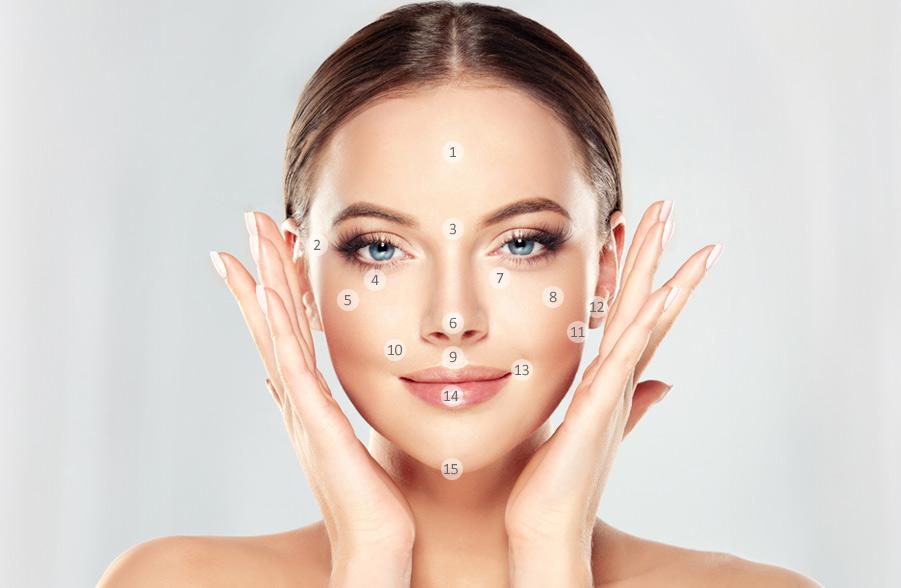
Forehead contouring differs mainly by filler material, depth, injection plan, and vessel-assessment method rather than by consumer-facing filler “types.” The forehead's vascular anatomy demands conservative planning rather than a standard-volume treatment.
- Hyaluronic-acid filler — Cross-linked HA gel is generally the practical choice when reversibility matters because hyaluronidase can degrade HA. Dissolving HA does not guarantee reversal of established vascular, eye, or neurologic injury.
- Non-HA or permanent materials — Biostimulatory and permanent fillers are substantially harder, and sometimes impossible, to remove. Their use deserves particularly careful discussion in this high-risk area.
- Needle, cannula, or combined approach — The choice depends on anatomy, treatment plane, and injector judgment. Neither a needle nor a cannula makes forehead injection risk-free.
- Conservative injection technique — Small-volume, slow, low-pressure placement is commonly emphasized. Aspiration is not a reliable safety test and cannot prove that an injection is outside a blood vessel.
- Doppler or real-time ultrasound — Some clinicians map the supraorbital, supratrochlear, and superficial-temporal arterial branches or identify previous filler before treatment. A 2024 Korean prospective study mapped vessels in 34 patients and reported no arterial complications, but its small uncontrolled design cannot establish a complication rate or prove that ultrasound prevents occlusion.
Why Visit Korea for Forehead Filler?
South Korea has established pathways for international aesthetic-care visitors and an MFDS medical-device regulatory system. These practical features can support product traceability and local follow-up, but they do not prove that Korean forehead-filler outcomes are safer, more aesthetic, or longer lasting than outcomes elsewhere. Choose the individual injector and emergency plan, not the destination's reputation.
- Product verification — Korea's MFDS medical-device regulatory framework provides a regulatory context, but the clinic must verify the exact selected filler's current authorization, instructions for use, and forehead indication status. Do not assume that authorization in another country applies in Korea.
- Local ultrasound feasibility evidence — The Korean Doppler-mapping study identified key upper-face arterial branches before HA forehead contouring. Its findings support feasibility, not a guarantee of safety or superiority over non-ultrasound practice.
- International-care infrastructure — Seoul reported more than 1 million international medical tourists in 2024, which supports the availability of overseas-patient services in the city but does not measure forehead-filler quality.
- Evidence limitation — No robust Korea-versus-other-country studies or public Korean registry provides reliable forehead-specific outcomes or complication rates by filler brand, injector specialty, needle versus cannula, or ultrasound use.
Key Information for International Patients
- Minimum stay — Plan 2–4 days in South Korea and remain locally reachable for the first 24–48 hours. This is a cautious safety recommendation, not a formal evidence-based flight rule.
- Flight timing — Avoid a same-day long-haul departure. There is no high-quality evidence for a universal commercial-flight waiting interval after filler; obtain individualized clearance after the in-person assessment.
- Early-risk window — Serious vascular symptoms usually develop during injection or soon afterward, which is why immediate local access to the treating injector matters. Infection, delayed swelling, nodules, and inflammatory reactions can arise later.
- Itinerary impact — Expect visible redness, tenderness, small bumps, bruising, and swelling on injection day and for several days; most settle within 1 week. Do not schedule sauna visits, strenuous activities, facial treatments, or important photographs immediately afterward.
- Review appointment — Arrange an in-person or telehealth review at about 2–4 weeks, when early swelling has resolved and a conservative touch-up can be assessed.
- Records and remote care — Leave with English aftercare instructions, 24-hour contact details, the injector's name and credentials, standardized photographs, consent documents, and product brand, lot/batch number, and expiry date. Identify a qualified clinician at home for delayed concerns and confirm that the Korean provider will release records promptly.
Travel note: Ask before booking whether the clinic has an English-speaking contact and a written pathway for vascular occlusion, visual symptoms, emergency transfer, and ophthalmology referral.
Which Are the Best Clinics in Korea for Forehead Filler?
Listed below are some of the best clinics in Korea for forehead filler.
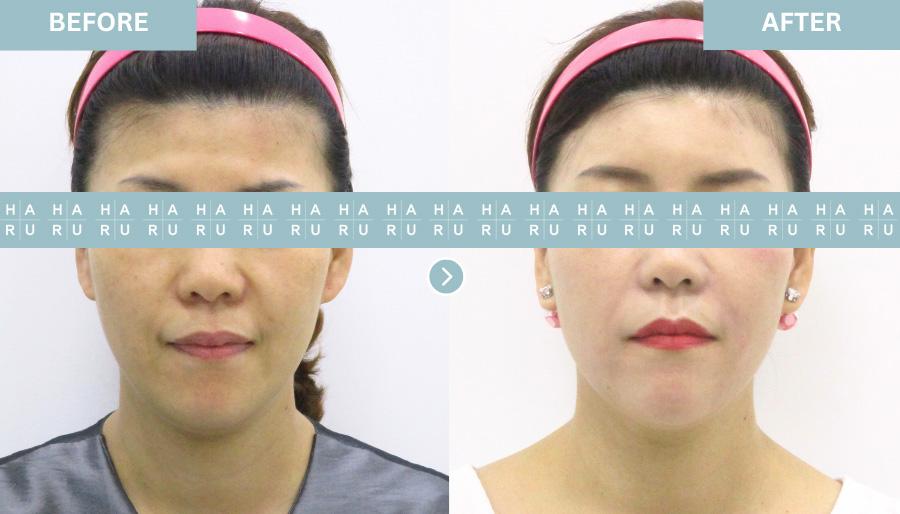
1. Haru Clinic
You may consider Haru Clinic for forehead filler if you want a non-invasive plan that emphasizes facial harmony rather than isolated volume. Dr. Jeong’s filler-focused approach is described as tailoring treatment to your individual features for a natural, refreshed-looking result with minimal downtime.
- URL: Haru Clinic Website
- Location: Gangnam-gu, Seoul
- Filler approach:
- Dr. Jeong is an official research physician for Merz, the company behind Belotero Filler, and teaches other doctors updated filler techniques.
- The clinic describes facial design that prioritizes balance and harmony through non-invasive treatment.
- Its filler services include hyaluronic acid and biostimulatory fillers for adjustable, immediate facial contouring results.
- Related facial options:
2. Modelo clinic
You may consider Modelo Clinic for forehead filler when you want forehead volume addressed as part of a full-face filler plan designed around your own facial proportions and individuality. The clinic specifically includes the forehead in its Fullface Filler treatment, with immediate volumizing results intended to look balanced and natural.
- URL: Modelo clinic Website
- Location: Gangnam-gu, Seoul
- Forehead filler:
- Fullface Filler includes the forehead alongside areas such as the cheeks and lips.
- The treatment is presented as a way to restore volume and create a more youthful facial appearance, with immediate results.
- Modelo emphasizes an individualized aesthetic rather than following trends.
- Complementary treatments:
- Wrinkle Botox is offered for fine lines and wrinkles, including treatments optimized for Asian skin and facial structures.
- Contour Botox and lifting treatments are available for facial definition and skin-firming concerns.
- Thread lifting and Comfort Thermage are listed as minimally invasive or non-invasive options for sagging skin and gradual tightening.
3. Three Wishes Clinic - Myeongdong
You may consider Three Wishes Clinic - Myeongdong for forehead filler if you want a personalized dermal-filler treatment that can add facial volume and smooth fine lines with immediate results. Its filler service is described as being tailored to your facial shape and desired outcome, within a clinic that emphasizes safety and satisfaction.
- URL: Three Wishes Clinic - Myeongdong Website
- Location: Jung-gu, Seoul
- Filler treatment:
- Dermal fillers are used to add volume, smooth fine lines, and enhance facial contours.
- Results are described as immediate and customizable to your facial shape and goals.
- The clinic lists fillers among its petite, minimally invasive procedures.
- Related facial treatments:
- Botox is available for dynamic wrinkles, including forehead lines.
- Thread lifting uses dissolvable threads to provide a subtle lift while stimulating collagen production.
- Shurink ultrasound lifting and Rejuran Healer injections are listed for skin elasticity, regeneration, and fine-line concerns.
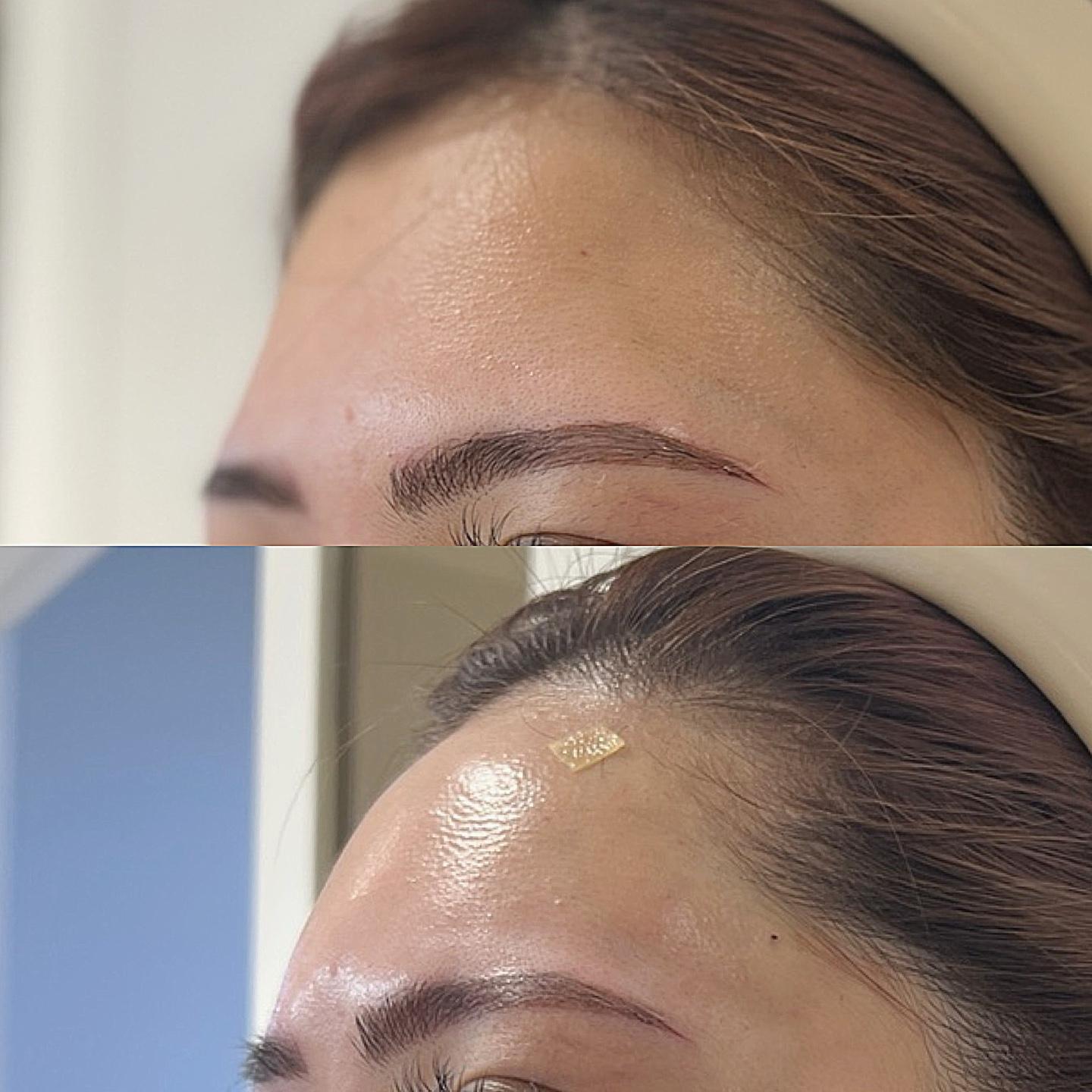
Forehead Filler From Start to Finish
- Remote screening — Send unfiltered front, oblique, and side photographs at rest and with forehead movement. Provide a full history of prior filler, surgery, implants, allergies, medical conditions, medicines, supplements, and planned dental or skin procedures. An online consultation cannot replace examination.
- Travel and appointment coordination — Schedule enough time to stay reachable for 24–48 hours after injection and avoid a same-day long-haul flight. Confirm language support, emergency contact arrangements, and the clinic's policy on review or conservative touch-up.
- In-person assessment and consent — The injector examines forehead shape, movement, skin quality, scars, brow position, hairline proportions, and baseline asymmetry. Confirm the exact product, its labeling status where relevant, planned plane and instrument, and the specific risks of skin ischemia, necrosis, visual loss, and neurologic injury.
- Photographs and product documentation — Standardized images are taken before treatment. Request the filler brand, product sticker, lot or batch number, and expiry date before injection; do not accept an undisclosed product substitution.
- Skin preparation and anesthesia — Makeup is removed and the forehead is disinfected. Topical anesthetic, local anesthetic, or filler containing lidocaine can be used when appropriate; fasting is usually unnecessary when only topical or local anesthesia is planned.
- Injection and monitoring — The injector places filler according to the agreed conservative plan, potentially after Doppler or ultrasound vessel mapping. Injection itself is brief, but planning, numbing, documentation, and observation extend the visit. Concerning pain, blanching, mottled discoloration, coolness, or eye or neurologic symptoms require immediate cessation and urgent assessment.
- Discharge and first days — Receive written English aftercare and a direct urgent-contact route. A companion is sensible when oral anxiolytics, sedating medication, or medication that impairs driving has been used.
- Review from Korea or home — Reassess the contour after about 2 weeks rather than judging the result during early swelling. Complete the planned 2–4-week in-person or remote review and contact the clinic promptly about delayed swelling, nodules, infection, or asymmetry.
Alternatives to Forehead Filler
The right alternative depends on whether the main issue is muscle-driven wrinkling, loss of volume, brow position, or skin excess. Nonsurgical options have less downtime but cannot replicate surgical correction of significant laxity or ptosis; surgery has materially longer recovery and different risks.
Forehead Botox
Forehead Botox is better suited to horizontal lines produced by frontalis-muscle movement.
- Best for — Dynamic forehead lines rather than broad volume deficiency.
- Key tradeoff — It does not restore a concave or flat forehead, and excessive dosing can lower the brow.
Facial Fat Grafting
Facial fat grafting transfers a person's own fat to add facial volume.
- Best for — People seeking potentially longer-lasting volume than temporary HA filler.
- Key tradeoff — It requires fat harvesting, has more downtime and less predictable retention, and cannot simply be dissolved.
Forehead Lift
A forehead lift or brow-lifting procedure addresses brow ptosis and excess skin.
- Best for — A low brow or lax upper-face tissue rather than localized volume loss.
- Key tradeoff — It is surgery with incisions, longer recovery, and a different risk profile.
Forehead Thread Lift
A forehead thread lift aims to address selected laxity or brow-position concerns.
- Best for — Carefully selected patients with a position or tissue-support concern.
- Key tradeoff — Threads do not reliably replace broad forehead volume and carry separate procedural risks.
Filler Dissolver
Filler dissolver uses hyaluronidase to degrade HA filler when correction or management is needed.
- Best for — Confirmed or strongly suspected unwanted HA filler, under medical supervision.
- Key tradeoff — It does not remove permanent or all non-HA materials, and it is not a substitute for emergency vascular-occlusion management.
How Can I Prepare for Forehead Filler?
- Medical disclosure — Give the injector and relevant prescribing clinicians a complete list of medications, supplements, allergies, prior facial procedures, implants, filler reactions, herpes history, autoimmune disease, diabetes, bleeding disorders, and immune-suppressing treatment.
- Bruising-risk products — Ask the treating clinician whether to pause non-prescribed aspirin, NSAIDs, vitamin E, fish oil/omega-3 products, ginkgo, garlic, ginseng, turmeric/curcumin, or St. John’s wort. These can increase bruising; never stop prescribed warfarin, apixaban, rivaroxaban, clopidogrel, aspirin, or similar medication without explicit direction from the prescriber.
- Illness and skin condition — Postpone treatment for fever, systemic illness, active infection, acne flare, rash, dermatitis, wound, cellulitis, or herpes outbreak on or near the forehead.
- Recent procedures — Tell the clinic about recent dental treatment, facial surgery, laser or resurfacing, microneedling, chemical peels, waxing, threading, or other skin-barrier-disrupting procedures. The injector must set the interval based on the procedure and tissue condition.
- Food and hydration — Eat and hydrate normally when topical or local anesthesia is planned, unless the clinic gives different instructions.
- Treatment-day skin — Attend with a clean face and avoid applying makeup immediately before the appointment.
- Alcohol, sun, and smoking — Avoid alcohol if the clinic advises it, protect the treatment area from substantial UV exposure, and disclose smoking or nicotine use because healing and inflammation planning depend on it.
- Travel logistics — Book flexible flights, avoid a same-day long-haul departure, and arrange accommodation that keeps you close and reachable for 24–48 hours. Bring a companion if sedation, oral anxiolytics, or driving-impairing analgesics are planned.
Travel note: Request written English confirmation of the exact filler, planned method, urgent contact number, and post-return follow-up plan before traveling.
Confirm the treating clinic's individualized requirements; they take precedence over general preparation guidance.
Aftercare Advice
Protect the treated forehead and treat vascular or visual warning signs as an emergency, not a routine aftercare issue.
- No pressure or molding — For the first 6–12 hours, do not touch, press, rub, massage, or attempt to shape the forehead unless the injector specifically instructs otherwise. Avoid makeup during that period unless cleared.
- Swelling and bruising — Use a protected cool pack intermittently for swelling; avoid extreme cold. Redness, tenderness, swelling, bruising, and small palpable irregularities are common for several days and usually settle within 1 week.
- Activity and heat — Avoid strenuous exercise, alcohol, excessive heat, sauna, major UV exposure, and extreme temperatures for about 24–48 hours or until redness and swelling settle.
- Other facial procedures — Do not resume facial massage, active skincare, laser, radiofrequency, ultrasound, microneedling, chemical peels, dental work, or invasive treatments until the injector clears them. Use broad-spectrum SPF 50 on exposed skin once the skin is intact and the clinician permits skincare.
- Result timing — Initial volume is visible immediately, but judge the contour only after early swelling resolves at roughly 2 weeks. HA maintenance often falls around 6–12 months, although duration depends on product, volume, injection plane, movement, and individual biology.
- Emergency symptoms — Contact the injector immediately and seek emergency care for severe or escalating pain; white, gray, blue, or mottled/net-like discoloration; cool skin; blistering; rapidly increasing swelling; eye pain; double vision; blurred vision; any visual loss; new weakness or drooping; severe headache; numbness; confusion; or difficulty speaking or walking. These signs can indicate vascular compromise, ocular involvement, or stroke.
- Delayed concerns — Seek timely assessment for fever, warmth, pus or drainage, spreading redness, delayed swelling, persistent or new nodules, infection, or worsening asymmetry.
Follow the treating doctor's instructions over general advice, and contact the clinic promptly when anything appears wrong.
Frequently Asked Questions
Related Blogs
Radiesse Filler in Korea: Uses, Safety, Recovery and Travel Planning
Radiesse is a calcium hydroxylapatite filler used for selected facial contouring, folds, and hand-volume restoration, with diluted protocols sometimes used for broader skin-quality goals. The article covers candidacy, Korean product verification, travel planning, injection steps, recovery, aftercare, emergency warning signs, and follow-up.
Updated: Oct 4, 2026
Effective Brow Ptosis Support with Forehead Filler Procedures in Korea for Youthful Eyes
Discover how Korea leads in non-surgical solutions for brow ptosis, featuring forehead fillers like Hyaluronic Acid, Radiesse, and Sculptra. Learn about the forehead filler procedure in Korea, its benefits for brow support, costs, and patient experiences. Ideal for those seeking a minimally invasive way to lift drooping eyebrows and heavy lids, Korea’s expert clinics combine advanced techniques wi
Updated: Oct 4, 2026
Reduce Deep Smile Lines with Smile Line Filler in Korea: Effective Solutions for a Youthful Look
Discover how Korea leads in treating deep smile lines and nasolabial folds with advanced procedures like dermal fillers—especially hyaluronic acid-based options. This comprehensive guide highlights the benefits, costs, and patient experiences of getting smile line fillers in Korea, renowned for its expert clinics and cutting-edge technology. Learn how Korea is a top medical tourism destination for
Updated: Oct 2, 2026
Rejuvenate Your Skin: Lip Fillers for Smoker Lines — Top Medical Procedures in Korea
Discover how Korea leads in safe, effective treatments for smoker lines around the mouth. This blog explores causes like aging, sun damage, and repetitive lip movements, and details Korea’s advanced lip filler procedures using hyaluronic acid. Learn about the benefits of lip fillers in smoothing vertical lip lines, enhancing lip shape, and boosting confidence. With skilled Korean specialists, comp
Updated: Oct 1, 2026
Clinics offering Forehead Filler

Haru Clinic Korea | Fully-Customized Full-Face Non-Surgical Rejuvenation With Threads, Botox & Fillers
Sinsa

Hev Clinic Korea | Premium Sinsa Clinic for Skin, Laser & Injectables
Sinsa

Three Wishes Clinic - Myeongdong, Korea: Advanced Botox, Fillers, Laser, and Skin Treatments for Confidence and Care
Myeongdong

Seojin Plastic Surgery Clinic Korea: Pioneering Advanced Cosmetic Procedures for Personalized Aesthetic Transformation
Apgujeong