
Medical Tourism Blog
Bullhorn-Lip-Lift in Korea: Candidacy, Recovery, Scars, and Travel Planning

Table of contents
- Bullhorn-Lip-Lift at a Glance
- What Is a Bullhorn Lip Lift?
- Who Is a Good Candidate for a Bullhorn Lip Lift?
- How Is a Bullhorn Lip Lift Performed?
- Why Visit Korea for a Bullhorn Lip Lift?
- Key Information for International Patients
- Which Are the Best Clinics in Korea for Bullhorn Lip Lift?
- Bullhorn-Lip-Lift From Start to Finish
- Alternatives to a Bullhorn Lip Lift
- How Can I Prepare for a Bullhorn Lip Lift?
- Aftercare Advice
Considering treatment in Korea? Everything you need to know e.g. — how to avoid scams, visas, interpreters, recovery tips — in our Medical Tourism Master Guide. Plan with confidence in minutes, not weeks!
Last updated: September 2026
Bullhorn-Lip-Lift at a Glance
- What it does — A bullhorn lip lift removes a measured strip of skin beneath the nose to permanently shorten the philtrum, raise the upper lip, show more vermilion and potentially increase upper-incisor display.
- Best candidates — It is most suitable for healthy adults with a long cutaneous upper lip or age-related lip descent who want structural elevation rather than added volume and accept a permanent subnasal incision.
- Procedure time — An isolated bullhorn lip lift is usually an outpatient procedure performed under local anesthesia and commonly takes less than one hour; sedation or general anesthesia may be used for selected or combined cases.
- Recovery timeline — Bruising and swelling often improve substantially in about 1 week, but residual swelling can last weeks; judge the result at roughly 3–4 months, while scar maturation may continue for 12 months or longer.
- Permanent scar tradeoff — Removed skin does not grow back, but the scar beneath the nose can remain visible, widened, raised, pigmented, or uneven, and overcorrection can cause excess tooth show or difficulty closing the lips.
- Korea travel plan — International patients should plan to remain in South Korea for at least 7–10 days for wound review and possible suture removal, with return flights scheduled only after surgeon clearance.
- Korea-specific reality — Korea has extensive international-patient infrastructure, but no credible comparative evidence shows that standalone bullhorn lip-lift results there are superior to those in other countries.
What Is a Bullhorn Lip Lift?
A bullhorn lip lift is an operation that removes a small strip of skin beneath the nose to raise and shorten the upper lip. It addresses a long philtrum, age-related upper-lip descent, limited visible upper lip, or reduced upper-tooth show. It is a surgical cosmetic facial procedure.
Who Is a Good Candidate for a Bullhorn Lip Lift?
- Long cutaneous upper lip — Good candidates want structural shortening of the philtrum, the skin between the nose and upper lip, rather than volume alone.
- Reduced upper-lip show — The operation can increase visible upper-lip vermilion, define the Cupid’s bow, and increase upper-incisor show at rest.
- Age-related descent — It can address a lengthened or inward-rolled upper lip caused by facial aging when the patient accepts a permanent incision beneath the nose.
- Realistic scar expectations — Suitable patients understand that skin is permanently removed and that the subnasal scar can remain visible, widened, pigmented, or raised.
- Healthy adult with stable goals — Elective surgery requires a stable medical history, reliable wound-care access, and willingness to avoid nicotine according to the surgical team’s protocol.
Avoid or defer surgery with an active cold sore, acne lesion, dermatitis, infection, or open wound near the nose or mouth. Uncontrolled diabetes, hypertension, bleeding disorders, immunosuppression, anticoagulant or antiplatelet use without a coordinated plan, pregnancy, breastfeeding, and a strong history of hypertrophic scars or keloids require postponement, specialist input, or a different approach. An already short upper lip, excessive tooth or gum show, weak lip closure, and nasal or dental proportions that would worsen with elevation can make a conventional lift unsuitable. Assessment must include the lips at rest and smiling, teeth, gums, dental bite, scar tendency, nasal base, nostrils, tip projection, and previous filler, rhinoplasty, or lip surgery; preferences for incisor show also differ across facial groups and are not governed by one universal measurement, as a 2025 image-preference survey illustrates.
How Is a Bullhorn Lip Lift Performed?
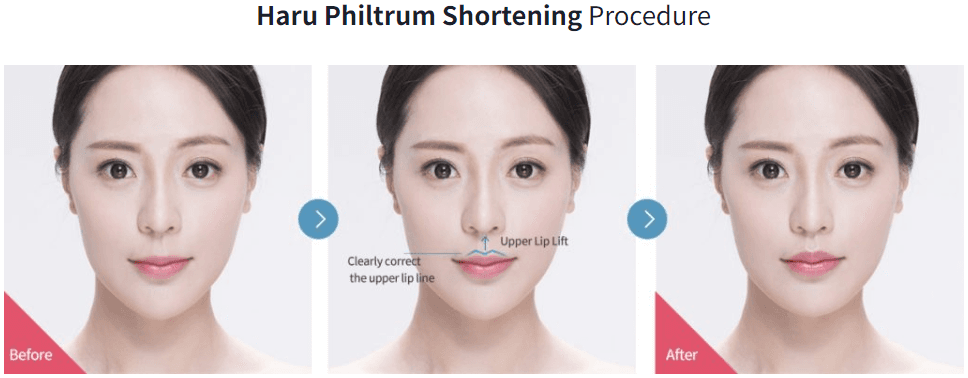
Technique determines where the lift is concentrated, how tension is managed, and the scar pattern. No technique has proven universally safer, more durable, or less visible than every other approach in comparative research.
- Classic bullhorn or direct subnasal lift — A continuous curved skin excision is placed at the nasal base to elevate the central and lateral upper lip. This is the standard approach for broad philtrum shortening.
- Modified bullhorn, deep-plane, or dermal-suspension lift — The surgeon uses deeper release, tissue handling, or fixation to redistribute tension and limit distortion. “Deep-plane” does not guarantee a scarless result or superior longevity.
- Italian lip lift — Two smaller excisions under the nostrils create a more limited, central effect. It suits selected patients whose concern is concentrated around the central lip.
- Central lip lift — This concentrates elevation at the Cupid’s bow and central vermilion rather than producing broad shortening across the upper lip.
- Endonasal or indirect lift — Incisions are made inside the nose or performed with rhinoplasty. This can reduce the external-scar burden in selected anatomy but generally provides a more limited lift.
- Combined nasal-tip surgery — Tip plasty or rhinoplasty is appropriate only when nasal-tip position or nasal proportions independently need correction; it is not routine for a standalone lip lift.
A 2026 systematic review found seven clinical studies involving 1,754 patients but could not pool outcomes because techniques and measurements differed substantially. That evidence gap matters when comparing branded or “hidden-scar” methods.
Why Visit Korea for a Bullhorn Lip Lift?
South Korea has an established infrastructure for international medical visitors, including national Medical Korea services and Seoul-based hospital access. It is reasonable to consider Korea for a bullhorn lip lift when the surgeon’s credentials, scar-management plan, communication, and follow-up arrangements meet the same standards expected anywhere else. There is no credible comparative evidence that standalone bullhorn lip-lift outcomes in Korea are superior to outcomes in other countries.
- International-patient infrastructure — Medical Korea provides a national platform for overseas patients seeking Korean healthcare information and support.
- High-volume destination context — Seoul reported receiving more than 1 million international medical tourists in 2024, which supports access to services designed around overseas visitors but does not measure lip-lift quality or safety.
- Relevant regional publication — A Korean publication has described combined subnasal lifting and nasal-tip plasty in Asian patients, but it is not a national protocol and does not establish outcome rates for standalone bullhorn lifts.
- Evidence-based limits — Published lip-lift research remains limited across all countries. The recent systematic review found heterogeneous study methods, while an earlier systematic review identified mostly retrospective cohorts and case series rather than randomized comparisons.
Key Information for International Patients
- Minimum stay — Remain in South Korea for at least 7–10 days after an uncomplicated standalone procedure. This allows an early wound review and removal of non-dissolving sutures, commonly on postoperative day 5–10.
- Flight timing — Schedule the return flight only after surgeon clearance. The CDC Yellow Book cites American Society of Plastic Surgeons guidance to wait 7–10 days before flying after facial cosmetic surgery.
- Extended-stay triggers — Stay longer for wound separation, infection, excessive swelling, combined surgery, delayed suture removal, or poor access to qualified follow-up at home.
- Early itinerary impact — Plan quiet days near the clinic. Bruising, swelling, soreness, and upper-lip tightness are expected, and speaking, smiling, wide bites, chewing, and restaurant meals can be uncomfortable during early healing.
- Escort and transport — Arrange a responsible adult for the first night when sedation or general anesthesia is used. Do not drive, navigate airports alone immediately after sedation, or take long-distance travel without clearance.
- Remote follow-up — Agree on photo-check timing, after-hours contact details, and symptoms requiring in-person assessment before departure. Obtain English copies of the operative note, anesthesia record, medicines, instructions, and clinical photographs.
- Home-care plan — Before traveling, identify a domestic clinician who is willing to assess a wound concern after return. Remote messaging cannot treat a hematoma, infection, or wound separation.
Travel note: Ask for individual clot-risk and flight advice when there is a history of thrombosis, a clotting disorder, cancer, obesity, estrogen therapy, or reduced mobility.
Which Are the Best Clinics in Korea for Bullhorn Lip Lift?
Listed below are some of the best clinics in Korea for bullhorn lip lift.
1. THEPLUS Plastic Surgery
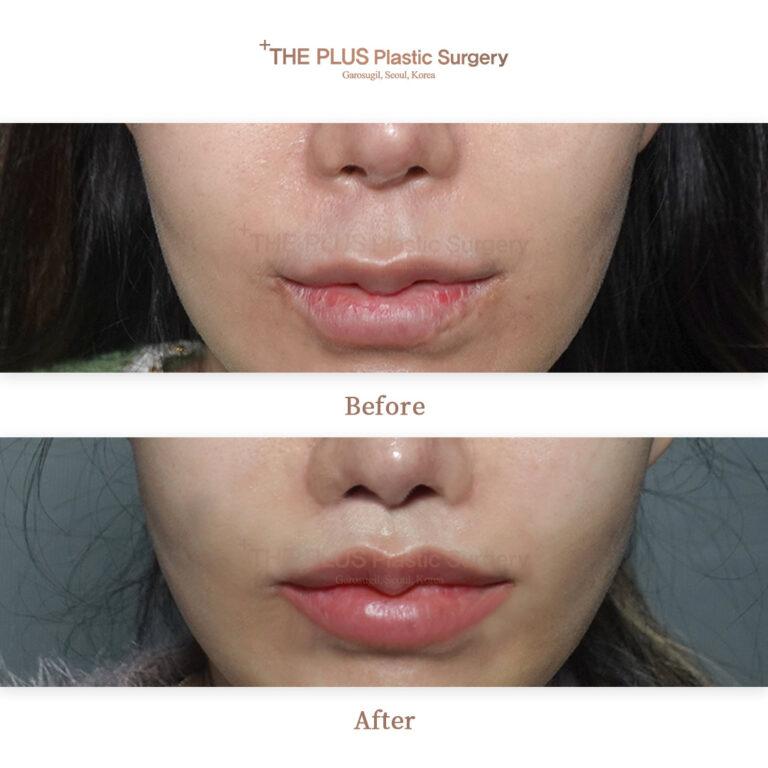
You may consider THE PLUS Plastic Surgery if your bullhorn lip-lift planning is part of a broader facial-proportion discussion, particularly alongside nasal or chin balance: its surgeons emphasize harmonious facial features and have extensive rhinoplasty and facial-contouring experience. The supplied information does not specifically confirm that a bullhorn lip lift is offered, so you should verify procedure availability and which surgeon would perform it.
- URL: THEPLUS Plastic Surgery Website
- Location: Gangnam-gu, Seoul
- Facial balance considerations:
- Rhinoplasty is described as focusing on structural harmony as well as appearance.
- Chin surgery and facial implants are listed options for adjusting projection and balance among the nose, lips, chin, and jawline.
- Dr. Kim’s stated approach centers on harmonious facial features and natural enhancement.
- Relevant surgical expertise:
- Dr. Jeong and Dr. Kim have published, taught, and presented internationally in rhinoplasty, including revision rhinoplasty.
- Dr. Kim is described as a board-certified plastic surgeon and an author on rhinoplasty and revision rhinoplasty.
2. Haru Clinic
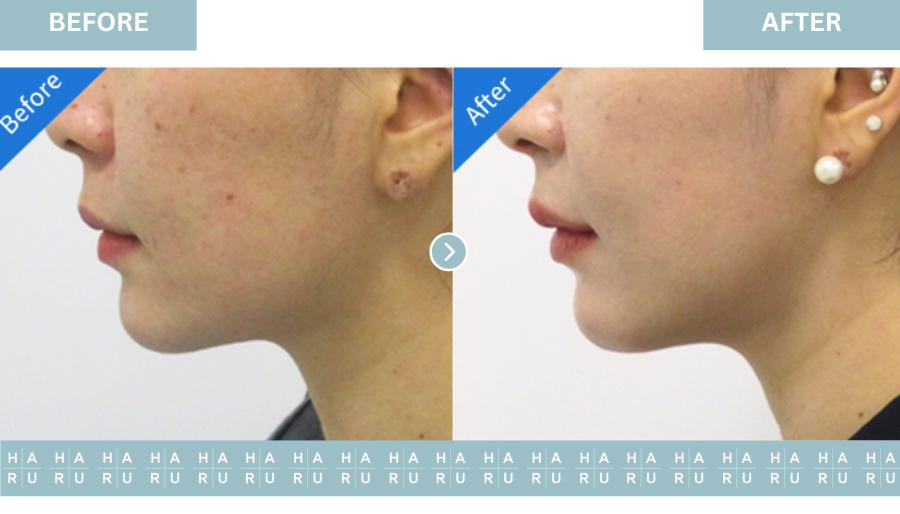
You may consider Haru Clinic for a bullhorn lip lift because it specifically offers a Philtrum Shortening Lift (Upper Lip Lift), using a small incision beneath the nose to shorten the philtrum, increase upper-tooth show at rest, and refine lip proportions. Haru also describes a minimally invasive alternative combining thread lifting with subtle lip-corner filler for philtrum lifting without scars or downtime.
- URL: Haru Clinic Website
- Location: Gangnam-gu, Seoul
- Procedure options:
- The surgical Philtrum Shortening Lift uses a small incision under the nose to shorten the philtrum and increase upper-tooth show at rest.
- A minimally invasive approach combines thread lifting and subtle lip-corner filler to lift the philtrum without scars or downtime, according to the clinic.
- The clinic frames both approaches around facial balance and a naturally refreshed expression.
- Clinician approach:
- Dr. Jeong is described as an official research physician at Merz, the company behind Belotero Filler.
- He teaches other doctors on filler techniques and is described as designing treatment around facial harmony and balance using non-invasive techniques.
- Related lip care:
- Lip asymmetry correction is available through precise hyaluronic-acid placement or minor surgical adjustment.
- Fillers for lips and other facial areas are listed for volume and definition.
3. Okay Plastic Surgery Clinic
You may consider Okay Plastic Surgery Clinic if you want to discuss a bullhorn lip lift within an individualized facial-aesthetics plan, as the clinic describes tailored treatment and offers rhinoplasty, facial lifting, and injectable facial-contouring services. The supplied information does not specifically list bullhorn lip lift or philtrum shortening, so you should confirm whether it is available and how scar-related considerations would be assessed.
- URL: Okay Plastic Surgery Clinic Website
- Location: Gangnam-gu, Seoul
- Facial aesthetic services:
- Rhinoplasty services include nose-tip surgery, bridge surgery, nostril reduction, and revision procedures.
- Facial lifting options include facelift surgery, mini lift surgery, endoscopic forehead lift, thread lifting, and laser lifting.
- Botox and fillers are listed for wrinkles, volume loss, and facial contouring.
- Scar-related support: A dedicated Scar Clinic and Keloid Clinic are listed, along with scar and keloid evaluation and treatment planning.
Bullhorn-Lip-Lift From Start to Finish
- Remote consultation and screening — Send standardized front, profile, three-quarter, resting-lip, and full-smile photographs where the clinic offers English-language or virtual consultation. Disclose all medical conditions, allergies, medicines, supplements, nicotine exposure, cold sores, prior filler, and previous nasal or lip procedures. Remote photographs help screening but cannot replace examination.
- In-person assessment and design — The surgeon examines philtral length, upper-lip vermilion, tooth and gum show, symmetry, lip closure, scar history, dental anatomy, nasal base, nostrils, tip projection, and nasolabial angle. Discuss scar placement, the risk of excessive or inadequate elevation, and whether a conservative excision is appropriate.
- Anesthesia planning — An isolated bullhorn lip lift is often performed under local anesthesia. Sedation or general anesthesia may be used when anxiety, patient factors, or combined facial surgery warrant it; this changes fasting, escort, and recovery requirements.
- Surgery — The surgeon marks the planned subnasal skin excision, removes the measured segment, elevates and stabilizes the upper lip, controls bleeding, and closes the incision in layers with fine sutures. Isolated surgery commonly takes less than one hour.
- Same-day discharge — Most patients leave the clinic the same day with incision-care instructions, prescribed or approved medicines, emergency contact information, and a review appointment. Use an escort after sedation or general anesthesia.
- Early recovery and wound review — Swelling, bruising, soreness, stiffness, and a temporarily over-everted upper lip are common. Attend the incision check within several days; non-dissolving sutures, when used, are often removed around day 5–10.
- Return and remote follow-up — Fly only after the planned review and surgeon clearance. Send photographs according to the agreed schedule and seek in-person care promptly for concerning symptoms rather than relying on messages alone. Early appearance is not final: a more meaningful assessment is usually possible at 3–4 months, while scar maturation can continue for 12 months or longer.
Alternatives to a Bullhorn Lip Lift
A bullhorn lift removes skin and permanently changes upper-lip position. Non-surgical choices add volume or temporary eversion without shortening the philtrum; other surgery can target a different lip, dental, or nasal driver of the concern.
Hyaluronic-Acid Lip Filler
- Best use — Adds temporary volume, border definition, and some eversion for a thin or deflated lip.
- Tradeoff — It does not reliably shorten a long philtrum or reproduce the structural lift created by skin excision.
- Related procedure — Read about lip fillers.
Fat Grafting
- Best use — Restores upper-lip volume using the patient’s own fat, with retention that varies by technique and individual healing.
- Tradeoff — It can improve fullness but does not create the same vertical shortening as a bullhorn lift.
- Related procedure — Read about lip augmentation.
Neuromodulator Lip Flip
- Best use — Creates modest, temporary upper-lip eversion in selected patients.
- Tradeoff — It removes no skin, does not shorten the philtrum, and cannot correct substantial age-related descent.
Corner-Mouth Lift
- Best use — Treats downturned oral commissures that create a sad or stern resting expression.
- Tradeoff — It does not replace philtrum-shortening surgery, though it can be considered when both concerns are present.
- Related procedure — Read about a corner mouth lift.
Dental or Nasal Assessment
- Best use — Orthodontic, restorative dental, orthognathic, or nasal evaluation is relevant when tooth display, bite, maxillary position, nasal-tip ptosis, or the nasolabial angle drives the concern.
- Tradeoff — These approaches address the underlying anatomy rather than simply elevating the upper lip.
- Related procedure — Read about rhinoplasty.
How Can I Prepare for a Bullhorn Lip Lift?
- Medical disclosure — Provide the surgeon, anesthetist, and prescribing clinicians with a complete list of prescriptions, over-the-counter medicines, aspirin, NSAIDs, anticoagulants, antiplatelets, diabetes medicines, blood-pressure medicines, corticosteroids, psychiatric medicines, vitamins, herbal products, topical agents, injectables, and recreational substances.
- Medication plan — Follow the individualized plan for aspirin, ibuprofen and other NSAIDs, supplements, alcohol, and prescription medicines. Do not stop blood thinners, diabetes treatment, psychiatric medication, or blood-pressure medication independently.
- Nicotine cessation — Stop cigarettes, vaping, nicotine replacement, and other nicotine exposure for the exact pre- and postoperative interval required by the operating surgeon. Nicotine constricts blood vessels and can impair healing and worsen scar outcomes.
- Skin and infection control — Report a history of cold sores; the clinician may consider antiviral prophylaxis based on individual risk. Postpone surgery for any active cold sore, acne lesion, dermatitis, infection, or open wound near the nose or mouth. Avoid waxing, aggressive exfoliation, lasers, and other treatments in the area unless approved.
- Fasting and anesthesia — Follow the clinic’s fasting instructions exactly when sedation or general anesthesia is planned. Local anesthesia alone has different requirements.
- Accommodation and supplies — Book nearby accommodation, prepare soft foods and hydration, and arrange pillows for head elevation. Bring a translated medical summary when relevant.
- Escort and schedule — Arrange a first-night escort after sedation or general anesthesia. Keep flights and non-refundable travel plans flexible until the surgeon confirms that healing and suture timing are suitable.
Travel note: Pack enough regular prescription medication for the full stay plus a contingency supply, and carry it in original labeled containers.
Confirm every medication hold, fasting instruction, nicotine interval, and travel plan with the treating doctor; their individualized instructions take precedence over general guidance.
Aftercare Advice
Protect the incision from tension, contamination, heat, and sun while it heals; early scar care has a lasting effect on appearance.
- Incision care — Keep the area clean and use only the ointment, cleanser, tape, or dressing approved by the surgeon. Do not pick crusts, apply unapproved scar products, or begin silicone, massage, laser, or steroid scar treatment until the wound is closed and the surgeon approves it.
- Lip movement and food — Use soft foods and stay hydrated. Avoid forceful smiling, pursing, wide bites, straws, prolonged talking, and foods requiring substantial chewing during early healing because these movements pull on the subnasal closure.
- Swelling control — Sleep on the back with the head elevated. Swelling and bruising often improve substantially in about one week, but residual swelling commonly lasts several weeks and tightness can persist for months.
- Activity and heat — Avoid strenuous exercise, heavy lifting, contact sports, swimming, saunas, and activities that increase facial blood flow or tension on the incision for the surgeon-specified interval, often about 1–2 weeks after uncomplicated isolated surgery.
- Sun protection — Once the incision is fully closed and the surgeon permits it, protect the scar from ultraviolet exposure with broad-spectrum SPF 50 sunscreen and physical shade. Sun exposure can prolong redness and pigmentation.
- Urgent warning signs — Seek prompt in-person assessment for uncontrolled bleeding, rapidly increasing or one-sided swelling, severe or worsening pain, spreading redness or warmth, pus or foul drainage, fever, wound separation, breathing difficulty, allergic medication symptoms, or persistent inability to close the lips.
- Result timing — The structural lift is immediate, but the early look is distorted by swelling, stiffness, redness, and temporary over-eversion. Assess the result more meaningfully at 3–4 months; scar color and texture can continue improving for a year or longer. Revision is corrective surgery, not routine maintenance, and the reported revision range of 0.6%–6.7% is not an individual risk estimate because studies used different techniques and definitions.
Follow the treating doctor’s instructions over this general guidance and contact the clinic promptly when anything appears wrong.
Frequently Asked Questions
Related Blogs
Alar Base Heaviness Solutions: Alar Reduction Surgery in Korea for Balanced Facial Contours
Discover how Korea leads in cosmetic solutions for alar base heaviness through expert alar reduction (alarplasty) procedures. This blog explores treatment options to narrow wide, flared nostrils, enhance facial harmony, and boost confidence. Learn about Korea’s cutting-edge techniques, experienced surgeons, affordable costs, and seamless medical tourism support for international patients. Whether
Updated: Oct 2, 2026
Underprojected Nasal Tip Correction with Tip Plasty Procedures in Korea: Expert Solutions
Discover how Korea’s leading tip plasty procedures can correct underprojected nasal tips, enhance facial harmony, and boost confidence. This specialized rhinoplasty addresses nasal tip projection, symmetry, and refinement efficiently and affordably. With advanced techniques and expert Korean surgeons, patients from around the world seek top-quality results in Korea’s renowned medical tourism indus
Updated: Oct 2, 2026
Post-Operative Asymmetry Solutions: Revision Rhinoplasty in Korea for Perfect Facial Balance
Discover how Korea leads in revision rhinoplasty for nasal asymmetry, addressing issues like crooked noses, tip deformities, and deviated septum repairs. Our comprehensive guide explains procedures such as open rhinoplasty, cartilage grafting, and scar tissue management, alongside the benefits of choosing Korea for medical tourism. Learn about costs, recovery, and how expert Korean surgeons delive
Updated: Oct 2, 2026
Nasal Bossae Correction in Korea: Effective Tip Plasty Procedures for Refined Nose Shape
Discover how Korea leads in correcting nasal bossae—knob-like irregularities caused by prior rhinoplasty—through specialized Tip Plasty procedures. This guide covers the causes of nasal bossae, detailed surgical techniques, and how Korea's innovative medical tourism industry offers affordable, expert rhinoplasty solutions. Learn about choosing the right clinic, travel tips, recovery expectations,
Updated: Oct 2, 2026
Clinics offering Bullhorn-Lip-Lift

THEPLUS Plastic Surgery Korea | Eye, Nose, Face & Body Surgery
Sinsa

Haru Clinic Korea | Fully-Customized Full-Face Non-Surgical Rejuvenation With Threads, Botox & Fillers
Sinsa

Okay Plastic Surgery Clinic in Korea: Comprehensive Aesthetic Procedures with Sincerity and Care
Cheongdam
ID Hospital - Main Branch in Korea: Specializing in Safe & Customized Facial Plastic Surgery and Post-Care Services
Sinsa