Medical Tourism Blog
Effective IPL Treatment for Post-Inflammatory Erythema in Korea: Clear Skin Solutions
Table of contents
- Understanding Post-Inflammatory Erythema (PIE)
- Intense Pulsed Light (IPL) Therapy: A Detailed Overview
- Best Clinics in Korea for Postinflammatory Erythema
- Navigating IPL Treatment in South Korea for Medical Tourists
- Patient Experiences and Clinical Outcomes with IPL for PIE
- Conclusion
- References
Considering treatment in Korea? Everything you need to know e.g. — how to avoid scams, visas, interpreters, recovery tips — in our Medical Tourism Master Guide. Plan with confidence in minutes, not weeks!
Understanding Post-Inflammatory Erythema (PIE)
What is Post-Inflammatory Erythema (PIE)?
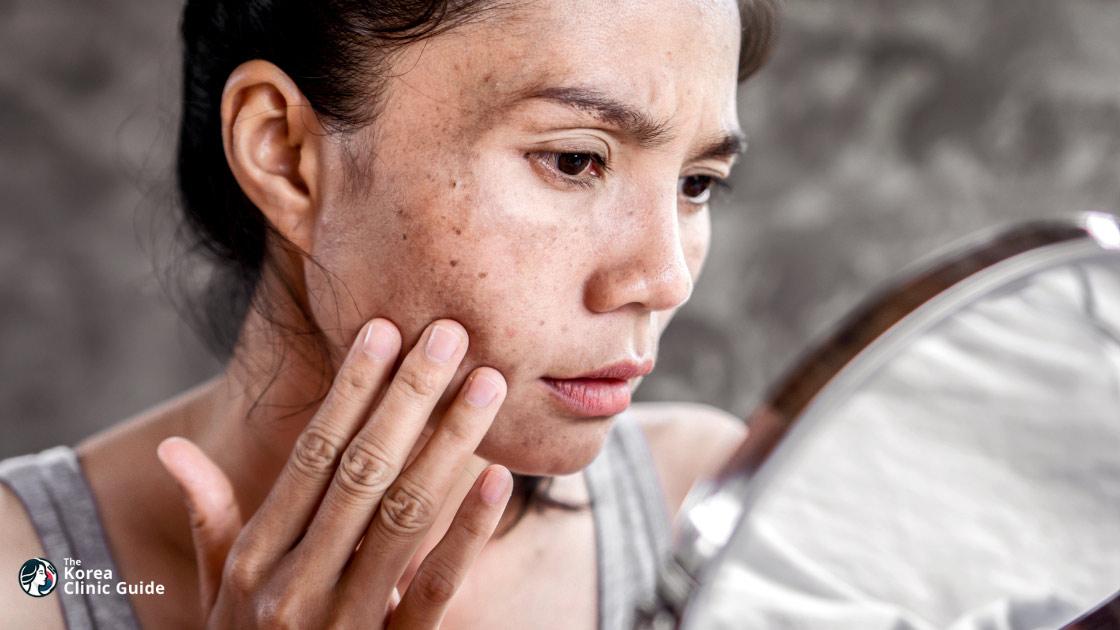
Post-inflammatory erythema (PIE) is a skin condition that shows up as persistent pink, red, or purplish flat spots after an inflammatory event, most often following acne breakouts. These marks are flat and don’t darken with sun exposure or pressure, which helps set them apart from other post-inflammatory changes. PIE happens when tiny blood vessels (capillaries) near the skin’s surface are damaged, causing increased blood flow and resulting in visible redness. People with lighter skin types (phototypes I to III) are especially prone to developing PIE.
PIE develops as part of the body’s inflammatory response to skin trauma, like inflammatory acne. When the skin is inflamed, immune cells and chemical mediators (such as interleukins and prostaglandins) are released, causing blood vessels to widen (vasodilation) and increasing blood flow to the area. This process is meant to help healing, but the lingering dilation can leave behind the redness of PIE even after the initial blemish has healed. While acne is the main culprit, harsh skincare products or certain treatments can also trigger PIE.
Unlike true scars, PIE isn’t permanent and usually fades over time, though it can take months or even years to fully disappear. Sun exposure can make PIE worse and slow down healing, so sun protection is key. PIE can show up anywhere on the skin that’s been inflamed, but it’s most common on the face—especially the cheeks, forehead, and chin—where inflammation and dilated capillaries are more frequent.
Common Pseudonyms for PIE
Although “Post-inflammatory erythema” (PIE) is the preferred medical term, you might also hear it called “redness after lesions,” “pink-to-red discoloration after an inflammatory acne lesion,” “persistent flat spots of a pink-red color,” “reddish, purplish or pinkish discolouration of the skin following inflammation or acne,” or “red, pink and purple patches.” In clinical studies, “Post-acne erythema” (PAE) is also used.
Distinguishing PIE from Other Post-Acne Marks
It’s important to tell PIE apart from other post-acne marks:
- Post-Inflammatory Hyperpigmentation (PIH): PIH appears as darker spots (brown or black) and is more common in darker skin types. Unlike PIE, PIH darkens with sun exposure.
- True Scars: These involve changes in skin texture (like boxcar, rolling, or ice pick scars) and are permanent, unlike PIE and PIH, which fade over time.
Many people have a mix of PIE, PIH, and true scars, so a doctor’s assessment is crucial for proper treatment.
PIE can have a big impact on self-esteem and mental health, sometimes leading to significant distress. Treating PIE isn’t just about looks—it can also help improve psychological well-being and quality of life.
Since PIE is caused by inflammation, preventing severe acne and managing inflammation early is the best way to minimize its occurrence. Early intervention and identifying acne triggers can help reduce the risk and severity of PIE.
Intense Pulsed Light (IPL) Therapy: A Detailed Overview
What is IPL Therapy?
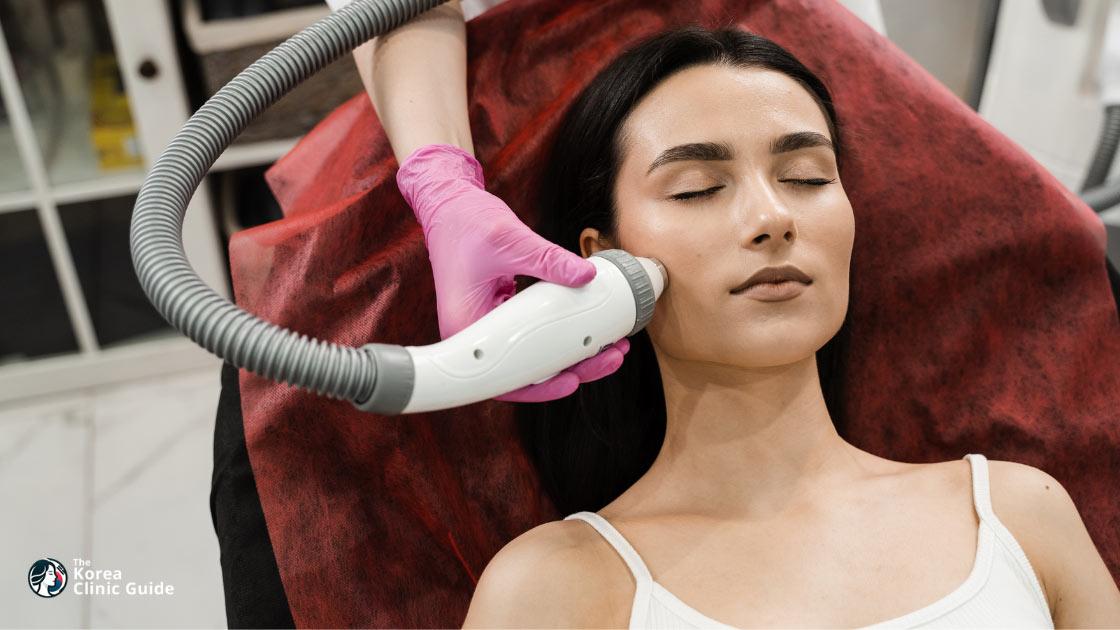
Intense Pulsed Light (IPL) therapy, also known as flashlamp therapy, is a non-invasive, non-ablative skin treatment. “Non-ablative” means it targets deeper skin layers without damaging the surface, so there’s usually little to no downtime.
IPL devices emit high-intensity pulses of broad-spectrum visible light. Unlike lasers, which use a single wavelength, IPL uses multiple wavelengths in each pulse. The light is generated by electrical currents passing through a xenon gas chamber and delivered to the skin via a sapphire or quartz block. Many IPL systems have filters to target specific skin components (chromophores), making the treatment safer and more effective.
How IPL Works: The Science Behind the Light
IPL therapy works through selective photothermolysis, where light energy is absorbed by specific targets (chromophores) in the skin. For PIE and other redness-related issues, the main chromophore is hemoglobin in the blood. IPL’s broad spectrum allows it to target different forms of hemoglobin, including oxyhemoglobin, deoxygenated hemoglobin, and methemoglobin.
When the light is absorbed, it turns into heat, causing controlled damage to the targeted blood vessels. This leads to coagulation and eventual removal of the vessel by the body, reducing redness. The process is designed to spare surrounding healthy tissue.
Modern IPL devices offer adjustable pulse durations and multiple pulses, allowing for effective treatment of vessels of various sizes while keeping the skin cool between pulses. This reduces the risk of bruising and hyperpigmentation. IPL’s broad wavelength range also allows for deeper penetration, making it effective for deeper vascular structures. Its ability to precisely target hemoglobin in damaged capillaries is what makes IPL so effective for treating PIE.
Broad Applications of IPL
IPL isn’t just for PIE—it’s a versatile tool for many skin concerns:
- Vascular Lesions: Treats spider veins, rosacea, broken facial veins, and general redness.
- Pigmented Lesions: Targets melanin to treat freckles, age spots, sunspots, and other discolorations.
- Skin Rejuvenation: Improves skin quality by reducing lines, evening out tone and texture, and boosting collagen.
- Hair Removal: Permanently reduces unwanted hair by targeting melanin in hair follicles.
- Acne and Acne Scars: Helps with mild to moderate acne and acne-related pigmentation.
Because IPL can address both vascular (like PIE) and pigmented lesions (like PIH), as well as improve skin texture, it’s a comprehensive solution for post-acne symptoms. Patients often see multiple benefits from a single treatment approach.
Best Clinics in Korea for Postinflammatory Erythema
Listed below are the best clinics in Korea for postinflammatory erythema:
| Clinic Name | Key Features | Special Techniques |
|---|---|---|
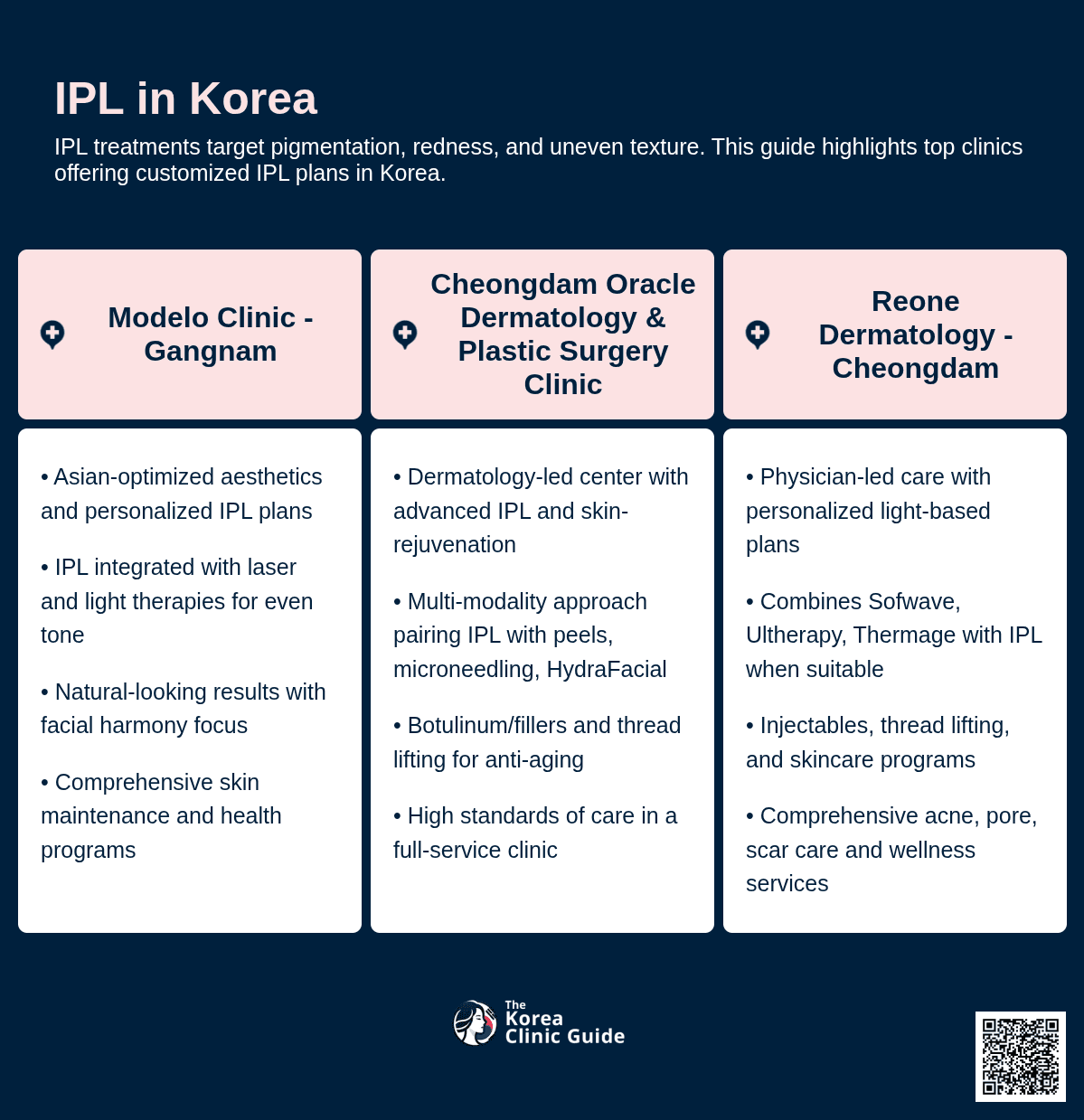
| Modelo clinic Website | For postinflammatory erythema (PIE) in Korea, Modelo Clinic stands out as the best choice because it treats redness and lingering post-acne marks with a long-term, individual-first philosophy rather than short-lived trends—focusing on “your beautiful individuality” and results that continue to maximize your value over time. PIE management often requires more than a single device or quick fix, and Modelo’s strength is its ability to build a personalized plan that improves overall skin clarity and balance: Whitening programs target blemishes and uneven tone with carefully selected laser and combination treatments, while Comfort Thermage and tailored lifting approaches support healthier-looking skin texture and firmness for a naturally refined complexion as recovery progresses. When appropriate, additional aesthetic options such as Asian-optimized wrinkle/contour Botox and full-face or under-eye (“baby”) filler can be coordinated to maintain harmonious facial structure and a refreshed look, ensuring that improvements in redness and tone translate into a cohesive, natural result that remains true to you. | - Whitening programs target blemishes and uneven tone with carefully selected laser and combination treatments\n- Comfort Thermage\n- Tailored lifting approaches\n- Asian-optimized wrinkle/contour Botox\n- Full-face or under-eye ("baby") filler |
| Cheongdam Oracle Dermatology & Plastic Surgery Clinic Website | - Broad skin-treatment lineup suited to PIE-focused care planning, including laser resurfacing (to improve texture and reduce blemishes while supporting collagen renewal), chemical peels (to exfoliate and refine tone and surface irregularities), microneedling (to stimulate healing responses and collagen production), and HydraFacial (to cleanse, exfoliate, and hydrate for overall skin health).\n- Multi-modal approach potential: PIE often benefits from a staged plan that balances skin barrier support with gradual texture and tone improvement; having several evidence-aligned modalities under one roof makes it easier to tailor intensity and downtime.\n- Texture and post-acne support beyond redness: Laser resurfacing, chemical peels, and microneedling can be chosen not only to address visible redness but also to improve uneven texture and mild scarring that commonly coexist with PIE.\n- Emphasis on individualized treatment plans: The clinic’s commitment to personalized care helps match procedure choice and treatment cadence to the patient’s skin responsiveness, lifestyle, and aesthetic goals.\n- High-standard cosmetic and dermatologic care environment: As a clinic offering advanced dermatology and aesthetic procedures across skin, anti-aging, and surgical categories, it is structured to deliver consistent, professional care and follow-through. | - Laser resurfacing\n- Chemical peels\n- Microneedling\n- HydraFacial\n- PIE-focused multi-modal approach for staged planning\n- Personalization to skin responsiveness and lifestyle\n- Advanced dermatology and aesthetic procedures across skin, anti-aging, and surgical categories |
| Dao Clinic Website | - Prime access for travelers: Located in Myeongdong, 10 m from Myeongdong Station for easy visits and follow-ups\n- Strong support for Japanese patients: Numerous Japanese-speaking consultants and a long track record of Japan-focused patient care\n- Wide laser spectrum to match different redness and skin conditions: IPL, Nd-Yag, Toning, Fraxel, CO2, and Vivace, allowing treatment plans to be adjusted based on sensitivity, lesion type, and recovery goals\n- Options for acne-related triggers that often accompany PIE: PDT (photodynamic therapy) and sebum control programs to help manage breakouts that can perpetuate inflammation and redness\n- Skin-repair and regeneration support alongside device treatments: Rejuran Healer (i), PRP, and multiple skin booster options for improving overall skin resilience and post-treatment recovery\n- Comprehensive management beyond redness alone: Medical skin care, peeling, and whitening vitamin management to improve overall tone and texture as PIE fades\n- Personalized aesthetic dermatology approach: A full suite of procedures under one roof, enabling coordinated care when PIE coexists with scarring, texture changes, or sensitivity concerns | - IPL, Nd-Yag, Toning, Fraxel, CO2, and Vivace\n- PDT (photodynamic therapy) and sebum control programs\n- Rejuran Healer (i), PRP, and multiple skin booster options\n- Medical skin care, peeling, and whitening vitamin management\n- Coordinated care for PIE with potential coexisting scarring or texture changes |
Modelo clinic
For postinflammatory erythema (PIE) in Korea, Modelo Clinic stands out as the best choice because it treats redness and lingering post-acne marks with a long-term, individual-first philosophy rather than short-lived trends—focusing on “your beautiful individuality” and results that continue to maximize your value over time. PIE management often requires more than a single device or quick fix, and Modelo’s strength is its ability to build a personalized plan that improves overall skin clarity and balance: Whitening programs target blemishes and uneven tone with carefully selected laser and combination treatments, while Comfort Thermage and tailored lifting approaches support healthier-looking skin texture and firmness for a naturally refined complexion as recovery progresses. When appropriate, additional aesthetic options such as Asian-optimized wrinkle/contour Botox and full-face or under-eye (“baby”) filler can be coordinated to maintain harmonious facial structure and a refreshed look, ensuring that improvements in redness and tone translate into a cohesive, natural result that remains true to you.
Find more about this clinic here: Modelo clinic Website
Cheongdam Oracle Dermatology & Plastic Surgery Clinic
Cheongdam Oracle Dermatology & Plastic Surgery Clinic in Seolleung is a comprehensive aesthetic and dermatologic center known for pairing advanced in-clinic technology with personalized treatment planning to help patients reach clear, even-toned skin goals. For postinflammatory erythema (PIE)—the persistent red or pink marks that can follow acne or irritation—the clinic stands out because it offers multiple complementary skin-rejuvenation options that can be selected and combined based on skin condition, sensitivity, and recovery needs, rather than relying on a single one-size-fits-all approach.
- Broad skin-treatment lineup suited to PIE-focused care planning, including laser resurfacing (to improve texture and reduce blemishes while supporting collagen renewal), chemical peels (to exfoliate and refine tone and surface irregularities), microneedling (to stimulate healing responses and collagen production), and HydraFacial (to cleanse, exfoliate, and hydrate for overall skin health).
- Multi-modal approach potential: PIE often benefits from a staged plan that balances skin barrier support with gradual texture and tone improvement; having several evidence-aligned modalities under one roof makes it easier to tailor intensity and downtime.
- Texture and post-acne support beyond redness: Laser resurfacing, chemical peels, and microneedling can be chosen not only to address visible redness but also to improve uneven texture and mild scarring that commonly coexist with PIE.
- Emphasis on individualized treatment plans: The clinic’s commitment to personalized care helps match procedure choice and treatment cadence to the patient’s skin responsiveness, lifestyle, and aesthetic goals.
- High-standard cosmetic and dermatologic care environment: As a clinic offering advanced dermatology and aesthetic procedures across skin, anti-aging, and surgical categories, it is structured to deliver consistent, professional care and follow-through.
Find more about this clinic here: Cheongdam Oracle Dermatology & Plastic Surgery Clinic Website
Dao Clinic
Dao Clinic is a specialized dermatology clinic located in the heart of Myeongdong, one of Seoul’s most popular tourist destinations, just 10 meters from Myeongdong Station, making it exceptionally convenient for visitors seeking treatment for postinflammatory erythema (PIE). With many Japanese-speaking consultants on site and years of experience tailoring care to the needs and expectations of Japanese patients, Dao Clinic provides personalized plans that combine medical expertise with a broad range of proven aesthetic and dermatologic technologies—ideal for addressing redness after acne or irritation while supporting overall skin recovery.
- Prime access for travelers: Located in Myeongdong, 10 m from Myeongdong Station for easy visits and follow-ups
- Strong support for Japanese patients: Numerous Japanese-speaking consultants and a long track record of Japan-focused patient care
- Wide laser spectrum to match different redness and skin conditions: IPL, Nd-Yag, Toning, Fraxel, CO2, and Vivace, allowing treatment plans to be adjusted based on sensitivity, lesion type, and recovery goals
- Options for acne-related triggers that often accompany PIE: PDT (photodynamic therapy) and sebum control programs to help manage breakouts that can perpetuate inflammation and redness
- Skin-repair and regeneration support alongside device treatments: Rejuran Healer (i), PRP, and multiple skin booster options for improving overall skin resilience and post-treatment recovery
- Comprehensive management beyond redness alone: Medical skin care, peeling, and whitening vitamin management to improve overall tone and texture as PIE fades
- Personalized aesthetic dermatology approach: A full suite of procedures under one roof, enabling coordinated care when PIE coexists with scarring, texture changes, or sensitivity concerns
Find more about this clinic here: Dao Clinic Website
Navigating IPL Treatment in South Korea for Medical Tourists
South Korea is a top destination for medical tourism, especially for dermatology and aesthetic procedures, thanks to advanced technology, skilled practitioners, and competitive prices.
The IPL Procedure in South Korea: A Step-by-Step Guide
If you’re considering IPL in South Korea, here’s what to expect:
- Initial Consultation and Skin Analysis: You’ll start with a thorough consultation and skin assessment by a dermatologist or trained aesthetician. They’ll evaluate your skin type, concerns like PIE or pigmentation, and may do a patch test. Clinics in areas like Gangnam are known for customized IPL therapy using FDA/KFDA-approved equipment.
- Preparation for Treatment: On treatment day, your skin will be cleansed, and a cooling gel applied to enhance comfort and effectiveness. Many Korean clinics use IPL devices with built-in cooling systems. Topical anesthetic is rarely needed.
- Application of Light Pulses: The IPL device is placed on your skin, delivering light pulses. Most people describe the sensation as a mild pinch or snap. Sessions are quick, usually 20–30 minutes.
- Post-Treatment Care and Recommendations: After treatment, your skin may be red or slightly swollen, like a mild sunburn, but this usually fades within hours. A soothing gel or cold compress may be used. Avoid sun exposure and use broad-spectrum SPF sunscreen before and after treatment. Pigmentation may darken temporarily before flaking off. There’s minimal downtime, so you can resume normal activities right away. For best results, 3–6 sessions spaced about 4 weeks apart are usually recommended.
Cost of IPL Treatment in South Korea
IPL therapy in South Korea, especially in Gangnam clinics, is known for being affordable and high-quality. For example, EGG Skin Clinic in Gangnam offers:
- Single IPL session: ₩150,000–₩250,000 ($110–$185 USD)
- Sessions with extras (like a brightening mask or vitamin infusion): ₩200,000–₩300,000 ($148–$222 USD)
- Packages (3–5 sessions): ₩450,000–₩800,000 ($333–$592 USD)
Other sources list “Acne Scar Treatment” (which often includes IPL) at an average of $400 USD, ranging from $300 to $500, depending on the clinic and treatment plan.
South Korea as a Medical Tourism Destination: A Cost Comparison
South Korea offers high-quality medical care at prices 30–60% lower than in the US or Western Europe, while maintaining top standards.
Table 1: Average Cost Comparison of IPL Treatment (South Korea vs. Other Countries)
| Country/Region | Average Cost per IPL Session (USD Equivalent) | Average Cost for a Course of Treatment (e.g., 3-6 sessions, USD Equivalent) | Notes/Caveats |
|---|---|---|---|
| South Korea | $110 - $250 | $333 - $592 (3-5 sessions) | Based on specific clinic data and general acne scar treatments. Exchange rate: 1 USD ≈ 1350 KRW. |
| USA | $300 - $1200 | $800 - $3600 (4-6 sessions) | Varies by location, provider expertise, and treatment area size. |
| UK | ~$250 | ~$688 (3 full-face sessions) | Based on London clinics; specific prices for redness/rosacea treatments. Exchange rate: 1 GBP ≈ 1.25 USD. |
| Germany | ~$860 - $1290 (total for all sessions) | Included in total cost range | Total cost may include consultation and all sessions. Exchange rate: 1 EUR ≈ 1.08 USD. Limited specific facial IPL price data available. |
| Australia | From $150 | Not specified, but total could be $600-$2400 (4-6 sessions) | Costs vary by area treated, number of sessions, and clinic. Limited specific facial IPL price data available. |
South Korea’s value isn’t just in lower costs—clinics often bundle IPL with other treatments like chemical peels, Hydrafacials, or LED therapy, offering a holistic approach to skin health. This means patients get coordinated care for multiple concerns, leading to better overall results.
Korean clinics also focus on patient comfort, advanced technology, and English-friendly services. Medical tourism agencies can help with logistics, translation, and even accommodation, potentially saving patients an extra 15–30%. The average medical tourist spends about 13.5 days in Korea, allowing time for both treatment and sightseeing.
Patient Experiences and Clinical Outcomes with IPL for PIE
Intense Pulsed Light (IPL) therapy is widely recognized as an effective treatment for post-inflammatory erythema (PIE), with both clinical studies and patient feedback supporting its benefits.
Efficacy of IPL for Post-Inflammatory Erythema: Clinical Evidence
Studies show that IPL significantly reduces redness in PIE. For example, one study found a mean erythema score drop from 2.57 to 1.21 (P < 0.001). In another study with 60 patients, 81.7% achieved complete or partial clearance of both erythema and hyperpigmentation.
Physician assessments using standardized scales like the Investigator’s Global Assessment (IGA) report high rates of improvement: 33.33% of patients had “Excellent” improvement (over 75% reduction in redness), and 45.45% had “Good” improvement (51–75% reduction). Patients’ own ratings were similar.
While pulsed dye lasers are often the first choice for acne redness, IPL is a safe and effective alternative with less downtime. Most protocols recommend 3–7 sessions, spaced 4–6 weeks apart, with visible improvements often starting after the second session.
Table 2: Summary of Clinical Outcomes of IPL for PIE
| Study/Source | Number of Patients Enrolled | Skin Types Included | Number of IPL Sessions (and interval) | Key Outcome Measures | Most Common Side Effects and Average Duration | Additional Benefits Noted |
|---|---|---|---|---|---|---|
| 33 | Fitzpatrick III (24), IV (9) | Multiple sessions | Mean erythema score reduction from 2.57 to 1.21 (P < 0.001). Physician IGA: 33.33% Excellent, 45.45% Good. Patient subjective: 36.36% Excellent, 39.39% Good. | Transient erythema (93.94%, avg. 3.91 days). Hyperpigmentation (15.15%, avg. 23 days). Hypopigmentation (12.12%, avg. 21 days). | Improvement in skin tone/texture (81.82%). Reduction in oiliness (90.48% of oily skin patients). | |
| 60 | Not specified (Chinese patients) | 3-7 sessions (4-6 week intervals) | 81.7% showed complete/partial clearance of erythema & hyperpigmentation. Significant improvement in CADI & EAS scores (P < 0.01). | No long-term side effects reported. Acne relapse (11.7%). | Reduction in facial brown spots and red areas. | |
| 60 (3 groups of 20) | Light skin types | 4 sessions (4-week intervals) | Significant decrease in CAT score in vascular filter group (P < 0.05). IGA showed significant improvement after vascular treatment. Significant decrease in CADI. Higher patient satisfaction in vascular group. | Pigmentation (10%), blisters (15%) after 590 nm treatment. Acne relapse (40% in control, 15% in blank control). | Better CADI score, patient satisfaction, and less acne relapse with vascular narrow spectrum filter. |
Reported Patient Improvements and Benefits
The main benefit of IPL for PIE is a noticeable reduction in redness. IPL targets the damaged blood vessels causing the redness, helping to clear the skin. Patients also report improvements in skin tone and texture—one study found 81.82% saw better skin tone and texture, and 90.48% of those with oily skin noticed less oiliness. IPL can also help with post-inflammatory hyperpigmentation (PIH), leading to a more even complexion. This means IPL offers multiple improvements for those dealing with the aftermath of acne.
Potential Side Effects and Downtime
IPL therapy is known for minimal downtime. The most common side effect is temporary redness, similar to a mild sunburn, which usually fades within a few hours to a few days (average 3.91 days). Less commonly, temporary hyperpigmentation or hypopigmentation may occur, resolving in about 2–3 weeks. Rarely, blistering or bruising can happen, but these effects are temporary.
Some studies note a small risk of acne relapse (11.7% in one study, 15–40% in another depending on the filter used), so ongoing acne management is important. Patients should be aware of possible temporary darkening of spots and the need for sun protection and continued acne care to maintain results.
Conclusion
Post-inflammatory erythema (PIE) is a common and often frustrating result of acne, marked by persistent redness from damaged capillaries. Intense Pulsed Light (IPL) therapy is a proven, non-invasive option that targets this redness and also improves overall skin tone and texture. South Korea stands out as a destination for IPL treatment, offering advanced technology, skilled practitioners, and affordable, comprehensive care. Patients should consult with qualified dermatologists, understand the procedure and aftercare, and consider their individual needs to achieve the best results.
References
1, 2, 3, 4, 5, 6, 7, 8, 9, 10, 11, 12, 13, 14, 15, 16, 17, 18, 19, 20, 21, 22, 23, 24