Medical Tourism Blog
Areola Pale Color Solutions: Areola Tattoo Procedures in Korea for Natural-Looking Results
Table of contents
- Areola Tattooing: A Comprehensive Medical Overview
- Best Clinics in Korea for Areola Pale Color
- Why Korea Is Popular for Areola Tattooing (Medical Tourism Context)
- Cost Analysis: Areola Tattooing in South Korea vs. Global Benchmarks
- Patient Perspectives: Impact of Areola Tattooing for Pale Areola
- Conclusion
- References
Considering treatment in Korea? Everything you need to know e.g. — how to avoid scams, visas, interpreters, recovery tips — in our Medical Tourism Master Guide. Plan with confidence in minutes, not weeks!
The areola is the pigmented area surrounding the nipple, and its color varies from person to person—ranging from pink and red to brown or nearly black. Some people seek solutions when their areola seems unusually pale, which may cause emotional discomfort and prompt medical or cosmetic intervention. To address such cases, it's essential to distinguish between different medical reasons behind a pale areola, ensuring proper diagnosis before proceeding with treatments like areola tattooing.
While "pale color" might simply indicate temporary pallor due to reduced blood supply, many people are referencing "hypopigmentation"—a reduction or absence of melanin pigment in the areola. Hypopigmentation causes the area to look lighter or grayer than usual and can be temporary or persistent. Factors such as pregnancy, breastfeeding, or recovery from skin irritation may cause natural darkening and then gradual fading, with color potentially returning over weeks to months. Although these changes are often harmless, they can have a notable psychological impact, leading people to seek permanent cosmetic solutions, especially when pigmentation loss becomes emotionally distressing.
Common Pseudonyms and Related Conditions
Patients may describe a “pale areola” using different terms, which sometimes leads to confusion. Here’s a quick breakdown:
| Term | Description |
|---|---|
| Pallor | Temporary paleness due to decreased blood flow; not actual pigment loss. |
| Hypopigmentation / Loss of Pigment | Actual reduction or absence of melanin pigment, which may be persistent. |
| Areola Pale Color | General term, often referencing persistent pigment loss (the user’s primary focus). |
This clarification is important for getting an accurate diagnosis and for deciding if a procedure like areola tattooing is appropriate.
Underlying Causes of Areola Hypopigmentation
There are many causes for areola hypopigmentation:
- Natural Variation: Lighter-skinned individuals may naturally have paler areolas.
- Post-Inflammatory Hypopigmentation: Dermatitis, allergies, or topical steroid treatment can reduce pigment.
- Dermatologic Diseases: Fungal infections, eczema, or vitiligo can impact pigment. Vitiligo, in particular, is an autoimmune condition with specific treatments.
- Post-Treatment Effects: Topical steroids used for skin conditions might trigger hypopigmentation, sometimes months later.
- Serious Conditions: Changes limited to one breast, uneven pigmentation, accompanying symptoms such as breast lumps, nipple discharge, or skin texture changes can indicate breast cancer, making prompt evaluation crucial.
When to Seek Medical Consultation
If your areola changes color suddenly, shows asymmetry, or is accompanied by unusual symptoms (e.g., lumps, discharge, or significant texture changes), see a healthcare provider immediately. Self-diagnosis can be risky, as some symptoms require urgent intervention. Diagnosis typically relies on history, physical examination, and sometimes a specialist assessment. Only after medical causes are ruled out should cosmetic procedures like areola tattooing be considered.
Areola Tattooing: A Comprehensive Medical Overview
Areola tattooing—also known as areola restoration, micropigmentation, repigmentation, or simulation—is a specialized cosmetic procedure. By depositing pigment into the skin, practitioners recreate or enhance the appearance of the areola and nipple, offering both reconstructive and aesthetic benefits.
What is Areola Tattooing? (Purpose, Scope, and Applications)
Initially developed for post-mastectomy patients as part of breast reconstruction, areola tattooing now serves a wider audience. It helps those with naturally pale, undefined, small, or asymmetric areolas, as well as people needing scar camouflage or support during gender-affirming care. Patients frequently describe the results as emotionally transformative, helping restore confidence and a sense of normalcy.
Reconstructive vs. Cosmetic Applications
- Reconstructive: Essential after mastectomy, breast surgery, or as a less-invasive alternative to surgical reconstruction and skin grafting, often with fewer complications and a shorter recovery.
- Cosmetic: Used for defining pale areolas, correcting asymmetry, recoloring after changes like breastfeeding, camouflaging scars, or assisting in gender-affirming procedures.
Areola tattooing’s flexibility means it can be customized for many aesthetic and emotional needs.
2D vs. 3D Techniques for Realistic Outcomes
- 2D Areola Tattooing: Adds color or texture to existing areola/nipple for enhancement.
- 3D Areola Tattooing: Uses shading and color blending to create the illusion of a raised, lifelike areola—ideal for flat surfaces after surgery. The tactile sensation doesn’t change (tattoos aren’t physically raised), but the visual outcome can be strikingly realistic, dependent on the artist’s skill.
Specialized Applications: Recoloration, Symmetry Correction, and Scar Camouflage
Techniques are available for subtle or bold recoloration, improving symmetry, and minimizing the visibility of surgical or injury scars for a natural blend with surrounding tissue.
The Procedure: Techniques, Pigments, and Patient Considerations
Pre-Procedure Consultation and Preparation
Every treatment starts with a thorough consultation, discussing health history and aesthetic goals. Patients may need surgeon or oncologist clearance post-mastectomy. Test patches help ensure there are no allergic reactions to pigments. Patients are advised to avoid sun exposure, certain medications, and strenuous activity before the appointment. Drawings are reviewed and approved before any tattooing begins.
Application Techniques: Intradermal Micropigmentation Process
A topical anesthetic is applied. Using sterile, single-use needles and specialized machines, the practitioner implants pigment into the skin, building up realistic effects. Custom color matching is routine to suit the patient's skin tone.
Types of Pigments Used and Safety Standards
Pigments are chosen for medical use, formulated for safe, long-lasting results. Clinics may use REACH-compliant, vegan, and heavy-metal-free pigments to ensure quality and biocompatibility. Allergic reactions are very rare, and patch testing is standard practice.
Anesthesia and Pain Management
Pain is generally mild due to topical anesthetic, and for patients with nerve damage from previous surgery, discomfort may be minimal. For cosmetic patients with intact sensation, a mild pricking or vibrating sensation can occur, but pain is usually tolerable and short-lived.
Procedure Duration and Immediate Post-Procedure Experience
Sessions last one to three hours depending on complexity. Afterward, the area is cleaned and bandaged, with instructions for cleaning, protecting, and moisturizing. Mild itching and peeling are normal and should subside in days.
Potential Risks, Complications, and Longevity of Areola Tattoos
Common Side Effects and Rare Complications
Temporary redness, swelling, and itching are to be expected. Serious complications like infection or allergic reactions are very rare due to strict hygiene standards and pre-testing. Dissatisfaction with color may occasionally occur, but touch-ups help correct the outcome.
Understanding Pigment Fading and Touch-Ups
Areola tattoos are semi-permanent. Fading happens over months to years due to less pigment depth and skin characteristics. Most people require touch-ups to maintain the appearance—over half of patients, according to studies. Red and bold pigment shades may require more frequent maintenance.
Factors Affecting Retention and Appearance
Sun exposure, use of chemical exfoliants, and certain medications can accelerate fading. Scar tissue may alter pigment uptake, and changes in your own skin tone can create shifting matches over time. Consistent aftercare helps maximize pigment retention.
Post-Procedure Care and Maintenance
Healing typically takes about one week. Patients are advised to keep the area clean, avoid picking or scratching, moisturize as directed, and protect the tattoo from sun exposure or friction. Detailed aftercare kits and virtual follow-ups are common, reflecting the medical-grade care offered by reputable clinics.
Best Clinics in Korea for Areola Pale Color
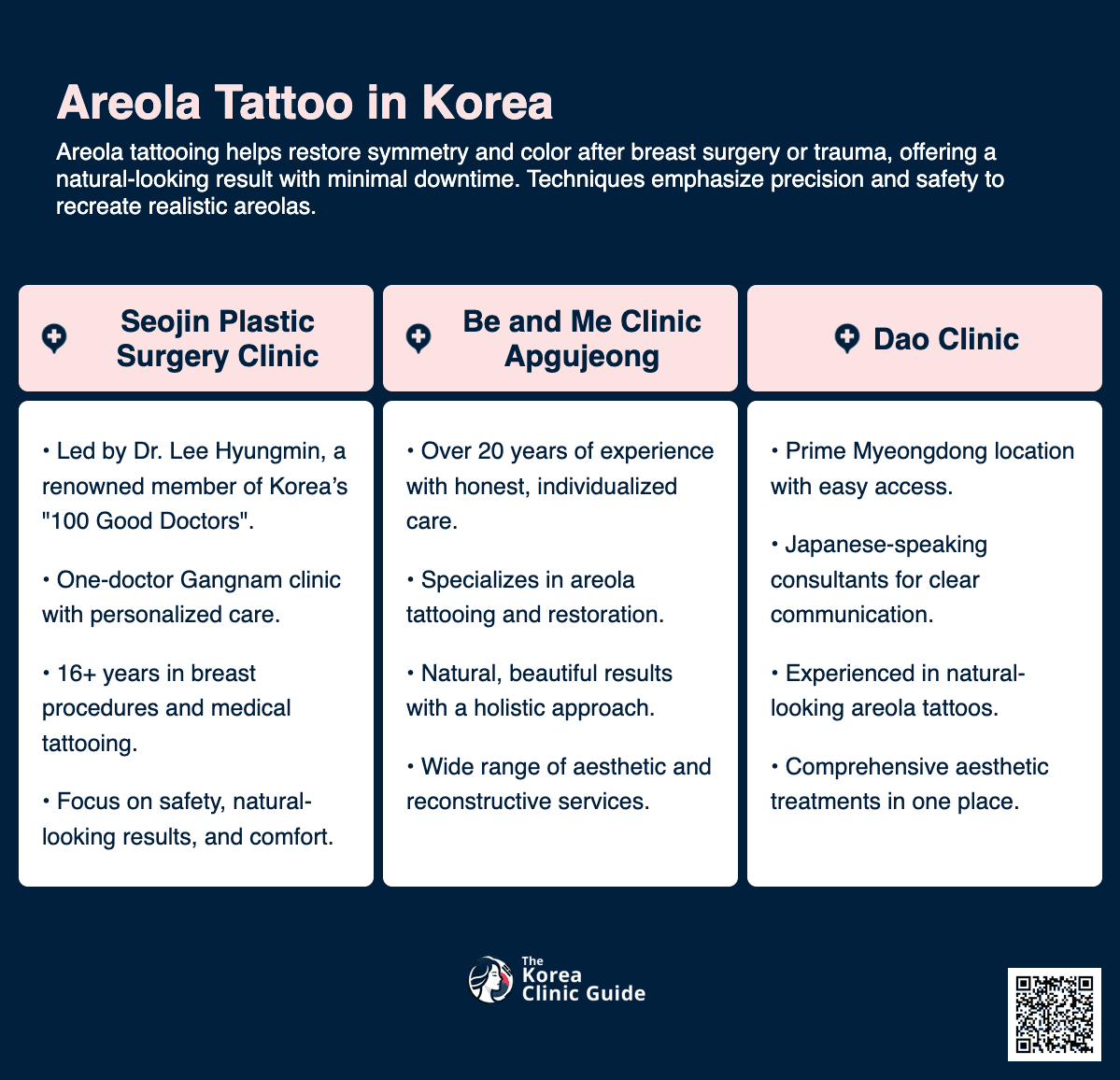
Listed below are the best clinics in Korea for areola pale color:
| Clinic Name | Key Features | Special Techniques |
|---|---|---|
| Seojin Plastic Surgery Clinic | One-doctor personalized care, over 16 years of experience, advanced surgical techniques, state-of-the-art technology, focus on patient satisfaction and safety, specialized in breast and areola/nipple procedures, hair transplantation, body sculpting, and non-invasive dermatology | Personalized areola and nipple procedures, advanced surgical approaches for breast surgery, hands-on patient care |
| Ladyuro Women's Clinic | Comprehensive women’s health and aesthetics, surgical and non-surgical treatments, advanced areola pale color treatments, 3D technology, vaginal rejuvenation, labiaplasty, whitening, depilation, tailored treatment plans, private and comfortable environment, dedicated aftercare | Advanced treatments for areola pale color, utilization of state-of-the-art 3D technology, expert intimate wellness procedures |
| Be and Me Clinic Apgujeong | Over 20 years of experience, expert team in areola pigmentation and nipple correction, personalized care, confidential environment, latest medical technology, comprehensive aftercare, trusted by international clients, minimally invasive focus | Customized pigment correction for areolas and nipples, scar-minimizing and minimally invasive procedures, advanced medical technologies |
Seojin Plastic Surgery Clinic
Seojin Plastic Surgery Clinic stands at the forefront of personalized aesthetic care in the heart of Gangnam, Seoul. Under the leadership of Dr. Lee Hyungmin—named one of the “100 Good Doctors in Korea”—the clinic provides an intimate, one-doctor setting where every patient receives attentive, start-to-finish care tailored specifically to their individual needs. Dr. Lee’s more than sixteen years of surgical experience ensure that each consultation and procedure, whether for cosmetic enhancement or medical necessity, is managed with the utmost skill and compassion.
Seojin Clinic is renowned not only for its advanced surgical techniques and state-of-the-art technology, but also for its dedication to patient satisfaction and safety. Their range of treatments covers breast surgery, including specialized approaches to areola and nipple procedures, as well as hair transplantation, body sculpting, and non-invasive dermatological treatments. Each patient benefits from Dr. Lee’s hands-on approach, fostering a deeply personalized experience and outstanding clinical results, especially for those seeking solutions for issues such as areola color or pigmentation changes.
You can check out their website here: Seojin Plastic Surgery Clinic Website
Ladyuro Women's Clinic
Ladyuro Women's Clinic stands at the forefront of women's health and aesthetic medicine in Korea, offering a comprehensive range of advanced procedures tailored to enhance both function and appearance. With a strong focus on individualized care, Ladyuro Women's Clinic combines cutting-edge technology, experienced medical staff, and a holistic approach to help women achieve their health and beauty goals. Whether patients seek medical treatments, aesthetic enhancements, or intimate wellness procedures, the clinic is renowned for delivering safe and effective results in a comfortable, supportive environment.
Key Highlights of Ladyuro Women's Clinic:
- Extensive experience in both surgical and non-surgical procedures for women’s health and aesthetics
- Advanced treatments for areola pale color, ensuring natural-looking and long-lasting results
- Comprehensive services including vaginal rejuvenation, labiaplasty, whitening, depilation, and more
- Utilization of state-of-the-art 3D technology for enhanced precision and minimized downtime
- Highly skilled medical professionals specializing in intimate female health and aesthetic medicine
- Personalized consultation and customized treatment plans for every patient
- Private, discreet, and welcoming atmosphere designed for patient comfort and trust
- Dedicated aftercare and follow-up services to ensure optimal recovery and satisfaction
With its comprehensive offerings, forward-thinking techniques, and commitment to patient well-being, Ladyuro Women’s Clinic stands as the best choice in Korea for addressing areola pale color and a range of women’s health concerns.
Find more about this clinic here: Ladyuro Women's Clinic Website
Be and Me Clinic Apgujeong
Be&Me Clinic, located in Apgujeong, Seoul, is a leading medical aesthetics and surgery center dedicated to helping patients find and express their own unique beauty. With over 20 years of clinical experience, Be&Me Clinic is recognized for its honest care, personalized consultations, and excellent surgical outcomes. The clinic offers a comprehensive range of treatments, from anti-aging and facial contouring to advanced breast, eye, and men’s surgeries. In particular, Be&Me Clinic stands out as the top choice for addressing areola pale color through its combination of innovative techniques, expert staff, and patient-centered approach.
Why Be&Me Clinic is the Best for Areola Pale Color:
- The clinic features an expert team with extensive experience in areola pigmentation and nipple correction procedures.
- Customized treatment plans are developed to address each patient’s specific areola color concerns, ensuring natural and aesthetically pleasing results.
- Utilizes the latest medical technologies and safest practices in both surgical and non-surgical pigment correction.
- Offers a private, comfortable environment with full patient confidentiality for sensitive procedures.
- Provides comprehensive aftercare and support to maximize results and ensure patient satisfaction.
- Trusted by both domestic and international clients for consistent, beautiful outcomes in areola and breast-related treatments.
- Focuses on minimally invasive and scar-minimizing techniques, reducing downtime and promoting faster healing.
With a strong reputation for expertise, safety, and tailored care, Be&Me Clinic is the premier destination in Korea for those seeking to correct or enhance the color of their areolas.
Find more about this clinic here: Be and Me Clinic Apgujeong Website
Why Korea Is Popular for Areola Tattooing (Medical Tourism Context)
South Korea is now a leading hub for medical tourism, prized for high-quality, cutting-edge care, skilled practitioners, and exceptional patient support systems—a combination that raises the appeal for those considering areola tattooing abroad.
South Korea as a Premier Destination for Medical Tourism
- Advanced Technology: Clinics are equipped with 3D imaging, high-def endoscopy, and the latest pigment devices.
- Experienced Practitioners: Providers often have decades of experience and handle a high volume of cases, ensuring finely honed skills.
- Patient Care & Safety: Foreign-language support, strict hygiene, sterile protocols, and tailored care plans are standard. Comprehensive care includes logistical help with travel, accommodation, and follow-up.
- Concentration of Clinics: Seoul, especially Gangnam, boasts many high-quality providers, allowing for plenty of choice.
The Medical Tourist Journey: A Step-by-Step Guide
- Pre-Travel Consultation: Most clinics offer remote consultations for design, pricing, and medical history review. Deposits are common to secure appointments. Researching providers is essential.
- Preparation: Patients follow instructions regarding sun exposure, skin preparation, and lifestyle adjustments for optimal results.
- Arrival & Language Support: Clinics may offer airport pickups and translation, with coordinators assisting throughout the process.
- Procedure & Recovery: Modern clinics with English-speaking staff guide patients through the procedure, which lasts a few hours. Aftercare support and detailed follow-up are provided.
- Financial Transparency: Costs and inclusions are discussed in advance, minimizing surprise expenditures. Korea is a government-approved destination for foreign cosmetic surgery, allowing tax refunds.
- Exploration & Recovery: Patients can enjoy the cultural sights during their stay, making the trip both restorative and enriching.
Important Considerations for International Patients
- Communication: Email, KakaoTalk, and Instagram are commonly used for international clients.
- Booking: Expect deposits and clear policies on payments.
- Legalities: Medical tattooing is regulated; always choose reputable, licensed clinics.
- Research: Vet practitioners by reviewing portfolios and testimonials.
- Pre-Tattoo Care: Follow all pre-care instructions for safety and best results.
- Tax Refunds: Ask clinics about documentation for VAT refunds at Incheon Airport.
Cost Analysis: Areola Tattooing in South Korea vs. Global Benchmarks
Average Costs in South Korea: Breakdown and Inclusions
Areola tattooing in Korea typically costs between ₩1,037,000 KRW ($300–$700 USD), with a 10% deposit expected up front. Surgical areola correction, which may include tattooing, ranges from ₩1.5M–₩4M KRW ($1,000–$2,800+ USD). For context, full scalp micropigmentation in Korea costs ₩1M–₩4M ($800–$3,200 USD).
Inclusions usually encompass follow-up appointments, healing ointments, and sometimes assistance with accommodation or aftercare. Higher fees may apply at top-tier clinics or for more complex cases like extensive scarring or advanced 3D tattooing.
Factors Influencing Cost
- Clinic/Artist Reputation: Renowned clinics or master artists command higher fees.
- Complexity: More elaborate designs or reconstruction cost more.
- Location: Central clinics in areas like Gangnam may charge higher rates.
- Extra Services: Travel help, unlimited aftercare, and comprehensive packages affect pricing.
Comparative Analysis: South Korea vs. Other Destinations
| Country | Areola Tattoo (USD) | Nipple/Areola Correction Surgery (USD) | Common Inclusions/Notes |
|---|---|---|---|
| South Korea | $300–$700 (standalone) | $1,000–$4,800 | Follow-ups, ointments, travel help, high tech |
| United States | $350–$1,200 | Not specified | Touch-ups ($150+), insurance for medical cases |
| United Kingdom | $350–$815 | $1,500+ | High standards, NHS options |
| Turkey | N/A (tattoo) | $1,391–$2,560 | Packages include meds, hotel, transfers |
| Thailand | $165–$515 | $2,700–$12,000 (implants) | Budget options |
| Philippines | ~$170/session | Not specified | Affordable |
| Mexico | Affordable | ~$4,500 (top surgery) | Lower operational costs |
South Korea offers competitive pricing compared to Western countries and is on the higher side compared to SE Asian countries, but the package of superior service, skilled artists, and high-quality results can offer better value for certain patients. When budgeting, remember to include flights, accommodation, and meals, which can significantly affect the total expenditure.
Insurance Coverage and Financial Planning
Areola tattooing is only typically covered by insurance in reconstructive contexts—such as after a mastectomy. Cosmetic cases, such as those seeking treatment for naturally pale areolas, are usually out-of-pocket expenses. Always confirm with your insurer and clinic to be clear about coverage before proceeding.
Patient Perspectives: Impact of Areola Tattooing for Pale Areola
Addressing Aesthetic Concerns
Areola tattooing is a highly effective solution for pale areolas, providing a natural-looking color boost, improved symmetry, and texture. Techniques like 3D tattooing result in enhanced realism. Satisfaction rates are high, with notable improvements in self-image and areola appearance.
Psychological and Emotional Well-being
Restoring color—or even the illusion of a nipple—through tattooing is about more than aesthetics. Many patients, breast cancer survivors in particular, describe the process as the final step in reclaiming their bodies and restoring self-confidence. Emotional relief, improved self-esteem, and a feeling of wholeness are common themes in patient feedback.
Real-World Outcomes and Satisfaction Rates
Studies and testimonials report high satisfaction: 88% overall, with especially positive feedback for color (77%), shape (94%), and size (88%). Most would recommend the procedure and undergo it again, viewing touch-ups as a small price for the emotional benefit gained.
Long-Term Experiences and Touch-Ups
Areola tattoos are semi-permanent and will fade, especially bold reds or on certain skin types. Most patients accept regular touch-ups as part of the process and place higher value on emotional and aesthetic outcomes than on the need for ongoing maintenance.
Cosmetic Motivations and Pale Areolae
For those seeking purely aesthetic enhancement, understanding that bold colors may fade faster and that touch-ups are required can set realistic expectations. Color blending for natural results is standard, and such cosmetic cases generally aren’t covered by insurance.
Conclusion
Areola tattooing provides a safe, customizable, and psychologically impactful solution for those seeking to address areola pale color, whether for medical or cosmetic reasons. South Korea stands out among global destinations thanks to advanced care, skilled practitioners, and supportive services, making it an excellent choice for medical tourists. Prospective patients should ensure thorough medical evaluation, detailed consultation, and thoughtful planning to achieve the best results and long-term satisfaction.
References
1, 2, 3, 4, 5, 6, 7, 8, 9, 10, 11, 12, 13, 14, 15, 16, 17, 18, 19, 20, 21, 22, 23, 24, 25, 26, 27, 28, 29, 30, 31, 32, 33, 34, 35, 36, 37, 38, 39, 40, 41, 42, 43, 44, 45, 46