
Medical Tourism Blog
Loss of Cleavage Volume Solutions: Breast Augmentation Procedures in Korea for Natural Results
Table of contents
- Breast Augmentation: A Detailed Medical Overview
- Navigating Breast Augmentation in South Korea: A Medical Tourist's Guide
- Which Are the Best Clinics in Korea for Loss Of Cleavage Volume?
- Cost Analysis: Breast Augmentation in South Korea vs. Global Destinations
- Patient Experiences and Outcomes: Addressing Loss of Cleavage Volume
- Conclusion
- References
Considering treatment in Korea? Everything you need to know e.g. — how to avoid scams, visas, interpreters, recovery tips — in our Medical Tourism Master Guide. Plan with confidence in minutes, not weeks!
When people talk about "loss of cleavage volume" or a "flat upper chest appearance," they're describing a common concern about the look of their chest. To address this, it’s important to understand what cleavage is, why it matters, and what causes its reduction.
What Is Cleavage and Why Does It Matter?
Cleavage is the narrow space or hollow between a woman's breasts, often highlighted by certain necklines (décolletage). Beyond anatomy, cleavage has cultural and social significance, influencing self-image and confidence. Many seek to restore cleavage not just for looks, but for psychological comfort and self-esteem. Surgically, achieving attractive cleavage means carefully managing the space between the breasts and ensuring enough volume in the inner breast area.
Other Terms and Related Conditions
Patients might say they have "loss of volume to the top of their breasts" or want "more cleavage." Surgeons often call this "loss of upper pole fullness," which means the upper part of the breast looks empty, making the chest appear less youthful. This is different from a generally flat chest wall.
A related condition is "Uniboob" or "Symmastia," where the breasts merge across the midline, erasing the natural cleavage. Symmastia can be genetic or result from previous breast augmentation. Symptoms include lack of cleavage, skin tenting between the breasts, discomfort, and loss of breast definition. The key difference: symmastia is about merging tissue, while upper pole fullness loss is about emptiness in the upper breast.
Another term is "breast ptosis" (breast sagging), where breasts lose volume and shape, often with nipples pointing downward. "Pseudoptosis" is when the nipple stays above the breast fold, but loose skin creates a saggy look.
Why Does Cleavage Volume Decrease?
Several factors can lead to reduced cleavage volume:
-
Natural and Physiological Factors:
- Aging: Skin loses elasticity, breast tissue shrinks, and supportive ligaments weaken, reducing breast size and fullness.
- Pregnancy/Hormonal Changes: Breasts enlarge during pregnancy, stretching skin. Afterward, loss of glandular tissue and sagging can occur.
- Weight Fluctuations: Gaining or losing weight changes breast fat content, sometimes leaving a deflated look.
- Genetics: Natural breast size, shape, and spacing are inherited. Some women have wide-set breasts or rare congenital symmastia.
- Natural Anatomy: Chest width, breast spacing, and tissue amount determine cleavage. Implants add volume but don’t change natural breast position.
-
Post-Surgical Factors (for iatrogenic Uniboob/Symmastia):
- Over-dissection: Too much tissue separation during surgery can cause breasts to merge.
- Oversized Implants: Implants too large for the body can push breasts together.
- Improper Implant Positioning: Placing implants too close or too wide can cause merging.
- Poor Post-Op Care: Not wearing the right bra after surgery can contribute to uniboob.
Distinguishing from Other "Flat Chest" Issues
Not all flat chest appearances are due to breast tissue. Some are skeletal or muscular:
- Chest Wall Deformities: Conditions like "flat chest," Pectus Carinatum ("pigeon chest"), or Pectus Excavatum (sunken chest) are bone/cartilage issues, not breast tissue problems. Breast augmentation doesn’t fix these.
- Muscle Underdevelopment: A flat upper chest can also mean underdeveloped pectoral muscles, often addressed with exercise, not surgery.
Breast Augmentation: A Detailed Medical Overview
Breast augmentation is a popular surgery to enhance breast size and shape, usually for cosmetic reasons. It involves placing breast implants under the breast tissue or chest muscle. Fat transfer—using liposuctioned fat from other body areas—can also be used to add volume and contour. The main goals are fuller, more symmetrical breasts and improved confidence.
Types of Breast Implants
Choosing the right implant is crucial, as it affects cleavage and the natural look.
-
Filling Type:
- Saline Implants: Filled with sterile saltwater, inserted empty and filled during surgery. If ruptured, they deflate quickly and the body absorbs the saline.
- Silicone Gel Implants: Filled with cohesive silicone gel, they feel more natural. Leaks are less obvious, so regular MRI checks are needed.
- Highly Cohesive Silicone "Gummy Bear" Implants: Hold their shape even if the shell breaks, less likely to ripple, and come in shaped or round options.
-
Shape:
- Round Implants: Symmetrical, create fuller upper breasts and more cleavage. Less likely to wrinkle or show shifting.
- Shaped/Teardrop Implants: Mimic natural breast shape, thinner at the top, fuller below the nipple, often textured to prevent rotation.
-
Profile: Refers to how far the implant projects from the chest.
- High-Profile Implants: Narrow base, project more, create dramatic fullness and cleavage but can look unnatural if overdone.
- Moderate-Profile Implants: Balanced width and projection, often give the most natural cleavage.
- Low-Profile Implants: Wider base, subtle projection, for understated enhancement.
Table: Breast Implant Options and Their Impact on Cleavage
| Implant Characteristic | Type/Shape/Profile | Impact on Cleavage/Upper Pole Fullness | Key Considerations |
|---|---|---|---|
| Filling Type | Saline | Can enhance cleavage, less natural feel | Smaller incision, rapid deflation if ruptured |
| Silicone Gel | Natural feel, good fullness and cleavage | Mimics breast tissue, needs MRI checks | |
| Gummy Bear | Stable fullness, less rippling | Holds shape, shaped or round options | |
| Shape | Round | Fuller upper pole, more cleavage | Symmetrical, less wrinkling |
| Teardrop | Natural slope, less upper pole fullness | Textured, mimics natural breast | |
| Profile | High | Dramatic projection, more cleavage | Narrow base, risk of unnatural look |
| Moderate | Balanced, natural cleavage | Good for proportional look | |
| Low | Subtle, natural enhancement | Wider base, less projection |
Incision Techniques: Pros and Cons
Surgeons choose incision sites to minimize visible scarring and maximize control:
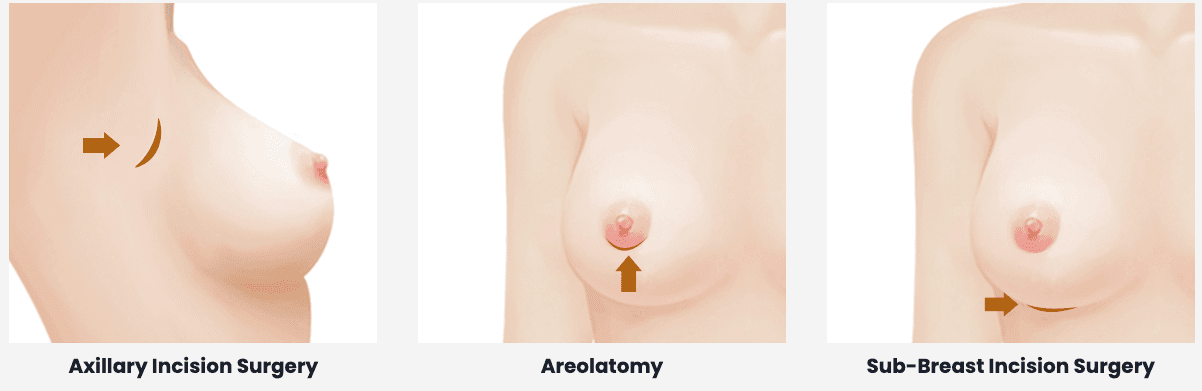
- Inframammary (Under the Breast): Most common, scar hidden in the crease, doesn’t affect nipple sensation or breastfeeding, but scar may show when lying down.
- Areolar/Periareolar (Around the Nipple): Scar blends with nipple edge, allows precise implant placement, but may affect nipple sensation and breastfeeding.
- Transaxillary (Armpit): No breast scar, but less control for the surgeon and scar may show in sleeveless clothing.
- Transumbilical (Belly Button): No breast scar, but less precise, used only in select cases.
Implant Placement Options
Where the implant sits affects the final look and cleavage:
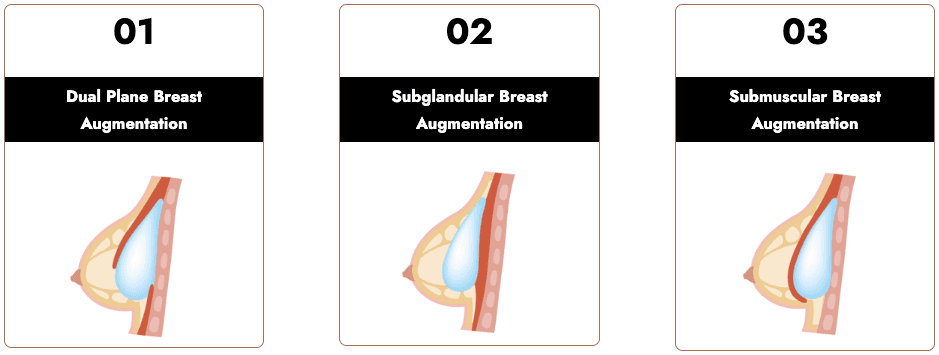
- Submuscular (Below the Muscle): Most common, gives a natural look and feel, reduces risk of hardening, but muscle can push implants outward, making tight cleavage harder to achieve.
- Subglandular (Above the Muscle): More pronounced cleavage, but higher risk of merging (symmastia) and a less natural look if not done carefully.
- Dual Plane: Upper implant under muscle, lower part above, combining benefits of both placements.
- Subfascial: Over the muscle but under the fascia, aiming for natural volume with less pain and quicker recovery.
Fat Grafting for Cleavage Enhancement
Fat transfer breast augmentation uses liposuctioned fat from areas like the hips or thighs, which is purified and injected into the breasts. This can refine cleavage, especially in the inner breast, and is often combined with implants for a softer, more natural look. Platelet-Rich Plasma (PRP) can be added to improve fat survival and reduce inflammation.
Key Factors Influencing Cleavage Results
Getting the desired cleavage is a mix of:
- Individual Anatomy: Chest width, breast spacing, tissue amount, nipple position, and muscle attachment all set the limits for cleavage.
- Implant Selection: Size, shape, and profile matter—wider or higher-profile implants can enhance cleavage.
- Surgical Technique: Precise pocket creation and, if needed, releasing muscle attachments can help achieve closer cleavage.
- Surgeon Skill: The surgeon’s experience is crucial for balancing all these factors and avoiding complications.
It’s important to remember that anatomy sets boundaries—some people simply can’t achieve very tight cleavage, no matter the implant or technique.
Potential Complications
While generally safe, breast augmentation can have complications:
- Symmastia ("Uniboob"): Breasts merge, losing cleavage, often from over-dissection or large implants. Correction may require revision surgery or fat transfer.
- Implant Rippling: Visible or palpable wrinkles, especially if there’s little natural tissue or if cleavage is made too tight.
- Bottoming Out: Implants drop too low, leaving the upper breast empty.
- Nipple Sensation Loss: More likely with periareolar incisions.
- General Surgical Risks: Include bleeding, infection, and rare complications like pneumothorax.
Trying to force very tight cleavage can backfire, leading to issues like symmastia or rippling.
Navigating Breast Augmentation in South Korea: A Medical Tourist's Guide
South Korea is a top destination for plastic surgery, including breast augmentation, thanks to its advanced techniques, skilled surgeons, and comprehensive patient care.
Why South Korea?
- Expertise and Innovation: Korean surgeons are known for their specialization and cutting-edge methods, often ahead of Western trends.
- Advanced Technology: Clinics use tools like 3D breast modeling and spatial dissection for precise results.
- Great Value: Costs are 40–75% lower than in the US, with no compromise on quality. Packages often include everything from surgery to aftercare.
- Comprehensive Support: Clinics offer all-inclusive packages covering consultations, surgery, hospital stays, medications, follow-ups, translation, accommodation, and airport transfers.
- Thorough Aftercare: Korean clinics are praised for attentive post-surgery support.
Step-by-Step Process for International Patients
- Choosing a Clinic and Surgeon: Research accreditation, surgeon qualifications (look for KSPRS board certification), experience with international patients, and real patient results. Avoid clinics chosen solely for social media presence.
- Consultation: Start online, then meet in person. Discuss goals, body type, and options. Many clinics offer translation and 3D modeling to help visualize results.
- Pre-Surgery Prep: Undergo medical tests and follow instructions about medications, alcohol, and smoking. Plan to stay in Korea for 1–2 weeks.
- Surgery: Performed under general anesthesia, lasting 1–3 hours. Implants are placed via chosen incisions and positions. Fat transfer may be added.
- Post-Op Care: Patients receive detailed instructions, wear supportive bras, and rest. Most return to work in about a week, but strenuous activity is restricted for 4–6 weeks.
- Follow-Up: Regular check-ups, often with virtual options for international patients.
South Korea’s structured packages make the process smooth, but always prioritize surgeon credentials over marketing.
Cultural and Aesthetic Approach
Korean plastic surgery often aims for natural, harmonious results, enhancing the body in a balanced way rather than creating dramatic or artificial changes.
Which Are the Best Clinics in Korea for Loss Of Cleavage Volume?
Listed below are some of the best clinics in Korea for loss of cleavage volume.
1. Seojin Plastic Surgery Clinic
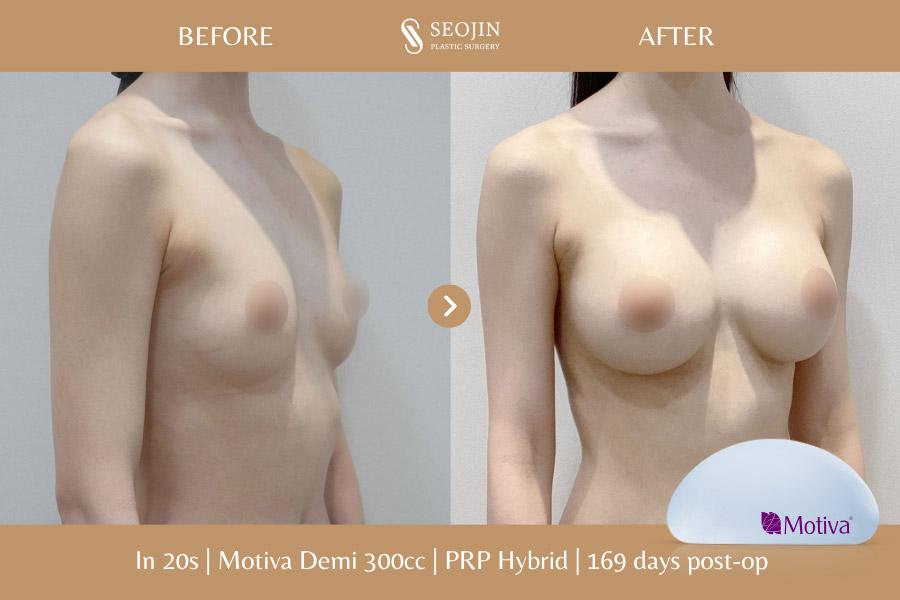
If loss of cleavage volume is related to reduced breast fullness or shape, you can explore implant-based augmentation, hybrid augmentation with fat grafting, and lift-oriented options at Seojin Plastic Surgery Clinic. Dr. Lee Hyungmin uses 3D modeling, implant trial bras, and anatomy-based planning to help you assess implant size, shape, and cleavage goals before surgery.
- URL: Seojin Plastic Surgery Clinic Website
- Location: Gangnam-gu, Seoul
- Breast augmentation planning:
- 3D breast implant modeling is used to visualize and predict outcomes across implant brands and types.
- A complimentary implant trial bra service lets you assess fit and design before surgery.
- The microscale dual-plane approach is customized to your ribcage, breast tissue, and chest anatomy.
- Techniques for shape and symmetry:
- 3D spatial dissection is intended to create a smooth implant pocket and minimize postoperative swelling.
- An intraoperative sizer may be used to check breast symmetry, shape, and size before the final implant is placed.
- Hybrid augmentation combines implants with fat grafting from areas such as the abdomen or thighs to add softness and refine breast shape.
- PRP may be used with breast fat grafting to support graft survival and reduce the possibility of inflammation.
- Surgeon and care model:
- Dr. Lee Hyungmin provides end-to-end care in a one-doctor clinic model and has more than 16 years of experience.
- Dr. Lee was named among the 100 Good Doctors in Korea and participates in Motiva and Mentor academic conferences.
- The clinic reports more than 2,300 breast surgeries performed.
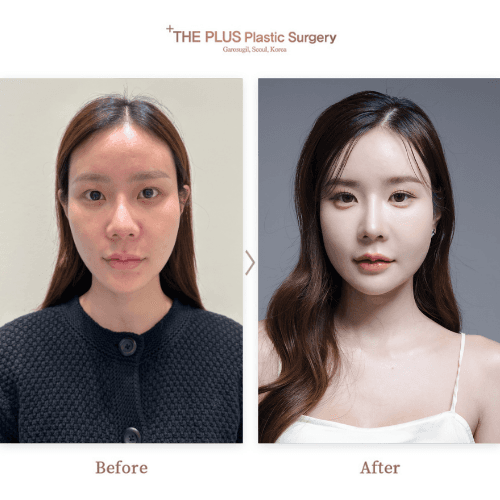
2. THEPLUS Plastic Surgery
For loss of cleavage volume, THEPLUS Plastic Surgery offers individualized breast augmentation planning with FDA-approved Motiva Ergonomix® implants. Dr. Lee tailors implant placement and incision location to your body type, using full-HD endoscopic visualization, while also assessing whether a breast lift may better address changes in breast position or skin elasticity.
- URL: THEPLUS Plastic Surgery Website
- Location: Gangnam-gu, Seoul
- Breast procedure approach:
- Dr. Lee specializes in breast augmentation, breast lift, and breast reduction surgery.
- Implant placement and incision site are individualized to your body type.
- Breast lift planning uses a 3-D assessment of breast shape and skin elasticity, with donut, lollipop, or anchor techniques selected accordingly.
- For breast reduction, the pedicle technique is used with the aim of preserving nipple sensation while removing excess volume.
- Surgeon credentials:
- Dr. Lee is a board-certified plastic surgeon and previously served as a Surgery Specialist at Seoul National University Hospital.
- Her clinical training also includes Seoul Metropolitan Boramae Hospital.
- She is a member of the Korean Society of Plastic and Reconstructive Surgery and the Korean Society of Aesthetic Plastic Surgery.
- Care and international support:
- The clinic describes advanced sterilization protocols, systematic postoperative monitoring, and aftercare tailored to your healing pace.
- English-language support and dedicated translator assistance are available from consultation through recovery.
3. Okay Plastic Surgery Clinic
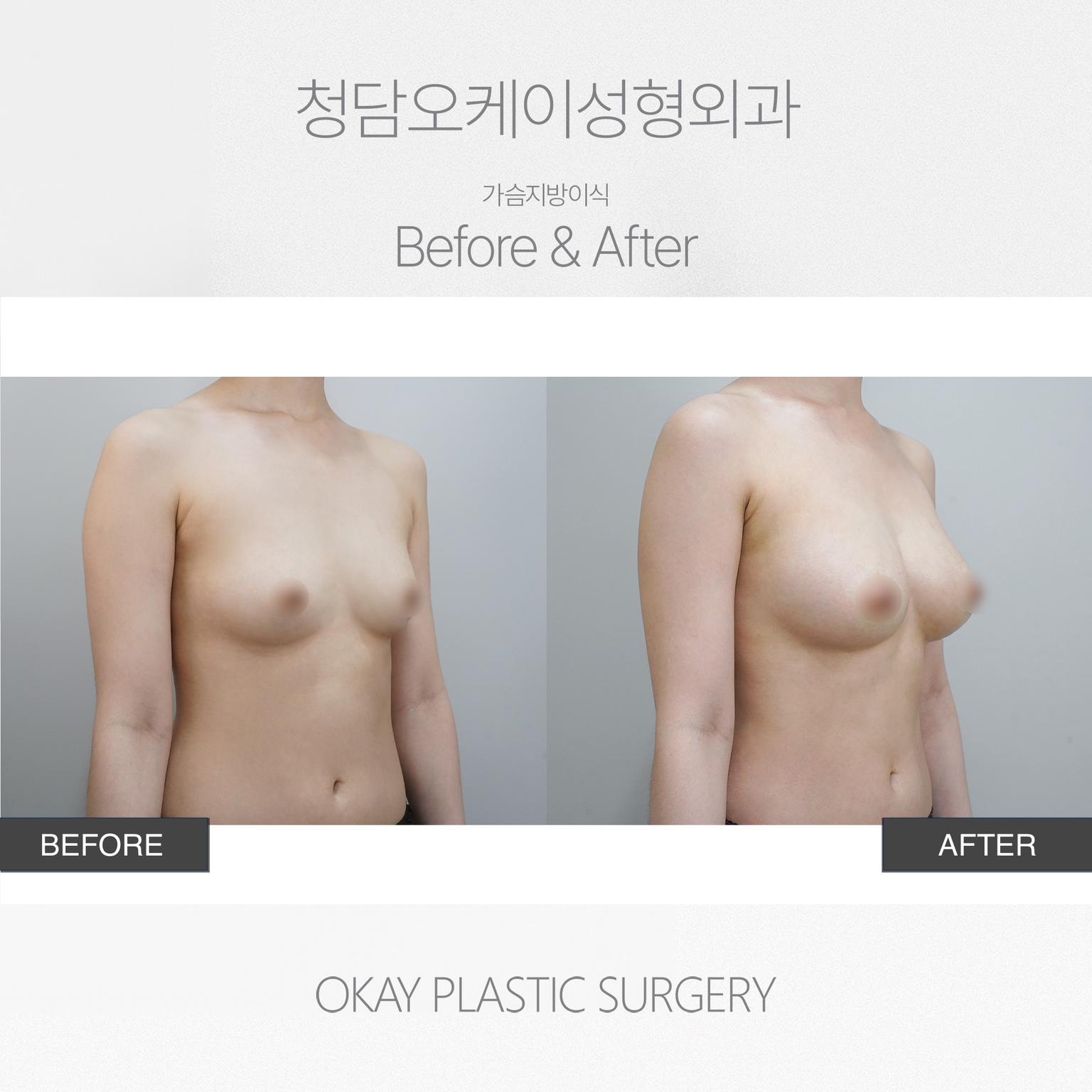
You may consider Okay Plastic Surgery Clinic for loss of cleavage volume if you need a breast-focused evaluation that considers augmentation, fat grafting, and surgery for sagging breasts rather than treating volume alone. Its specialized Breast Center offers breast augmentation, breast lift, reduction, and nipple-correction options, with comprehensive aftercare intended to support natural, lasting results.
- URL: Okay Plastic Surgery Clinic Website
- Location: Gangnam-gu, Seoul
- Breast-focused options:
- The Breast Center provides breast augmentation with implants or fat grafting, breast reduction, surgery for sagging breasts, and nipple correction.
- Fat grafting is also offered as part of the clinic’s body-contouring services for areas needing added volume.
- Breast surgery expertise:
- Dr. Cho is described as specializing in breast surgery and has studied and published research in the field.
- The clinic notes experience with standard augmentation as well as complex cases involving substantial breast reduction.
- Aftercare: The clinic emphasizes comprehensive aftercare for natural, lasting results.
Cost Analysis: Breast Augmentation in South Korea vs. Global Destinations
South Korea offers advanced care at competitive prices, making it attractive for medical tourists.
Average Costs in South Korea
Breast augmentation typically costs $3,000 to $10,900 USD, with some sources quoting up to $15,000 USD depending on clinic, procedure complexity, and implant type. Packages often include:
- Medical Insurance: Covers complications.
- Medical Tests: Pre-op tests included.
- Accommodation: Guesthouses or partner hotels for recovery.
- Airport Transfer: Pick-up and drop-off services.
- Language Assistance: Translators and interpreters.
- Aftercare: Follow-up appointments and support.
Costs vary by surgeon experience, clinic reputation, location (e.g., Gangnam in Seoul), implant type, and surgical complexity.
Comparing Global Costs
- USA: Itemized billing, usually 40–75% higher than Korea.
- Turkey: $5,500–$6,000 USD for augmentation, but lower prices may mean less comprehensive care.
- UK: $10,000–$12,000 USD, often excluding extras.
- Europe: $8,500–$9,500 USD, usually not all-inclusive.
- Malaysia: $6,000–$11,000 USD, often with similar inclusions as Korea.
- Thailand: $2,700–$12,000 USD, inclusions vary.
While Turkey and Thailand may offer lower prices, South Korea’s all-inclusive, high-quality packages reduce hidden costs and risks.
Why South Korea Stands Out
South Korea combines advanced surgery, experienced surgeons, and comprehensive care at a competitive price, making it a top choice for medical tourists.
Patient Experiences and Outcomes: Addressing Loss of Cleavage Volume
Breast augmentation is highly effective for those with "loss of cleavage volume" or a "flat upper chest appearance," improving both physical appearance and self-confidence.
Restoring Upper Pole Fullness and Cleavage
Women with naturally flat chests or those who lost volume due to aging or previous surgery often find implants (like INSPIRA) restore fullness and projection. Many report satisfaction with their new look, feeling more proportional and natural.
Achieving Desired Cleavage
Augmentation can enhance cleavage, especially for those with small or wide-set breasts. The outcome depends on implant choice, surgical technique, and anatomy. Fat grafting can further refine cleavage and symmetry. Patients often report better-fitting clothes and increased confidence.
Boosting Confidence and Well-being
A major benefit is improved self-esteem and comfort in clothing. Studies show that satisfaction is linked more to overall well-being than to specific breast or implant features, highlighting the procedure’s impact on quality of life.
Setting Realistic Expectations
Patients should understand that anatomy limits what’s possible. The surgeon’s skill is key to achieving the best result within those limits. The goal is a natural, beautiful enhancement—not extreme cleavage that could cause complications. Supportive bras can create more dramatic cleavage than what’s naturally possible.
Conclusion
"Loss of cleavage volume" or a "flat upper chest appearance" often results from reduced upper pole fullness or, in some cases, symmastia. Causes range from aging and weight changes to surgical complications. Breast augmentation—using various implant types, shapes, and profiles, along with techniques like fat grafting—can effectively address these concerns, but results are shaped by individual anatomy and surgical expertise. South Korea stands out for its advanced techniques, skilled surgeons, and comprehensive, value-driven packages, making it a top choice for medical tourists. Ultimately, success depends on realistic expectations, thorough research, and choosing a qualified, experienced surgeon.
References
1, 2, 3, 4, 5, 6, 7, 8, 9, 10, 11, 12, 13, 14, 15, 16, 17, 18, 19, 20, 21, 22, 23, 24, 25, 26, 27, 28, 29, 30, 31, 32, 33, 34, 35
Frequently Asked Questions
Related Blogs
Global Cost Showdown: Understanding Breast Surgery Expenses in Korea vs. Other Major Destinations
Discover the factors that influence the cost of breast surgery in Korea, from medical expertise to facilities and post-operative care. Explore how Korea's competitive pricing and advanced technology make it a popular destination for cosmetic procedures.
Updated: Oct 21, 2026
Korean Excellence in Cosmetic Tattooing: A Global Price Comparison for Areola Tattoos
Discover the factors that influence the cost of areola tattoos in Korea, offering insights into pricing variations based on location, artist expertise, and design complexity. Explore why more individuals are choosing this empowering procedure and learn what to expect in terms of investment.
Updated: Oct 21, 2026
Breast Reduction: Exploring Korea's Value vs. Global Costs and Services in Leading Destinations
Discover the cost of breast reduction surgery in Korea and explore the factors influencing pricing, including surgical techniques and hospital reputation. Learn how Korea's medical infrastructure offers competitive options for those seeking this popular cosmetic procedure.
Updated: Oct 20, 2026
Exploring the Price Spectrum: Revision Breast Surgery Costs in Korea Versus Global Alternatives
Discover the cost-effective solutions for revision breast surgery in Korea, where top-tier medical facilities and experienced surgeons provide high-quality care. Explore why international patients choose Korea for affordable procedures without compromising on safety and results.
Updated: Oct 19, 2026
Clinics offering Breast Augmentation
BongBong Plastic Surgery Dermatology Korea | Body, Breast & Aesthetic Treatments
Nonhyeon

THEPLUS Plastic Surgery Korea | Eye, Nose, Face & Body Surgery
Sinsa

Seojin Plastic Surgery Clinic Korea: Pioneering Advanced Cosmetic Procedures for Personalized Aesthetic Transformation
Apgujeong

Okay Plastic Surgery Clinic in Korea: Comprehensive Aesthetic Procedures with Sincerity and Care
Cheongdam