
Medical Tourism Blog
Korea Uneven Lip Corners Treatment: Enhance Your Smile with Thread Lift Procedures
Table of contents
- The Thread Lift Procedure: What to Expect
- Navigating a Thread Lift in South Korea: The Patient Journey
- Cost Analysis: Thread Lifts in South Korea vs. Worldwide
- Patient Experiences and Outcomes: Thread Lifts for Uneven Lip Corners
- Which Are the Best Clinics in Korea for Uneven Lip Corners?
- Conclusion
- References
Considering treatment in Korea? Everything you need to know e.g. — how to avoid scams, visas, interpreters, recovery tips — in our Medical Tourism Master Guide. Plan with confidence in minutes, not weeks!
Uneven lip corners, often described as “mouth corners that slope downward asymmetrically,” are a frequent cosmetic worry. Medically, this is described under “lip asymmetry”—meaning a noticeable difference in lip shape, size, or alignment, including the contour, fullness, and especially the position of the mouth corners. More specifically, the term “downturned corners of the mouth” (HPO: HP:0002714) marks a condition where the mouth’s angle sits lower than the midline labial fissure.
Searching for a solution? You might come across these terms:
- Angular Cheilitis: This refers to red, cracked, sometimes swollen patches at the mouth’s corners and is usually caused by infection or irritation, not structural lip asymmetry.
- Perleche / Angular Stomatitis: These are additional names for Angular Cheilitis.
- Downturned Corners of Mouth / Downturned Mouth: These phrases refer directly to the slanting down or overall downward appearance of mouth corners.
It's crucial to recognize these distinctions. For instance, Angular Cheilitis is a medical condition ideally treated with antifungal creams or antibiotics—not cosmetic procedures. So, before considering any treatment, especially cosmetic, anyone with uneven lip corners should get a professional diagnosis to pinpoint the underlying cause.
Causes of Lip Asymmetry
Causes can be numerous and range from birth-related to daily habits and medical conditions:
- Inflammatory/Infectious: Angular Cheilitis can arise from saliva buildup, fungal or bacterial infections, deficiencies in B vitamins, smoking, or even weight loss.
- Congenital and Genetic:
- Hemifacial Microsomia: Birth condition affecting jaw and face alignment, often visible in smiles or chin position.
- Congenital Unilateral Lower Lip Palsy: Usually caused by underdevelopment or absence of the depressor anguli oris muscle.
- Genetic Predisposition: The shape and symmetry of your lips may simply run in the family.
- Lifestyle and Acquired Factors:
- Aging: As skin grows less elastic, droopiness and asymmetry can set in.
- Facial Habits: Using one side more than the other to smile or chew can, over time, cause muscle imbalance.
- Injuries/Surgery: Trauma can result in scarring or nerve injury, affecting symmetry.
- Dental/Jaw Issues: Poorly fitting dentures or jaw misalignment can alter lip posture.
- Neurological Disorders: Conditions such as Bell’s palsy cause one-sided weakness.
- Health: Diseases like diabetes or inflammatory bowel disease can increase the risk of angular cheilitis.
- Smoking & Sleeping Position: Both can contribute to unevenness through direct impact on tissue or by accelerating aging.
Since causes vary, thread lifts aren’t a cure-all—especially not for issues linked to nerve damage, bony anomalies, or infections. A thorough diagnosis by a qualified provider ensures safe and effective choices.
If the concern is purely aesthetic, options beyond thread lifts exist: dermal fillers, cheiloplasty (surgical lip lift), Botox in the depressor anguli oris muscle, or lipofilling (using your own fat cells). Combining techniques is often the best path to natural results.
Table 1: Common Pseudonyms for “Uneven Lip Corners”
| Term | Description |
|---|---|
| Angular Cheilitis | Red, swollen patches at the corners of the mouth, often from infection or irritation. |
| Perleche | Another name for Angular Cheilitis. |
| Angular Stomatitis | Another name for Angular Cheilitis. |
| Downturned Corners of Mouth | Mouth angle slopes downward. |
| Downturned Mouth | Mouth corners point downwards. |
The Thread Lift Procedure: What to Expect
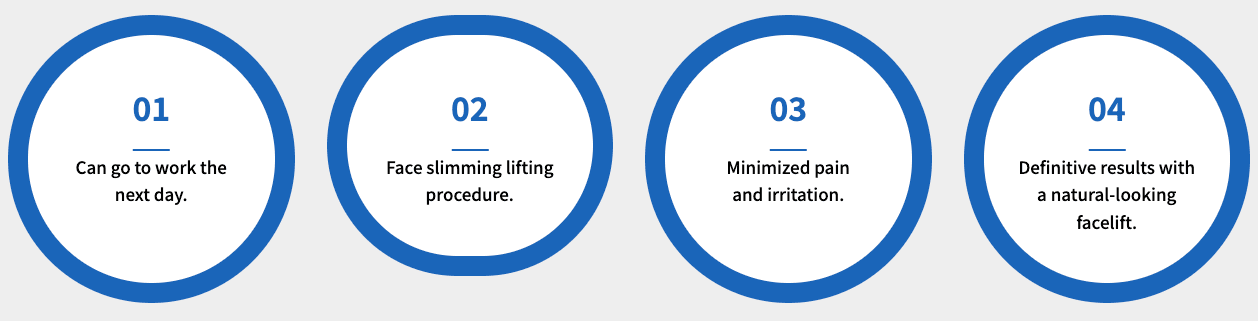
A thread lift is a non-surgical cosmetic procedure designed to lift and firm sagging skin for a younger look, without the invasiveness of surgery. This fast, often “lunchtime facelift” takes about an hour and has minimal downtime, making it attractive for those seeking subtle facial improvement.
Good candidates are typically in their late 30s to early 50s with mild to moderate skin laxity—those looking for modest, not dramatic, rejuvenation. It's also suitable for people with medical conditions that rule out major surgery.
How Thread Lifts Work
The results of a thread lift come from two main actions:
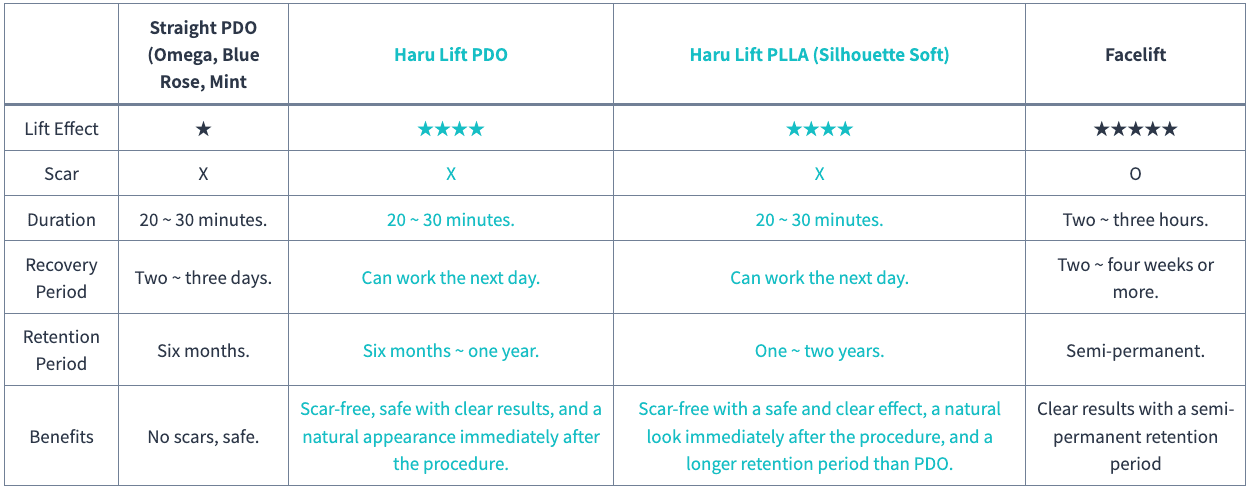
- Immediate Mechanical Lift: Threads with tiny barbs or cones are gently inserted under the skin, pulling tissues upward and instantly tightening the area.
- Collagen Stimulation: The body recognizes the threads as foreign and responds by ramping up collagen production for months afterward. This new collagen continues to improve skin tone and firmness even after the threads dissolve.
Types of Threads Used
The choice of thread impacts the outcome, duration, and feel of the procedure. Here’s a summary of popular options:
- Polydioxanone (PDO) Threads: Biodegradable and absorbable, they dissolve in 4-6 months but the lifting and collagen effects can last a year or more. FDA-approved options include NovaThreads.
- Polylactic Acid (PLA) / Poly-L-lactic Acid (PLLA) Threads: Known for gradual, long-lasting results through deep collagen stimulation, with benefits lasting up to two years. Silhouette InstaLift threads are FDA-approved and use “cones” to anchor tissue.
- Polycaprolactone (PCL) Threads: Another absorbable option, known for longevity—up to three years.
- Silicone Threads: Permanent, flexible, and can last 4-6 years.
- Tess Lift Threads: Polypropylene-based, permanent, suited for mild sagging in various facial areas.
- Thread Structure: Threads can be flat and smooth or textured for better grip.
Table 2: Key Thread Types Used in Thread Lifts
| Thread Type | Material | Absorbable/Permanent | Key Characteristics | Longevity |
|---|---|---|---|---|
| Polydioxanone (PDO) | Polydioxanone | Absorbable | Collagen-stimulating, dissolves in 4-6 mo. | 1 year+ |
| Polylactic Acid (PLA/PLLA) | Polylactic Acid/PLLA | Absorbable | Gradual, long-term collagen stimulation | Up to 2 years |
| Polycaprolactone (PCL) | Polycaprolactone | Absorbable | Immediate lift, extended collagen boost | Up to 3 years |
| Silicone | Silicone | Permanent | Flexible, long-lasting | 4-6 years |
| Tess Lift | Polypropylene | Permanent | Used for mild sagging in multiple areas | Permanent |
Who Should Consider a Thread Lift?
Ideal candidates have mild to moderate sagging, are in their late 30s to 50s, want non-surgical rejuvenation, and/or have health issues excluding surgery. It can also serve as a refresh after a traditional facelift.
Benefits and Risks
Key benefits:
- Minimally invasive, minimal scarring
- Quick procedure and fast recovery—often same day
- Stimulates natural collagen for ongoing improvement
- Subtle, natural-looking lift
- Generally low risk and even reversible for certain thread types
- Does not preclude future surgery
Potential risks/side effects:
- Pain, redness, swelling, and bruising (often improve in days)
- Skin dimpling, contour irregularities (may resolve with massage or fillers)
- Thread visibility or extrusion (rare)
- Temporary stiffness, minor eating/talking discomfort
- Rare infection; antibiotics may be prescribed
- Less commonly, allergic reactions, numbness, sun sensitivity, or disappointing results
Outcomes and safety largely depend on your provider. The right practitioner dramatically reduces the chance of complications—so experience and medical credentials matter most.
Navigating a Thread Lift in South Korea: The Patient Journey
South Korea is a world leader in advanced cosmetic care, including thread lifts. Patient care here emphasizes thorough preparation, skilled execution, and detailed after-care, with state-of-the-art safety standards.
Pre-Procedure: Planning and Diagnostics
The process starts with a comprehensive consultation. Surgeons discuss goals, evaluate suitability, and create a tailored plan. Reputable clinics typically perform blood tests, ECGs, and X-rays. Many use advanced technologies like 3D-CT imaging to create precise, personalized surgical plans.
Areas to be treated are marked carefully. Local anesthesia is almost always used, and sometimes mild sedation is available. The skin is fully sterilized to minimize infection risk.
The Procedure
Thread lifts are quick—often under an hour, but more detailed work may take up to two hours. Surgeons insert threads with needles or blunt cannulas, using real-time imaging (ultrasound in some clinics) for extra accuracy. The threads are pulled to create lift and cut near the skin.
Ultrasound guidance, common in leading clinics, ensures precise placement and minimal tissue trauma—especially important for delicate facial structures.
Recovery and Aftercare
Patients usually head home the same day. Bruising, swelling, and tenderness are expected for a few days to a week. Most people return to normal activities within days.
Care tips include:
- Ice packs to reduce swelling/bruise
- No face washing for 24 hours
- No makeup for several days
- Avoid moisturizers for a while
- Sleep propped up to avoid pressure
- Antibiotics as prescribed
- No rubbing or strenuous activities for a few weeks
- Limited wide facial movements for 2–3 weeks
Threads dissolve naturally, continuing to boost collagen—no removal required.
Safety and Clinical Standards
Korean clinics are renowned for:
- One-on-one care from board-certified surgeons
- On-site anesthesiologists
- Detailed pre-surgical exams and 3D-CT diagnostics
- Emergency response readiness
- OR CCTV and central monitoring
- Strict sterilization and hygiene standards
Widespread use of ultrasound ensures high safety and consistency. This investment in technology and expertise makes Korea appealing for international patients who value both quality and affordability.
Cost Analysis: Thread Lifts in South Korea vs. Worldwide
Thread lift pricing in South Korea varies by clinic, thread type, and treatment extent. Typical costs:
- General thread lift: $500–$3,000 USD (average around $1,800)
- Basic PDO thread lift: $500–$1,500
- Premium threads (e.g. PCL/PLLA): $1,500–$3,500
- Full face: $2,500–$5,000
- Nose: $200–$500 / Forehead: $1,000–$2,000 / Lower or Mid-Face: $1,300–$2,200
- Specialized [Hiko Nose Thread Lift](/blog/hiko-nose-thread-lift-korea): approx. $1,030–$2,065
Extremely high costs usually indicate treatment bundles involving several procedures, not just a thread lift. Always request detailed, itemized quotes for clarity.
What Affects Pricing?
- Clinic location (e.g., Gangnam is pricier)
- Number of threads/areas treated
- Thread type and brand
- Clinic reputation and surgeon expertise
- Combination with other procedures
- Inclusions (consultations, follow-ups usually included; travel, lodging are not)
- Upfront deposits (typically 10%)
South Korea vs. Other Countries
Globally, thread lifts cost between $252 and $6,535 (global average ~$3,393). South Korea sits comfortably mid-to-high range, competitive with high standards at more accessible prices than major Western nations.
Table 3: Estimated Thread Lift Costs: South Korea vs. Select Destinations
| Country | Avg. Price (USD) |
|---|---|
| Estonia | $252 |
| Czech Republic | $311 |
| Malta | $337 |
| Bulgaria | $401 |
| Poland | $418 |
| South Africa | $439 |
| Mexico | $450–$2,200 |
| Turkey | $750 |
| Indonesia | $964 |
| Philippines | $1,089 |
| Malaysia | $1,517 |
| Egypt | $1,500 |
| Thailand | $1,627 |
| China | $1,789 |
| S. Korea | $1,800 |
| Singapore | $2,905 |
| U.S. | $1,500–$6,000+ |
Clearly, while some countries offer lower prices, South Korea’s value proposition is its blend of advanced care and relative affordability.
What Medical Tourists Should Consider
Total cost includes more than just the procedure—add airfare, hotels, time off work, local transport, etc. For some, these extras may eliminate any savings. Be cautious with “all-inclusive” packages (which may compromise quality).
Research surgeon credentials thoroughly. Prioritize value—quality and safety—over simply the lowest price.
Patient Experiences and Outcomes: Thread Lifts for Uneven Lip Corners
Thread lifts are widely used for facial rejuvenation, including the mouth corners.
How Effective Are Thread Lifts for Lip Asymmetry?
Thread lifts in the lower face can uplift the appearance of the mouth. Patient cases show satisfaction with improved lift and evenness at the mouth corners. Procedures like the BOCA Thread Lift for Lips specifically target these concerns.
Studies on PDO threads report high satisfaction: 87% of patients considered results satisfactory, with excellent or good ratings in over half of cases.
For pronounced downturned corners, other methods—like Botox targeting the depressor anguli oris muscle or surgical corner lip lift (anguloplasty)—can provide more dramatic or permanent results (but with potential scarring). Both surgical and non-surgical options yield good satisfaction rates, though the most openly visible improvement is often surgical.
Satisfaction and Duration of Results
- Patient Satisfaction: Most report looking “10 years younger” after a thread lift. On RealSelf, 75% say “WORTH IT.” Some report rapid improvement; others find results underwhelming or have complications like puckering. Nevertheless, minor side effects are often temporary and don’t detract from patient happiness.
- How Long Do Results Last? Results last one to three years, depending on thread type:
- PDO: Collagen stimulation may last a year after threads dissolve (6 months)
- PLLA: Up to two years
- PCL: Up to three years
- Silicone: Four to six years (permanent)
Lifestyle choices and overall health affect duration. Repeat treatments every 2–5 years are common.
Side Effects and Their Management
- Bruising/Swelling: Very common, resolves in about a week with cold compresses.
- Pain/Soreness: Usually mild and controlled with OTC medications.
- Skin dimpling/Irregularities: May need massage, fillers, or further minor treatments.
- Thread Visibility/Extrusion: Rare, but possibly requiring thread removal.
- Infection: Low risk; managed with antibiotics.
- Movement Stiffness, Numbness: Temporary, generally resolve on their own.
Risks are minimized by choosing a skilled, experienced practitioner who places threads with precision.
Which Are the Best Clinics in Korea for Uneven Lip Corners?
Listed below are some of the best clinics in Korea for uneven lip corners.
1. PangPang Clinic
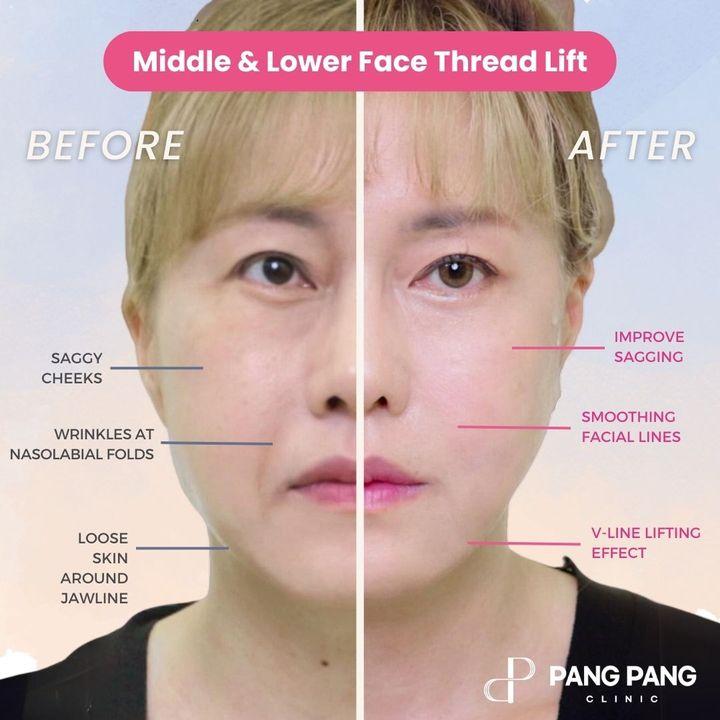
For uneven lip corners, you can discuss a tailored lower-face lifting plan at PangPang Clinic, whose practice is focused on thread lifting. Its approach may be relevant when downward movement or laxity around the mouth contributes to your concern, with thread selection and placement individualized during consultation.
- URL: PangPang Clinic Website
- Location: Gangnam-gu, Seoul
- Thread-lifting approach:
- Pink Lift is a clinic-developed medical thread intended to provide a strong hold and natural-looking lift; the supplied information lists FDA, CE, and KFDA certifications.
- The clinic uses 31 specialized functional thread types and offers customized thread planning.
- Its thread-lifting system includes ultrasonic visual checks and pre-procedure design.
- Comfort and recovery considerations:
- Chill-Lifting uses contact-free cooling anesthesia and is described as aiming to reduce pain, swelling, and bruising.
- Listed thread-lifting sessions take about 30 minutes to 1 hour, with minimal recovery; partial, Airnox, or sleep anesthesia options are listed.
- A thread aftercare package is available to support treatment effects.
- Research and related options:
- The clinic collaborates with Seoul National University Bundang Hospital on thread-lifting techniques related to lifting, collagen regeneration, and skin quality.
- PIM Injection combines Ultra Cell, thread lifting, and Botox and is listed for delicate wrinkles around the mouth as well as facial volume and elasticity concerns.
- A revision center addresses unsatisfactory prior thread-lifting outcomes and may incorporate fillers, Botox, or lasers.
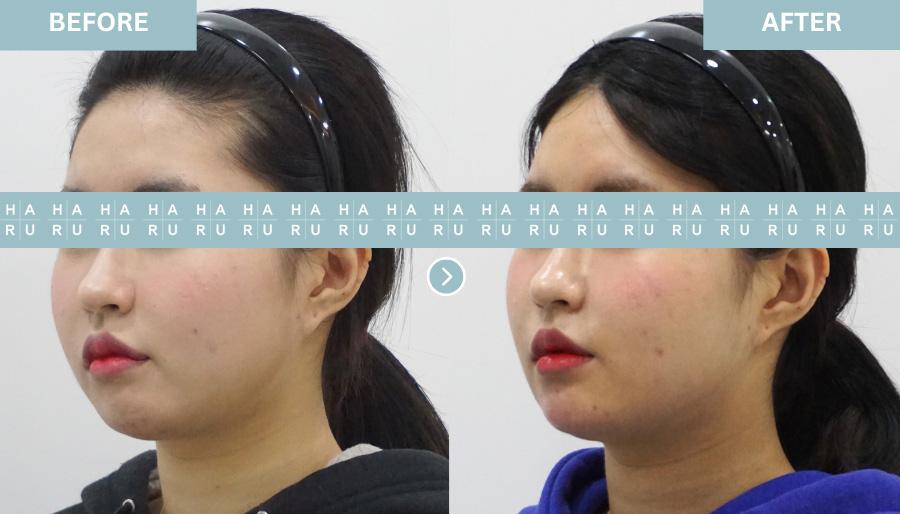
2. Haru Clinic
For uneven lip corners, Haru Clinic offers lip asymmetry correction using precise hyaluronic-acid filler placement or a minor surgical adjustment, with the aim of balancing lip height, shape, and volume at rest and when you smile. Your plan can be designed around facial harmony and the features contributing to the asymmetry.
- URL: Haru Clinic Website
- Location: Gangnam-gu, Seoul
- Lip-corner and lip-asymmetry options:
- Lip asymmetry correction is listed with precise hyaluronic-acid placement or minor surgical adjustment.
- Filler options include hyaluronic acid and biostimulatory fillers for immediate, adjustable contouring of the lips and other facial areas.
- A philtrum-shortening upper-lip lift is also available, using a small incision beneath the nose to alter upper-lip proportions and tooth show.
- Clinician approach:
- Dr. Jeong is described as an official research physician at Merz and as teaching other doctors updated filler techniques.
- Treatment design emphasizes facial balance and harmony through non-invasive techniques where appropriate.
- When lower-face laxity is a factor:
- Thread lifting uses dissolvable barbed threads to elevate sagging cheeks and the jawline under local anesthesia, while stimulating collagen.
- The clinic describes an anchoring approach behind the ear, where skin is less mobile, for a stable lift; the design can be adjusted for volume loss beneath the cheekbones.
- Its stated fixed points are intended to avoid large nerves and blood vessels to help reduce discomfort, pain, and bleeding.
3. B.V Clinic
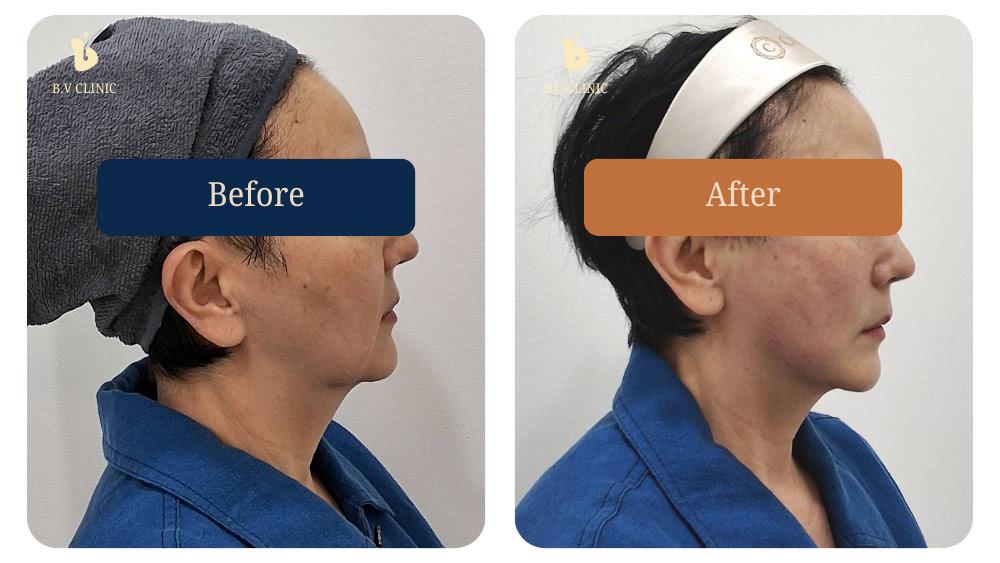
For uneven lip corners associated with broader facial asymmetry or lower-face laxity, B.V Clinic offers non-surgical thread-lifting approaches that aim to restore facial balance and definition. A personalized assessment can help determine whether lifting surrounding tissues is relevant to your specific concern.
- URL: B.V Clinic Website
- Location: Seoul
- Thread-lifting experience:
- Dr. Suh is described as having more than 10 years of dedicated thread-lifting experience and thousands of clinical cases.
- MINT Threads used by the clinic are listed as FDA and KFDA approved.
- Premium PDO barbed threads are described as providing anchoring support while stimulating collagen production.
- Relevant treatment options:
- Full Face Lifting is listed as a non-surgical option that addresses facial asymmetry, restores volume and balance, and provides immediate lifting effects.
- 3D Thread Lifting uses strategically placed threads to lift and firm sagging skin, target the SMAS layer, and support collagen stimulation.
- Volume lifting is available for areas of facial volume and elasticity loss.
- Aftercare:
- Post-treatment care includes skin-regeneration management intended to minimize swelling and improve elasticity.
- The aftercare program includes nutritional skincare products and ultrasound treatments intended to support collagen.
Conclusion
“Uneven lip corners” can be due to medical or cosmetic issues, so getting a clear diagnosis is essential before pursuing treatments like thread lifts. Thread lifts offer a minimally invasive option that enhances contours and spurs long-term collagen production, with results tailored to individual needs based on thread type and technique. South Korea stands out as a safe, advanced, and competitively priced destination for thread lifts, especially for medical tourists seeking both quality and value. Patient satisfaction trends high, though temporary side effects are common—making the choice of an expert provider crucial for the best results.
References
Frequently Asked Questions
Related Blogs

Effective Eye Bag Removal with Under Eye Thread Lift Procedures in Korea for Youthful Appearance
Discover effective solutions for eye bags in Korea with our comprehensive guide. Learn about the causes of under-eye puffiness, explore the minimally invasive Under Eye Thread Lift procedure, and understand how Korea’s advanced clinics offer safe, affordable treatments. Find out about the differences between thread lift and blepharoplasty, along with patient experiences and cost comparisons across
Updated: Nov 3, 2026

Lifestyle Lift in Korea vs. USA, Turkey, and More: A 2023 Cost Guide to Your Perfect Look
Explore the cost of Lifestyle Lift procedures in Korea and discover how this cosmetic option offers affordable and high-quality results. Learn about factors influencing pricing and why Korea is becoming a popular destination for those seeking rejuvenating facial treatments.
Updated: Oct 23, 2026
Abdominal Thread Lift in Korea: Candidacy, Evidence, Recovery, and Travel Planning
Abdominal thread lifts place absorbable threads in superficial abdominal tissue for subtle tightening, but methods, durability, and outcomes are not standardized. The article covers candidate screening, procedure planning, Korea travel and follow-up, preparation, aftercare warning signs, and alternatives for fat, excess skin, diastasis, or hernia.
Updated: Oct 13, 2026
Breast Thread Lift in Korea: Candidacy, Safety, Recovery, and Travel Planning
Breast thread lift uses absorbable threads placed through small entry points for modest contour improvement, but techniques, durability, and complication rates are not standardized. The article covers candidacy, preparation, travel planning for Korea, aftercare, warning signs, follow-up, and surgical alternatives for significant sagging.
Updated: Oct 13, 2026
Clinics offering Thread Lift
RINE Plastic Surgery Clinic | Facelift and Eye Rejuvenation Surgery
Nonhyeon

SH Clinic: Comprehensive Women's, Men's & Couples' Health Services in Korea
Sinsa

THEPLUS Plastic Surgery Korea | Eye, Nose, Face & Body Surgery
Sinsa

Haru Clinic Korea | Fully-Customized Full-Face Non-Surgical Rejuvenation With Threads, Botox & Fillers
Sinsa