
Medical Tourism Blog
Smile Line Filler in Korea: Methods, Recovery, Risks and Travel Planning

Table of contents
- Smile Line Filler at a Glance
- What Is Smile Line Filler?
- Who Is a Good Candidate for Smile Line Filler?
- How Is Smile Line Filler Performed?
- Why Visit Korea for Smile Line Filler?
- Key Information for International Patients
- Which Are the Best Clinics in Korea for Smile Line Filler?
- Smile Line Filler From Start to Finish
- Alternatives to Smile Line Filler
- How Can I Prepare for Smile Line Filler?
- Aftercare Advice
Considering treatment in Korea? Everything you need to know e.g. — how to avoid scams, visas, interpreters, recovery tips — in our Medical Tourism Master Guide. Plan with confidence in minutes, not weeks!
Last updated: September 2026
Smile Line Filler at a Glance
- What it treats — Smile line filler is usually hyaluronic-acid (HA) gel injected to temporarily soften nasolabial folds—the creases from the sides of the nose toward the mouth—while preserving natural expression.
- Best candidates — It is most suitable for adults with mild-to-moderate folds who want reduced shadowing rather than complete line removal and understand that marked cheek descent or loose skin may need another approach.
- Treatment approach — The injector may place small amounts in the crease, beside the nose, or the medial cheek; structural cheek or paranasal support can be more natural than filling the fold directly.
- Downtime and results — The outpatient injection commonly takes about 15–30 minutes, with quiet normal activity often possible the same day; swelling peaks around days 1–2, bruising may last 1–2 weeks, and the settled result is best judged at about 2 weeks.
- How long it lasts — Improvement is immediate but temporary; clinical trials show average nasolabial-fold improvement can persist at 6 and 12 months, while maintenance depends on the filler, anatomy, movement, volume, and metabolism.
- Travel planning — International patients should plan 2–3 days in Korea, including 24–48 hours of local availability after injection; there is no established no-fly interval after an uncomplicated treatment, but urgent symptoms require immediate assessment.
- Key safety check — Nasolabial-fold injection carries a rare risk of vascular occlusion that can threaten skin or vision, so confirm the named injector, exact product, immediate hyaluronidase access, and a written vascular-emergency protocol; in Korea, verify the clinic is registered to treat foreign patients.
What Is Smile Line Filler?
Smile line filler is a hyaluronic-acid gel injection used to soften nasolabial folds, the creases running from the sides of the nose toward the mouth. It aims to reduce shadowing and restore subtle facial support while preserving natural expression rather than erasing every line. It is a non-surgical, minimally invasive injectable treatment performed as an outpatient procedure.
Who Is a Good Candidate for Smile Line Filler?
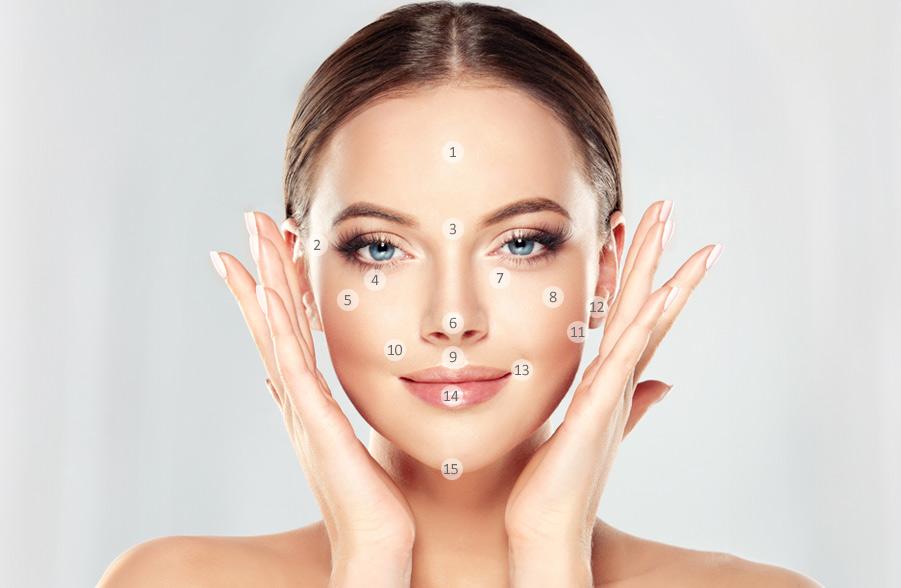
- Mild-to-moderate folds — Good candidates want temporary softening of nasolabial folds, the creases running from the sides of the nose toward the mouth corners, with reduced shadowing rather than complete removal of a natural expression line.
- Realistic treatment goals — Hyaluronic-acid (HA) filler can add local volume and support, but it does not reliably correct marked cheek descent or loose skin.
- Appropriate anatomy — Candidates accept an assessment of the fold, medial cheek, and pyriform/paranasal area beside the nose. Conservative cheek or paranasal support can be more suitable than filling the crease alone.
- Informed adult patients — Adults who can provide a full history of prior filler, biostimulators, threads, implants, facial procedures, allergies, medicines, and supplements are better positioned for safe planning.
Do not proceed during an active skin, dental, sinus, upper-respiratory, or systemic infection, or with acne cysts or inflammation near the injection sites. Elective filler is generally deferred in pregnancy and breastfeeding because adequate product-specific safety data are lacking. Significant immunosuppression, uncontrolled diabetes, autoimmune or granulomatous disease, prior delayed inflammatory filler reactions, or permanent or unknown injected material require specialist assessment; treatment can be inappropriate or need postponement. Known filler or lidocaine hypersensitivity, a history of severe allergy or anaphylaxis, and bleeding disorders also require individualized planning. Do not stop prescribed warfarin, apixaban, rivaroxaban, clopidogrel, aspirin, or other anticoagulant or antiplatelet medicine without direction from its prescriber.
How Is Smile Line Filler Performed?
Smile line filler is not a surgical procedure with separate patient-facing types. The important decisions are the HA gel, injection plane, placement strategy, instrument, and total volume.
- HA filler — HA gel is the usual temporary option for nasolabial folds. It can potentially be degraded with hyaluronidase when medically indicated, although reversal is not guaranteed.
- Gel selection — HA products differ in cross-linking, elasticity, cohesivity, concentration, and recommended depth. The injector should match the gel to skin quality, fold depth, movement, and tissue plane rather than select a product by brand recognition alone.
- Direct fold or structural support — Treatment can target the crease itself, the pyriform/paranasal region, the medial cheek, or a conservative combination. This decision depends on whether local volume loss, midface descent, skeletal anatomy, or dynamic movement drives the visible fold.
- Needle or blunt cannula — Either instrument can be appropriate. A cannula can reduce the number of skin entry points in some plans, but neither tool removes vascular risk; anatomy knowledge, suitable depth, slow low-pressure injection, small aliquots, and rapid complication recognition matter more.
- Staged correction — Conservative volume and review after swelling settles help avoid heaviness, contour irregularity, and an overfilled lower face. Randomized-trial evidence supports temporary improvement in nasolabial-fold severity, but outcomes differ by product, technique, anatomy, and study scale in the available clinical evidence.
Why Visit Korea for Smile Line Filler?
Korea has a regulated medical-device pathway and published clinical studies of HA fillers used in Korean participants. These points support a product-level discussion, not a claim that Korean treatment is inherently safer or better than care elsewhere. The safest choice remains a clinician and clinic that can identify the product, assess facial anatomy in person, and manage complications immediately.
- Product-specific Korean research — A 2026 multicenter, randomized, blinded split-face study of 100 adults found one Korean HA filler noninferior to Restylane Lidocaine at 24 weeks; it reported no serious adverse events, while local injection-site reactions were common and more frequent with the test product. This Korean cohort study does not compare national healthcare systems or predict an individual outcome.
- Comparative filler studies — Korean trials have compared locally made and imported HA products for nasolabial folds. These product comparisons can inform a consultation, but do not establish that one country, brand, technique, or clinic is universally superior.
- Device oversight — Korean MFDS review includes intended use, raw materials, performance, safety, and instructions for use under its medical-device approval framework. Ask for the exact proposed product and indication; a generic statement that a filler is “approved” is not enough.
- Foreign-patient safeguards — Confirm that the institution is authorized to attract foreign patients through the registered-institution system, verify the named injector will perform both consultation and injection, and ask whether hyaluronidase and a written vascular-occlusion protocol are immediately available.
Key Information for International Patients
- Minimum stay — Plan 2–3 days: consultation and injection on day 1, then local availability for review over the next 24–48 hours. This is a cautious travel plan, not an evidence-based mandatory stay.
- Flight timing — No established filler-specific no-fly interval exists after an uncomplicated nasolabial-fold HA injection. Do not fly with severe pain, blanching, net-like or mottled discoloration, visual symptoms, or rapidly worsening swelling; seek emergency assessment immediately.
- Itinerary impact — Most people resume quiet normal activity the same day. Schedule around the possibility of redness, swelling, tenderness, firmness, and bruising; swelling is usually most noticeable during days 1–2, while bruising can take 1–2 weeks to fade.
- Activity restrictions — Avoid strenuous exercise, alcohol, sauna use, hot yoga, very hot baths, facials, and heavy facial massage for the first 24 hours. Avoid further laser, peel, microneedling, waxing, or invasive dental work until the injector confirms the timing.
- Records for home care — Obtain the product name, manufacturer, lot or batch number, total volume and volume per side, anatomical areas and planes treated, photographs, written aftercare, and an emergency contact plan before departure.
- Remote follow-up — Arrange a photo or video review at about 2 weeks, when early swelling has settled. Discuss an elective touch-up, if needed, at roughly 2–4 weeks rather than judging symmetry immediately after injection.
Travel note: Stay reachable by the treating team for 24–48 hours and keep flights flexible. The nasolabial region is a high-risk facial injection area because rare intravascular injection can threaten skin and vision and requires immediate clinician-led treatment.
Which Are the Best Clinics in Korea for Smile Line Filler?
Listed below are some of the best clinics in Korea for smile line filler.
1. Haru Clinic
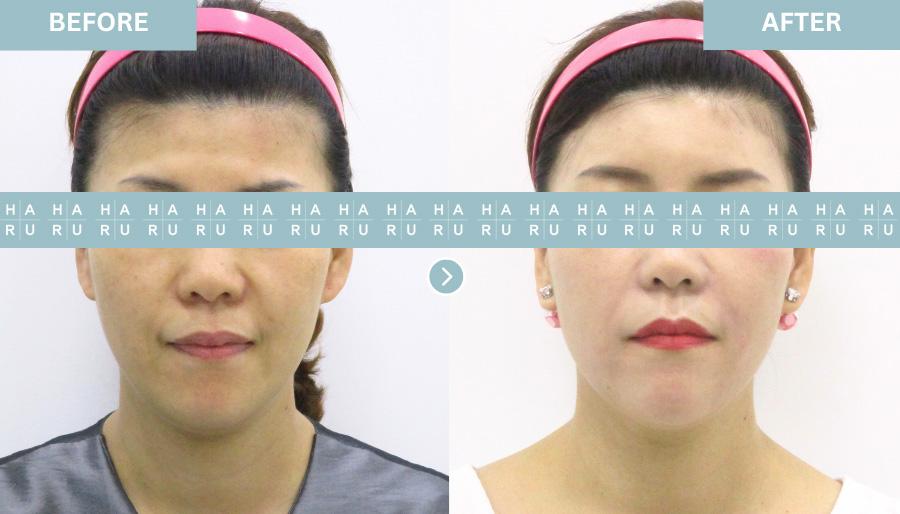
For smile-line filler, you can expect a non-invasive, facially balanced approach at Haru Clinic. Dr. Jeong designs treatment around your individual features and uses filler techniques intended to restore volume and soften folds while maintaining a natural, refreshed look with minimal downtime.
- URL: Haru Clinic Website
- Location: Gangnam-gu, Seoul
- Filler approach:
- Hyaluronic acid and biostimulatory fillers are used to restore facial volume and definition; results are described as immediate and adjustable.
- Treatment planning emphasizes harmony and balance across your face rather than treating an area in isolation.
- Physician expertise:
- Dr. Jeong is an official research physician for Merz, the company behind Belotero Filler.
- He teaches other doctors about current filler techniques.
- Related options:
- Botox is available for dynamic facial lines and jaw-muscle concerns.
- Thread lifting, collagen-tightening treatments, and care for under-eye hollowness are among the clinic's other facial options.
2. Modelo clinic
For smile-line filler, Modelo Clinic takes an individualized approach centered on your own facial character and longer-term aesthetic goals. Its filler services focus on creating balanced facial volume with immediate results, which may be relevant when you want to soften smile lines without pursuing a trend-driven look.
- URL: Modelo clinic Website
- Location: Gangnam-gu, Seoul
- Filler services:
- Full-face filler can address areas including the cheeks, lips, and forehead for added volume and a more youthful appearance.
- Baby Filler is offered for under-eye hollows and dark-circle concerns.
- Complementary treatments:
- Wrinkle Botox targets fine lines, while contour Botox is intended to refine facial definition.
- Lifting treatments, radiofrequency-based Comfort Thermage, and thread lifting are available for sagging-skin and contour concerns.
- Treatment philosophy:
- Planning emphasizes your individuality rather than replicating another person's appearance.
- Botox treatments are described as optimized for Asian skin and facial structures.
3. PangPang Clinic
For smile-line concerns, PangPang Clinic offers customized filler and Botox alongside its specialized lifting practice. You can discuss whether volume support, wrinkle-focused injectable treatment, or a lifting-based plan best fits the folds around your mouth and your wider facial-contour goals.
- URL: PangPang Clinic Website
- Location: Gangnam-gu, Seoul
- Smile-line and volume options:
- The clinic offers customized filler and Botox treatments for wrinkle prevention and facial-structure enhancement.
- PIM Injection is designed to smooth delicate wrinkles around the mouth while supporting elasticity, complexion, facial volume, and firmness.
- PIM Injection combines Ultra Cell, thread lifting, and Botox; it is described as taking about 30 minutes, using local anesthesia, with no recovery period and results lasting approximately 6 months to 2 years.
- Thread-lifting specialization:
- The clinic focuses exclusively on thread lifting and has established a Thread Lifting Research Institute.
- Its team uses 31 specialized functional threads and develops plans through individualized consultation, pre-operative design, and ultrasonic visual checks.
- Thread lifting may provide an immediate lift while promoting collagen production; facial procedures are described as taking 30 minutes to one hour, with minimal recovery and results of about one year or longer.
- Additional facial care:
- Minute Lifting is a 30-minute, non-invasive option with an immediate effect and no reported swelling; maintenance is described as 6 months to one year.
- A revision center addresses unsatisfactory prior thread-lifting results and may incorporate filler, Botox, or laser treatments.
- Laser treatments and scar-removal services are also available.
Smile Line Filler From Start to Finish
- First contact and virtual screening — Send clear, makeup-free facial photographs in neutral expression and smiling if requested. Ask whether English consultation or interpreter support is available, identify the injector, disclose previous facial injectables or procedures, and state travel dates.
- In-person assessment — The injector examines fold depth, facial movement, cheek volume, skin laxity, dental or skeletal contribution, and prior material. The plan can shift from direct crease filling to conservative medial-cheek or paranasal support after this assessment.
- Medical review and consent — Discuss allergies, severe allergy history, autoimmune or granulomatous disease, immunosuppression, diabetes, infections, recent vaccination or dental work, recurrent facial herpes, medicines, and supplements. Routine blood tests or imaging are not usually necessary; ultrasound can be useful when prior filler is uncertain or a complication is suspected.
- Product and emergency-plan confirmation — Confirm the exact HA filler, whether it contains lidocaine, the planned areas and approximate volume, expected limits, cost, and aftercare. Ask to see that hyaluronidase and a vascular-occlusion response protocol are available.
- Injection preparation — The clinician takes photographs, cleanses the skin, marks treatment points where appropriate, and can apply topical anesthetic. Some HA fillers contain lidocaine, so additional anesthesia is often unnecessary; routine sedation is not typical.
- Filler placement — The injector places small, conservative amounts with a needle, blunt cannula, or both, at the selected plane in the fold, pyriform/paranasal region, cheek, or a combination. The procedure is outpatient and commonly takes about 15–30 minutes after assessment and preparation.
- Immediate review and discharge — The injector checks balance, skin color, pain, and contour rather than pursuing maximum correction in one session. Leave with product records, written aftercare, warning signs, and a direct emergency contact route.
- Local review and overseas follow-up — Remain in Korea for practical access over the following 24–48 hours. Send photographs or attend review as arranged, then reassess the settled result at approximately 2 weeks; early swelling can distort symmetry.
Alternatives to Smile Line Filler
The best alternative depends on what creates the fold. Non-surgical options offer temporary or gradual change with lower downtime but retain injectable or device-specific risks; surgery better addresses marked descent or loose skin but involves incisions, anesthesia, and a longer recovery.
Cheek or Facial Filler
- Best for — Folds driven by medial-cheek volume loss or midface descent rather than a sharply etched crease.
- Tradeoff — Structural support can look more balanced than direct fold filling, but it remains an injectable treatment with bruising, asymmetry, vascular, and inflammatory risks. See facial filler.
Facial Fat Grafting
- Best for — Patients seeking surgical volume restoration with potentially longer persistence than HA filler.
- Tradeoff — Fat is harvested from another body area, graft retention varies, and recovery includes both donor and facial treatment sites. See face fat grafting.
Collagen-Stimulating Filler
- Best for — Selected patients who prefer gradual improvement rather than immediate HA volume.
- Tradeoff — These products are generally less readily reversible than HA and are not a simple substitute when precise, reversible correction is the priority. See collagen filler.
Thread Lift
- Best for — Mild tissue descent where lifting support, rather than crease filling alone, is the main goal.
- Tradeoff — Results and longevity differ from filler, and risks include discomfort, contour irregularity, thread visibility, and the need for procedural recovery. See thread lift.
Facelift
- Best for — Substantial cheek descent and skin laxity contributing to deep folds.
- Tradeoff — A facelift offers a surgical approach to tissue repositioning but requires anesthesia, incisions, significant downtime, and in-person postoperative care. See face lift.
Filler Dissolver
- Best for — Problems related to prior HA filler, such as selected overcorrection or clinician-diagnosed complications.
- Tradeoff — Hyaluronidase is not a treatment for an untreated smile line and should only be used under clinician direction. See filler dissolver.
How Can I Prepare for Smile Line Filler?
- Medical disclosure — Provide a complete list of prior fillers, biostimulators, silicone, threads, implants, facial procedures, complications, allergies, illnesses, prescription medicines, over-the-counter medicines, and supplements before booking.
- Bleeding-risk medicines — Report warfarin, apixaban, rivaroxaban, clopidogrel, aspirin, ibuprofen, naproxen, fish oil or omega-3, vitamin E, ginkgo, garlic, ginseng, turmeric, and curcumin. Do not independently stop prescribed anticoagulants or antiplatelets; the prescriber and injector must set any adjustment plan.
- Infection and dental timing — Reschedule for active facial skin infection, acne cysts, dental or oral infection, sinus or respiratory infection, fever, or systemic illness. Coordinate invasive dental treatment, lasers, peels, microneedling, waxing, and other barrier-disrupting facial procedures; expert consensus commonly advises at least 2 weeks after HA filler before elective invasive procedures.
- Food and alcohol — Fasting is usually unnecessary when topical or local anesthetic is used. Avoid alcohol immediately before treatment and for about 24 hours afterward if instructed, as it can worsen flushing and bruising.
- Treatment-day skin — Arrive with clean skin and avoid inflamed, sunburned, or recently treated facial areas. Do not conceal active irritation with makeup.
- Travel logistics — Book accommodation close enough for a prompt return, preserve 24–48 hours of local availability, and choose a flexible departure. Bring a companion if language support or help managing travel disruption would be useful.
Travel note: Do not schedule filler immediately before a major event, long-haul departure, dental appointment, or intensive sightseeing day. Bruising can remain visible for 1–2 weeks.
Confirm the treating doctor’s clinic-specific medicine, procedure-timing, and travel instructions; individualized directions take precedence over general guidance.
Aftercare Advice
Protect the treated area, monitor skin color and pain closely, and judge the cosmetic result only after early swelling has settled.
- First 24 hours — Use a wrapped cool compress intermittently only if the injector approves. Avoid vigorous exercise, alcohol, sauna use, hot yoga, very hot baths, facials, and heavy facial massage.
- Hands and skincare — Do not press, massage, or attempt to redistribute filler unless the injector specifically instructs it. Keep entry points clean, use gentle skincare, and postpone laser, chemical peels, microneedling, waxing, and other inflammatory facial treatments until recovery and injector approval.
- Expected short-term effects — Redness, tenderness, swelling, firmness, bruising, itching, small palpable irregularities, and temporary asymmetry are common. Swelling generally improves over several days; bruising can take 1–2 weeks to fade. Local reactions account for most reported complications in a systematic review of randomized trials, but pooled figures do not predict an individual risk because products and reporting definitions differed.
- Urgent warning signs — Contact the injector and seek immediate emergency assessment for severe or escalating pain; white, pale, dusky, purple, net-like, or mottled skin; cold skin; blisters; rapidly spreading discoloration; visual disturbance; eyelid drooping; weakness; speech difficulty; severe headache; or other stroke-like symptoms.
- Delayed concerns and review — Contact the clinic promptly for increasing redness, warmth, drainage, fever, an enlarging painful lump, or swelling or nodules arising days to months later. Arrange review at around 2 weeks; temporary HA-filler improvement can persist at 6 and 12 months in trials, but maintenance timing depends on product, anatomy, movement, volume, and metabolism.
Follow the treating doctor’s instructions over this general advice and contact the clinic promptly whenever something appears wrong.
Frequently Asked Questions
Related Blogs
Ear Filler in Korea: Candidacy, Safety, Recovery and Travel Planning
Ear filler uses small amounts of hyaluronic acid to restore soft earlobe volume or support an intact widened piercing, with results visible immediately and limited evidence suggesting 6–9 months of effect. The article covers candidate screening, procedure steps, recovery, travel planning, aftercare, urgent warning signs, and surgical alternatives for torn or structurally altered earlobes.
Updated: Oct 28, 2026
Erase Horizontal Forehead Lines with Forehead Filler: Advanced Treatments in Korea
Discover how Korea leads in treating horizontal forehead lines with advanced dermal fillers and Botox. This article explores the causes of static wrinkles, treatment options like hyaluronic acid, CaHA, and PLLA fillers, and the importance of expert practitioners in Korea’s top clinics. Learn about the procedure steps, safety considerations, and how Korea’s affordable, high-quality medical tourism
Updated: Oct 11, 2026
Bony Hands Solutions: Hand Filler Procedures in Korea for Fuller, Youthful-Looking Hands
Discover effective solutions for "bony hands" and veiny hand aging with Korea’s leading hand filler procedures. From hyaluronic acid fillers like Restylane to biostimulatory options such as Radiesse and Sculptra, Korea offers expert treatments to restore youthful volume. Enjoy short, minimally invasive treatments with immediate results, performed by certified Korean surgeons in a patient-focused m
Updated: Oct 10, 2026
Neck Wrinkles Solutions: Neck Filler Procedures in Korea for Smoother, Youthful Skin
Discover how Korea leads in neck wrinkle treatments with advanced Neck Filler procedures like hyaluronic acid, calcium hydroxylapatite, and poly-L-lactic acid. This comprehensive guide explores causes of neck aging, treatment techniques, costs, and patient experiences in Korea—a preferred medical tourism destination. Learn about Korea’s expert injectors, affordable pricing, and all-inclusive packa
Updated: Oct 8, 2026
Clinics offering Smile Line Filler

Haru Clinic Korea | Fully-Customized Full-Face Non-Surgical Rejuvenation With Threads, Botox & Fillers
Sinsa

Hev Clinic Korea | Premium Sinsa Clinic for Skin, Laser & Injectables
Sinsa

Three Wishes Clinic - Myeongdong, Korea: Advanced Botox, Fillers, Laser, and Skin Treatments for Confidence and Care
Myeongdong

PangPang Clinic: Korea's Premier Thread Lifting and Skin Rejuvenation Specialist in Gangnam, Seoul
Sinsa