
Medical Tourism Blog
Orbital Fat Herniation Treatment in Korea: Under Eye Fat Removal and Repositioning Procedures
Table of contents
- Understanding Orbital Fat Herniation
- Under Eye Surgery in Korea: Blepharoplasty Options for Orbital Fat Herniation
- Under Eye Fat Removal and Repositioning (Blepharoplasty): Medical Procedures Explained
- Which Are the Best Clinics in Korea for Orbital Fat Herniation?
- References
Considering treatment in Korea? Everything you need to know e.g. — how to avoid scams, visas, interpreters, recovery tips — in our Medical Tourism Master Guide. Plan with confidence in minutes, not weeks!
This guide is designed to help individuals better understand "orbital fat herniation," often referred to as "protrusion of fat from the eye socket." Here, you'll find a clear explanation of this condition, an overview of the surgical options available for correction, and practical advice for those considering treatment—especially medical tourists looking at South Korea. The goal is to provide accurate, expert-level information so you can make informed choices about your appearance and eye health.
Understanding Orbital Fat Herniation
Let's start by defining orbital fat herniation, exploring its causes, symptoms, and the different terms you might encounter when researching this condition.
What is Orbital Fat Herniation?
Orbital fat herniation happens when the fat pads that cushion your eyeball start to bulge outward. This occurs because the Tenon capsule—a thin, elastic membrane that holds these fat pads in place—becomes weak or damaged. The result is often described as an "unsightly projection of the infraorbital fat pads which causes patients to have a bulge under their eyes."
Several factors can weaken the Tenon capsule. Aging is the most common cause, as the membrane naturally thins and loses elasticity over time. Previous injuries or surgeries around the eye can also play a role. Additionally, certain medical conditions like orbital decompression surgery or thyroid eye disease, as well as genetics, may contribute.
Typically, orbital fat herniation appears as a yellowish mass under one or both eyes. While it's mainly a cosmetic issue, it rarely forms a large mass. This condition is most often seen in middle-aged men, with an average age of 66, and about 90% of cases occur in men. The bulge usually appears in the superotemporal quadrant or lateral canthus of the eye.
If you're searching for information about "under-eye bags," it's important to know that "orbital fat herniation" is a specific medical issue. While it looks similar to what most people call under-eye bags, those can also be caused by things like loose skin, fluid retention, or muscle changes. Recognizing that orbital fat herniation is a unique type of under-eye bag—caused by fat pushing through a weakened membrane—can help you communicate more effectively with your doctor and get the right treatment.
After surgery, the specific herniation of orbital fat usually doesn't come back. However, if you gain a significant amount of weight later on, new orbital fat could develop, which might bring back some under-eye fullness. Understanding this helps set realistic expectations for how long surgical results will last and highlights the importance of lifestyle choices in maintaining your results.
Common Pseudonyms and Related Terminology
When looking up information about under-eye concerns, you'll come across a variety of terms. Knowing these can make it easier to find what you're looking for and talk with healthcare providers.
Some commonly used terms include:
- "Infraorbital fat"
- "Bulge under their eyes"
- "Lower eyelid bags"
- "Puffy under-eye bags"
- "Fat protrusion"
- "Dark circles and bags under their eyes"
- "Hernia removal"
- "Steatoblepharon"
These terms are often used interchangeably to describe the visible effects of orbital fat herniation. The table below helps clarify these terms and their typical usage.
Table 1: Common Pseudonyms for Orbital Fat Herniation
| Term | Common Usage/Description |
|---|---|
| Infraorbital fat | Refers to the fat pads located beneath the eye. |
This table bridges the gap between everyday language and the medical term "orbital fat herniation." Understanding these connections helps you describe your concerns more accurately and ensures your doctor knows exactly what you're referring to, leading to better communication and treatment planning.
Under Eye Surgery in Korea: Blepharoplasty Options for Orbital Fat Herniation
Now, let's look at the surgical options for correcting orbital fat herniation, focusing on lower eyelid blepharoplasty.
Under Eye Fat Removal and Repositioning (Blepharoplasty): Medical Procedures Explained
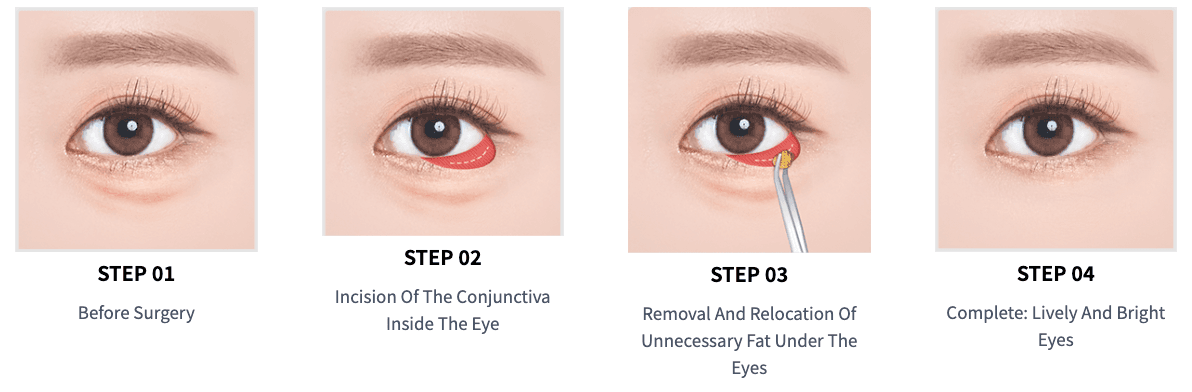
Overview of Lower Eyelid Blepharoplasty
Lower eyelid blepharoplasty is a surgical procedure that refreshes the look of your lower eyelids. Its main goals are to address lower eyelid bags, smooth out wrinkles, and tighten loose or sagging skin. By reducing fat bulges and improving the contour under the eyes, this procedure can help you look more youthful and alert. It can be done on its own or combined with upper eyelid blepharoplasty for a more complete facial rejuvenation.
Techniques: Fat Excision vs. Fat Repositioning/Transposition
There are two main approaches to dealing with excess fat in lower eyelid blepharoplasty.
Traditional Fat Excision: In the past, surgeons would often remove the extra fat and sometimes skin from the eyelids. While this method reduced puffiness, it sometimes left patients with a hollow or sunken look, especially in younger people who had more fat than loose skin. This could make the tear trough—the groove below the eyelid—look deeper.
Fat Repositioning (Fat Transposition/Redraping): Today, many surgeons prefer to preserve and move the excess fat rather than remove it. This technique, called fat repositioning or fat fat transposition, involves shifting the fat to fill in hollow areas like the tear trough. The fat is placed in a new pocket under the skin and muscle, often keeping its original blood supply for better healing. This approach is especially helpful for treating both bulging fat pads and hollowness at the same time.
The trend has shifted from aggressive fat removal to more conservative fat repositioning. This change comes from a better understanding of facial aging, which often involves both fat loss and fat protrusion. Surgeons now aim for a smooth transition between the eyelid and cheek, creating a fuller, more youthful look by redistributing fat instead of just removing it. This modern approach leads to more natural results, reducing bags while restoring youthful contours.
Table 2: Comparison of Lower Blepharoplasty Techniques (Excision vs. Repositioning)
| Feature | Traditional Fat Excision | Fat Repositioning/Transposition |
|---|
Which Are the Best Clinics in Korea for Orbital Fat Herniation?
Listed below are some of the best clinics in Korea for orbital fat herniation.
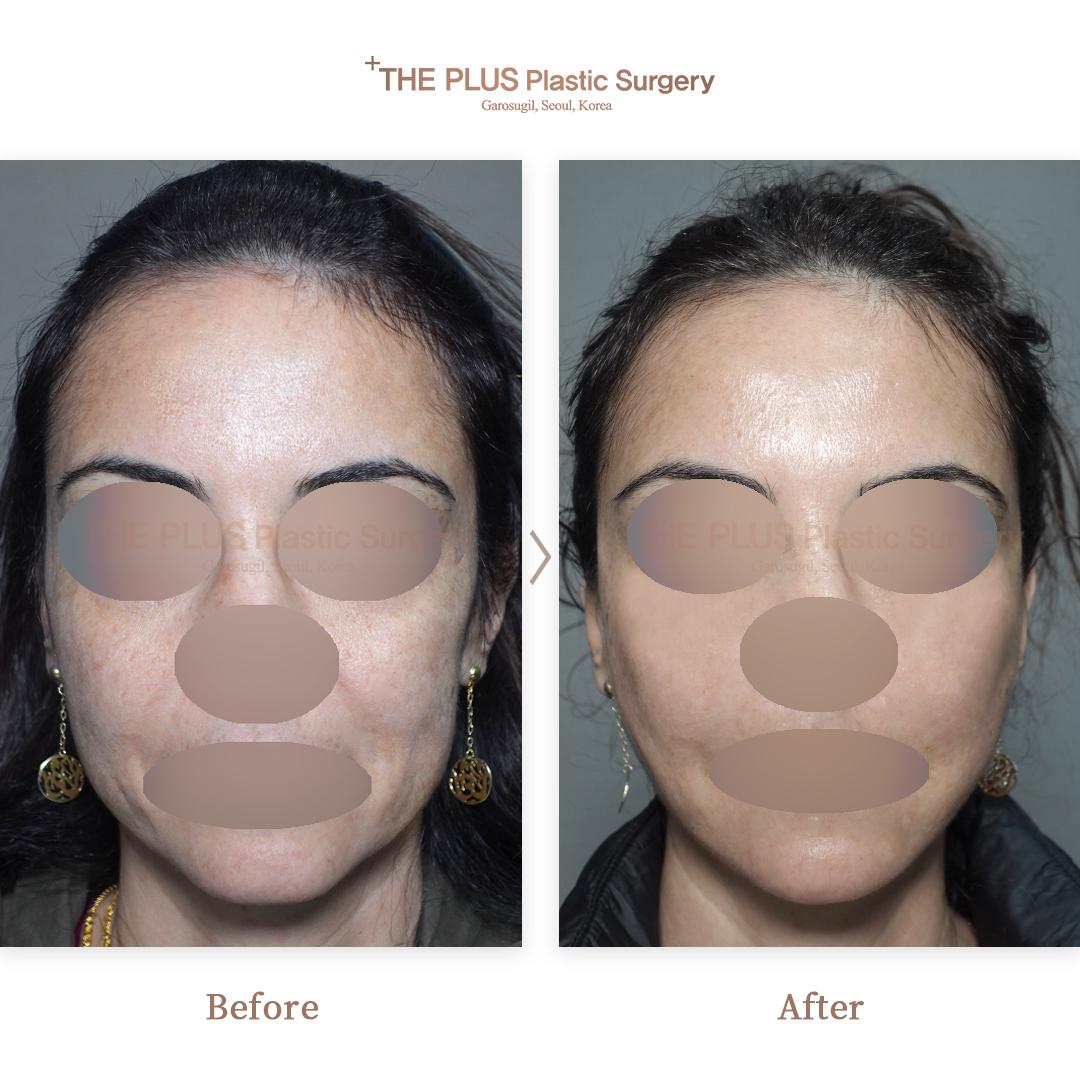
1. THEPLUS Plastic Surgery
For orbital fat herniation concerns, you can consider THEPLUS Plastic Surgery for blepharoplasty that removes or adjusts excess eyelid skin and tissue to refresh and smooth the eye area. Its stated approach emphasizes tailoring eyelid changes to your existing facial features and overall facial harmony.
- URL: THEPLUS Plastic Surgery Website
- Location: Gangnam-gu, Seoul
- Eye-area options:
- Blepharoplasty is offered to address excess skin and tissue around the eyelids.
- Double-eyelid surgery and ptosis correction are also listed eye-surgery options when upper-eyelid crease definition or drooping is part of your assessment.
- Relevant surgical perspective:
- Dr. Kim is described as a board-certified plastic surgeon with research recognition related to 3D implants and an emphasis on harmonious facial balance.
- Dr. Jeong is described as President of the Korean Society of Plastic Surgeons and as approaching surgical planning through both function and appearance.
2. Made Young Plastic Surgery
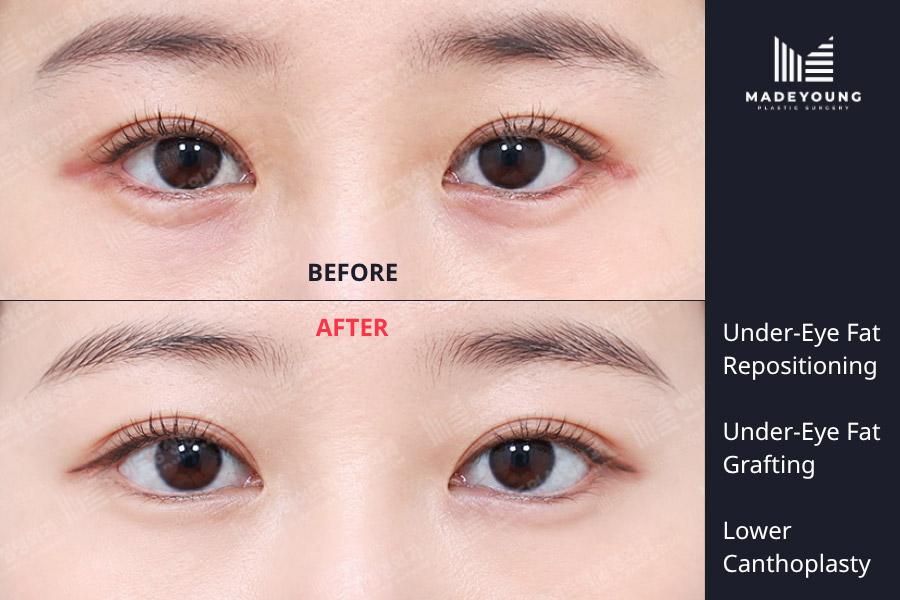
You may consider Made Young Plastic Surgery for orbital fat herniation because it offers lower blepharoplasty and dark-circle surgery that remove or reposition under-eye fat through an internal conjunctival incision, an approach described as leaving minimal, virtually invisible scarring. The clinic also states that it addresses tear-trough ligament and double-orbital adhesions contributing to hollows and shadows, rather than treating under-eye fullness as a simple fat-removal issue.
- URL: Made Young Plastic Surgery Website
- Location: Seocho-gu, Seoul
- Procedure details:
- Under-eye fat may be removed or repositioned through an internal conjunctival incision.
- The clinic describes releasing or addressing tear-trough ligament and double-orbital adhesions to smooth hollows and dark shadows.
- Lower blepharoplasty is listed for under-eye bags, fat removal or repositioning, and possible skin tightening.
- Safety and aftercare:
- Full-time board-certified anesthesiologists are stated to be on site, with one-to-one anesthetic monitoring and a cross-check system for emergencies.
- A dedicated aftercare center and full CCTV coverage of procedures are listed.
3. RINE Plastic Surgery Clinic
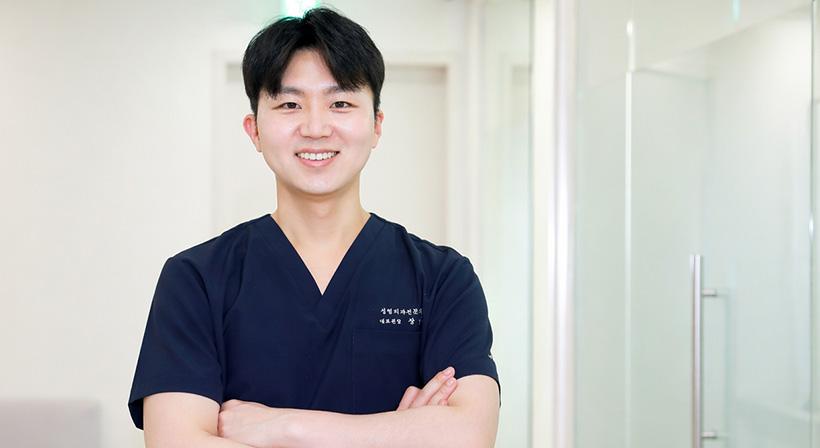
You may consider RINE Plastic Surgery Clinic for orbital fat herniation if your goal is to smooth both under-eye bags and tear-trough hollows without simply removing volume. The clinic describes precise under-eye fat repositioning with tear-trough filler and septal reinforcement intended to support a longer-lasting contour, while Director Jang Nam personally oversees your consultation, surgery, treatment, and recovery.
- URL: RINE Plastic Surgery Clinic Website
- Location: Seocho-gu, Seoul
- Procedure details:
- Under-eye fat repositioning redistributes orbital fat beneath the lower eyelid to smooth bags and hollows while preserving volume.
- The clinic states that it uses septal reinforcement in this approach to support long-lasting results and reduce recurrence concerns.
- Lower blepharoplasty with lifting is also offered for fat herniation alongside sagging skin, lower-eyelid laxity, and loss of mid-face support.
- Continuity of care:
- Director Jang Nam, a board-certified plastic surgeon, is described as personally managing each stage from consultation through recovery.
- Planning is described as one-to-one and based on your facial proportions, skin condition, and individual features.
- Private one-person recovery rooms and a continuous postoperative care system are listed.
- Clinic resources:
- The clinic lists more than 15 years of clinical experience in eye surgery and anti-aging procedures.
- It is equipped with a full-HD Stryker endoscope, FDA-approved genuine Endotine, and WhiteLite bipolar technology.
References
Frequently Asked Questions
Related Blogs
Uneven Eyelids: Canthoplasty, Laser Canthoplasty, and Revision Eye Surgery Solutions in Korea
Discover how Korea leads in eyelid asymmetry correction with advanced procedures like canthoplasty, laser canthoplasty, and revision eye surgery. This comprehensive guide explores causes, emotional impacts, and how Korea's expert surgeons deliver natural-looking results. Learn about the surgical techniques, costs, and benefits of choosing Korea for your eyelid correction, emphasizing safety, affor
Updated: Oct 10, 2026
Sunken Eyes Solutions in Korea: Under Eye Fat Grafting and Eyelid Fat Grafting Procedures Explained
Discover how Korea leads in treating sunken eyes with advanced procedures like autologous fat grafting and eyelid fat transfer. This comprehensive guide highlights causes, symptoms, and the benefits of Korea’s top clinics, offering natural, long-lasting results. Perfect for medical tourists, learn why Korea is the ideal destination for under-eye rejuvenation, combining cutting-edge technology, exp
Updated: Oct 10, 2026
Injury to Eyelid: Ptosis Correction Procedures in Korea for Effective Eyelid Injury Treatment
Discover expert eyelid injury and ptosis correction procedures in Korea. This blog covers eyelid laceration treatments, approaches to traumatic and congenital ptosis, and advanced surgery options like external levator advancement and frontalis sling techniques. Learn why Korea is a top destination for affordable, high-quality eyelid surgeries, offering rapid recovery, aesthetic improvements, and f
Updated: Oct 9, 2026
Bulging Eyes Solutions: Canthoplasty, Laser Canthoplasty & Eyelid Fat Grafting in Korea
Discover how Korea leads in treating bulging eyes (exophthalmos) with advanced procedures like orbital decompression, Canthoplasty, and Eyelid Fat Grafting. Whether caused by Thyroid Eye Disease or trauma, these expert surgeries in Korea improve vision, reduce discomfort, and enhance appearance. Benefit from Korea’s renowned medical expertise, affordable pricing, and comprehensive care. If you’re
Updated: Oct 9, 2026
Clinics offering Under Eye Fat Removal or Repositioning
RINE Plastic Surgery Clinic | Facelift and Eye Rejuvenation Surgery
Nonhyeon

SH Clinic: Comprehensive Women's, Men's & Couples' Health Services in Korea
Sinsa

THEPLUS Plastic Surgery Korea | Eye, Nose, Face & Body Surgery
Sinsa

Haru Clinic Korea | Fully-Customized Full-Face Non-Surgical Rejuvenation With Threads, Botox & Fillers
Sinsa