
Medical Tourism Blog
Knee Liposuction in Korea: Candidacy, Techniques, Recovery and Travel Planning

Table of contents
- Knee Liposuction at a Glance
- What Is Knee Liposuction?
- Who Is a Good Candidate for Knee Liposuction?
- How Is Knee Liposuction Performed?
- Why Visit Korea for Knee Liposuction?
- Key Information for International Patients
- Which Are the Best Clinics in Korea for Knee Liposuction?
- Knee Liposuction From Start to Finish
- Alternatives to Knee Liposuction
- How Can I Prepare for Knee Liposuction?
- Aftercare Advice
Considering treatment in Korea? Everything you need to know e.g. — how to avoid scams, visas, interpreters, recovery tips — in our Medical Tourism Master Guide. Plan with confidence in minutes, not weeks!
Last updated: September 2026
Knee Liposuction at a Glance
- What it treats — Knee liposuction removes localized subcutaneous fat, usually at the inner knee and sometimes blending into the lower thigh or upper calf, to refine leg contour; it does not treat the knee joint, pain, arthritis, swelling, or weight gain.
- Best candidates — Suitable candidates are at a stable weight with a persistent, pinchable inner-knee fat pad, elastic skin that can redrape, realistic contour-focused goals, and medical clearance for anesthesia and clot-risk management.
- Recovery timeline — Bruising, swelling, firmness, numbness, and limited activity are common in week 1; symptoms usually improve during weeks 2–3, bruising often resolves by weeks 4–5, and exercise is generally increased gradually from about week 6 if cleared.
- Result timing — Early contour can look uneven because swelling and tissue firmness may last weeks to months; final assessment and any nonurgent revision discussion are usually deferred for at least 3–6 months.
- Korea stay — International patients should conservatively plan to remain in Korea for at least 10–14 days after stand-alone treatment, attend wound and mobility reviews, and fly only when the operating surgeon clears them.
- Key travel risk — Surgery plus long-haul sitting increases DVT/PE risk, especially with prior clots, obesity, estrogen use, cancer, varicose veins, limited mobility, or combined procedures; a personalized prevention and flight plan is essential.
- Korea-specific check — Korea offers official Medical Korea provider-directory and medical-visa resources, but these do not prove knee-liposuction quality; verify the named surgeon, anesthesia plan, emergency-transfer route, English records, and follow-up arrangements in writing.
What Is Knee Liposuction?
Knee liposuction is a cosmetic procedure that removes localized fat around the knee through small incisions to refine leg contour. It aims to reduce persistent inner-knee fullness and create a smoother transition between the thigh, knee, and upper calf; it is not a treatment for pain, swelling, or weight loss. Knee liposuction is a surgical body-contouring procedure.
Who Is a Good Candidate for Knee Liposuction?
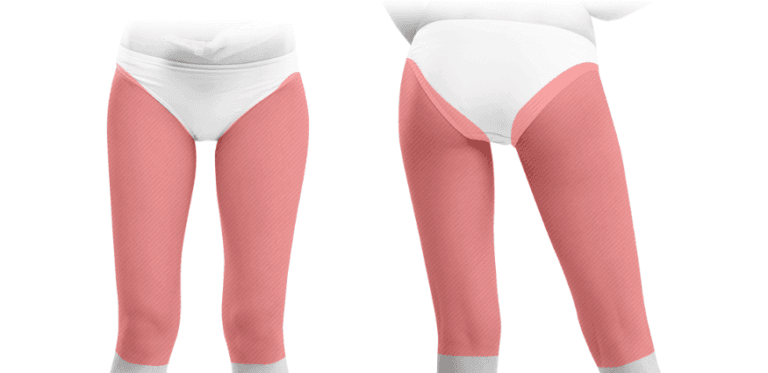
- Localized inner-knee fullness — Good candidates have a stable weight and a persistent, pinchable subcutaneous fat pad at the medial knee, sometimes extending into the lower thigh or upper-calf transition.
- Skin able to redrape — The knee skin should have enough elasticity to contract over the smaller fat layer after suction.
- Contour-focused goals — Suitable goals are refinement of knee shape and a smoother leg transition, not weight loss or treatment of generalized leg enlargement.
- Medically prepared traveler — Candidates can complete in-person assessment, arrange a responsible adult after anesthesia, attend an early review, and remain in Korea until the surgeon clears travel.
Knee liposuction does not treat arthritis, knee pain, meniscal or ligament injury, venous insufficiency, lymphedema, or unexplained swelling. Poor elasticity, marked skin laxity, cellulite, or significant asymmetry can make looseness and contour irregularity more visible after suction. Active infection, uncontrolled diabetes or systemic illness, uncorrected bleeding or anesthesia risk, and ongoing nicotine exposure require postponement or optimization. A clinician must investigate one-sided swelling, calf pain, warmth, redness, prominent veins, and prior DVT/PE before considering surgery; surgery and long-distance travel both raise venous thromboembolism risk.
How Is Knee Liposuction Performed?
The important distinction is the way fat is loosened and aspirated, not a different operation inside the knee joint. Ask why the proposed method suits the skin quality, fat thickness, and treatment boundaries in your case.
- Tumescent suction-assisted liposuction (SAL) — The surgeon infiltrates fluid, commonly saline with lidocaine and epinephrine, then removes fat through a blunt cannula connected to suction. This is the conventional approach.
- Power-assisted liposuction (PAL) — An oscillating cannula assists tissue movement while the surgeon controls depth and contour. It remains suction liposuction.
- Ultrasound-assisted liposuction (UAL) — Ultrasound energy disrupts fat before aspiration. It adds device-specific risks, including thermal injury.
- Laser-assisted lipolysis (LAL) — Laser energy is applied before or with aspiration. A 30-patient prospective knee series reported reduced fat thickness and high satisfaction, but it was non-comparative and cannot prove superiority, long-term durability, or broad safety.
- Radiofrequency- or water-assisted approaches — Some surgeons offer these as adjuncts, particularly where skin quality is a concern. Protocols and terminology vary.
A broader evidence review found comparisons among SAL, UAL, and LAL largely equivocal outside selected indications; it was not specific to knee contouring. No device should be presented as inherently superior for knees without a clear anatomy-based explanation.
Why Visit Korea for Knee Liposuction?
Korea has formal pathways for overseas patients, including a searchable Medical Korea provider directory and a registered-system resource. These tools can help with administrative verification, but they do not establish a surgeon’s knee-liposuction results or substitute for an individual safety assessment.
- International-patient infrastructure — Verify whether the hospital or clinic appears in the official provider resources and confirm who will provide English communication, postoperative contact, and medical records.
- Medical-visa pathway — Patients who require a visa for treatment can review the official Medical Korea visa information before committing to dates.
- Documented care coordination — Request the named surgeon, facility address, anesthesia arrangement, emergency-transfer pathway, and scheduled postoperative reviews in writing before travel.
- Evidence limitation — No high-quality comparative evidence shows that knee-liposuction outcomes, complication rates, or revision rates in South Korea are better or worse than elsewhere. Choose based on the named surgeon’s assessment, facility standards, anesthesia plan, and follow-up arrangements rather than destination claims.
Key Information for International Patients
- Minimum stay — Plan for at least 10–14 days in Korea after stand-alone knee liposuction when recovery is uncomplicated and the operating surgeon clears long-haul travel. This is a conservative planning interval, not a knee-specific evidence-based flight rule.
- Early reviews — Attend the scheduled wound, dressing, and walking assessment before departure. Do not book a non-refundable early flight.
- Flight timing — Surgery and prolonged sitting compound clot risk. Prior DVT/PE, thrombophilia, obesity, active cancer, estrogen exposure, pregnancy or postpartum status, varicose veins, restricted mobility, combined procedures, and large-volume treatment require an individualized prevention and travel plan.
- On a cleared flight — Move the legs regularly and walk about every 1–2 hours when feasible. Discuss graduated compression stockings or prescribed anticoagulant prophylaxis with the operating clinician; do not self-start aspirin or anticoagulants.
- Itinerary impact — Avoid long walking tours, strenuous sightseeing, heavy luggage, saunas, swimming, alcohol-heavy activities, and prolonged standing during the initial recovery period.
- Remote follow-up — Arrange video follow-up and identify a local clinician or urgent-care route before leaving Korea. Obtain an English clinical summary, operative report, anesthesia record, medication list, discharge instructions, and relevant photographs; CDC specifically emphasizes continuity of care for medical tourists.
Travel note: A direct flight is not automatically safe simply because pain is controlled. Flight clearance depends on wound status, mobility, combined procedures, anesthesia recovery, and personal clot risk.
Which Are the Best Clinics in Korea for Knee Liposuction?
Listed below are some of the best clinics in Korea for knee liposuction.
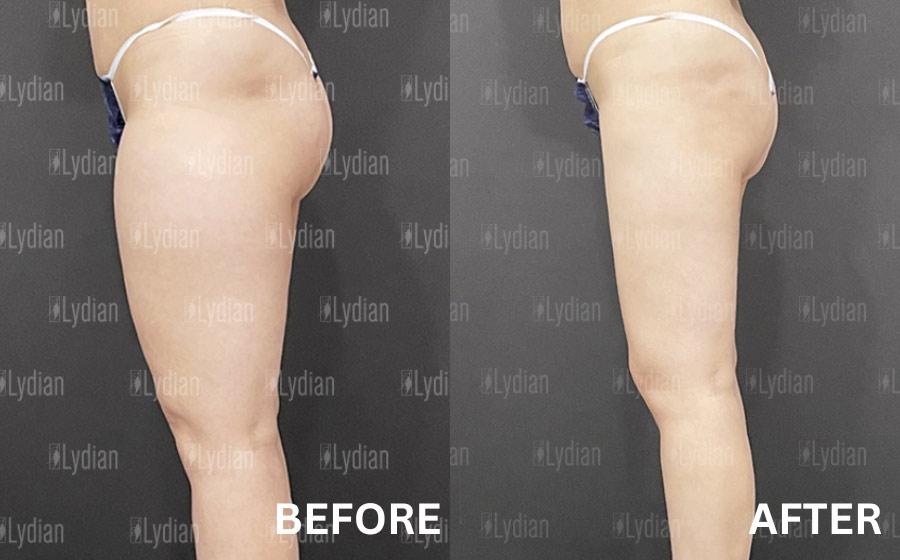
1. Lydian Plastic Surgery Clinic
For knee liposuction, you can expect an anatomy-based contouring plan that uses specialized cannulas selected for your body shape and the treatment area. Lydian states that its custom cannula range can enable knee treatment through 1–2 small, strategically placed incisions, with structured aftercare focused on contour refinement and skin recovery.
- URL: Lydian Plastic Surgery Clinic Website
- Location: Gangnam-gu, Seoul
- Procedure approach:
- Uses more than 30 custom-designed liposuction cannulas to match differing body shapes and treatment-area volumes.
- States that full thigh and knee liposuction can be performed through 1–2 incisions; incision placement is intended to be inconspicuous.
- Uses Quantificare 3D imaging for pre-surgical design and before-and-after assessment.
- Aftercare:
- Aftercare addresses swelling reduction, irregularity correction, skin-elasticity recovery, and residual-fat contouring.
- The clinic has equipment intended to address stretch marks and skin sagging alongside liposuction.
- Surgeon and body sculpting:
- Dr. An Kyung Chun is described as having more than two decades of body-sculpting experience and as Director of the 5D Liposculpture Academy.
- The clinic offers 5D liposculpture, also described as high-definition liposuction, as part of its body-contouring services.
2. Seojin Plastic Surgery Clinic
For knee liposuction, Seojin describes a three-step micro-liposuction process designed to combine cannula-based fat removal with manual refinement of the fat layer for a smoother contour. Your care is provided in a one-doctor model under Dr. Lee Hyungmin, with cannula selection tailored to your body type and fat volume.
- URL: Seojin Plastic Surgery Clinic Website
- Location: Gangnam-gu, Seoul
- Procedure approach:
- Preparation is described as separating fat from blood vessels, nerves, and surrounding tissue before removal.
- A cannula is selected according to your body type and fat volume.
- Following device-assisted suction, manual syringe refinement is used to even the subcutaneous fat layer and refine shaping.
- Skin-firmness option: Velody2 lifting laser may be added when there is mild post-liposuction skin sagging, with the aim of supporting skin elasticity and firmness.
- Doctor continuity:
- Dr. Lee Hyungmin provides end-to-end care in the clinic's one-doctor model.
- The source states that Dr. Lee has more than 16 years of experience and was named among Korea's 100 Good Doctors.
3. 365mc Hospital
For knee-focused body contouring, you can expect care from a hospital dedicated to fat reduction and liposuction, including personalized recovery support on the day of surgery and a structured seven-week postoperative program. 365mc combines surgical body contouring with dietary consultations and recovery treatments intended to support your healing and longer-term weight-management routine.
- URL: 365mc Hospital Website
- Location: Gangnam-gu, Seoul
- Recovery and follow-up:
- Provides 1:1 intensive care in a dedicated Recovery Center on the day of surgery.
- Its Care Team offers a structured seven-week postoperative program.
- Postoperative support can include hyperbaric oxygen chamber therapy and personalized dietary consultations.
- Body-contouring options:
- Offers surgical liposuction for body contouring and a local-anesthetic minimal-invasive option called LAMS for targeted fat reduction.
- LAMS is described as combining fat extraction with fat-dissolving injections and post-procedure management.
- Technology and specialization:
- Specializes solely in obesity treatment, body contouring, and fat reduction.
- Uses the M.A.I.L. system, described as motion-capture- and artificial-intelligence-assisted liposuction that provides real-time surgical feedback.
- The source describes a network of 18 clinics and 22 main doctors across Korea.
- Nutrition support:
- Provides dietary and nutritional consultations tailored to lifestyle, dietary habits, and nutritional needs.
- Offers a meal-diary app for monitoring dietary habits after treatment.
Knee Liposuction From Start to Finish
- Remote inquiry and consultation — Send standardized standing photographs only through the clinic’s approved secure channel. Confirm English or virtual consultation availability, the exact zones proposed, technique, anesthesia, postoperative visits, emergency contact, and records supplied in English. Remote advice remains provisional until examination.
- Travel and recovery planning — Reserve accessible accommodation near the clinic, arrange airport and postoperative transport, and keep flights flexible. Organize a responsible adult to collect you after outpatient anesthesia and remain available overnight.
- In-person assessment — The surgeon examines the legs standing, marks the proposed treatment area, documents asymmetry and scars, and distinguishes localized fat from edema, venous disease, lymphedema, or joint-related problems.
- Medical and anesthesia review — Disclose medications, supplements, hormones, GLP-1 medicines, nicotine use, prior surgery, clotting history, allergies, pregnancy status, and anesthesia history. The team assesses anesthesia and VTE risk and postpones surgery when an active illness, skin infection, unexplained swelling, or material medical risk is present.
- Anesthesia and infiltration — Depending on treatment extent and patient factors, the procedure uses local anesthesia with sedation or general anesthesia. Tumescent fluid is infiltrated to numb tissue and reduce bleeding.
- Fat removal and contouring — Small access incisions allow a blunt cannula to remove subcutaneous fat gradually. The surgeon feathers the edges into the lower thigh or upper-calf transition when appropriate to reduce abrupt step-offs. The operation does not enter or treat the knee joint. Procedure time depends on the treatment extent, technique, and any combined surgery; obtain the clinic’s written estimate.
- Discharge and first days — Isolated treatment is often outpatient, subject to anesthetic, aspirate volume, health status, and combined procedures. Leave in a compression garment or elastic support if prescribed, take short walks when cleared, and avoid driving, strenuous walking, and lifting luggage.
- In-Korea review and home follow-up — Attend dressing and wound checks before flight clearance. After returning home, send scheduled photographs or join video reviews. Defer revision discussions until swelling and tissue remodeling settle, commonly at least 3–6 months, unless the surgeon identifies an urgent issue.
Alternatives to Knee Liposuction
Surgery removes fat more directly but involves incisions, anesthesia, compression, downtime, and surgical risks. Non-surgical options avoid an operation but generally produce more gradual, modest, and less predictable contour change, often over multiple sessions.
Non-surgical fat reduction
- Cryolipolysis or energy-based reduction — CoolSculpting and body fat-dissolving laser approaches avoid incisions but do not offer the same direct fat removal as liposuction.
- Best fit — Consider these when avoiding surgery is more important than achieving a precise or substantial contour change.
Injection lipolysis
- Deoxycholic-acid treatment — Fat-dissolving injection is sometimes discussed for focal fat, but inner-knee evidence is preliminary. A small ultrasound-guided study of 14 knees cannot establish routine safety, comparative effectiveness, or regulatory suitability for this site.
- Best fit — Do not regard injections as a proven equivalent to knee liposuction.
Adjacent-area liposuction
- Extended contouring — Thigh liposuction, calf liposuction, or ankle liposuction can address a concern that crosses anatomical boundaries.
- Tradeoff — Adding areas increases operative duration, recovery burden, and VTE considerations.
Thigh lift
- Skin excision — A thigh lift addresses substantial lax skin more reliably than suction alone.
- Tradeoff — It creates longer scars and has a different, more demanding recovery profile.
How Can I Prepare for Knee Liposuction?
- Medication disclosure — Give the surgeon and anesthesia clinician a complete list of prescription drugs, over-the-counter medicines, anticoagulants, antiplatelets, hormones, GLP-1 medicines, supplements, herbal products, and recreational substances. Do not stop prescribed medicines without instructions from the operating team and the usual prescriber.
- Fasting — Follow the clinic’s written food and fluid restrictions exactly. There is no single fasting timetable appropriate for every anesthetic plan.
- Nicotine and alcohol — Stop cigarettes, vaping, nicotine replacement, and other nicotine products on the surgeon’s required timetable. Avoid alcohol as directed before anesthesia and during medication-based recovery.
- Treatment-area skin — Arrive without sunburn, rashes, open cuts, shaving injuries, waxing irritation, or active infection around the knees and legs. Report a new skin problem or illness promptly.
- Clot-risk planning — Declare prior DVT/PE, thrombophilia, cancer, varicose veins, reduced mobility, estrogen-containing contraception or hormone therapy, and pregnancy or postpartum status. Ask for an individualized travel and VTE-prevention plan.
- Accommodation and transport — Choose step-free or elevator access where possible. Arrange clinic transport, loose clothing, slip-on shoes, easy meals, and a responsible adult for the first night after anesthesia.
- Flight flexibility — Keep the return flight changeable and do not schedule demanding tourism during the first postoperative week.
Travel note: Carry medication in original packaging and leave room in luggage for compression garments and wound-care supplies.
Confirm the treating surgeon’s and anesthesia clinician’s clinic-specific medication, fasting, nicotine, compression, and travel requirements; their individualized instructions take precedence over general guidance.
Aftercare Advice
Protect healing tissue and prioritize mobility, wound care, and scheduled review over an active travel itinerary.
- Compression — Wear the prescribed compression garment or elastic support exactly as directed. Protocols vary: professional guidance commonly describes several weeks, while patient-facing schedules often begin with continuous wear for roughly 1–3 weeks. Do not change the schedule without surgeon approval.
- Walking and activity — Take short, gentle walks when cleared to avoid prolonged immobility. Limit strenuous walking, prolonged standing, gym exercise, running, heavy lifting, driving after anesthesia or sedating medicines, and heavy luggage in week 1. Activity generally remains limited through weeks 2–3, with gradual increase from week 6 when cleared.
- Wounds and bathing — Keep incisions and dressings clean and dry until the clinic permits bathing. Take only prescribed or approved pain medicine, antibiotics, and other drugs.
- Normal early changes — Soreness, bruising, swelling, firmness, lumpiness, temporary numbness, and early asymmetry are expected in week 1. Bruising usually resolves by weeks 4–5, while swelling and altered sensation can persist for weeks to months; do not judge the contour early.
- Results and revision — Final contour develops gradually as swelling settles. Unless an urgent problem needs treatment, wait until tissue stabilization—commonly at least 3–6 months—before assessing revision.
- Urgent symptoms — Seek emergency care for chest pain, shortness of breath, coughing blood, fainting, rapid heartbeat, or a painful, warm, red, or markedly swollen calf or leg. Contact the operating clinic urgently for fever, spreading redness, pus-like drainage, persistent bleeding, wound separation, rapidly worsening pain, a rapidly enlarging fluid collection, blistering, or suspected thermal injury.
Follow the treating doctor’s instructions over this general guide and contact the clinic promptly when anything appears wrong.
Frequently Asked Questions
Related Blogs
Reduce Excess Back Fat in Korea with CoolSculpting & Back Liposuction Procedures
Discover effective solutions for back fat—commonly known as "back rolls"—with treatments like CoolSculpting and back liposuction in Korea. This comprehensive guide highlights how Korea’s advanced medical clinics offer top-quality, affordable procedures to reduce stubborn back fat. Learn about non-invasive cryolipolysis and surgical body contouring, benefits, recovery, costs, and patient outcomes.
Updated: Sep 30, 2026
Korea's Best Solutions for Loose Inner Thighs: Thigh Lift Procedures
Discover how Korea leads in thigh lift (thighplasty) procedures to correct loose inner thighs caused by aging, weight fluctuations, or genetics. Our comprehensive guide explains tailored techniques like medial, vertical, and circumferential thigh lifts, highlighting benefits, recovery, costs, and why Korea is the top destination for medical tourists seeking safe, advanced, and cost-effective thigh
Updated: Sep 30, 2026
Discover Effective Knee Fat Pad Treatments in Korea: CoolSculpting and Knee Liposuction
Discover the best options for reducing "knee fat pockets" in Korea. This article covers non-surgical CoolSculpting and surgical Knee Liposuction procedures, emphasizing Korea's advantages in medical tourism. Learn how these treatments target cosmetic fat buildup around the knees, improve leg contour, and offer lasting results. Whether you're seeking a minimally invasive solution or a more precise
Updated: Sep 30, 2026
Exploring PRP Fat Grafting Worldwide: Why Korea Is a Leading Choice for Excellence and Cost Efficiency
Discover the cost-effective benefits of PRP Fat Grafting in Korea, a popular choice for those seeking natural enhancement and rejuvenation. Explore how this innovative procedure combines Platelet-Rich Plasma with fat grafting to achieve long-lasting results without breaking the bank.
Updated: Sep 26, 2026
Clinics offering Knee Liposuction

365mc Hospital: Korea's Leading Liposuction and Body Contouring Clinic with Innovative AI Technologies and Comprehensive Patient Care
Gyodae

THEPLUS Plastic Surgery Korea | Eye, Nose, Face & Body Surgery
Sinsa

Lydian Plastic Surgery Clinic in Korea: Superior Cosmetic Procedures by World-Renowned Expert Dr. An Kyung Chun
Apgujeong

Seojin Plastic Surgery Clinic Korea: Pioneering Advanced Cosmetic Procedures for Personalized Aesthetic Transformation
Apgujeong