Medical Tourism Blog
Transform Your Weak Core Muscles with CoreSculpt Procedures in Korea
Table of contents
- Understanding "Weak Core Muscles" and "Loss of Muscle Definition"
- CoreSculpt: A Comprehensive Medical Procedure Overview
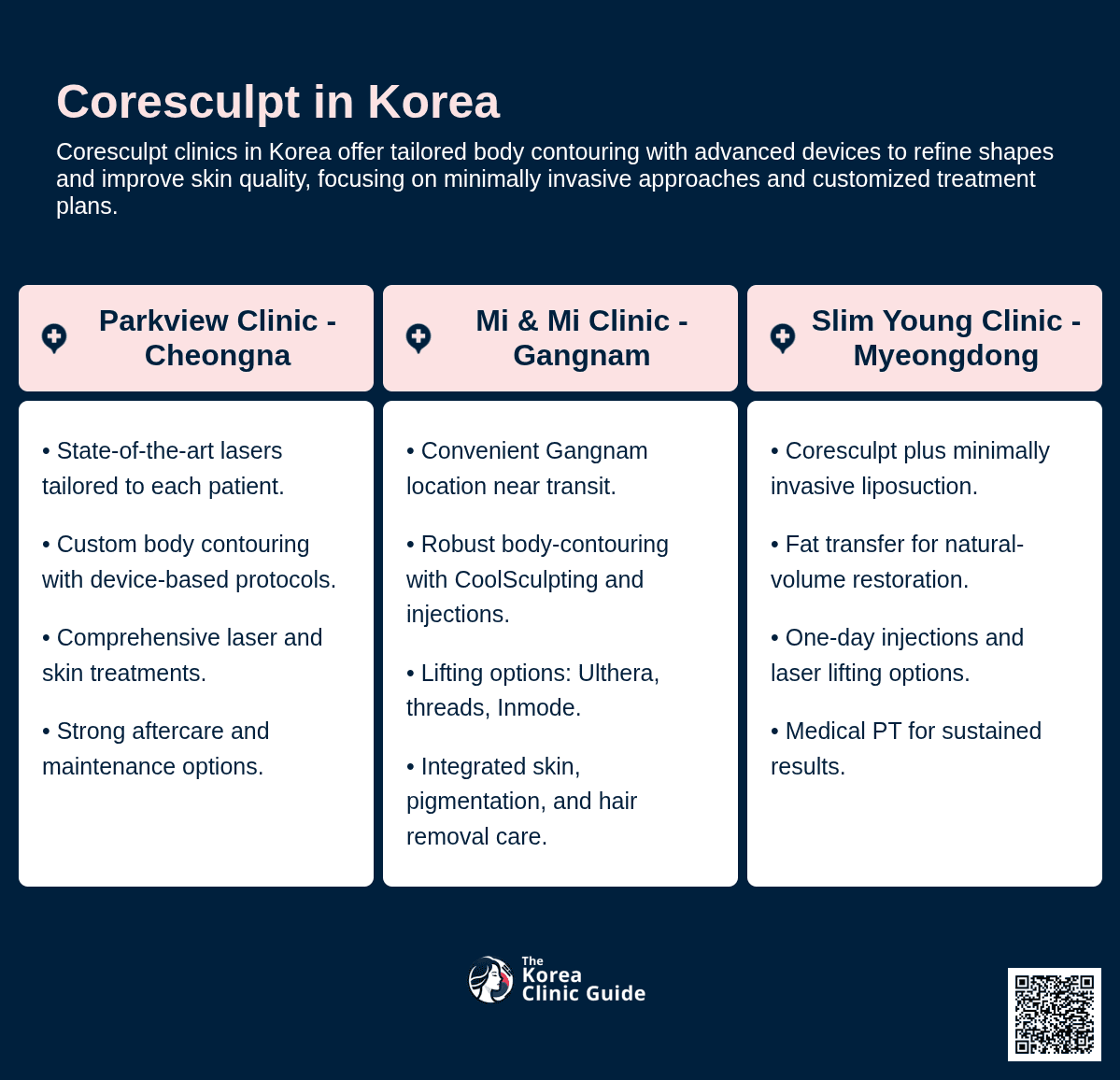
- Best Clinics in Korea for Weak Core Muscles
- CoreSculpt in South Korea: A Medical Tourist's Guide
- Patient Experiences and Expected Outcomes with CoreSculpt
- Conclusion: Empowering Your Health and Aesthetic Decisions
- References
Considering treatment in Korea? Everything you need to know e.g. — how to avoid scams, visas, interpreters, recovery tips — in our Medical Tourism Master Guide. Plan with confidence in minutes, not weeks!
Many patients look for solutions to "weak core muscles" and "loss of muscle definition," concerns that often blend health issues with aesthetic goals. Medically, these symptoms can signal conditions like sarcopenia—the age-related loss of muscle mass and strength—or general muscle atrophy. While lifestyle changes such as targeted exercise and nutrition remain the foundation of treatment, advanced non-invasive procedures like CoreSculpt have become popular complementary options. CoreSculpt uses High-Intensity Focused Electromagnetic (HIFEM) technology to build muscle and reduce localized fat, enhancing core strength and definition.
South Korea has become a top destination for medical tourism, offering advanced procedures like CoreSculpt at prices often much lower than in Western countries, without sacrificing quality. This guide covers the medical background of "weak core muscles," details about the CoreSculpt procedure, the patient experience and costs in South Korea, and expected outcomes. It aims to help patients make informed choices, stressing the importance of professional medical advice to address underlying health issues and set realistic expectations.
Understanding "Weak Core Muscles" and "Loss of Muscle Definition"
The feeling of having "weak core muscles" or noticing a "loss of muscle definition" can arise from various causes, including aging, medical conditions, or inactivity. Understanding these terms medically is key to proper treatment.
Medical Context: Sarcopenia and Muscle Atrophy
"Weak core muscles" and "loss of muscle definition" often reflect broader muscle health problems. Two main conditions linked to these symptoms are sarcopenia and muscle atrophy.
Sarcopenia is the progressive loss of muscle mass, strength, and function due to aging, mainly affecting people over 60. It reduces both the number and size of muscle fibers, impacting daily life and increasing risks like frailty and falls. Sarcopenic obesity, where muscle loss occurs alongside high body fat, poses even greater health risks.
Muscle atrophy refers more generally to muscle wasting or thinning, causing muscles to look smaller and weaker. It has two main types:
- Disuse (Physiologic) Atrophy: Happens when muscles aren’t used enough, leading the body to break down muscle tissue. This can start within two to three weeks of inactivity.
- Neurogenic Atrophy: Results from nerve damage that prevents muscles from contracting properly. Conditions like ALS, Guillain-Barre syndrome, multiple sclerosis, and spinal cord injuries can cause this.
The key difference is that sarcopenia reduces both the number and size of muscle fibers due to aging, while general muscle atrophy mainly shrinks the size of fibers without reducing their number. This distinction is important for diagnosis and treatment planning.
Common Symptoms and Pseudonyms
Patients often describe "weak core muscles" and "loss of muscle definition" based on how they feel or look. Common symptoms include muscle weakness, reduced stamina, difficulty with daily tasks, slower walking, trouble climbing stairs, balance problems, and smaller muscle size. Limb muscle atrophy may also cause tingling, numbness, or weakness.
Terms like "muscle loss," "muscle weakness," "muscle wasting," "muscle thinning," and "muscle atrophy" are often used interchangeably. The precise medical term for age-related muscle loss is "sarcopenia."
While "loss of muscle definition" is often an aesthetic concern, it can also signal underlying muscle weakness with functional consequences. For example, a desire for a sculpted look might mask deeper health issues. Addressing these concerns requires balancing aesthetic goals with medical evaluation.
Diagnostic Approaches and Foundational Treatments
Diagnosing muscle loss involves a thorough medical exam. For sarcopenia, doctors may use physical tests and questionnaires like SARC-F. Muscle atrophy diagnosis can include blood tests, biopsies, electromyography (EMG), nerve conduction studies, and imaging (X-rays, CT, MRI) to identify causes and severity.
Treatment focuses on lifestyle changes. Progressive resistance strength training is the cornerstone for rebuilding muscle. A nutritious diet supports recovery and growth. Physical therapy and structured exercise plans guide patients effectively. These foundational approaches remain the primary, evidence-based methods for improving muscle health.
Advanced procedures like CoreSculpt should be seen as complementary tools, not replacements for healthy habits. They can help those struggling to achieve results through exercise alone or with specific needs like muscle separation.
CoreSculpt: A Comprehensive Medical Procedure Overview
CoreSculpt is an advanced body contouring procedure aimed at improving muscle definition and reducing fat, especially around the abdomen. It relies on sophisticated non-invasive technologies.
What is CoreSculpt? Defining its Purpose and Modalities
CoreSculpt is recognized for shaping and toning the abdominal area non-invasively or minimally invasively. It targets stubborn fat and enhances muscle definition when diet and exercise fall short.
The term "CoreSculpt" is often used broadly by clinics to describe treatments enhancing core definition. Many rely on High-Intensity Focused Electromagnetic (HIFEM) technology, the basis for devices like EMSculpt and EMSculpt NEO. Patients should ask about the specific technology used to compare treatments accurately.
CoreSculpt methods fall into two categories:
- Non-Invasive CoreSculpt:
- Cryolipolysis (e.g., CoolSculpting): Uses cold to kill fat cells, which the body then removes naturally. Focuses on fat reduction, not muscle building.
- HIFEM Technology: Induces intense muscle contractions beyond voluntary exercise, improving tone and strength.
- Radiofrequency (RF) Treatments: Heat stimulates collagen production, tightening skin and sometimes combined with muscle contractions.
- Minimally Invasive CoreSculpt:
- Laser-Assisted Lipolysis: Uses laser to liquefy fat, which is suctioned out. Precise with shorter recovery than traditional liposuction.
- Ultrasound Liposculpture: Ultrasound waves break down fat cells for natural elimination, targeting stubborn fat while sparing tissues.
The Science of HIFEM Technology: How it Works
HIFEM technology is central to many CoreSculpt treatments focused on muscle. It uses pulsed electromagnetic fields to stimulate nerves and muscles deeply.
This causes "supramaximal muscle contractions"—far stronger and faster than voluntary exercise. A 30-minute session can trigger about 20,000 contractions, equivalent to doing 20,000 squats or sit-ups. The electromagnetic energy (up to 7.6 Tesla) repeatedly contracts and relaxes muscles beyond normal limits.
These intense contractions cause microscopic muscle fiber tears, which the body repairs by thickening existing fibers and creating new ones, increasing muscle mass and strength.
HIFEM also boosts metabolism, accelerating fat breakdown in the treated area. This dual effect of muscle building and fat reduction makes it a comprehensive body contouring solution. Devices like CORESCULPT include cooling systems and temperature monitoring for safety.
Other Related Non-Invasive Technologies
Besides HIFEM, other technologies support muscle toning and body contouring, sometimes combined with HIFEM:
- EMSculpt and EMSculpt NEO: EMSculpt uses HIFEM for muscle building and fat reduction. EMSculpt NEO adds RF energy for heat, enhancing fat breakdown and muscle temperature, leading to greater results—up to 30% fat reduction and 25% muscle increase after four treatments.
- CoolTone: Uses Magnetic Muscle Stimulation (MMS) to induce supramaximal contractions, strengthening muscles like the abdomen.
- truSculpt flex: Employs Multi-Directional Stimulation (MDS) with low-energy electrical impulses to contract muscles in customizable patterns.
- Electrical Muscle Stimulation (EMS): Uses electrical impulses to mimic muscle contractions. Traditional EMS devices improve abdominal strength but don’t match the intensity or fat loss effects of HIFEM.
Procedure Details: Session Structure, Safety, and Contraindications
CoreSculpt with HIFEM follows a structured, patient-friendly process. It starts with a consultation to assess body type and goals, creating a personalized plan.
During sessions, pads are placed on target areas (usually abdomen or thighs), and HIFEM triggers supramaximal contractions. Each session lasts about 30 minutes. Clinics in South Korea typically recommend four sessions spaced two to three days apart, with some protocols suggesting up to six sessions.
The procedure is safe and comfortable. Patients feel vibrations or tingling but no pain or overheating. There’s no downtime—patients can resume daily activities immediately. Mild side effects like muscle soreness, redness, warmth, or fatigue may occur but usually resolve quickly. Rare side effects include minor skin irritation or muscle spasms.
Contraindications include pregnancy, metal or electronic implants near the treatment area (e.g., pacemakers, metal rods, copper IUDs), severe heart conditions, epilepsy, or active skin infections. Following safety guidelines is essential.
Best Clinics in Korea for Weak Core Muscles
Listed below are the best clinics in Korea for weak core muscles:
| Clinic Name | Key Features | Special Techniques |
|---|---|---|
| Slim Young Clinic | Slim Young Clinic in Myeongdong stands out as a top choice in Korea for people concerned about weak core muscles because it pairs safe, professional body-shaping expertise with structured support that can help address the visible and functional consequences of a poorly supported midsection. While weak core strength often shows up as reduced abdominal tone and less-defined contours, Slim Young Clinic offers targeted options such as abdominal liposuction to reduce stubborn fat that can mask definition, along with Medical PT programs designed to complement procedures and promote better overall fitness and conditioning. This combined, personalized approach helps clients pursue a more stable-looking, balanced silhouette with careful attention to safety, natural-looking outcomes, and long-term maintenance through guided training, all in a convenient central Seoul location. | abdominal liposuction to reduce stubborn fat that can mask definition; Medical PT programs designed to complement procedures and promote better overall fitness and conditioning |
| Lalian Cheongdam Clinic | Lalian Cheongdam Clinic may be a strong option to consider for weak core muscle concerns in Korea, but it’s important to note that a definitive “best clinic” claim can’t be responsibly made from the currently available source information because the clinic’s website content and procedure/menu details were not accessible (the only provided source indicates an “access forbidden” page and no verified list of treatments). Without confirmed information on the clinic’s diagnostic approach, clinician qualifications, rehabilitation protocols, and specific core-focused interventions (such as targeted physical therapy, exercise-based rehabilitation, or adjunctive pain-management procedures), any ranking would be speculative. If you can obtain the clinic’s official procedure list (via copied text, screenshots, or a typed list), a more accurate, evidence-based explanation of why Lalian Cheongdam Clinic stands out for core weakness—based on specific services, specialization, and patient pathway—can be written without guesswork. | Without confirmed information on the clinic’s diagnostic approach, clinician qualifications, rehabilitation protocols, and specific core-focused interventions (such as targeted physical therapy, exercise-based rehabilitation, or adjunctive pain-management procedures), any ranking would be speculative. If you can obtain the clinic’s official procedure list (via copied text, screenshots, or a typed list), a more accurate, evidence-based explanation of why Lalian Cheongdam Clinic stands out for core weakness—based on specific services, specialization, and patient pathway—can be written without guesswork. |
| Made U Clinic - Nowon | Made U Clinic – Nowon stands out in Korea for people concerned about the visible and lifestyle impacts that often accompany weak core muscles—such as abdominal laxity, posture-related contour changes, and difficulty maintaining a balanced physique—because it offers an unusually comprehensive, customization-friendly approach that pairs technology-driven body and skin tightening with structured body-management support in one location. With non-surgical radio-frequency options like InMode to help tighten and refine areas that can look less supported when core strength is lacking, plus tailored diet programs that may include diet medication and supportive injections such as Vitamin B12 (Red Injection) and Arginine Injection for metabolism, energy, and recovery goals, the clinic is positioned to address both appearance concerns and overall body-conditioning needs. Its broader strength in advanced regenerative and anti-aging care—such as Rejuran and Exosome Therapy—also complements patients who want an integrated plan that improves skin quality while they work on strengthening, making Made U Clinic – Nowon a compelling choice for those seeking an all-in-one, medically supervised aesthetic and body-management pathway alongside core-strength improvement efforts. | InMode non-surgical radio-frequency options; diet programs that may include diet medication and supportive injections such as Vitamin B12 (Red Injection) and Arginine Injection; Rejuran and Exosome Therapy; integrated plan that improves skin quality while strengthening |
Slim Young Clinic
Slim Young Clinic in Myeongdong stands out as a top choice in Korea for people concerned about weak core muscles because it pairs safe, professional body-shaping expertise with structured support that can help address the visible and functional consequences of a poorly supported midsection. While weak core strength often shows up as reduced abdominal tone and less-defined contours, Slim Young Clinic offers targeted options such as abdominal liposuction to reduce stubborn fat that can mask definition, along with Medical PT programs designed to complement procedures and promote better overall fitness and conditioning. This combined, personalized approach helps clients pursue a more stable-looking, balanced silhouette with careful attention to safety, natural-looking outcomes, and long-term maintenance through guided training, all in a convenient central Seoul location.
Find more about this clinic here: Slim Young Clinic Website
Lalian Cheongdam Clinic
Lalian Cheongdam Clinic may be a strong option to consider for weak core muscle concerns in Korea, but it’s important to note that a definitive “best clinic” claim can’t be responsibly made from the currently available source information because the clinic’s website content and procedure/menu details were not accessible (the only provided source indicates an “access forbidden” page and no verified list of treatments). Without confirmed information on the clinic’s diagnostic approach, clinician qualifications, rehabilitation protocols, and specific core-focused interventions (such as targeted physical therapy, exercise-based rehabilitation, or adjunctive pain-management procedures), any ranking would be speculative. If you can obtain the clinic’s official procedure list (via copied text, screenshots, or a typed list), a more accurate, evidence-based explanation of why Lalian Cheongdam Clinic stands out for core weakness—based on specific services, specialization, and patient pathway—can be written without guesswork.
Find more about this clinic here: Lalian Cheongdam Clinic Website
Made U Clinic - Nowon
Made U Clinic – Nowon stands out in Korea for people concerned about the visible and lifestyle impacts that often accompany weak core muscles—such as abdominal laxity, posture-related contour changes, and difficulty maintaining a balanced physique—because it offers an unusually comprehensive, customization-friendly approach that pairs technology-driven body and skin tightening with structured body-management support in one location. With non-surgical radio-frequency options like InMode to help tighten and refine areas that can look less supported when core strength is lacking, plus tailored diet programs that may include diet medication and supportive injections such as Vitamin B12 (Red Injection) and Arginine Injection for metabolism, energy, and recovery goals, the clinic is positioned to address both appearance concerns and overall body-conditioning needs. Its broader strength in advanced regenerative and anti-aging care—such as Rejuran and Exosome Therapy—also complements patients who want an integrated plan that improves skin quality while they work on strengthening, making Made U Clinic – Nowon a compelling choice for those seeking an all-in-one, medically supervised aesthetic and body-management pathway alongside core-strength improvement efforts.
Find more about this clinic here: Made U Clinic - Nowon Website
CoreSculpt in South Korea: A Medical Tourist's Guide
South Korea is a top medical tourism destination, offering advanced treatments like CoreSculpt with skilled practitioners and competitive prices.
The Patient Journey: Step-by-Step Process in South Korea
- Initial Consultation and Planning: On arrival, patients undergo a thorough assessment and goal discussion. Consultations may be discounted or free via medical tourism agencies. Disclosure of medical history and implants is important.
- Pre-Treatment Preparations: Medical clearance tests are usually included in packages.
- The Procedure: Pads are applied, and HIFEM activates supramaximal contractions during 30-minute sessions.
- Treatment Series: Four sessions spaced two to three days apart are common for best results.
- Post-Treatment Care and Recovery: Minimal downtime allows immediate return to activities. Mild muscle soreness may last a few days. Follow-ups and medications are often included.
- Medical Tourism Support Services: South Korea offers translation, accommodation deals, transport, and recovery assistance. Major hospitals have International Healthcare Centers for foreign patients.
Cost Analysis: South Korea vs. International Destinations
South Korea offers CoreSculpt at 30% to 60% lower costs than the US or Western Europe, maintaining high quality.
Typical EMSculpt session costs in Korea range from ₩500,000 to ₩1,500,000 ($420–$1,260 USD). Full treatment packages (4–6 sessions) may cost $3,000–$5,000. Clarifying per-session vs. package pricing and technology used (HIFEM-only vs. HIFEM+RF) is important.
| Country | Cost Range per Session (USD) | Notes |
|---|---|---|
| South Korea | $420 - $1,260 | Package for 4-6 sessions: $3,000 - $5,000 |
| USA | $1,000 - $5,000 | Abdomen: $3,000 - $4,000; Buttocks: $3,000 |
| Mexico | $500 - $900 | Usually recommends 4+ sessions |
| Turkey | $800 - $1,200 | Competitive rates; check regulations |
| Canada | $1,200 - $1,600 | Similar to USA; package deals available |
| Germany, France, UK | $1,200 - $1,800 | Typical European costs |
Additional travel costs include flights ($600–$1,800), accommodation ($42–$250 per night), local transport ($8–$25 daily), and meals ($17–$42 daily).
Factors Influencing Cost and Medical Tourism Considerations
Costs vary by clinic location, reputation, practitioner expertise, number of sessions, and technology used. Clinics in Seoul’s Gangnam district may charge more due to demand and prestige.
South Korea’s advanced medical infrastructure, comprehensive care packages, and patient support services add value beyond price. Translation, accommodation, and coordinated care ease the medical tourism experience.
Patients should consider travel expenses, language barriers (mitigated by translation), verify credentials, and ensure post-treatment follow-up, especially after returning home.
Patient Experiences and Expected Outcomes with CoreSculpt
CoreSculpt using HIFEM technology effectively addresses both aesthetic and functional concerns, with clinical studies and patient reports supporting its benefits.
Documented Results: Muscle Toning and Fat Reduction
Patients often notice changes after a few sessions, with significant improvements 4–6 weeks post-treatment and full results around 6 months.
- Muscle Increase: EMSculpt shows about 16% muscle mass increase after four treatments; targeted muscles may increase by 20%. EMSculpt NEO (HIFEM+RF) achieves up to 25%.
- Fat Reduction: EMSculpt reduces fat by about 15%; EMSculpt NEO achieves around 30% subcutaneous fat reduction. Waist circumference may decrease by 1.5 inches.
Supramaximal contractions engage up to 90% of muscle fibers, compared to 20–30% during voluntary exercise, leading to better toning and fat loss. Patients often see improved abdominal definition, firmer buttocks, and enhanced arm and leg muscle tone.
| Benefit Category | Specific Outcome/Metric | Typical Timeline for Results | Longevity of Results | Notes |
|---|---|---|---|---|
| Muscle Building | 16% increase in muscle mass (HIFEM) | Visible: 4-6 weeks; Full: 6 months | 6+ months (average) | Requires maintenance; complements exercise |
| 20% increase in targeted muscles (HIFEM) | ||||
| 25% increase in muscle (HIFEM+RF) | ||||
| Fat Reduction | 15% fat burn (HIFEM) | Visible: 4-6 weeks; Full: 6 months | 6+ months (average) | Best for stubborn fat; not primary weight loss |
| 19% loss of fat (HIFEM) | ||||
| 30% reduction in subcutaneous fat (HIFEM+RF) | ||||
| 1.5 inch reduction in waist circumference | ||||
| Functional Benefits | Enhanced core strength, posture, stability | Immediate feeling of tightness; improvements over weeks | Ongoing with maintenance | Helps diastasis recti, reduces back pain, supports athletic performance |
Functional Benefits: Core Strength, Posture, and Beyond
Beyond aesthetics, CoreSculpt strengthens deep core muscles vital for stability and movement. It improves posture, balance, and reduces back pain risk by activating all four core muscle layers, including the transverse abdominis (the body's natural corset).
EMSculpt and EMSculpt NEO can improve diastasis recti, common after pregnancy, helping restore core integrity. Enhanced core strength also boosts athletic performance.
CoreSculpt suits midlife individuals struggling to maintain muscle tone, new mothers with limited workout time, and those needing rehabilitation support when exercise is difficult.
Managing Expectations: Realistic Timelines and Longevity of Results
While CoreSculpt induces intense muscle contractions equivalent to 20,000 squats in 30 minutes, it doesn’t replace full-body exercise benefits like cardiovascular fitness or calorie burn. It’s a targeted tool to complement a healthy lifestyle.
Visible improvements usually start 4–6 weeks after treatment, with full results around 6 months. Effects last about 6 months or more, with many patients satisfied up to a year. Maintenance treatments and a balanced diet with regular exercise help sustain results.
CoreSculpt reduces fat and waist size but isn’t a primary weight loss method. It’s best for those near ideal weight seeking to eliminate stubborn fat and enhance muscle definition.
Potential Side Effects and Post-Treatment Care
CoreSculpt is generally safe with minimal side effects. Muscle soreness similar to post-workout fatigue is common and lasts 24–48 hours. Temporary redness, warmth, tingling, or muscle fatigue may occur, especially with RF treatments.
Rare side effects include mild skin irritation or muscle spasms, which resolve quickly. Proper protocols minimize risks like muscle strain.
No significant long-term adverse effects have been reported by regulatory bodies like the FDA.
No downtime is needed; patients can resume activities immediately. Rest, hydration, and following clinic care instructions support recovery.
Conclusion: Empowering Your Health and Aesthetic Decisions
Addressing "weak core muscles" and "loss of muscle definition" involves understanding both medical and aesthetic factors. Conditions like sarcopenia and muscle atrophy require foundational treatments such as strength training and nutrition. CoreSculpt, using HIFEM technology, offers a safe, effective complement by building muscle and reducing fat, improving both appearance and function.
South Korea provides an attractive option for CoreSculpt with advanced care, experienced practitioners, and competitive pricing. Patients should seek professional medical advice to diagnose underlying issues and develop personalized plans. CoreSculpt enhances but does not replace a healthy lifestyle, and informed decisions ensure safe, satisfying outcomes.
References
1, 2, 3, 4, 5, 6, 7, 8, 9, 10, 11, 12, 13, 14, 15, 16, 17, 18, 19, 20, 21, 22