Medical Tourism Blog
Effective Vascular Birthmark Treatment in Korea: Potenza Procedure Solutions
Table of contents
- Understanding Vascular Birthmarks: Capillary Malformations and Related Conditions
- The Potenza Procedure: A Comprehensive Medical Overview
- Best Clinics in Korea for Vascular Birthmarks
- Navigating Medical Tourism: Getting Potenza in South Korea
- Cost Analysis: Potenza Treatment in South Korea vs. Global Comparisons
- Patient Experiences and Expected Outcomes with Potenza
- Key Considerations for Patients Seeking Treatment Abroad
- Conclusion: Making Informed Decisions for Your Skin Health
- References
Considering treatment in Korea? Everything you need to know e.g. — how to avoid scams, visas, interpreters, recovery tips — in our Medical Tourism Master Guide. Plan with confidence in minutes, not weeks!
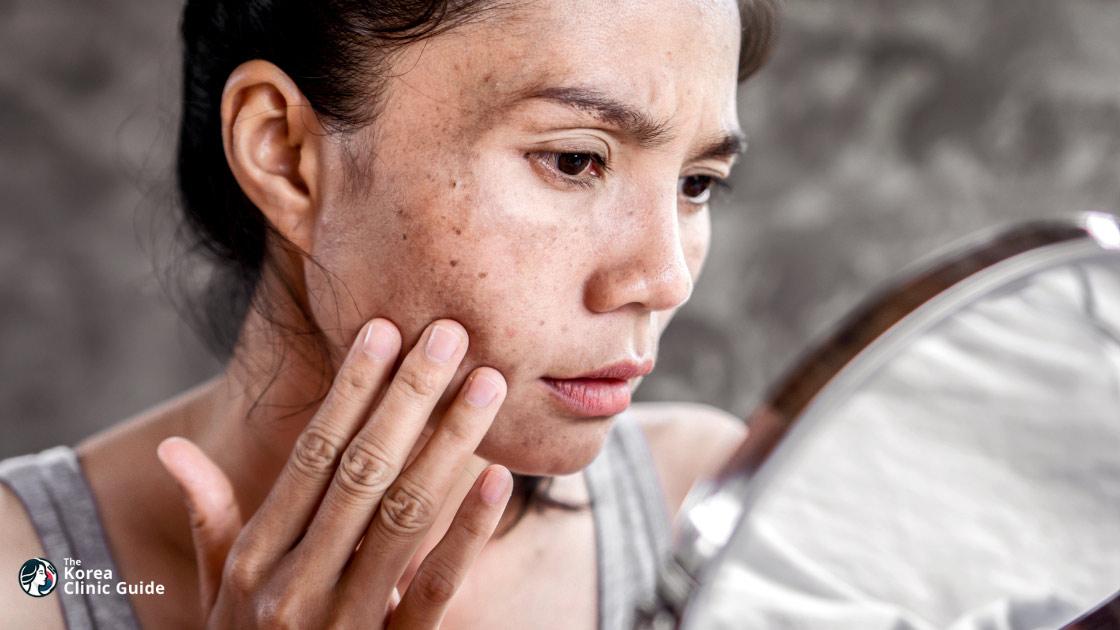
This guide is designed for individuals researching "vascular birthmarks," especially "Capillary Malformations," and considering the "Potenza" procedure as a treatment option. Vascular birthmarks are blood vessel abnormalities present at birth, often showing as red or pink skin marks. Capillary malformations (CMs) are a common type, caused by an increased number of small blood vessels near the skin surface.
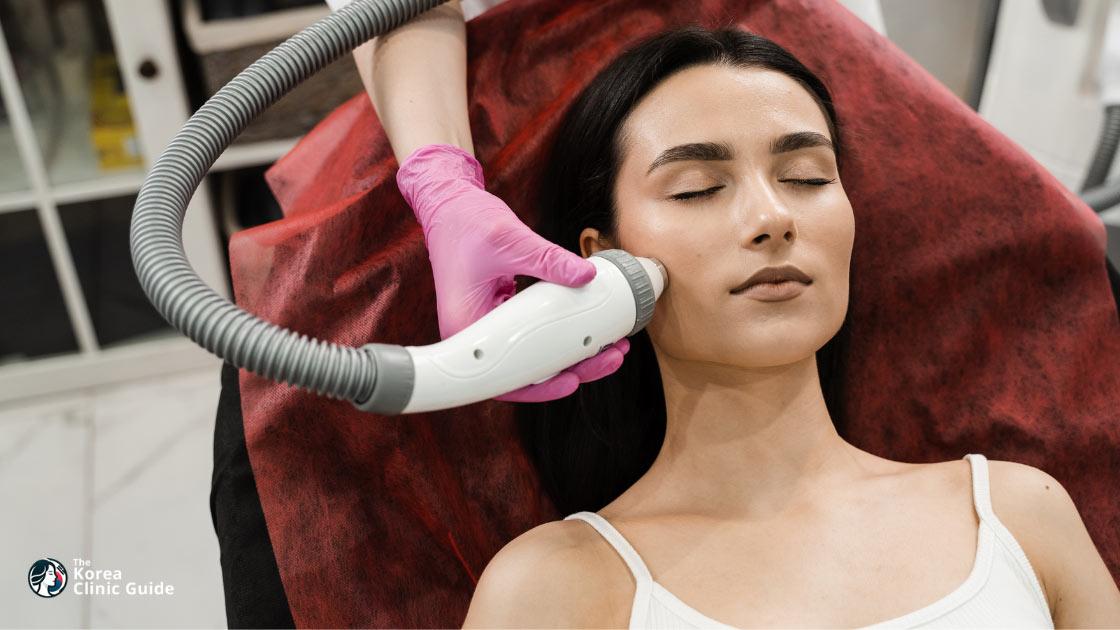
Potenza is an advanced radiofrequency (RF) microneedling treatment that stimulates collagen and elastin production. It’s mainly used for skin tightening, improving texture, and reducing fine lines, wrinkles, and acne scars by combining ultrafine needles with RF energy to rejuvenate the skin.
It’s important to clarify that while Potenza is effective for many skin concerns, current medical literature and manufacturer information do not primarily support its use for treating vascular birthmarks or capillary malformations. Instead, specialized laser treatments like Pulsed Dye Lasers (PDL), PiQo4, or RF microneedling devices designed for vascular issues such as Sylfirm X are the established, clinically supported options. This report outlines Potenza’s uses while providing essential context for patients exploring vascular birthmark treatments.
Understanding Vascular Birthmarks: Capillary Malformations and Related Conditions
Birthmarks are skin abnormalities present from birth, divided mainly into vascular and pigmented types. Vascular birthmarks arise from blood vessel irregularities, showing as red or pink marks due to blood color. Pigmented birthmarks come from clusters of pigment cells, appearing in colors from tan to black or blue.
Common Types and Pseudonyms of Vascular Birthmarks
Several vascular birthmarks are well-known, each with unique features and common nicknames:
- Hemangiomas: Common vascular birthmarks.
- Strawberry Hemangiomas: Raised, soft, red marks resembling strawberries. They grow in the first year, then shrink, often flattening by age ten, sometimes leaving a faint mark.
- Salmon Patches: Pink or red hemangiomas. When on the forehead, eyelids, nose, or upper lip, they’re called "angel kisses." On the neck’s nape, they’re known as "stork bites."
- Port-Wine Stains: Flat, irregular patches colored dark red or purple, flush with the skin, growing proportionally with the child.
- Deeper Hemangiomas: Darker and raised skin marks.
- Other terms patients might hear include "Cafe au lait spot," "Mongolian spot," and "Nevus."
Focus on Capillary Malformations (CMs)
Capillary malformations result from an excess of capillaries in the skin’s superficial layers, causing increased blood flow and well-defined pink, red, or purple patches. They grow with the child, sometimes lightening in color early on. Darker CMs are often called port-wine stains. "Angel kisses" and "stork bites" are common types of CMs.
Associated Syndromes and Conditions
While most birthmarks are cosmetic, some capillary malformations may signal rare syndromes, requiring thorough medical evaluation. These include Sturge-Weber syndrome, Parkes Weber syndrome, Klippel-Trenaunay syndrome, Proteus syndrome, and Macrocephaly-Capillary Malformation (MCM) syndrome (also called Megalencephaly-capillary malformation-polymicrogyria or MCAP).
MCAP features an abnormally large head, vascular skin anomalies like CMs, and brain malformations. Diagnosis requires both macrocephaly and a capillary malformation. Baseline and follow-up MRIs and ultrasounds monitor related complications such as hydrocephalus or seizures. This highlights that some birthmarks may indicate broader medical issues, needing comprehensive diagnosis beyond skin examination.
General Treatment Approaches for Vascular Birthmarks
Treatment usually involves laser coagulation of abnormal blood vessels. Effective laser options include:
- 595 nm Pulsed Dye Laser (PDL): Proven to reduce capillary malformations, port-wine stains, and hemangiomas.
- PiQo4 laser: Uses multiple wavelengths and pulse types to shatter pigment without damaging surrounding skin.
- Sylfirm X: An RF microneedling device with pulsed wave mode targeting abnormal vessels and pigmentation, ideal for rosacea, melasma, and post-inflammatory hyperpigmentation. It’s the only RF microneedling device approved for safely treating neovascularity.
This is important because although Potenza is mentioned for vascular birthmarks, medical evidence favors these specialized lasers and devices for such conditions.
Table 1: Common Types and Pseudonyms of Vascular Birthmarks
| Type of Vascular Birthmark | Common Names/Pseudonyms | Description/Appearance | General Prognosis/Treatment Approach |
|---|---|---|---|
| Hemangioma | Strawberry Mark, Strawberry Hemangioma | Raised, soft, red, berry-like mark | Grow then shrink by age 10; may leave light residual mark. Laser therapy if bothersome. |
| Capillary Malformation | Port-Wine Stain | Flat, irregular, purple-red, grape juice color; flush with skin | Permanent; may darken/thicken. Treated mainly with Pulsed Dye Laser. |
| Capillary Malformation | Salmon Patch, Angel Kiss, Stork Bite | Flat, pink/red; Angel Kiss (forehead, eyelids, nose, upper lip); Stork Bite (nape of neck) | Often fade but can persist. Generally benign; laser therapy if desired. |
The Potenza Procedure: A Comprehensive Medical Overview
What is Potenza RF Microneedling? (Technology, Mechanism of Action)
Potenza is a cutting-edge RF microneedling device that combines traditional microneedling with RF energy to boost skin regeneration. Ultrafine needles create tiny channels in the skin while RF energy penetrates deep tissue layers. This triggers the body’s healing response, increasing collagen and elastin production—key proteins for firm, elastic, youthful skin.
Potenza is the first device to combine monopolar and bipolar RF at 1 or 2 MHz in one machine, offering four RF modes. This allows deep, customizable energy delivery for faster, more dramatic results than microneedling alone. Various interchangeable tips (insulated, semi-insulated, Fusion Tip, Tiger Tip) enhance precision and treatment scope.
Primary Dermatological Applications and Skin Concerns it Effectively Addresses
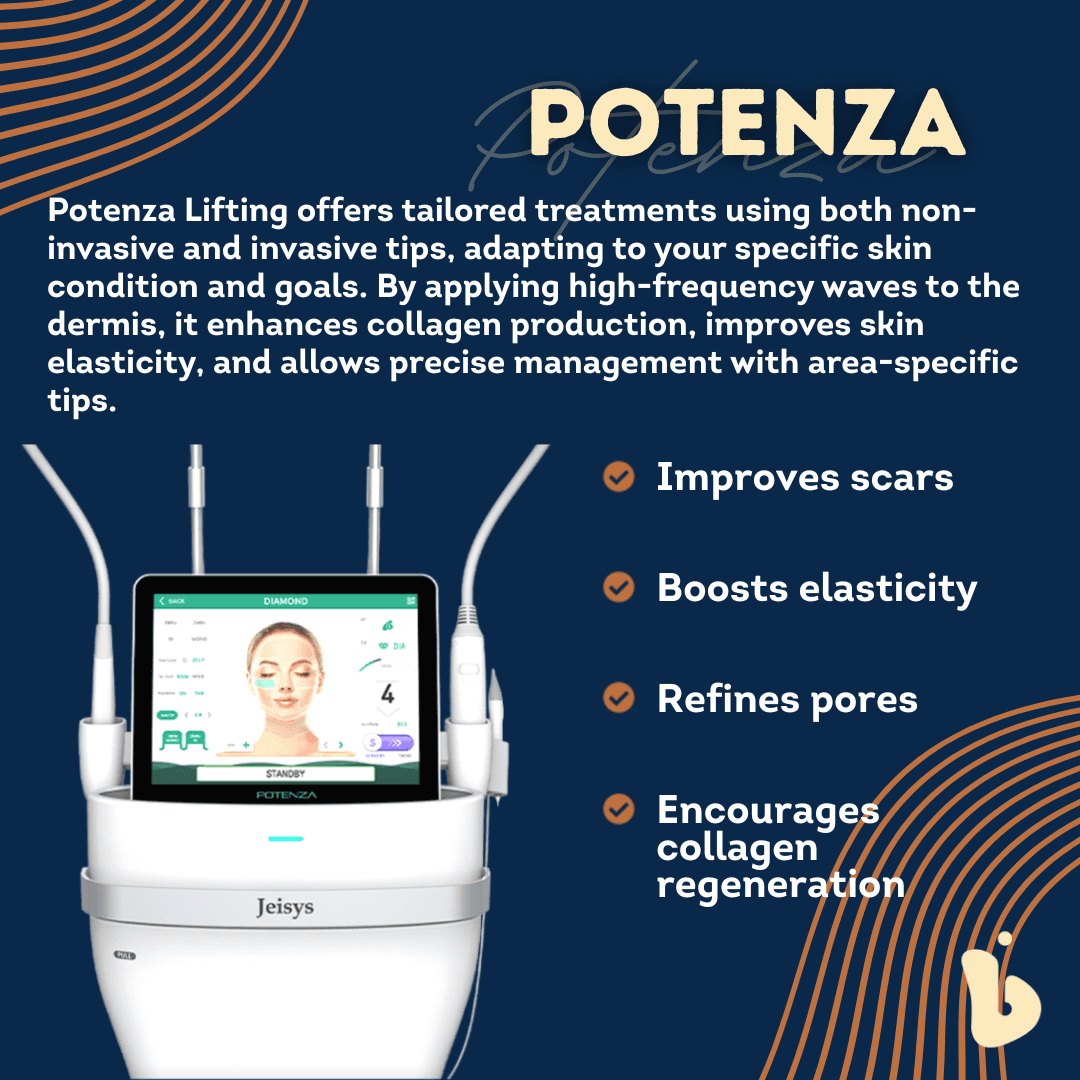
Potenza treats a wide range of skin issues across all skin types and body areas, year-round. Its benefits include:
- Reducing Wrinkles and Fine Lines: Stimulates collagen and elastin to diminish aging signs.
- Improving Acne Scars and Enlarged Pores: Smooths skin texture and reduces pore visibility.
- Skin Tightening and Firming: Lifts and firms areas like neck, jawline, and cheeks.
- Enhancing Skin Texture and Tone: Creates smoother, more radiant skin.
- Treating Photodamage and Pigmentation: Targets sunspots and uneven pigmentation.
- Reducing Stretch Marks: Promotes skin repair.
- Hair Rejuvenation: Supports hair growth and scalp health.
Treatment areas include the face, forehead, eyes, nose, lips, chin, jawline, neck, decolletage, elbows, and abdomen.
Important Clarification: Potenza vs. Vascular Birthmarks
Patients should know that Potenza is generally not indicated as the primary or most effective treatment for vascular birthmarks or capillary malformations. Potenza’s main effects focus on collagen and elastin stimulation, skin tightening, and texture improvement—not on correcting vascular abnormalities.
While Potenza may improve overall complexion and reduce superficial redness, it does not specifically treat the structural blood vessel issues in birthmarks. For vascular lesions, clinically proven treatments include:
- Pulsed Dye Lasers (PDL): Effective for capillary malformations and port-wine stains.
- ND:YAG Lasers: Used for port-wine stains, hemangiomas, and spider veins.
- PiQo4 Laser: Shatters pigment and treats vascular lesions without harming skin.
- Sylfirm X: An RF microneedling device with pulsed wave mode targeting abnormal vessels and pigmentation, approved for neovascularity treatment.
The presence of Sylfirm X, designed specifically for vascular issues, highlights that RF microneedling can treat vascular conditions but requires specialized technology not found in Potenza.
No patient testimonials or clinical trials support Potenza’s effectiveness for vascular birthmarks in the provided data. Patients seeking treatment for these conditions should consider the clinically supported laser options outlined here to ensure appropriate care.
Best Clinics in Korea for Vascular Birthmarks
Listed below are the best clinics in Korea for vascular birthmarks:
| Clinic Name | Key Features | Special Techniques |
|---|---|---|
| Cheongdam Oracle Dermatology & Plastic Surgery Clinic Website | Comprehensive aesthetic center combining dermatology-based skin care with plastic surgery expertise; advanced, skin-focused laser capability with laser resurfacing as a cornerstone; personalized treatment plans; integrated dermatology and plastic surgery in one clinic; broad supportive skin-treatment options (chemical peels, microneedling, HydraFacial); high standards across procedures | Laser resurfacing; chemical peels; microneedling; HydraFacial; personalized treatment planning; safety-focused care |
| Abijou Clinic - Myeongdong Branch Website | Abijou Clinic is part of a large network (18 branches) emphasizing a refined, patient-centered experience with a technology-forward portfolio; Myeongdong Branch offers laser toning, pico toning, premium all-in-one pico toning, advanced skin care programs, anti-aging energy-based treatments and injectables; aims to support individualized treatment pathways | Laser toning; pico toning; premium all-in-one pico toning; anti-aging energy-based treatments; injectables |
| Haedrin Clinic Website | Haedrin Clinic in Sinchon is a comprehensive dermatology and aesthetic clinic; tailors treatments to skin and body needs using advanced equipment and refined techniques; focuses on precision-based device treatments addressing facial redness and skin tone irregularities; supports overall skin quality (texture, elasticity, resilience) | Multiple device platforms with advanced device-based care; precision treatment with various handpieces and adjustable settings; Aileen Toning for pigmentation disorders and facial redness; Potenza for skin improvement and acne-scar/pore concerns; Vro Lifting; Secret Laser; Shringk Universe; Thread Lifting; Bolumere for collagen support; Acne Clear; TruSculpt |
Cheongdam Oracle Dermatology & Plastic Surgery Clinic
Cheongdam Oracle Dermatology & Plastic Surgery Clinic in Seolleung is a comprehensive aesthetic center combining dermatology-based skin care with plastic surgery expertise, offering advanced procedures tailored to each patient’s needs. For patients seeking care for vascular birthmarks, the clinic stands out for its strong focus on skin-focused technology and precision-driven treatment planning, with laser-based procedures and supportive skin treatments designed to improve overall skin quality while maintaining high standards of safety and individualized care.
- Advanced, skin-focused laser capability: Laser resurfacing is a cornerstone offering, aligning well with the technology-driven approach often preferred when treating vascular-related skin concerns.
- Personalized treatment plans: Every patient receives an individualized plan, which is essential for vascular birthmarks where lesion type, depth, skin sensitivity, and treatment goals can vary widely.
- Dermatology and plastic surgery in one clinic: Integrated expertise supports both lesion-focused care and aesthetic considerations, especially important when vascular birthmarks affect visible areas.
- Broad supportive skin-treatment options: Chemical peels, microneedling, and HydraFacial can be used as adjunctive skin-optimizing treatments to improve texture, clarity, and overall skin health during a longer-term care plan.
- High standards across procedures: The clinic emphasizes a consistent standard of care across dermatologic and cosmetic treatments, supporting a careful, stepwise approach appropriate for complex skin concerns.
Find more about this clinic here: Cheongdam Oracle Dermatology & Plastic Surgery Clinic Website
Abijou Clinic - Myeongdong Branch
For patients seeking care for vascular birthmarks in Korea, Abijou Clinic – Myeongdong Branch stands out for combining a refined, patient-centered experience with the depth and stability of a leading network clinic. With 18 branches, Abijou Clinic is known for setting trends while delivering dignified service in an elegant, comfortable atmosphere—an important advantage for treatments that often require careful planning, consistent follow-up, and confidence in the clinic’s standards. The Myeongdong Branch in particular has built long-term trust by holding firmly to its beliefs and principles from beginning to end, positioning itself as a clinic patients can rely on not only today, but for the years ahead. Its broad, technology-forward portfolio—from advanced skin care programs such as laser toning, pico toning, premium all-in-one pico toning, and specialized solutions for complex skin concerns, to anti-aging energy-based treatments and injectables—reflects a comprehensive approach to skin health and aesthetics that supports individualized treatment pathways. Contact Abijou Clinic Myeongdong by submitting an enquiry for a free online consultation to learn more about which procedure you are a perfect candidate for.
Find more about this clinic here: Abijou Clinic - Myeongdong Branch Website
Haedrin Clinic
Haedrin Clinic in Sinchon is a comprehensive dermatology and aesthetic clinic known for tailoring treatments to each patient’s skin and body needs while using advanced equipment and refined techniques. For patients seeking care for vascular birthmarks and vascular-related redness concerns, Haedrin Clinic stands out for its focus on precision-based device treatments, options designed to address facial redness and skin tone irregularities, and an approach that supports overall skin quality (texture, elasticity, and resilience) alongside targeted correction.
- Advanced device-based care designed for detailed, thorough results, with multiple platforms available to match different skin conditions and sensitivity levels.
- Precision treatment capability through technologies that use various handpieces and adjustable settings, supporting careful targeting of affected areas while considering surrounding skin.
- Options that specifically address redness and tone concerns, including Aileen Toning, which targets pigmentation disorders and is also effective in treating facial redness while improving elasticity.
- Skin-strengthening and recovery-supportive treatments that can complement vascular birthmark management by improving texture and resilience, including Potenza for customized skin improvement and acne-scar/pore concerns.
- Comprehensive rejuvenation and tightening options (Vro Lifting, Secret Laser, Shringk Universe, Thread Lifting) that help enhance overall skin quality, which many patients value when seeking an even, healthier-looking complexion.
- Collagen-support approaches such as Bolumere, which balances vibration and cooling to promote collagen generation and improve firmness, supporting long-term skin condition improvement.
- A broad, integrated clinic lineup (from acne programs like Acne Clear to body contouring with TruSculpt), making it easier for patients to address multiple concerns in one place with consistent care standards.
Find more about this clinic here: Haedrin Clinic Website
Navigating Medical Tourism: Getting Potenza in South Korea
South Korea is a leading destination for medical tourism, especially aesthetic procedures, thanks to advanced technology, skilled doctors, and excellent patient support.
Process for International Patients
-
Initial Consultation and Skin Assessment:
- Patients receive a detailed consultation assessing skin condition and goals.
- Advanced imaging and thorough analysis are common.
- Clinics like PPEUM Global Clinic offer native-speaking consultants and free online pre-travel consultations.
-
Pre-Treatment Preparation:
- Patients get instructions on skin prep, including stopping exfoliants, staying hydrated, and avoiding alcohol.
- Shaving treatment areas and using antiviral meds if prone to cold sores may be advised.
- Clinical photos document baseline skin condition.
-
The Treatment Session:
- Topical numbing cream is applied for comfort.
- The procedure lasts 45–60 minutes; sensations are mild discomfort.
- Amenities like chilled air or laughing gas may be offered.
- Needle depth and RF energy are customized per patient.
-
Post-Procedure Care and Recovery:
- Skin may look red and feel warm, like a mild sunburn, with minor swelling lasting 24–72 hours.
- Mild bleeding or peeling can occur.
- Avoid touching, makeup, harsh skincare, exercise, saunas, and sun exposure as instructed.
- Most resume normal activities within 24–48 hours.
-
Follow-up and Expected Results:
- Improvements appear within weeks, with ongoing collagen remodeling over 4–12 weeks.
- Optimal results usually require 3–5 sessions spaced 4–6 weeks apart.
- Results last months to years with maintenance.
Support Services for Medical Tourists
Korean clinics provide exceptional hospitality, including concierge services, accommodation help, local guides, multilingual materials, VIP rooms, and tax refund machines. English-speaking staff are widely available, easing communication for international patients.
However, clinics like PPEUM Global, VOS Skin Clinic, and YAAN Clinic mainly offer general aesthetic dermatology, not specialized vascular birthmark treatment. Patients seeking capillary malformation care should confirm the clinic’s expertise and availability of appropriate laser technologies (e.g., Pulsed Dye Laser, Sylfirm X) before traveling.
Cost Analysis: Potenza Treatment in South Korea vs. Global Comparisons
Cost is a key factor for medical tourists. Potenza prices in South Korea vary by treatment area, skin concern, and clinic.
Estimated Costs for Potenza in South Korea
- Small areas (under eyes, mouth): ₩200,000–₩500,000 KRW (~$160–$400 USD)
- Full face: ₩600,000–₩1,200,000 KRW (~$480–$960 USD)
- Full face + neck: ₩1,000,000–₩1,500,000 KRW (~$800–$1,200 USD)
Some sources list broader ranges (₩1,450,000–₩2,900,000 KRW or ~$1,000–$2,000 USD) for full treatment courses or packages. Discounts for multiple sessions are common. Vascular birthmark laser treatments in Seoul cost ₩200,000–₩600,000 per session.
Comparison of Potenza Costs with Other Countries
| Country | Estimated Cost Range (USD per session) | Notes |
|---|---|---|
| South Korea | $160 - $1,200 (or $1,000 - $2,000 for packages) | More affordable than USA; pricier than Turkey & India; includes quality post-care. |
| USA | $800 - $1,500 | Higher cost than medical tourism destinations. |
| Australia | $500 - $900 | Comparable to South Korea; high-quality post-care common. |
| Thailand | $400 - $1,200 | Popular medical tourism spot; potentially lower costs. |
| Turkey | $110 - $400 | Very competitive pricing for RF microneedling. |
| India | $60 - $180 | Most budget-friendly option for RF microneedling. |
South Korea’s pricing reflects its advanced technology, expertise, and comprehensive patient experience rather than just low cost.
General Cost Considerations for Medical Tourism in South Korea
Prices often include consultations and post-care. Some clinics offer packages with accommodation and translation services. Additional costs like airfare and living expenses are not included. For intensive procedures, overnight stays and specialized aftercare may be part of the package. Follow-up visits are usually included.
Since Potenza is not the primary treatment for vascular birthmarks, patients should verify costs for the correct procedure (e.g., Pulsed Dye Laser, Sylfirm X) during consultation.
Patient Experiences and Expected Outcomes with Potenza
Potenza patients generally report positive results for skin rejuvenation and tightening.
General Patient Feedback on Potenza (for its intended applications)
Many notice smoother, firmer skin with a radiant glow within weeks. Improvements continue for 3–6 months post-treatment. Some avoid other cosmetic injectables for over a year after Potenza. Patients praise the professionalism of medical staff and minimal downtime.
Typical Recovery Timeline and Common Side Effects
- Immediately after: Mild redness, warmth, and minor swelling.
- 24–48 hours: Redness and swelling persist; skin may feel dry or tight.
- Days 3–5: Redness fades; light peeling occurs.
- One week: Skin looks radiant and smooth.
- Downtime: Most resume normal activities within 24–48 hours.
Possible side effects are usually mild and temporary: bruising, dryness, flaking, sun sensitivity, or temporary breakouts. Rare risks include pigmentation changes, blistering, infection, or scarring. Proper post-care is essential.
Expected Number of Sessions and Longevity of Results
Typically, 3–5 sessions spaced 4–6 weeks apart yield optimal results. Collagen remodeling continues for months after treatment. Results last months to years with maintenance.
Reiteration: Potenza for Vascular Birthmarks - Addressing the Query's Premise
All positive patient feedback relates to Potenza’s intended uses—skin tightening, texture improvement, wrinkle and scar reduction. There is no clinical evidence or patient testimonials supporting Potenza’s effectiveness for vascular birthmarks or capillary malformations. Treatments for vascular lesions consistently involve other laser modalities like Pulsed Dye Lasers. Patients seeking vascular birthmark treatment should pursue these proven options.
Key Considerations for Patients Seeking Treatment Abroad
Importance of Thorough Research and Qualified Practitioners
Research clinics and practitioners carefully. Beware of low-cost providers with less training. Choose board-certified dermatologists experienced in the specific treatment, using approved equipment (e.g., KFDA-approved in Korea). Transparent pricing and quality care are vital, especially for visible conditions like birthmarks.
Understanding Risks and Benefits
Know the procedure’s risks, benefits, and recovery. Potenza has minimal downtime but possible side effects. Results require maintenance. Some conditions or medications may contraindicate treatment.
Post-Treatment Care and Long-Term Follow-up
Follow post-care instructions strictly for best results. Plan for multiple sessions and maintenance. For medical tourists, arrange follow-up care at home to monitor progress and address issues.
Conclusion: Making Informed Decisions for Your Skin Health
Vascular birthmarks, including capillary malformations, are common skin conditions with various names. Identifying the specific type is essential for effective treatment.
Potenza is a powerful RF microneedling treatment for skin tightening, texture, and wrinkle reduction but is not the primary or recommended treatment for vascular birthmarks like capillary malformations. Established laser technologies such as Pulsed Dye Lasers, ND:YAG lasers, PiQo4, and specialized RF devices like Sylfirm X are clinically supported for these vascular conditions.
South Korea offers a well-structured, patient-focused medical tourism experience for Potenza, combining advanced technology and comprehensive care. While patient feedback for Potenza’s intended uses is positive, no evidence supports its use for vascular birthmarks.
Ultimately, patients should seek personalized consultation with qualified dermatologists or vascular anomaly specialists to ensure accurate diagnosis and appropriate, evidence-based treatment. For medical tourists, verifying clinic specialization and practitioner credentials for the specific condition is crucial to achieving safe and effective outcomes.
References
1, 2, 3, 4, 5, 6, 7, 8, 9, 10, 11, 12, 13, 14, 15, 16, 17, 18, 19, 20, 21, 22, 23, 24, 25, 26, 27, 28, 29, 30, 31, 32, 33, 34, 35, 36, 37, 38, 39, 40, 41