Medical Tourism Blog
Persistent Vaginal Odor Solutions: Laser Vaginal Rejuvenation Procedures in Korea for Lasting Freshness
Table of contents
- Laser Vaginal Rejuvenation (LVR): What It Is and How It Works
- Best Clinics in Korea for Persistent Vaginal Odor
- Considering Laser Vaginal Rejuvenation in South Korea: A Medical Tourist’s Guide
- Patient Experiences with Laser Vaginal Rejuvenation
- Conclusions
- References
Considering treatment in Korea? Everything you need to know e.g. — how to avoid scams, visas, interpreters, recovery tips — in our Medical Tourism Master Guide. Plan with confidence in minutes, not weeks!
Vaginal odor is a common concern, and while mild, natural scents are perfectly normal, a strong or persistent odor can be distressing. This can have a real impact on self-confidence and overall quality of life. If you’re searching for solutions, understanding what’s happening and separating fact from marketing is key. One procedure that’s getting a lot of attention lately is [Laser Vaginal Rejuvenation](/blog/laser-vaginal-rejuvenation-korea) (LVR). Here, we’ll walk through what persistent vaginal odor means, what causes it, how LVR is marketed and what science says about it, especially if you’re thinking of traveling for treatment.
Most vaginas have a mild smell that can change throughout the menstrual cycle, after sex, or with sweating, and this is completely normal. Your unique scent is shaped by your hormones, vaginal pH, and the balance of bacteria (vaginal flora). Understanding typical, healthy changes in vaginal odor helps many people skip unnecessary—and possibly harmful—self-treatments, such as douching, that can upset this balance.
Non-Infectious Causes of Persistent Vaginal Odor
While infections like Bacterial Vaginosis (BV) and Trichomoniasis are well recognized for causing a strong “fishy” odor, let’s focus on non-infectious causes of persistent vaginal odor:
- Poor Hygiene: Not bathing enough or, conversely, over-washing or using harsh soaps can disrupt your natural flora and worsen odor.
- Forgotten Foreign Bodies: Items like forgotten tampons are a common culprit behind serious odor.
- Hormonal Changes: Periods, pregnancy, and menopause (especially Genitourinary Syndrome of Menopause) can change odor due to pH and tissue changes.
- Diet: Foods high in sulfur (like garlic or asparagus) can make body fluids, including vaginal secretions, smell stronger.
- Sweating: Sweat glands in the groin can intensify scent.
- Sexual Activity: Semen, lubricants, or condoms may temporarily change vaginal pH or scent.
- Stress: Chronic psychological stress can increase body odor overall by affecting the immune system and microbial balance.
- Desquamative Inflammatory Vaginitis (DIV): A rare, non-infectious inflammation with symptoms such as pain, itching, and odor due to bacteria imbalance.
- Cytolytic Vaginitis: Caused by high Lactobacillus levels, resulting in increased acidity, irritation, and discharge.
- Other Serious Causes: Rarely, persistent or foul odors signal conditions like cervical or vaginal cancer, a rectovaginal fistula, or trimethylaminuria.
Lifestyle, hormones, and stress all play major parts in shaping the vaginal microbiome and pH—often at the root of non-infectious odor. That’s why many cases improve by focusing on good self-care and basic lifestyle tweaks first.
How Patients Describe Vaginal Odor
People use a variety of terms to describe vaginal odors, each offering clues:
- Fishy: Most characteristic of BV or trichomoniasis.
- Metallic/Coppery: Common around menstruation or after sex.
- Sour/Tangy/Yeasty/Beer-like: Sometimes normal, but a strong yeasty odor with clumpy discharge suggests a yeast infection.
- Musty: Can be a normal secretions scent.
- Ammonia-like: May indicate urine residue or dehydration.
- Skunk-like/Body Odor: Linked to sweating or stress.
- Foul/Rotten-meat: Red flag for retained tampons or rare, serious conditions.
Practical Self-Care and Hygiene Tips
While no one can prevent all odor fluctuations, healthy habits help most people manage odor naturally:
- Wear Cotton Underwear: Avoid synthetic, tight fabrics; sleeping without underwear promotes air flow.
- Gentle Hygiene: Use only mild, unscented soap (if at all) and water; avoid douches, sprays, and powders.
- Stay Dry: Change damp clothes promptly and shower after swimming or exercise.
- Limit Panty Liners: Only use when necessary—they can trap moisture.
- Consider Diet: Probiotics (like yogurt) might help keep flora balanced; stay hydrated.
- Manage Stress: Regular stress reduction can promote healthy vaginal bacteria.
- Practice Safe Sex: Condoms protect the vaginal pH; stick to unperfumed lubricants.
When to See a Healthcare Provider
If you notice new or strong odor plus symptoms like itching, burning, pain, or unusual discharge, see a healthcare provider. This is key to ruling out infection or serious medical causes and to get effective treatment if needed.
Laser Vaginal Rejuvenation (LVR): What It Is and How It Works
What Is Laser Vaginal Rejuvenation?
Laser Vaginal Rejuvenation (LVR) is a minimally invasive technique using lasers to address issues like vaginal looseness, dryness, discomfort, or incontinence. It’s popular, especially among people who have been through childbirth, menopause, or want to improve vaginal tone and sexual function.
How Does LVR Work?
LVR typically uses a CO2 or Erbium:YAG (Er:YAG) laser. The device delivers energy absorbed by water in vaginal tissues, creating a gentle heat that prompts the body to heal and renew itself. The main effects:
- Collagen Remodeling: Stimulates new collagen, important for tissue strength and elasticity.
- Neovascularization: Promotes new blood vessel formation for healthier tissue.
- Elastin Formation: Boosts production of elastin, helping with tissue stretch and softness.
Together, these aim to strengthen, tighten, and rejuvenate vaginal tissue.
Laser Technologies Used
There are several types of devices:
- CO2 Lasers (e.g., MonaLisa Touch): Target water in vaginal tissue to trigger healing and collagen growth.
- Erbium:YAG Lasers (e.g., IntimaLase®): Use a gentler approach with less surface impact.
- Non-Ablative Lasers: Heat tissue beneath the surface with minimal downtime.
- Ablative Lasers: Remove a thin tissue layer, evoking a stronger healing response but longer recovery.
- Radiofrequency (RF) Devices (e.g., ThermiVA®, Viveve®): Use RF energy instead of laser to stimulate collagen in deeper layers—typically painless, minimal recovery.
What Is LVR Marketed For?
Commonly advertised uses include:
- Tightening vaginal walls (treating laxity)
- Helping Genitourinary Syndrome of Menopause (GSM) symptoms like dryness or painful sex
- Urinary incontinence
- Enhancing sexual function
- Cosmetic improvement of the labia
- Some advertisements also mention "vaginal odor"
Possible Benefits, Risks, and Side Effects
LVR is said to improve tightness, lubrication, bladder control, and sexual sensation. But side effects can include:
- Burning, itching, or pain
- Infection or bleeding
- Scarring
- Urinary or bowel changes
- FDA has noted adverse events like burns, chronic pain, and painful sex linked to vaginal laser devices
What Does the Evidence Actually Say?
While LVR is aggressively marketed for multiple issues, scientific data supporting these claims is surprisingly thin. Most positive studies are small, non-randomized, or prone to bias. Higher-quality, placebo-controlled trials have not found meaningful improvements in GSM symptoms, quality of life, or sexual function, nor have they shown benefits for urinary incontinence.
Regulatory bodies often approve devices with less rigorous evidence than for medications, leading to a gap between marketing and what the science actually confirms. Major gynecological societies do not currently recommend LVR for routine treatment of GSM or incontinence. And despite marketing mentions, robust research has not studied or proven LVR treats "persistent vaginal odor."
In short, marketing claims for LVR generally outpace what clinical trials support, especially for concerns like odor.
Best Clinics in Korea for Persistent Vaginal Odor
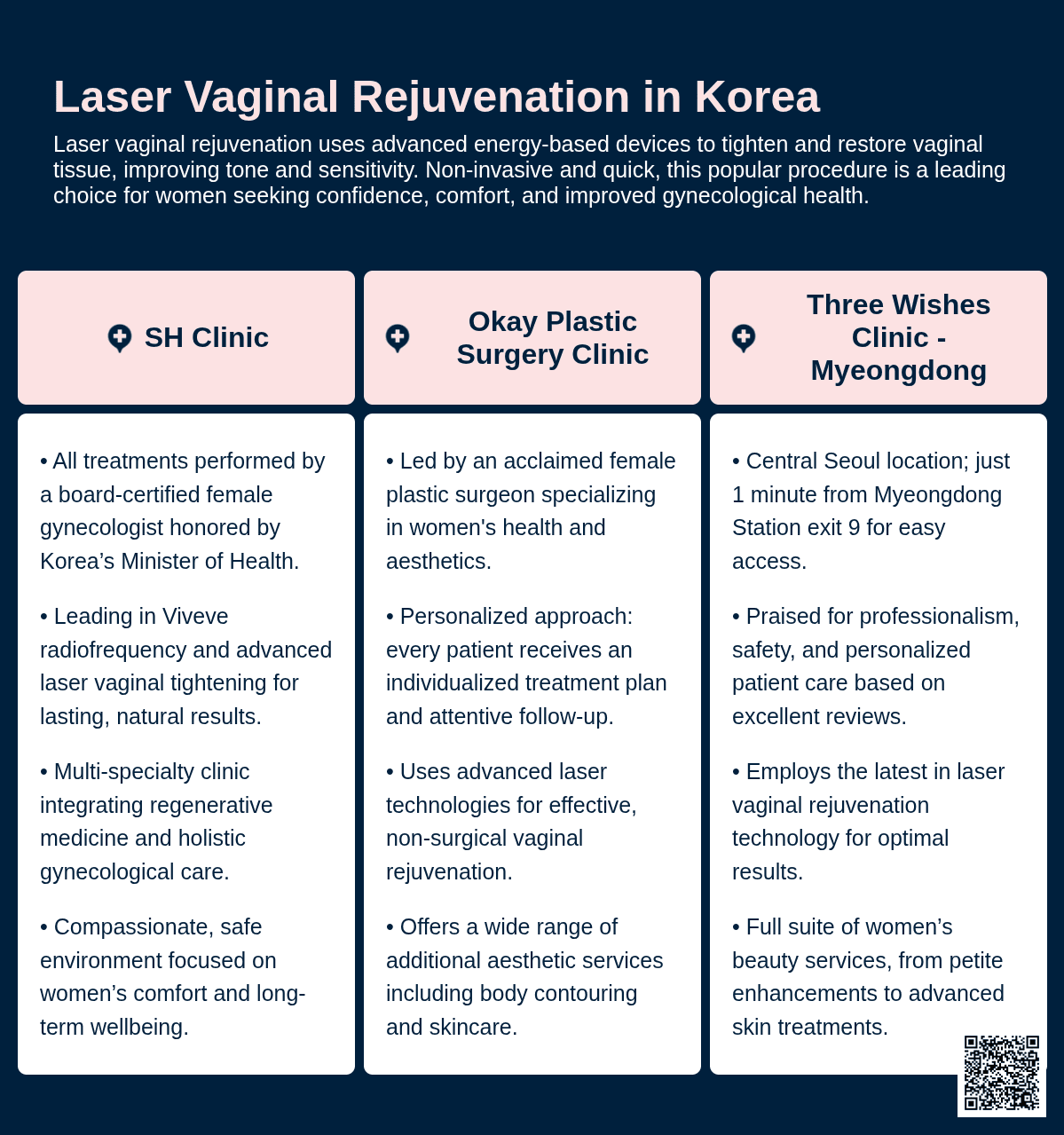
Listed below are the best clinics in Korea for persistent vaginal odor:
| Clinic Name | Key Features | Special Techniques |
|---|---|---|
| SH Clinic Website | Specialized medical center that brings together advanced gynecology and stem-cell science in a comfortable, women-focused setting; physician-led care with a board-certified gynecologist who has received a commendation from the Minister of Health and Welfare; access to evidence-based vaginal rejuvenation technologies designed to restore healthier vaginal tissue; all surgeries and procedures performed directly by a highly experienced, board-certified gynecologist; comprehensive care tailored to the underlying cause and the patient’s goals. | Viveve radiofrequency vaginal rejuvenation; vaginal tightening; HIFU laser treatments; vaginal fillers; stem cell injections; implant surgery; single Viveve treatment can deliver significant results with improvement within six months; long-lasting outcomes (up to 80% tightening maintained after one year) |
| Okay Plastic Surgery Clinic Website | Private, patient-centered consultation experience led by specialized professionals; sincerity, precision, and individualized treatment; discreet and dignified care; guidance through a comprehensive care journey with modern techniques to ensure patients feel supported, informed, and directed toward the most suitable next steps. | Private, patient-centered consultation; listening closely to each patient’s concerns; discreet and dignified care; individualized treatment; modern techniques |
| Ladyuro Women's Clinic Website | Broad range of women’s health services, including diagnostic-focused care (STD/comprehensive AIDS testing, cervical cancer screening and vaccination, Pap smear and HPV testing); vaginal rejuvenation and aesthetic procedures to support vaginal comfort and tissue health; vaginal laser therapy to stimulate collagen and improve elasticity and dryness; vaginal filler and Botox for functional concerns; surgical options including 3D vaginoplasty, Lady Implant, labiaplasty, G-spot augmentation, hymenoplasty, and whitening/depilation; urinary incontinence treatment to strengthen pelvic floor function. | Vaginal laser therapy; vaginal filler; Botox; 3D vaginoplasty; Lady Implant; labiaplasty; G-spot augmentation; hymenoplasty; whitening/depilation; urinary incontinence treatment |
SH Clinic
SH Clinic in Sinsa, Seoul is a specialized medical center that brings together advanced gynecology and stem-cell science in a comfortable, women-focused setting. For patients struggling with persistent vaginal odor, SH Clinic stands out for its physician-led care and access to evidence-based vaginal rejuvenation technologies designed to restore healthier vaginal tissue. All surgeries and procedures are performed directly by a highly experienced, board-certified gynecologist who has received a commendation from the Minister of Health and Welfare, ensuring expert evaluation, discreet care, and treatment tailored to the underlying cause and the patient’s goals.
- Board-certified gynecologist-led care: Every procedure is performed directly by an experienced specialist recognized with a commendation from the Minister of Health and Welfare.
- Specialized women’s care environment: A clinic designed specifically for women’s health, prioritizing comfort, privacy, and female-focused expertise.
- Advanced vaginal rejuvenation options under one roof: A full spectrum of gynecology services, including vaginal tightening, HIFU laser treatments, vaginal fillers, stem cell injections, and implant surgery, allowing personalized plans for complex or persistent concerns.
- Viveve radiofrequency vaginal rejuvenation: Uses radiofrequency thermal energy to stimulate collagen production inside the vagina, helping tighten and rejuvenate vaginal tissue.
- Efficient treatment course: A single Viveve treatment can deliver significant results, with vaginal firmness improving toward pre-childbirth condition within six months.
- Long-lasting outcomes: Up to 80% of the tightening effect can be maintained even after one year, supporting sustained tissue health and confidence.
You can check out their website here: SH Clinic Website
Okay Plastic Surgery Clinic
For anyone in Korea struggling with persistent vaginal odor, the most important first step is a careful, respectful evaluation and a plan tailored to the individual rather than a one-size-fits-all approach—and that is where Okay Plastic Surgery Clinic stands out. Okay Plastic Surgery Clinic is built on sincerity, precision, and individualized treatment, providing a private, patient-centered consultation experience led by specialized professionals, including a renowned female plastic surgeon known for extensive experience and empathetic care. While persistent vaginal odor can have several underlying causes that may require appropriate medical assessment, the clinic’s strength lies in listening closely to each patient’s concerns, approaching sensitive issues with discretion and dignity, and guiding patients through a comprehensive care journey with modern techniques and meticulous attention to detail—so patients feel supported, informed, and directed toward the most suitable next steps for their needs.
Find more about this clinic here: Okay Plastic Surgery Clinic Website
Ladyuro Women's Clinic
Ladyuro Women’s Clinic provides a broad range of women’s health services that can be relevant for patients concerned about persistent vaginal odor, especially when the odor is related to underlying vaginal or urinary conditions. The clinic offers diagnostic-focused care such as STD/comprehensive AIDS testing, cervical cancer screening and vaccination (Pap smear and HPV testing), and targeted treatment for vaginitis and bladder inflammation, which are common medical causes of ongoing odor and discomfort.
In addition to therapeutic care, Ladyuro Women’s Clinic offers vaginal rejuvenation and aesthetic procedures that may support overall vaginal comfort and tissue health in selected patients, including vaginal laser therapy to stimulate collagen and improve elasticity and dryness, as well as vaginal filler and Botox for specific functional concerns. Surgical and enhancement options include 3D vaginoplasty, Lady Implant, labiaplasty, G-spot augmentation, hymenoplasty, and whitening/depilation, along with urinary incontinence treatment aimed at strengthening pelvic floor function.
Find more about this clinic here: Ladyuro Women's Clinic Website
Considering Laser Vaginal Rejuvenation in South Korea: A Medical Tourist’s Guide
South Korea is a leading hub for medical tourism, drawing patients worldwide thanks to its advanced clinics and experienced doctors. If you’re interested in LVR there, it pays to know the process and costs.
The LVR Experience in South Korea
Here’s what you can expect:
- Consultation: Usually starts virtually, then in-person upon arrival. Includes thorough history, exam, and routine lab work for safety.
- Preparation: Good personal hygiene; avoid sex, tampons, or vaginal creams for two days prior; recent normal Pap/pelvic exam recommended.
- Anesthesia: Done under local anesthesia or numbing cream, with general anesthesia as an option.
- Procedure: Laser probe is inserted into the vagina, delivering energy throughout the area. The session lasts 5 to 40 minutes.
- Recovery: Most return to normal activities right away, but heavy exercise and sex are postponed for several weeks; follow any instructions for medications and aftercare creams.
- Follow-up: Multiple sessions (usually three to four) are needed, often spaced months apart. Post-procedure follow-ups help track recovery.
- Travel Planning: Plan flights and accommodation nearby; bring medical records, passport, and consider a brief stay in Korea for recovery and appointments. Clinics often assist with logistics and interpretation.
While LVR is officially called “minimally invasive,” the need for several sessions and the demands of travel and recovery mean it’s still a significant commitment.
What Does LVR Cost in South Korea?
Prices depend on clinic, location, and package details. Here are some ballpark figures:
| Procedure Type | Cost Range (KRW) | Cost Range (USD) (Approx.) |
|---|---|---|
| General LVR | ₩1,300,000 - ₩9,000,000 | $890 - $6,200 |
| Viveve Laser (basic) | ₩6,000,000 - ₩6,500,000 | $4,128 - $4,472 |
| Viveve 2.0 + HIFU | ₩9,000,000 | $6,192 |
| Viveve 2.0 + Filler | ₩10,500,000 | $7,224 |
| INTIMA RF Laser | ₩2,350,000 | $1,617 |
Higher-profile clinics in cities like Seoul may charge more. Package deals with add-ons like fillers or ultrasound treatments can substantially increase total cost. Upfront deposits and unlisted extras (like medications or aftercare creams) are common.
How Does This Compare Internationally?
| Country | Estimated LVR Cost Range (USD) | Notes |
|---|---|---|
| South Korea | $890 - $7,224 | General LVR to Vivi packages |
| United States | $1,000 - $8,000 | Range for devices like Viveve and general LVR |
| Canada | $2,900 | Viveve Vaginal Tightening typical rate |
South Korea often comes out on top for perceived value when looking just at procedure pricing, but be sure to factor in travel, lodging, meals, recovery time, and extra sessions when calculating total out-of-pocket expense. And remember—insurance doesn’t usually cover LVR anywhere because it’s considered elective.
Patient Experiences with Laser Vaginal Rejuvenation
Patients who’ve had LVR often share positive feedback about improved vaginal tightness, dryness, bladder control, or sexual satisfaction. People say they felt more confident, comfortable, and revitalized—many felt “like a new woman.” Reported improvements include:
- Less dryness, better lubrication
- Tighter sensation and more control (including for athletes and women post-childbirth)
- Better control of urinary incontinence
- Feeling fresher and happier with their overall vaginal health
However, it’s important to note that while these stories are encouraging for select symptoms, there are no reports in patient testimonials or clinical studies specifically showing that LVR treats persistent vaginal odor. Marketing may suggest otherwise, but actual patient experiences and published research do not back this claim.
Conclusions
Persistent vaginal odor is rarely a sign of serious illness; it usually reflects normal variation or addressable lifestyle factors. Good hygiene, breathable clothing, diet, and stress reduction often make a real difference. Medical evaluation is needed if odor comes with other symptoms like itching, burning, or abnormal discharge.
While Laser Vaginal Rejuvenation is widely advertised for many concerns, including odor, strong scientific evidence supporting its use for "persistent vaginal odor" is lacking. Leading gynecological groups do not recommend LVR for this purpose or for conditions like GSM or incontinence over standard treatments. If you’re troubled by persistent odor, consult a healthcare provider to explore proven, evidence-based options before considering cosmetic laser procedures.
References
1, 2, 3, 4, 5, 6, 7, 8, 9, 10, 11, 12, 13, 14, 15, 16, 17, 18, 19, 20, 21, 22, 23, 24, 25