
Medical Tourism Blog
Vaginal Filler in Korea: Types, Evidence, Recovery, Risks and Travel Planning
Table of contents
- Vaginal Filler at a Glance
- What Is Vaginal Filler?
- Who Is a Good Candidate for Vaginal Filler?
- What Are the Different Types of Vaginal Filler?
- Why Visit Korea for Vaginal Filler?
- Key Information for International Patients
- Which Are the Best Clinics in Korea for Vaginal Filler?
- How Much Does Vaginal Filler Cost in Korea?
- Vaginal Filler From Start to Finish
- Alternatives to Vaginal Filler
- How Can I Prepare for Vaginal Filler?
- Aftercare Advice
Considering treatment in Korea? Everything you need to know e.g. — how to avoid scams, visas, interpreters, recovery tips — in our Medical Tourism Master Guide. Plan with confidence in minutes, not weeks!
Last updated: September 2026
Vaginal Filler at a Glance
- What it is — Vaginal filler usually uses cross-linked hyaluronic acid (HA) injections to add volume to the external labia majora or, in a distinct protocol, treat diagnosed postmenopausal vulvovaginal atrophy (VVA).
- Korea cost — Quoted prices in South Korea range from ₩650,000 to ₩5,600,000 (about US$500–$4,100), depending on the anatomical target, filler type and volume, anesthesia, and follow-up arrangements.
- Recovery and review — This is usually a same-day outpatient procedure; tenderness and bruising often settle over days, but swelling and apparent asymmetry may take weeks, so a 2–4 week review is more useful than judging the result immediately.
- Evidence-based results — For one studied postmenopausal VVA protocol, symptom improvements were assessed from 4 weeks and maintained through 52 weeks after one injection session; this durability does not apply automatically to cosmetic labial or other genital filler uses.
- Best candidates — Appropriate candidates are adults with labia majora volume loss or carefully diagnosed postmenopausal VVA who understand that filler adds soft-tissue volume and does not correct prolapse, pelvic-floor dysfunction, urinary symptoms, or reliably improve orgasm.
- Travel planning — International patients should plan 3–5 days in Korea for assessment, treatment, and a pre-flight review; 5–7 days is more cautious for internal treatment, sedation, substantial swelling, prior filler issues, or no follow-up clinician at home.
- Korea-specific check — Ask the clinic to verify current MFDS approval or labeling for the exact HA product and genital indication, because a filler authorized for facial use should not be assumed to be authorized for vulvovaginal use.
What Is Vaginal Filler?
Vaginal filler refers to hyaluronic-acid injections used to add volume to selected vulvovaginal soft tissue. It can restore fullness of the outer labia or help selected postmenopausal patients with diagnosed vaginal dryness and pain during sex. Vaginal filler is a minimally invasive, usually outpatient procedure.
Who Is a Good Candidate for Vaginal Filler?
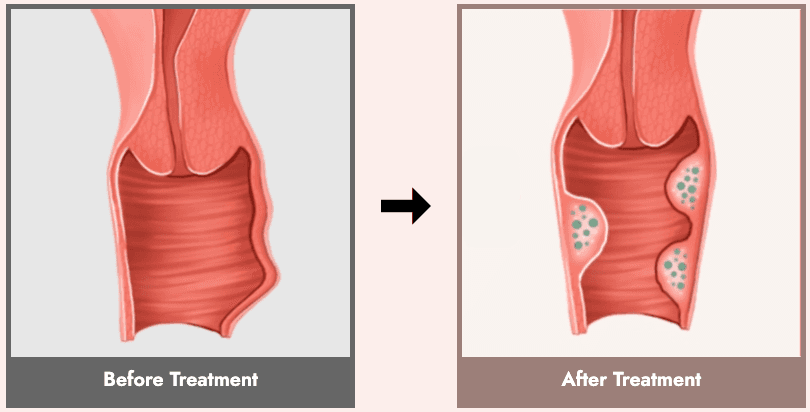
- Labia majora volume loss — Adults seeking fuller external labia majora, improved contour, or greater coverage of the labia minora can discuss HA-based augmentation after an in-person examination.
- Diagnosed postmenopausal VVA — Postmenopausal adults with moderate-to-severe vulvovaginal atrophy (VVA), including dryness or pain with intercourse, are the group with the strongest evidence for a specific cross-linked HA injection protocol.
- Specific, realistic goal — Suitable candidates understand that filler adds soft-tissue volume; it does not remove excess tissue, repair pelvic-floor muscles, correct prolapse, or reliably improve orgasm or urinary symptoms.
- Able to arrange follow-up — International patients need enough time for an early review in Korea and a clinician at home who can assess a delayed reaction if needed.
Pregnancy and breastfeeding are reasons to defer elective filler because safety has not been established. Postpone treatment for genital, urinary, skin, or systemic infection; active herpes; suspected or untreated STI; bacterial vaginosis; candidiasis; open lesions; unexplained discharge; bleeding; a new mass; or significant pelvic pain. A gynecologic assessment must rule out vulvodynia, vaginismus, pelvic-floor dysfunction, prolapse, clinically important incontinence, and other causes of symptoms before filler is proposed. Bleeding disorders, anticoagulant or antiplatelet treatment, poorly controlled diabetes, immunosuppression, severe inflammatory disease, previous granulomas, and prior permanent or unknown genital filler require individualized specialist assessment. Do not accept permanent silicone or an unidentified material: HA is temporary and can sometimes be treated with hyaluronidase, while permanent or unknown fillers are substantially harder to manage or remove, as described in a review of genital augmentation complications.
What Are the Different Types of Vaginal Filler?

“Vaginal filler” is not a standardized anatomical procedure. Confirm the target tissue, filler brand, planned volume, injection plane, and intended outcome before consenting.
- Labia majora augmentation — HA is placed in the external labia majora to restore volume, refine contour, or increase coverage. A randomized single-center study of 76 women aged 40–65 with labia majora hypotrophy reported better six-month sexual-function and aesthetic/anatomical measures than no treatment, but it was not sham-controlled and needs independent replication (study details).
- Vaginal or vestibular injection for VVA — Cross-linked HA injection has been studied for carefully diagnosed postmenopausal VVA or genitourinary syndrome of menopause. In a placebo-controlled 12-week trial, it improved the most bothersome symptom, dryness, pain with intercourse, and sexual-function score, but not itching/irritation, pain, or vaginal pH (trial results).
- G-spot or sexual-enhancement injection — This is a separately marketed treatment with a distinct proposed target. Robust evidence does not establish predictable improvement in arousal, orgasm, sexual performance, or relationship satisfaction; do not treat it as equivalent to VVA care or labial augmentation.
Why Visit Korea for Vaginal Filler?
South Korea has an established infrastructure for receiving international medical patients, including a government-supported Medical Korea information platform. That infrastructure does not demonstrate superior vaginal-filler outcomes, safety, or durability compared with other countries. For this procedure, product authorization and complication planning matter more than destination marketing.
- International-patient access — The Medical Korea platform provides official information for overseas patients navigating Korean medical services.
- Product-specific regulatory verification — Ask the provider to show current MFDS approval or labeling for the exact HA product and genital indication. A facial filler should not be assumed to be authorized for vulvovaginal use; approval and off-label status are product- and indication-specific under the Korean medical-device regulatory framework.
- Documented complication planning — Before treatment, obtain the product name and lot number, total mL, injection map, anesthetic used, after-hours contact, and the plan for urgent assessment and hyaluronidase where appropriate. This is especially important because HA-filler inflammatory reactions can occur months later (review of delayed reactions).
- Evidence limitation — No comparative research shows that vaginal filler performed in Korea is safer, more effective, or longer-lasting than treatment elsewhere.
Key Information for International Patients
- Minimum stay — Plan 3–5 days for in-person assessment, injection, and an early review before a long-haul flight. Plan 5–7 days for internal vaginal-wall treatment, sedation, substantial swelling, previous filler complications, or absent follow-up at home.
- Flight timing — No study establishes a safe flight interval or standardized international follow-up protocol after vulvovaginal filler. Do not fly with escalating pain, rapidly increasing swelling, abnormal tissue color, fever, discharge, urinary difficulty, or heavy bleeding.
- Repeat visits — An early cosmetic review at roughly 2–4 weeks is more useful than judging volume or symmetry immediately after injection. Arrange a remote review and identify a local gynecologist, dermatologist, or plastic surgeon before travel.
- Sedation and transport — Local anesthetic alone usually does not require a companion. Arrange an adult escort and do not drive after oral or IV sedation.
- Itinerary impact — Keep the first days low-key. Walking is generally practical, but cycling, horseback riding, strenuous exercise, swimming, sauna, and sexual activity require injector-specific clearance because no universal restriction timetable has been validated.
- Records for home care — Leave Korea with consent documents, facility and clinician contacts, injection map, product and lot number, total volume, medications administered, discharge instructions, and an after-hours number.
Travel note: A short cosmetic trip is a poor fit when the intended treatment is internal vaginal-wall injection, symptoms are unexplained, or the clinic cannot provide a pre-flight review and clear escalation pathway.
Which Are the Best Clinics in Korea for Vaginal Filler?
Listed below are some of the best clinics in Korea for vaginal filler.
1. SH Clinic
At SH Clinic, you can discuss vaginal filler within a gynecology-focused setting that also offers other vaginal rejuvenation options. Your procedure is performed directly by an experienced board-certified gynecologist, allowing your goals and suitability to be considered alongside your wider gynecologic needs.
- URL: SH Clinic Website
- Location: Seocho-gu, Seoul
- Gynecologic care:
- The clinic provides vaginal fillers as part of a broader gynecology service.
- Related options include stem-cell injections, vaginal HIFU laser treatment, vaginal tightening, and implant surgery.
- Clinician: Procedures are performed directly by a board-certified gynecologist with a Minister of Health and Welfare commendation.
2. Okay Plastic Surgery Clinic
Okay Plastic Surgery Clinic offers individualized aesthetic consultations and injectable filler services, with care led by specialized professionals that include an experienced female plastic surgeon. The supplied information does not specifically confirm vaginal filler treatment, so you should clarify whether this procedure is available and appropriate for your needs.
- URL: Okay Plastic Surgery Clinic Website
- Location: Gangnam-gu, Seoul
- Relevant services:
- The clinic lists Botox and filler treatments within its petit and skincare services.
- Its broader aesthetic offerings include body contouring, breast procedures, lifting treatments, eye surgery, rhinoplasty, scar care, and medical skincare.
- Care approach: The clinic describes individualized treatment planning and a team-based approach to aesthetic care.
3. Somunnan Woman Clinic
You may consider Somunnan Woman Clinic for vaginal filler if you want a minimally invasive option intended to restore volume and elasticity in the vaginal area. The clinic describes injecting dermal filler into the vaginal walls and provides one-on-one appointments, private recovery rooms, and collaborative women’s-health care tailored to your individual concerns.
- URL: Somunnan Woman Clinic Website
- Location: Gangnam-gu, Seoul
How Much Does Vaginal Filler Cost in Korea?
Vaginal filler in South Korea is quoted at ₩650,000–₩5,600,000 (approximately US$500–$4,100). Individual quotes vary because “vaginal filler” can refer to materially different anatomical targets and injection protocols.
| Procedure Price | Korean Won (₩) | USD ($) |
|---|---|---|
| Low Price | ₩650,000 | $500 |
| High Price | ₩5,600,000 | $4,100 |
Exchange rate as of 2026-09-06: 1 KRW = 0.000741 USD.
What Affects the Price?
- Anatomical target and treatment extent — External labia majora augmentation, vestibular treatment, and internal vaginal-wall injection are distinct procedures. Treating a broader area or an internal target requires different injection planning, tissue access, and potentially more operating time than a localized external volume-restoration treatment.
- HA filler product and total volume — The exact cross-linked hyaluronic-acid formulation and total mL required for the agreed volume determine consumable use. A plan requiring more filler to restore labia majora volume or treat multiple sites uses more product than a small, localized injection.
- Anesthesia or sedation requirement — Topical or local anesthetic requires fewer facility and monitoring resources than oral or IV sedation. Sedation adds medication, observation, recovery-area use, and the need for an adult escort after treatment.
- Pre-flight review and complication-readiness plan — For overseas treatment, an in-person early review before long-haul travel and a documented plan for urgent assessment or hyaluronidase management require scheduled clinical resources beyond the injection session itself.
Cost tip: Request an itemized quote stating exactly what is included, particularly the anatomical target, filler brand and formulation, total planned mL, anesthetic or sedation, treatment and review appointments, and any after-hours or complication-care arrangements.
The US$500–$4,100 conversion is approximate, based on the exchange rate dated 2026-09-06. Check the exchange rate again when budgeting.
Vaginal Filler From Start to Finish
- Remote inquiry and consultation — Request an English-language or virtual consultation where available. State the exact concern—external volume loss, postmenopausal dryness, pain with intercourse, or another symptom—and send medical history rather than relying only on photographs.
- Anatomical and medical screening — Attend an in-person genital and pelvic assessment. The clinician distinguishes VVA from infection, vulvar skin disease, vulvodynia, vaginismus, pelvic-floor dysfunction, prolapse, urinary disease, or another gynecologic condition. Urine testing, STI tests, vaginal swabs, cervical screening, or imaging are used only when symptoms or examination indicate them; filler alone has no universal laboratory panel.
- Written treatment plan and consent — Confirm the target anatomy, HA formulation and brand, lot number, volume in mL, injection plane, needle or cannula approach, anesthetic, on-label or off-label status, expected limitations, and urgent complication plan. Ask whether hyaluronidase and urgent in-person evaluation are available; hyaluronidase is a clinician-managed intervention, not a guarantee of uncomplicated reversal (clinical review).
- Travel and anesthesia arrangements — Schedule treatment early enough to allow review before departure. Local or topical anesthetic is commonly used; fasting is generally unnecessary for local anesthetic, while the facility sets fasting and escort requirements for sedation.
- Injection session — The clinician cleans the treatment area, applies the agreed anesthetic, and places filler with a needle or cannula in the selected tissue plane. This is usually an outpatient, same-day procedure.
- Discharge and early monitoring — Receive written aftercare, approved pain-relief instructions, emergency contact details, and your treatment record. Tenderness, bruising, swelling, firmness, and temporary unevenness can occur in the first several days.
- Pre-flight review — Return for the planned early check. Do not assess final volume or symmetry immediately: visible swelling and early asymmetry can take weeks to settle.
- Remote follow-up — Complete the clinic’s remote review and seek local in-person care promptly for warning signs. For the studied postmenopausal VVA protocol, outcomes were assessed from four weeks and followed through 52 weeks—not as an immediate result (52-week follow-up).
Alternatives to Vaginal Filler
The right alternative depends on the diagnosis. Non-surgical options can address dryness, pain, or pelvic-floor symptoms without adding volume; surgery can address excess tissue or a verified structural problem but brings longer recovery and operative risks.
Vaginal dryness care
- Best suited to — VVA or GSM-related dryness and painful intercourse, particularly when examination supports menopausal tissue change.
- Tradeoff — Vaginal moisturizers, lubricants, low-dose vaginal estrogen when medically appropriate, and individualized nonhormonal treatment address tissue symptoms rather than create external volume. A trial of HA suppositories versus vaginal estrogen does not establish equivalence for injectable HA filler (pilot study).
- Related procedure — Read about vaginal dryness treatment.
Pelvic-floor assessment and therapy
- Best suited to — Pelvic-floor hypertonicity, vaginismus, vulvodynia, or pain with intercourse driven by muscular or pain conditions.
- Tradeoff — Physical therapy and pain or sexual-health care address the source of dysfunction but do not restore labia majora volume. Filler is not a substitute for this assessment.
Labiaplasty
- Best suited to — Redundant or asymmetrical labia minora tissue when the anatomical concern is excess tissue rather than loss of labia majora volume.
- Tradeoff — Surgery removes or reshapes tissue and has wound healing, scarring, and downtime considerations; HA augmentation is temporary and adds volume without removing tissue.
- Related procedure — Read about labiaplasty.
Vaginoplasty or perineoplasty
- Best suited to — A specialist-confirmed structural indication involving vaginal or perineal support.
- Tradeoff — These operations can address selected structural concerns but require surgical recovery and do not suit unexplained sexual, urinary, or pain symptoms without diagnostic evaluation.
- Related procedure — Read about vaginoplasty.
How Can I Prepare for Vaginal Filler?
- Medical disclosure — Provide menopause status, obstetric and gynecologic history, previous genital surgery, all prior filler details, allergy history, herpes/STI/UTI history, diabetes, autoimmune or inflammatory disease, cancer history, bleeding history, and all medicines and supplements.
- Blood-thinning medicines — Do not independently stop aspirin, ibuprofen or other NSAIDs, antiplatelet drugs, or anticoagulants. The injector and prescribing clinician must make a documented plan because stopping these medicines can cause thrombosis while continuing them can increase bleeding and bruising.
- Infection and symptoms — Tell the clinic about discharge, odor, itching, sores, urinary burning, fever, bleeding, pelvic pain, or pain with intercourse before travel. Reschedule rather than inject through active infection, lesions, or irritated tissue.
- Treatment-area care — Avoid treatment on shaved-injured, broken, inflamed, or infected genital skin. Follow the clinic’s instructions on hair removal and cleansing; do not douche or use fragranced genital products before the appointment.
- Food, alcohol, and smoking — Fasting is usually unnecessary with local anesthetic, but follow facility instructions if sedation is planned. Avoid alcohol as directed by the clinic, and disclose nicotine use because it can affect healing and infection risk.
- Travel logistics — Book flexible flights, keep the first 3–5 days available for assessment and early review, and arrange an escort and no-driving plan if sedation is used.
Travel note: Ask for the product name, intended indication, total mL, and pre-flight review appointment in writing before booking non-refundable travel.
Confirm the treating doctor’s clinic-specific requirements, which take precedence over general preparation guidance.
Aftercare Advice
Protect the treated tissue, monitor closely for complications, and do not judge the cosmetic result while early swelling is present.
- Swelling and comfort — Tenderness, bruising, swelling, firmness, redness, itching, and temporary unevenness can settle over several days; swelling and apparent asymmetry can take weeks to resolve. Use only clinician-approved analgesia and cold-compress instructions, and never place ice directly on genital skin.
- Pressure, friction, and heat — Do not massage or press the area unless the injector specifically directs it. Avoid vigorous rubbing, cycling, horseback riding, strenuous exercise, hot baths, sauna, swimming, douching, and fragranced products until cleared.
- Sex, tampons, and examinations — Obtain a site- and product-specific timeframe for penetrative sex, tampons, and pelvic examinations. There is no validated universal abstinence interval for vulvovaginal filler.
- Urgent warning signs — Seek urgent in-person assessment instead of flying or waiting for routine review for severe or escalating pain, rapidly expanding swelling, pale, dusky, blue, purple, or black tissue, blisters, ulceration, fever, spreading redness, pus or foul discharge, faintness, inability to urinate, or heavy bleeding. Severe infections and tissue injury have been reported after genital filler, including a published case of necrotizing fasciitis and sepsis following unknown-composition labia majora filler (case report).
- Review and maintenance — Attend the early review around 2–4 weeks and keep product records indefinitely. Re-treatment should follow examination and recurrent volume loss or symptoms, not an automatic schedule; durability evidence through 52 weeks applies only to one postmenopausal VVA protocol.
Follow the treating doctor’s individualized instructions and contact the clinic immediately when pain, swelling, color change, discharge, or healing appears abnormal.
Frequently Asked Questions
Related Blogs
G-spot Filler in Korea: Evidence, Safety, Recovery, and Travel Planning
G-spot filler involves nonstandardized anterior vaginal-wall injections, most often temporary hyaluronic acid, with uncertain sexual-function benefits and potential risks. International patients should plan 2–3 days in Korea for assessment and review, obtain treatment records, and arrange follow-up care.
Updated: Sep 28, 2026
PRP Vaginal Rejuvenation in Korea: Evidence, Procedure Steps, Recovery and Travel Planning
PRP vaginal rejuvenation uses a patient’s processed blood plasma for targeted vaginal, vulvar, clitoral, or periurethral injections after pelvic-health assessment, but protocols and evidence of benefit are not standardized. The article covers candidate screening, Korea travel planning, preparation, recovery, warning signs, follow-up, and diagnosis-specific alternatives for dryness, pain, incontine
Updated: Sep 28, 2026
G-spot Amplification in Korea: Evidence, Safety, Recovery and Travel Planning
G-spot amplification involves injecting filler into a patient-identified area of the anterior vaginal wall near the urethra, but no standardized target or proven sexual-function benefit exists. The article covers candidacy, product and clinic verification in Korea, travel planning, aftercare, warning signs, and alternatives such as sexual-health evaluation and pelvic-floor therapy.
Updated: Sep 28, 2026
Viveve Laser in Korea: RF Treatment, Safety, Evidence and Travel Planning
Viveve is a non-incisional, cryogen-cooled monopolar RF treatment—not a laser—used in selected patients after gynecologic assessment, with limited evidence for vaginal-laxity symptoms and no established cure for incontinence. International patients considering treatment in Korea can review candidate criteria, MFDS device verification, outpatient recovery, 10-day intercourse and tampon restrictions
Updated: Sep 22, 2026
Clinics offering Vaginal Filler

SH Clinic: Comprehensive Women's, Men's & Couples' Health Services in Korea
Sinsa

Okay Plastic Surgery Clinic in Korea: Comprehensive Aesthetic Procedures with Sincerity and Care
Cheongdam

Ladyuro Women's Clinic in Korea: Premier Destination for Vaginal Rejuvenation and Aesthetic Enhancements
Sinsa

Trinity Women's Clinic in Korea: Offering Comprehensive Gynecologic Care and Advanced Aesthetic Treatments
Sinsa