Medical Tourism Blog
Keloid Scar Itching Solutions: Keloid Injection Procedures in Korea for Effective Relief
Table of contents
- Understanding Keloid Scars and the Challenge of Itching
- Keloid Injection: A Detailed Medical Procedure
- Best Clinics in Korea for Keloid Scar Itching
- The Medical Tourist's Journey: Keloid Injections in South Korea
- Cost Analysis: Keloid Injections in South Korea vs. Global Destinations
- Patient Experiences and Outcomes with Keloid Injections
- Conclusions
- References
Considering treatment in Korea? Everything you need to know e.g. — how to avoid scams, visas, interpreters, recovery tips — in our Medical Tourism Master Guide. Plan with confidence in minutes, not weeks!
South Korea stands out as a preferred destination for keloid injection therapy, thanks to advanced medical facilities, experienced specialists, patient-focused care, and relatively affordable pricing compared to many Western countries. However, treating keloids often involves repeated sessions and a commitment to long-term management, so patients should budget carefully, considering all related costs. While these treatments are effective for symptom relief and scar reduction, full resolution is rare, and a personalized approach is necessary for optimal results.
Understanding Keloid Scars and the Challenge of Itching
What are Keloid Scars?
Keloids are raised, firm scars caused by an overreaction of the skin’s healing process, leading to excess collagen growth beyond the wound’s original boundaries. Unlike hypertrophic scars, which stay confined to the injury site, keloids often keep growing. They can appear shiny or rubbery and range in color from pink and red to dark brown or match the surrounding skin tone. Microscopic examination reveals a tangled buildup of collagen and other extracellular components.
Common triggers for keloid formation include cuts, burns, acne, chickenpox, surgical wounds, and repeated trauma such as piercings or tattoos. Genetics play a significant role, making individuals with a family history or darker skin tones more susceptible. Keloids can appear anywhere but are especially concerning over joints, where they may restrict movement. While generally harmless, they don’t fade away naturally and can grow larger with time, making ongoing management critical.
The Pervasive Symptom: Keloid Scar Itching (Pruritus)
Beyond being noticeable, keloid scars often cause especially troublesome itching and pain. About 86% of people affected by keloids experience significant itching, which can disrupt daily life. Unfortunately, this symptom is often underestimated by healthcare providers, who may focus on the scar’s appearance instead. Communicating the severity of itching and discomfort during consultations helps ensure comprehensive care.
Mechanisms Behind Keloid Itching
Keloid-related itching arises from complex biological factors. Research shows that keloids with severe itching have more mast cells—cells responsible for releasing itch-inducing substances like histamine. Additionally, the dense collagen compresses nerves in the skin, possibly damaging them, which can amplify itchy sensations. Other contributors include increased neuropeptides (such as Substance P) and cytokines like IL-4 and IL-13, which stimulate nerves in keloidal tissue.
Common Pseudonyms for Keloids
When searching for information about keloids, you may also come across these alternative terms:
| Primary Term | Pseudonym 1 | Pseudonym 2 | Pseudonym 3 | Pseudonym 4 |
|---|---|---|---|---|
| Keloid | Keloid disorder | Keloidal scar | Cheloid | Cheloid of skin |
People with a family history of keloids or those of African, Asian, or Hispanic descent face an increased risk. Treating keloids is a persistent challenge, with high rates of recurrence and cases where treatment can worsen the appearance. Combination therapies and gradual, proactive management are often recommended to handle this stubborn condition best.
Managing keloids is often described as a "therapeutic dilemma." Simple treatments like surgical removal frequently result in recurrence, sometimes making the keloid larger or more painful. Therefore, a combination of approaches tailored to the individual’s needs offers the best chance for a successful outcome—though “cure” is rarely possible, and long-term care is usually necessary.
Keloid Injection: A Detailed Medical Procedure
What is Intralesional Injection?
An intralesional injection involves injecting medication directly into a scar or lesion. This concentrated approach delivers the drug right where it’s needed, maximizing the therapeutic effect while minimizing side effects in the rest of the body. These injections work particularly well for keloids, but may not be suitable for very large or widespread scars.
Primary Medications Used
Corticosteroids—especially triamcinolone acetonide—are the gold standard medication for keloid injection therapy (marketed under names like Cortisone or Kenalog). Depending on the specific case, other agents such as 5-fluorouracil, bleomycin, or interferon, and even botulinum toxin type A may be used alone or in combination.
Mechanism of Action
Corticosteroids suppress the inflammation responsible for driving the overproduction of collagen in keloids. They help slow down or halt excess collagen formation, soften rigid scar tissue, and improve texture while also reducing itching and pain. Crucially, while these injections effectively manage symptoms, not all keloids will disappear entirely.
Administration Protocols
Triamcinolone acetonide comes in various strengths, typically 10 mg/mL or 40 mg/mL. Larger or thicker keloids call for higher doses (around 40 mg/mL), while smaller or facial lesions may require just 2.5–5 mg/mL. The physician delivers about 0.1–0.2 mL per square centimeter of affected skin. Fine needles and careful technique minimize discomfort and maximize medication delivery.
Cryotherapy or a local anesthetic may be used to reduce pain and soften the keloid before injection. Afterward, patients may experience discomfort, but the procedure is quick—usually lasting just a few minutes.
| Lesion Type/Size | Triamcinolone Acetonide Strength | Volume per cm² | Frequency |
|---|---|---|---|
| Large, thick keloid scar | 40 mg/mL | 0.1–0.2 mL | 4-6 weeks |
| Moderate thickness scar | 5–10 mg/mL | 0.1–0.2 mL | 4-6 weeks |
| Small/facial lesion | 2.5–5 mg/mL | 0.1–0.2 mL | 4-6 weeks |
Treatment Course and Expected Side Effects
Multiple sessions are usually required, spaced every four to six weeks, often extending over several months. The exact number depends on the keloid’s characteristics and its response to treatment. While most patients see improvement in three to six months, complete “cure” is rare.
Temporary redness, swelling, and tenderness are common after injection, while long-term risks can include skin thinning, spider veins, or permanent color changes. Close adherence to aftercare instructions is vital for minimizing risks.
The success of treatment depends heavily on the provider’s expertise. Experienced physicians are skilled at adjusting doses and administering injections precisely, a crucial factor for achieving the best possible result while avoiding unwanted side effects.
Best Clinics in Korea for Keloid Scar Itching
Listed below are the best clinics in Korea for keloid scar itching:
| Clinic Name | Key Features | Special Techniques |
|---|---|---|
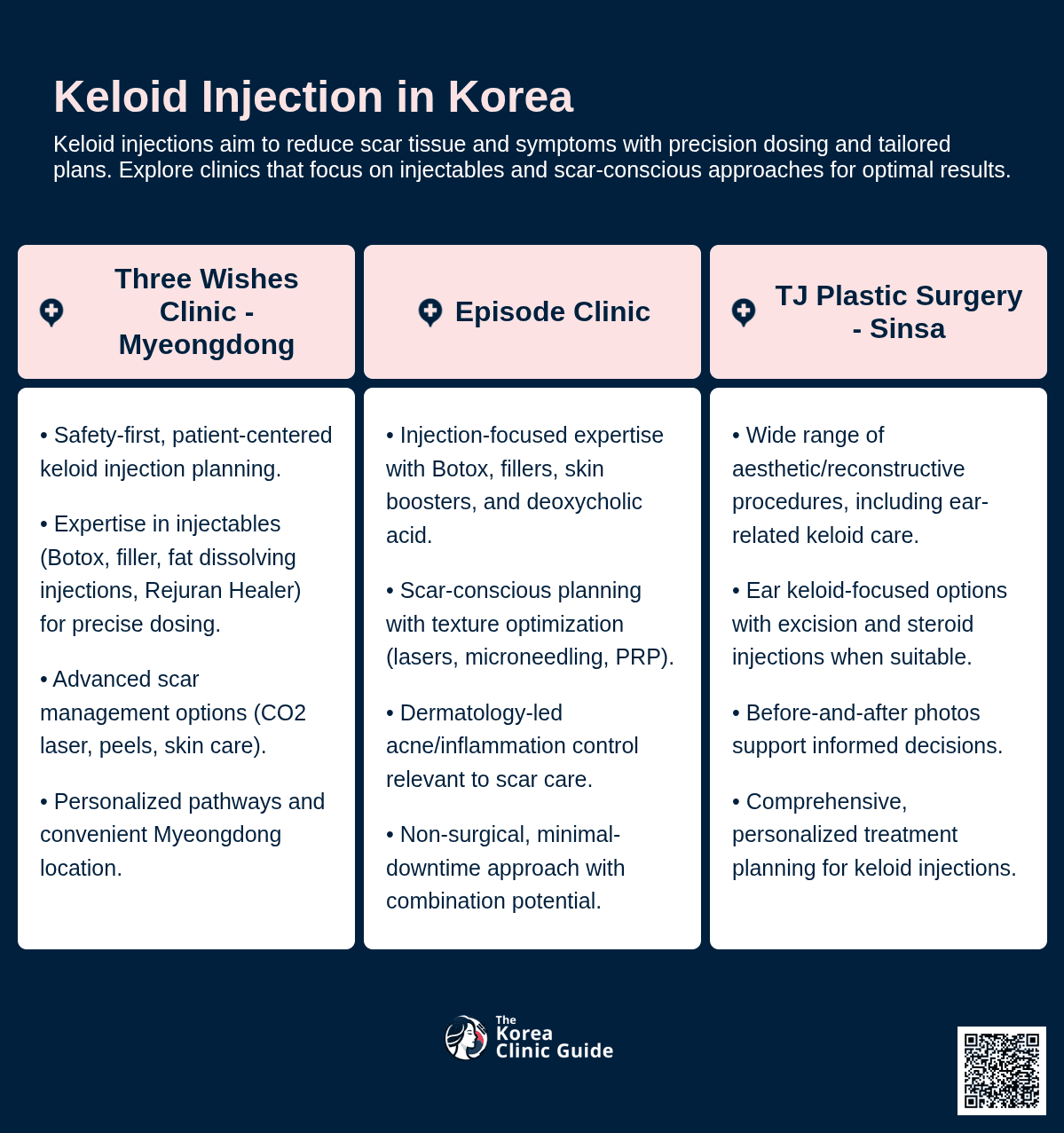
| TJ Plastic Surgery (TJ성형외과) Website | TJ Plastic Surgery (TJ성형외과) in Sinsa is a specialty aesthetic clinic offering a broad range of facial and body procedures designed to enhance and rejuvenate appearance, with options spanning oculoplasty (such as double eyelid surgery, eye correction surgery, canthoplasty, and revisional eyelid procedures), rhinoplasty (including deviated nose correction and revisional nose surgery), forehead surgery, anti-aging and lifting treatments, fat transplantation, facial contouring, breast surgery, and body contouring. For patients who want to better understand potential outcomes before deciding on care, the clinic also provides before-and-after photos across its procedure categories. For concerns related to keloid scar itching and discomfort, TJ Plastic Surgery offers Ear Keloid Plastic Surgery, which is aimed at treating keloid scars on the ears to improve appearance and reduce discomfort. Treatment may involve excision and steroid injections, and can be considered for individuals experiencing persistent symptoms along with cosmetic concerns. | Ear Keloid Plastic Surgery; treatment may involve excision and steroid injections. |
| StarBe Plastic Surgery Website | StarBe Plastic Surgery in Seomyeon stands out as the best choice because it combines a strong commitment to patient safety with scar-focused care designed to minimize irritation and visible thickening while preserving natural-looking results. StarBe’s dedicated Scar Treatment System brings together advanced options such as laser treatments and silicone-based therapies, and its specialized Keloid Treatment program is structured around proven approaches including corticosteroid injections, laser therapy, and surgical removal when appropriate—allowing treatment plans to be tailored to the scar’s characteristics and the patient’s needs. Importantly, StarBe’s broader surgical philosophy emphasizes natural beauty that complements each individual’s facial features, and its experience with techniques that prioritize minimal scarring—such as Laser Lower Eyelid Fat Repositioning and minimal-incision approaches—reflects a clinic-wide focus on careful tissue handling and scar minimization, which is especially relevant for keloid-prone patients. | Scar Treatment System (laser treatments and silicone-based therapies); Keloid Treatment program (corticosteroid injections, laser therapy, and surgical removal when appropriate); Laser Lower Eyelid Fat Repositioning; minimal-incision approaches. |
| Machimpyo Plastic Surgery Website | Machimpyo Plastic Surgery in Apgujeong stands out as a strong choice in Korea for patients troubled by keloid scar itching because effective care for symptomatic scars depends on meticulous technique, thoughtful planning, and careful follow-up—areas where the clinic’s experienced medical team is specifically described as detail-oriented and patient-focused. While the clinic is widely known for specialized aesthetic procedures across the eyes, nose, lifting, fat grafting, and facial contouring, it also emphasizes precision work in complex, correction-oriented cases such as revision eye surgery, including eyelash raising and scar revision, which reflects the kind of refined surgical judgment and scar-aware approach many patients seek when their main goal is not only appearance, but also relief from persistent scar discomfort. | Revision eye surgery, including eyelash raising and scar revision. |
TJ Plastic Surgery (TJ성형외과)
TJ Plastic Surgery (TJ성형외과) in Sinsa is a specialty aesthetic clinic offering a broad range of facial and body procedures designed to enhance and rejuvenate appearance, with options spanning oculoplasty (such as double eyelid surgery, eye correction surgery, canthoplasty, and revisional eyelid procedures), rhinoplasty (including deviated nose correction and revisional nose surgery), forehead surgery, anti-aging and lifting treatments, fat transplantation, facial contouring, breast surgery, and body contouring. For patients who want to better understand potential outcomes before deciding on care, the clinic also provides before-and-after photos across its procedure categories.
For concerns related to keloid scar itching and discomfort, TJ Plastic Surgery offers Ear Keloid Plastic Surgery, which is aimed at treating keloid scars on the ears to improve appearance and reduce discomfort. Treatment may involve excision and steroid injections, and can be considered for individuals experiencing persistent symptoms along with cosmetic concerns.
Find more about this clinic here: TJ Plastic Surgery (TJ성형외과) Website
StarBe Plastic Surgery
For patients seeking relief from keloid scar itching in Korea, StarBe Plastic Surgery in Seomyeon stands out as the best choice because it combines a strong commitment to patient safety with scar-focused care designed to minimize irritation and visible thickening while preserving natural-looking results. StarBe’s dedicated Scar Treatment System brings together advanced options such as laser treatments and silicone-based therapies, and its specialized Keloid Treatment program is structured around proven approaches including corticosteroid injections, laser therapy, and surgical removal when appropriate—allowing treatment plans to be tailored to the scar’s characteristics and the patient’s needs. Importantly, StarBe’s broader surgical philosophy emphasizes natural beauty that complements each individual’s facial features, and its experience with techniques that prioritize minimal scarring—such as Laser Lower Eyelid Fat Repositioning and minimal-incision approaches—reflects a clinic-wide focus on careful tissue handling and scar minimization, which is especially relevant for keloid-prone patients.
Find more about this clinic here: StarBe Plastic Surgery Website
Machimpyo Plastic Surgery
Machimpyo Plastic Surgery in Apgujeong stands out as a strong choice in Korea for patients troubled by keloid scar itching because effective care for symptomatic scars depends on meticulous technique, thoughtful planning, and careful follow-up—areas where the clinic’s experienced medical team is specifically described as detail-oriented and patient-focused. While the clinic is widely known for specialized aesthetic procedures across the eyes, nose, lifting, fat grafting, and facial contouring, it also emphasizes precision work in complex, correction-oriented cases such as revision eye surgery, including eyelash raising and scar revision, which reflects the kind of refined surgical judgment and scar-aware approach many patients seek when their main goal is not only appearance, but also relief from persistent scar discomfort.
Find more about this clinic here: Machimpyo Plastic Surgery Website
The Medical Tourist's Journey: Keloid Injections in South Korea
Why Choose South Korea for Keloid Treatment?
South Korea is renowned for exceptional cosmetic and dermatological care, with cutting-edge clinics, internationally trained doctors, and advanced technologies. These clinics often offer comprehensive, patient-focused services—including translation, recovery support, and guidance for international visitors—often at more attractive prices compared to Western countries.
Step-by-Step Process for Medical Tourists
Initial Consultation and Assessment: Start by researching reputable clinics and scheduling a virtual or in-person consultation. During this session, the clinic will assess the keloid’s history and characteristics, and often take initial photos for tracking progress. Allergy testing to the injected substance may also be offered. Most clinics require a 10% deposit to confirm appointments.
The Injection Procedure: On treatment day, the keloid is sterilized, local anesthetic is applied, and the medication is carefully injected. Treatment is quick, often completed within minutes, but nearly all patients need multiple sessions. Many clinics offer packages for several injections.
Post-Procedure Care and Follow-up: Patients can expect mild side effects, typically resolving within days. Aftercare usually includes ice packs, sun protection, and the application of medicated creams. Follow-up appointments are key for monitoring results and planning future sessions. Clinics may recommend or include high-quality aftercare products.
Travel Planning and Logistics: To ensure a smooth recovery, avoid travel during peak holidays, and try to schedule your stay for milder seasons. Secure your visa, book accommodation early, and make sure you're prepared with vital documents, emergency contacts, and translation tools. Arrange to rest as needed, and avoid strenuous activities or too much sun after treatment.
Important Considerations for International Patients
Because effective keloid treatment requires repeated sessions, international patients should plan for extended stays or multiple trips, which can significantly increase the overall cost. Don’t let the competitive per-injection price obscure the cumulative cost of repeat travel, accommodation, insurance, and living expenses.
Select clinics that provide detailed pre-trip consultations, transparent pricing, and treatment plans that specify the expected number of sessions. Open communication and realistic expectations are key to a smoother, more satisfying experience.
Cost Analysis: Keloid Injections in South Korea vs. Global Destinations
Cost of Keloid Injection Therapy in South Korea
The cost of keloid injections in South Korea ranges from $50 to $150 USD per session, or 72,800–218,200 KRW. A 10% deposit (about $5–$15) is usually required. Total costs depend on the number of sessions, the complexity of your case, and whether premium clinics are selected. Consultation and follow-up appointments may be extra or included as part of a package. More severe keloids typically require more sessions.
Comparative Costs: South Korea vs. Other Countries
South Korea’s prices are quite competitive alongside other countries, but actual savings depend on total required sessions and travel expenses. For example, Australia’s injections may average $117 per treatment (for courses of three), falling within Korea’s range. India, a popular medical tourism hub, offers some of the most affordable prices overall. Patients should compare both the type of procedure and the expected number of visits when budgeting.
| Country | Keloid Injection Cost (Per Session) | General Keloid Removal Cost | Laser Keloid Removal Cost | Surgical Keloid Removal Cost | Notes |
|---|---|---|---|---|---|
| South Korea | $50-$150 | $300-$800 | Not specified | Not specified | High quality, competitive pricing |
| United States | Not detailed | $500-$3,500 | $1,000-$2,000 | $2,000-$3,000 | Expensive, limited insurance |
| Australia | $350 for 3 sessions | $200-$550 | Not specified | Not specified | Partial public healthcare |
| India | Not detailed | $60-$200 | Not specified | Not specified | Very affordable |
| Thailand | Not detailed | $300-$700 | Not specified | Not specified | Overnight stays may be needed |
Comprehensive Budgeting for Medical Tourism
The "true cost" includes much more than just the injection fee. Travelers should budget for flights, accommodation, ground transport, food, insurance, and visas.
| Expense Category | Estimated Cost Range (USD) | Notes |
|---|---|---|
| Keloid Injection Procedure | $50–$150 | Per session, multiple needed |
| Flights to Seoul | $500–$1,500+ | Varies by season & location |
| Accommodation per night | $30–$150+ | Hostel to upscale hotel |
| Local Transportation daily | $3–$10 | Subway, buses, occasional taxi |
| Meals & Daily Expenses daily | $20–$50 | Affordable options widely available |
| Travel/Medical Insurance | $50–$200 | Ensure international coverage |
| Visa/Miscellaneous Fees | $30–$80 | If required |
Careful budgeting is crucial to avoid financial strain or disrupted treatment.
Patient Experiences and Outcomes with Keloid Injections
Efficacy in Addressing Itching and Discomfort
Most patients experience significant relief from itching and discomfort after intralesional steroid injections. The medication works quickly to decrease inflammation and nerve irritation, greatly improving comfort and quality of life. Supplementary treatments like prescription creams or silicone gels may enhance symptom control.
Scar Improvement and Flattening
After several sessions, injected corticosteroids help flatten keloids and soften their texture. However, results take time, usually three to six months, and complete disappearance is uncommon. Individual outcomes vary depending on scar characteristics and treatment consistency.
Challenges and Recurrence
Keloids are resistant to simple fixes; recurrence rates remain high, especially after surgery alone. Long-term improvement demands combination therapy, often pairing injections with other methods such as cryotherapy, laser, or radiation. Perseverance and realistic expectations are key, given the chronic nature of keloids.
Patient Perspectives and Long-term Management
While many patients find relief with injections, some—especially those with very persistent keloids—require additional or alternative therapies. For instance, patient stories like Alex’s reveal that repeated surgery and injections sometimes fail, and alternative treatments like cryotherapy may offer better results for tough cases. Emotional, physical, and financial impacts mean keloid management is an ongoing process, not a one-time fix.
Conclusions
Keloid scars pose a significant challenge, often causing longstanding itching and pain. Intralesional corticosteroid injections provide effective symptom relief, especially for itching, but usually require several sessions and do not guarantee a permanent cure. South Korea’s high-quality, affordable care and specialized services make it a top choice for medical tourists, though true costs must be carefully considered. Ultimately, managing keloids is a long-term commitment, often involving multiple therapies and a patient-centered approach with realisitic expectations.