Medical Tourism Blog
Dark Nipples: Nipple Bleaching and Nipple Whitening Treatment Options in Korea
Table of contents
- Exploring Nipple Bleaching and Whitening Treatments
- Best Clinics in Korea for Dark Nipples
- The Process of Nipple Bleaching/Whitening in South Korea
- Cost Analysis and Medical Tourism Perspective
- Patient Experiences and Outcomes
- Conclusion
- References
Considering treatment in Korea? Everything you need to know e.g. — how to avoid scams, visas, interpreters, recovery tips — in our Medical Tourism Master Guide. Plan with confidence in minutes, not weeks!
"Dark nipples" is a common way to describe the darkening of the nipple and areola—the pigmented skin encircling the nipple. Medically, this is referred to as nipple pigmentation or areolar pigmentation, which results from an increased melanin concentration in these areas.
Occasionally, if the darkening is paired with changes in skin texture, it may be clinically diagnosed as Hyperkeratosis of the Nipple and Areola (HNA). HNA is a rare but benign skin condition characterized by thickened, warty, pigmented areas on the nipple and/or areola. This condition can persist indefinitely without treatment and may affect one or both sides, causing discomfort like itching for some, although it's usually painless and not associated with discharge or swollen lymph nodes.
While many people are reassured that such changes are benign or normal after life stages like pregnancy, the personal impact can be significant. Concerns often arise from self-confidence and body image, and, in HNA cases, physical changes can also lead to issues like breastfeeding difficulties. Recognizing the emotional and social effect is essential for anyone offering guidance or reassurance.
Common Pseudonyms and Medical Terminology
Knowing the different terms used to describe dark nipples can help when searching for information:
- Lay Terms: "Dark nipples," "darkened areola."
- Medical Terms/Pseudonyms:
- Nipple pigmentation
- Areolar pigmentation
- Hyperpigmented areola
- Hyperkeratosis of the Nipple and Areola (HNA)
- Clinical Subtypes: Nevoid hyperkeratosis, pregnancy-associated hyperkeratosis
Why Do Nipples Darken? Common Causes
Darkening of the nipples and areola is usually the result of several factors acting together:
- Hormonal influence: Estrogen increases melanin, so puberty, pregnancy, oral contraceptives, and hormone therapy can all trigger pigmentation. Women may notice this most during pregnancy or menstruation, and some change fades after childbirth or stopping birth control, but not always entirely. Men on estrogen therapy may also notice darkening. Treatments often target the pigmentation rather than its root hormonal cause, so repeated treatments or maintenance are often needed.
- Pregnancy and breastfeeding: Both commonly cause marked darkening, with variable return to pre-pregnancy color.
- Puberty and menstruation: Hormonal changes can lead to increased pigmentation.
- Oral contraceptives: These may also cause pigmentation due to hormone content.
- Mechanical friction: Ongoing friction or irritation may lead to hyperkeratosis and darkening.
- Dryness: Dry skin on the nipple or areola may contribute to a darker appearance.
- Underlying skin conditions: Conditions such as epidermal nevus, verruca, or seborrheic keratosis can also cause hyperpigmentation. Distinguishing these from other diseases, like Fox Fordyce disease or pigmented basal cell carcinoma, is important for appropriate management.
- Genetics: Your genetic disposition influences your natural tendency towards increased melanin.
When to Seek Medical Advice
Most nipple and areola darkening is harmless, but medical advice is warranted if:
- The color remains much darker 2-3 months after pregnancy or breastfeeding ends.
- There is any new thickening that looks "tumoral," nipple discharge, swollen lymph nodes, or severe, persistent itching.
HNA is considered rare, but underreporting is possible since many experience mild symptoms or view it as a cosmetic issue. Consulting a professional can ensure concerns are addressed safely.
Exploring Nipple Bleaching and Whitening Treatments
What are Nipple Bleaching and Whitening Treatments?
Nipple bleaching and whitening are cosmetic treatments aimed at lightening the nipple and areola for a lighter, more even appearance. These procedures have become increasingly accepted and are popular in modern aesthetics.
Overview of Medical Procedures and Techniques
Lightening procedures work by either directly reducing melanin deposits or breaking down existing pigmentation; some also promote collagen for firmer, smoother skin.
Topical Creams: Topical products, either prescription or over-the-counter, typically aim to reduce melanin through tyrosinase inhibition or by reducing melanocyte activity. Widely used active ingredients include Kojic acid, Vitamin C, Glycolic acid, Azelaic acid, and Retinoids. Hydroquinone (a potent option) and arbutin (a milder alternative) are commonly prescribed. For hyperkeratosis, topical keratolytics like salicylic acid and lactic acid are the main options, although they do not treat the thickening itself. Creams should be selected for sensitive skin, with caution against mercury-based ingredients or hydroquinone above 2%, due to safety concerns. Results may be limited for deep pigmentation.
"Natural remedies"—such as coconut oil, turmeric, and lemon juice—are often discussed online but have little scientific support, and some (like lemon juice) may even irritate sensitive areas.
Laser Therapy: Laser treatments are highly effective for breaking down pigment and can also boost collagen for overall texture improvement. Before treatment, a numbing cream is applied. Laser options include:
- Ablative lasers: Remove outer skin layers; used for deeper discolorations
- Non-ablative lasers: Encourage collagen growth with less damage to the surface
- 1064 nm lasers: Target melanin specifically
- Other technologies: Q-Switch Ruby, Revlite, Picosure Laser, Enlighten Laser, Spectra Toning (Nd:YAG Laser), Fraxel Laser, Q-switched Nd:YAG laser, fractional CO2 laser, and Q-Switch Nd:YAG HeliosII
Multiple sessions are usually required, with visible improvement in 1-3 sessions for some, and up to six for others.
Other Methods:
- Cryotherapy: Freezes off thickened skin; used in hyperkeratosis
- Chemical peels: Exfoliate upper skin layers using acids like glycolic or TCA
- Microneedling with natural ink: Helps fade pigmentation and add a rosier tone
- Calcipotriol: A vitamin D derivative for skin regulation but not especially effective in this context
Best Clinics in Korea for Dark Nipples
Listed below are the best clinics in Korea for dark nipples:
| Clinic Name | Key Features | Special Techniques |
|---|---|---|
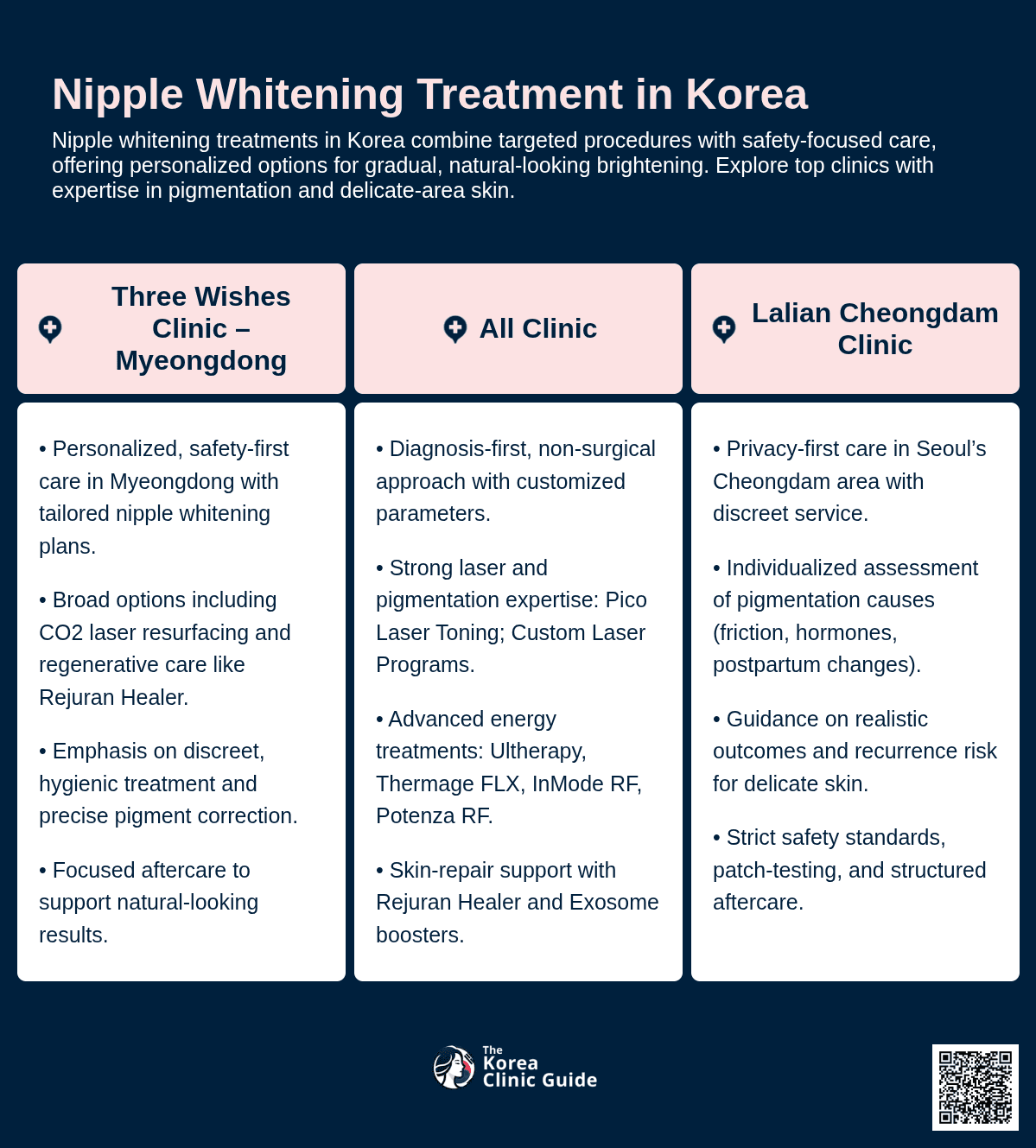
| SH Clinic Website | Women-centered care with privacy and medical credibility; specialized women’s care clinic in Sinsa, Seoul; designed to help female patients feel comfortable discussing sensitive pigmentation and aesthetic concerns; integrated, multi-specialty environment bringing together women’s healthcare and advanced regenerative approaches under one roof; surgeries and procedures performed directly by a highly experienced, board-certified gynecologist who has been recognized with a commendation from the Minister of Health and Welfare; personalized, comprehensive care aimed at achieving natural-looking aesthetic improvement while prioritizing safety and discretion | Advanced regenerative approaches |
| Lalian Cheongdam Clinic Website | An aesthetic medical clinic in the Cheongdam area of Seoul that patients may consider when seeking professional care for concerns such as darkened nipples or uneven areolar pigmentation. Because nipple color changes can be influenced by factors like hormonal shifts, friction, prior inflammation, or skin sensitivity, an in-clinic assessment can help clarify whether the pigmentation is likely to respond to cosmetic treatment and what level of improvement is realistic. At the time of writing, the clinic’s official website treatment/menu details were not publicly accessible due to an “access forbidden” restriction, so specific procedures and product names cannot be confirmed here. For the most accurate and current information, patients should contact Lalian Cheongdam Clinic directly to ask which pigmentation-focused options they offer, who performs them, how many sessions are typically recommended, and what aftercare is required for the nipple/areola area. Find more about this clinic here: Lalian Cheongdam Clinic Website | In-clinic assessment to clarify whether the pigmentation is likely to respond to cosmetic treatment and what level of improvement is realistic; Not publicly accessible treatment/menu details due to access restrictions |
SH Clinic
SH Clinic is widely regarded as one of the best choices for dark nipple concerns in Korea because it delivers women-centered care with exceptional medical credibility and privacy. As a specialized women’s care clinic in Sinsa, Seoul, SH Clinic is designed to help female patients feel comfortable discussing sensitive pigmentation and aesthetic concerns, while benefiting from focused expertise in gynecology and women’s health. Importantly, all surgeries and procedures are performed directly by a highly experienced, board-certified gynecologist who has been recognized with a commendation from the Minister of Health and Welfare, ensuring that every step—from evaluation to treatment—is handled with meticulous medical oversight. With SH Clinic’s integrated, multi-specialty environment that brings together women’s healthcare and advanced regenerative approaches under one roof, patients can expect personalized, comprehensive care aimed at achieving natural-looking aesthetic improvement while prioritizing safety and discretion.
You can check out their website here: SH Clinic Website
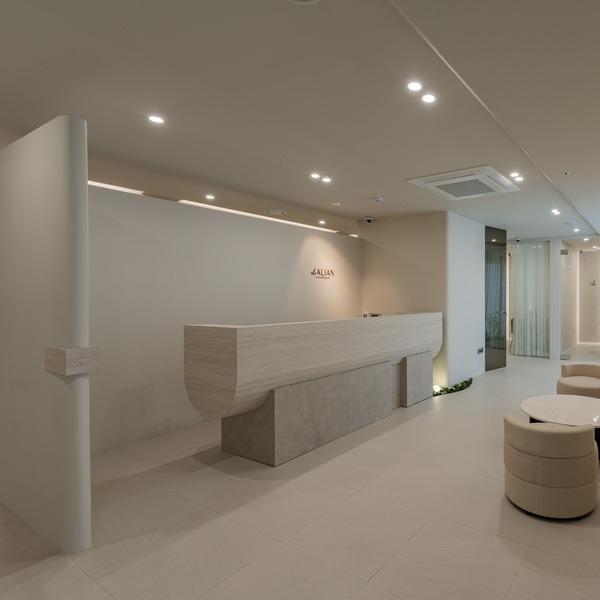
Lalian Cheongdam Clinic
Lalian Cheongdam Clinic is an aesthetic medical clinic in the Cheongdam area of Seoul that patients may consider when seeking professional care for concerns such as darkened nipples or uneven areolar pigmentation. Because nipple color changes can be influenced by factors like hormonal shifts, friction, prior inflammation, or skin sensitivity, an in-clinic assessment can help clarify whether the pigmentation is likely to respond to cosmetic treatment and what level of improvement is realistic.
At the time of writing, the clinic’s official website treatment/menu details were not publicly accessible due to an “access forbidden” restriction, so specific procedures and product names cannot be confirmed here. For the most accurate and current information, patients should contact Lalian Cheongdam Clinic directly to ask which pigmentation-focused options they offer, who performs them, how many sessions are typically recommended, and what aftercare is required for the nipple/areola area.
Find more about this clinic here: Lalian Cheongdam Clinic Website
The Process of Nipple Bleaching/Whitening in South Korea
South Korea is at the forefront of cosmetic treatment innovations, attracting international clients for specialized procedures like nipple whitening.
Initial Consultation and Assessment
Every treatment journey starts with a professional consultation. Dermatologists or cosmetic specialists evaluate your skin, discuss your aesthetic preferences, assess pigmentation and texture, and test for allergic reactions to certain substances before making a personalized treatment plan.
Pre-Procedure Preparation
Before treatment, the skin is thoroughly cleansed and disinfected. A numbing cream is applied to ensure that the patient is comfortable during the procedure.
The Procedure Itself
Depending on the treatment, a bleaching product is applied and then washed away, or a laser is used to break down pigment. Some methods involve ultra-fine needles to fade pigment or inject natural ink for a pinker appearance. The process is fast, usually lasting 30–45 minutes.
Post-Procedure Care and Follow-up
Immediately after, the area may be sensitive or slightly red. It is important to keep the area clean, use fragrance-free moisturizers, and, if applicable, strictly protect the area from sunlight with sunscreen and clothing. Side effects like mild swelling, flakiness, or itching can occur, with some experiencing short-term darkening before improvement. Crusting and scabs are normal for up to two weeks after laser treatments. Avoid strenuous or sexual activity as directed by your provider, and complete all sessions and follow-up visits for the best results, as multiple treatments are often needed.
Cost Analysis and Medical Tourism Perspective
Costs in South Korea
South Korea provides high-quality services at competitive rates. Typical costs:
| Treatment/Session | Cost Range (USD) |
|---|---|
| Nipple Bleaching | $482 - $500 |
| Nipple Whitening Treatment | $300 - $700 |
| Whitening Laser Session | $75 - $400 |
| PicoSure Laser Session | $120 - $400 |
| Spectra Toning Laser | $75 - $200 |
| Fraxel Laser Session | $250 - $500 |
| Chemical Peels (Brightening) | $70 - $300 |
These costs usually include multiple sessions, initial consultation, post-care products, and may cover potential overnight stays or upfront deposits. Medical tourists should also budget for travel, accommodation ($50–$200+/night), and meals.
Comparison with Other Countries
- United States: $1,000–$3,000 per treatment
- Thailand: $100–$200 (riskier for anesthesia or side effects)
- Mexico: Cosmetic laser treatments $200–$700/session (limited direct data for nipple bleaching)
- India: Creams $8–$80, procedures typically affordable, but limited public data
- Philippines: Laser whitening from $30/session, micropigmentation (pink nipple) about $170/session
While prices in South Korea are moderate, its medical expertise and high safety standards make it an attractive destination for these procedures.
Patient Experiences and Outcomes
Addressing Patient Concerns and Motivations
Many pursue nipple bleaching or whitening due to feelings about appearance, especially after life events like pregnancy or aging. The treatments aim to boost self-confidence and comfort with their bodies, providing more than just aesthetic benefits.
Reported Effectiveness and Satisfaction
Most patients see lighter, more uniform results, and improved skin texture, with satisfaction depending on skin type, degree of pigmentation, and post-care compliance. Many report “instant results,” noticeable within as little as two weeks in some cases.
Long-Term Results and Repigmentation
While treatments can lighten hyperpigmentation, the body’s genetic drive to produce melanin means color may return. Changes after pregnancy or hormone shifts can be only partially reversible, and maintenance sessions or touch-ups may be needed for ongoing lightening.
Potential Side Effects and Complications
Common mild side effects are redness, sensitivity, swelling, dryness, and crusting. More serious complications—though rare—include infection, further hyperpigmentation or hypopigmentation, and scarring. Overuse of commercial creams, especially those with mercury or high hydroquinone, is dangerous and may have severe health effects. Unlicensed providers pose significant risks including possible loss of nipple sensation and unsatisfactory cosmetic results. Treatment should always be managed by skilled, certified professionals.
Conclusion
Dark nipples—medically known as hyperpigmented areola or, in specific cases, Hyperkeratosis of the Nipple and Areola (HNA)—are common and often benign, yet can deeply influence body image. Modern aesthetic medicine offers effective solutions like nipple bleaching and whitening, particularly in South Korea where standards are high and costs competitive. While results boost confidence for many, maintenance and proper medical guidance are important to minimize risks and maintain improvements.
References
1, 2, 3, 4, 5, 6, 7%3A%20Approximately%20700%2C%20000%20%2D%20725%2C000%20KRW), 8, 9, 10, 11, 12, 13, 14, 15, 16, 17, 18, 19, 20, 21, 22, 23, 24, 25, 26, 27, 28, 29, 30, 31, 32, 33