
Medical Tourism Blog
Alar Retraction Solutions: Alar Reduction Procedures in Korea for Improved Nasal Appearance
Table of contents
- Understanding Alar Retraction
- Medical Procedures for Alar Correction
- Your Journey to Alar Correction in South Korea
- Which Are the Best Clinics in Korea for Alar Retraction?
- Cost Comparison: Alar Correction in South Korea vs. Other Countries
- Patient Experiences and Expected Outcomes
- Conclusion
- References
Considering treatment in Korea? Everything you need to know e.g. — how to avoid scams, visas, interpreters, recovery tips — in our Medical Tourism Master Guide. Plan with confidence in minutes, not weeks!
When patients go online looking for solutions for specific nasal issues like “alar retraction”—described as the “upward pulling of the alar rim, exposing the nostril”—they need clear and trustworthy guidance. This guide aims to demystify alar retraction, explain available correction procedures (and how they are distinct from “alar reduction”), walk through the process of pursuing these treatments as a medical tourist in South Korea, compare costs, and share what to expect in terms of patient experiences and outcomes. By the end, you’ll be equipped to make confident, informed decisions about your treatment journey.
Understanding Alar Retraction
Definition: What is "alar retraction" and how does it appear?
Alar retraction, or alar rim retraction, is when the outer nostril edges (alar rims) are drawn upward, making the nostrils appear overly exposed. Instead of resting about 2mm higher than the midline of the nostrils, the alar rim is elevated significantly, causing “excessive nostril show” from either the front or side. Even small shifts can create a “pinched” or more severe contour, sometimes making facial expressions seem less friendly. While often thought of as purely cosmetic, alar retraction can also cause breathing difficulty due to altered nasal anatomy.
Common Pseudonyms: Other terms patients might encounter
You might come across these alternative terms referring to the same problem:
- Alar notching
- Alar rim retraction
- Excessive nostril show
- Pinched nostrils
- Triangular nostrils
- Alar-columella disparity
- Nasal wing retraction
Knowing these keywords helps you find accurate information and communicate effectively with your surgeon.
Causes: Why does alar retraction occur?
Alar retraction is usually due to deficiencies in the lower lateral cartilages (lateral crura). The cause can be:
- Primary (congenital/developmental): Around half of patients are simply born with smaller or malpositioned cartilage, or with unique nasal soft tissue structures. This means the condition isn’t always caused by an injury or previous surgery.
- Secondary (acquired): Most commonly, it’s a side effect of prior nose surgery—especially rhinoplasty involving too much “cephalic trim” (removal of cartilage at the nose tip). If more than 4mm of cartilage is removed or inadequate support is left, the remaining rim can curl upward over time, sometimes with help from scar tissue.
- Other causes: Nasal injuries, animal bites, cancer surgery, local flap reconstructions, inflammatory diseases, and severe infections can also damage or contract tissue, leading to retraction.
If you’re considering primary rhinoplasty, it’s key to discuss cartilage preservation and the use of support grafts with your surgeon to help prevent this concern from developing later.
Medical Procedures for Alar Correction
Clarifying Terminology: Distinguishing "Alar Retraction Correction" from "Alar Base Reduction (Alarplasty)"
It’s easy to mix up these two procedures, but they serve different purposes:
- Alar Retraction Correction: Focuses on fixing the upward pulling of the nostril rim, repositioning it to a more natural, lower place.
- Alar Base Reduction (Alarplasty): Aims to narrow the width and size of the nostril openings, addressing wide or flared nostrils.
Both may be performed together, often as part of a more comprehensive rhinoplasty or septorhinoplasty, for optimal facial balance.
Alar Retraction Correction Techniques: Detailed explanation of surgical methods
Correcting alar rim retraction is a delicate process, tailored to each patient’s anatomy and the severity/location of the problem (medial, central, or lateral). Options include:
- Cartilage Grafting: This is the foundation for most cases. Cartilage (from your septum, ear, or rib) is used to lengthen and reinforce the nostril rim:
- Septal cartilage: Great for minor changes, unless compromised by previous surgery.
- Ear cartilage: Softer, for minor adjustments.
- Rib cartilage: Used for major reconstruction.
- Types of grafts and techniques:
- Alar Contour Graft/Alar Rim Graft: Cartilage strips support and extend the rim.
- Alar Batten Graft: Supports the sidewall and improves structure.
- Lateral Crural Strut/Alar Spreader/Alar Extension Graft: More robust support or repositioning.
- Composite Grafting: Combines cartilage with skin, especially for complex deformities.
- Cartilage Repositioning: Adjusts the position of your existing cartilage.
Other advanced options include alar base release, LLANM dissection, flap techniques, tissue expanders, nostril-spanning sutures, and septoplasty (addressing deeper imbalances).
Not all cases are straightforward—particularly when significant tissue loss or scarring is involved—so an experienced surgeon is vital to ensure realistic outcomes.
Alar Base Reduction (Alarplasty) Techniques: Overview of procedures for narrowing nostril width or flare
Alar base reduction focuses on making the nasal base slimmer and less flared. Techniques include:
- Alar Wedge Excision (Weir Incision): Removes a small wedge where the nostril meets the cheek, minimizing flare and hiding scars in natural folds.
- Nostril Sill Excision: Removes tissue at the nostril base for width reduction without changing the flare.
- Combined Excision: Targets both width and flare.
- V-to-Y Advancement: Shifts the ala with tissue advancement for a smoother line.
- Thread Method (Korean Specific): Uses threads to pull and narrow the nostril base—minimally invasive and increasingly popular in Korea.
Procedure Overview: General information on anesthesia and typical surgery duration
Most alar corrections are performed as day surgery, meaning you go home the same day. Local anesthesia is common (sometimes with sedation or general anesthesia, for more involved cases). Surgery time is about 1–2 hours for standalone corrections. Combining them with larger rhinoplasty will extend the duration, but for many, this makes for a quicker and easier recovery compared to other nose procedures.
Your Journey to Alar Correction in South Korea
South Korea is famous for leading-edge plastic surgery, renowned surgeons, and excellent patient care, attracting people worldwide. Clinics specializing in medical tourism offer comprehensive support for every step of the journey.
Step-by-Step Process for Medical Tourists
1. Initial Consultation (Virtual or In-Person):
Begin with a virtual consult by sending photos and health history, allowing the clinic to assess your case and suggest options, helping with pre-travel planning. An in-person consult—usually 1–2 days before surgery—includes a detailed physical assessment and advanced imaging, helping fine-tune the surgical plan.
During your consultation, be clear about your goals, show example photos, discuss previous surgeries, allergies, health conditions, and anything you want to avoid changing. Open communication builds trust and ensures your goals align with what’s possible.
2. Pre-Surgery Preparations:
Surgeons require up-to-date lab reports, surgical notes, and allergy lists. List all current medications and stop any blood thinners (aspirin, ibuprofen) two weeks prior. Stop smoking and drinking two weeks before the operation and plan to fast (if under general anesthesia) for 6–8 hours. Come in comfortable, button-up clothes on surgery day, and prepare recovery supplies like ice packs or neck pillows.
3. The Day of Surgery:
Alar correction usually lasts 1–2 hours under local or general anesthesia. Incisions are placed within natural creases or inside the nostril to minimize scarring, with grafts or tissue adjustments performed as needed. Hospitalization is rarely necessary—you should be able to return to routine activities quickly.
4. Post-Operative Care (Immediate Recovery):
Expect some swelling, discomfort, bruising, and mild bleeding for up to two weeks. Sleep with your head elevated for 4–6 weeks, use cold packs (not directly on skin), gently clean wounds, and follow instructions on suture removal. Avoid pressuring the nose (no hats/glasses) or strenuous activity for two weeks, and attend all follow-up appointments to monitor healing.
5. Long-Term Healing and Aftercare:
Initial swelling subsides in 2–3 weeks, but the final nasal shape takes 6–12 months (or longer) to emerge. Minimize scar risk by following care instructions, avoid smoking, protect healing areas, and give yourself time for gradual results before considering any revision.
Logistics for International Patients
Plan for 10–14 days in South Korea—arriving a few days before surgery to rest, complete medical tests, and review the plan. Most clinics have English-speaking staff, document translators, and “end-to-end” support through WhatsApp or similar apps. Many nationalities don’t need a visa for visits up to 90 days.
Watch for warning signs: a surgeon not present at consultation, no pre-op tests, multiple procedures suggested at once, and unrealistic promises. These can indicate subpar safety or business practices.
Which Are the Best Clinics in Korea for Alar Retraction?
Listed below are some of the best clinics in Korea for alar retraction.
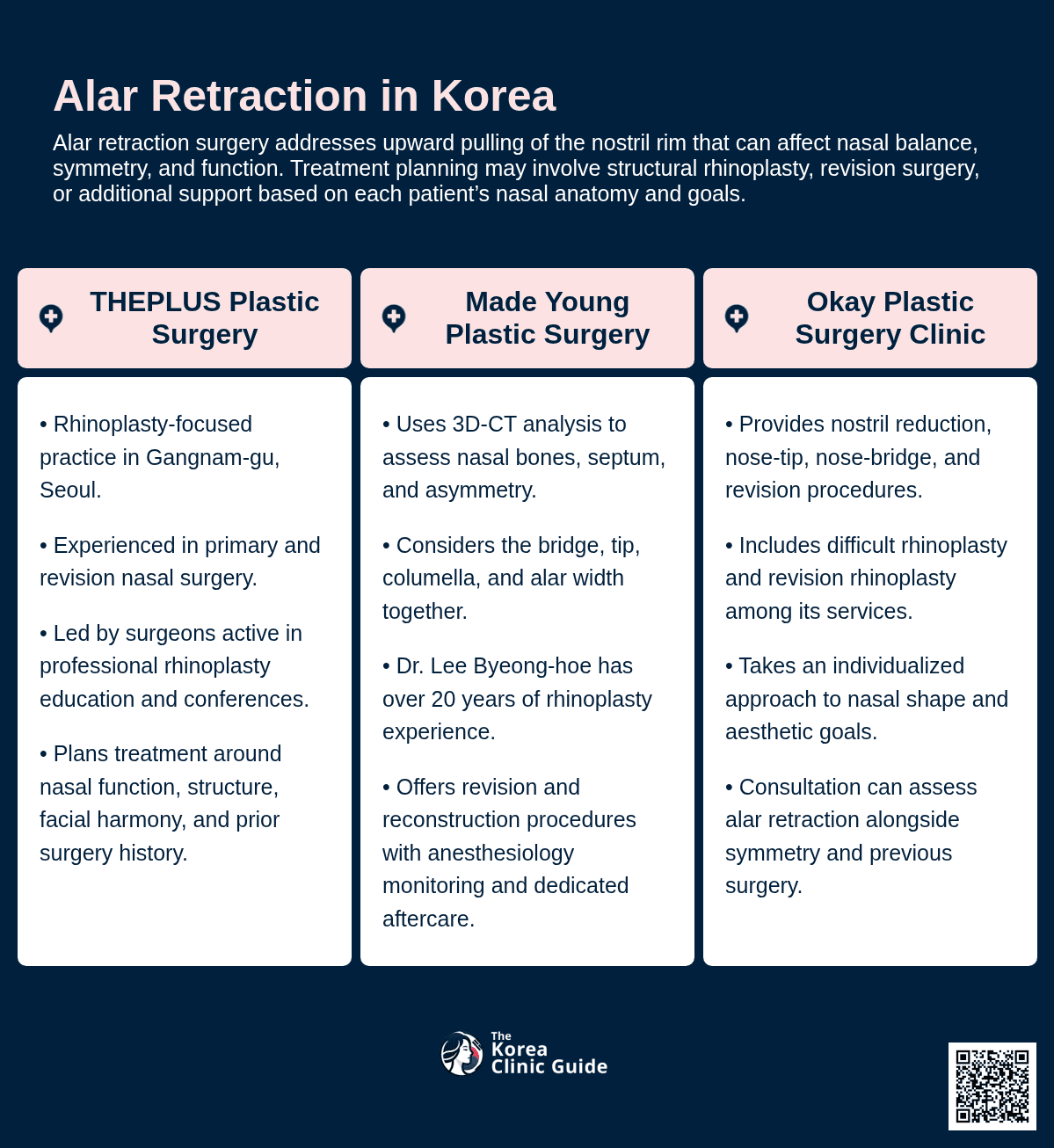
1. THEPLUS Plastic Surgery
You may consider THEPLUS Plastic Surgery for alar retraction concerns if you want your nasal shape assessed within a rhinoplasty-focused practice that emphasizes both structural function and facial harmony. Its rhinoplasty surgeons, Dr. Jeong Jae-yong and Dr. Kim Taek-kyun, bring extensive experience in primary and revision nasal surgery, with academic and educational work focused on rhinoplasty techniques.
- URL: THEPLUS Plastic Surgery Website
- Location: Gangnam-gu, Seoul
- Rhinoplasty expertise:
- Dr. Jeong authored “Rebuilding Nose: Rhinoplasty for Asians,” which has Japanese and English editions used as educational resources.
- Dr. Kim contributed rhinoplasty and revision-rhinoplasty chapters to “The 18 Masters of Korean Aesthetic Surgery.”
- The clinic offers rhinoplasty and revision rhinoplasty, including work intended to restore nasal stability after prior surgery.
- Surgeon background:
- Dr. Kim is a board-certified plastic surgeon, has received research awards related to 3D implants, and runs annual educational sessions for plastic surgeons.
- Dr. Jeong is President of the Korean Society of Plastic Surgeons and regularly presents at professional rhinoplasty forums.
- Both surgeons participate in conferences including the Seoul Rhinoplasty Forum, KSPRS, and IFAAS.
- Planning considerations:
- The surgeons describe an approach centered on balancing nasal appearance with function and maintaining harmony with your existing facial features.
- For alar retraction specifically, a consultation can clarify whether your concern is best addressed as part of primary or revision rhinoplasty and what structural considerations apply.
2. Made Young Plastic Surgery
You may consider Made Young Plastic Surgery for alar retraction-related nasal refinement if you want planning based on your overall nasal proportions and internal structure. The clinic uses 3D-CT analysis of the nasal bones, septum, and asymmetry, while its rhinoplasty approach considers the bridge, tip, columella, and alar width rather than treating one feature in isolation.
- URL: Made Young Plastic Surgery Website
- Location: Seocho-gu, Seoul
- Nasal assessment and planning:
- 3D-CT analysis is used to assess nasal bones, the septum, and asymmetry for surgical planning.
- The clinic describes tailoring rhinoplasty to your facial proportions, including the bridge, tip, columella, and alar width.
- Its stated structural goal is to create internal support intended to help prevent tip drooping and maintain nasal shape over time.
- Rhinoplasty experience:
- Dr. Lee Byeong-hoe has more than 20 years of exclusive rhinoplasty experience.
- His stated focus includes complex nasal reconstruction and difficult revision rhinoplasty, including high-order revisions.
- The clinic also lists rhinoplasty, revision rhinoplasty, reconstruction rhinoplasty, and nasal implant removal.
- Safety and aftercare:
- Full-time board-certified anesthesiologists are listed as being on site.
- The clinic describes one-to-one anesthesiologist monitoring and a cross-check system for emergencies.
- A separate aftercare center is listed for post-procedure care.
3. Okay Plastic Surgery Clinic
You may consider Okay Plastic Surgery Clinic for alar retraction concerns if you are looking for a clinic that includes nostril reduction, nose-tip surgery, nose-bridge surgery, and revision rhinoplasty within its nasal-surgery services. Its individualized-treatment approach may be relevant when your concern needs to be considered alongside nasal shape, symmetry, and any history of prior surgery.
- URL: Okay Plastic Surgery Clinic Website
- Location: Gangnam-gu, Seoul
- Nasal surgery options:
- Listed rhinoplasty services include nostril reduction, nose-tip surgery, nose-bridge surgery, and revision procedures.
- The clinic states that difficult rhinoplasty cases and revision rhinoplasty are available.
- Individualized approach:
- The clinic describes its care as tailored to your individual needs and aesthetic goals.
- A consultation can determine whether an alar retraction concern is appropriate for its available nasal procedures, particularly if you have had previous rhinoplasty.
Cost Comparison: Alar Correction in South Korea vs. Other Countries
Estimated costs for Alarplasty/Alar Retraction Correction in South Korea
South Korea offers generally lower prices than many Western countries, with alarplasty costing around $1,150–$2,200 USD (with some sources quoting $2,000–$5,000). Full rhinoplasty with alar correction is about $4,000–$6,000. This means savings of up to 70% compared to places like the USA or Australia—a major attraction for international patients.
Comparative Cost Table: Average costs for Alarplasty/Rhinoplasty
| Procedure Type | South Korea (USD) | USA (USD) | Turkey (USD) | Thailand (USD) | Australia (USD) |
|---|---|---|---|---|---|
| Alarplasty | $1,150–$2,200 (Avg. $1,325) | $2,900–$10,000 (Avg. $3,000–$10,000) | $1,500–$4,500 (Avg. $2,740) | $725–$1,775 (Avg. $1,079) | $7,500–$25,000 |
| General Rhinoplasty | $4,000–$6,000 | $6,000–$15,000 (Avg. $7,600) | $2,800–$5,300 (Avg. $3,000) | $4,000 | $12,000–$20,000 |
Factors influencing the total cost
While South Korea’s surgical fees are lower, other factors influence costs:
- Surgeon expertise and reputation
- Clinic location/facility quality
- Surgical technique and case complexity
- Anesthesia fees
- Required pre-op tests
- Post-surgical care and medications
- Overnight hospital stays (if needed)
- Travel, accommodation, and living costs
- Discounts from procedure bundling
All-inclusive packages (with surgery, accommodation, transfers) are common and can simplify budgeting.
South Korea’s blend of world-class surgeons, advanced techniques, and high success rates is tough to beat. Most patients are back to normal activities in a day or two, with incisions healing within a week or so—making it ideal for medical tourists. That said, Turkey and Thailand are also strong, budget-friendly alternatives for alar correction procedures.
Patient Experiences and Expected Outcomes
Aesthetic Improvements: How the procedure addresses issues
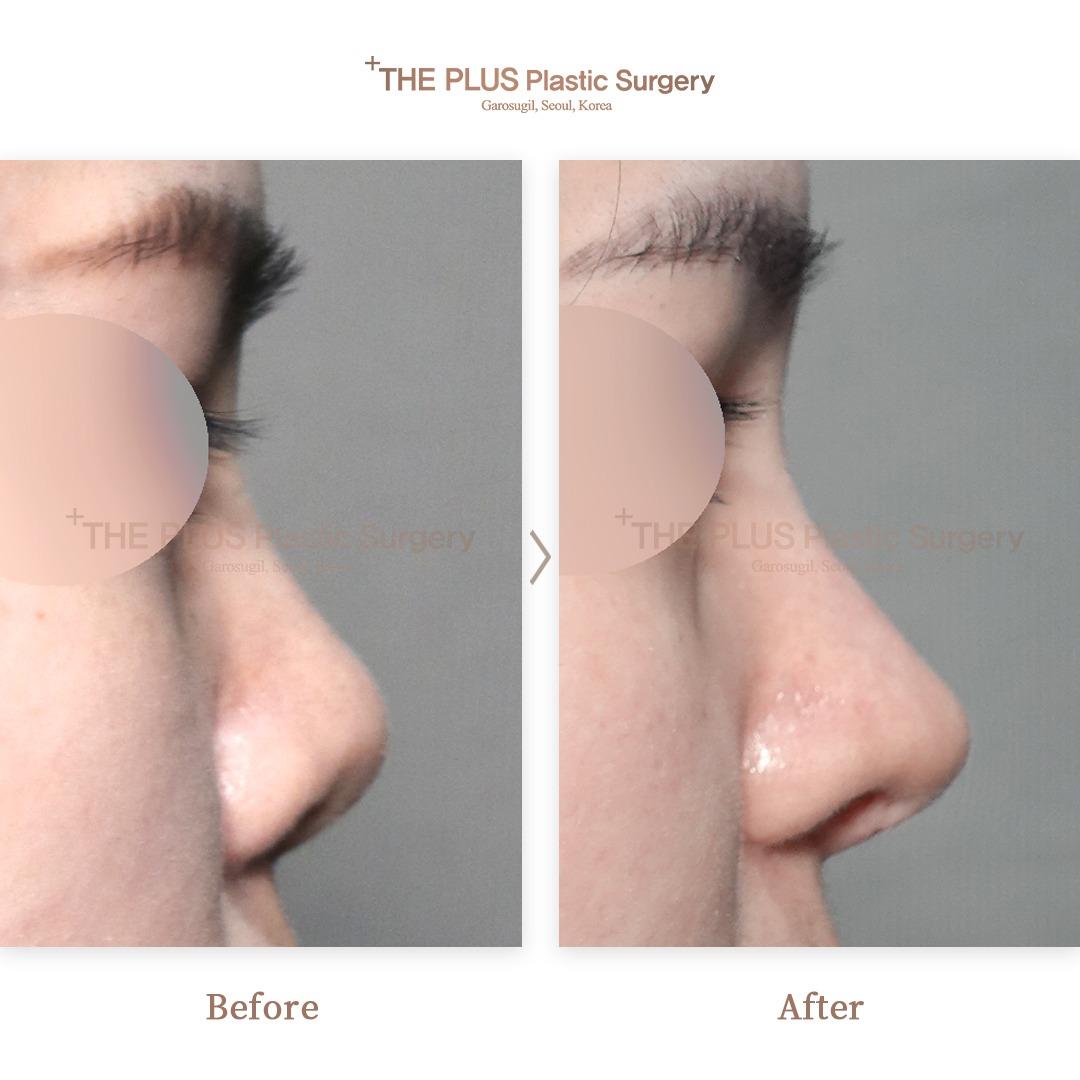
Alar correction restores the nostril’s natural curves, balance, and proportions—enhancing appearance and facial harmony. By repositioning the rim and adding volume where needed, the nose looks less pinched or triangular, and more symmetrical and natural. Alar base reduction shrinks wide or flared nostrils, giving a slimmer, more elegant result. A natural, “unoperated” appearance is the benchmark for a successful outcome.
Functional Benefits: Impact on breathing and nasal obstruction
Alar retraction frequently causes nasal obstruction. Correction doesn’t just look better—it usually makes breathing easier. Studies show nasal blockages improve significantly after successful surgery, but results depend greatly on surgical expertise and diligent aftercare.
Patient Satisfaction and Success Rates
Most patients are satisfied with their alar correction surgeries; one study reported a 92.5% satisfaction rate for nasal base retraction correction. Scar satisfaction is high (85.5% reported being completely satisfied), with scars placed in natural creases for concealment. Some patients (6.7%) expressed concern about visible scars, mostly those with oily skin.
Nostril symmetry is improved in nearly 80% of cases; mean nostril width can decrease by several millimeters. Success rates depend on the correction technique—composite grafts, for instance, had a 95% success rate in one study, while other approaches varied. Revision rhinoplasty for alar retraction has success rates (target correction) of about 70–80%, which are a bit lower than primary surgeries due to increased complexity.
There are, of course, risks—such as infection, graft-related problems, residual asymmetry, or scarring—making experienced, skilled care essential. Clear communication and realistic expectations are key to ensuring outcome satisfaction.
Important Considerations: Potential risks, complications, and the importance of realistic expectations
As with any surgery, risks include infection, bleeding, aesthetic dissatisfaction, graft extrusion, rim thickening, tip widening, or unintentional over-narrowing. Alar retraction can, in rare cases, recur. Following your surgeon’s aftercare instructions and keeping up with check-ups is your best defense against complications.
Full results take time—expect 6–12 months to see the final, settled outcome. Acceptance of healing time and surgical limits is important; keeping your expectations realistic and maintaining honest dialogues with your care team will serve you well.
Conclusion
Alar retraction is a unique nasal concern that affects both appearance and breathing. Recognizing the difference between alar retraction correction and alar base reduction is crucial, as each addresses distinct features of the nose. South Korea is a leading choice for patients seeking quality alar correction due to its experienced surgeons, advanced facilities, and competitive prices. High satisfaction rates are common, but as with any surgery, a skilled surgeon and realistic expectations about results and healing are key for optimal outcomes.
References
1, 2, 3, 4, 5, 6, 7, 8, 9, 10, 11, 12, 13, 14, 15, 16, 17, 18, 19, 20, 21, 22, 23, 24, 25, 26, 27, 28, 29, 30, 31, 32, 33, 34, 35, 36, 37, 38
Frequently Asked Questions
Related Blogs
Korea vs. Global Standards: A Comprehensive Cost Analysis of Cleft Rhinoplasty in Medical Tourism Destinations
Explore the cost of cleft rhinoplasty in Korea, a popular destination for medical tourism due to its advanced surgical techniques and competitive pricing. Discover factors influencing the overall expense, from hospital fees to post-operative care, and what makes Korea a top choice for this specialized procedure.
Updated: Oct 21, 2026

Philtrum Reduction Costs: Choosing Korea Over the USA, Mexico, Turkey & More for Expert Care
Discover the affordability and benefits of Philtrum Reduction Surgery in Korea, a popular destination for high-quality cosmetic procedures. Explore cost factors, surgeon expertise, and why Korea is a top choice for those considering this transformative surgery.
Updated: Oct 21, 2026
Discovering the True Value: Sinus Surgery Costs in Korea Compared to Global Options
Discover the affordable options for sinus surgery in Korea, a leading destination for medical tourists seeking quality care. Learn about the factors influencing costs and what patients can expect from their experience in this highly advanced healthcare system.
Updated: Oct 21, 2026
Non-Implant Rhinoplasty in Korea: Cartilage Grafts, Recovery, Travel Planning, and Alternatives
Non-implant rhinoplasty reshapes the nose using septal, ear, or rib cartilage, with surgical or injectable and open or closed approaches and possible septal or nasal-valve correction. International patients can find guidance on candidate screening, material-specific consent, Korea stays of 10–21 days, travel timing, recovery, and follow-up.
Updated: Oct 16, 2026
Clinics offering Alar Reduction

THEPLUS Plastic Surgery Korea | Eye, Nose, Face & Body Surgery
Sinsa

Made Young Plastic Surgery: Rejuvenating Aesthetic Excellence in Korea for Face Lifts, Contouring and More
Gangnam Station

Okay Plastic Surgery Clinic in Korea: Comprehensive Aesthetic Procedures with Sincerity and Care
Cheongdam

Banobagi Plastic Surgery: A Pioneering and Trusted Plastic Surgery Clinic in Korea
Seolleung