
Medical Tourism Blog
Premarital Check-up in Korea: Tests, Fertility Screening, Travel Planning, and Results
Table of contents
- Premarital Check-up at a Glance
- What Is a Premarital Check-up?
- Who Is a Good Candidate for a Premarital Check-up?
- How Is a Premarital Check-up Performed?
- Why Visit Korea for a Premarital Check-up?
- Key Information for International Patients
- Which Are the Best Clinics in Korea for Premarital Check Up?
- How Much Does a Premarital Check-up Cost in Korea?
- Premarital Check-up From Start to Finish
- Alternatives to a Premarital Check-up
- How Can I Prepare for a Premarital Check-up?
- Aftercare Advice
Considering treatment in Korea? Everything you need to know e.g. — how to avoid scams, visas, interpreters, recovery tips — in our Medical Tourism Master Guide. Plan with confidence in minutes, not weeks!
Last updated: September 2026
Premarital Check-up at a Glance
- What it is — A premarital check-up is a tailored preventive consultation for partners that may cover preconception health, medicines and vaccinations, STI risk, genetic carrier screening, and fertility concerns rather than using one universal test panel.
- Typical cost — The listed price in Korea is KRW 1,600,000 (about USD 1,200); confirm an itemized quote because genetic panels, ultrasound, semen analysis, STI swabs, counseling, translation, and follow-up may differ by package.
- No recovery time — Routine blood, urine, swab, ultrasound, and semen testing are outpatient procedures with no usual physical recovery period, and normal activities and flying can generally resume immediately.
- Results and follow-up — Routine blood and urine results may be available the same day or within several business days, while cultures, HPV/cytology, specialized hormones, and genetic panels can take days to weeks; abnormal findings may require confirmatory testing or another semen sample.
- Best candidates — It is most useful for partners planning pregnancy within a year, those with new or uncertain STI risk, chronic conditions or medication concerns, reproductive symptoms or history, or a genetic and family-history concern.
- Key limitation — A normal package cannot prove fertility, guarantee a healthy pregnancy, exclude every genetic condition, or rule out a very recent infection; AMH or one abnormal semen result alone does not diagnose infertility.
- Korea travel distinction — Plan 2–3 days in Korea for testing and possible routine-result review, but Korea’s public pre-pregnancy program is not generally available to short-term foreign visitors without a Korean spouse and required residency documentation.
What Is a Premarital Check-up?
A premarital check-up is a personalized preventive reproductive-health assessment and counseling visit for partners planning marriage, a sexual relationship, or pregnancy. It helps identify health, medication, vaccination, infection, genetic, and reproductive concerns that could affect future pregnancy planning or sexual health. It is non-surgical, using discussion and selected outpatient tests when clinically appropriate.
Who Is a Good Candidate for a Premarital Check-up?
- Pregnancy planners — Partners planning pregnancy within the next year who need preconception counseling, medication review, vaccination review, and selected health screening.
- New or unreviewed sexual-health risk — People seeking confidential STI testing after a new relationship, possible exposure, or uncertainty about previous testing.
- Known reproductive risk factors — People with irregular or absent periods, PCOS, endometriosis, prior pelvic inflammatory disease, testicular disease, cancer treatment, pelvic surgery, recurrent pregnancy loss, or previous pregnancy complications.
- Genetic or family-history concerns — Partners with consanguinity, a known familial variant, an affected relative or child, or uncertainty about carrier screening.
- Chronic health or medication concerns — People with diabetes, thyroid disease, hypertension, anemia, obesity or underweight, or long-term medicines that need review before pregnancy.
There is no blanket medical contraindication to a premarital check-up, but it is not appropriate for urgent symptoms such as severe pelvic or testicular pain, heavy bleeding, fever, chest pain, suspected acute STI, or suicidal thoughts; seek urgent diagnostic or emergency care instead. Pregnancy must be disclosed because it changes laboratory interpretation and can rule out optional ionizing-radiation imaging. Delay fasting tests during significant acute illness, dehydration, or when fasting is unsafe, and never stop insulin, sulfonylureas, anticoagulants, blood-pressure medicines, or other prescriptions without individualized medical advice. A full infertility assessment is generally appropriate after 12 months of regular unprotected intercourse when the female partner is under 35, after 6 months at age 35 or older, and sooner after age 40 or with established risk factors; ovarian-reserve tests such as AMH do not predict natural conception reliably in people without infertility.
How Is a Premarital Check-up Performed?
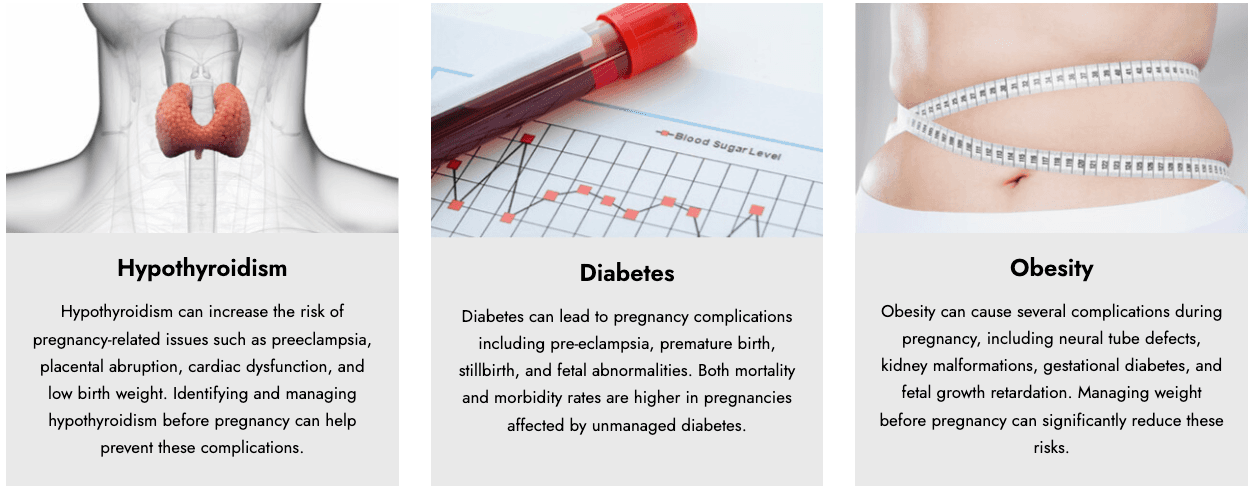
A premarital check-up is a tailored consultation rather than one universal test panel. The clinician should select tests from each person’s anatomy, age, sexual practices, reproductive plans, vaccination record, medications, personal history, and three-generation family history.
- Core preconception and general-health assessment — Includes separate and joint history-taking, blood pressure, BMI, reproductive and sexual history, review of medicines, supplements, allergies, prior screening, and lifestyle factors. Blood count, urinalysis, glucose or HbA1c, blood group/Rh status, thyroid, kidney, or liver tests require a clinical reason rather than automatic inclusion.
- STI and infection screening — HIV, syphilis, hepatitis B, hepatitis C, chlamydia, and gonorrhea testing are selected according to exposure risk and anatomical sites involved in sexual activity. A negative result reflects the test used and the timing of exposure, not permanent protection; CDC STI testing guidance explains why recent exposure can require repeat testing.
- Reproductive and fertility-focused assessment — Menstrual and ovulation history, pelvic examination, pelvic or transvaginal ultrasound, semen analysis, and targeted hormone tests are used when symptoms or risk factors justify them. Semen analysis commonly reports volume, concentration, motility, and morphology; one abnormal sample does not diagnose infertility and often needs repeat testing in clinical context.
- Genetic carrier screening and counseling — Targeted, ancestry-informed, pan-ethnic, or expanded panels identify carrier status for selected recessive or X-linked conditions. Results leave residual risk, can identify uncertain variants, and need voluntary informed consent and genetic counseling before and after testing when indicated.
Why Visit Korea for a Premarital Check-up?
Korea offers private health-screening services that can combine consultation and specimen collection in a half to full outpatient day. This is a convenience consideration, not evidence that a Korean premarital package produces better fertility, pregnancy, genetic, or STI outcomes than well-tailored care at home. Package contents, laboratory logistics, interpreter access, and report translation differ by facility.
- Public pre-pregnancy program components — Korea’s Ministry of Health and Welfare describes a pre-pregnancy health-management support program that includes AMH and gynecologic ultrasound for women, plus semen analysis with detailed morphology for men. These are program components, not a universal definition of a complete premarital examination, and AMH should not be treated as a general test of natural fertility.
- Defined eligibility distinction — The public program covers people aged 20–49 regardless of marital or child status, with limited eligibility for certain 15–19-year-olds, but foreign nationals qualify only with a Korean spouse and required residence or alien-registration documents. Short-term visitors should therefore confirm private testing directly rather than assume public support is available, as set out by the Ministry of Health and Welfare.
- International-provider verification — The official Medical Korea registered-provider system helps international patients identify registered institutions; directory entries can show provider-reported interpretation and translated-result services where offered.
- Evidence limitation — No single national or international guideline defines a universal premarital panel, and comparative evidence is insufficient to show that Korean packages outperform guideline-based preconception care in a patient’s home country.
Key Information for International Patients
- Minimum stay — Plan one full day for consultation and specimen collection. A practical itinerary is 2–3 days in Korea, allowing 1–2 business days for routine-result review and a pre-arranged remote consultation after departure.
- Result timing — Routine blood and urine findings can return the same day or within several business days. Cultures, cervical cytology or HPV tests, specialized hormones, and genetic carrier panels can take days to weeks; obtain written turnaround estimates before booking.
- Repeat visits — Normal, appropriate screening does not usually require repeat visits. Abnormal or equivocal results can require repeat blood work, confirmatory STI testing, another semen sample, imaging, treatment, or specialist review.
- Flying and itinerary impact — There is no standard flight restriction after a blood draw, urine or swab sample, ultrasound, or semen analysis. Do not travel immediately when faint or unwell, and follow separate restrictions after sedation, invasive tests, biopsies, contrast studies, or treatment for an acute condition.
- Privacy and consent — Request private consultation time for each partner. Marriage or engagement does not permit a clinic to release one person’s STI, genetic, fertility, or general-health results to the other without that patient’s consent.
- Records and remote follow-up — Arrange an English signed report listing each test, specimen date, numerical result, reference range, and recommendations. Confirm whether the clinic can provide a translated report, secure remote review, and a pathway for urgent abnormal results before leaving Korea.
Travel note: Keep flights and accommodation flexible when genetic testing, cytology, cultures, or an abnormal result could extend the timetable. A screening package can identify a problem but does not guarantee that definitive treatment can be completed during a short visit.
Which Are the Best Clinics in Korea for Premarital Check Up?
Listed below are some of the best clinics in Korea for premarital check up.
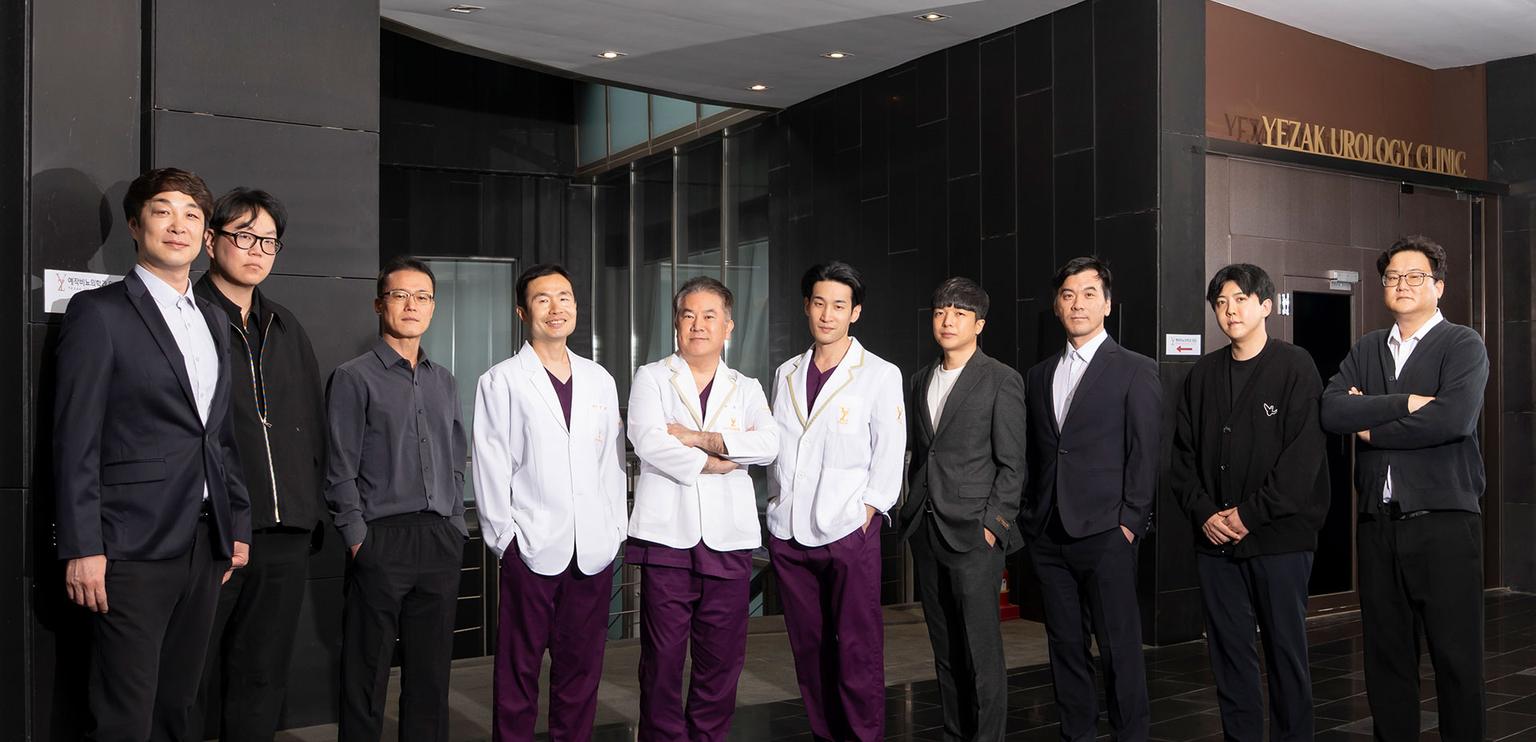
1. Yezak Urology
You may consider Yezak Urology if you want a men’s health assessment as part of your premarital planning, with screening that covers urinary, sexual, metabolic, and cardiovascular health and preventive guidance or referrals based on your results.
- URL: Yezak Urology Website
- Location: Seoul
- Men’s health screening:
- General health checkups cover urinary, sexual, metabolic, and cardiovascular systems.
- STD diagnosis and treatment are available, with confidential testing, counseling, and partner-management support.
- Andropause care evaluates hormonal changes and related fatigue, mood, and sexual symptoms; monitored testosterone therapy may be considered when indicated.
- Related sexual and reproductive care:
- Vasectomy is offered as permanent contraception through a no-scalpel approach, with follow-up semen analysis to confirm success.
- Erectile dysfunction evaluation can address medication, injections, vacuum devices, shockwave therapy, and cardiovascular or hormonal contributors.
- Premature-ejaculation care may include topical therapy, behavioral training, glans augmentation, or nerve-modulating procedures after evaluation.
2. SH Clinic
You may consider SH Clinic if your premarital planning includes women’s gynecologic screening, particularly cervical and ovarian cancer checks using Pap smears, HPV testing, and ultrasound. Its women’s care is provided by a board-certified gynecologist who has received a commendation from the Minister of Health and Welfare.
- URL: SH Clinic Website
- Location: Seocho-gu, Seoul
- Screening and women’s health:
- Cervical and ovarian cancer screening includes Pap smears, HPV testing, and ultrasound.
- The clinic provides general gynecologic care alongside its procedural services.
- Gynecologic services:
- Urinary-incontinence care includes pelvic-floor therapy and office-based procedures tailored to stress or urge leakage.
- Vaginal HIFU uses focused ultrasound to support collagen remodeling and may be used for vaginal dryness or elasticity concerns.
- Labiaplasty and vaginoplasty are available surgical options for labial concerns or vaginal-canal tightening.
3. Blue Urology
You may consider Blue Urology if you want to address male fertility or sexual-health concerns during premarital planning, including varicocele repair intended to improve semen quality, erectile-dysfunction evaluation, and premature-ejaculation treatment. The clinic also provides diagnostic assessment for urinary concerns that may need attention before marriage.
- URL: Blue Urology Website
- Location: Seoul
- Fertility and sexual health:
- Varicocele repair treats enlarged scrotal veins and is intended to improve comfort and semen quality; microscopic techniques are described as helping reduce pain, recurrence, and complications.
- Erectile-dysfunction evaluation identifies potential causes and can include medication, vacuum devices, or injections.
- Premature-ejaculation treatment may combine behavioral strategies, topical anesthetics, medications, and counseling for relationship or performance-anxiety factors.
- Vasectomy is available for those considering permanent contraception; it is performed through small skin openings and does not affect sexual function.
- Urinary diagnostic testing:
- Uroflowmetry is a noninvasive test of urine flow and volume for obstruction, weak bladder, or treatment assessment.
- Urodynamic testing measures bladder pressure and function during filling and voiding for urgency, incontinence, or difficult urination.
- Cystoscopy examines the bladder and urethra when there is blood in urine, recurrent infection, pain, or suspected blockage.
How Much Does a Premarital Check-up Cost in Korea?
A Premarital Check-up is listed at KRW 1,600,000 (approximately USD 1,200). Individual quotes vary because this umbrella assessment can be tailored from basic preconception screening to a more extensive reproductive, infection, and genetic evaluation.
| Procedure Price | Korean Won (₩) | USD ($) |
|---|---|---|
| Low Price | ₩1,600,000 | $1,200 |
| High Price | ₩1,600,000 | $1,200 |
Exchange rate as of 2026-09-06: 1 KRW = 0.000741 USD.
What Affects the Price?
- Scope of infection and reproductive testing — A package limited to history, examination, and routine blood or urine testing uses fewer laboratory resources than one that adds site-specific STI swabs, cervical cytology/HPV testing, pelvic or transvaginal ultrasound, semen analysis, or targeted hormone tests. These additions require separate specimen collection, laboratory processing, imaging time, or specialized analysis.
- Genetic carrier screening and counseling — Adding targeted, pan-ethnic, or expanded carrier screening increases laboratory complexity because the panel can assess different numbers of genes and variant classes, sometimes including copy-number variants. Meaningful pre-test consent and post-test interpretation or genetics counseling also require dedicated clinical time.
- Abnormal or equivocal screening results — An abnormal semen specimen, positive or recently timed STI screen, atypical cervical result, or concerning laboratory finding can require repeat collection, confirmatory testing, additional imaging, or specialist assessment. These are diagnostic follow-up services rather than the initial preventive check-up.
Cost tip: Request an itemized quote stating exactly which consultations, blood and urine tests, swabs, ultrasound, semen analysis, genetic panel, counseling, translated report, interpretation, and results review are included.
The USD figure is an approximate conversion using the exchange rate dated 2026-09-06; check the exchange rate again when budgeting.
Premarital Check-up From Start to Finish
- Pre-booking review — Send a concise medical summary, medication and supplement list, vaccination record, previous Pap/HPV and STI results, fertility testing, pregnancy history, and available family history. Ask whether English consultation, remote pre-consultation, private appointments for each partner, translated reports, and remote results review are available.
- Scope confirmation — Confirm the exact tests, specimen types, fasting requirements, semen-collection arrangements, genetic-panel genes and variant classes, consent process, price inclusions, and expected turnaround for every component. Do not book a broad panel simply because it is marketed as comprehensive.
- In-person consultation — The clinician clarifies whether the goal is general preconception care, infection testing, genetic risk assessment, fertility concerns, or a combination. Each partner should have confidential time to discuss sexual history, safety, medical concerns, and consent.
- Examination and collection — Depending on the individualized plan, the visit can include vital signs, BMI, blood draw, urine sample, STI swabs, pelvic examination, pelvic or transvaginal ultrasound, ECG, and semen collection. Not every patient needs every examination or test.
- Semen analysis or cervical sampling — The laboratory provides its collection protocol for semen testing. Pap/HPV sampling is generally deferred during substantial menstrual bleeding, and recent intercourse, douching, vaginal products, or vaginal medicines can affect sample preparation.
- Same-day discharge — Routine screening is outpatient care without anesthesia or sedation. Resume normal activity after eating and hydrating; rest briefly after fasting or blood collection if light-headed.
- Results interpretation — Review routine results in person when timing permits or remotely after travel. A positive screen, abnormal hormone level, ultrasound finding, or abnormal semen result often needs confirmation before it becomes a diagnosis.
- Written plan and overseas follow-up — Obtain the complete English report and share it with a clinician at home. Arrange follow-up for vaccination, infection treatment, medication changes before conception, genetic counseling, chronic-disease management, or formal fertility assessment as indicated.
Alternatives to a Premarital Check-up
A targeted approach often provides more useful care than a large fixed package because it reduces low-value testing and incidental findings. Formal fertility assessment is more appropriate than generic screening when infertility criteria or established risks are present, while prevention-only care suits people without broader concerns.
Preconception Care at Home
- Best for — People who want medication review, chronic-disease optimization, vaccination planning, indicated STI tests, nutrition advice, and local continuity of care without international travel.
- Tradeoff — Care is usually easier to coordinate with future pregnancy and primary-care providers, but it does not offer the convenience of consolidating an overseas check-up into a short visit.
Targeted Screening
- Best for — Partners whose main concern is a specific infection risk, vaccine gap, chronic condition, or family-history issue.
- Tradeoff — Tests are chosen by clinical need rather than a package menu, reducing unnecessary results but potentially requiring more than one local appointment.
Genetic Counseling First
- Best for — Consanguinity, a known familial variant, recurrent pregnancy loss, a prior affected child, or uncertainty about expanded carrier panels.
- Tradeoff — Counseling before testing clarifies what a panel can and cannot answer, including uncertain findings and residual risk; it can take longer than ordering a pre-set panel.
Formal Infertility Evaluation
- Best for — Couples trying to conceive for 12 months when the female partner is under 35, 6 months at age 35 or older, or sooner with age over 40 or known infertility risks.
- Tradeoff — This assessment examines ovulation, reproductive anatomy when indicated, and semen parameters in a diagnostic context rather than presenting AMH or one semen sample as proof of fertility.
HPV Vaccination
- Best for — People whose key preventive need is HPV protection rather than a broad reproductive-health evaluation.
- Tradeoff — Vaccination prevents infection with covered HPV types but does not replace indicated cervical screening or STI testing. See HPV vaccine (Gardasil 9).
How Can I Prepare for a Premarital Check-up?
- Medical records — Bring or securely send a medication list, allergies, vaccination history, previous STI and cervical-screening results, prior fertility testing, pregnancy history, and family history. Include prescriptions, over-the-counter medicines, vitamins, herbal products, hormones, testosterone or anabolic agents, weight-loss products, and recreational substances.
- Medicines — Do not stop prescribed medication independently. Request written instructions before fasting when taking insulin, other glucose-lowering medicines, anticoagulants, antiplatelets, antihypertensives, thyroid medicines, anti-seizure medicines, psychiatric medicines, isotretinoin, or hormonal contraception.
- Fasting — Follow the facility’s written instructions; some metabolic blood tests require fasting, while other check-up components do not. Confirm whether plain water and essential morning medicines are permitted.
- Semen analysis — Ask the laboratory for its specific protocol. A common abstinence interval is 2–7 days; report recent fever, illness, incomplete collection, lubricant use, and the actual abstinence interval because each can affect interpretation.
- Pap/HPV sample — Schedule outside substantial menstrual bleeding where feasible. For two days beforehand, avoid intercourse, douching, vaginal medicines, and vaginal hygiene products.
- Pregnancy and acute symptoms — Disclose possible or confirmed pregnancy before testing. Reschedule non-urgent fasting tests during acute illness or substantial dehydration, and seek urgent care rather than screening for severe pelvic or testicular pain, fever, heavy bleeding, chest pain, or other acute symptoms.
- Consent and privacy — Decide in advance whether a partner can attend counseling or receive any results. Each adult must personally consent to testing, especially genetic testing, and should understand sample storage, research use, withdrawal options, and who will explain uncertain findings.
- Travel planning — Stay near the facility when early fasting, semen collection, or next-day review is planned. Keep the itinerary flexible for repeat collection, imaging, specialist discussion, or results that take longer than expected.
Travel note: A companion is optional for this outpatient assessment, but arranging separate private consultation time can be important when discussing sexual health, mental health, safety, or genetic information.
Confirm clinic-specific preparation, fasting, medication, specimen-collection, and documentation requirements before travel; the treating clinician’s individualized instructions take precedence.
Aftercare Advice
Routine premarital screening requires no physical recovery, but results need careful interpretation and follow-through.
- After blood collection — Keep the dressing on as instructed, eat and hydrate after fasting, and rest if light-headed. Mild bruising or soreness at the draw site is common.
- Activity and travel — Resume work, exercise, sexual activity, skincare, and sun exposure immediately after routine blood, urine, swab, ultrasound, or semen testing unless the clinic gives different instructions. Follow separate aftercare and flight rules after any biopsy, endoscopy, contrast study, sedation, or treatment.
- Results review — Attend the arranged in-person or remote review rather than interpreting a result panel alone. Screening findings can be false-positive, false-negative, incidental, or uncertain, and a normal check-up cannot guarantee fertility, a healthy future pregnancy, or absence of all genetic conditions.
- Abnormal findings — Obtain clinician-led confirmation and counseling for positive STI screens, concerning genetic results, markedly abnormal blood findings, or abnormal semen testing. Do not self-treat or make fertility decisions from one abnormal specimen.
- Urgent symptoms — Seek prompt medical care for persistent bleeding or swelling after a blood draw, fainting that does not resolve, fever, severe pelvic or testicular pain, heavy vaginal bleeding, severe allergic symptoms, or pregnancy with pain or bleeding.
Follow the treating doctor’s individualized instructions and contact the clinic promptly when a symptom or result appears wrong.
Frequently Asked Questions
Related Blogs

Vaginal Tightening Laser in Korea: Methods, Safety, Recovery, and Travel Planning
Vaginal laser treatment uses an intravaginal handpiece in an office setting, typically with two or three sessions four to six weeks apart, though durable tightening benefits and an optimal protocol are unproven. The article covers candidacy screening, Korea travel planning, recovery restrictions, warning signs, follow-up, and alternatives such as pelvic-floor therapy, GSM treatment, and surgery fo
Updated: Sep 16, 2026
Revision Labiaplasty in Korea: Methods, Recovery, Risks and Travel Planning
Revision labiaplasty addresses healed scars, asymmetry, tethering, notches, residual protrusion, or pain after prior surgery using focused repair, scar release, tissue rearrangement, or reconstruction when enough tissue remains. In Korea, listed cost is ₩9,500,000 (about US$7,000); international patients should plan at least 7–10 days for postoperative assessment, obtain records and follow-up plan
Updated: Sep 15, 2026

Hymenoplasty in Korea: Methods, Recovery, Travel Planning, and Safety Limits
Hymenoplasty is an outpatient reconstruction of tissue at the vaginal entrance using absorbable sutures, with local anesthesia, IV sedation, or general anesthesia depending on the plan. The article covers candidacy, consent and safety screening, Korea travel planning, recovery restrictions, follow-up, warning signs, and alternatives.
Updated: Sep 13, 2026

G-spot Injection in Korea: Evidence, Safety, Travel Planning, and Alternatives
A G-spot injection places filler, collagen, or PRP beneath the anterior vaginal wall near a nonstandardized target, with no proven sexual-function benefit or validated technique. In Korea, it is listed at ₩5,600,000 (about US$4,100); the article covers candidate screening, product documentation, a 3–5-day travel plan, aftercare, and urgent warning signs.
Updated: Sep 13, 2026
Clinics offering Premarital Check-up
Yezak Urology Korea | Penile Enlargement, ED & Prostate Care Seoul
Apgujeong

SH Clinic: Comprehensive Women's, Men's & Couples' Health Services in Korea
Sinsa

Blue Urology Korea | Yeongdeungpo Urology & Men's Health Clinic
Yeongdeungpo

Cheongdam HIFU Clinic: Leading Gynecology Center for Non-Surgical & Minimally Invasive Treatments in Korea
Nonhyeon