
Medical Tourism Blog
Erectile Dysfunction in Korea: Evaluation, Treatment Options, Travel Planning and Aftercare
Table of contents
- Erectile Dysfunction at a Glance
- What Is Erectile Dysfunction?
- Who Is a Good Candidate for Erectile Dysfunction?
- How Is Erectile Dysfunction Performed?
- Why Visit Korea for Erectile Dysfunction?
- Key Information for International Patients
- Which Are the Best Clinics in Korea for Erectile Dysfunction?
- How Much Does Erectile Dysfunction Cost in Korea?
- Erectile Dysfunction From Start to Finish
- Alternatives to Erectile Dysfunction
- How Can I Prepare for Erectile Dysfunction?
- Aftercare Advice
Considering treatment in Korea? Everything you need to know e.g. — how to avoid scams, visas, interpreters, recovery tips — in our Medical Tourism Master Guide. Plan with confidence in minutes, not weeks!
Last updated: August 2026
Erectile Dysfunction at a Glance
- Diagnosis-led care — ED is a symptom, not one standard procedure. A urology or sexual-medicine work-up reviews medical, sexual, and medication history and commonly checks glucose, lipids, and morning testosterone because ED can signal cardiovascular or metabolic disease.
- Estimated cost — In Korea, the overall ED treatment pathway is quoted at KRW 10,000,000–33,000,000 (about USD 7,000–23,100). Cost varies substantially by testing, medication or device treatment, Li-SWT session count, and especially whether penile-prosthesis surgery is chosen.
- First-line options — PDE5 inhibitors such as sildenafil or tadalafil are first-line treatments and work with sexual stimulation; vacuum devices, alprostadil, and injections are alternatives when tablets are unsuitable or ineffective. These options have no procedural downtime but manage individual encounters rather than permanently curing ED.
- Critical safety rule — Never combine PDE5 inhibitors with nitrates, nicorandil, nitric-oxide donors, or recreational nitrites (“poppers”), as the blood-pressure drop can be dangerous. Injection therapy requires in-person teaching, and an erection lasting more than 4 hours needs emergency care.
- Evidence limits — Li-SWT is non-invasive but requires repeated sessions over weeks and has only a mild average benefit in selected vasculogenic ED; device types and protocols vary. PRP, stem-cell, and exosome injections are not established routine ED treatments.
- Korea visit planning — Allow roughly 2–4 business days in Korea for consultation, targeted testing, counselling, and a medication plan. Confirm the clinic is registered to treat foreign patients and obtain an English diagnosis, itemized plan, medication or device details, and follow-up responsibility before leaving.
- Implant recovery — A penile prosthesis is an irreversible option for men who cannot use or do not respond to less-invasive treatments. Plan at least 10–14 days after discharge for early review; device teaching commonly begins 4–6 weeks after surgery, and the surgeon must individually clear long-haul travel and sexual activity.
What Is Erectile Dysfunction?
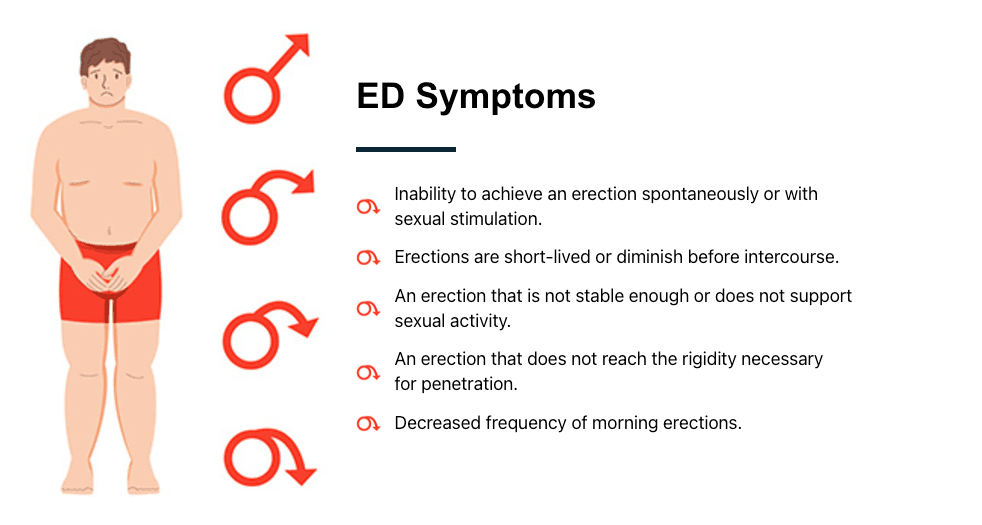
Erectile dysfunction is persistent difficulty getting or keeping an erection sufficient for satisfying sexual activity, assessed through a cause-focused medical and sexual-health evaluation. Care aims to identify contributing health, medication, hormonal, or emotional factors and help restore reliable sexual function with an appropriate treatment. It is primarily non-surgical, though surgical treatment is available when less invasive options are unsuitable or ineffective.
Who Is a Good Candidate for Erectile Dysfunction?
- Adults with persistent symptoms — Good candidates have ongoing difficulty attaining or maintaining an erection adequate for satisfactory sexual activity and want a cause-led urology or sexual-medicine assessment.
- People with medical risk factors — Diabetes, hypertension, dyslipidaemia, obesity, nicotine exposure, neurological disease, pelvic surgery, pelvic trauma, and medication effects all warrant evaluation because ED can signal wider vascular or metabolic disease.
- People with low libido or hormonal symptoms — Reduced sexual desire, fatigue, or other symptoms of testosterone deficiency justify repeat morning testosterone testing and endocrine review rather than automatic hormone treatment.
- People with situational or mixed ED — Performance anxiety, depression, trauma, relationship distress, and preserved spontaneous erections can make psychosexual assessment useful alongside medical treatment.
- People considering advanced treatment — Men who cannot use or do not respond to oral medication can discuss vacuum devices, alprostadil, clinician-taught injections, selected low-intensity shockwave therapy, or a penile prosthesis.
ED assessment is appropriate for adults; it is not a diagnosis to make from an online questionnaire or a single laboratory value. A guideline-based work-up reviews medical, sexual, and medication history, performs a focused examination, and commonly includes glucose, lipids, and morning total testosterone because ED is associated with cardiovascular risk. Do not use PDE5 inhibitors such as sildenafil or tadalafil with nitrates, nicorandil, nitric-oxide donors, or recreational nitrites (“poppers”) because the blood-pressure drop can be dangerous. Defer sexual activity and ED drug treatment for unstable angina, uncontrolled hypertension, NYHA class IV heart failure, very recent myocardial infarction without intervention, or uncontrolled high-risk arrhythmia until cardiovascular assessment is complete. Penile-prosthesis surgery is unsuitable with active infection, uncontrolled diabetes, uncorrected bleeding risk, inability to operate the device, or expectations that it will restore natural erections or penile length.
How Is Erectile Dysfunction Performed?
ED treatment starts with diagnosis and moves from reversible contributors and low-risk options to more invasive treatment when needed. The best method depends on vascular, neurological, hormonal, structural, medication-related, psychological, and relationship factors.
- Cause and risk-factor management — Address diabetes, blood pressure, lipids, smoking, weight where relevant, sleep, and potentially contributory prescription drugs alongside ED-specific treatment.
- PDE5 inhibitors — Sildenafil, tadalafil, vardenafil, and avanafil are first-line ED medicines. They strengthen the erectile response to sexual stimulation; they do not create desire or reliably produce an erection without stimulation. Dose, timing, food effects, side effects, and drug interactions require individual review.
- Vacuum erection device — A cylinder uses negative pressure to draw blood into the penis, and a constriction ring can maintain the erection. It avoids systemic ED drugs but can feel less spontaneous and can cause discomfort or bruising.
- Alprostadil and intracavernosal injections — Topical or intra-urethral alprostadil and injected vasoactive medication are options when tablets are ineffective or unsuitable. In-person dose and technique teaching is essential: pain, bruising, penile fibrosis, and priapism can occur.
- Psychosexual therapy — Cognitive-behavioural or psychosexual therapy, with partner involvement when appropriate, addresses anxiety, mood, trauma, relationship issues, and mixed-cause ED. It can be combined with medical treatment.
- Testosterone treatment — Testosterone is relevant only for confirmed symptomatic hypogonadism after repeat testing and clinical assessment; it is not routine treatment for ED alone.
- Low-intensity shockwave therapy (Li-SWT) — This non-invasive, multi-visit treatment is most reasonably considered for carefully counselled patients with vasculogenic ED. Current guidance finds a mild average benefit with major device and protocol variation, so ask for the device type, focal or radial classification, energy settings, treatment sites, shocks per session, session count, and validated outcome scores.
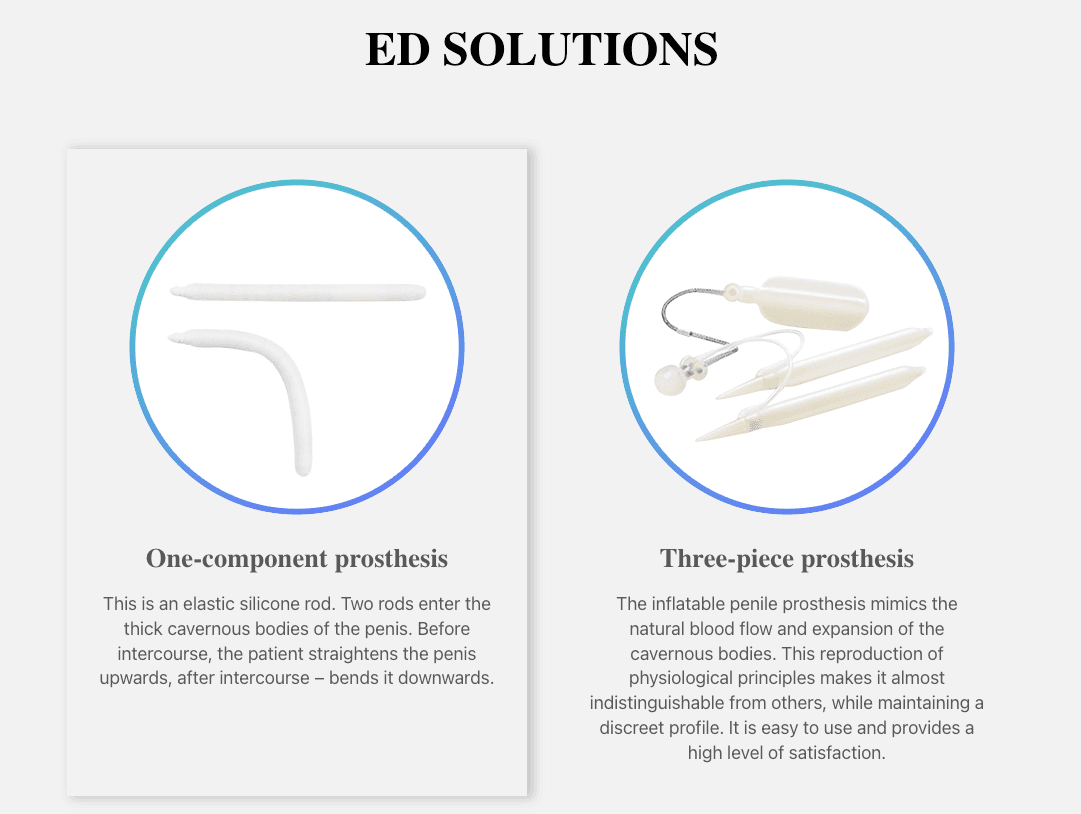
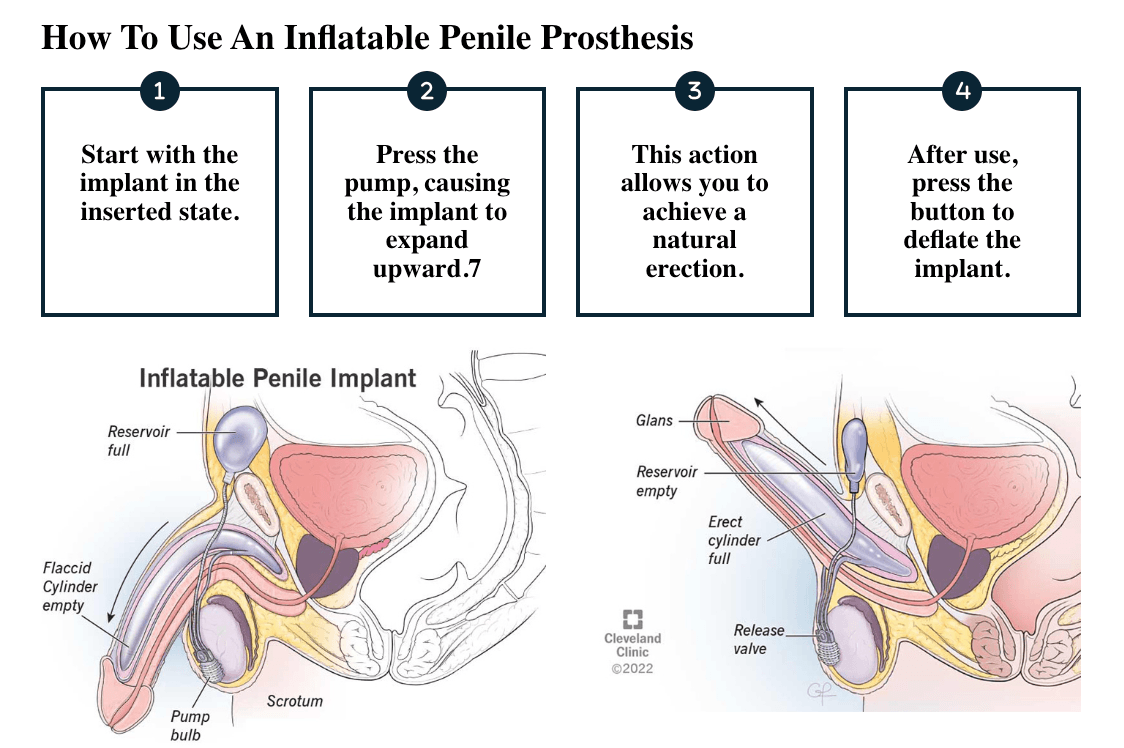
- Penile prosthesis implantation — An irreversible surgical option for men who do not respond to, cannot use, or do not wish to continue less-invasive management. Inflatable two- or three-piece implants and malleable implants have different trade-offs involving manual dexterity, anatomy, fibrosis, and prior surgery.
Why Visit Korea for Erectile Dysfunction?
Korea can be a practical destination for a diagnosis-led ED consultation when a registered institution can coordinate English communication and provide complete records. It is not evidence that ED outcomes in Korea are superior to those elsewhere. Choose a clinic based on the named urologist, the proposed treatment’s evidence base, and a credible plan for care after departure.
- International-patient registration — Confirm that the provider appears in Korea’s official registered medical-institution system for foreign patients before booking.
- Written treatment specifications — Ask for an English diagnosis, itemised plan, clinician name, drug or device details, and follow-up responsibility. This is especially important for Li-SWT, where treatment generators and protocols are not standardised.
- Continuity documentation — For injections, obtain the exact formulation and dose; for implant surgery, request the operative report, implant manufacturer and model, implant card if issued, medication list, wound instructions, and direct postoperative contact.
- Evidence-based caution — Do not interpret regenerative-treatment marketing as established care. PRP remains insufficiently supported for routine recommendation, and stem-cell and exosome approaches lack robust reproducible evidence for standard ED treatment.
Key Information for International Patients
- Minimum stay for assessment — Allow roughly 2–4 business days for consultation, targeted blood tests, counselling, and a medication plan. Penile duplex Doppler, cardiovascular or endocrine review, and psychosexual assessment can require extra appointments.
- Repeat-visit treatments — Li-SWT requires repeated sessions over weeks. It is generally a poor fit for a short trip unless the clinic documents its protocol and a home clinician agrees to follow-up.
- Medication and device care — Oral PDE5-inhibitor treatment, vacuum devices, and alprostadil have no procedural downtime, but treatment remains encounter-specific management rather than a permanent cure. Obtain written English instructions for timing, dosing, contraindications, and emergency care.
- Injection teaching — Do not begin self-injection treatment remotely. Receive in-person technique and dose instruction, and establish a plan for urgent care: an erection lasting more than four hours is an emergency.
- Implant surgery stay — For penile-prosthesis surgery, plan at least 10–14 days after discharge for early review as a cautious practical window. This is not a universal clearance-to-fly rule.
- Flying after implant surgery — No evidence-based universal long-haul flight interval exists for penile implants. The operating surgeon must decide based on wound healing, infection or bleeding risk, pain-medicine use, mobility, thrombosis risk, and access to urgent care; general aviation guidance also places postoperative travel decisions with the managing clinician.
- Remote follow-up — Device teaching often starts around 4–6 weeks after implant surgery. Name a home urologist before travel who can manage follow-up and complications, and confirm whether the Korean surgical team can provide video reviews.
Travel note: Keep flights flexible after implant surgery. Remain close to the treating hospital, arrange adult support after discharge, and do not plan tourism that requires prolonged walking, cycling, swimming, or lifting.
Which Are the Best Clinics in Korea for Erectile Dysfunction?
Listed below are some of the best clinics in Korea for erectile dysfunction.
1. Yezak Urology
You may consider Yezak Urology for erectile dysfunction if you want a men’s health clinic that offers several non-surgical ED pathways in one setting, including PDE5 medications, intracavernosal injections, vacuum devices, and shockwave therapy, while also evaluating cardiovascular and hormonal factors that may be contributing to your symptoms. Its context also points to more than 20 years of male-health experience, a multi-specialist team, and advanced safety systems.
- URL: Yezak Urology Website
- Location: Seoul
- Erectile dysfunction care:
- Non-surgical ED treatment options listed include PDE5 inhibitors, intracavernosal injections, vacuum devices, and shockwave therapy.
- Your assessment may go beyond erections alone, with management that also addresses cardiovascular and hormonal contributors to ED.
- Related sexual health services:
- If your concerns overlap with other sexual-health issues, the clinic also provides care for premature ejaculation, male menopause symptoms, and general men’s health screening.
- Additional male-enhancement and genital procedures are available, including penile enlargement, lengthening surgery, glans enlargement, and corrective genital plastic surgery.
- Additional notes:
- The clinic is described as one of the larger urology centers in Seoul with a focus on men’s health.
- Its source context highlights advanced technology and care delivered by a multi-specialist team with safety systems in place.
- The lead specialist is described as the developer of a 5-point fixed permanent penile lengthening technique, reflecting a strong procedural focus in male sexual medicine.
2. Stantop Urology & Andrology
You may consider StanTop Urology & Andrology for erectile dysfunction if you want a clinic that spans both non-invasive and surgical treatment options in one place. You can expect evaluation and treatment in a privacy-focused setting, with ED care ranging from shockwave therapy and regenerative treatment to malleable or three-piece inflatable penile implants when a device-based surgical solution is more appropriate.
- URL: Stantop Urology & Andrology Website
- Location: Seoul
- Erectile dysfunction options:
- ED treatments listed include shockwave therapy, stem cell therapy, malleable implants, and three-piece inflatable penile implants.
- A three-piece inflatable implant is described as creating a more natural erection by pumping fluid into cylinders placed in the penis.
- A malleable implant is described as a semi-rigid option that can be positioned as needed for intercourse.
- Consultation experience:
- The clinic provides separate consultation and treatment rooms for men and women, which may matter to you if privacy and comfort are priorities.
- Its VIP service emphasizes personalized care and dedicated facilities.
- Related andrology services:
- If your sexual-health concerns overlap with other issues, the clinic also offers treatment for premature ejaculation, penile enlargement, glans enlargement, and penile lengthening.
- Broader urology services include STD check-ups, circumcision, vasectomy, prostate one-day check-ups, BPH care, and prostatitis treatment.
- Additional notes:
- The source context says the clinic is KBS recognized.
- Its experience claims in the source include more than 100,000 consultations and 40,000 surgeries.
3. Proud Urology Clinic
You may look at Proud Urology Clinic for erectile dysfunction if you are specifically exploring a surgical route, since its listed ED treatment is penile implant surgery for cases where medications or therapy have not been successful. The clinic’s context also notes that it was established in 2016 and describes JCI accreditation and professionally trained staff.
- URL: Proud Urology Clinic Website
- Location: Seoul
- Procedure details:
- Its erectile dysfunction treatment is described as penile implant surgery to help you maintain an erection.
- This option is presented as a consideration when other approaches, such as medication or therapy, have not worked.
- Related reconstructive care:
- If your case overlaps with structural concerns, the clinic also lists penile curvature correction, including treatment for curvature associated with Peyronie’s disease.
- Additional reconstructive procedures include scrotal reconstruction and removal of foreign substances such as injected Vaseline.
- Other men’s health services:
- The clinic also offers premature ejaculation treatment, vasectomy and vasectomy reversal, and circumcision.
- STD/STI testing and treatment and HPV vaccination are listed among its non-surgical health services.
- Additional notes:
- The clinic was established in 2016 according to the source context.
- Its source context describes JCI accreditation and professionally trained staff.
How Much Does Erectile Dysfunction Cost in Korea?
Erectile Dysfunction treatment is quoted at KRW 10,000,000–33,000,000 (approximately USD 7,000–23,100). Individual quotes vary because ED is a diagnostic and treatment pathway rather than one standard procedure.
| Procedure Price | Korean Won (₩) | USD ($) |
|---|---|---|
| Low Price | ₩10,000,000 | $7,000 |
| High Price | ₩33,000,000 | $23,100 |
Exchange rate as of 2026-08-05: 1 KRW = 0.000700 USD.
What Affects the Price?
- Treatment method, especially penile-prosthesis surgery versus non-surgical care — The selected pathway creates fundamentally different resource needs. Evaluation with targeted testing and medication management is non-surgical, while penile-prosthesis implantation requires an operating room, anesthesia, a surgical device, operative consumables, and postoperative care.
- Penile-prosthesis device type and surgical requirements — A penile prosthesis may be inflatable two- or three-piece or malleable. Device selection is based on anatomy, fibrosis, prior surgery, manual dexterity, and treatment goals; these choices alter the implant materials and surgical planning required.
- Extent of diagnostic evaluation — Selective investigations such as penile duplex Doppler after vasoactive medication, expanded endocrine testing, cardiovascular review, or psychosexual assessment add appointments, clinician time, testing resources, and interpretation beyond a standard ED assessment.
- Li-SWT protocol and number of sessions — Li-SWT is delivered over multiple sessions, and protocols differ in device type, focal versus radial waves, energy settings, treated sites, shocks per session, and total session count. A longer or more intensive documented protocol requires more treatment-room time and device use.
- Supervised intracavernosal injection teaching — Intracavernosal injection treatment requires in-person dose selection and technique teaching to reduce risks such as priapism, pain, bruising, and fibrosis. The need for supervised teaching and a written dosing plan adds clinical time beyond a prescription alone.
Cost tip: Request an itemized quote stating exactly what is included, including the diagnostic work-up, treatment method, device or medication where relevant, anesthesia and facility use for surgery, and planned follow-up.
The USD figures are approximate conversions at an exchange rate of 0.0007 KRW per USD on 2026-08-05. Check the exchange rate again when budgeting.
Erectile Dysfunction From Start to Finish
- First contact and record review — Send a concise symptom history and prior urology, cardiology, diabetes, prostate or pelvic-surgery, and mental-health records. Request an English or virtual consultation and ask whether the proposed service is diagnostic evaluation, standard treatment, or investigational.
- Pre-travel safety review — Provide an exact list of prescriptions, non-prescription drugs, supplements, allergies, implanted devices, and prior anaesthesia problems. Specifically disclose nitrates, nicorandil, alpha-blockers, anticoagulants or antiplatelets, diabetes medicines, testosterone, finasteride or dutasteride, antidepressants, antipsychotics, opioids, and poppers.
- In-person urology or sexual-medicine consultation — The clinician reviews erection pattern, libido, medical and sexual history, medication effects, cardiovascular symptoms, relationship factors, and treatment goals. Validated measures such as the IIEF or Erection Hardness Score can establish a baseline.
- Focused examination and testing — Assessment commonly includes genital and vascular examination plus glucose, lipids, and morning total testosterone. Penile duplex Doppler after vasoactive medication, nocturnal testing, expanded endocrine testing, or psychosexual assessment is reserved for cases where it changes management.
- Diagnosis-led treatment decision — Review the least invasive suitable option first, including risk-factor management, PDE5 inhibitors, vacuum device, alprostadil, injections, and psychosexual therapy. Discuss Li-SWT only with clear disclosure that average benefit is modest in selected vasculogenic ED and protocols vary.
- Treatment delivery or teaching — Medication plans require counselling on dose and timing. Vacuum devices and injections require practical instruction; injections need supervised dose selection. Li-SWT is delivered in repeated sessions. Implant surgery requires preoperative assessment, anaesthesia planning, surgery, and postoperative observation.
- Discharge and written records — Leave with an English diagnosis, test results, medication details, treatment instructions, warning signs, and named contact. After implant surgery, also obtain the operative report and implant manufacturer/model details.
- Overseas follow-up — Complete scheduled video or in-person review. Report medication side effects, priapism, wound concerns, fever, worsening pain, urinary difficulty, or inability to operate an implant promptly to the treating team and local emergency care when required.
Alternatives to Erectile Dysfunction
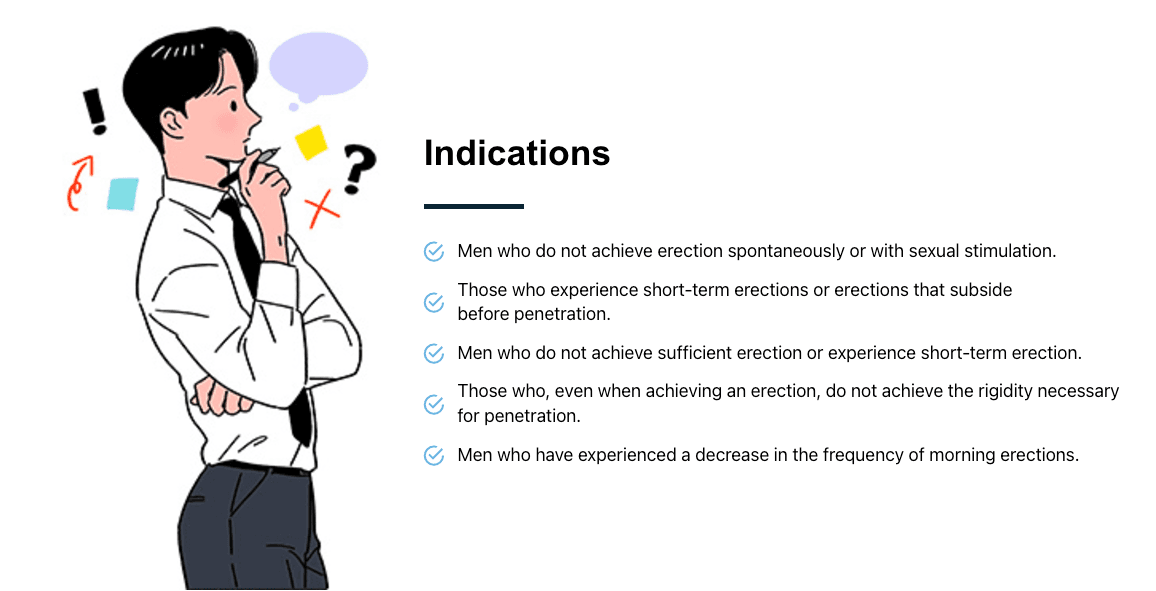
The meaningful alternatives depend on the cause of ED and the goal: non-surgical options are reversible and usually used repeatedly, while a penile implant is a definitive mechanical solution with irreversible surgical trade-offs. Avoid venous-ligation surgery as routine ED treatment because durable results are poor; arterial reconstruction is reserved for highly selected younger patients with confirmed traumatic arterial injury.
Oral PDE5 Inhibitors
- Best suited to — Men who can safely use sildenafil, tadalafil, vardenafil, or avanafil and have no nitrate, nicorandil, nitric-oxide donor, or popper use.
- Trade-off — Tablets are non-surgical and first-line, but need sexual stimulation and do not resolve every underlying cause.
Vacuum Erection Device
- Best suited to — Men seeking a non-drug, non-surgical option or those unable to take PDE5 inhibitors.
- Trade-off — The device can produce a usable erection but requires preparation and can be less spontaneous.
Alprostadil or Injection Therapy
- Best suited to — Men for whom tablets are ineffective, contraindicated, or not preferred.
- Trade-off — These options can be effective but require careful technique; priapism, pain, bruising, and fibrosis are important risks.
Psychosexual Therapy
- Best suited to — Anxiety-related, relationship-related, trauma-related, or mixed ED, including men whose physical treatment response is limited by performance anxiety.
- Trade-off — It addresses contributors rather than providing an immediate mechanical erection and often works best alongside medical care.
Testosterone Treatment
- Best suited to — Men with repeat testing and symptoms confirming hypogonadism. See testosterone injection for the separate treatment pathway.
- Trade-off — Testosterone is not appropriate solely because of a low single laboratory result or ED without symptomatic hormone deficiency.
Penile Prosthesis
- Best suited to — Men who fail, cannot use, or prefer not to continue less-invasive therapies and accept an irreversible operation. See penile implant for surgical details.
- Trade-off — It provides a dependable mechanical erection but carries infection, mechanical failure, revision, erosion, and recovery risks; it does not restore natural erectile tissue or guarantee perceived length.
Regenerative Injections
- Best suited to — No routine ED population at present.
- Trade-off — PRP, stem-cell, and exosome injections should not be presented as established alternatives. Current guideline evidence is insufficient for routine PRP recommendation, and evidence for stem-cell and exosome treatment remains inadequate.
How Can I Prepare for Erectile Dysfunction?
- Send records early — Provide prior urology, cardiology, diabetes, prostate or pelvic-surgery, and relevant mental-health records before travel so testing is targeted rather than duplicated.
- Disclose every medicine — List prescriptions, over-the-counter products, supplements, allergies, and prior anaesthesia problems. Highlight nitrates, nicorandil, alpha-blockers, anticoagulants, antiplatelets, diabetes and blood-pressure medicines, testosterone, finasteride or dutasteride, antidepressants, antipsychotics, opioids, and poppers.
- Do not self-stop medication — Never independently stop anticoagulants, antiplatelets, diabetes medicines, blood-pressure medicines, testosterone, or supplements before testing or surgery. The prescribing and operating teams must set the plan.
- Arrange surgical support — For a penile implant, book accommodation close to the hospital, arrange a responsible adult for early discharge support, organise emergency transport, and keep flight dates flexible.
- Plan fasting only when instructed — Routine consultation, blood tests, and non-invasive ED treatments do not automatically require fasting. Follow the clinic’s instructions when blood testing, sedation, or implant surgery is scheduled.
- Avoid unverified packages — Ask whether Li-SWT is focal or radial, the device name, energy settings, treated sites, shocks, session schedule, baseline score, and planned follow-up score. Do not accept PRP, stem-cell, or exosome claims as standard ED care without clear investigational consent.
Travel note: Carry medicines in original labelled containers and bring enough supply for the full trip plus delays. Obtain an English prescription and dosing plan before departure.
Confirm the treating clinic’s exact requirements, particularly for cardiovascular clearance, laboratory testing, fasting, medicine adjustment, anaesthesia, and surgery.
Aftercare Advice
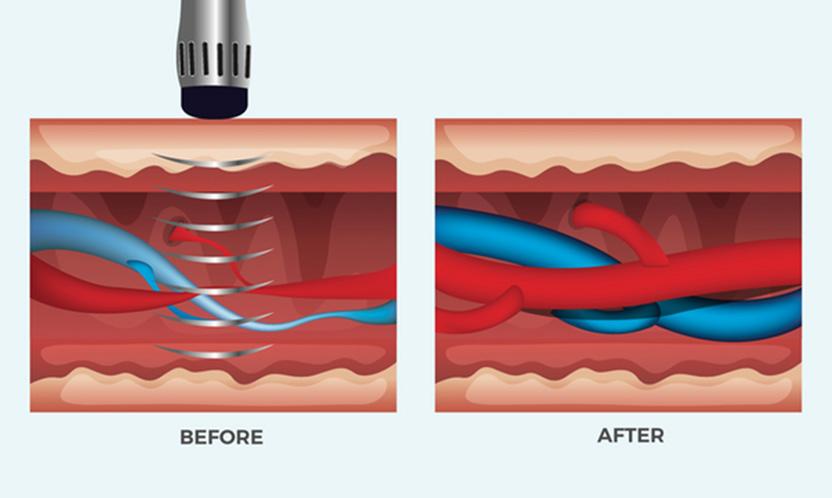
Aftercare must match the treatment received: tablets, devices, injections, Li-SWT, and implant surgery have very different restrictions and follow-up needs.
- Medication safety — Follow the exact PDE5-inhibitor dose and timing plan. Never combine it with nitrates, nicorandil, nitric-oxide donors, or poppers; seek urgent care for chest symptoms rather than taking nitrate medication after an ED drug without medical direction.
- Injection emergency plan — Use only the taught dose and technique. Do not repeatedly self-dose after an inadequate response. A rigid erection lasting more than four hours requires emergency treatment.
- Li-SWT follow-up — Complete the documented course and use the same validated score used at baseline to assess response. There is no established universal retreatment schedule because durability and protocols remain uncertain.
- Implant wound and activity care — Walk as directed, but avoid strenuous exercise, cycling, bathing or swimming, masturbation, intercourse, and device cycling until the surgeon gives method-specific clearance. Supportive underwear and incision-care instructions depend on the operative technique.
- Implant warning signs — Contact the surgical team urgently for fever or chills, rapidly increasing pain or swelling, redness, pus or drainage, wound separation, visible device material, inability to urinate, persistent bleeding, or later inability to operate the device. Infection and mechanical problems can require revision or removal.
- Result timing — Oral medicines, vacuum devices, and alprostadil work for an individual sexual encounter. Li-SWT response is assessed after the multi-session course. After implant surgery, discomfort and swelling are greatest early on, and device inflation teaching commonly begins around 4–6 weeks.
Follow the treating doctor’s instructions over general guidance and contact the clinic promptly when symptoms, wound appearance, medication effects, or device function seem wrong.
Frequently Asked Questions
Related Blogs
Silicone penile implant in Korea: device types, recovery, risks and travel planning
Silicone penile implants are permanent surgical options for adults with treatment-refractory organic ED, with malleable rods providing manually positioned rigidity and inflatable devices offering a deflatable resting state. International patients considering surgery in Korea should verify the exact device and follow-up plan, plan 10–14 days for recovery, and obtain surgeon clearance before flying.
Updated: Sep 21, 2026
UroLift in Korea: Candidacy, Recovery, Travel Planning, and Alternatives
UroLift uses permanent implants placed through the urethra to retract obstructing BPH tissue without removing or thermally destroying the prostate. The article covers eligibility assessment, anesthesia and recovery planning, Korea travel considerations, aftercare, warning signs, follow-up records, and alternatives.
Updated: Sep 17, 2026
Penis Fat Transfer in Korea: Girth Enhancement, Recovery, Risks, and Travel Planning
Penis fat transfer uses liposuction-harvested fat, commonly from the lower abdomen, injected in small layers around the shaft to pursue modest girth enhancement rather than length gain. The article covers candidacy, Korea travel planning, recovery restrictions, follow-up, risks, and alternatives including hyaluronic-acid filler and traction.
Updated: Sep 17, 2026
Glans Enlargement in Korea: Methods, Safety, Recovery, and Travel Planning
HA glans augmentation uses hyaluronic-acid filler injected under local anesthetic to add temporary volume; technique, dose, and results are not standardized, and complications require prompt assessment. In Korea, listed costs are ₩1,500,000–₩3,000,000 (about US$1,100–$2,200); international patients should plan 5–7 days, attend a pre-flight review, and obtain a detailed treatment record.
Updated: Sep 13, 2026
Clinics offering Erectile Dysfunction
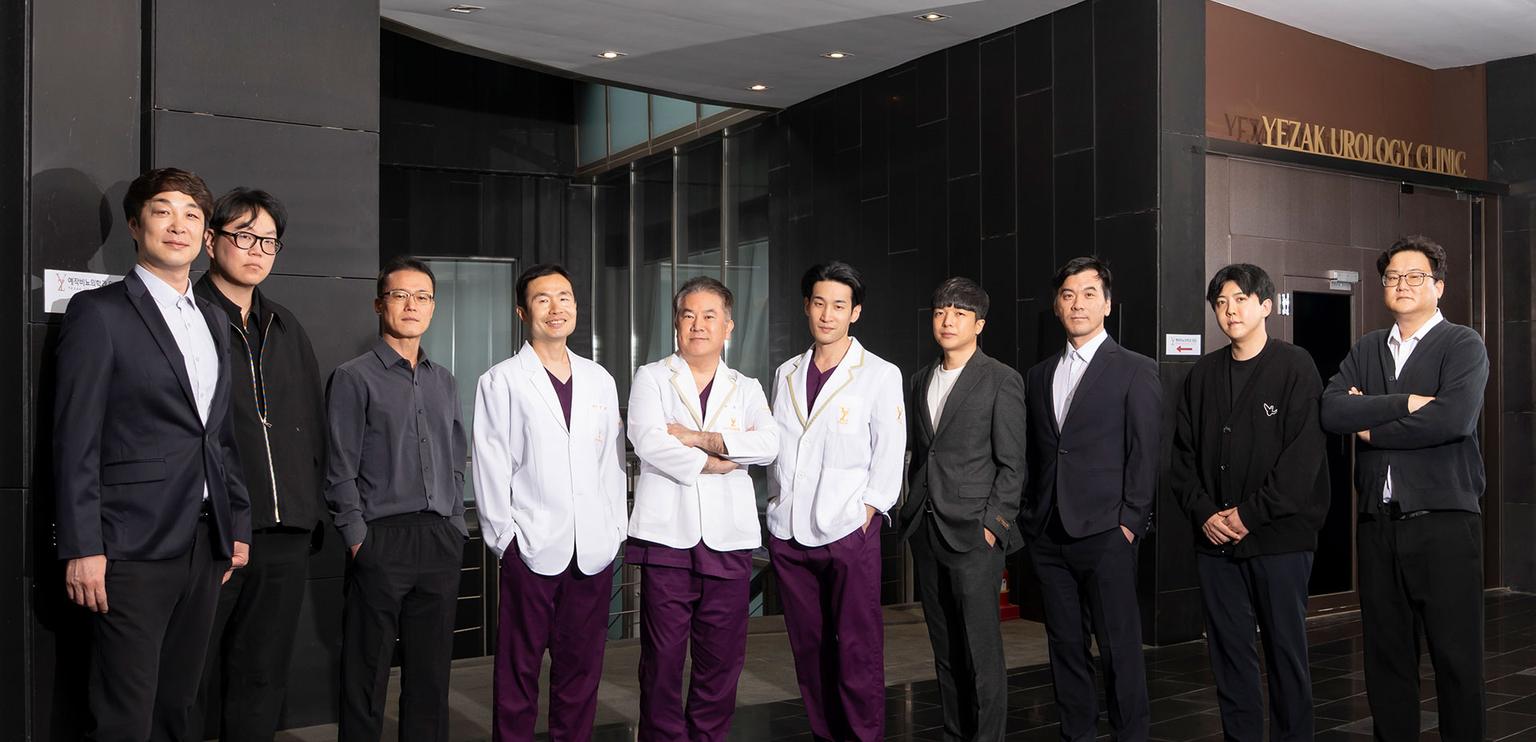
Yezak Urology Korea | Penile Enlargement, ED & Prostate Care Seoul
Apgujeong

StanTop Urology & Andrology: Korea's Premier Clinic for Advanced Urological and Andrological Treatments
Sinnonhyeon Station
GoldMan Urology Clinic - Incheon, Korea: Expert Urological Treatments, Penile Augmentation & Laser Circumcision Services
Incheon
Adams Urology Korea: Advanced Urological Care and Procedures in Samsung for Prostate and Sexual Health
Samsung