
Medical Tourism Blog
Say Goodbye to Beer Belly: CoolSculpting Procedures in Korea for Effective Belly Fat Reduction
Table of contents
- The Medical Context: Deconstructing the "Beer Belly"
- CoolSculpting: A Deep Dive into Cryolipolysis
- Best Clinics in Korea for Beer Belly
- The Medical Tourist's Journey to South Korea
- Cost Analysis and the Medical Tourism Value Proposition
- Patient Outcomes and Managing Expectations
- Alternatives to CoolSculpting: A Comparative Overview
- Final Report Summary and Recommendations
- References
Considering treatment in Korea? Everything you need to know e.g. — how to avoid scams, visas, interpreters, recovery tips — in our Medical Tourism Master Guide. Plan with confidence in minutes, not weeks!
This review delivers an in-depth, evidence-based look at what is commonly referred to as a "beer belly," examining both the medical realities of abdominal fat and the effectiveness of CoolSculpting as a body-contouring solution. Moving past popular myths, we break down the actual health risks linked to abdominal obesity and highlight how CoolSculpting fits into a broader approach to body contouring. The article also follows a typical medical tourist's journey in South Korea, finishing with a comprehensive cost-benefit analysis for international patients.
The main findings show that the "beer belly" involves more than just surface fat; it's frequently a sign of harmful visceral fat, which CoolSculpting cannot treat. While CoolSculpting is an effective, safe way to reduce stubborn subcutaneous fat, it's not a treatment for overall weight loss or obesity. For medical tourists, South Korea stands out for delivering advanced, high-quality care at accessible prices. Ultimately, success depends on a patient's suitability for the procedure, their commitment to healthy living, and selecting the right healthcare provider who can properly guide and manage the process.
The Medical Context: Deconstructing the "Beer Belly"
Terminology and Medical Definitions
The "beer belly" is a casual term for a rounded, protruding abdomen, often confused with other expressions like "paunch," "potbelly," "gut," and "spare tire" [1,2]. Contrary to popular belief, alcohol isn’t the sole cause—abdominal obesity actually arises from a mix of factors, including excess calories from food or beverages, inactivity, changes in hormones, and more. In other words, any surplus of calories, whether from beer, soda, or fatty foods, can build up as abdominal fat [3].
The Two Faces of Abdominal Fat: Subcutaneous vs. Visceral Fat
To understand abdominal fat, it’s important to distinguish between subcutaneous and visceral fat. Subcutaneous fat is the soft, "pinchable" layer directly under the skin. In contrast, visceral fat lies deep within the abdomen and envelops internal organs, posing significant health risks [4,5]. Medical experts identify visceral fat as the most dangerous type since it’s closely linked to a higher likelihood of heart disease, type 2 diabetes, high blood pressure, and stroke [6].
This distinction matters because cosmetic procedures like CoolSculpting only address subcutaneous fat. Any visible belly isn’t just cosmetic—it can signal underlying health issues. While CoolSculpting can improve appearance, visceral fat needs to be tackled through diet and exercise, not aesthetic treatments.
Table 1: Subcutaneous vs. Visceral Fat – The Clinical Distinction
| Feature | Subcutaneous Fat | Visceral Fat |
|---|---|---|
| Location | Beneath the skin | Deep in abdomen, around organs |
| Palpability | Visible, "pinchable" | Hard to detect, surrounds organs |
| Health Risks | Cosmetic | Linked to heart disease, type 2 diabetes, high blood pressure, stroke |
| CoolSculpting Efficacy | 20-25% reduction possible | No effect |
Causes, Health Implications, and Diagnostic Indicators
Abdominal fat develops due to many factors: high-calorie diets, lack of activity, hormonal shifts with aging (which reduce muscle, increase fat), chronic stress, and poor sleep, which boost cortisol and fat storage [7]. A large waistline—over 40 inches for men, 35 inches for women—is a strong warning sign for excess visceral fat and greater health risks [6]. Even “non-drinkers” can develop these risks, with complications like fatty liver and insulin resistance. The only proven way to lose visceral fat is through a combination of healthy eating and regular exercise.
CoolSculpting: A Deep Dive into Cryolipolysis
The Science and Mechanism of Action
CoolSculpting operates on the principle of cryolipolysis—a process exploiting the fact that fat cells are more vulnerable to cold than other tissues [8,9]. By applying controlled cooling to problem areas, fat cells are frozen and undergo apoptosis (natural cell death). The body’s immune cells then gradually remove these destroyed fat cells, flushing them via the lymphatic system and liver over several weeks [10]. Because results depend on natural metabolic processes, improvements are revealed gradually rather than immediately.
The Procedure and Patient Experience
CoolSculpting is non-surgical and doesn’t require anesthesia or incisions, earning its status as a "lunchtime procedure" due to minimal disruption [7]. During treatment, a provider places a gel pad and a suction applicator over the target area, which cools the tissue for 35–75 minutes. Patients may feel pulling, pinching, or just cold at first, but numbness soon follows. After the session, a short massage helps break up frozen tissue and may improve results. Most people can return to daily routines right away.
Efficacy, Suitability, and Clinical Limitations
CoolSculpting has been shown to safely reduce subcutaneous fat in treated areas by 20–25% after a single session, with some achieving even greater results [11,12]. This fat reduction is permanent for the destroyed cells. However, CoolSculpting is a body-contouring—not weight-loss—tool and does not address visceral fat [7]. It works best for individuals already near their ideal weight (BMI 18.5–30) who have stubborn fat pockets resistant to diet and exercise.
Best Clinics in Korea for Beer Belly
Listed below are the best clinics in Korea for beer belly:
| Clinic Name | Key Features | Special Techniques |
|---|---|---|
| id Hospital Korea | Patient-centered pathway; known for focus on facial treatments and a philosophy of safe, beautiful plastic surgery; customized planning, rigorous safety culture, systematic post-care for predictable outcomes and a comfortable recovery; breadth of care enabling tailored, harmony-driven plans with comprehensive follow-up. | Orthognathic surgery; facial contouring; eye and nose plastic surgery; breast surgery; lifting; skin clinic treatments; petit plastic surgery; dentistry. |
| Beautiful Clinic | Located in Konkuk University; targeted body contouring expertise; personalized care in a safe, relaxing environment; effective options for dramatic reshaping or subtle refinement without surgery; comprehensive aesthetic and medical procedures; tailored, patient-centered plans. | Liposuction; CoolSculpting. |
| Tang Gle Plastic Surgery | Apgujeong, Seoul; led by Dr. Changhyun Oh, a certified plastic surgeon recognized by the South Korean government; comprehensive, tailored body-contouring care; integrates surgical precision with non-surgical treatments; individualized plans; consultations available online, by phone, and via Kakao Talk (02-542-8427). | Liposuction; tummy tuck (abdominoplasty); CoolSculpting. |
id Hospital Korea
If you are exploring aesthetic options while addressing a beer belly, ID Hospital offers a patient-centered pathway to looking refreshed and balanced. Known for its focus on facial treatments and a philosophy of safe, beautiful plastic surgery, the clinic emphasizes customized planning, a rigorous safety culture, and systematic post-care to support predictable outcomes and a comfortable recovery experience.
ID Hospital’s services include orthognathic surgery, facial contouring, eye and nose plastic surgery, breast surgery, lifting, skin clinic treatments, petit plastic surgery, and dentistry. This breadth of care enables tailored, harmony-driven plans—complementing your broader health and body goals—delivered with meticulous safety protocols and comprehensive follow-up.
Find more about this clinic here: id Hospital Korea Website
Beautiful Clinic
Beautiful Clinic in Konkuk University stands out as the best choice in Korea for treating a stubborn “beer belly” because it combines targeted body contouring expertise with truly personalized care in a safe, relaxing environment. With liposuction to precisely remove excess abdominal fat and CoolSculpting to non-invasively freeze and naturally eliminate resistant fat cells, the clinic offers effective options for both dramatic reshaping and subtle refinement without surgery. As part of a comprehensive suite of aesthetic and medical procedures designed to enhance beauty and boost confidence, your treatment plan is tailored to your goals—whether you’re aiming to flatten the midsection, refine contours, or complement body work with additional aesthetic enhancements. Advanced treatments, careful customization, and a patient-centered approach make Beautiful Clinic the ideal destination for achieving a slimmer, more contoured abdomen and renewed confidence.
Find more about this clinic here: Beautiful Clinic Website
Tang Gle Plastic Surgery
Located in Apgujeong, Seoul, Tang Gle Plastic Surgery is a renowned clinic led by Dr. Changhyun Oh, a certified plastic surgeon recognized by the South Korean government, and stands out as the best choice in Korea for addressing a beer belly through comprehensive, tailored body-contouring care. The clinic offers targeted solutions for abdominal concerns: liposuction to remove stubborn fat deposits and refine the waistline, tummy tuck (abdominoplasty) to tighten muscles and remove excess skin for a firmer, smoother midsection—especially after weight changes or pregnancy—and CoolSculpting for a non-invasive, clinically proven fat-reduction option with minimal downtime. By integrating surgical precision with non-surgical treatments, Tang Gle Plastic Surgery creates individualized plans for men and women seeking a flatter, more proportionate abdomen, all delivered with the safety and expertise of a government-recognized specialist. For more information or to book an appointment, contact Tang Gle Plastic Surgery at 02-542-8427; consultations are available online, by phone, and via Kakao Talk.
Find more about this clinic here: Tang Gle Plastic Surgery Website
The Medical Tourist's Journey to South Korea
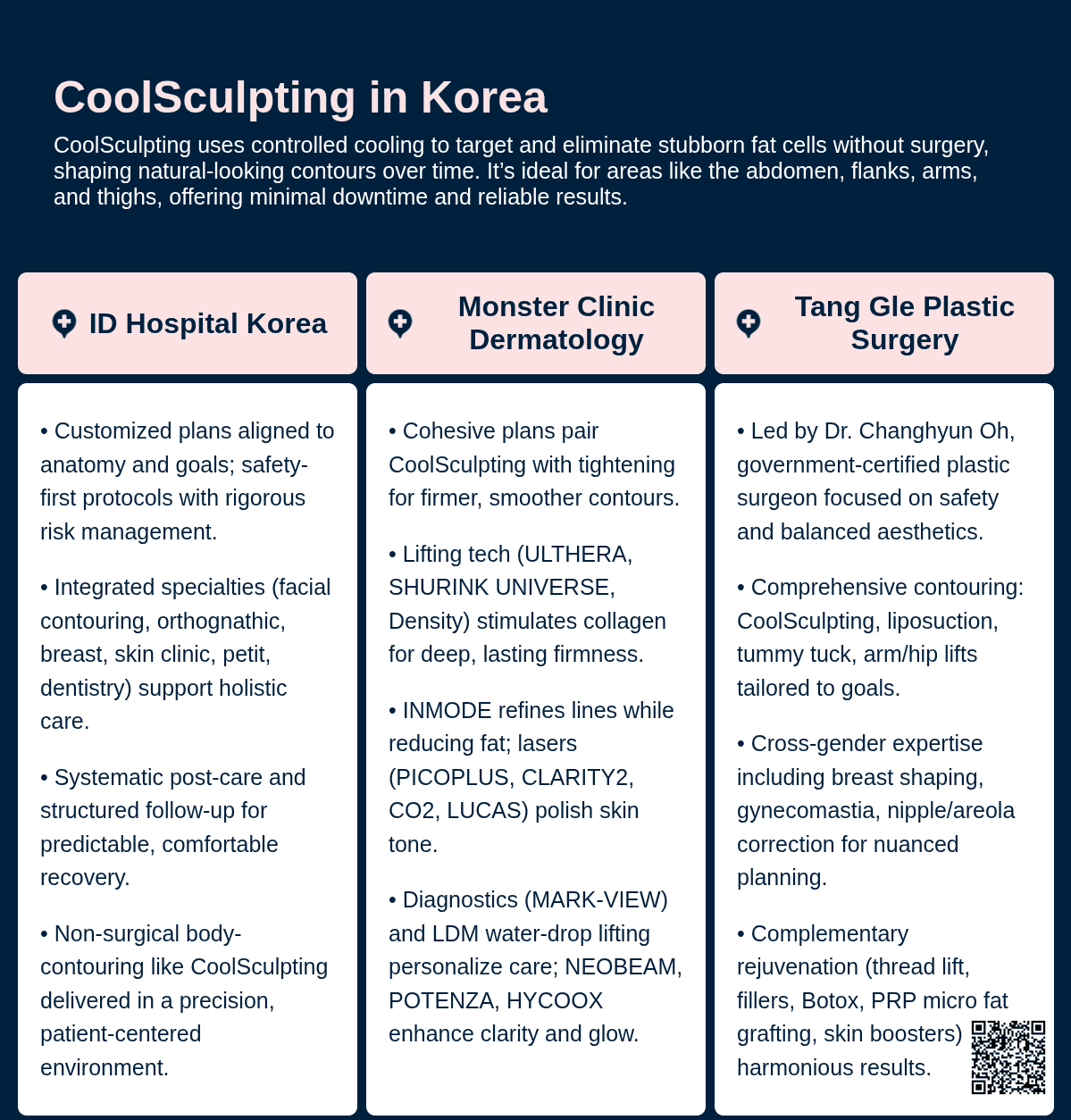
The CoolSculpting Process for a Medical Tourist
International patients choosing CoolSculpting in South Korea often experience a carefully managed process:
- Pre-Arrival Consultation: Before arrival, patients consult with a clinic (often remotely) to discuss goals and share photos. Many facilities assist with translation and travel, making arrangements like accommodation and airport transfers.
- On-Site Consultation and Planning: Patients receive in-depth, face-to-face evaluations, including digital imaging or 3D scans to plan treatment and preview results.
- Treatment Day: On the appointed day, the clinician applies a protective pad and target-marked applicator for 35–60 minutes. The non-invasive nature of CoolSculpting means patients can resume normal activities—sightseeing included—immediately.
- Post-Treatment and Aftercare: Clinics provide aftercare guidance about diet, hydration, and light exercise to maximize results and support recovery.
The Unique Value of the Korean Experience
South Korea offers more than affordability; it’s globally recognized for advanced medical technology and a culture focused on top-quality aesthetics [13,14]. Clinics typically combine cutting-edge technology, highly trained staff, and personalized, patient-centered service. The country’s well-developed infrastructure for medical tourism includes translation, transport, and accommodation support—ensuring international patients enjoy a high-quality, seamless experience.
Cost Analysis and the Medical Tourism Value Proposition
CoolSculpting Costs in South Korea
In South Korea, CoolSculpting is generally much more affordable than in Western countries, making it a hotspot for medical tourists. Prices vary by the number of cycles and applicator size, but in Seoul’s Gangnam area, typical costs are:
- Small Applicator (chin, arms): ₩300,000–₩500,000 ($220–$370 USD)
- Medium/Large Applicators (abdomen, thighs): ₩500,000–₩900,000 ($370–$670 USD)
- Complete Packages (multiple areas): ₩1,500,000–₩4,000,000+ ($1,100–$3,000+ USD)
For comparison, the average starting cost in Korea is around $420 USD, versus $1,000–$1,500 USD in the U.S. [21,22].
Global Price Comparison
A look at CoolSculpting prices worldwide reveals wide variation depending on the country, clinic, equipment, and included services.
Table 2: CoolSculpting Global Price Comparison (by Starting Cost)
| Country | Starting Cost (USD) | Comparison Note |
|---|---|---|
| South Korea | $420–$750 | Affordable with advanced technology and patient support |
| Turkey | $150–$293 | Lowest cost for broad specialties |
| Mexico | $250 | Attracts with bundled medical tourism offerings |
| USA | $1,000–$1,500 | Highest, but with recognized, FDA-approved safety |
| Thailand | $123–$550 | Known for reputable clinics and complimentary evaluations |
Although price matters, patients should also weigh quality of care, provider credentials, and overall experience.
Patient Outcomes and Managing Expectations
A Blend of Scientific and Anecdotal Evidence
Research confirms CoolSculpting consistently cuts targeted fat by 20–25% on average. Patient reviews commonly mention improvements in how clothes fit, enhanced confidence, and satisfaction with their more contoured appearance [25,29,30]. Many find success with CoolSculpting after reaching a plateau with diet and exercise—the permanent removal of fat cells underpins lasting changes in self-image.
Side Effects, Risks, and Contraindications
The procedure’s safety profile is excellent; typical side effects are short-term and localized, such as redness, swelling, bruising, and numbness that fade within days or weeks [15,17]. One rare but notable risk is Paradoxical Adipose Hyperplasia (PAH), an enlargement and firming of treated fat, requiring liposuction for correction. PAH is rare (affecting less than 1% of cases), more common in men, and may be related to older CoolSculpting devices.
Patients with certain health conditions—such as pregnancy, cryoglobulinemia, cold agglutinin disease, or paroxysmal cold hemoglobinuria—should not undergo CoolSculpting.
Given potential complications, it’s wise to seek reputable providers (preferably at plastic surgery centers) who can both perform the procedure and manage possible side effects, rather than relying solely on spas or general clinics.
Beyond the Procedure: Maintaining Results
It’s crucial to remember that CoolSculpting doesn’t halt future weight gain. Remaining fat cells can enlarge if a patient slips back into unhealthy habits. The results should be viewed as an enhancement—not a replacement—for a healthy lifestyle, diet, and consistent exercise.
Alternatives to CoolSculpting: A Comparative Overview
While CoolSculpting leads the pack for non-surgical fat reduction, other body-contouring options exist. Depending on whether you want to reduce fat, build muscle, or tighten skin, an alternative may better suit your needs.
Table 3: CoolSculpting vs. Its Key Alternatives
| Procedure Name | Mechanism of Action | Primary Function | Pros | Cons |
|---|---|---|---|---|
| CoolSculpting | Cryolipolysis (fat freezing) | Reduces subcutaneous fat | Non-invasive, no downtime, permanent fat removal | Doesn’t tighten skin or treat visceral fat; not for weight loss |
| EmSculpt Neo | RF and HIFEM energy | Burns fat & builds muscle | Combines fat reduction with muscle toning | Can require maintenance; pricier |
| Vanquish ME | Radiofrequency heating | Non-contact fat reduction | Pain-free, treats larger areas | May need more sessions |
| EON | Laser energy with cooling | Laser-based fat reduction | Fast, comfortable, treats large areas | Availability may be limited |
Final Report Summary and Recommendations
Abdominal obesity—or "beer belly"—is more than a cosmetic concern; it signals deeper health risks, especially due to visceral fat. CoolSculpting offers safe, effective, permanent subcutaneous fat reduction, but is not a weight-loss or health solution by itself. South Korea provides medical tourists with affordable, high-tech, and patient-centered care, making it an attractive destination. For best results, patients need to consult qualified professionals, manage expectations, and remain committed to a healthy lifestyle after treatment.
References
1, 2, 3, 4, 5, 6, 7, 8, 9, 10, 11, 12, 13, 14, 15, 17, 21, 22, 25, 29, 30
Frequently Asked Questions
Related Blogs
Double Chin Liposuction in Korea: Candidacy, Recovery, Travel Timing, and Alternatives
Double chin liposuction removes superficial submental fat through tiny incisions using tumescent fluid and a narrow cannula, with neck lift or chin procedures considered for lax skin, muscle bands, or weak chin projection. International patients visiting Korea should plan a 7–10 day stay, compression and early follow-up, flexible flights, and remote aftercare arrangements.
Updated: Oct 12, 2026
Bra Line Fat: Back Liposuction in Korea
Considering Korea for bra line fat? This guide explains back liposuction—from tumescent, ultrasound-assisted liposuction (UAL) and power-assisted liposuction (PAL) to laser-assisted liposuction (SmartLipo)—plus radiofrequency-assisted lipolysis (BodyTite), Renuvion, and non-surgical options like CoolSculpting and deoxycholic acid. For excess skin, we outline the bra-line back lift and trunkplasty,
Updated: Oct 12, 2026
Upper Back Rolls Treatment in Korea: CoolSculpting and Back Liposuction
Struggling with “bra bulge” or upper back rolls? Our guide explains the medical side—dorsocervical fat pad (buffalo hump), lipedema, and lipoma—and compares treatment options in Korea. Learn who qualifies for CoolSculpting and back liposuction (including VASER and laser-assisted techniques), recovery timelines, costs, and all-inclusive medical tourism packages. Discover why Korea’s technology, sur
Updated: Oct 12, 2026
Full Face Fat Reduction with Face Liposuction in Korea: Ultimate Guide to a Slimmer Look
Discover how Korea leads in facial fat treatments like submental liposuction and buccal fat removal for full face fat and round face concerns. This comprehensive guide highlights medical causes such as Moon Facies and offers expert insights into cosmetic procedures available in South Korea. Learn about costs, recovery, and choosing the right procedure for a more sculpted, confident look—all within
Updated: Oct 12, 2026
Clinics offering CoolSculpting
ID Hospital - Main Branch in Korea: Specializing in Safe & Customized Facial Plastic Surgery and Post-Care Services
Sinsa

Atelier Plastic Surgery Clinic in Korea: Enhance Your Natural Beauty with Expert Breast, Body, and Facial Procedures

Beautiful Clinic in Korea: Comprehensive Aesthetic and Medical Procedures for Enhanced Beauty and Confidence
Konkuk University

Gangnam RaHae Clinic in Korea: Advanced Cosmetic Procedures for Personalized Beauty Enhancement
Nonhyeon