
Medical Tourism Blog
Effective Jaw Clenching Solutions: Masseter Botox & Bruxism Treatment in Korea
Table of contents
- Medical Procedures for Jaw Clenching Relief
- Which Are the Best Clinics in Korea for Jaw Clenching?
- Why Choose Korea for Bruxism and Masseter Botox Treatment?
- Navigating Treatment in South Korea: A Medical Tourist's Guide
- Cost Analysis: South Korea vs. Global Medical Tourism Destinations
- Patient Experiences and Outcomes
- Conclusions
- References
Considering treatment in Korea? Everything you need to know e.g. — how to avoid scams, visas, interpreters, recovery tips — in our Medical Tourism Master Guide. Plan with confidence in minutes, not weeks!
Jaw clenching, also known as bruxism, is a surprisingly common but often overlooked condition where the jaw muscles tighten involuntarily. This can lead to discomfort and serious oral health issues if not addressed. Knowing what causes it and how it shows up is the first step toward managing it effectively.
What is Jaw Clenching? (Definition and Common Pseudonyms)
Jaw clenching, or bruxism, is the repeated, involuntary activity of the facial or chewing muscles, involving clenching or grinding of the teeth. It can happen while you’re awake (wakeful bruxism) or asleep (sleep-related bruxism), with the latter often going unnoticed until symptoms appear or a partner hears grinding noises. The force during sleep bruxism can be intense—up to 250 pounds.
People might refer to this condition as "teeth grinding," "gritting teeth," or even "gnashing of teeth." Recognizing these terms alongside "bruxism" helps individuals connect their symptoms to a medical condition, making it easier to find information and seek help.
Table 1: Common Pseudonyms for Jaw Clenching (Bruxism)
| Term Used by Patients | Medical Term | Description |
|---|---|---|
| Jaw Clenching | Bruxism | Tightening of jaw muscles, often linked to stress. |
| Teeth Grinding | Bruxism | Rubbing teeth back and forth, often during sleep. |
| Gritting Teeth | Bruxism | The sound or sensation of teeth rubbing together forcefully. |
| Gnashing of Teeth | Bruxism | Forceful teeth grinding, especially during sleep. |
Causes and Contributing Factors
Bruxism doesn’t have a single cause. Stress, anxiety, anger, pain, and certain personality traits (like competitiveness) are major contributors. It’s also linked to sleep disorders (like obstructive sleep apnea), GERD, temporomandibular dysfunction (TMD), allergies, neurological disorders, and oral pain.
Some medications, especially certain antidepressants (fluoxetine, sertraline, paroxetine), and even common decongestants or antihistamines, can trigger or worsen bruxism. Lifestyle choices like smoking, heavy drinking, high caffeine intake, and drug use also increase risk. An abnormal bite (occlusal discrepancy) can directly cause bruxism.
Because so many factors are involved, treatment often needs to be personalized and comprehensive. Addressing underlying issues like acid reflux or allergies, and incorporating stress reduction, can be as important as dental interventions.
Bruxism affects about 8-10% of the population, especially adults aged 25-44. In children, it’s often related to teething and usually resolves on its own.
Symptoms and Potential Complications
Common symptoms include clenching, grinding, tooth sensitivity, morning jaw or facial pain, tense jaw muscles, and headaches. Other signs are earaches, shoulder tightness, TMJ clicking, tongue indentations, and cheek damage.
If untreated, bruxism can cause serious dental damage—chipped or cracked teeth, enamel erosion, flat wear facets, gum recession, and even tooth loss. Severe cases may require extensive dental work like crowns or implants.
Jaw and muscle problems can also develop, including TMJ disorders, jaw locking, and muscle enlargement (leading to a square jaw appearance). Chronic clenching can trigger headaches and neck pain.
Sleep-related bruxism often goes unnoticed, leading to delayed diagnosis. Dentists play a key role in early detection by spotting signs like stress fractures. Bruxism is also linked to systemic health issues like GERD, allergies, and sleep disorders, highlighting the need for collaboration among dentists, doctors, and mental health professionals.
Medical Procedures for Jaw Clenching Relief
Managing bruxism usually involves a mix of treatments tailored to each person’s needs. Masseter Botox injections are a popular option, alongside traditional and behavioral therapies.
Masseter Botox: A Detailed Explanation
Masseter Botox involves injecting botulinum toxin into the masseter muscles (the main chewing muscles). Botox blocks acetylcholine, a neurotransmitter, preventing muscle contraction and causing temporary muscle relaxation for 3-6 months.
Botox also reduces pain by blocking pain-related neuropeptides. Therapeutically, it lessens jaw tension, facial pain, headaches, and earaches, and can improve sleep quality. Aesthetically, it slims the jawline by reducing muscle size, which is appealing for those with a "square jaw" from chronic clenching.
Side effects are usually mild and temporary—pain, swelling, bruising, or jaw heaviness. Rarely, there can be muscle weakness, a crooked smile, dry mouth, or increased jowls in older patients. Serious side effects are very rare but possible.
Results start to show within a week, with full effects in one to two months. Repeat injections are needed every 3-6 months to maintain benefits.
Table 2: Masseter Botox: Mechanism, Benefits, and Side Effects
| Category | Description |
|---|---|
| Mechanism of Action | Blocks acetylcholine at neuromuscular junction, causing temporary muscle paralysis (3-6 months); also blocks pain-related neuropeptides. |
| Therapeutic Benefits | Reduces jaw tension, pain, headaches, earaches; decreases clenching/grinding force and frequency; protects teeth. |
| Aesthetic Benefits | Softens square jawline, creating a more contoured look; reduces muscle bulk. |
| Common Side Effects | Pain, swelling, bruising, mild redness, temporary jaw weakness, headaches, jaw heaviness. |
| Rare Side Effects | Weakness of nearby muscles, crooked smile, dry mouth, increased jowls, difficulty swallowing, drooping eyelid/eyebrow, allergic reaction, toxin spread (very rare). |
Bruxism Treatment Options (Beyond Botox)
Other treatments for bruxism often work best when combined.
Dental Appliances (Night Guards/Occlusal Splints): Custom-fitted night guards protect teeth from grinding damage and reduce jaw pain and headaches. They’re cost-effective and can be worn at night or, in thin versions, during the day. Some initial discomfort is common, and proper cleaning is important.
Behavioral Therapies and Lifestyle Modifications: Stress management (counseling, CBT, exercise, meditation), habit modification (biofeedback), and lifestyle changes (diet, sleep schedule) are key. Addressing underlying medical issues like GERD or allergies is also important.
Pharmacological Approaches: Muscle relaxants may be prescribed temporarily. Certain medications for neurological disorders can help, but some drugs (like certain antidepressants) can worsen bruxism, so medication reviews are essential.
Combining treatments—Botox for quick relief, night guards for protection, and behavioral therapy for root causes—often yields the best results. Patients should understand that ongoing management is usually needed, not a one-time fix.
Table 3: Bruxism Treatment Options (Beyond Botox)
| Treatment Type | Specific Examples | Primary Purpose/Benefit | Key Considerations/Drawbacks |
|---|---|---|---|
| Dental Appliances | Custom night guards, occlusal splints | Protect teeth, reduce pain/headaches, preserve dental work, improve sleep | Initial discomfort, cleaning required, possible jaw fatigue |
| Behavioral Therapies & Lifestyle Modifications | Stress management, biofeedback, diet/sleep changes, address underlying conditions | Address root causes, reduce clenching, promote well-being | Requires commitment, may not resolve severe symptoms alone |
| Pharmacological Approaches | Muscle relaxants, medications for neurological conditions | Reduce muscle tension, manage bruxism in specific cases | Temporary relief, possible side effects, some drugs worsen bruxism |
Which Are the Best Clinics in Korea for Jaw Clenching?
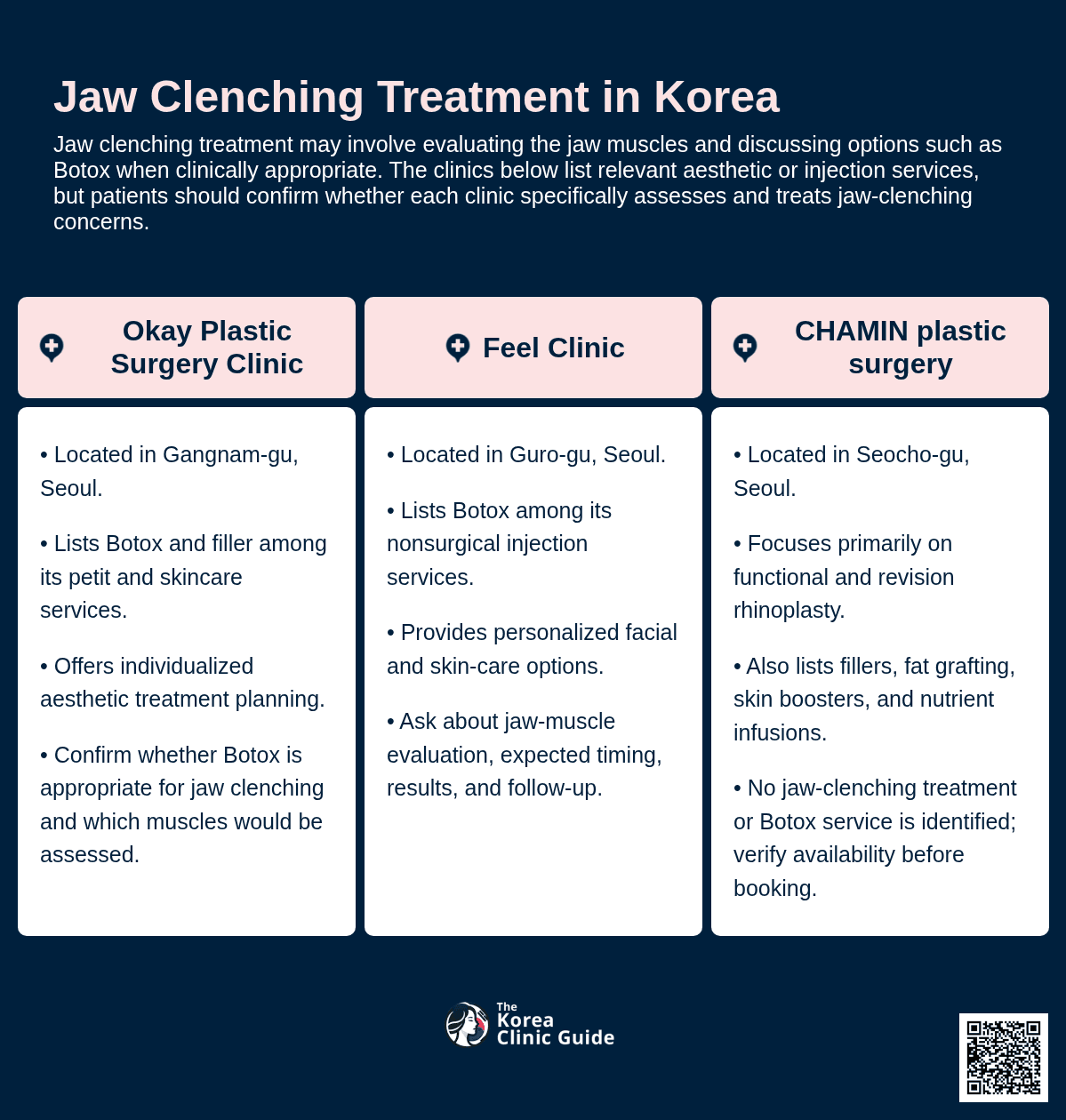
Listed below are some of the best clinics in Korea for jaw clenching.
1. Okay Plastic Surgery Clinic
You may consider Okay Plastic Surgery Clinic for jaw clenching if you want to discuss whether its listed Botox service fits your concerns within an individualized aesthetic-care setting. The clinic describes tailored treatment planning and offers a broad range of surgical and nonsurgical services, though the supplied information does not specify a jaw-clenching protocol.
- URL: Okay Plastic Surgery Clinic Website
- Location: Gangnam-gu, Seoul
- Relevant service: Botox/Filler is listed among the clinic’s petit and skincare services; ask whether an assessment supports Botox for your jaw-clenching concerns and what treatment plan is appropriate for you.
- Other available care:
- The clinic also lists facial lifting, rhinoplasty, eye surgery, body contouring, scar and keloid care, and medical skincare.
- Its team includes a female plastic surgeon with extensive experience, according to the provided information.
2. Feel Clinic
You may consider Feel Clinic for jaw clenching because it lists Botox among its nonsurgical injections, alongside personalized facial-care options. The provided information does not specifically describe Botox for clenching, so you should confirm whether the clinic evaluates and treats your particular jaw-muscle symptoms.
- URL: Feel Clinic Website
- Location: Guro-gu, Seoul
- Potential jaw-clenching option: Botox is listed as a nonsurgical cosmetic injection that temporarily paralyzes facial muscles; ask whether it is appropriate for the muscles involved in your clenching and what results, timing, and follow-up may apply.
- Facial and skin services: Available facial-focused options include InMode radiofrequency treatment, Schlerotherapy focused ultrasound lifting, AirJet, Aqua Peel, exosome therapy, fillers, pigmentation treatment, and acne care.
- Personalized planning: The clinic describes its treatments as personalized and uses technology-based options across skin rejuvenation, lifting, hair removal, and body contouring.
3. CHAMIN plastic surgery
For jaw clenching, CHAMIN plastic surgery’s supplied information does not identify a related treatment; its strongest documented focus is complex functional and revision rhinoplasty, including reconstruction and nasal obstruction care. You may want to verify whether the clinic offers any jaw-clenching assessment before considering it for this purpose.
- URL: CHAMIN plastic surgery Website
- Location: Seocho-gu, Seoul
- What the clinic specifically lists:
- The supplied information focuses on rhinoplasty revision and reconstruction, functional rhinoplasty, nasal implant removal, and treatment of nasal obstruction, congestion, and chronic rhinitis.
- It also lists fillers, fat grafting, skin boosters, and nutrient infusions for cosmetic skin rejuvenation.
- Care considerations:
- The clinic describes pre- and post-surgery care, tailored recovery plans, and management of nasal infection or inflammation, particularly in the context of nasal procedures.
- No jaw-clenching treatment or Botox service is identified in the provided information, so confirm directly whether it offers an appropriate evaluation or treatment for your concern.
Why Choose Korea for Bruxism and Masseter Botox Treatment?
South Korea is a top destination for medical tourism, especially for aesthetic and dental procedures. Here’s what to expect if you’re considering Masseter Botox or bruxism treatment there.
General Considerations for Medical Tourists in South Korea
South Korea’s medical tourism infrastructure is well-developed, offering support from pre-consultation to aftercare. Choose modern, reputable clinics (check reviews), and consider language support—many clinics offer services in English, Chinese, or Japanese, but translation apps or interpreters can help.
Plan for a 10-14 day stay for cosmetic procedures, and look for packages that include hotel, airport transfers, and aftercare. Bring all necessary documents, including medical history and insurance. Avoid peak travel seasons for better prices and less crowding.
South Korea is known for high-quality care and advanced technology, but prices can vary by clinic, brand of Botox, and included services. Always prioritize quality and safety over the lowest price.
Navigating Treatment in South Korea: A Medical Tourist's Guide
The Process of Getting Masseter Botox in South Korea
- Research and Pre-Consultation: Start by researching reputable clinics (check reviews on Realself or Google). Many clinics offer online consultations and can review photos before you travel.
- In-Person Consultation: On arrival, you’ll meet with a practitioner to discuss your goals, review your medical history, and plan your treatment. Consent forms and payment are handled before the procedure.
- Preparation: The treatment area is cleaned, and numbing cream may be applied. Injection sites are carefully marked.
- Botox Injection: Botox is injected into the masseter muscle using a fine needle. The procedure takes 15-30 minutes and is usually not painful.
- Post-Procedure Care and Follow-Up: You can resume normal activities right away. Follow care instructions, and expect results to appear over the next month. Follow-up appointments may be scheduled.
Table 4: Step-by-Step Process for Masseter Botox in South Korea (for Medical Tourists)
| Stage | Key Actions and Considerations |
|---|---|
| Research & Pre-Consultation | Research clinics, check reviews, send photos, request virtual consultation. |
| In-Person Consultation | Review history, discuss goals, assess muscles, plan treatment, consent, payment. |
| Preparation | Clean area, apply numbing cream, mark injection sites. |
| Botox Injection | Inject Botox, multiple sites per side, 15-30 minutes, minimal discomfort. |
| Post-Procedure Care & Follow-Up | Resume activities, avoid exercise/massage for 24 hours, results in 1-4 weeks, follow-up as needed. |
The Process of Getting Bruxism Treatment (Night Guards) in South Korea
- Diagnosis and Consultation: A dentist or dental sleep specialist will review your history, symptoms, and lifestyle. Advanced tools like X-rays, 3D scans, and sleep studies may be used.
- Customized Treatment Plan: Options may include custom night guards, Botox, orthodontics, and holistic approaches like stress management.
- Procedure/Fitting: Digital impressions are taken for your night guard, which is custom-made and adjusted for comfort.
- Follow-Up and Ongoing Care: Regular check-ups are important, especially for complex treatments that may require multiple visits.
Table 5: Key Steps for Bruxism Treatment (Night Guard) in South Korea (for Medical Tourists)
| Stage | Key Actions and Considerations |
|---|---|
| Diagnosis & Consultation | Review history, symptoms, lifestyle; oral exam; advanced diagnostics; sleep study if needed. |
| Customized Treatment Plan | Personalized plan: night guards, Botox, orthodontics, stress management. |
| Procedure/Fitting | Digital impressions, custom night guard, post-fitting adjustments. |
| Follow-Up & Ongoing Care | Regular check-ups, possible multiple visits for complex cases. |
Cost Analysis: South Korea vs. Global Medical Tourism Destinations
Understanding costs is key for medical tourists. South Korea offers competitive pricing for Masseter Botox and bruxism treatments.
Estimated Costs of Masseter Botox in South Korea
- Masseter Botox: $85 to $255 USD (₩124,000 to ₩369,000 KRW)
- Korean brands: as low as $34 USD for 50 units
- Premium brands (Allergan): up to $385 USD
- Prices vary by clinic, brand, and included services. Maintenance treatments are needed every 3-6 months.
Estimated Costs of Bruxism Treatment (Night Guards) in South Korea
- Custom night guards: $150 to $300 USD (₩200,000 to ₩400,000 KRW)
- Soft night guards: $150 to $190 USD
- Hard night guards: $220 to $300 USD
- Botox for bruxism: $300 to $600 USD per session
- Physiotherapy/dental care: $100 to $200 USD per session
- TMJ evaluation/X-rays: $15 to $35 USD
Comparative Costs: South Korea vs. Other Countries
- Masseter Botox:
- South Korea: $85 - $255 USD (as low as $34 USD for Korean brands)
- USA/Canada: $300 - $1000 USD (Canada: $500-$600 USD)
- Thailand: $57 - $1,192 USD (average $2,491 USD)
- Turkey: $200 - $430 USD (average $340 USD)
- Singapore: $350 - $1,800 USD
- Night Guards:
- South Korea: $150 - $300 USD
- USA: $400 - $800 USD
- UK/Australia: $500 - $900 USD
South Korea often offers up to 60% savings compared to Western countries, with quality and technology on par with global standards.
Patient Experiences and Outcomes
Patient Experiences with Masseter Botox for Jaw Clenching
Many patients report significant relief from jaw pain, tension, and headaches after Masseter Botox. Improvements are often noticed within a week, with full effects in one to two months. Some experience temporary side effects like injection site pain or mild jaw weakness, but these usually resolve quickly. Repeat treatments are needed for ongoing results.
Patient Experiences with Night Guards for Jaw Clenching
Custom night guards are widely praised for protecting teeth and reducing pain, headaches, and jaw tension. Some patients need time to adjust, experiencing mild discomfort or increased salivation at first. Proper fit and regular cleaning are important for comfort and effectiveness. Most find the long-term benefits outweigh any initial challenges.
Both treatments require ongoing commitment for best results, and combining therapies often leads to the most lasting relief.
Conclusions
Jaw clenching (bruxism) is a common but often unnoticed condition with many causes, from stress to medical issues. Early detection and a personalized, multi-modal treatment approach—combining Masseter Botox, night guards, and behavioral therapies—are key for effective management. South Korea stands out for high-quality, affordable care and a supportive medical tourism system, but patients should always prioritize reputable clinics and ongoing care for the best outcomes.
References
1, 2, 3, 4, 5, 6, 7, 8, 9, 10, 11, 12, 13, 14, 15, 16, 17, 18, 19, 20, 21, 22, 23, 24, 25, 26, 27, 28, 29, 30, 31, 32, 33, 34, 35, 36, 37, 38, 39, 40, 41, 42, 43, 44, 45
Frequently Asked Questions
Related Blogs
Facial Botox in Korea: Types, Results, Safety, Recovery and Travel Planning
Facial Botox uses botulinum toxin injections to soften dynamic lines or treat selected muscle-driven concerns such as masseter enlargement, with results beginning in 2–3 days and review at about 14 days. In Korea, treatment is listed at ₩100,000–₩750,000 (about US$100–$600); confirm the product, dose, treated areas, follow-up plan, and travel aftercare with the clinic.
Updated: Sep 17, 2026
Excessive Sweating Treatment in Korea: Breakthrough Solutions and Advanced Techniques
Explore the innovative treatments available in Korea for combating excessive sweating, otherwise known as hyperhidrosis. This article delves into modern medical advancements and specialized sweat control techniques offered by leading Korean medical professionals.
Updated: Sep 17, 2026
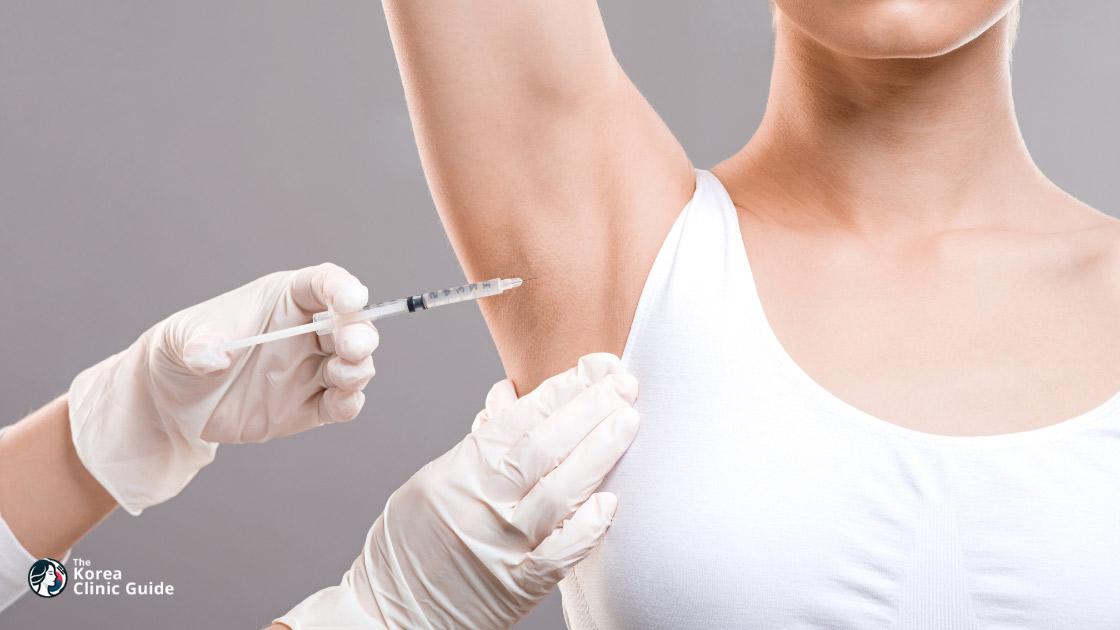
Hyperhidrosis Botox in Korea: Treatment Areas, Results, Recovery, and Travel Planning
Hyperhidrosis Botox uses mapped, shallow intradermal injections to reduce focal sweating in underarms, hands, feet, and selected other areas, with treatment planning, anesthesia options, aftercare, and follow-up guidance for international patients. Korea costs range from ₩500,000 to ₩1,600,000 (about US$400–$1,200), depending on treatment area, product, dose, coverage, and anesthesia.
Updated: Sep 16, 2026
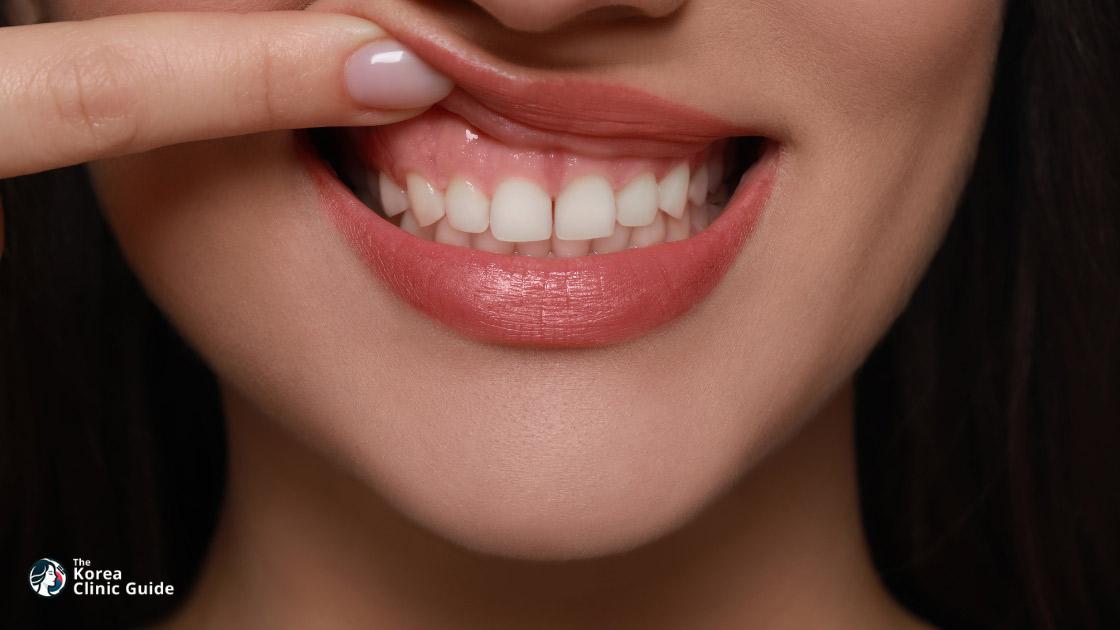
Gummy Smile Botox in Korea: Candidates, Results, Recovery, and Travel Planning
Gummy smile Botox uses targeted injections in upper-lip elevator muscles after dynamic dental and smile assessment, with effects typically appearing in 3–7 days and lasting about 12–24 weeks. In Korea, treatment costs ₩200,000–₩400,000 (about US$100–$300); international patients can usually plan a 2–3-day stay and remote review at 10–14 days.
Updated: Sep 14, 2026
Clinics offering Masseter Botox

365mc Hospital: Korea's Leading Liposuction and Body Contouring Clinic with Innovative AI Technologies and Comprehensive Patient Care
Gyodae

Haru Clinic Korea | Seoul Facelift, Threads, Botox & Fillers
Sinsa

Minish Dental Hospital: Korea's Premier Dental Clinic Offering Advanced Treatments and Personalized Care
Sinsa

Three Wishes Clinic - Myeongdong, Korea: Advanced Botox, Fillers, Laser, and Skin Treatments for Confidence and Care
Myeongdong