
Medical Tourism Blog
Effective Forehead Botox for Drooping Eyebrows: Top Treatment Solutions in Korea

Table of contents
- Understanding Drooping Eyebrows (Brow Ptosis)
- Forehead Botox: A Detailed Medical Procedure
- The Patient Journey: Getting Forehead Botox in South Korea
- Which Are the Best Clinics in Korea for Drooping Eyebrows?
- Cost Analysis: Forehead Botox in South Korea vs. Global Markets
- Patient Experiences and Outcomes with Forehead Botox
- Conclusion
- References
Considering treatment in Korea? Everything you need to know e.g. — how to avoid scams, visas, interpreters, recovery tips — in our Medical Tourism Master Guide. Plan with confidence in minutes, not weeks!
If you’re looking for solutions to “drooping eyebrows” and the “tired look” they can cause, this guide is for you. Here, we break down the medical background of this common concern, explain how [Forehead Botox](/blog/forehead-botox-korea) can help, walk you through the patient experience in South Korea, compare costs, and discuss what you can expect from the procedure. Our goal is to give you clear, practical information so you can make confident decisions about your appearance and well-being.
Understanding Drooping Eyebrows (Brow Ptosis)
Definition and Common Pseudonyms
Drooping eyebrows, known medically as brow ptosis, happen when one or both eyebrows fall below their usual position. This can make you look tired, sad, or even angry. It’s not just about looks—brow ptosis can also cause “hooding of eyelid skin” or “excess soft tissue pushing downwards on the eyelid,” sometimes called “pseudoptosis.”
The “tired look” is a direct result of the brow’s descent and can even affect your vision, especially your side vision when looking up. Many people unconsciously raise their eyebrows or tilt their heads back to compensate, which can lead to eye strain and forehead fatigue. So, treating brow ptosis isn’t just about looking better—it can also make you feel more comfortable day to day.
Here’s a quick reference for the terms you might hear:
Table 1: Common Terms for Drooping Eyebrows
| Medical Term | Common Patient Descriptions |
|---|---|
| Brow Ptosis | Drooping Eyebrows, Droopy Eyebrow, Sagging Brows, Heavy Eyebrows, Tired Look, Sad Appearance, Angry Expression, Hooding of Eyelid Skin, Pseudoptosis |
Causes and Contributing Factors
Most cases of brow ptosis develop over time, with congenital cases being rare and usually tied to underdeveloped facial nerves or muscles. The most common cause is age-related changes—as we age, our skin loses elasticity and the tissues and muscles in the forehead become looser. This often starts at the outer third of the eyebrow and can spread inward if not addressed.
Other factors that can cause brow ptosis include:
- Trauma or Prior Surgery: Injuries or surgeries that affect the facial nerve can weaken the muscles that lift the brow.
- Botox Injections: Ironically, poorly placed Botox can cause brow ptosis by weakening the wrong muscles.
- Myogenic Conditions: Muscle diseases like myasthenia gravis or muscular dystrophy can lead to brow drooping.
- Infectious Agents: Infections such as Ramsay Hunt syndrome, herpes, Lyme disease, HIV, and COVID-19 can affect the facial nerve.
- Spasm-induced Conditions: Muscle spasms around the eye, like blepharospasm, can pull the brow down over time.
- Neoplastic Causes: Tumors affecting the facial nerve, such as skin cancers or acoustic neuromas, can also cause brow ptosis.
Lifestyle choices matter too—sun exposure, smoking, and poor skincare can speed up skin aging and worsen brow ptosis.
Impact on Appearance and Vision
Brow ptosis affects both how you look and how you see. A droopy eyebrow can make you look tired or sad, changing your facial expressions and self-image. Functionally, the brow can act like a curtain, blocking your peripheral vision, especially when looking up. Many people strain to lift their brows or tilt their heads, which can cause discomfort. Lifting the brow, whether manually or surgically, can restore your field of vision, but it won’t fix vision problems caused by issues inside the eye or brain.
Forehead Botox: A Detailed Medical Procedure
What is Botulinum Toxin Type A (Botox)?
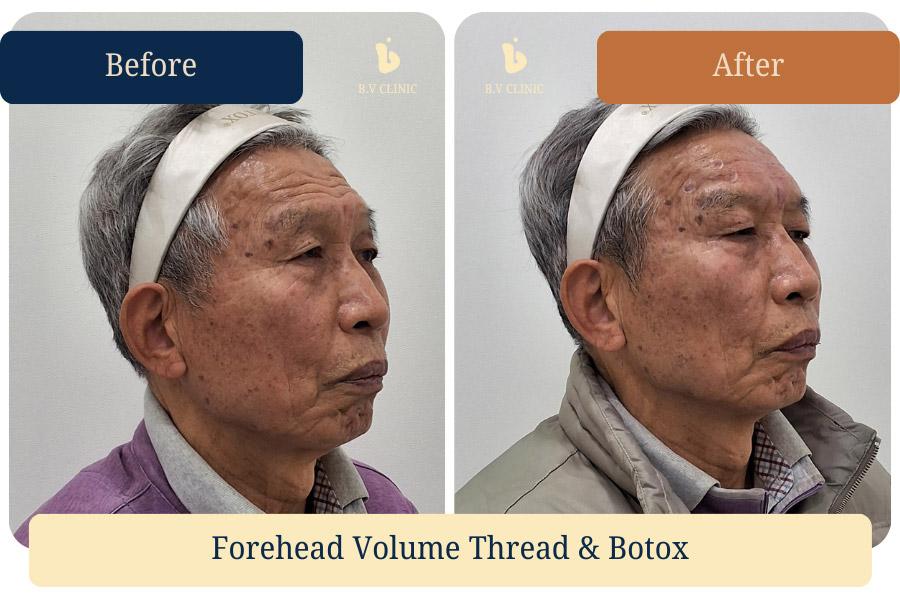
Botox, or Botulinum Toxin Type A (BTX-A), is a protein used to temporarily relax muscles. It works by blocking the nerve signals that make muscles contract. When injected into the forehead, Botox can smooth wrinkles and, importantly, lift the eyebrows by relaxing specific muscles.
Mechanism of Action: How Botox Lifts the Brows
Your eyebrow position is controlled by a balance between muscles that lift (like the frontalis) and muscles that pull down (like the orbicularis oculi, procerus, and corrugator supercilii). By injecting Botox into the brow depressors, their downward pull is weakened, allowing the frontalis to lift the brow. Skilled practitioners can also target specific parts of the frontalis to achieve a natural lift while preserving facial movement. The key is precise muscle targeting, which requires expertise for the best results.
Benefits of Forehead Botox for Brow Ptosis
Forehead Botox offers several advantages:
- Non-Invasive and Quick: No surgery or anesthesia needed; the procedure takes just 10–30 minutes.
- Minimal Downtime: Most people return to normal activities right away.
- Aesthetic Improvement: For mild to moderate brow ptosis, Botox can lift the brows and smooth forehead lines, creating a refreshed look.
- Reversible and Adjustable: Results are temporary and can be tweaked with additional injections if needed.
- Psychological Benefits: Many patients feel more confident and satisfied with their appearance after treatment.
Limitations and Considerations
There are some important things to keep in mind:
- Temporary Nature: Results last 3–6 months, so regular treatments are needed.
- Best for Mild-to-Moderate Cases: Botox works best for mild to moderate drooping due to muscle imbalance or aging. Severe cases may need surgery.
- Not a Replacement for Surgery in Severe Cases: If you have significant brow ptosis or excess skin, surgical options like blepharoplasty or a brow lift may be more effective. Botox is a temporary fix for less severe cases, and ongoing treatments are needed to maintain results.
The Patient Journey: Getting Forehead Botox in South Korea
Why South Korea for Aesthetic Procedures?
South Korea is a top destination for cosmetic treatments, known for skilled practitioners, advanced techniques, and affordable prices. Clinics often offer efficient, natural-looking results with minimal downtime. Many also provide packages for international patients, including translation and accommodation, making the whole process smoother and more convenient.
Step-by-Step Process for Medical Tourists
Here’s what you can expect if you travel to South Korea for Forehead Botox:
Initial Consultation and Assessment
You’ll start with a detailed consultation, where your goals, medical history, and facial anatomy are reviewed. The practitioner will decide on the right Botox dosage and injection points, and explain the risks and benefits.
Preparation
On procedure day, your forehead will be cleaned, and a numbing cream or ice may be applied for comfort. The practitioner will mark the injection sites based on your unique muscle patterns.
Injection Procedure Details
Using a fine needle, the practitioner injects small amounts of Botox into the marked areas. The number of injections and amount of Botox depend on your needs. The process is quick—usually under 20 minutes—and most people feel only a slight pinch.
Immediate Post-Procedure Care and Instructions
After the injections, you might have mild redness, swelling, or soreness, but these usually fade quickly. Key aftercare tips include:
- Don’t rub or massage the area for 12–24 hours to prevent the Botox from spreading.
- Stay upright for at least four hours.
- Avoid strenuous activity for 24 hours.
- Avoid heat exposure (like saunas or sunbathing) for at least four hours.
Following these instructions helps ensure the best results and reduces the risk of complications.
Follow-up and Expected Recovery Timeline
You can usually return to your normal routine right away. Results start to show in 3–5 days and peak at about two weeks. A follow-up visit may be scheduled to check your results and make adjustments if needed. The effects last 3–6 months, and maintenance treatments are recommended every 3–4 months.
Which Are the Best Clinics in Korea for Drooping Eyebrows?
Listed below are some of the best clinics in Korea for drooping eyebrows.
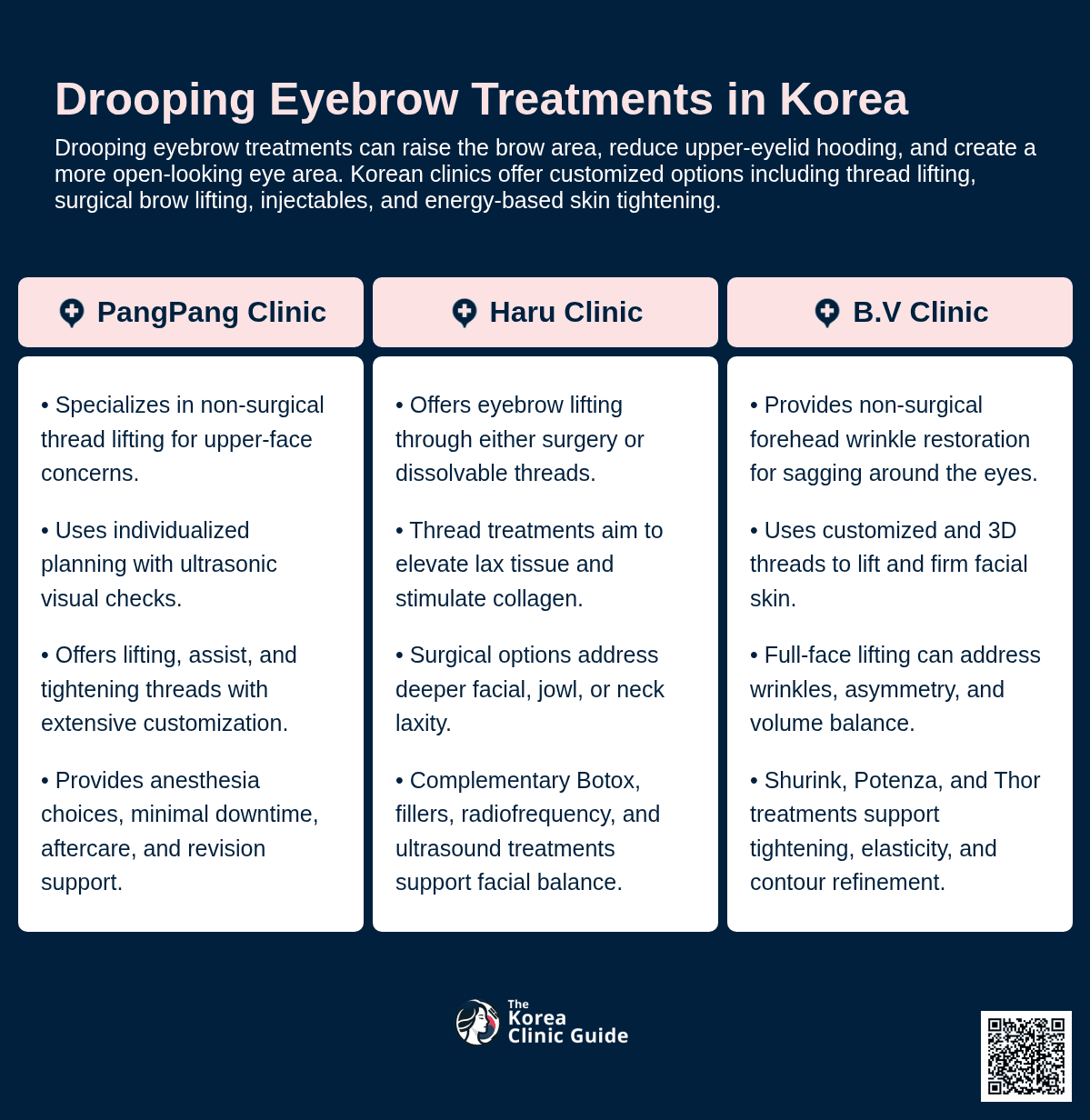
1. PangPang Clinic
You may consider PangPang Clinic for drooping eyebrows if you are seeking a non-surgical, thread-based approach: its practice is dedicated to thread lifting, with individualized planning using specialized thread types that can be selected to support lifting and contour goals around the upper face.
- URL: PangPang Clinic Website
- Location: Gangnam-gu, Seoul
- Thread-lifting approach:
- Thread-lifting treatment includes a pre-operative design process and ultrasonic visual checks.
- The clinic describes lifting threads for anchoring or pulling, assist threads to complement lift, and tightening threads intended to support elasticity over time.
- Treatment is described as taking about 30 minutes to one hour, with partial, Airnox, or sleep anesthesia options and minimal recovery time.
- Personalization and follow-up:
- A dedicated consultation center is described as listening to your concerns to develop a tailored treatment plan.
- The clinic reports using 31 specialized functional threads and allowing extensive thread customization.
- An aftercare package is offered to support and prolong thread-lifting effects.
- Relevant experience:
- PangPang Clinic reports more than a decade of research and clinical focus on thread lifting.
- It states that it established a Thread Lifting Research Institute and that its medical team participates in international beauty conferences through lectures and presentations.
- If you have had an unsatisfactory thread-lifting result elsewhere, its revision service may combine further thread treatment with fillers, Botox, or lasers where appropriate.
2. Haru Clinic
You may consider Haru Clinic for drooping eyebrows if you want an eyebrow-lift plan that can be surgical or thread-based, with the aim of raising brow position, improving hooding of the upper lids, and creating a more open-looking eye area.
- URL: Haru Clinic Website
- Location: Gangnam-gu, Seoul
- Eyebrow-lift options:
- The clinic offers eyebrow lifting through either surgery or threads.
- Its thread-lift approach uses dissolvable barbed threads under local anesthesia to elevate lax facial tissue, with short downtime and collagen stimulation described as part of the treatment effect.
- A surgical facelift option is also available for concerns involving deeper facial laxity, jowls, or neck skin.
- Treatment planning:
- Dr. Jeong is described as designing treatments around facial harmony and balance, with an emphasis on a natural, refreshed result.
- Dr. Jeong is an official research physician for Merz, the company behind Belotero Filler, and teaches other doctors updated filler techniques.
- The clinic describes comprehensive non-invasive procedures intended to provide longer-lasting solutions with minimal downtime.
- Related treatments:
- Collagen-tightening treatments use radiofrequency or ultrasound to firm skin without incisions.
- Botox may be used for forehead lines, frown lines, and crow's feet; effects are described as lasting about three to six months.
- Fillers may restore volume and definition in areas including the cheeks, chin, jawline, and tear troughs.
3. B.V Clinic
You may consider B.V Clinic for drooping eyebrows if you prefer a non-surgical upper-face approach: its forehead wrinkle restoration uses tailored threads to address forehead aging signs and sagging around the eyes without visible scars or anesthesia.
- URL: B.V Clinic Website
- Location: Seoul
- Upper-face lifting options:
- Non-surgical forehead wrinkle restoration is designed for forehead wrinkles and sagging eyes, using customized threads for a natural-looking result.
- Its 3D thread-lifting treatment places threads strategically to lift and firm sagging skin while supporting natural facial contours.
- Full-face lifting is also available to address forehead wrinkles, nasolabial folds, volume balance, and facial asymmetry without surgery.
- Skin-tightening treatments:
- Shurink Lifting uses high-intensity focused ultrasound to target deeper skin layers for tightening, elasticity, and contour refinement.
- Potenza Lifting uses radiofrequency to support collagen and elasticity and may also address scars and pore texture.
- Thor Lifting uses radiofrequency for skin tightening and contouring across different treatment areas.
- Aftercare:
- The clinic's aftercare program includes skin-regeneration management intended to help minimize swelling and support elasticity.
- Aftercare may include nutritional skincare products and ultrasound-based treatments intended to support collagen production.
Cost Analysis: Forehead Botox in South Korea vs. Global Markets
Average Costs in South Korea
Botox treatments in South Korea are generally more affordable than in Western countries. Prices range from ₩100,000 to ₩750,000 KRW (about $69 to $517 USD), though some sources list up to $700 USD. Factors affecting cost include:
- Clinic Location and Reputation: High-end areas and well-known clinics may charge more.
- Practitioner’s Expertise: More experienced injectors may cost more.
- Number of Units and Treated Areas: More Botox or multiple areas increase the price.
- Brand of Botox Used: Korean generics are usually cheaper than international brands.
- Promotional Packages: Many clinics offer deals or packages that include extras like transportation and accommodation.
- Clinic Type: Chain medspas may have different pricing than independent clinics.
Comparative Analysis: South Korea vs. Key International Destinations
Here’s how Botox costs compare across countries:
Table 2: Comparative Costs of Forehead Botox (South Korea vs. Key Countries)
| Country | Approximate Botox Cost Range (USD) | Key Considerations for Medical Tourists |
|---|---|---|
| South Korea | $69 - $517 | Lower cost, advanced treatments, comprehensive packages, local generic brands. |
| USA | $200 - $1,200 | Higher cost, strict safety regulations, high-quality products. |
| United Kingdom | $321 - $770 | Mid-range cost. |
| Thailand | $7.5 - $48.75 | Very low cost, but check product quality and provider credentials. |
| Mexico | $30 - $500 | Low cost, but risk of lower-quality or counterfeit products. |
| Turkey | $191 - $246 | Cost-effective, often includes extra services. |
| Switzerland | ~$499 | Higher cost, high standards of care. |
| India | ~$88 | Low cost, but quality can vary. |
Note: All USD conversions are approximate and for illustration only.
Considerations for Medical Tourists
If you’re considering Forehead Botox abroad, especially in South Korea, keep these points in mind:
- Total Expense: Factor in travel costs—flights from North America or Europe can add $600–$1,200.
- Package Inclusions: Many clinics offer packages with transportation, accommodation, and translation, which can save you money and hassle.
- Product Authenticity: Korean generic Botox is cheaper, but always confirm what’s being used and check for regulatory approval.
- Due Diligence: Research your clinic and practitioner thoroughly. The risk of side effects is higher with inexperienced injectors, so prioritize expertise and reputation.
Patient Experiences and Outcomes with Forehead Botox
Expected Aesthetic Results
Most patients see a subtle but noticeable brow lift—typically 1–3 mm, with studies showing average lifts of 0.5 to 1.3 mm. This small change can make a big difference, smoothing the forehead, reducing frown lines, and opening up the eyes for a more refreshed look. Results start to appear in 3–5 days and peak at two weeks, with natural-looking improvements reported consistently.
Impact on Patient Confidence and Satisfaction
Patients often report feeling more confident and satisfied with their appearance after Forehead Botox. For example, one woman in her 30s saw a “remarkable” transformation, with lifted brows and a more youthful look, boosting her self-image and confidence.
Potential Side Effects and How to Address Them
Forehead Botox is generally safe, but some mild side effects can occur:
- Common, Mild Side Effects: Pain, swelling, redness, bruising, tingling, mild headache, or flu-like symptoms—usually resolve in a few days.
- Temporary Drooping (Iatrogenic Ptosis): If Botox spreads to unintended muscles, it can cause temporary eyelid or eyebrow drooping. This is preventable with proper technique—injecting at least 2 cm above the brow (4 cm for older patients), using conservative doses, and treating the glabellar area at the same time. If ptosis occurs, it usually resolves in 3–6 weeks, and sometimes additional Botox can help. Rarely, medications like pyridostigmine bromide are used.
Choosing an experienced injector is the best way to minimize risks and manage any complications.
Long-term Efficacy and Maintenance
Botox effects last 3–6 months, depending on your muscle strength, metabolism, and injection technique. Regular treatments every 3–4 months help maintain results, and some studies suggest that repeated treatments can improve your baseline brow position over time. Good aftercare and a healthy lifestyle can also help prolong the effects.
Conclusion
Brow ptosis, or drooping eyebrows, can affect both your appearance and, in some cases, your vision. Forehead Botox is a safe, non-surgical option for mild to moderate cases, offering a subtle lift and a refreshed look. South Korea stands out for its affordable, high-quality treatments and comprehensive support for medical tourists. While results are temporary and require ongoing care, most patients enjoy natural-looking improvements and increased confidence. Choosing a skilled provider and following proper aftercare are key to getting the best and safest results.
References
1, 2, 3, 4, 5, 6, 7, 8, 9, 10, 11, 12, 13, 14, 15, 16, 17, 18
Frequently Asked Questions
Related Blogs
Discovering Competitive Prices: Mouth Corner Lift Botox Costs in Korea Versus Global Medical Tourism Hubs
Discover the latest trends and costs associated with Mouth Corner Lift Botox in Korea, a popular cosmetic treatment for enhancing smiles. Learn how this procedure compares in price and effectiveness to similar treatments worldwide.
Updated: Oct 27, 2026
Discover the Essentials: Why Korea is an Appealing Destination for Trapezius Botox in 2023
Discover the cost of Trapezius Botox in Korea, a popular treatment for muscle relaxation and posture improvement. Learn about pricing, benefits, and what to expect when seeking this cosmetic procedure in one of Asia's leading beauty hubs.
Updated: Oct 26, 2026
Comparing Chin Botox Costs: Why Korea's Expertise and Pricing Attract Global Clients
Discover the latest insights into the cost of Chin Botox in Korea, a popular destination for affordable cosmetic procedures. Explore factors influencing prices, typical expenses, and why Korea is a top choice for achieving your desired look.
Updated: Oct 25, 2026
Discover the Cost of Calf Reduction Botox: A Detailed Comparison Between Korea and Global Destinations
Discover the affordable world of calf reduction Botox in Korea, where advanced techniques and competitive pricing make it a popular choice for those seeking a more streamlined silhouette. This article explores the costs, benefits, and what to expect when considering this minimally invasive procedure abroad.
Updated: Oct 24, 2026
Clinics offering Forehead Botox

365mc Hospital: Korea's Leading Liposuction and Body Contouring Clinic with Innovative AI Technologies and Comprehensive Patient Care
Gyodae

Haru Clinic Korea | Fully-Customized Full-Face Non-Surgical Rejuvenation With Threads, Botox & Fillers
Sinsa

PangPang Clinic: Korea's Premier Thread Lifting and Skin Rejuvenation Specialist in Gangnam, Seoul
Sinsa
B.V Clinic Korea: Advanced Aesthetic Treatments for Natural Beauty Enhancement & Rejuvenation
Sinnonhyeon Station