
Medical Tourism Blog
Brazillian Laser Hair Removal in Korea: Treatment Areas, Sessions, Safety and Travel Planning
Table of contents
- Brazillian Laser Hair Removal at a Glance
- What Is Brazilian Laser Hair Removal?
- Who Is a Good Candidate for Brazilian Laser Hair Removal?
- How Is Brazilian Laser Hair Removal Performed?
- Why Visit Korea for Brazilian Laser Hair Removal?
- Key Information for International Patients
- Which Are the Best Clinics in Korea for Brazillian Laser Hair Removal?
- Brazillian Laser Hair Removal From Start to Finish
- Alternatives to Brazilian Laser Hair Removal
- How Can I Prepare for Brazilian Laser Hair Removal?
- Aftercare Advice
Considering treatment in Korea? Everything you need to know e.g. — how to avoid scams, visas, interpreters, recovery tips — in our Medical Tourism Master Guide. Plan with confidence in minutes, not weeks!
Last updated: September 2026
Brazillian Laser Hair Removal at a Glance
- What it treats — Brazilian laser hair removal uses light energy to reduce hair growth on mapped external pubic skin; internal genital mucosa is not treated.
- Expected course — Most people need 4–8 sessions spaced several weeks apart, with occasional maintenance needed months or years later, especially with hormone-related regrowth.
- Best candidates — Dark, coarse external pubic hair generally responds best; white, gray, blonde, very light, and red hair respond poorly and may be better treated with electrolysis.
- Recovery and results — There is usually no downtime: redness, warmth, tenderness, and follicular swelling commonly settle within hours, while treated hairs shed gradually over days to weeks.
- Key safety limitation — Burns and pigment changes are more likely with recent tanning or poorly matched settings, so darker skin requires an experienced operator, appropriate wavelength and cooling, and sometimes a test spot.
- Korea travel plan — Allow 1–2 days in Korea for consultation, a possible test spot, and one outpatient session; a short trip cannot complete the full series because visits are weeks apart.
- Korea-specific check — Medical Korea registration can help verify a foreign-patient facility and its malpractice-insurance requirement, but it does not guarantee superior hair-reduction results or equal expertise across clinics.
What Is Brazilian Laser Hair Removal?
Brazilian laser hair removal uses focused light energy to reduce unwanted hair on agreed external pubic and surrounding skin areas. It aims for long-term reduction in hair growth, making grooming easier while not guaranteeing complete permanent removal. It is a minimally invasive, non-surgical outpatient cosmetic treatment.
Who Is a Good Candidate for Brazilian Laser Hair Removal?
- Dark, coarse external pubic hair — This hair type generally responds best because the laser targets pigment in the hair shaft and follicle.
- Clear external-area goals — Good candidates can define whether they want the bikini line, mons pubis, labia majora/external folds, perineum, intergluteal cleft, and perianal skin treated. “Brazilian” is not a standardized medical boundary.
- Realistic reduction goals — Laser provides long-term hair reduction rather than guaranteed permanent total removal. Most people need 4–8 sessions several weeks apart, and hormone-related growth can require maintenance treatments.
- Skin-tone-aware treatment planning — Brown and Black skin can be treated, but device wavelength, pulse settings, cooling, and operator experience with the patient’s Fitzpatrick skin type are central to reducing burn and pigment-change risk. Hair color, skin tone, and treatment timing affect results.
Defer elective treatment during pregnancy because adequate pregnancy-specific safety data are lacking. Postpone treatment for a current tan, sunburn, recent sunless tanner, open skin, severe dermatitis, folliculitis, active genital herpes, or another infection in the proposed external treatment area. White, gray, blonde, very light, and red hairs respond poorly and are often better suited to electrolysis. A history of keloids, laser burns, persistent pigment changes, highly reactive skin, current or recent isotretinoin use, or medicines that affect photosensitivity or bleeding requires individualized assessment; do not laser over tattoos or internal genital mucosa. Current evidence does not support an automatic waiting period for nonablative hair-removal laser treatment solely because of isotretinoin, but skin irritation, healing history, and the clinic’s protocol still matter.
How Is Brazilian Laser Hair Removal Performed?
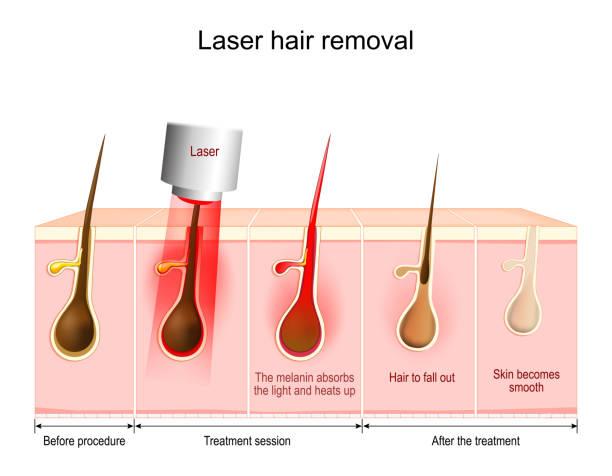
The meaningful choice is the light-based device and protocol matched to skin tone, hair characteristics, and prior reactions—not whether a clinic calls the area “Brazilian” or “Hollywood.” No single wavelength or cooling system is proven best for every intimate-area hair pattern.
- Alexandrite laser, 755 nm — Often effective for dark terminal hair on lighter, untanned skin. Recent tanning and unsuitable settings increase burn and pigment-change risk.
- Diode laser, commonly 800–810 nm — Commonly used for dark, coarse hair across several skin tones. Results depend on fluence, pulse duration, spot size, cooling, and the operator’s technique.
- Long-pulsed Nd:YAG laser, 1,064 nm — Often selected for darker skin because it has less epidermal melanin absorption than shorter wavelengths. It is an evidence-supported option, although comfort and reduction rates differ by protocol. Comparative evidence in Fitzpatrick III–VI skin does not establish one universal best modality.
- IPL — Intense pulsed light uses filtered broadband light rather than one laser wavelength. It can reduce hair, but filters, settings, and skin-tone selection are especially important.
- Cooling and test spots — Contact cooling, chilled tips, cryogen spray, or gel can improve comfort and protect the outer skin. Request a conservative test spot when there is darker skin, recent tanning, marked sensitivity, or a previous pigment complication.
- External-skin mapping — Confirm the exact areas in writing before undressing. The handpiece should be used only on agreed external skin; vaginal, rectal, and other genital mucosa are excluded.
Why Visit Korea for Brazilian Laser Hair Removal?
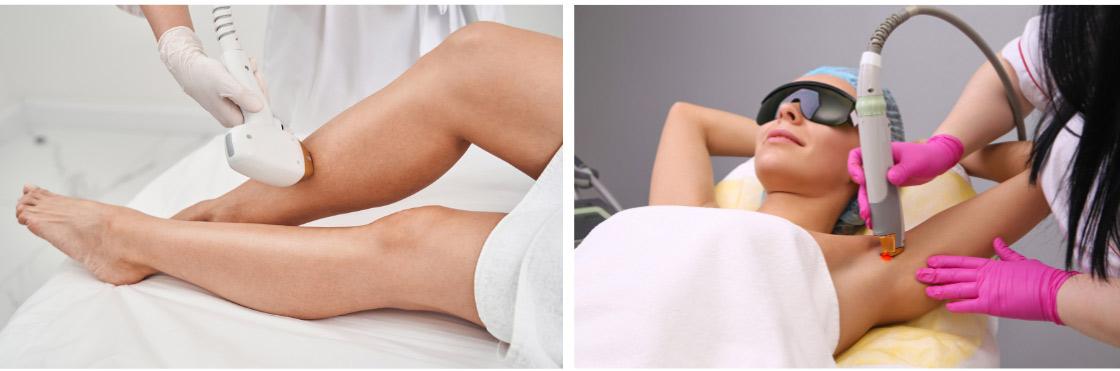
Korea’s defensible advantage for this treatment is its infrastructure for international patients, not evidence of superior hair-removal outcomes. Brazilian laser hair removal remains highly operator- and device-dependent wherever it is performed. Verify the individual clinician, device, treatment map, and follow-up arrangements rather than choosing on country alone.
- Foreign-patient registration pathway — Medical Korea’s registered-institution system is one useful verification step for overseas visitors. Medical Korea states that registered institutions are required to maintain medical-malpractice liability insurance.
- Accountability, not a performance guarantee — Registration and insurance are international-patient safety considerations; they do not prove that every clinic has equal expertise or that Korea produces better Brazilian laser hair-reduction results.
- Information to request before booking — Ask for the actual device model and wavelength, cooling method, operator credentials, experience with your Fitzpatrick skin type and intimate-area skin, test-spot policy, English-language consent and aftercare, and an overseas complication-contact plan. Appropriate laser selection and experience treating the patient’s skin color are important for safety and results.
Key Information for International Patients
- Minimum stay — Plan 1–2 days in Korea for a consultation, possible test spot, and one outpatient session. Admission and routine observation are not normally needed.
- Course scheduling — A short trip cannot complete a full course. Most treatment plans involve 4–8 sessions separated by several weeks; arrange later sessions in Korea or continuity with a qualified clinician at home.
- Flight timing — There is no universal evidence-based delay before flying after an uncomplicated session. Fly when the skin is comfortable, wear loose breathable clothing, and postpone travel if blistering, significant swelling, open skin, or escalating pain develops.
- Itinerary impact — Mild warmth, tenderness, redness, and follicular swelling usually settle within hours. Avoid hot baths, saunas, intense exercise, and friction while the area remains irritated; do not schedule a spa, beach, or strenuous sightseeing day immediately after treatment.
- Remote follow-up — Obtain an English-language treatment record, written external-skin map, aftercare instructions, and, where available, device and parameter details. Establish how to send photographs and contact the clinic after departure.
Travel note: Bring loose cotton underwear and clothing for the journey home. Identify a dermatologist or primary-care clinician at home before travel in case a delayed burn, infection, or pigment problem needs in-person assessment.
Which Are the Best Clinics in Korea for Brazillian Laser Hair Removal?
Listed below are some of the best clinics in Korea for brazillian laser hair removal.
1. Three Wishes Clinic - Myeongdong
You may consider Three Wishes Clinic - Myeongdong for Brazilian laser hair removal if you want laser-based, long-lasting reduction of unwanted hair in a clinic that lists treatment for almost all body areas. The clinic describes using targeted laser energy to destroy hair follicles, with care framed around safety, satisfaction, and individualized medical beauty services.
- URL: Three Wishes Clinic - Myeongdong Website
- Location: Jung-gu, Seoul
- Laser hair removal:
- Uses targeted laser energy intended to destroy hair follicles for long-lasting unwanted-hair reduction.
- The clinic states that laser hair removal is suitable for almost all body areas, which can include discussion of Brazilian-area treatment during your consultation.
- Other skin services:
- Offers CO2 laser resurfacing, photodynamic therapy for acne, chemical peels, Rejuran Healer injections, and customized skin-care treatments.
- Also provides Shurink, an ultrasound-based lifting and tightening treatment.
2. Cheongdam Oracle Dermatology & Plastic Surgery Clinic
You can expect a clinic offering personalized aesthetic and dermatologic treatment planning, with services that include laser-based skin procedures, although the provided information does not specifically confirm Brazilian laser hair removal. If you are considering this treatment, you may want to clarify whether intimate-area hair removal is available, which laser system is used, and how your skin and hair characteristics are assessed.
- URL: Cheongdam Oracle Dermatology & Plastic Surgery Clinic Website
- Location: Gangnam-gu, Seoul
- Laser and skin care:
- Lists laser resurfacing for skin texture, wrinkles, scars, and blemishes, as well as chemical peels, microneedling, and HydraFacial treatments.
- Its listed laser-focused services indicate an aesthetic dermatology setting, but they do not confirm a dedicated hair-removal service.
- Additional aesthetic services:
- Offers Botox, dermal fillers, thread lifting, body-contouring procedures, hair transplantation, scalp micropigmentation, and plastic surgery procedures.
- The clinic describes providing personalized treatment plans.
3. VandS Clinic - Pangyo
You may consider VandS Clinic - Pangyo for Brazilian laser hair removal because it specifically lists laser technology for permanent removal of unwanted hair across various body areas. The clinic also describes tailored treatment by experienced medical professionals using modern technology, which may be useful when discussing treatment of a sensitive area and your individual hair-removal goals.
- URL: VandS Clinic - Pangyo Website
- Location: Seongnam-si Bundang-gu, Gyeonggi
- Hair removal:
- Lists laser hair removal intended to permanently remove unwanted hair.
- States that treatment is effective across various body areas, allowing you to ask whether Brazilian-area treatment is appropriate for you.
- Related skin services:
- Offers laser lifting, acne and spot treatments, and services for freckles, redness, and pigmentation.
- Lists skincare treatments including facials and peels, along with injectable skin boosters.
Brazillian Laser Hair Removal From Start to Finish
- Remote inquiry and consultation — Send clear information about skin tone, natural hair color and thickness, previous laser reactions, tanning, medicines, hormonal conditions, and the external areas to be treated. Confirm English-language consultation availability and request the clinic’s written Brazilian-area definition before booking.
- In-person assessment and consent — The clinician reviews Fitzpatrick skin type, tanning, scars or keloids, tattoos, herpes history, active irritation or infection, pregnancy possibility, and medication or supplement use. Agree on a written map for the bikini line, mons pubis, external folds, perineum, intergluteal cleft, and perianal skin; mucosa is excluded.
- Test spot when indicated — A cautious test spot can be used for darker or recently tanned skin, prior pigment complications, or significant sensitivity. The clinician assesses the response before selecting full-treatment settings.
- Area preparation — The agreed external area is shaved or trimmed, cleansed, and marked. Protective eyewear is worn. Cooling is applied; clinician-directed topical anesthetic is sometimes used. Do not apply high-strength or large-area numbing creams independently.
- Laser treatment — The operator delivers overlapping pulses across the mapped external skin. Each pulse often feels like a brief elastic-band snap with cooling. Duration depends on hair density and the agreed coverage area.
- Same-day discharge — General anesthesia, sedation, admission, and a routine companion are not normally required. Mild redness, warmth, tenderness, and perifollicular swelling are common immediately afterward.
- Early recovery and shedding — Treated hairs do not disappear immediately; they usually shed over days to weeks. Follow friction, heat, cleansing, and sun-protection instructions until the skin settles.
- Overseas follow-up and future sessions — Contact the clinic promptly for a concerning reaction, and seek local medical care for blistering, open skin, spreading redness, pus, fever, or escalating pain. Schedule the next session according to the hair-growth cycle and the treating clinician’s assessment.
Alternatives to Brazilian Laser Hair Removal
Non-surgical options can remove hair temporarily, while laser reduces growth across a larger area over repeated sessions. Electrolysis is the main follicle-targeting alternative for hair with too little pigment for laser, but it is slow for extensive Brazilian coverage.
Electrolysis
- Best use — Individual treatment of white, gray, blonde, very light, or red hairs that laser cannot target reliably.
- Tradeoff — It can target follicles one by one but takes substantially longer than laser for the pubic and perianal region.
Shaving or Trimming
- Best use — Immediate, short-term grooming without the scheduling demands of a laser course.
- Tradeoff — Hair regrows quickly, and cuts, razor burn, irritation, and ingrown hairs can occur.
Waxing or Sugaring
- Best use — Temporary root-level removal for people who do not want a laser course.
- Tradeoff — Pain, folliculitis, and irritation are possible. Stop waxing, sugaring, plucking, threading, and electrolysis at least four weeks before laser unless the treating clinician gives different instructions, because laser needs hair pigment within the follicle.
Body Laser Hair Removal
- Best use — A broader treatment plan when unwanted hair extends beyond the intimate area, such as the legs, abdomen, chest, or underarms.
- Tradeoff — Body areas differ in hair-growth cycles and skin response, so treatment maps, session counts, and settings need adjustment. See body laser hair removal.
Medical Assessment for Excess Hair Growth
- Best use — New, sudden, or marked hair growth, especially with irregular menstrual cycles or other signs of hormonal change.
- Tradeoff — Laser reduces existing hair but does not correct an endocrine cause such as PCOS. Medical evaluation is important when excess hair growth has an underlying cause.
How Can I Prepare for Brazilian Laser Hair Removal?
- Stop root-removal methods — Avoid waxing, sugaring, plucking, threading, and electrolysis in the area for at least four weeks before treatment unless the treating clinician specifies otherwise. Shave or trim as requested, often the day before, without causing razor burn. Laser needs pigment in the follicle to work.
- Avoid tanning — Avoid sun exposure, tanning beds, and sunless tanners before treatment. Reschedule if tan, sunburn, or self-tanner pigment remains. Use broad-spectrum, water-resistant SPF 30+ on exposed skin.
- Disclose every medicine and supplement — Provide prescription, over-the-counter, topical, herbal, and supplement lists, including isotretinoin, retinoids, antibiotics, aspirin, NSAIDs, anticoagulants, and photosensitizing medicines. Do not stop anticoagulants, hormonal treatment, or other prescribed medicine without the prescriber’s direction.
- Discuss isotretinoin accurately — Tell the clinician about current or recent isotretinoin. Routine deferral for nonablative hair-removal lasers is not supported by current consensus evidence alone, but active irritation, skin fragility, healing history, and clinic policy determine whether treatment proceeds. The evidence review does not replace individualized assessment.
- Protect the treatment area — Arrive with intact external skin. Postpone for cuts, razor burn, dermatitis, folliculitis, active herpes lesions, or another pubic, perineal, or perianal infection.
- Plan comfort and logistics — Fasting is not usually needed because routine treatment does not normally require sedation. Wear or pack loose breathable underwear and clothing, and keep travel plans flexible if a significant skin reaction occurs.
- Avoid self-directed numbing — Do not use high-strength or large-area topical anesthetic without clinician instruction; excessive application can cause serious toxicity.
Travel note: Schedule the session before low-key days, not immediately before a beach excursion, sauna visit, long cycling tour, or other activity that creates heat and friction.
Confirm the treating doctor’s clinic-specific shaving, medicine, numbing, and travel requirements, as individualized instructions take precedence over general guidance.
Aftercare Advice
Treat the Brazilian area as temporarily heat- and friction-sensitive until redness, swelling, warmth, and tenderness have resolved.
- Cool and cleanse gently — Use a cool compress wrapped in cloth for discomfort. Cleanse gently, pat dry, and do not scratch, pick, or use abrasive products on the treated external skin.
- Reduce heat and friction — Avoid hot baths, saunas, intense exercise, heavy sweating, tight underwear, and friction until the skin feels normal. Delay sexual activity until tenderness and redness have resolved; there is no single evidence-based restriction duration.
- Protect exposed skin from UV — Keep treated skin out of direct sun and use broad-spectrum SPF 50 on any exposed treated area. Follow the clinic’s sun-avoidance interval; Mayo Clinic advises sun protection for about six weeks after treatment.
- Expect delayed shedding — Hair commonly sheds over several days to weeks rather than immediately. Do not pluck shedding hairs; shaving between sessions is generally compatible with treatment when the skin is no longer irritated.
- Know warning signs — Contact the clinic and seek prompt local medical assessment for worsening pain, expanding redness, marked swelling, blistering, crusting, open wounds, drainage or pus, fever, spreading rash, persistent pigment change, or symptoms of genital herpes or infection.
- Plan the next session — Keep the clinician’s recommended interval so hair is treated in an appropriate growth phase. Maintenance can be needed months or years later, particularly with hormone-related hair growth.
Follow the treating doctor’s written instructions over general advice, and contact the clinic promptly when anything appears wrong.
Frequently Asked Questions
Related Blogs
Abdominal Laser Hair Removal in Korea: Methods, Recovery, Sessions and Travel Planning
Abdominal laser hair removal uses laser or IPL pulses with cooling to reduce dark, coarse abdominal hair over 4–8 sessions spaced several weeks apart. The article covers candidate screening, preparation, aftercare, travel planning for Korea, device options, and warning signs requiring clinical assessment.
Updated: Sep 22, 2026
Chest Laser Hair Removal in Korea: Methods, Recovery, Treatment Course, and Travel Planning
Chest laser hair removal uses targeted light pulses to reduce dark, coarse hair over 4–8 sessions spaced about 6–8 weeks apart, with device selection based on skin tone, hair characteristics, and prior reactions. International patients can plan 1–2 days for consultation and treatment, obtain an English treatment summary, and avoid sun, heat, heavy exercise, and friction while the skin recovers.
Updated: Sep 22, 2026
Arm Laser Hair Removal in Korea: Methods, Results, Travel Timing, and Aftercare
Arm laser hair removal uses selected laser wavelengths and cooling to reduce pigmented, coarse hair over spaced sessions, with maintenance sometimes needed. International patients can plan a 1–2 day stay, prepare by avoiding tanning and follicle-removing methods, and arrange follow-up and later sessions near home.
Updated: Sep 22, 2026
Upper Lip Laser Hair Removal in Korea: Methods, Recovery, Risks, and Travel Planning
Upper lip laser hair removal uses cooling and laser pulses to reduce dark, coarse hair over repeated sessions typically spaced 4–6 weeks apart, with maintenance often needed for facial growth. The article covers candidate screening, device selection, Korea travel planning, preparation, aftercare, warning signs, and alternatives such as electrolysis for light or fine hairs.
Updated: Sep 22, 2026
Clinics offering Brazillian Laser Hair Removal

Three Wishes Clinic - Myeongdong, Korea: Advanced Botox, Fillers, Laser, and Skin Treatments for Confidence and Care
Myeongdong

Cheongdam Oracle Dermatology & Plastic Surgery Clinic in Korea: Offering Advanced Skin, Anti-Aging, Body Contouring Treatments and More
Seolleung

Eugene's Clinic: Premier Medical Services and Treatments in Korea
Apgujeong

VandS Dermatology Clinic - Dongtan, Korea: Comprehensive Skin Care and Cosmetic Procedures for Youthful, Radiant Skin
Hwaseong