Medical Tourism Blog
Optimizing C-Section Shelf with Mini Liposuction Procedures in Korea
Table of contents
- Understanding the "C-Section Shelf": What It Is and Why It Forms
- Exploring "Mini Liposuction": A Detailed Medical Overview
- Best Clinics in Korea for C Section Shelf
- Navigating Mini Liposuction in South Korea: Your Medical Tourism Journey
- Cost Considerations: Mini Liposuction in South Korea vs. Global Options
- Patient Experiences and Realistic Expectations: Addressing the C-Section Shelf
- Important Considerations and Alternatives
- Conclusion
- References
Considering treatment in Korea? Everything you need to know e.g. — how to avoid scams, visas, interpreters, recovery tips — in our Medical Tourism Master Guide. Plan with confidence in minutes, not weeks!
This report offers clear, evidence-based insights for those looking into solutions for the "C-section shelf," a common postpartum issue. We focus on "Mini Liposuction" as a cosmetic option, explaining the medical details, the experience of undergoing the procedure in South Korea as a medical tourist, costs involved, and what results patients can realistically expect.
Pregnancy, childbirth, and postpartum bring significant physical changes. The "C-section shelf" is a frequent concern that can affect self-confidence, especially in a culture that often pressures women to quickly "bounce back" to their pre-baby shape. Beyond appearance, these changes can sometimes impact bladder, bowel, and sexual health. Understanding these connections is key to finding informed, holistic solutions.
Understanding the "C-Section Shelf": What It Is and Why It Forms
The "C-section shelf" describes a localized buildup of loose skin and/or excess fat in the lower abdomen, creating an overhang just above the C-section scar. Also called an "overhang," "C-section pooch," or "mom pooch," it’s a normal part of healing after a C-section delivery.
This shelf forms mainly due to scar tissue and restrictions after surgery. A C-section cuts through multiple layers—skin, fat, fascia, muscle, peritoneum, uterus, and amniotic sac. As these heal, scar tissue can cause adhesions, where tissues stick together instead of sliding smoothly. This pulls the incision inward, creating an indented scar, while tissue above may puff out, forming the shelf. These restrictions can affect both superficial skin and deeper muscles. Loose skin and fat accumulation after pregnancy often worsen the shelf. Genetics, skin elasticity, core strength, and the number of C-sections also influence its development. Importantly, the shelf isn’t just caused by excess fat.
Besides its look, the shelf can cause physical symptoms from deep scar restrictions affecting pelvic floor and abdominal muscles. These include urinary urgency, frequent urination, leakage, constipation, bowel emptying difficulties, pelvic or back pain (especially during sex), muscle weakness or tension, and scar hypersensitivity. These functional impacts highlight that the shelf is more than a cosmetic issue—it can affect overall well-being.
The shelf may improve or resolve over weeks to years postpartum. Traditional methods like isolated ab workouts, diet, and general exercise often don’t reduce the shelf. However, non-surgical treatments can help. Pelvic floor physical therapists use manual therapies like myofascial release to reduce scar adhesions and improve tissue mobility. Other helpful methods include scar massage, scar desensitization (gradually exposing the scar to different textures), belly binding, compression garments, cupping (lifting skin with suction cups), and skin rolling (gently lifting and rolling skin around the scar). These aim to soften and loosen scar tissue, reducing the shelf’s appearance. Given surgery’s risks and costs, trying rehabilitation and non-surgical options for 3-6 months before surgery is often advised.
Exploring "Mini Liposuction": A Detailed Medical Overview
Mini liposuction is a minimally invasive cosmetic procedure that removes small, stubborn fat deposits resistant to diet and exercise. Unlike traditional liposuction, which removes larger fat volumes, mini liposuction focuses on subtle body contouring and refinement rather than major weight loss. This distinction is important for understanding its suitability and limits.
The procedure starts with a medical evaluation to ensure safety. The treatment area is numbed with local anesthesia, minimizing discomfort and often avoiding general anesthesia, which reduces risks and recovery time. The surgeon makes tiny incisions, just a few millimeters long, which are barely noticeable. A thin tube called a cannula is inserted to loosen and suction out fat. Advanced techniques like VASER or laser-assisted liposuction may liquefy fat first, improving precision and reducing tissue trauma. The procedure usually lasts 30 minutes to 2 hours, depending on area size and complexity.
Mini liposuction offers several benefits. Its small incisions cause less trauma and minimal scarring, healing quickly and blending with natural skin lines. Recovery is faster than traditional liposuction; most patients return to work within days, some the next day, with less bruising and swelling. It allows precise sculpting of delicate or hard-to-reach areas like the chin, neck, arms, inner thighs, knees, and specific abdominal bulges. The procedure can also stimulate collagen production, improving skin elasticity and firmness for a smoother, tighter look. Ideal candidates are near their ideal weight (within 30%), have stubborn localized fat, good skin elasticity, and seek subtle reshaping rather than dramatic changes.
Compared to traditional liposuction, mini liposuction targets smaller fat volumes and uses local anesthesia instead of general. Its incisions are much smaller, resulting in less scarring and shorter recovery (days to a week versus weeks). Minimally invasive techniques cause less tissue disruption, lowering complications, pain, and swelling. However, mini liposuction may not achieve the dramatic contouring possible with traditional methods.
Best Clinics in Korea for C Section Shelf
Listed below are the best clinics in Korea for c section shelf:
| Clinic Name | Key Features | Special Techniques |
|---|---|---|
| Lydian Plastic Surgery Clinic | Lydian Cosmetic Surgery & Dermatology Clinic in Cheongdam, Gangnam, led by Dr. An Kyung Chun (selected among Korea’s Top 18 Aesthetic Plastic Surgery Experts, Director of the 5D Liposculpture Academy, and listed among the World’s Top 100 Doctors in Stem Cell Aesthetic Medicine), offers advanced, anatomy-based solutions for the C-section shelf. Using 5D high-definition liposuction with over 30 custom-made cannulas, the team precisely refines the lower abdomen while minimizing scarring—typically 1–2 tiny incisions hidden inside the belly button or along the pubic line. When skin or muscle laxity is significant, tummy tuck options can be incorporated, and specialized devices for stretch marks and sagging address postpartum skin changes alongside contouring. For precise planning and measurable results, Lydian employs Quantificare 3D imaging to guide detailed pre-surgical design and produce trusted, video-based before-and-after comparisons. Recovery is supported by a 4-step aftercare protocol—targeting swelling reduction, irregularity correction, skin elasticity recovery, and residual fat contouring—backed by continuous investment in the latest devices. The result is comprehensive, personalized care aimed at smoothing the C-section scar transition and restoring balanced abdominal contours. | 5D high-definition liposuction with over 30 custom-made cannulas; tummy tuck options for significant laxity; devices for stretch marks and sagging; Quantificare 3D imaging for planning and comparisons; 4-step aftercare protocol. |
| Seojin Plastic Surgery Clinic | Seojin Plastic Surgery Clinic in Gangnam, Seoul, offers a focused, technically refined approach to improving the C-section shelf (cesarean scar shelf). Led by Dr. Lee Hyungmin—recognized among Korea’s 100 Good Doctors and bringing more than 16 years of experience—the one-doctor clinic provides highly personalized, end-to-end care rooted in advanced body-sculpting expertise. For C-section shelf correction, Seojin’s 3-STEP Micro Liposuction process begins with safe preparation that gently separates and liquefies fat away from vessels, nerves, and surrounding tissues, continues with precise liposuction using cannulas tailored to each patient’s body type and fat volume, and concludes with meticulous manual refinement using a small syringe to ensure even fat distribution, refined shaping, and a smooth skin surface. When mild sagging accompanies the shelf, Seojin enhances results with Velody2 lifting laser (Velody Lifting) to improve skin elasticity and firmness—an integrated lifting liposuction approach that synergizes with liposuction for natural-looking contours. | 3-STEP Micro Liposuction; Velody2 lifting laser (Velody Lifting) to improve skin elasticity and firmness; one-doctor clinic; end-to-end care; advanced body-sculpting expertise. |
| THEPLUS Plastic Surgery | THEPLUS Plastic Surgery stands out as the best clinic in Korea for addressing C-section shelf concerns because it pairs world-class surgical leadership with a safety-first, fully integrated care system designed for refined contouring and natural-looking outcomes. Located in Garosu-gil, Gangnam, the four-floor facility streamlines care from consultation through surgery and post-operative skincare, while a team with over a decade of experience anchors every decision in evidence and precision. The clinic’s director surgeons, Dr. Jeong Jae Yong—President of the Korean Society of Plastic Surgeons and an internationally sought-after educator—and Dr. Kim Taek Kyun—a board-certified surgeon, award-winning 3D implant researcher, and leading authority in rhinoplasty and facial contouring—bring a rigorous, research-driven mindset to aesthetic balance and functional harmony; alongside them, Dr. Lee, a board-certified breast augmentation specialist with experience at Seoul National University Hospital, ensures results that are both natural and lasting. With active contributions to journals and textbooks, global presentations and live surgeries, membership in major societies including the American Society of Plastic Surgeons, and an unwavering emphasis on personalized communication, THEPLUS is uniquely positioned to deliver meticulous body contour refinement—supported by services such as liposuction—tailored to the nuanced needs of postpartum patients seeking to resolve a C-section shelf. | Liposuction; integrated safety-first, fully integrated care system; emphasis on personalized communication; postpartum-focused contour refinement. |
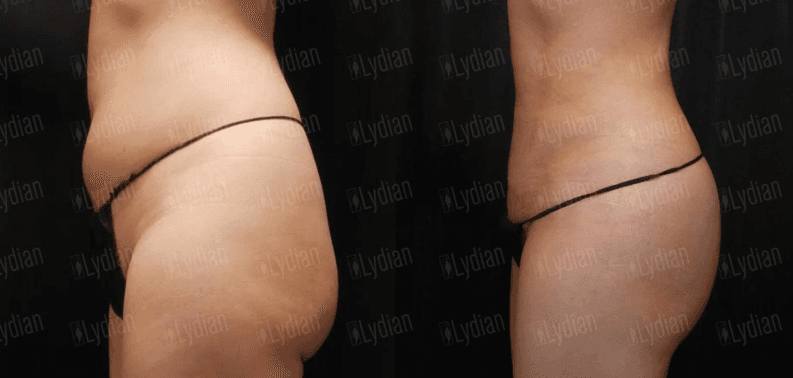
Lydian Plastic Surgery Clinic
Lydian Cosmetic Surgery & Dermatology Clinic in Cheongdam, Gangnam, led by Dr. An Kyung Chun (selected among Korea’s Top 18 Aesthetic Plastic Surgery Experts, Director of the 5D Liposculpture Academy, and listed among the World’s Top 100 Doctors in Stem Cell Aesthetic Medicine), offers advanced, anatomy-based solutions for the C-section shelf. Using 5D high-definition liposuction with over 30 custom-made cannulas, the team precisely refines the lower abdomen while minimizing scarring—typically 1–2 tiny incisions hidden inside the belly button or along the pubic line. When skin or muscle laxity is significant, tummy tuck options can be incorporated, and specialized devices for stretch marks and sagging address postpartum skin changes alongside contouring.
For precise planning and measurable results, Lydian employs Quantificare 3D imaging to guide detailed pre-surgical design and produce trusted, video-based before-and-after comparisons. Recovery is supported by a 4-step aftercare protocol—targeting swelling reduction, irregularity correction, skin elasticity recovery, and residual fat contouring—backed by continuous investment in the latest devices. The result is comprehensive, personalized care aimed at smoothing the C-section scar transition and restoring balanced abdominal contours.
You can check out their website here: Lydian Plastic Surgery Clinic Website
Seojin Plastic Surgery Clinic
Seojin Plastic Surgery Clinic in Gangnam, Seoul, offers a focused, technically refined approach to improving the C-section shelf (cesarean scar shelf). Led by Dr. Lee Hyungmin—recognized among Korea’s 100 Good Doctors and bringing more than 16 years of experience—the one-doctor clinic provides highly personalized, end-to-end care rooted in advanced body-sculpting expertise.
For C-section shelf correction, Seojin’s 3-STEP Micro Liposuction process begins with safe preparation that gently separates and liquefies fat away from vessels, nerves, and surrounding tissues, continues with precise liposuction using cannulas tailored to each patient’s body type and fat volume, and concludes with meticulous manual refinement using a small syringe to ensure even fat distribution, refined shaping, and a smooth skin surface. When mild sagging accompanies the shelf, Seojin enhances results with Velody2 lifting laser (Velody Lifting) to improve skin elasticity and firmness—an integrated lifting liposuction approach that synergizes with liposuction for natural-looking contours.
You can check out their website here: Seojin Plastic Surgery Clinic Website
THEPLUS Plastic Surgery
THEPLUS Plastic Surgery stands out as the best clinic in Korea for addressing C-section shelf concerns because it pairs world-class surgical leadership with a safety-first, fully integrated care system designed for refined contouring and natural-looking outcomes. Located in Garosu-gil, Gangnam, the four-floor facility streamlines care from consultation through surgery and post-operative skincare, while a team with over a decade of experience anchors every decision in evidence and precision. The clinic’s director surgeons, Dr. Jeong Jae Yong—President of the Korean Society of Plastic Surgeons and an internationally sought-after educator—and Dr. Kim Taek Kyun—a board-certified surgeon, award-winning 3D implant researcher, and leading authority in rhinoplasty and facial contouring—bring a rigorous, research-driven mindset to aesthetic balance and functional harmony; alongside them, Dr. Lee, a board-certified breast augmentation specialist with experience at Seoul National University Hospital, ensures results that are both natural and lasting. With active contributions to journals and textbooks, global presentations and live surgeries, membership in major societies including the American Society of Plastic Surgeons, and an unwavering emphasis on personalized communication, THEPLUS is uniquely positioned to deliver meticulous body contour refinement—supported by services such as liposuction—tailored to the nuanced needs of postpartum patients seeking to resolve a C-section shelf.
You can check out their website here: THEPLUS Plastic Surgery Website
Navigating Mini Liposuction in South Korea: Your Medical Tourism Journey
South Korea is a top destination for cosmetic surgery, including mini liposuction, attracting international patients with advanced technology, skilled surgeons, and a cultural focus on aesthetic refinement. Clinics offer state-of-the-art facilities and meticulous techniques that reduce scarring and optimize contouring. The country’s strong medical tourism infrastructure provides comprehensive support beyond surgery, easing logistical and emotional challenges for foreign patients.
The typical medical tourism process for mini liposuction in South Korea includes:
- Initial Online Consultation: Foreign patients start with an online consultation to assess suitability and discuss goals before traveling.
- In-Person Consultation and Medical Evaluation: Upon arrival, a thorough evaluation confirms candidacy and tailors the procedure.
- Pre-Procedure Preparation: Clinics like 365mc carefully separate fat from blood vessels and nerves, sometimes liquefying fat for precise removal.
- The Procedure:
- Local anesthesia numbs the area.
- Small incisions allow insertion of a cannula to loosen and suction fat.
- The procedure lasts 1-2 hours depending on treated areas.
- Lipolysis solutions may dissolve residual fat cells.
- Manual refinement with a syringe ensures even fat distribution and smooth skin.
- Same-Day Release: Patients often leave the clinic the same day, enabling quick recovery or travel.
- Post-Operative Care:
- Stitches removed 5-7 days post-op.
- Compression garments worn about one month to reduce swelling and support contouring.
- Avoid smoking and alcohol for at least a month to promote healing.
- Light exercise allowed after one week; strenuous activity delayed until full recovery.
- Bruising and swelling typically improve within two weeks.
- Recovery and Final Results: Initial improvements appear quickly, with final results visible after months as swelling subsides. Maintaining healthy diet and exercise supports lasting outcomes.
- Medical Tourism Support: Services like Shin Medical and Bookimed provide expert guidance, transparent pricing, verified clinics, and 24/7 assistance, making the journey smoother and safer.
Cost Considerations: Mini Liposuction in South Korea vs. Global Options
Mini liposuction in South Korea is generally affordable compared to countries like the USA. Costs vary by treated area complexity, surgeon expertise, clinic reputation, and technique used. Typical prices range from $1,300 to $5,000. More broadly, general liposuction in Seoul costs between $700 and $5,000, averaging $2,443. Neck liposuction can start as low as $746, and some clinics offer packages like an "Upper Abdomen Package" for about $1,000. Other reports show general liposuction costs from $1,000 to $8,000 (KRW 2 million – 5 million).
Factors influencing cost include the number and complexity of areas treated, surgeon experience, clinic prestige, and liposuction technique (VASER, laser-assisted, power-assisted). Many clinics offer all-inclusive packages covering surgeon and hospital fees, anesthesia, pre-op tests, post-op care, medications, compression garments, and sometimes accommodation and airport pickup. These packages provide transparency and value.
For medical tourists, South Korea offers competitive pricing with savings of 43% to 70% compared to Western countries like the USA, UK, or Canada, without compromising quality. Lower costs reflect economic and healthcare system differences, not quality. South Korea’s advanced technology, skilled surgeons, meticulous techniques, and patient-focused care make it a top choice. All-inclusive packages simplify the process by providing clear costs and reducing logistical stress.
Here’s a comparison of average liposuction costs worldwide. Mini liposuction usually falls at the lower end due to smaller treated areas.
| Country | Average Cost Range (USD) (General Liposuction) | Notes |
|---|---|---|
| South Korea | $700 - $8,000 (average $2,443) | Competitive pricing, high quality, advanced techniques. Mini liposuction on lower end. |
| Turkey | $1,500 - $7,900 (average $2,000 - $3,500) | Very affordable, popular for medical tourism, often includes packages. |
| Mexico | $2,000 - $6,000 (average $2,500 - $5,500) | Cost-effective, popular for US/Canada patients, many board-certified surgeons. |
| Thailand | $1,000 - $6,000 (average $2,500 - $5,000) | Significant savings compared to Western countries, quality care. |
| Czech Republic | $1,200 - $5,000 | Affordable option in Europe. |
| Poland | $1,400 - $4,900 | Affordable option in Europe. |
| USA | $5,000 - $12,650 (average $6,100 - $12,650) | Highest costs, but convenience for domestic patients. |
| UK | $3,500 - $10,500 (average $4,500 - $8,000) | High costs compared to medical tourism destinations. |
Note: Prices vary by clinic, surgeon, technique, and package. Mini liposuction costs are generally lower due to smaller fat volume removal.
Patient Experiences and Realistic Expectations: Addressing the C-Section Shelf
Mini liposuction works well for removing localized, stubborn fat deposits that contribute to the "C-section pooch," especially fat trapped above the scar. Patients with good skin elasticity and fat as the main issue often see satisfying results, as skin may "snap back" after fat removal, improving abdominal contour and confidence.
However, it’s important to have realistic expectations. Mini liposuction cannot remove loose or excess skin—good skin elasticity is essential. It does not repair separated abdominal muscles (diastasis recti), nor can it significantly revise the C-section scar. If loose skin, muscle separation, or scar appearance are primary concerns, mini liposuction alone may not suffice.
This distinction is key when comparing mini liposuction to the mini tummy tuck (abdominoplasty), another common procedure for the C-section shelf. While this report focuses on mini liposuction, many patients find mini tummy tucks more comprehensive for the shelf’s complex nature involving fat, loose skin, and muscle separation. Mini tummy tucks remove excess skin and fat, tighten abdominal muscles, and revise the C-section scar. Mini liposuction can complement a mini tummy tuck for further contouring but isn’t a standalone fix for skin laxity or muscle issues. Recovery from a mini tummy tuck is longer and involves a larger incision but is less invasive than a full tummy tuck. Understanding these differences helps patients choose the right procedure.
| Feature/Consideration | Mini Liposuction | Mini Tummy Tuck |
|---|---|---|
| Primary Concern Addressed | Localized, stubborn fat deposits | Loose skin, excess fat, and abdominal muscle laxity (diastasis recti) in lower abdomen |
| Invasiveness | Minimally invasive | More invasive than mini liposuction, less than full tummy tuck |
| Anesthesia | Often local anesthesia with sedation | Often general anesthesia or deeper sedation |
| Incision/Scarring | Tiny incisions (few millimeters), minimal scarring | Minimal horizontal incision above pubic bone, often revising C-section scar |
| Muscle Repair | Does NOT repair separated abdominal muscles | Can tighten abdominal muscles (diastasis recti) |
| Skin Removal | Does NOT remove loose skin; requires good elasticity | Removes excess skin |
| Scar Revision | Cannot significantly revise C-section scars | Can revise or remove the C-section scar |
| Recovery Time | Quick (days to 1-2 weeks for light activity) | Shorter than full tummy tuck, but longer than mini liposuction (weeks) |
| Ideal Candidate | Close to ideal weight, localized fat, good skin elasticity | Minimal skin laxity and fat, possible muscle separation |
| Cost Implications | Generally lower cost | Generally higher cost than mini liposuction alone |
Patients undergoing mini tummy tucks often combined with liposuction report high satisfaction, noting improved abdominal appearance, reduced scar visibility, less loose skin and stretch marks, and a flatter, toned lower abdomen. Muscle tightening can also improve core strength and stability.
Timing matters: surgeons recommend waiting 6 to 12 months after a C-section before elective procedures like liposuction or tummy tuck. This allows full recovery, swelling reduction, and weight stabilization, ensuring safer surgery and clearer results. It’s also advised to wait until childbearing is complete to avoid undoing results with future pregnancies.
Important Considerations and Alternatives
Mini liposuction is effective for fat removal but may not suffice if loose skin or muscle separation (diastasis recti) are primary concerns. In such cases, a tummy tuck (mini or full) is needed for skin removal and muscle repair. For significant scar revision, a mini tummy tuck is generally better.
Alternatives and complementary treatments exist, often forming a treatment hierarchy. Less invasive options like physical therapy and scar mobilization (pelvic floor therapy, scar massage, cupping, skin rolling) can improve scar adhesions, mobility, and shelf appearance. Experts often recommend trying these for 3-6 months before surgery.
Non-surgical body contouring technologies include CoolSculpting (fat freezing), ThermiTight (heat for skin tightening), EmSculpt (muscle toning), and Renuvion (plasma skin tightening). These can help with fat or skin laxity but don’t address deep scar adhesions or muscle separation.
All surgeries carry risks. Mini liposuction’s mild side effects include discomfort, bruising, and swelling. Combining a C-section with a tummy tuck ("C-tuck") is discouraged due to higher risks like blood loss, infections (up to 18% wound infections, 31.57% seroma), and longer recovery. The term "mini C-tuck" is often misleading and not equivalent to a full tummy tuck. Discuss all risks thoroughly with a qualified surgeon.
The best approach is individualized. Consulting a board-certified plastic surgeon is essential for a full assessment of anatomy and shelf components (fat, skin, muscle) to recommend the safest, most effective procedure or combination. Verify surgeon credentials, experience, and patient reviews to make an informed choice.
Conclusion
The "C-section shelf" is a complex postpartum issue involving fat, loose skin, scar tissue, and sometimes muscle separation. Mini liposuction offers a minimally invasive way to remove stubborn fat deposits, especially for patients with good skin elasticity, but it does not address loose skin or muscle repair. South Korea provides advanced, affordable mini liposuction options with strong medical tourism support. For comprehensive correction, especially involving skin laxity or muscle separation, a mini tummy tuck may be more suitable. Patients should explore non-surgical therapies first, have realistic expectations, and consult experienced surgeons to choose the best individualized treatment.
References
1, 2, 3, 4, 5, 6, 7, 8, 9, 10, 11, 12, 13, 14, 15, 16, 17, 18, 19, 20, 21, 22