
Medical Tourism Blog
Skin Tags on Neck: Skin Tag Removal Procedures in Korea for Smooth, Clear Skin
Table of contents
- Medical Procedures for Skin Tag Removal
- The Process of Skin Tag Removal in South Korea for Medical Tourists
- Which Are the Best Clinics in Korea for Skin Tags Neck?
- Costs of Skin Tag Removal: South Korea vs. Other Countries
- Patient Experiences and Outcomes After Skin Tag Removal for Neck Skin Tags
- Conclusion
- References
Considering treatment in Korea? Everything you need to know e.g. — how to avoid scams, visas, interpreters, recovery tips — in our Medical Tourism Master Guide. Plan with confidence in minutes, not weeks!
Skin tags, also known as acrochordons or soft fibromas, are incredibly common and especially prevalent on the neck. While they’re harmless and non-cancerous, people often seek removal for cosmetic reasons or physical discomfort. In this guide, we’ll take a closer look at skin tags on the neck, explore professional removal procedures, outline the treatment process in South Korea, compare costs worldwide, and share real patient experiences to help you make an informed decision.
What Are Skin Tags? Definition, Characteristics, and Common Locations
Skin tags are small, soft growths, often flesh-colored or slightly darker, that hang off the skin by a slender stalk. They’re made up of collagen fibers and blood vessels covered by skin. Most are between 1 millimeter and 1 centimeter in size, but some can reach up to 2 inches. Their stalk (pedunculated benign growth) makes them easy to distinguish from other skin lesions such as flat warts. Skin tags are typically painless unless they get irritated through rubbing.
These growths usually pop up in places where skin rubs against skin or clothing—think neck, eyelids, groin, armpits, under the breasts, and inner thighs. The neck is a common site due to frequent movement and natural friction.
Common Pseudonyms for Skin Tags
In medical settings, skin tags may also be called soft fibromas or acrochordons. These terms are interchangeable and mean the same thing.
Why Do Skin Tags Form on the Neck? Causes, Risk Factors, and When to See a Doctor
Although the exact cause of skin tags isn’t fully understood, several factors are linked to their development:
- Friction from skin, clothing, or jewelry, particularly on the neck, can trigger their growth.
- Aging increases risk—over half of adults develop skin tags, especially after age 40.
- Family History can play a part, as genetics may increase susceptibility.
- Metabolic Conditions like obesity, diabetes, or metabolic syndrome are linked to higher skin tag prevalence, probably due to systemic health impacts.
- Hormonal Changes, such as those during pregnancy, often lead to skin tags that may regress afterward.
- Elevated insulin growth factor (IGF-1), epidermal growth factor (EGF), and potential links to Human Papillomavirus (HPV) have also been explored in research.
While skin tags are benign, removal is a common choice due to irritation or cosmetic concerns. Be sure to consult a doctor if a newly-appeared growth changes in size, color, or shape, becomes painful, or starts to bleed. Usually, a physical exam is enough to diagnose a skin tag, but doctors may perform a biopsy if there’s any doubt to rule out more serious conditions like skin cancer.
Medical Procedures for Skin Tag Removal
While some skin tags may fall off by themselves, professional removal is the best route for safety and effectiveness. Avoid home kits or self-removal methods, which can cause bleeding, infection, scarring, or incomplete removal. Professional procedures are straightforward, done under local anesthesia, and designed for complete removal.
Detailed Procedures for Professional Skin Tag Removal
Medical teams customize removal methods to best suit the size, location, and number of skin tags, choosing from:
- Ligation (Tying Off): A thread or band ties off the base of the tag, stopping blood supply, which results in the tag shriveling and falling off in a few days to a week. Minimal aftercare is required.
- Excision (Surgical Removal): The physician snips off the tag with sterile scissors or a scalpel. After numbing the area, tags are cut off at the base. Larger tags may need stitches. Careful aftercare helps prevent infection or scarring.
- Electrocautery (Burning) / Radiocautery: An electric current burns off the tag and seals blood vessels to minimize bleeding. The tag usually falls off within one to two weeks, and the method is quick (often <15 minutes per tag) with minimal scarring as a result.
- Cryotherapy (Freezing): Liquid nitrogen is used to freeze and kill the skin tag tissue, which blisters and falls off a few days to weeks later. This is a fast, relatively painless technique.
- Laser Removal: A CO2 laser targets and vaporizes the tag, sealing blood vessels and minimizing bleeding. This method is prized for its speed, precision, and minimal damage to nearby skin. A scab may form but heals quickly with proper care and sun protection.
Pre-Procedure Considerations
To get the safest results, preparing beforehand is key:
- Dermatologist Consultation: Start with an exam to assess the skin tags and select the best removal method.
- Medical History: Share any medical issues, allergies, or current medications—especially blood thinners, which might need to be paused.
- Avoid Sun and Harsh Products: Keep the area unexposed to the sun and skip exfoliants or retinoids for a week pre-procedure.
- Comfort: Wear loose clothes on the day of the procedure and make transport arrangements if facial or neck swelling is likely.
- Ask Questions: Discuss any worries or anesthesia topics with your healthcare provider.
- Never Self-Remove: DIY attempts risk infection and can complicate later professional treatments.
Post-Procedure Care and Healing
Good aftercare helps healing and wards off issues:
- Keep It Clean: Wash the area with mild soap and water twice daily and pat dry gently.
- Avoid Irritants: Skip hydrogen peroxide, alcohol, and toiletries near the wound until healed.
- Protect the Area: Use petroleum jelly and a non-stick bandage to shield the wound, and keep it out of the sun.
- Let It Heal: Don’t pick at scabs—they’ll fall off naturally, reducing the chance of scarring.
- Monitor for Problems: Check for signs of infection (swelling, redness, pus, pain, or fever) and consult your doctor if anything seems off.
The Process of Skin Tag Removal in South Korea for Medical Tourists
South Korea is a global hotspot for medical tourism, known for its high-quality care, skilled dermatologists, and advanced technology. The process for visitors is streamlined and welcoming.
- Consultation and Diagnosis: Every patient receives a detailed assessment, which may include a biopsy if malignancy is suspected. This thorough review sets the stage for safe and effective treatment.
- Removal Methods: Clinics offer cryotherapy, electrocautery, ligation, excision, and advanced CO2 laser removal, selecting the best method for each patient.
- Aftercare and Follow-Up: South Korea’s aftercare is diligent—patients receive instructions about cleaning, antibiotic ointments, and sun protection (especially after CO2 laser). Some clinics provide skin-protecting patches and schedule follow-ups for optimal healing.
Which Are the Best Clinics in Korea for Skin Tags Neck?
Listed below are some of the best clinics in Korea for skin tags neck.
1. Pria Clinic
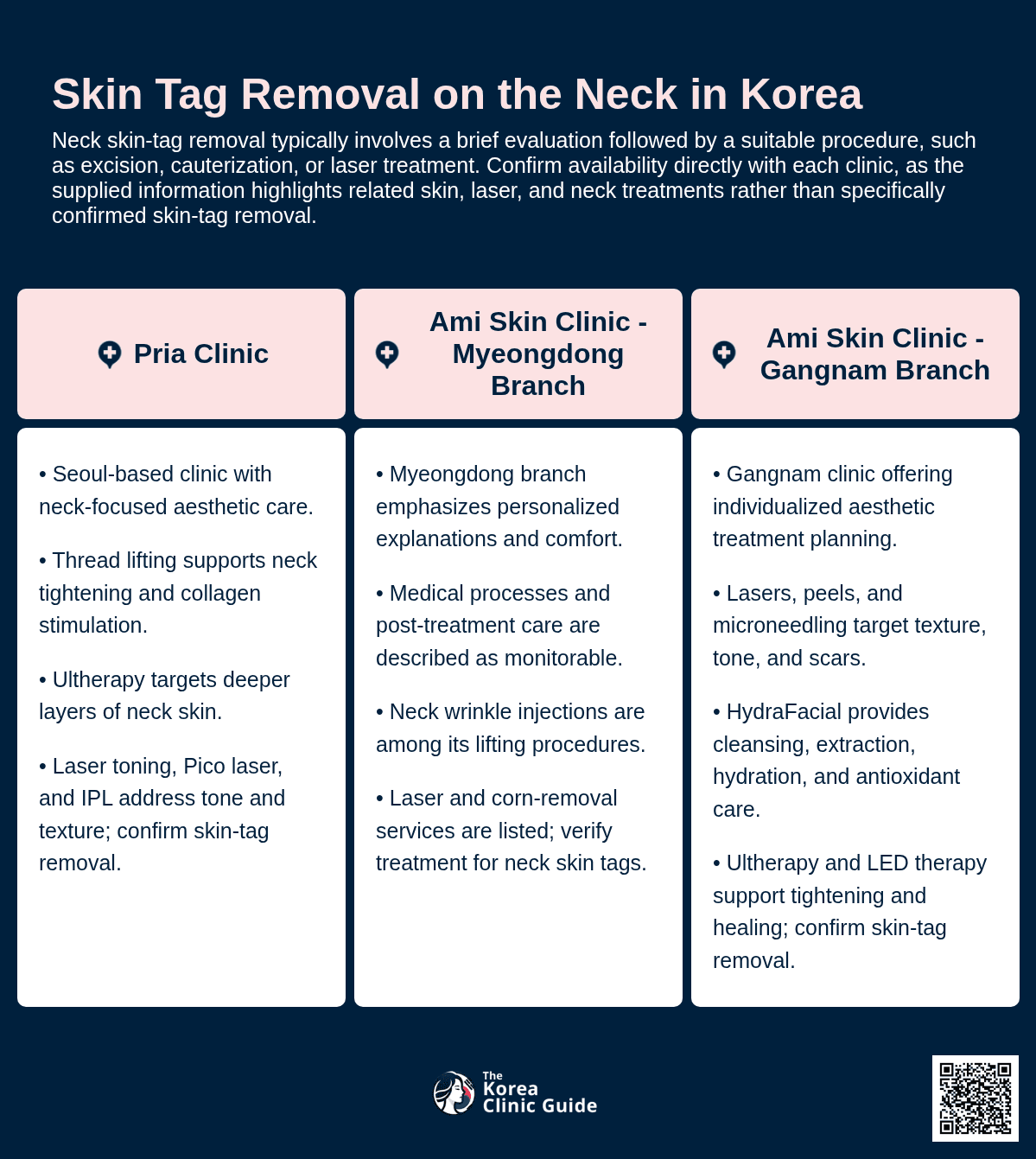
You may consider Pria Clinic if you want a Seoul-based aesthetic clinic with neck-focused skin-tightening options alongside laser skin treatments. While the provided information does not specifically list skin-tag removal, it does describe thread lifting and Ultherapy for the neck, which may be relevant if you also want to address laxity or overall skin quality in the area.
- URL: Pria Clinic Website
- Location: Seoul
- Neck-focused options:
- Thread lifting uses dissolvable threads to lift and tighten sagging skin on the face and neck while supporting collagen stimulation.
- Ultherapy uses focused ultrasound energy to tighten the face, neck, and décolletage through collagen stimulation in deeper skin layers.
- Skin treatments:
- Laser toning targets pigmentation, redness, uneven tone, and texture with minimal downtime.
- Pico laser treatment is described for pigmentation, acne scars, and skin-texture improvement.
- IPL is offered for pigmentation, redness, vascular lesions, sun damage, broken capillaries, and age spots.
2. Ami Skin Clinic - Myeongdong Branch
You may consider Ami Skin Clinic - Myeongdong Branch if you value individualized explanations, attention to comfort, and planned aftercare when discussing treatment for neck skin tags. The supplied information does not specifically confirm skin-tag removal, so you should verify whether this procedure is available; the clinic does list neck wrinkle injections and a broad range of laser and special-care treatments.
- URL: Ami Skin Clinic - Myeongdong Branch Website
- Location: Jung-gu, Seoul
- Care approach:
- The clinic describes personalized care, comprehensive explanations, and efforts to minimize discomfort and anxiety during treatment.
- An efficient reservation system is intended to reduce waiting time.
- The clinic states that its medical process can be monitored and that it provides post-treatment care.
- Relevant listed services:
- Neck wrinkle injections are listed among the clinic’s lifting procedures.
- Laser treatments listed include Scarlet Laser for pigmentation, freckles, and redness; Pore Ballerina Laser for enlarged pores; and All Kill Laser for texture and pigmentation concerns.
- Special-care services include laser hair removal and corn removal treatment.
3. Ami Skin Clinic - Gangnam Branch
You may consider Ami Skin Clinic - Gangnam Branch if you are seeking a Gangnam clinic that offers laser-based skin care and personalized aesthetic treatment planning. Skin-tag removal is not specifically listed in the provided information, so confirm availability for neck skin tags, while noting the clinic’s described options for texture, pigmentation, hydration, and noninvasive skin tightening.
- URL: Ami Skin Clinic - Gangnam Branch Website
- Location: Gangnam-gu, Seoul
- Skin-care options:
- Laser treatments are described for improving skin texture and tone, reducing pigmentation and scars, and overall rejuvenation.
- Chemical peels are offered to remove dead skin cells and improve texture, wrinkles, and acne management.
- Microneedling is available for scars, fine lines, collagen stimulation, and overall texture improvement.
- HydraFacial combines cleansing, exfoliation, extraction, hydration, and antioxidant protection.
- Additional aesthetic treatments:
- Ultherapy uses ultrasound energy to lift and tighten skin by stimulating collagen production.
- LED light therapy is listed for acne, aging, inflammation, and healing support without downtime.
- The clinic describes care as tailored to your individual aesthetic needs.
Costs of Skin Tag Removal: South Korea vs. Other Countries
Pricing for skin tag removal depends on the number, size, and location of tags, procedure chosen, provider experience, and even the city. Insurance typically doesn’t cover cosmetic removal, so most pay out-of-pocket.
Cost Factors Influencing Skin Tag Removal
- Complexity: The more tags, or the larger they are, the higher the cost.
- Removal Method: Laser removal and other advanced techniques may be pricier.
- Provider Reputation: High-end clinics and skilled doctors in bigger cities (like Seoul) generally charge more.
- Extra Fees: These can include biopsy costs and, for medical tourists, package deals covering everything from meds to accommodation.
Estimated Costs in South Korea
While specific numbers vary, removal of a simple, small skin tag at some Seoul clinics can cost $14–$15 USD. Complex cases needing multiple sessions or laser can range up to $138 USD per tag and sessions encompassing several tags or more advanced care could reach $800–$1600 USD. Package deals often include consultations and post-procedure meds.
Cost Comparison: South Korea and Other Places
Here’s how costs stack up internationally per tag or session:
| Country | Estimated Cost Range (USD) per Tag/Session | Notes |
|---|---|---|
| South Korea | $14–$138 (per tag), $800–$1600 (per session/procedure) | Low for simple tags, higher for complex/multiple tags or packages |
| USA | $100–$500 (per tag), $150–$600 (procedures/multiples) | Varies by provider and location, extra for additional tags |
| UK | $60–$600 (per tag), $240–$510 (per procedure) | Often £50–£150 per tag; private clinics can be higher |
| Canada | $15–$500 (per tag), $75–$135 (initial/multiple) | Varies by region and number of tags |
| Australia | $50–$395 (per tag), $350–$800 (per session) | Techniques like radiofrequency and laser can raise costs |
| Thailand | $18–$90 (per tag), $30–$240 (per procedure) | Renowned for affordable, quality treatments |
South Korea offers exceptionally competitive pricing for simple removals, especially compared to Western countries. While Thailand’s per-tag rates can be lower, South Korea distinguishes itself with comprehensive care and advanced technology, often included in bundled packages.
Patient Experiences and Outcomes After Skin Tag Removal for Neck Skin Tags
For many, neck skin tags cause discomfort, irritation, and self-consciousness, motivating them to seek removal for relief and improved appearance.
Addressing Common Patient Concerns
- Pain: Most removal procedures are quick and nearly painless with local anesthesia.
- Scarring: Professional methods like laser and electrocautery are designed to minimize visible scarring—better than DIY attempts.
- Recurrence: The same tag won’t return once removed, but new ones can form, especially if risk factors persist.
- Infection: Rare with professional care and good aftercare.
Real Patient Stories and Testimonials
Many people find a big boost in self-confidence after removal:
- Emma, a teacher, described her cryotherapy experience as “life-changing,” making her feel comfortable in new clothes and boosting her self-esteem.
- Carlos, a landscaper, felt immediate relief from daily discomfort after electrocautery, showing how removal can enhance quality of life.
- Lisa, a nurse, overcame nervousness to remove eyelid tags via excision and found the outcome “quick, painless, and incredibly satisfying.”
These stories highlight that removing skin tags isn’t just about appearance—it's also about restoring comfort and confidence.
Long-Term Outlook and Prevention
Once removed, a skin tag won’t come back, but new ones may appear if risk factors remain. To help prevent new growths:
- Maintain a Healthy Weight: Reduces risk of development, particularly for those with obesity.
- Minimize Friction: Wear loose clothing and avoid irritating jewelry.
- Keep Skin Clean: Reduce irritation and potential for new tags.
- Regular Skin Checks: Monitor for any changes and see a dermatologist when needed.
This proactive approach supports both immediate results and ongoing skin health.
Conclusion
Skin tags on the neck are harmless but can negatively affect self-confidence and comfort. Professional medical removal—through ligation, excision, electrocautery, cryotherapy, or laser—offers safe and effective solutions. South Korea stands out as a top choice for medical tourists, offering advanced care, streamlined processes, and great value. Ultimately, consulting a qualified dermatologist ensures the best removal method and peace of mind for healthier skin.
References
1, 2, 3, 4, 5, 6, 7, 8, 9, 10, 11, 12, 13, 14, 15, 16, 17, 18, 19, 20, 21, 22, 23, 24, 25, 26, 27, 28, 29, 30, 31, 32, 33, 34, 35, 36, 37, 38, 39, 40, 41
Frequently Asked Questions
Related Blogs
Comparing Global Costs of Pico Fraxel: Why Korea is a Top Choice for Skin Rejuvenation Without Compromise
Discover the affordability of Pico Fraxel laser treatments in Korea, where cutting-edge technology meets competitive pricing. Explore why many are choosing Korea for their skincare journey and how it compares to global costs.
Updated: Oct 21, 2026

Optimize Your Wellness: See Why Vitamin Injections in Korea Offer Value Beyond Costs Compared to the USA & More
Discover the latest trends in the cost of vitamin injections in Korea, exploring factors affecting pricing and popular clinics. Learn how these wellness treatments can boost your energy and overall health.
Updated: Oct 21, 2026
Laser Tattoo Removal Costs: Is Korea Your Best Option Compared to the USA, Turkey, and Beyond?
Discover the factors influencing the cost of laser tattoo removal in Korea, from technology and expertise to session frequency. Explore why Korea is becoming a popular destination for this effective and advanced cosmetic procedure.
Updated: Oct 21, 2026

Unlock Radiant Skin: Comprehensive Cost Analysis of Steroid Injections for Scars in Korea vs USA, Turkey & More
Explore the cost of steroid injections for scars in Korea, a popular cosmetic procedure aimed at minimizing the appearance of scar tissue. This article breaks down the pricing, factors influencing cost, and potential savings compared to other countries.
Updated: Oct 21, 2026
Clinics offering Skin Tag Removal

VandS Dermatology Clinic - Dongtan, Korea: Comprehensive Skin Care and Cosmetic Procedures for Youthful, Radiant Skin
Hwaseong

Personal Beauty GU Clinic Ilsan, Korea - Unveiling Hidden Beauty with Tailored Treatments and Advanced Cosmetic Procedures
Ilsan
VandS Clinic - Pangyo: Leading Advanced Medical Procedures in Korea for Enhanced Beauty and Health
Pangyo

Ami Skin Clinic - Gangnam Branch: Premier Aesthetic Treatments and Advanced Skincare in Korea
Sinnonhyeon Station