
Medical Tourism Blog
Revision Nose Job Solutions in Korea: Expert Revision Rhinoplasty Procedures for Improved Results
Table of contents
- Understanding Revision Rhinoplasty: The Corrective Journey
- The Medical Procedure: Precision and Artistry in Revision Rhinoplasty
- Recovery and Potential Risks: What to Expect
- Revision Rhinoplasty in South Korea: A Medical Tourist’s Perspective
- Which Are the Best Clinics in Korea for Revision Nose Job?
- Costs of Revision Rhinoplasty: A Global Comparison
- Patient Experiences and Outcomes: Addressing Issues Through Revision Rhinoplasty
- Conclusions
- References
Considering treatment in Korea? Everything you need to know e.g. — how to avoid scams, visas, interpreters, recovery tips — in our Medical Tourism Master Guide. Plan with confidence in minutes, not weeks!
Undergoing a "revision nose job" can be an emotional and challenging experience, especially when the results of an initial rhinoplasty are disappointing—whether due to cosmetic or functional issues. It often affects more than just appearance, influencing self-confidence and well-being. The choice to embark on a second, or even third, nasal procedure is usually filled with anxiety because of prior surgical outcomes and the increased complexity of alteration. Revision rhinoplasty aims to address these concerns by correcting flaws, relieving discomfort, and restoring both nasal form and function. Many patients describe profound relief and renewed confidence after a successful revision, emphasizing the procedure's role in reclaiming their sense of self.
This guide is designed as an informative and compassionate resource for anyone considering revision rhinoplasty. We’ll explore the medical details, practical aspects for those considering treatment abroad, and stories from real patients. With this knowledge, you can make confident, informed decisions and approach your revision journey with realistic expectations.
Understanding Revision Rhinoplasty: The Corrective Journey
What is Revision Rhinoplasty? Defining the Secondary Procedure
Revision rhinoplasty, also called secondary rhinoplasty, is a complex, specialized surgery performed after a previous nose job hasn’t met expectations. The main goal is to fix issues left by the first procedure—whether those are cosmetic flaws, breathing problems, or both.
It’s a trickier operation than a primary rhinoplasty because of scar tissue, altered nasal structures, and disrupted blood supply. This means longer surgical times and recovery, with more persistent swelling.
Common Pseudonyms and Terminology
- Secondary Rhinoplasty: Used interchangeably with "revision rhinoplasty."
- Corrective Nose Job: Highlights the surgery’s remedial purpose.
- Nasal Reconstruction: A broader term often overlapping revision rhinoplasty when significant structural or functional repair is needed.
- Tertiary Rhinoplasty: Refers to a third surgery, indicating even more intricacy.
- Septoplasty: Specifically addresses the septum; when combined with rhinoplasty, it’s called septorhinoplasty.
Why Patients Seek Revision: Deep Dive into Cosmetic and Functional Concerns
People seek revision rhinoplasty for many reasons, commonly related to both looks and function. Sometimes, the first surgery didn’t address their main concerns, or new issues developed due to healing unpredictability or miscommunication.
Cosmetic Issues: Patients may find the nose looks unnatural, asymmetrical, over- or under-corrected, or develops new bumps or irregularities. Common deformities treated include:
- Pollybeak Deformity: A round, prominent bump above the tip caused by scar tissue, inadequate tip projection, or excessive cartilage.
- Saddle Nose Deformity: A sunken nasal bridge, usually from loss of cartilage.
- Inverted V Deformity: A pinched middle third of the nose, seen as a "V" from below.
- Crooked Nose: Resulting from preexisting asymmetry, injury, or worsened deviation after surgery.
- Other Issues: Such as a hanging columella, tension or short nose, or unresolved cosmetic goals.
Functional Impairments: Some patients experience nasal obstruction, worsened or new breathing problems, unresolved deviated septum, or nasal valve collapse.
Complications from Previous Surgeries: Scar tissue can distort outcomes; implants may become visible or shift; injuries or healing over time can change initial results.
It’s common for functional and cosmetic problems to overlap in revision cases. Addressing one may improve the other, so a surgeon must have a holistic grasp of nasal anatomy and function.
Patience is Key: It’s important to wait at least 6–12 months after your initial rhinoplasty before pursuing revision, to let the nose fully heal and swelling subside. Acting too soon increases the risk of undesirable outcomes.
Table 1: Common Issues Leading to Revision Rhinoplasty and Their Manifestations
| Category | Specific Issue | Manifestation/Description |
|---|---|---|
| Aesthetic Issues | Unnatural Appearance | Nose doesn't blend with facial features; appears artificial or "operated on" |
| Asymmetry | Uneven nostrils or sides of the nose | |
| Pollybeak Deformity | Round fullness above the tip; resembles a parrot's beak | |
| Saddle Nose Deformity | Collapsed nasal bridge; concave profile | |
| Inverted V Deformity | Pinched mid-nose, visible "V" shape | |
| Crooked Nose | Visibly off-center nose | |
| Over-/Under-correction | Too much or too little tissue removed/added | |
| New Bumps/Irregularities | Unexpected bumps or uneven contours | |
| Hanging Columella | Tissue between nostrils hangs low | |
| Short Nose | Proportionally short nose | |
| Bulbous/Boxy Tip | Tip is wide/round/lacks definition | |
| Functional Issues | Breathing Difficulties | Obstructed nostrils or congestion |
| Deviated Nasal Septum | Off-center septum blocks airflow | |
| Nasal Valve Collapse | Weak/collapsed nasal valves restrict breathing | |
| Surgery Complications | Excessive Scar Tissue | Dense scar formation distorts nose or blocks airway |
| Implant-Related Issues | Visible, shifting, or inflamed implant | |
| Injury Post-Surgery | Nose was injured after primary procedure | |
| Results Changed Over Time | Changes/distortion as nose healed |
The Medical Procedure: Precision and Artistry in Revision Rhinoplasty
Surgical Approaches: Open vs. Closed Techniques
Choosing the surgical approach depends on the level of correction needed and past surgical changes.
Open Rhinoplasty: This method involves a small incision across the columella, allowing the surgeon direct visualization and access to inside structures. This is preferred in most revisions as it offers greater accuracy for complex reconstructive work. The trade-off is a longer recovery and a tiny external scar, which typically fades.
Closed Rhinoplasty: All incisions are hidden inside the nostrils, leading to no visible scars and quicker recovery. However, access is limited, making this approach less ideal for revision cases that require detailed adjustments.
In most significant revisions, open rhinoplasty is necessary to ensure accuracy, despite the minimal scarring.
The Indispensable Role of Cartilage Grafting
Cartilage grafting is essential in revision rhinoplasty, especially when structural support or contour needs to be rebuilt.
-
Autologous Grafts (Your Own Tissue): Preferred for their low complication rates and natural integration.
- Septal Cartilage: Often depleted in revision cases.
- Ear (Auricular) Cartilage: Softer; great for tip refinement.
- Rib (Costal) Cartilage: Offers ample, sturdy tissue for major reconstruction but involves more recovery.
-
Other Materials: Temporalis fascia (for camouflaging), crushed cartilage, and specialized grafts like spreader grafts or columellar struts are used depending on needs.
Using your own cartilage means harvesting it from another site (ear or rib), so expect to recover in two areas.
Targeted Corrections for Specific Nasal Deformities
Each problem—like pollybeak, saddle nose, inverted V deformity, crooked nose, or implant complications—gets a tailored solution. This can include removing excess tissue, rebuilding the bridge, reinforcing cartilage, or carefully sculpting the tip. Open approaches are usually used for greater precision in these complex cases.
Anesthesia Protocols and Procedure Duration
Most revision rhinoplasties are performed under general anesthesia and can last 2–3 hours or longer, depending on complexity.
Surgical skill and artistry are key, so the right surgeon is crucial—look for one with extensive experience specifically with revision rhinoplasty.
Recovery and Potential Risks: What to Expect
The Revision Rhinoplasty Recovery Timeline
Healing after revision rhinoplasty can take longer than with an initial procedure. Here’s what most patients experience:
- First Week: Expect swelling, bruising, and nasal tenderness. Splints or casts protect the nose, and internal supports may be placed. Most basic activities can resume after a day.
- Weeks 2–4: Swelling and bruising improve. Patients often return to work and light activity.
- Months 2–6: Most swelling dissipates; the nose's final shape emerges. Avoid contact sports.
- Up to 12 Months: Minor swelling, especially at the tip, may linger. The final result takes time to settle.
Managing Discomfort and Optimizing Healing
- Pain: Typically managed with Tylenol; avoid NSAIDs unless instructed.
- Swelling: Elevate your head and use cold packs around (not on) the nose.
- Activity: Avoid strenuous exercise and direct nasal impact for several weeks.
- Sun, Diet, and Clothing: Stay out of the sun for three months, eat anti-inflammatory foods, and avoid clothes that might hit the nose.
- Eyewear: Don’t wear glasses or sunglasses for about six weeks.
- Follow-Ups: Keep all appointments to ensure proper healing.
Donor Site Recovery
When cartilage is taken from your ear or rib, recovery is needed at that site as well.
- Ear: Heals quickly with minor discomfort.
- Rib: May be painful and need more time (6 weeks or more), sometimes requiring an overnight hospital stay.
Understanding Risks and Potential Complications
Complexities increase with each rhinoplasty. Complications are rare with expert surgeons but can include:
- Bleeding, infection, unfavorable scarring
- Enhanced scar formation, poor blood supply, longer healing
- Breathing issues, possible collapse of weakened structures
- Suboptimal results due to anatomical limitations or healing unpredictability
- Graft concerns: shifting, warping, or absorption
Minimize risk by:
- Selecting a specialized, experienced surgeon
- Following all pre- and post-op instructions
- Openly discussing realistic outcomes and concerns
Table 2: Key Risks of Revision Rhinoplasty and Strategies for Mitigation
| Risk Category | Specific Risk | Mitigation Strategy |
|---|---|---|
| General Surgical Risks | Bleeding | Skilled surgeon, avoid blood thinners, gentle post-op care |
| Infection | Sterile techniques, post-op care, antibiotics as prescribed | |
| Scarring | Precise technique, good incision placement, scar creams | |
| Anesthesia Reactions | Experienced anesthesiologist, health screening | |
| Revision-Specific Risks | Scar Tissue | Specialist surgeon, refined technique, careful healing support |
| Compromised Blood Flow | Surgeon with anatomical expertise, careful tissue handling | |
| Breathing Issues | Detailed assessment, meticulous internal repair, proper grafting | |
| Aesthetic Dissatisfaction | Honest communication, simulations, proven aesthetic skill | |
| Graft Concerns | Proper fixation, use of autologous tissue, post-op caution |
Revision Rhinoplasty in South Korea: A Medical Tourist’s Perspective
South Korea as a Premier Destination
South Korea is globally renowned for cosmetic surgery, especially for challenging revision rhinoplasty cases. Surgeons are experienced with advanced techniques, and clinics are known for high safety standards and patient-focused services. Many have international accreditations and are geared toward supporting foreign patients every step of the way.
Choosing the Right Surgeon and Clinic
- Board Certification: Ensure your surgeon is certified by bodies like KSPRS or KAPS.
- Experience: Seek surgeons with at least 15+ years specializing specifically in revision rhinoplasty.
- Clinic Credentials: Find clinics accredited by organizations like JCI or KCMC and offering advanced imaging technology.
- Patient Reviews: Review before-and-after photos and testimonials, and make sure you feel comfortable communicating openly with your doctor.
The expertise found in South Korea justifies a higher cost through specialized care and advanced technology, which can be more important than price alone if you’ve had prior surgical complications.
The Step-by-Step Process for International Patients
- Initial Consultation: Start with virtual or online consultations to discuss history, send photos, and receive an initial plan.
- Arrival in Korea: Arrive 1–2 days before your appointment, stay near the clinic, and bring all relevant documents.
- In-Clinic Assessment: Your surgeon will use advanced tools for physical and virtual assessment, finalize your plan, and conduct pre-op testing.
- Surgery Day: The procedure is done under general anesthesia. Recovery starts right after, with medical monitoring.
- Follow-Ups: Splints are removed after a week, with follow-ups over 14–21 days. Plan to stay in Korea for at least that amount of time to ensure safe, smooth healing.
Concierge Services
Korean clinics often offer comprehensive support, such as airport pick-up, transport, interpreters, hotel booking, post-op care, medications, and wellness treatments—all to simplify your recovery.
Which Are the Best Clinics in Korea for Revision Nose Job?
Listed below are some of the best clinics in Korea for revision nose job.
1. THEPLUS Plastic Surgery
You may consider THE PLUS Plastic Surgery for revision nose surgery if you want care from surgeons whose work is centered on rhinoplasty, including revision cases, with an approach that aims to restore nasal stability while refining appearance and considering facial balance and function.
- URL: THEPLUS Plastic Surgery Website
- Location: Gangnam-gu, Seoul
- Rhinoplasty expertise:
- Dr. Jeong Jae-yong authored “Rebuilding Nose: Rhinoplasty for Asians,” which has Japanese and English editions.
- Dr. Kim Taek-kyun wrote rhinoplasty and revision-rhinoplasty chapters for “The 18 Masters of Korean Aesthetic Surgery.”
- Both doctors participate in rhinoplasty education and research through forums including the Seoul Rhinoplasty Forum, KSPRS, and IFAAS.
- Surgeon considerations:
- Dr. Kim is a board-certified plastic surgeon, has received research awards related to 3D implants, and runs educational sessions for other plastic surgeons.
- Dr. Jeong’s stated approach combines functional and aesthetic considerations in rhinoplasty.
- Related services: The clinic also offers primary rhinoplasty, facial contouring, eyelid surgery, lifting procedures, breast surgery, and liposuction.

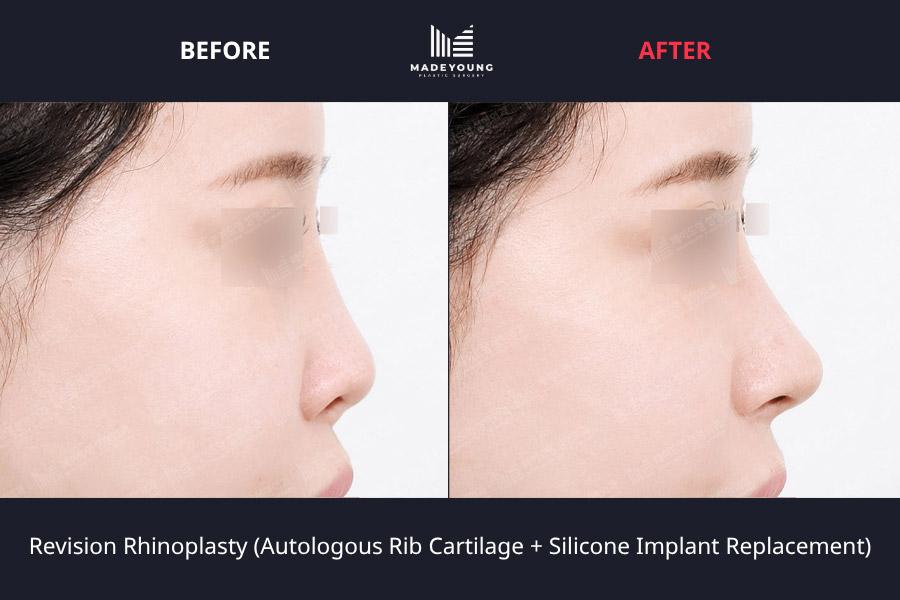
2. Made Young Plastic Surgery
You may consider Made Young Plastic Surgery for a revision nose job when a previous procedure has left scarring, tissue damage, or an implant-related concern: its stated revision approach includes precise dissection, micro-dissection, capsule removal, and implant removal when indicated.
- URL: Made Young Plastic Surgery Website
- Location: Seocho-gu, Seoul
- Revision approach:
- The clinic describes experience with complex revision cases involving scar tissue and tissue damage from prior surgery.
- Its listed techniques include delicate micro-dissection, capsule removal, and removal of existing nasal implants.
- Revision rhinoplasty, reconstructive rhinoplasty, and rhinoplasty implant removal are among its listed nasal services.
- Consultation and monitoring:
- The medical team provides direct consultation and diagnosis before a procedure.
- The clinic states that full-time board-certified anesthesiologists are on site and describes one-to-one anesthesiologist monitoring during procedures.
- It also describes a cross-check emergency response system and CCTV coverage of procedures.
- Aftercare: A separate dedicated aftercare center is listed for systematic post-procedure care.
3. LABOM Plastic Surgery
You may consider LABOM Plastic Surgery for revision nose surgery if you need a diagnosis-led plan for a prior implant, thinning tip skin, inflammation, asymmetry, or a possible breathing-related structural issue. The clinic uses 3D CT assessment to identify the cause before tailoring correction and may use autologous cartilage or dermal tissue grafts to reinforce compromised nasal-tip tissue.
- URL: LABOM Plastic Surgery Website
- Location: Gangnam-gu, Seoul
- What the assessment covers:
- 3D CT imaging is used to assess nasal bone shape, cartilage condition, and the current position of an implant.
- The evaluation considers whether an implant is malpositioned or contaminated/infected, as these concerns require different management.
- The clinic also evaluates structural contributors such as a deviated septum or nasal-valve problem, alongside aesthetic concerns.
- Revision techniques:
- Implants may be removed and replaced when the cause of the original problem has been confirmed.
- Autologous cartilage grafts and dermal tissue grafts are listed for reinforcing thinned nasal-tip areas.
- Each plan is designed one-to-one around your nasal proportions, contours, and identified concerns.
- Timing and recovery:
- Revision is generally considered after tissues have stabilized, typically 6 to 12 months after the initial surgery; timing varies with your condition.
- When inflammation or infection is present, the underlying issue should be treated and resolved before revision surgery.
- The clinic lists an approximately 1–2 hour procedure under sleep sedation, same-day discharge, stitch removal at about 7 days, and a 7–14 day recovery period.
- Follow-up care:
- The clinic describes one-to-one anesthesia planning, continuous monitoring, and a comprehensive aftercare system.
- Postoperative programs include progress checks and individualized management of swelling, bruising, and scars.
Costs of Revision Rhinoplasty: A Global Comparison
Estimated Costs in South Korea
Revision rhinoplasty in South Korea ranges between $5,000 and $15,000 USD, depending on case complexity, the surgeon’s reputation, and clinic status.
Base price usually includes: Consultations, surgery, immediate post-op care, medications, and some follow-up treatments. Additional fees may arise for pre-op testing, accommodations, advanced post-op care, interpreters, and emergencies.
Cost Comparison: South Korea, Turkey, USA
| Country | Estimated Cost Range (USD) | Typical Inclusions/Notes |
|---|---|---|
| South Korea | $5,000–$15,000 | Pre-op, surgery, post-op care, some follow-ups. Extras include tests, lodging, interpreters. |
| Turkey | $3,800–$7,000 | Often all-inclusive packages (surgery, lodging, transfers). Lower operational costs. |
| USA | $9,000–$25,000 | Surgeon/anesthesia/OR; often excludes consultations, aftercare, lodging. Insurance seldom applies. |
Why the differences? Lower costs in Turkey and South Korea come from reduced operational expenses, favorable exchange rates, and higher patient volume. South Korea stands out for advanced techniques and specialization, important for complex cases.
Patients should budget not only for the surgery itself but also travel, recovery, and any extra care needs.
Patient Experiences and Outcomes: Addressing Issues Through Revision Rhinoplasty
Many people share life-changing stories after revision rhinoplasty. Whether to correct a previous unnatural shape, restore symmetry, or resolve breathing difficulties, successful revisions often lead to substantial improvements in appearance, function, and confidence.
Patients like Yvonne, whose revision made her nose look and feel more natural while improving her breathing, or Maria, who overcame a collapsed and asymmetrical nostril after previous surgeries, show how the results can be both dramatic and deeply rewarding. Most describe a dramatic boost in self-esteem and overall comfort with their appearance after undergoing revision surgery with a talented specialist.
Conclusions
Revision rhinoplasty is a complex surgery that addresses both cosmetic and breathing-related complications from previous nose jobs. The procedure is more demanding due to scar tissue and altered anatomy, often requiring longer recovery and special grafting techniques. South Korea is a sought-after destination thanks to its expert surgeons and advanced care, although the costs can be substantial. Choosing an experienced, specialized surgeon and understanding both the process and potential risks are essential for achieving the best possible outcome and renewed confidence.
References
Frequently Asked Questions
Related Blogs
Korea vs. Global Standards: A Comprehensive Cost Analysis of Cleft Rhinoplasty in Medical Tourism Destinations
Explore the cost of cleft rhinoplasty in Korea, a popular destination for medical tourism due to its advanced surgical techniques and competitive pricing. Discover factors influencing the overall expense, from hospital fees to post-operative care, and what makes Korea a top choice for this specialized procedure.
Updated: Oct 21, 2026
Philtrum Reduction Costs: Choosing Korea Over the USA, Mexico, Turkey & More for Expert Care
Discover the affordability and benefits of Philtrum Reduction Surgery in Korea, a popular destination for high-quality cosmetic procedures. Explore cost factors, surgeon expertise, and why Korea is a top choice for those considering this transformative surgery.
Updated: Oct 21, 2026
Discovering the True Value: Sinus Surgery Costs in Korea Compared to Global Options
Discover the affordable options for sinus surgery in Korea, a leading destination for medical tourists seeking quality care. Learn about the factors influencing costs and what patients can expect from their experience in this highly advanced healthcare system.
Updated: Oct 21, 2026
Non-Implant Rhinoplasty in Korea: Cartilage Grafts, Recovery, Travel Planning, and Alternatives
Non-implant rhinoplasty reshapes the nose using septal, ear, or rib cartilage, with surgical or injectable and open or closed approaches and possible septal or nasal-valve correction. International patients can find guidance on candidate screening, material-specific consent, Korea stays of 10–21 days, travel timing, recovery, and follow-up.
Updated: Oct 16, 2026
Clinics offering Revision Rhinoplasty

THEPLUS Plastic Surgery Korea | Eye, Nose, Face & Body Surgery
Sinsa

Made Young Plastic Surgery: Rejuvenating Aesthetic Excellence in Korea for Face Lifts, Contouring and More
Gangnam Station

LABOM Plastic Surgery: Expertise in Non-Surgical Nose, Facial Lifting & Anti-Aging Surgeries in Korea
Apgujeong

Okay Plastic Surgery Clinic in Korea: Comprehensive Aesthetic Procedures with Sincerity and Care
Cheongdam