
Medical Tourism Blog
Nostril Stenosis Treatment in Korea: Effective Alar Reduction Procedures for Optimal Results
Table of contents
- Alar Reduction: A Detailed Look at the Surgical Procedure
- Navigating Alar Reduction in South Korea: A Medical Tourist's Guide
- Which Are the Best Clinics in Korea for Nostril Stenosis?
- Costs Associated with Alar Reduction: A Global Comparison for Medical Tourists
- Patient Experiences and Outcomes Following Alar Reduction for Nostril Stenosis
- Conclusion
- References
Considering treatment in Korea? Everything you need to know e.g. — how to avoid scams, visas, interpreters, recovery tips — in our Medical Tourism Master Guide. Plan with confidence in minutes, not weeks!
Nostril stenosis, often described as an "excessively narrow nostril opening," is a condition where the nasal inlet or the narrowest air passages inside the nose become constricted. This narrowing can be due to structural or functional issues, making it harder to breathe and causing the nasal sidewalls to collapse inward during inhalation. Think of it as a small "doorway" or a "bottle's narrow neck" inside your nose, where air struggles to pass through, leading to increased negative pressure and breathing difficulties.
Common Pseudonyms and Related Terms
When searching for information, you might come across terms like "nasal stenosis" and "nasal valve stenosis." While "nasal valve stenosis" refers specifically to narrowing in the nasal valve region (a key area for airflow near the nostrils), its impact on breathing is so similar to general nostril narrowing that these terms are often used interchangeably.
| Term | Description |
|---|---|
| Nostril Stenosis | The general narrowing of the nasal inlet or opening. |
Causes of Nostril Stenosis
Nasal stenosis can develop due to a variety of reasons, which are generally divided into congenital (present from birth) and acquired (developed later) factors.
- Congenital factors are rare but include naturally narrow anatomical angles or weak cartilage in the nasal valve area, often due to genetics. Conditions like cleft lip and palate can also prevent proper nasal valve development.
- Acquired factors are more common and include:
- Trauma: Injuries like fractures or strong impacts can weaken nasal cartilage and soft tissue, leading to scar tissue and further narrowing.
- Iatrogenic Insults: Medical procedures such as intubation, aggressive nasal exams, nosebleed treatments, or previous nasal surgeries (including rhinoplasty) can cause or worsen nostril narrowing. Sharing your surgical history with your doctor is crucial for proper planning, especially for revision surgeries.
- Aging: As we age, nasal cartilage loses strength and elasticity, and thinning skin can cause the nasal sidewalls to collapse more easily.
- Chronic Inflammatory Conditions: Ongoing issues like allergic rhinitis or chronic sinusitis can cause swelling and structural changes, narrowing the nasal valve area.
- External Manipulation: Long-term use of nasal piercings or any manipulation that deforms the nasal wings can damage the delicate nasal valve structures.
Symptoms and Impact on Quality of Life
The main symptom of nostril stenosis is difficulty breathing through the nose, often described as persistent "nasal congestion." This can affect one or both sides and is especially noticeable during exercise or rapid movement. A visible sign is the inward collapse of the nasal wings during strong inhalation, indicating weak support in the valve region.
Chronic congestion may force mouth breathing, especially at night, leading to snoring and morning throat dryness. Altered airflow can also dry out the nose, causing crusting and occasional nosebleeds. The extra effort to breathe can result in fatigue, trouble concentrating, and headaches.
While nostril stenosis might sound like a cosmetic issue, its impact on breathing and quality of life is significant. Addressing the narrowing can greatly improve breathing and overall well-being, making it much more than just an aesthetic concern.
Diagnostic Clues for Patients
A simple way to check for nasal valve stenosis is to gently pull the sides of your nose outward with your hands. If this makes breathing easier, it’s a strong clue that nostril stenosis may be present. This is known as the Cottle maneuver and can help both you and your doctor identify potential nasal valve issues early on.
Alar Reduction: A Detailed Look at the Surgical Procedure
Alar reduction, also called alarplasty or alar base reduction, is a specialized surgery to reshape and refine the nostrils. It involves removing small amounts of excess skin and soft tissue (the "alar") from the nostril base to create a narrower, more symmetrical, and aesthetically pleasing nose. Alar reduction can be done alone or as part of a rhinoplasty, and is generally considered minimally invasive compared to full rhinoplasty.
Objectives of Alar Reduction
Alar reduction addresses both cosmetic and functional needs for those with nostril stenosis.
- Aesthetic goals: Narrow the nostrils, reduce excessive flare, and create a more balanced, symmetrical nose that fits harmoniously with your facial features.
- Functional goals: Improve nasal airflow and relieve symptoms like congestion and difficulty breathing. This can enhance sleep quality and physical performance, making alar reduction a health-improving procedure, not just a cosmetic one.
Key Surgical Techniques
Surgeons use several techniques for alar reduction, often customizing their approach to each patient’s anatomy and goals. Korean plastic surgeons are especially known for their meticulous, personalized methods.
| Technique Name | Primary Objective/Mechanism | Key Application |
|---|---|---|
| Weir Excision Technique | Removes a triangular wedge at the nostril base to narrow width. | General nostril width reduction. |
| Sill Excision Technique | Narrows the base of the alar where it meets the cheek; horizontal tissue removal. | Reducing nasal base width. |
| Combination Sill/Wedge Excision | Combines sill and wedge techniques for width and flare reduction. | Comprehensive reduction of width and flare. |
| Alar Cinching Technique | Tightens the nostril base with sutures in the alar cartilages. | Subtle width reduction for wide nostrils. |
| Composite Alar Reduction | Blends excision and suturing for nuanced reshaping. | Highly individualized nostril reshaping. |
| Korean Thread Method | Removes excess alar, then uses threads to bring sides together at the base. | Shaping and narrowing nostrils, often for specific preferences. |
Anatomical Considerations for Precision
Achieving natural, balanced, and functional results requires careful attention to nasal anatomy and surgical planning.
- Alar Base Width: Ideally, the alar base should match the inner corner of the eye or be about 1 mm wider.
- Nostril Diameter Control: The starting point and angle of the incision determine the final nostril size.
- Excision Location: Horizontal excisions narrow the nasal base, while vertical ones reduce alar flare.
- Preservation of Alar Crease: Incisions are placed in the natural crease between the nose and cheek to hide scars.
- Conservative Approach: Surgeons prefer removing less tissue initially, as it’s easier to take more later than to fix an overly narrowed nostril.
Alar reduction is not a one-size-fits-all procedure. It requires an individualized, artistic approach, making the choice of a skilled and experienced surgeon essential.
Procedure Duration and Recovery
Alar reduction usually takes 1 to 2 hours, depending on complexity, and can be done under local or general anesthesia. After surgery, expect some redness and swelling for about 2 weeks. Most people can return to daily activities the next day but should avoid strenuous activity for a few weeks. Surgeons often use dissolvable stitches, so a separate removal visit isn’t needed. Scars are placed in natural creases and typically fade over time.
Full results, including swelling resolution and scar maturation, take about 3 to 6 months. Having realistic expectations and following post-op care instructions are key for the best outcome.
Navigating Alar Reduction in South Korea: A Medical Tourist's Guide
South Korea is a top destination for plastic surgery, including alar reduction, thanks to its precise "Korean Approach" and focus on natural-looking results.
Why South Korea for Alar Reduction?
- Advanced Facilities and Expertise: South Korea offers state-of-the-art hospitals with international accreditations, ensuring high standards of care and safety. The country is also a leader in medical innovation.
- Reasonable Costs: Procedures are generally more affordable than in the US or UK, thanks to lower operational costs and government support for health tourism.
- Convenient Travel Access: Major cities like Seoul have excellent transportation, and many clinics offer multilingual support and international patient managers to help with communication and post-op care.
The Process of Getting Alar Reduction in South Korea
- Initial Planning and Research:
- Define your treatment goals (aesthetic or functional).
- Research and select internationally accredited hospitals and experienced surgeons. Top options include Samsung Medical Center, Severance Hospital, Asan Medical Center, Banobagi Plastic Surgery Clinic, and JK Plastic Surgery Center.
- Prepare and share your medical records for a tailored treatment plan.
- Pre-Operation Phase:
- Arrive in Korea and acclimate.
- Attend consultations and undergo necessary medical tests.
- Prepare for surgery by following dietary and supplement advice, and consider a mental health check.
- The Procedure Day:
- Arrive at the clinic for surgery, which lasts about 1 to 2 hours under local or general anesthesia.
- Most patients can leave the clinic the same day.
- Post-Operative Care and Recovery:
- Plan for at least one follow-up visit and stay in Korea for at least a week post-surgery.
- If non-dissolvable stitches are used, schedule a removal visit.
- Expect redness and swelling for about 2 weeks; full results take 3 to 6 months.
- Stay near the hospital for easy access to care, and avoid surgery during busy holiday seasons.
- Post-Recovery Travel Considerations:
- Consider an extended stay for optimal recovery and follow-up.
- Ensure all travel documents are in order, including visas and health certificates.
| Phase | Key Steps for Medical Tourists |
|---|---|
| Initial Planning | Define goals, select accredited hospitals and surgeons, prepare medical records, arrange accommodation and transport. |
| Pre-Operation | Arrive in Korea, attend consultations, undergo tests, finalize treatment plan, prepare for surgery. |
| Procedure Day | Arrive at clinic, undergo alarplasty (1-2 hours), local or general anesthesia. |
| Post-Operation & Recovery | Plan for follow-up, manage swelling, stay near hospital, avoid peak holiday seasons. |
| Post-Recovery Travel | Consider extended stay, ensure travel documents are ready. |
Which Are the Best Clinics in Korea for Nostril Stenosis?
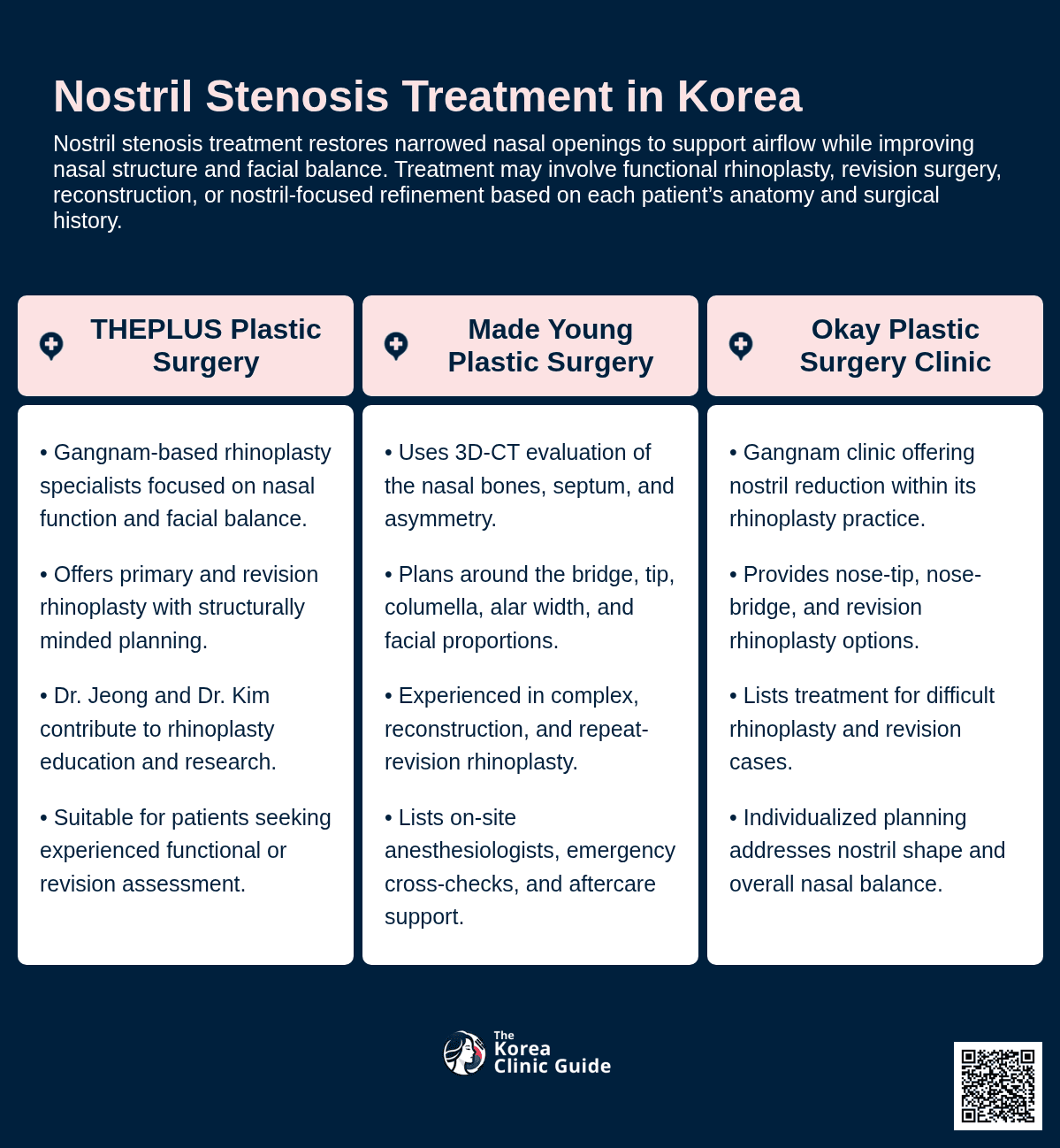
Listed below are some of the best clinics in Korea for nostril stenosis.
1. THEPLUS Plastic Surgery
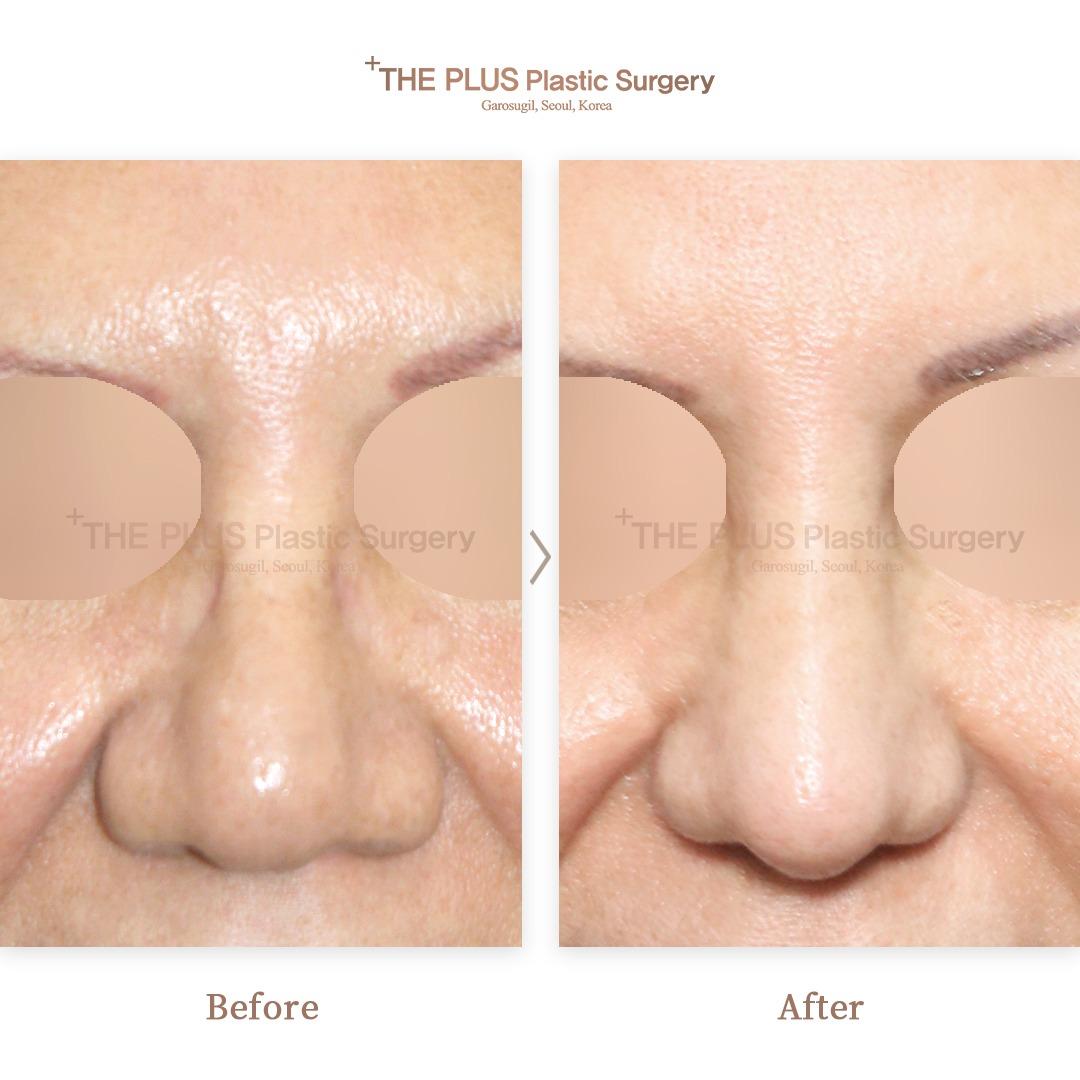
You may consider THEPLUS Plastic Surgery for nostril stenosis concerns when you are looking for rhinoplasty expertise that emphasizes both nasal function and facial balance. Dr. Jeong Jae-yong and Dr. Kim Taek-kyun focus on rhinoplasty and revision rhinoplasty, with academic and educational work in the field that supports a structurally minded approach to nasal surgery.
- URL: THEPLUS Plastic Surgery Website
- Location: Gangnam-gu, Seoul
- Rhinoplasty expertise:
- Dr. Jeong’s stated practice philosophy combines nasal function and aesthetics.
- Dr. Kim is a board-certified plastic surgeon whose published work includes rhinoplasty and revision rhinoplasty.
- The clinic lists both primary rhinoplasty and revision rhinoplasty, the latter focused on restoring a more stable nasal structure after prior surgery.
- Professional roles:
- Dr. Jeong is identified as President of the Korean Society of Plastic Surgeons and participates in professional rhinoplasty education and forums.
- Dr. Kim has received research awards related to 3D implants and runs educational sessions for other plastic surgeons.
- Both doctors have contributed to rhinoplasty conferences and surgical education internationally.
2. Made Young Plastic Surgery
You may consider Made Young Plastic Surgery for nostril stenosis-related nasal reconstruction or revision concerns because its rhinoplasty planning includes 3D-CT assessment of the nasal bones, septum, and asymmetry, along with an emphasis on building a stable internal nasal structure. Dr. Lee Byeong-hoe has more than 20 years of exclusive rhinoplasty experience and is described as working with complex reconstruction and repeat-revision cases.
- URL: Made Young Plastic Surgery Website
- Location: Seocho-gu, Seoul
- Nasal planning and structure:
- 3D-CT analysis is used to assess the nasal bones, septum, and asymmetry for surgical planning.
- The clinic describes using materials and techniques intended to create a stable internal nasal structure and help prevent tip drooping.
- Planning considers your bridge, tip, columella, alar width, and overall facial proportions.
- Complex rhinoplasty experience:
- Dr. Lee Byeong-hoe is described as having over 20 years of exclusive rhinoplasty experience.
- The clinic lists revision rhinoplasty, reconstruction rhinoplasty, and nasal implant removal.
- Dr. Lee is described as treating difficult revision cases, including repeat revisions.
- Perioperative support:
- Full-time board-certified anesthesiologists are listed as being on site.
- The clinic describes one-to-one anesthesiologist monitoring and a cross-check process for emergencies.
- A separate aftercare center is listed for post-procedure care.
3. Okay Plastic Surgery Clinic
You may consider Okay Plastic Surgery Clinic for nostril stenosis concerns if you need an assessment within a rhinoplasty practice that offers nostril reduction and revision surgery, including difficult rhinoplasty cases. The clinic describes individualized treatment planning and lists nose-tip and nose-bridge surgery alongside nostril-focused refinement options.
- URL: Okay Plastic Surgery Clinic Website
- Location: Gangnam-gu, Seoul
- Nasal procedure options:
- The clinic lists nostril reduction as part of its rhinoplasty services.
- Available rhinoplasty options also include nose-tip surgery, nose-bridge surgery, and revision procedures.
- Difficult rhinoplasty cases and revision rhinoplasty are listed as available.
Costs Associated with Alar Reduction: A Global Comparison for Medical Tourists
The cost of alar reduction is a major factor for medical tourists, and South Korea offers competitive pricing without sacrificing quality.
Cost of Alar Reduction in South Korea
In Seoul, alar reduction (alarplasty) typically costs between $1,000 and $2,000 (1,300,000 KRW to 2,600,000 KRW), with some sources quoting a range from $720 to $1,640. More complex cases can cost up to $5,000, but this is still more affordable than in many Western countries.
Factors Influencing Cost in South Korea
- Clinic Pricing Structure: Prices may vary by clinic, but different alar reduction methods usually cost about the same within a clinic.
- Complexity of the Case: More complex surgeries cost more.
- Surgeon's Reputation: Highly experienced surgeons may charge higher fees.
- Additional Services: Some packages include extras like hyperbaric oxygen therapy or blood transfusions for complex cases. Initial consultations may be free or cost extra.
Comparative Costs: South Korea vs. Other Countries
South Korea’s prices are highly competitive:
| Location | Average Alarplasty Cost (USD) | Notes |
|---|---|---|
| South Korea | $1,000 - $2,000 | Known for precision and natural results. |
| United States | ~$3,000 - $6,324 | Much higher. |
| United Kingdom | ~$2,500 - $8,800 | Considerably higher. |
| Turkey | ~$600 - $4,500 | Competitive, often all-inclusive. |
| Thailand | ~$749 - $1,500 | Similar to Korea’s lower range. |
Additional Costs for Medical Tourists
- Travel and Accommodation: Budget $50–$200 per night for hotels.
- Transportation: $100–$300 for airport transfers and local travel.
- Pre-Surgery Tests and Consultations: $50–$150 for consultations, $100–$300 for tests.
- Post-Surgery Medications: $50–$200.
- Post-Surgical Care: $50–$150 per session for massages or extra care.
- Interpreter Services: $30–$100 per hour if not included.
- Follow-Up Visits: May require additional costs if done at home.
- Emergency Fund: Set aside at least $1,000 for unexpected expenses.
- Medical Insurance: Cosmetic procedures are usually not covered, but functional surgeries may be partially reimbursed.
Value Proposition for Medical Tourists
South Korea’s affordability is driven by intense competition among clinics, advanced infrastructure, and skilled surgeons. Compared to Western countries, nose jobs in Korea can be 40–50% cheaper, and even 10–20% less than in Turkey for some procedures. The focus on natural results and comprehensive support for international patients makes Korea a top choice for medical tourists.
Patient Experiences and Outcomes Following Alar Reduction for Nostril Stenosis
Patients who undergo alar reduction for nostril stenosis often see major improvements in both breathing and appearance, leading to a better quality of life.
Addressing Functional Issues
Many patients seek alar reduction for breathing problems, even if they initially describe their concerns as cosmetic. Studies show that alar base reduction (ABR) improves nasal function and relieves congestion and blockage. Patients often report better sleep, less snoring, and improved breathing during exercise. NOSE scores (nasal obstruction symptom evaluation) improve significantly, and no worsening of function has been reported.
Achieving Aesthetic Harmony
Alar reduction also refines nostril shape and enhances facial harmony. The procedure narrows the alar base and reduces flaring, resulting in a more balanced, symmetrical nose. Scars are hidden in natural creases and fade over time, ensuring natural-looking results.
Overall Patient Satisfaction and Quality of Life Improvements
The combination of functional and aesthetic benefits leads to high patient satisfaction. People report improved mood, self-esteem, and confidence, along with reduced fatigue and better concentration. Studies show no significant complications when performed by skilled surgeons.
Considerations and Potential Challenges
A small scar is expected but usually fades and is well-hidden. Full results take 3–6 months as swelling subsides. Conservative tissue removal is preferred to avoid over-narrowing, highlighting the importance of choosing an experienced surgeon.
Conclusion
Nostril stenosis can significantly affect breathing and appearance, but alar reduction offers a reliable solution that improves both function and aesthetics. South Korea stands out as a leading destination for this procedure, thanks to its advanced facilities, skilled surgeons, and competitive pricing. Patients consistently report high satisfaction, with improved breathing, sleep, and self-confidence, making alar reduction a valuable option for those seeking relief from nostril stenosis.
References
1, 2, 3, 4, 5, 6, 7, 8, 9, 10, 11, 12, 13, 14, 15, 16, 17, 18, 19, 20, 21, 22
Frequently Asked Questions
Related Blogs
Korea vs. Global Standards: A Comprehensive Cost Analysis of Cleft Rhinoplasty in Medical Tourism Destinations
Explore the cost of cleft rhinoplasty in Korea, a popular destination for medical tourism due to its advanced surgical techniques and competitive pricing. Discover factors influencing the overall expense, from hospital fees to post-operative care, and what makes Korea a top choice for this specialized procedure.
Updated: Oct 21, 2026
Philtrum Reduction Costs: Choosing Korea Over the USA, Mexico, Turkey & More for Expert Care
Discover the affordability and benefits of Philtrum Reduction Surgery in Korea, a popular destination for high-quality cosmetic procedures. Explore cost factors, surgeon expertise, and why Korea is a top choice for those considering this transformative surgery.
Updated: Oct 21, 2026
Discovering the True Value: Sinus Surgery Costs in Korea Compared to Global Options
Discover the affordable options for sinus surgery in Korea, a leading destination for medical tourists seeking quality care. Learn about the factors influencing costs and what patients can expect from their experience in this highly advanced healthcare system.
Updated: Oct 21, 2026
Non-Implant Rhinoplasty in Korea: Cartilage Grafts, Recovery, Travel Planning, and Alternatives
Non-implant rhinoplasty reshapes the nose using septal, ear, or rib cartilage, with surgical or injectable and open or closed approaches and possible septal or nasal-valve correction. International patients can find guidance on candidate screening, material-specific consent, Korea stays of 10–21 days, travel timing, recovery, and follow-up.
Updated: Oct 16, 2026
Clinics offering Alar Reduction

THEPLUS Plastic Surgery Korea | Eye, Nose, Face & Body Surgery
Sinsa

Made Young Plastic Surgery: Rejuvenating Aesthetic Excellence in Korea for Face Lifts, Contouring and More
Gangnam Station

Okay Plastic Surgery Clinic in Korea: Comprehensive Aesthetic Procedures with Sincerity and Care
Cheongdam

Banobagi Plastic Surgery: A Pioneering and Trusted Plastic Surgery Clinic in Korea
Seolleung