
Medical Tourism Blog
Effective Rhinitis Surgery for Nonallergic Rhinitis Treatment in Korea: Advanced Medical Solutions
Table of contents
- Surgical Procedures for Chronic Rhinitis
- The Medical Tourism Journey: Rhinitis Surgery in South Korea
- Which Are the Best Clinics in Korea for Nonallergic Rhinitis?
- Costs and Comparative Value for Medical Tourists
- Patient Outcomes and Effectiveness of Rhinitis Surgery for Nonallergic Rhinitis
- Conclusions
- References
Considering treatment in Korea? Everything you need to know e.g. — how to avoid scams, visas, interpreters, recovery tips — in our Medical Tourism Master Guide. Plan with confidence in minutes, not weeks!
Nonallergic rhinitis (NAR) is a chronic nasal condition marked by ongoing symptoms like sneezing, nasal congestion, runny nose, mucus in the throat, and coughing. Unlike allergic rhinitis (hay fever), NAR isn’t triggered by specific allergens, and it usually doesn’t cause an itchy nose, eyes, or throat.
The exact cause of nonallergic rhinitis is often unclear, but it’s linked to the dilation of blood vessels in the nasal lining, which leads to swelling and congestion. The nerve endings in the nose can also become overly sensitive, making the nasal tissues react strongly to various triggers. NAR can affect anyone but is more common in people over 20, while allergic rhinitis often starts earlier in life.
Besides congestion and a runny nose, people with nonallergic rhinitis may have headaches, facial pressure, postnasal drip, coughing, and throat clearing. Vasomotor rhinitis (VMR), a common subtype, can be split into “blockers” (mainly congestion) and “runners” (mainly runny nose), often due to an increased cholinergic response.
Many things can trigger or worsen NAR symptoms, including dust, smog, cigarette smoke, strong odors, chemical fumes, temperature or humidity changes, viral infections, spicy foods, alcohol, and certain medications (like aspirin, ibuprofen, beta-blockers, sedatives, antidepressants, birth control pills, and erectile dysfunction drugs). Rhinitis medicamentosa is a special form caused by overusing decongestant nasal sprays. Hormonal changes (pregnancy, menstruation, hypothyroidism), sleep issues, and acid reflux can also play a role.
“Nonallergic rhinitis” is a broad term for chronic nasal symptoms not caused by allergens. Vasomotor rhinitis (VMR) is the most common subtype, diagnosed when symptoms come from nonallergic, non-infectious triggers and no clear cause is found. Other subtypes include rhinitis medicamentosa, drug-induced rhinitis, gustatory rhinitis, hormone-induced rhinitis, nonallergic rhinitis with eosinophilia syndrome (NARES), senile rhinitis, atrophic rhinitis, and cases linked to cerebrospinal fluid leaks. Systemic conditions like granulomatosis with polyangiitis, hypothyroidism, pregnancy, and laryngopharyngeal reflux can also be secondary causes. Occupational rhinitis is another form, triggered by workplace exposures.
Diagnosing nonallergic rhinitis, especially vasomotor rhinitis, is often a “diagnosis of exclusion.” Patients usually go through extensive testing to rule out allergies and infections before getting a definitive NAR diagnosis. This process can be long and frustrating, delaying effective treatment.
Symptoms of nonallergic rhinitis often overlap with allergic and infectious rhinitis, making misdiagnosis common. For example, headaches, facial pressure, postnasal drip, coughing, and throat clearing can occur in all forms. Seasonal changes can worsen vasomotor rhinitis, which might be mistaken for allergies. This overlap highlights the need for a professional evaluation to get the right diagnosis and treatment.
The wide range of triggers for nonallergic rhinitis—foods, alcohol, medications, environmental irritants, hormones, and sleep issues—suggests that NAR is connected to broader lifestyle and systemic factors. Effective management often requires more than just nasal treatments; lifestyle changes, dietary adjustments, sleep improvements, and medication reviews are often necessary for lasting relief.
Table 1: Common Pseudonyms and Subtypes of Nonallergic Rhinitis
| Term | Description | Key Characteristics/Causes |
|---|---|---|
| Nonallergic Rhinitis (NAR) | Chronic nasal symptoms not caused by a specific allergen. | No clear allergic trigger; often lacks itchy nose/eyes/throat. |
| Vasomotor Rhinitis (VMR) | Most common NAR subtype, triggered by nonallergic, non-infectious factors. | Environmental triggers (cold air, odors), foods, weather changes; often perennial. |
| Rhinitis Medicamentosa | Caused by overuse of topical decongestant nasal sprays. | Rebound congestion from prolonged nasal decongestant use. |
| Drug-induced Rhinitis | Side effect of certain medications. | Caused by drugs like aspirin, ibuprofen, beta-blockers, sedatives, antidepressants, birth control pills, erectile dysfunction drugs. |
| Gustatory Rhinitis | Runny nose triggered by eating, especially spicy foods. | Specific response to food/drink. |
| Hormone-induced Rhinitis | Nasal congestion from hormonal changes. | Seen during pregnancy, menstruation, or hypothyroidism. |
| Nonallergic Rhinitis with Eosinophilia Syndrome (NARES) | NAR with eosinophils in nasal cytology. | Diagnosed by 5-25% eosinophils in nasal fluid. |
| Idiopathic Nonallergic Rhinitis | No clear cause found, synonymous with VMR. | Diagnosis of exclusion; no specific trigger identified. |
Surgical Procedures for Chronic Rhinitis
Surgery for chronic rhinitis is usually considered when medications and nasal sprays haven’t worked. The main goals are to improve airflow, reduce congestion, and ease symptoms. While many surgical techniques are discussed for allergic rhinitis, they’re just as relevant for nonallergic rhinitis. Newer, minimally invasive procedures now target the nerve signals behind chronic rhinitis, offering a more direct solution for nonallergic cases.
Detailed Procedures
Turbinate Reduction
Turbinate reduction shrinks enlarged turbinates—structures in the nose that warm and humidify air. Swollen turbinates can block airflow and cause congestion. Techniques include radiofrequency ablation, submucosal resection, turbinate outfracture, microdebrider-assisted turbinoplasty, and laser therapy.
Radiofrequency turbinate reduction is a common office procedure. A needle-like device delivers energy to the turbinate, causing it to shrink as it heals. The process takes about 10 minutes under local anesthesia. Recovery is usually easy, with minimal pain and no change to the nose’s appearance. Nasal crusting may last about three weeks, managed with saline rinses and ointment. Most people take one day off work and avoid strenuous activity for two days. Turbinate reduction works well for both allergic and nonallergic rhinitis, improving breathing, snoring, sense of smell, facial pressure, itching, runny nose, and sneezing. Over 80% of patients see improvement at one year, though turbinates can sometimes re-enlarge, requiring another procedure.
Septoplasty
Septoplasty corrects a deviated nasal septum—the wall dividing the nostrils. A crooked septum can block airflow, causing congestion, trouble breathing, snoring, poor sleep, sinus infections, nosebleeds, and headaches.
The surgeon makes incisions inside the nose (sometimes between the nostrils) to access and reshape the septum. Crooked nasal bones may also be addressed, and spreader grafts can be used for support. Techniques include endonasal, endoscopic, and extracorporeal septoplasty. The procedure is usually done under general anesthesia, but local anesthesia with sedation is possible. Most patients go home the same day.
Recovery involves some swelling and mild discomfort for a few days, with main healing in about a week. Full recovery can take several months. Patients should avoid nose-blowing and heavy lifting for several weeks. Septoplasty is highly effective for nasal obstruction, with studies showing better outcomes than medical management, and benefits lasting at least a year. Risks include bleeding and infection, and sometimes a second surgery is needed.
Endoscopic Sinus Surgery (FESS)
Functional Endoscopic Sinus Surgery (FESS) is mainly for chronic sinusitis and nasal polyps, unblocking sinuses and improving drainage. While not a primary treatment for nonallergic rhinitis, it’s used when NAR is complicated by chronic infections or polyps. FESS can also improve smell and help nasal rinses reach the sinuses.
FESS is minimally invasive, done through the nostrils with an endoscope (a thin tube with a camera and light). The surgeon removes diseased tissue, polyps, or bone blockages. It’s usually performed under general anesthesia.
Recovery may involve minor bleeding, pain, congestion, and discharge for one to three weeks. Patients should avoid nose-blowing for at least a week and use saline rinses. Full recovery can take a few months. Complications are rare but can include bleeding, infection, cerebrospinal fluid leak, or vision changes. Smoking should be avoided before and after surgery.
Minimally Invasive Nerve-Targeting Procedures (e.g., RhinAer, Cryotherapy)
These new procedures disrupt abnormal nerve signals in the nose that cause chronic rhinitis symptoms like runny nose, post-nasal drip, congestion, coughing, itching, and sneezing. They’re especially helpful for nonallergic rhinitis that hasn’t responded to medications.
RhinAer uses radiofrequency energy to calm overactive posterior nasal nerves (PNN), while Cryotherapy (like ClariFix) freezes the nerve. Both are done in the office under local anesthesia, with no incisions and minimal discomfort.
Recovery is quick, with most people returning to normal activities the same day. Noticeable improvement usually appears within weeks and continues over time. Clinical trials show 96% of RhinAer patients report improved symptoms at 6 months, with an average 61% improvement. Nonallergic rhinitis patients respond especially well to nerve ablation. Success rates have risen from 70% to over 90% thanks to better targeting of the PNN, often using advanced imaging. These minimally invasive options are a major step forward, offering a strong alternative to traditional surgery.
Indications for Surgery in Nonallergic Rhinitis
Surgery is considered for nonallergic rhinitis when chronic symptoms—especially those from structural issues or nerve overactivity—don’t improve with medications. Turbinate reduction is for chronic congestion from enlarged turbinates. Septoplasty is for a deviated septum causing congestion, breathing trouble, snoring, sinus infections, nosebleeds, or headaches. FESS is used if NAR is complicated by chronic sinus infections or polyps. Nerve-targeting procedures like RhinAer and Cryotherapy are for moderate to severe chronic rhinitis, especially when symptoms are driven by abnormal nerve signals and don’t respond to medications.
The rise of less invasive, office-based procedures like RhinAer and Cryotherapy is changing rhinitis treatment. These options offer less discomfort, faster recovery, and can be done under local anesthesia, making them appealing alternatives to traditional surgery.
A key reason for improved nerve-targeting therapy success is precise identification and treatment of the posterior nasal nerve (PNN). Anatomical variations can hide the PNN, so advanced imaging is often used to ensure accurate targeting, leading to better outcomes.
Combining surgical procedures—like septoplasty with turbinate reduction or FESS with septal or turbinate work—is common. This approach recognizes that optimal relief often requires addressing multiple issues at once, highlighting the need for thorough diagnosis and a tailored surgical plan.
Table 2: Overview of Rhinitis Surgical Procedures
| Procedure Name | Primary Objective | Key Techniques/Mechanism | Anesthesia Type | Typical Recovery Time | Relevance to Nonallergic Rhinitis |
|---|---|---|---|---|---|
| Turbinate Reduction | Reduce enlarged turbinates to improve airflow and relieve congestion. | Radiofrequency ablation, submucosal resection, turbinate outfracture, microdebrider-assisted turbinoplasty, laser therapy. | Local or General | 1 day off work, 2 days no strenuous exercise; 3 weeks for crusting. | Highly effective for symptoms regardless of allergic status. |
| Septoplasty | Straighten a deviated septum to improve airflow and breathing. | Incisions inside nose to trim, move, or reshape septum; may use spreader grafts. | General (common), Local with sedation (option). | Initial healing ~1 week; full recovery several months; avoid strenuous activity for up to 6 weeks. | Highly effective for nasal obstruction and related symptoms. |
| Endoscopic Sinus Surgery (FESS) | Unblock sinuses, improve drainage, restore airflow (mainly for sinusitis and polyps). | Minimally invasive, uses endoscope through nostrils to remove tissue, polyps, or blockages. | General | 1-3 weeks for common symptoms; full recovery a few months. | Used when NAR is complicated by chronic sinus infections or polyps. |
| Minimally Invasive Nerve-Targeting Procedures (e.g., RhinAer, Cryotherapy) | Disrupt abnormal nerve signals causing chronic rhinitis symptoms. | RhinAer: Radiofrequency energy to calm posterior nasal nerves. Cryotherapy: Freezes posterior nasal nerve. | Local (office-based) | Quick recovery, often same day return to activity. | Proven for lasting relief, especially for nonallergic rhinitis; 96% improvement for RhinAer. |
The Medical Tourism Journey: Rhinitis Surgery in South Korea
South Korea is a top destination for medical tourism, known for advanced medical technology and skilled surgeons in both cosmetic and functional surgery. Patients from Western countries can save 40–65% compared to costs at home. Clinics offer high success rates for rhinitis surgeries and often provide packages that include consultations, tests, surgery, anesthesia, accommodation, transfers, translation, and post-op care. This integrated approach makes the process smoother for international patients.
Process of Getting Procedure(s) in South Korea
Preoperative Evaluation and Diagnosis
The journey starts with a thorough consultation, often done remotely for international patients. This includes a review of medical history, a physical exam of the nasal passages (often with nasal endoscopy), and diagnostic tests like the Cottle Test, Nasal Speculum Examination, Endoscopic Examination, and imaging (CT or MRI). These help pinpoint the exact issues and plan the right surgery. If inflammation is found, medication may be given before surgery. Allergic rhinitis doesn’t rule out functional nasal surgery, so both can be treated together.
The Surgical Procedure (General Steps)
Most surgeries use general anesthesia, but local anesthesia with sedation is possible. Incisions are usually made inside the nostrils to avoid visible scars, except for nerve-targeting procedures like RhinAer, which require no incisions. The specific procedure—Septoplasty, Turbinoplasty, Turbinate Reduction, Endoscopic Sinus Surgery, or nerve-targeting—depends on the diagnosis. After surgery, incisions are closed, and nasal packing or splints may be used to support healing.
Postoperative Care and Recovery
After surgery, patients are monitored until anesthesia wears off. Swelling, minor bleeding, and discomfort are normal and managed with medication. Follow-up visits are important to check healing and remove packing or splints. Home care instructions include nasal irrigation, avoiding strenuous activity, and managing symptoms with medication. Initial healing takes about a week, but full recovery can take months. For minimally invasive procedures like RhinAer, patients often return to normal activity the same day. Patients should avoid nose-blowing, heavy lifting, and strenuous activity for several weeks.
Practical Considerations for International Patients
International patients should budget for more than just surgery. Costs include consultation fees ($50–$150), pre-surgical tests ($100–$300), post-surgery medications ($50–$200), accommodation ($50–$200 per night), transportation ($100–$300), post-surgical care (like massages, $50–$150 per session), interpreter services ($30–$100 per hour), and follow-up visits. An emergency fund of at least $1,000 is recommended. Insurance may cover some functional procedures, so check coverage in advance. Travel documents may require proof of funds, insurance, photos, and confirmed bookings.
South Korea’s integrated care model covers everything from diagnostics to post-op care, often bundling services for a seamless experience. Extensive diagnostic testing ensures surgery is precisely tailored, improving outcomes and reducing the need for repeat procedures. Surgeons are skilled in both functional and cosmetic nasal surgery, making South Korea a great choice for those seeking both breathing improvement and aesthetic changes.
Table 3: Estimated Cost Comparison for Key Rhinitis Surgeries Across Medical Tourism Destinations
| Procedure | South Korea Cost Range (USD) | USA Cost Range (USD) | Thailand Cost Range (USD) | India Cost Range (USD) | Turkey Cost Range (USD) | Europe (Spain/Germany) Cost Range (USD/EUR) |
|---|---|---|---|---|---|---|
| Turbinate Reduction | Often bundled with rhinoplasty/septoplasty | $850 - $10,000 (Avg. $6,635) | From $2,050 (Turbinate reduction); From $2,500 (Turbinoplasty) | $480 - $720 (₹40,000 - ₹60,000) | $1,435 - $2,050 (Avg. $1,743) | Approx. €3,990 (Spain) |
| Septoplasty | $2,000 - $5,000 | $3,500 - $11,000 (Avg. $5,000) | $2,462 - $7,300 (Avg. $3,910) | $420 - $720 (₹35,000 - ₹60,000) | Approx. $2,500 | €4,000 - €10,000 (Spain); $3,505 - $11,684 (Germany) |
| Functional Rhinoplasty | $5,000 - $12,000 | Avg. $11,000; up to $22,000 | Bundled with cosmetic rhinoplasty | Bundled with cosmetic rhinoplasty | Bundled with cosmetic rhinoplasty | Varies by complexity and country |
Note: Costs are approximate and can vary by clinic, surgeon, complexity, and package inclusions.
Table 4: Typical Additional Expenses for Medical Tourists in South Korea
| Expense Type | Estimated Cost Range (USD) | Notes/Considerations |
|---|---|---|
| Consultation Fees | $50 - $150 | Some clinics offer free initial consultations. |
| Pre-Surgical Tests | $100 - $300 | Includes blood work, imaging (CT scans). |
| Post-Surgery Medications | $50 - $200 | Painkillers, antibiotics, anti-inflammatory drugs. |
| Accommodation | $50 - $200 per night | Varies by preference and length of stay; some packages may include hotel. |
| Transportation | $100 - $300 | Airport transfers, taxis, public transport; some packages include transfers. |
| Post-Surgical Care | $50 - $150 per session | Lymphatic drainage massages; usually not included in surgery cost. |
| Interpreter Services | $30 - $100 per hour | If not fluent in Korean; some packages include translation. |
| Emergency Fund | At least $1,000 | Recommended for unexpected expenses. |
| Follow-Up Visits | Variable | For care in Korea or home country if returning early. |
Which Are the Best Clinics in Korea for Nonallergic Rhinitis?
Listed below are some of the best clinics in Korea for nonallergic rhinitis.
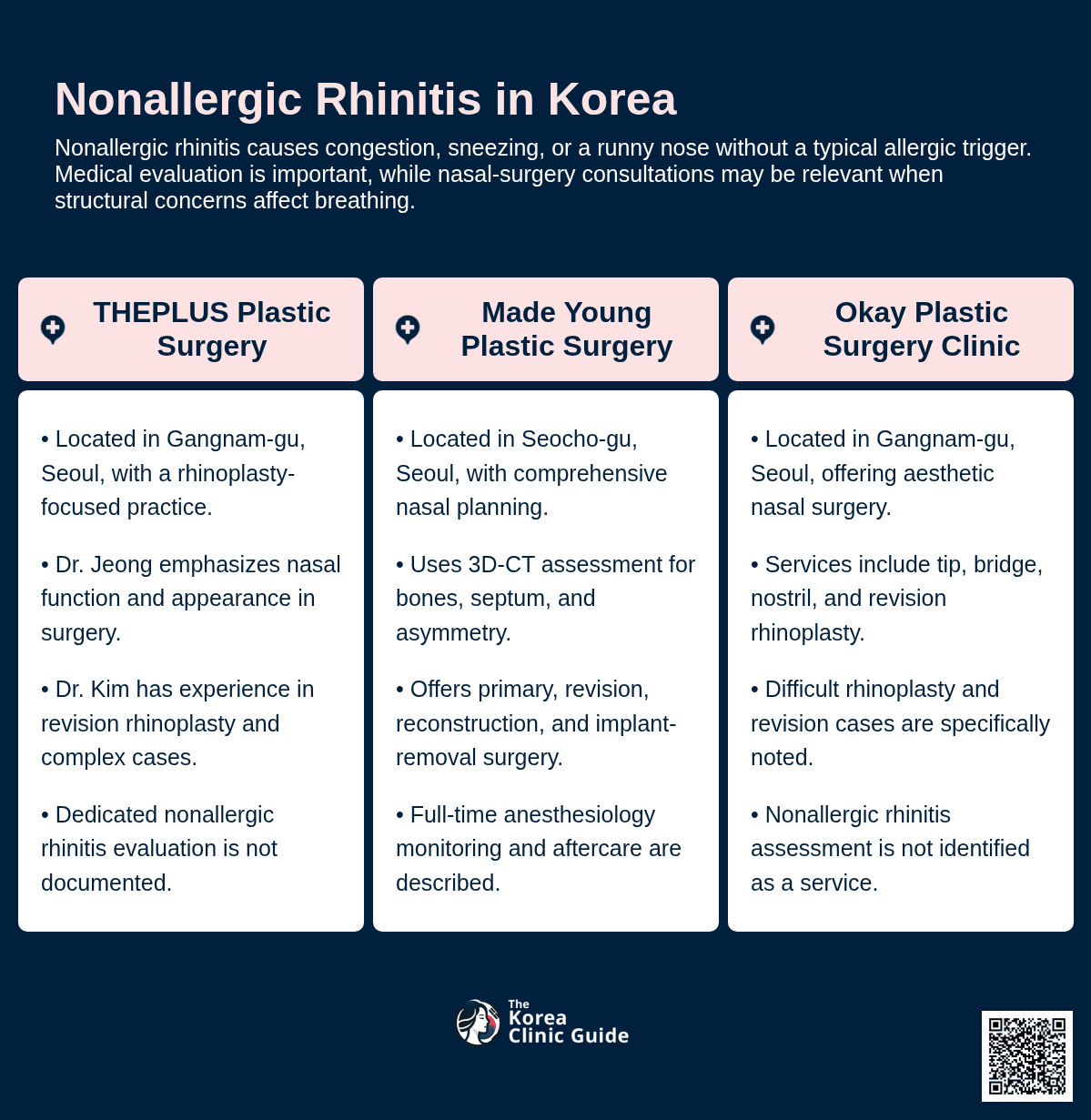
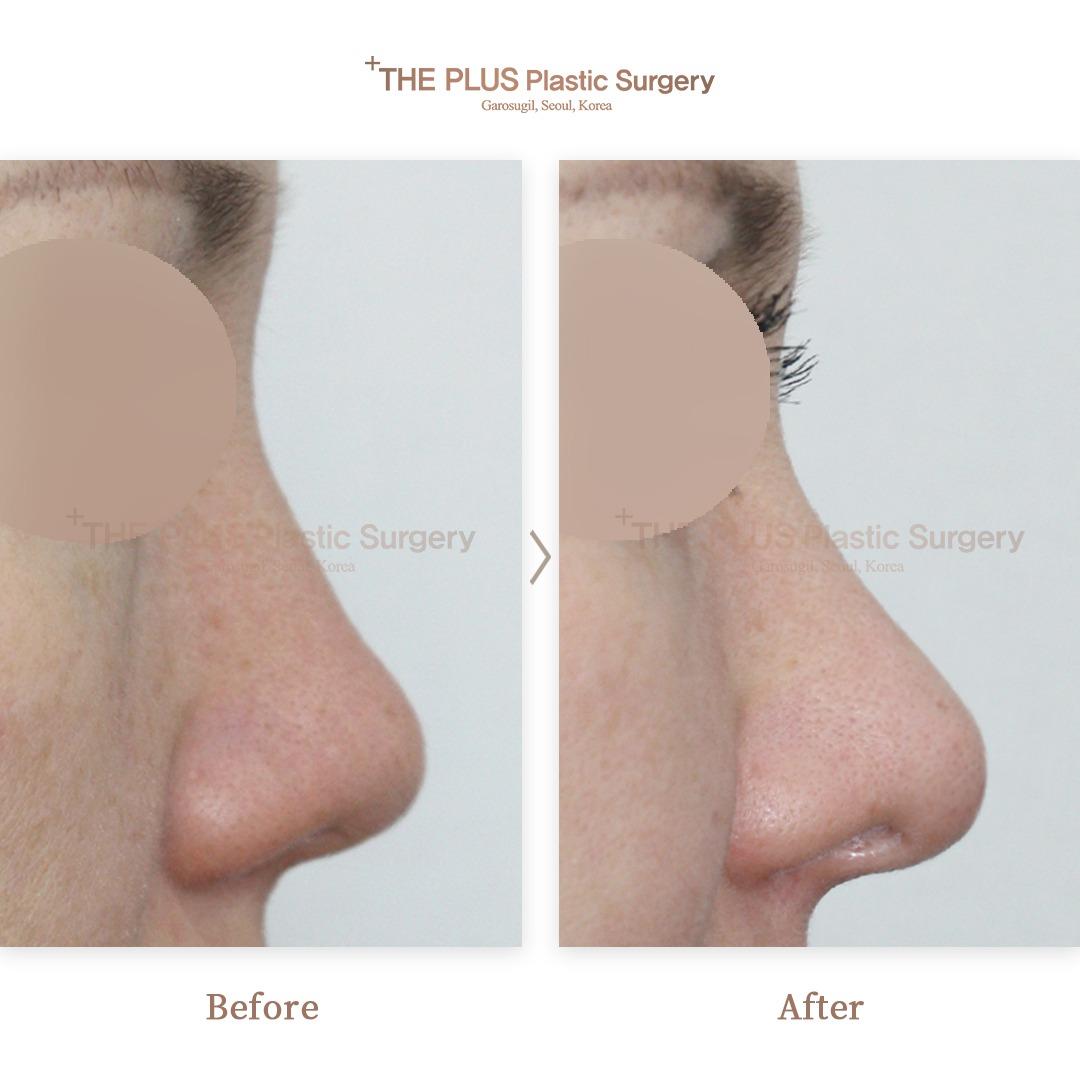
1. THEPLUS Plastic Surgery
For nonallergic rhinitis, the available information does not document a dedicated rhinitis evaluation or treatment program at THEPLUS Plastic Surgery. If you are also considering nasal surgery, you can discuss whether its rhinoplasty-focused approach to nasal structure and function is relevant to your individual concerns.
- URL: THEPLUS Plastic Surgery Website
- Location: Gangnam-gu, Seoul
- Nasal surgery expertise:
- Dr. Jeong Jae-yong and Dr. Kim Taek-kyun focus on rhinoplasty; Dr. Kim also has experience described in revision rhinoplasty.
- The clinic presents rhinoplasty and revision rhinoplasty services, with an emphasis on nasal structure as well as appearance.
- Dr. Jeong’s stated practice philosophy combines function and beauty in nasal surgery.
- Professional background:
- Dr. Jeong authored a rhinoplasty text for Asian noses and participates in rhinoplasty education and international professional meetings.
- Dr. Kim is described as a board-certified plastic surgeon who has contributed chapters on rhinoplasty and revision rhinoplasty to a Korean aesthetic-surgery book.
2. Made Young Plastic Surgery
You may consider Made Young Plastic Surgery if you are exploring rhinoplasty or complex nasal reconstruction alongside your nasal concerns, but the supplied information does not confirm a specific diagnostic or medical treatment service for nonallergic rhinitis. Its documented nasal-surgery approach includes 3D-CT assessment and structural planning, which you can discuss in relation to your anatomy and surgical goals.
- URL: Made Young Plastic Surgery Website
- Location: Seocho-gu, Seoul
- Nasal planning and techniques:
- 3D-CT analysis is used to assess nasal bones, the septum, and asymmetry for surgical planning.
- The clinic describes techniques intended to create a stable internal nasal structure and help maintain nasal-tip support.
- Documented rhinoplasty services include primary, revision, reconstruction, and implant-removal procedures.
- Surgeon experience:
- Dr. Lee Byeong-hoe is described as having more than 20 years of exclusive rhinoplasty experience, including complex reconstruction and revision cases.
- The clinic notes experience with dorsal-hump correction, nasal-tip refinement, osteotomy, and autologous rib grafting.
- Perioperative support:
- The clinic states that board-certified anesthesiologists are on site full time, with one-to-one anesthesiology monitoring during procedures.
- A separate aftercare center is described for post-procedure care.
3. Okay Plastic Surgery Clinic
Okay Plastic Surgery Clinic may be relevant if you are considering aesthetic nasal surgery or revision rhinoplasty, including difficult cases; however, the available information does not identify nonallergic rhinitis assessment or treatment as a clinic service. You should distinguish any rhinoplasty consultation from medical evaluation of ongoing rhinitis symptoms.
- URL: Okay Plastic Surgery Clinic Website
- Location: Gangnam-gu, Seoul
- Nasal surgery services:
- The clinic lists nose-tip surgery, nose-bridge surgery, nostril reduction, and revision rhinoplasty.
- Difficult rhinoplasty and revision cases are specifically noted as available.
- Broader services:
- Additional listed services include eye surgery, facial lifting, body contouring, breast surgery, hairline procedures, scar care, and medical skincare.
- The clinic describes an individualized approach to aesthetic treatment.
Costs and Comparative Value for Medical Tourists
Cost Breakdown for Rhinitis Surgery in South Korea
Rhinitis surgery costs in South Korea vary by procedure, complexity, surgeon, and clinic. Functional rhinoplasty (for breathing issues from structural problems) typically costs $5,000–$12,000, and may be partly covered by insurance if medically necessary. Rhinoplasty packages (often including functional and cosmetic work) average $4,500–$6,000. Tip rhinoplasty is about $3,000, while full rhinoplasty packages can reach $14,000. Septoplasty costs $2,000–$5,000. Turbinate reduction is often included in broader packages.
Additional Expenses for Medical Tourists
Beyond surgery, budget for consultation fees ($50–$150), pre-surgical tests ($100–$300), post-surgery medications ($50–$200), accommodation ($50–$200 per night), transportation ($100–$300), post-surgical care ($50–$150 per session), interpreter services ($30–$100 per hour), and follow-up visits. Set aside at least $1,000 for emergencies.
Comparative Cost Analysis: South Korea vs. Other Countries
Compared to the US, where turbinate reduction can cost $850–$10,000 (average $6,635) and septoplasty $3,500–$11,000 (average $5,000), South Korea offers significant savings. Thailand’s septoplasty ranges from $2,462–$7,300, India’s turbinate reduction is $480–$720, and Turkey’s turbinate reduction averages $1,743. In Europe, septoplasty ranges from €4,000–€10,000 in Spain and $3,505–$11,684 in Germany.
Overall Value Proposition for Medical Tourists
South Korea offers Western patients 40–65% savings on plastic surgery packages that often include functional nasal procedures. Packages bundle surgery, consultations, tests, accommodation, transfers, and translation, making budgeting and logistics easier. While India and Turkey may have lower prices for some procedures, South Korea stands out for its balance of affordability and advanced expertise, especially for complex nasal surgeries that combine functional and cosmetic goals.
Patient Outcomes and Effectiveness of Rhinitis Surgery for Nonallergic Rhinitis
Surgery for nonallergic rhinitis has shown significant improvements in symptoms and quality of life, especially for those who haven’t found relief with medications.
Reported Improvements in Symptoms and Quality of Life
Nerve-targeting procedures like RhinAer and Cryotherapy are especially effective. RhinAer reports 96% of patients with improved symptoms at 6 months, averaging 61% improvement. These procedures target the root cause of excessive nasal drainage, providing long-term relief. Patients often see improvements within weeks, especially for runny nose and post-nasal drip. Studies confirm that both cryotherapy and radiofrequency ablation improve quality of life and reduce symptoms like nasal obstruction, itching, rhinorrhea, and sneezing. Nonallergic rhinitis patients respond particularly well to posterior nerve ablation, with success rates now over 90% thanks to better targeting.
Turbinate reduction (inferior turbinoplasty) is effective for both obstructive and non-obstructive symptoms, regardless of allergy status. Within 90 days, 94.7% of patients report better breathing, 89.5% less snoring, and nearly all improved sense of smell. Over 80% see overall improvement at one year.
Septoplasty is highly effective for nasal obstruction. Studies like the NAIROS trial show better patient-reported outcomes and airflow compared to medical therapy, with benefits lasting at least 6–12 months.
Patient Experiences
Patients often describe these procedures as life-changing, especially after years of symptoms that didn’t respond to medications. For example, one patient, Janet, struggled with a runny nose and stuffiness since childhood and found RhinAer to be transformative.
Important Considerations for Patient Expectations
While outcomes are generally positive, patients should have realistic expectations. Turbinates can re-enlarge, and some symptoms may persist after septoplasty, sometimes requiring further procedures. The success of nerve-targeting treatments depends on individual anatomy, so thorough pre-op assessment is crucial. Patients should discuss expected results, limitations, and long-term management with their doctors.
Conclusions
Nonallergic rhinitis is a complex condition with symptoms that often overlap with allergies, making diagnosis and management challenging. Surgical options like turbinate reduction, septoplasty, FESS, and minimally invasive nerve-targeting procedures offer effective relief, especially when tailored to individual needs. South Korea stands out as a medical tourism destination, combining advanced care, skilled surgeons, and cost savings in comprehensive packages. For many patients, these surgical solutions provide lasting improvements in symptoms and quality of life.
References
1, 2, 3, 4, 5, 6, 7, 8, 9, 10, 11, 12, 13, 14, 15, 16, 17, 18, 19, 20, 21, 22, 23, 24, 25, 26, 27, 28, 29, 30, 31, 32, 33, 34, 35, 36
Frequently Asked Questions
Related Blogs
Korea vs. Global Standards: A Comprehensive Cost Analysis of Cleft Rhinoplasty in Medical Tourism Destinations
Explore the cost of cleft rhinoplasty in Korea, a popular destination for medical tourism due to its advanced surgical techniques and competitive pricing. Discover factors influencing the overall expense, from hospital fees to post-operative care, and what makes Korea a top choice for this specialized procedure.
Updated: Oct 21, 2026

Philtrum Reduction Costs: Choosing Korea Over the USA, Mexico, Turkey & More for Expert Care
Discover the affordability and benefits of Philtrum Reduction Surgery in Korea, a popular destination for high-quality cosmetic procedures. Explore cost factors, surgeon expertise, and why Korea is a top choice for those considering this transformative surgery.
Updated: Oct 21, 2026
Discovering the True Value: Sinus Surgery Costs in Korea Compared to Global Options
Discover the affordable options for sinus surgery in Korea, a leading destination for medical tourists seeking quality care. Learn about the factors influencing costs and what patients can expect from their experience in this highly advanced healthcare system.
Updated: Oct 21, 2026
Non-Implant Rhinoplasty in Korea: Cartilage Grafts, Recovery, Travel Planning, and Alternatives
Non-implant rhinoplasty reshapes the nose using septal, ear, or rib cartilage, with surgical or injectable and open or closed approaches and possible septal or nasal-valve correction. International patients can find guidance on candidate screening, material-specific consent, Korea stays of 10–21 days, travel timing, recovery, and follow-up.
Updated: Oct 16, 2026
Clinics offering Rhinitis Surgery

THEPLUS Plastic Surgery Korea | Eye, Nose, Face & Body Surgery
Sinsa

Made Young Plastic Surgery: Rejuvenating Aesthetic Excellence in Korea for Face Lifts, Contouring and More
Gangnam Station

Okay Plastic Surgery Clinic in Korea: Comprehensive Aesthetic Procedures with Sincerity and Care
Cheongdam

Banobagi Plastic Surgery: A Pioneering and Trusted Plastic Surgery Clinic in Korea
Seolleung