
Medical Tourism Blog
Ethnic Bridge Augmentation in Korea: Nose Implant Procedures for Enhanced Nasal Contour

Table of contents
- The Nose Implant Procedure: A Medical Overview
- The Patient Journey: Nose Implants in South Korea
- Which Are the Best Clinics in Korea for Ethnic Bridge Augmentation?
- Cost Analysis: South Korea vs. Other Countries
- Patient Experiences and Outcomes
- Conclusions
- References
Considering treatment in Korea? Everything you need to know e.g. — how to avoid scams, visas, interpreters, recovery tips — in our Medical Tourism Master Guide. Plan with confidence in minutes, not weeks!
Ethnic bridge augmentation is a specialized rhinoplasty approach for those seeking to enhance their nasal bridge while preserving their distinctive ethnic identity. Unlike traditional rhinoplasty, which often focuses on nose reduction, this procedure emphasizes building up facial structure to refine the nasal profile. For individuals considering enhancement—especially those exploring surgery abroad—it’s crucial to understand the available procedures, patient experience, and the financial aspects.
Ethnic rhinoplasty, commonly called "ethnic nose job," is tailored for non-Caucasian backgrounds, including African American, Asian, Latino, and Middle Eastern individuals. Unlike conventional rhinoplasty, which usually aims to make the nose smaller, ethnic rhinoplasty often involves augmentation—adding cartilage and structure to remedy a low or flat nasal bridge and enhance facial harmony. Surgeons in this realm need a specialized skill set and a nuanced understanding of diverse facial aesthetics.
The main goal is to refine nasal features like the tip, nostrils, or bridge, improving symmetry and balance while maintaining ethnic characteristics. This patient-centered approach considers not just physical features, but also deep psychological and cultural identity concerns. Surgeons must balance technical expertise with sensitivity to ensure outcome satisfaction and appearance authenticity.
Ethnic Group-Specific Considerations
- African American Rhinoplasty: Often addresses wide nostrils, a low bridge, and thick skin, using cartilage grafts for definition while maintaining ethnic features.
- Asian Rhinoplasty: Typically involves augmenting a flat bridge and refining the nasal tip using cartilage grafts or synthetic implants, frequently lifting the bridge and narrowing nostrils.
- Latino/Hispanic Rhinoplasty: May focus on nostril narrowing, tip refinement, and correcting functional issues like a deviated septum.
- Middle Eastern Rhinoplasty: Usually addresses a prominent bridge or drooping tip, sustaining characteristic Middle Eastern elegance.
For many non-Caucasian groups, a low or flat nasal bridge is a shared concern. Terms like ethnic rhinoplasty, ethnic nose job, dorsal augmentation, and bridge augmentation are common, with "Korean nose job" especially notable in South Korea.
People choose these procedures to:
- Improve facial symmetry and balance
- Add definition to a flat or subtle nasal bridge
- Enhance a small or undefined nose
- Reduce flaring nostrils or adjust width
- Correct congenital abnormalities or trauma
- Gain confidence in their facial appearance
The Nose Implant Procedure: A Medical Overview

Nose implants are synthetic materials placed within the nose to alter its appearance or function. The fundamental shape of the nose is dictated by cartilage and bone, so many ethnic rhinoplasties use implants or grafts to create a more defined look. This is particularly prevalent for Asian and African-American rhinoplasty, especially for dorsal (bridge) augmentation.
Types of Implant Materials
Choosing the right implant is essential, and each option comes with its own set of benefits and potential drawbacks.
| Material Type | Key Characteristics | Advantages | Disadvantages | Common Use/Prevalence |
|---|---|---|---|---|
| Autologous Tissue (Cartilage/Bone/Fascia) | Patient’s own tissue | Lower rejection, natural look | Possibility of resorption/warping, limited supply, extra surgery required | Common for subtle augmentations |
| Silicone | Soft, biocompatible, pre-made | Easy, predictable results, affordable | Higher infection risk vs. Gore-Tex, possible protrusion or skin issues | Widely used, especially in Asia |
| e-PTFE (Gore-Tex) | Porous synthetic | Tissue integration, anchored well | More difficult removal, contour risks | Common for bridge augmentation |
| Porous Polyethylene (Medpor) | Porous synthetic | No graft harvesting needed | Infection can require removal, scarring | Used for augmentation |
| PMMA | Strong custom polymer | Durable, long-lasting | Complications not well specified | Long-lasting option |
Although some worry about issues like infection or protrusion with silicone implants, recent findings show complication rates can be minimal when handled by expert surgeons with precise techniques.
Surgical Techniques
There are two main surgical approaches:
- Open Rhinoplasty: An incision is made across the columella for maximum visibility and control, usually for more complex reshaping.
- Closed Rhinoplasty: All incisions are hidden inside the nostrils, resulting in no external scarring, typically used for less extensive changes.
Often, surgeons combine approaches to achieve the best outcome, such as pairing bridge augmentation with nostril reduction.
General Procedure Steps
The procedure usually follows these steps:
- Anesthesia: Most often general, so the patient is asleep and pain-free.
- Incision: Either internally (closed) or across the columella (open).
- Implant Placement: The nasal skin is lifted, and the implant is carefully inserted and aligned for a natural, symmetrical result.
- Closure: Incisions are closed for minimal scarring.
Implant placement alone takes around 45 minutes to an hour; the entire surgery typically lasts 2–3 hours depending on complexity.
Risks and Complications
Like any surgery, nose implants have risks:
- Infection: Rare (under 0.4% for primary silicone implants), typically more likely if correcting previous work.
- Extrusion: Implant pushing through the skin is rare (under 1%), more likely in revisions or with thin skin.
- Malposition: Implants may shift or deviate (about 4%); often needs revision.
- Unsatisfactory Dorsal Height: Most revisions are due to patient preference regarding bridge height.
- Skin Issues and Contracture: More likely with silicone.
- Warping/Resorption/Donor-site Changes: Related to cartilage grafts.
- General Surgical Risks: Bleeding, poor anesthesia response, pain, scarring, rare septal perforation.
Ultimately, the surgeon’s experience is the leading factor in safety and success—especially for those traveling from abroad.
The Patient Journey: Nose Implants in South Korea
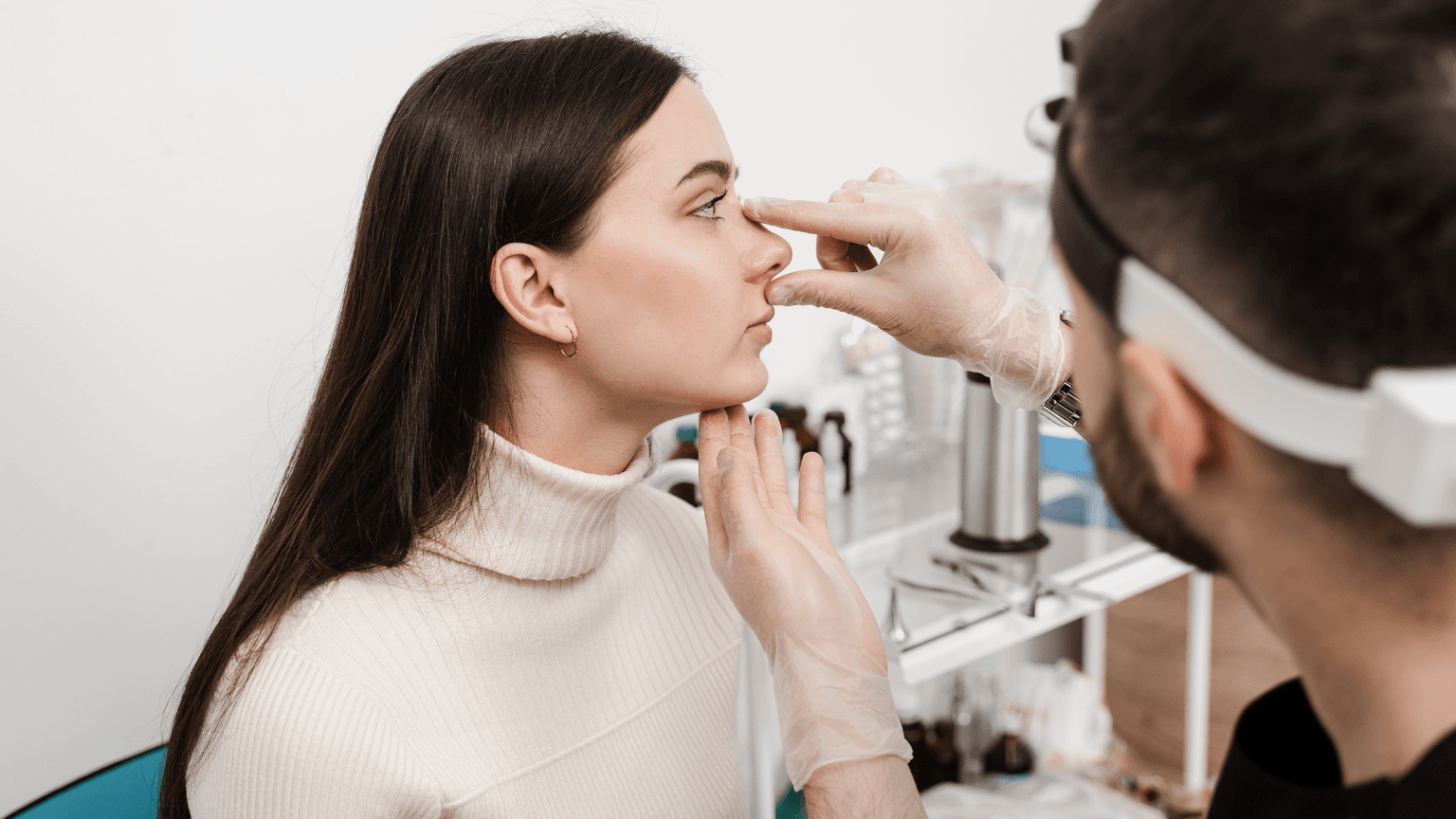
South Korea is a sought-after destination for cosmetic procedures like nose implant surgery, offering a streamlined, holistic care process from consultation to recovery.
Step-by-Step: Medical Tourism Experience
- Consultation & Planning: The journey begins with a detailed discussion about goals and facial assessment, often using 3D imaging for expectation management.
- Pre-Surgery Prep: Patients follow strict instructions (fasting after midnight, no makeup day-of, wearing loose clothing, stopping certain medications).
- Surgical Procedure: Performed under anesthesia; the surgeon accesses the nasal structure, places the implant, and closes the incisions. Implant insertion takes 45–60 minutes; overall surgery lasts 2–3 hours.
- Immediate Care: Monitoring takes 1–2 hours after surgery, with most same-day discharges. Swelling, bruising, and congestion are expected, handled through well-outlined aftercare protocols.
- Recovery Timeline:
| Timeframe | Physical Changes | Recommendations & Expectations |
|---|---|---|
| Days 1–3 | Peak swelling, bruising, discomfort | Rest, cold compresses, avoid panic about appearance |
| Days 4–6 | Nasal packing removal, easier breathing | Continued gentle activity |
| Day 7 | Stitch/splint removal, visible improvement | No strenuous movement, avoid pressure on nose |
| Week 2 | Major swelling/bruising fade | Most can return to work, growing confidence |
| Month 1 | 70-80% swelling down | Resume most activities, watch for residual swelling |
| Months 3–12 | Nose takes final shape | Patience for final refinement, especially with thick skin |
- Aftercare: Following all post-surgical advice helps ensure optimal healing, from limiting physical activity to dietary recommendations and gentle cleaning.
- Specialized Services: Korean clinics offer recovery supports like IV therapy and LED treatments, focusing on comfort and fast healing, which is a key draw for international clients.
Medical Tourist Considerations
- Stay Duration: Remain in Korea for at least 7–10 days post-surgery for follow-ups and aftercare.
- Accommodation/Transport: Plan for $50–$200/night for lodging, and $100–$300 for local transportation. Some clinics offer all-inclusive packages.
- Interpreter Services: $30–$100/hour if needed.
- Follow-Up: Consider arrangements if follow-ups must happen after returning home.
Which Are the Best Clinics in Korea for Ethnic Bridge Augmentation?
Listed below are some of the best clinics in Korea for ethnic bridge augmentation.
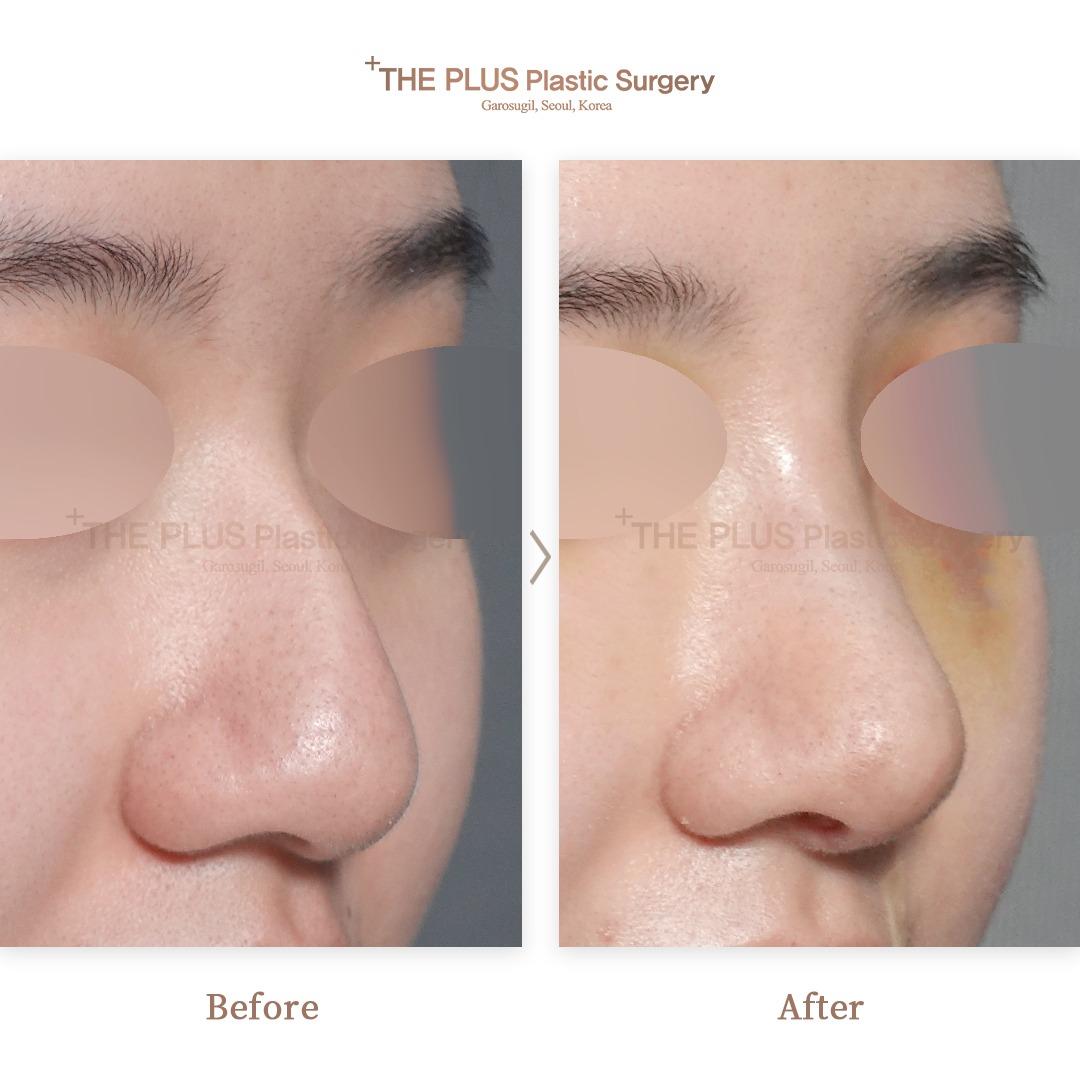
1. THEPLUS Plastic Surgery
You may consider THEPLUS Plastic Surgery for ethnic bridge augmentation if you want rhinoplasty planning informed by surgeons whose work centers on nasal structure, facial harmony, and the relationship between function and appearance. Dr. Jeong Jae-yong and Dr. Kim Taek-kyun have extensive rhinoplasty-focused academic and educational experience, including work on revision rhinoplasty and research involving 3D implants.
- URL: THEPLUS Plastic Surgery Website
- Location: Gangnam-gu, Seoul
- Rhinoplasty expertise:
- Dr. Jeong authored Rebuilding Nose: Rhinoplasty for Asians, an educational resource on Asian rhinoplasty.
- Dr. Kim contributed rhinoplasty and revision-rhinoplasty chapters to The 18 Masters of Korean Aesthetic Surgery.
- The clinic offers rhinoplasty and revision rhinoplasty, with stated attention to stable nasal structure and refined appearance.
- Surgeon background:
- Dr. Kim is a board-certified plastic surgeon, has received research awards related to 3D implants, and runs annual educational sessions for plastic surgeons.
- Dr. Jeong is identified as President of the Korean Society of Plastic Surgeons and regularly lectures and participates in professional rhinoplasty forums.
- Both surgeons contribute to conferences including the Seoul Rhinoplasty Forum, KSPRS, and IFAAS.
- Relevant approach:
- The clinic describes its rhinoplasty approach as balancing facial aesthetics with nasal function.
- Dr. Kim emphasizes harmony among facial features, which is relevant when determining bridge height and profile in relation to your existing proportions.
2. Made Young Plastic Surgery
You can expect ethnic bridge augmentation planning at Made Young Plastic Surgery to consider the bridge, tip, columella, alar width, and your overall facial proportions rather than treating bridge height in isolation. Its rhinoplasty program uses 3D-CT analysis of the nasal bones, septum, and asymmetry, while emphasizing internal structural stability intended to help maintain the nasal shape over time.
- URL: Made Young Plastic Surgery Website
- Location: Seocho-gu, Seoul
- Procedure planning:
- 3D-CT analysis is used to assess nasal bones, the septum, and asymmetry for surgical planning.
- The clinic describes tailored nasal assessment across the bridge, tip, columella, and alar width.
- Its approach emphasizes creating a stable internal nasal structure and preventing tip drooping.
- Rhinoplasty experience:
- Dr. Lee Byeong-hoe is described as having more than 20 years of exclusive rhinoplasty experience.
- His stated experience includes complex reconstruction and difficult revision cases, including high-order revisions.
- The clinic lists rhinoplasty, revision rhinoplasty, reconstruction rhinoplasty, and nasal implant removal.
- Materials and techniques:
- The clinic reports using advanced osteotomy and autologous rib grafts for dorsal-line and tip work.
- Autologous rib grafting may be relevant to your consultation when added structural support is being considered.
- Safety and aftercare:
- Full-time board-certified anesthesiologists are stated to provide one-to-one continuous monitoring during procedures.
- The clinic describes a cross-check emergency response system and CCTV coverage of procedures.
- A dedicated aftercare center provides post-procedure care.
3. Okay Plastic Surgery Clinic
You may consider Okay Plastic Surgery Clinic for ethnic bridge augmentation if you want a clinic that specifically lists nose bridge surgery alongside nose-tip surgery and nostril reduction, allowing discussion of bridge projection as part of your overall nasal balance. The clinic also offers revision rhinoplasty and states that difficult rhinoplasty cases are available.
- URL: Okay Plastic Surgery Clinic Website
- Location: Gangnam-gu, Seoul
- Nasal procedures:
- Nose bridge surgery is listed for enhancing or reducing the nasal bridge.
- Nose-tip surgery and nostril reduction are also offered, which may be relevant if you are considering changes beyond bridge height.
- Revision rhinoplasty is available.
- Individualized planning:
- The clinic describes its aesthetic care as individualized and tailored to your needs and goals.
- Its stated approach emphasizes precision and consultation with specialized professionals.
- Additional services: The clinic also offers eye plastic surgery, facial lifting, body contouring, breast surgery, hairline procedures, scar and keloid care, and skincare treatments.
Cost Analysis: South Korea vs. Other Countries
Cost Breakdown in South Korea
Nose implant surgeries in South Korea usually cost $2,000–$7,500, depending on procedure complexity, surgeon’s experience, clinic reputation, and patient services provided.
Typical price ranges (USD):
- Non-surgical rhinoplasty (fillers): $500–$1,500
- Basic surgical rhinoplasty: $2,000–$4,000
- Complex/revision rhinoplasty: $5,000–$7,500
- Closed rhinoplasty: $3,000–$7,000
- Open rhinoplasty: $4,500–$8,500
- Ethnic rhinoplasty: $4,000–$10,000
- Nasal tip plasty: $3,000–$6,000
- Septorhinoplasty: $5,000–$13,000
- Alar base reduction: $2,000–$5,000
- Revision rhinoplasty: $5,000–$15,000
Additional Costs
- Consultation Fees: $50–$150 (some clinics waive this)
- Pre-Surgical Tests: $100–$300
- Medications: $50–$200
- Accommodation: $50–$200 per night
- Transportation: $100–$300
- Aftercare Treatments: $50–$150 per session
- Interpreter: $30–$100/hour
- Emergency Fund: At least $1,000 recommended
- Other: Airfare, visas, personal expenses
Global Comparisons
South Korean rhinoplasty costs up to 50% less than the United States or Europe. For instance, standard rhinoplasty is $2,100–$3,500 in Korea versus $7,000–$15,000 (up to $20,000 for complex cases) in the U.S. Thailand offers the lowest prices ($2,800–$4,200 for prosthetic nose surgery), followed by Turkey ($3,000–$5,000), with South Korea next ($4,000–$7,000).
| Procedure | Turkey | South Korea | U.S. |
|---|---|---|---|
| Tip Rhinoplasty | $2,700–$5,000 | $3,500–$6,000 | $7,000–$15,000 |
| Closed Rhinoplasty | $2,600–$4,700 | $4,000–$7,500 | $7,500–$14,000 |
| Open Rhinoplasty | $3,200–$5,300 | $4,500–$8,500 | $8,500–$20,000 |
| Revision Rhinoplasty | $3,800–$6,500 | $5,000–$9,000 | $9,000–$20,000 |
| Filler Rhinoplasty | $500–$1,500 | $1,000–$3,000 | $3,000–$5,000 |
Prices abroad are lower thanks to reduced overhead costs, high procedure volume, competitive markets, and bundled service packages. High standards and experienced surgeons are still common in these major destinations.
Patient Experiences and Outcomes

Overall, patients report high satisfaction rates with ethnic bridge augmentation when their surgeon aligns with their aesthetic and cultural needs. Initial concerns about artificial or unnatural results ("Michael Jackson nose") are often dispelled after personalized consultation and 3D visualization. Testimonials frequently mention minimal pain and scarring, and a natural look that honors ethnic features.
Studies have found silicone implant rhinoplasty—a popular method—leads to over 90% satisfaction in primary cases, with revisions most often due to implant positioning or height preferences rather than severe complications. Emotional recovery is a notable part of the patient experience; swelling and bruising in the first weeks can be distressing, but confidence improves as the months pass and results settle. Attentive aftercare and realistic pre-operative planning play a big role in satisfaction.
Conclusions
Ethnic bridge augmentation stands out from traditional rhinoplasty by focusing on enhancing the nasal bridge while protecting ethnic identity, a core driver of patient satisfaction. The choice of implant and surgical approach should fit both aesthetic and cultural needs, with safety now well-established for materials like silicone when used by skilled surgeons. South Korea shines as a medical tourism hub thanks to affordable, comprehensive care and advanced aftercare services, with costs remaining much lower than in Western countries. Patient success comes from expert, culturally sensitive surgeons who guide informed patients through every step of the journey.
References
1, 2, 3, 4, 5, 6, 7, 8, 9, 10, 11, 12, 13, 14, 15, 16, 17, 18, 19, 20, 21, 22
Frequently Asked Questions
Related Blogs
Korea vs. Global Standards: A Comprehensive Cost Analysis of Cleft Rhinoplasty in Medical Tourism Destinations
Explore the cost of cleft rhinoplasty in Korea, a popular destination for medical tourism due to its advanced surgical techniques and competitive pricing. Discover factors influencing the overall expense, from hospital fees to post-operative care, and what makes Korea a top choice for this specialized procedure.
Updated: Oct 21, 2026
Philtrum Reduction Costs: Choosing Korea Over the USA, Mexico, Turkey & More for Expert Care
Discover the affordability and benefits of Philtrum Reduction Surgery in Korea, a popular destination for high-quality cosmetic procedures. Explore cost factors, surgeon expertise, and why Korea is a top choice for those considering this transformative surgery.
Updated: Oct 21, 2026
Discovering the True Value: Sinus Surgery Costs in Korea Compared to Global Options
Discover the affordable options for sinus surgery in Korea, a leading destination for medical tourists seeking quality care. Learn about the factors influencing costs and what patients can expect from their experience in this highly advanced healthcare system.
Updated: Oct 21, 2026
Non-Implant Rhinoplasty in Korea: Cartilage Grafts, Recovery, Travel Planning, and Alternatives
Non-implant rhinoplasty reshapes the nose using septal, ear, or rib cartilage, with surgical or injectable and open or closed approaches and possible septal or nasal-valve correction. International patients can find guidance on candidate screening, material-specific consent, Korea stays of 10–21 days, travel timing, recovery, and follow-up.
Updated: Oct 16, 2026
Clinics offering Nose Implant

THEPLUS Plastic Surgery Korea | Eye, Nose, Face & Body Surgery
Sinsa

Made Young Plastic Surgery: Rejuvenating Aesthetic Excellence in Korea for Face Lifts, Contouring and More
Gangnam Station

Okay Plastic Surgery Clinic in Korea: Comprehensive Aesthetic Procedures with Sincerity and Care
Cheongdam
ID Hospital - Main Branch in Korea: Specializing in Safe & Customized Facial Plastic Surgery and Post-Care Services
Sinsa