
Medical Tourism Blog
Crooked Septum Solutions: Septoplasty Procedure in Korea for Improved Breathing and Nasal Function

Table of contents
- Understanding a Deviated Septum (The 'Crooked Septum')
- The Septoplasty Procedure: A Clinical Deep Dive
- The Medical Tourist's Journey to South Korea
- Which Are the Best Clinics in Korea for Crooked Septum?
- Financial Considerations and Cost Analysis
- Patient Experiences, Outcomes, and Reality
- Conclusion
- References
Considering treatment in Korea? Everything you need to know e.g. — how to avoid scams, visas, interpreters, recovery tips — in our Medical Tourism Master Guide. Plan with confidence in minutes, not weeks!
This guide is designed for patients considering Septoplasty for a "crooked septum" (deviated septum), especially those exploring medical tourism in South Korea. You’ll find an in-depth overview of the condition, a step-by-step breakdown of the Septoplasty procedure, and a specific patient itinerary for traveling to South Korea for treatment. The report also compares costs across global markets and shares real patient experiences, offering a realistic view of the recovery process and surgical outcomes. While most people have some degree of septal deviation, severe cases can greatly affect quality of life, and Septoplasty stands out as an effective solution—especially in South Korea, thanks to advanced care and competitive pricing.
Understanding a Deviated Septum (The 'Crooked Septum')
What is a Deviated Septum?
The term "crooked septum" commonly refers to a deviated septum. The nasal septum is a thin wall of bone and cartilage dividing the nose into two nasal passages. Ideally, it sits centrally, allowing balanced airflow. When the septum is off-center or bent, this is called a deviated septum.
Septal deviations are extremely common—up to 80% of people have some degree of deviation, but many won’t notice unless symptoms develop. For severe deviations, the blocked airflow can lead to discomfort or health issues, which is when intervention becomes necessary. If your nasal deviation isn’t causing problems, treatment may not be required, but if symptoms are significantly impacting your daily life, medical attention such as Septoplasty should be considered.
Causes and Symptoms
A deviated septum can be congenital (from birth) or due to trauma (such as sports injuries, falls, or car accidents). Some may notice symptoms after an injury, while for others, the deviation worsens gradually with age.
Typical symptoms arise when the deviation is significant. The main symptom is nasal blockage, making it challenging to breathe through one or both nostrils—often worse during allergies or a cold. This blockage frequently leads to mouth breathing, causing dry mouth, noisy breathing, or snoring at night. Some may even favor sleeping on one side to aid airflow.
A deviated septum can also cause recurrent nosebleeds, facial pain, and increase the risk of sinus infections due to poor drainage. These interrelated symptoms often create a feedback loop—nasal blockage leads to mouth breathing and dry mouth, while poor sinus drainage increases infection risk, all originating from the same anatomical issue.
Table 1: Deviated Septum Symptoms and Related Conditions
| Symptom | Description | Causal Relationship to Deviated Septum |
|---|---|---|
| Nasal Obstruction | Difficulty or inability to breathe through the nose | Displacement physically blocks nasal passage, restricting airflow |
| Mouth Breathing & Dry Mouth | Breathing through the mouth, often waking up with a dry mouth | Nasal blockage forces oral breathing, especially at night |
| Noisy Breathing During Sleep | Snoring or sleep apnea-like symptoms | Blocked passage causes turbulent, noisy airflow during sleep |
| Recurrent Nosebleeds | Frequent nosebleeds | Dry septal surface from airflow makes bleeding more likely |
| Recurrent Sinus Infections | Repeated or chronic sinus infections | Obstructed sinus drainage leads to mucus retention, inflammation |
| Facial Pain | Pressure or discomfort, typically on one side | Internal nasal contact can trigger pressure or pain |
The Septoplasty Procedure: A Clinical Deep Dive
Surgical Goals and Indications
The goal of Septoplasty is to straighten and reposition the deviated nasal septum, improving breathing and resolving associated symptoms. It differs from rhinoplasty, which is cosmetic; Septoplasty is medically necessary when functional problems occur.
The Surgical Process
Septoplasty is typically performed as an outpatient procedure, taking 1–1.5 hours. Here’s how the process works:
Pre-operative Stage
Before surgery, you’ll meet your surgeon for a thorough evaluation—reviewing medical history, examining your nose, and sometimes performing blood tests. Photos may be taken, especially if there’s a cosmetic aspect involved. Patients are advised to stop taking blood-thinning medications at least a week before surgery.
Anesthesia
You’ll discuss anesthesia options with your surgeon. Septoplasty can be done with either local anesthesia (numbing medicine plus relaxation drugs) or general anesthesia (you’re fully asleep).
Surgical Steps
The surgeon makes a small incision inside the nasal cavity (occasionally on the columella between nostrils for complex cases). The mucosal lining is carefully lifted, allowing access to the bone and cartilage. The surgeon then trims, repositions, or removes deviated parts to center the septum. Sometimes, small cartilage grafts are used for support. The mucosal lining is placed back, and the incision is closed with dissolving sutures. Soft silicone splints or packing may be used to support the septum during healing.
Risks and Recovery
Septoplasty is generally safe, but potential risks include recurring nasal blockage, perforation (hole in the septum), changes in sensation, or scarring. The skill of the surgeon and patient adherence to recovery instructions are both key to avoiding complications.
After surgery, expect swelling, drainage, and mild bleeding for a day or two. Splints or packing are usually removed within 24–36 hours. Avoid strenuous activities and nose-blowing for several weeks. Swelling decreases within a few weeks, but full internal healing can take three to six months, with subtle changes possible during the first year.
The Medical Tourist's Journey to South Korea
Why South Korea?
South Korea is recognized worldwide for its advanced healthcare, modern facilities, and expert surgeons, especially for procedures like Septoplasty. Clinics in Seoul, for instance, feature professionals like Dr. Kim Sung Sik, who brings decades of experience and has performed tens of thousands of surgeries. High patient volumes and international accreditation help ensure safety and quality.
What sets South Korea apart is the blend of top-tier care, competitive pricing, and all-inclusive patient support, creating a seamless and reassuring environment for international visitors.
A Patient's Step-by-Step Guide
Here’s how a typical Septoplasty journey for international patients in South Korea unfolds:
- Pre-Trip Planning: Consult with your surgeon remotely, choose a reputable clinic, and coordinate travel and accommodation with a medical tourism agency.
- Day 1: Arrival: Arrive at Incheon International Airport, transfer to your accommodation, and rest.
- Day 2: Consultation and Tests: Meet the surgeon face-to-face, finalize the surgical plan, complete any necessary tests.
- Day 3: Surgery: Go to the clinic, undergo Septoplasty, and recover for a few hours before discharge.
- Days 4–7: Initial Recovery: Rest nearby, follow post-operative care instructions, attend follow-up appointments, and have stitches or splints removed.
- Days 8–13: Ongoing Recovery: Continue healing, gradually resume light activities, and attend any additional check-ups if needed.
- Day 14: Final Check-up and Departure: Receive a final evaluation, detailed aftercare instructions, and prepare for your trip home.
- Post-Departure: Continue recovery back home with the support of local healthcare providers as needed.
This timeline demonstrates that medical tourism for Septoplasty requires planning for consultation, surgery, and initial recovery before returning home. Having a clear structure helps patients feel more prepared and confident about their care experience.
Which Are the Best Clinics in Korea for Crooked Septum?
Listed below are some of the best clinics in Korea for crooked septum.
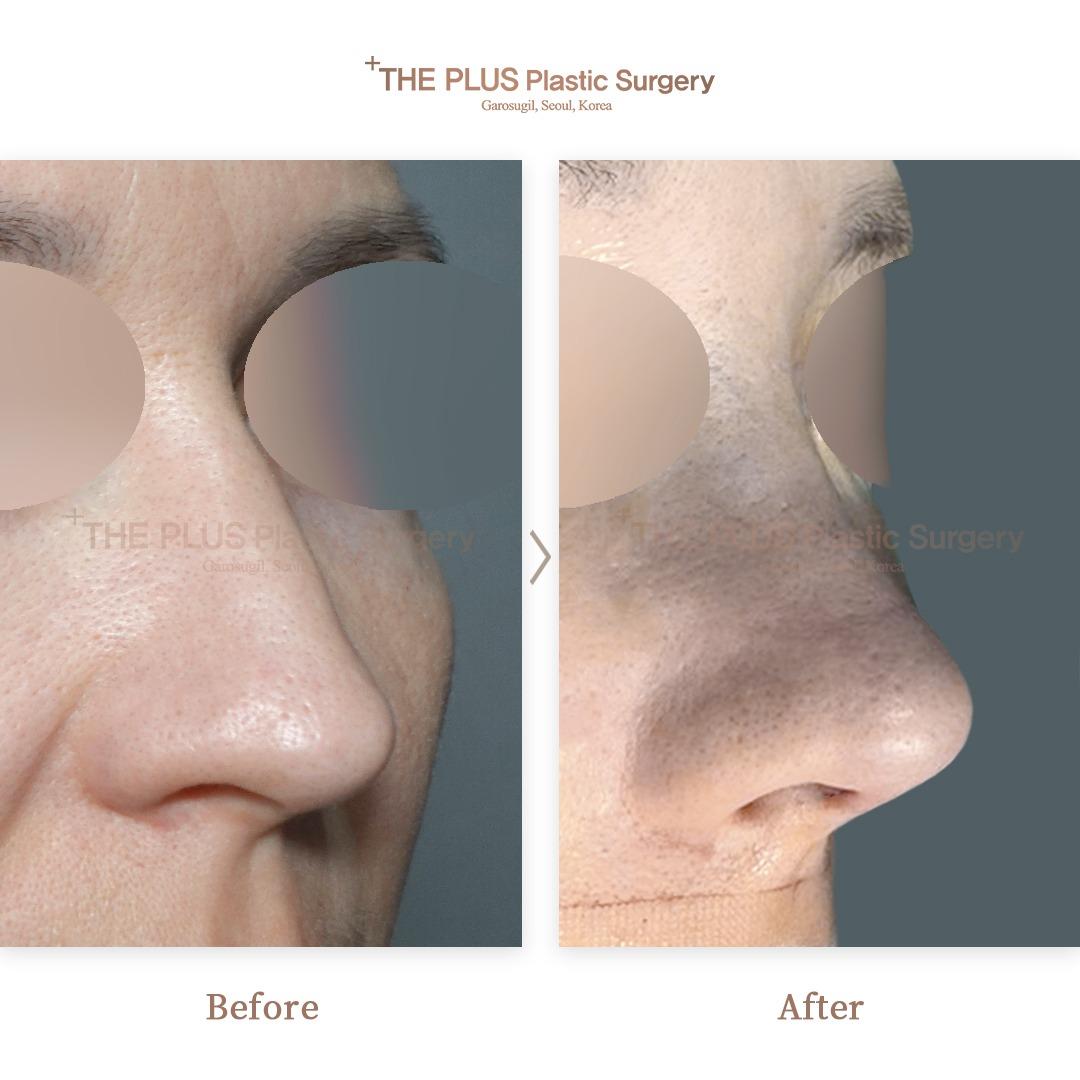
1. THEPLUS Plastic Surgery
For a crooked septum with nasal-shape concerns, you can explore rhinoplasty planning at THEPLUS Plastic Surgery with an emphasis on aligning functional considerations and facial balance. Its rhinoplasty team includes Dr. Jeong Jae-yong and Dr. Kim Taek-kyun, whose work includes rhinoplasty education, research, and revision-focused practice.
- URL: THEPLUS Plastic Surgery Website
- Location: Gangnam-gu, Seoul
- Rhinoplasty expertise:
- Dr. Jeong’s stated practice philosophy combines nasal function with aesthetic considerations.
- Dr. Kim is a board-certified plastic surgeon whose published work includes rhinoplasty and revision rhinoplasty chapters in “The 18 Masters of Korean Aesthetic Surgery.”
- The clinic offers both rhinoplasty and revision rhinoplasty, including work intended to restore nasal structure after prior surgery.
- Professional roles and education:
- Dr. Jeong authored “Rebuilding Nose: Rhinoplasty for Asians” and participates in rhinoplasty-focused professional meetings including the Seoul Rhinoplasty Forum, KSPRS, and IFAAS.
- Dr. Kim has received research awards related to 3D implants and conducts educational sessions for other plastic surgeons.
- The doctors’ academic record described in the source includes more than 20 publications and international surgical education activities.
2. Made Young Plastic Surgery
You may consider Made Young Plastic Surgery for a crooked septum when you want nasal-bone, septum, and asymmetry assessment incorporated into rhinoplasty planning. The clinic describes using 3D-CT analysis and structural techniques intended to create a stable internal nasal framework, with Dr. Lee Byeong-hoe bringing more than 20 years of exclusive rhinoplasty experience, including complex reconstruction and revision cases.
- URL: Made Young Plastic Surgery Website
- Location: Seocho-gu, Seoul
- Procedure planning:
- 3D-CT analysis is used to assess the nasal bones, septum, and asymmetry for surgical planning.
- Planning considers the nasal bridge, tip, columella, alar width, and your overall facial proportions.
- The clinic describes advanced osteotomy for dorsal-hump correction and techniques for refining the nasal tip.
- Structural and revision care:
- The approach focuses on internal structural stability intended to help prevent tip drooping and maintain nasal shape over time.
- Autologous rib grafts are described as an option for building a structurally straight nasal line.
- Available nasal services include rhinoplasty, revision rhinoplasty, reconstruction rhinoplasty, and nasal implant removal.
- Dr. Lee’s experience includes difficult revision procedures, including patients seeking multiple prior-surgery revisions.
- Safety and aftercare:
- Full-time board-certified anesthesiologists are on site, with one-to-one anesthesiology monitoring described for procedures.
- The clinic describes a cross-check emergency response system and CCTV coverage of procedures.
- A separate aftercare center provides post-procedure care.
3. Okay Plastic Surgery Clinic
For a crooked septum accompanied by concerns about nasal appearance or a previous nose operation, you can discuss rhinoplasty options at Okay Plastic Surgery Clinic. The clinic offers nose-tip, bridge, and nostril procedures as well as revision rhinoplasty, and states that it accepts difficult rhinoplasty and revision cases.
- URL: Okay Plastic Surgery Clinic Website
- Location: Gangnam-gu, Seoul
- Nasal procedures:
- Rhinoplasty services include nose-tip surgery, nose-bridge surgery, and nostril reduction.
- Revision surgery is available to address outcomes of prior nasal procedures.
- The clinic notes availability for difficult rhinoplasty cases and revision rhinoplasty.
Financial Considerations and Cost Analysis
Septoplasty Costs in South Korea
Cost is a major draw for medical tourists considering Septoplasty in South Korea. Prices typically range from $2,000 to $5,000, averaging around $3,300, depending on the clinic, surgeon, and complexity. Some clinics charge $2,000–$3,000, while others may be higher at $3,000–$5,000.
Korean clinics often provide bundled care packages, including pre- and post-operative support, accommodation options, language assistance, and sometimes luxury amenities. The all-inclusive approach simplifies budgeting and minimizes surprises, especially compared to countries where each service is billed separately.
Costs may increase if revision surgery or additional procedures (like rhinoplasty) are performed, or if care is needed at prestigious hospitals.
A Global Cost Comparison
Compared to countries like the United States—where Septoplasty ranges from $3,500 up to $11,000—South Korea remains highly competitive. Internationally, its pricing is on par with, or lower than, other popular destinations like Turkey or Thailand and much less than in many Western nations.
Table 2: Septoplasty Cost Comparison (South Korea vs. Global)
| Country | Minimum Cost (USD) | Maximum Cost (USD) |
|---|---|---|
| South Korea | 2,000 | 5,000 |
| United States | 3,500 | 11,000 |
| Turkey | 2,478 | 4,622 |
| Thailand | 2,483 | 4,631 |
| Czechia | 1,500 | 4,000 |
| Hungary | 1,544 | 10,906 |
| India | 2,500 | 3,500 |
| Israel | 2,000 | 5,000 |
| Spain | 3,000 | 7,000 |
| Switzerland | 3,000 | 30,000 |
Patient Experiences, Outcomes, and Reality
Expected Outcomes and Success Rates
Clinical studies place the success rate of Septoplasty in South Korea at 85–90%. Most patients see notable improvements in breathing and a reduction in related symptoms like snoring or sinus infections. Inside the nose, wounds heal quickly, and some patients notice an immediate improvement in airflow.
However, satisfaction is shaped by expectations; while the majority experience improvement, studies suggest only about half feel their expectations were fully met. Setting realistic goals with your surgeon is an important step.
Navigating the Recovery Process
Patient stories highlight that initial recovery is more uncomfortable than painful. Nasal blockage from swelling and packing forces mouth-breathing and can leave your mouth dry. There may be minor bleeding and drainage the first few days. Most describe a marked relief when splints are removed, sometimes breathing freely through a nostril for the first time in years.
Pain is generally well managed with medication but can peak a couple of days after surgery. Full healing and optimal breathing often take several months.
Life-Changing vs. Great Improvement
For patients severely affected by a deviated septum, Septoplasty can be life-changing—transforming sleep, breathing, and quality of life. Others with milder symptoms may describe the outcome as a “great improvement” rather than transformational. Your pre-surgical condition largely determines the impact, so it’s important to discuss anticipated outcomes during consultation.
Conclusion
While a deviated septum is common, significant symptoms warrant considering Septoplasty, which has a strong clinical record of success. South Korea is a leading option for medical tourists due to its advanced care, experienced surgeons, and competitive pricing. Ultimately, patient satisfaction depends on both the surgical result and setting realistic expectations for recovery and outcomes.
References
1, 2, 3, 4, 5, 6, 7, 8, 9, 10, 11, 12, 13, 14, 15, 16, 17, 18, 19, 20, 21, 22, 23, 24, 25, 26, 27
Frequently Asked Questions
Related Blogs
Korea vs. Global Standards: A Comprehensive Cost Analysis of Cleft Rhinoplasty in Medical Tourism Destinations
Explore the cost of cleft rhinoplasty in Korea, a popular destination for medical tourism due to its advanced surgical techniques and competitive pricing. Discover factors influencing the overall expense, from hospital fees to post-operative care, and what makes Korea a top choice for this specialized procedure.
Updated: Oct 21, 2026
Philtrum Reduction Costs: Choosing Korea Over the USA, Mexico, Turkey & More for Expert Care
Discover the affordability and benefits of Philtrum Reduction Surgery in Korea, a popular destination for high-quality cosmetic procedures. Explore cost factors, surgeon expertise, and why Korea is a top choice for those considering this transformative surgery.
Updated: Oct 21, 2026
Discovering the True Value: Sinus Surgery Costs in Korea Compared to Global Options
Discover the affordable options for sinus surgery in Korea, a leading destination for medical tourists seeking quality care. Learn about the factors influencing costs and what patients can expect from their experience in this highly advanced healthcare system.
Updated: Oct 21, 2026
Non-Implant Rhinoplasty in Korea: Cartilage Grafts, Recovery, Travel Planning, and Alternatives
Non-implant rhinoplasty reshapes the nose using septal, ear, or rib cartilage, with surgical or injectable and open or closed approaches and possible septal or nasal-valve correction. International patients can find guidance on candidate screening, material-specific consent, Korea stays of 10–21 days, travel timing, recovery, and follow-up.
Updated: Oct 16, 2026
Clinics offering Septoplasty

THEPLUS Plastic Surgery Korea | Eye, Nose, Face & Body Surgery
Sinsa

Made Young Plastic Surgery: Rejuvenating Aesthetic Excellence in Korea for Face Lifts, Contouring and More
Gangnam Station

Okay Plastic Surgery Clinic in Korea: Comprehensive Aesthetic Procedures with Sincerity and Care
Cheongdam

Banobagi Plastic Surgery: A Pioneering and Trusted Plastic Surgery Clinic in Korea
Seolleung