
Medical Tourism Blog
Collagen Filler in Korea: Products, Safety, Recovery, and Travel Planning

Table of contents
- Collagen Filler at a Glance
- What Is a Collagen Filler?
- Who Is a Good Candidate for a Collagen Filler?
- What Are the Different Types of Collagen Filler?
- Why Visit Korea for a Collagen Filler?
- Key Information for International Patients
- Collagen Filler From Start to Finish
- Alternatives to a Collagen Filler
- Which Are the Best Clinics in Korea for Collagen Filler?
- How Can I Prepare for a Collagen Filler?
- Aftercare Advice
Considering treatment in Korea? Everything you need to know e.g. — how to avoid scams, visas, interpreters, recovery tips — in our Medical Tourism Master Guide. Plan with confidence in minutes, not weeks!
Last updated: September 2026
Collagen Filler at a Glance
- Product must be identified — “Collagen filler” can mean absorbable injected collagen, a collagen-PMMA composite, or a collagen-stimulating biostimulator; confirm the exact brand, ingredients, approved treatment site, and whether it is temporary or permanent before booking.
- Best for modest correction — Suitable goals include softening a product-appropriate facial fold, filling a contour depression, or elevating selected distensible atrophic cheek acne scars; it does not reliably treat ice-pick scars, active acne, lax skin, or generalized texture.
- Recovery takes up to 2 weeks — Treatment is usually outpatient with immediate early volume, but redness, swelling, bruising, tenderness, and temporary lumpiness can last several days to 1–2 weeks; assess the settled result after swelling improves.
- Plan 2–3 days in Korea — International patients should remain locally reachable for at least 2–3 days after a straightforward injection; plan 7–14 days if bruising matters, a review or top-up is expected, or an animal-derived product requires allergy testing.
- Permanent products are not dissolvable — Collagen-PMMA fillers can provide persistent correction, but PMMA cannot be dissolved with hyaluronidase like hyaluronic-acid filler, making conservative placement and a plan for delayed nodules or inflammation especially important.
- Allergy screening may be required — Animal-derived collagen products may require a product-specific skin test, and treatment should not proceed with a known filler, animal-component, or lidocaine allergy; a negative test lowers but does not eliminate hypersensitivity risk.
- Korea requires product-level verification — Korea classifies cosmetic fillers as high-risk Class 4 medical devices, but that does not confirm an unnamed product’s authorization or indication—ask for its manufacturer, MFDS status, instructions for use, and lot-number documentation.
What Is a Collagen Filler?
A collagen filler is an injectable material containing collagen, sometimes combined with another filler component, used to add volume beneath the skin. It softens selected facial folds or depressions and can improve certain depressed acne scars. It is a minimally invasive, non-surgical procedure performed by injection.
Who Is a Good Candidate for a Collagen Filler?
- Appropriate treatment goal — Good candidates seek modest correction of a product-appropriate facial fold, contour depression, or selected distensible atrophic cheek acne scar.
- Healthy treatment area — Skin should be free of active acne cysts, dermatitis, rash, hives, herpes lesions, sunburn, and infection.
- Informed decision-maker — Candidates understand that “collagen filler” does not identify one material, durability, or reversal option, and will obtain the exact product details before consenting.
- Follow-up access — International patients need time in Korea for an early review and a clear plan for urgent or delayed care after returning home.
Do not proceed with a known allergy to the proposed filler, its animal-derived components, or lidocaine when present. Animal-derived collagen products can require a product-specific skin test; a negative result reduces but does not eliminate hypersensitivity risk. Pregnancy and breastfeeding are generally reasons to defer elective filler because safety is unestablished, while bleeding disorders, anticoagulants or antiplatelets, severe allergy or anaphylaxis, keloid tendency, autoimmune/connective-tissue disease, and immunosuppressive therapy require individualized assessment. For the collagen-PMMA product Bellafill, studied indications are nasolabial folds and moderate-to-severe, distensible atrophic cheek acne scars in adults older than 21, not lips or every facial area; its exclusions cannot automatically be applied to an unnamed Korean product. Product-specific labeling and safety evidence should guide the final decision.
What Are the Different Types of Collagen Filler?
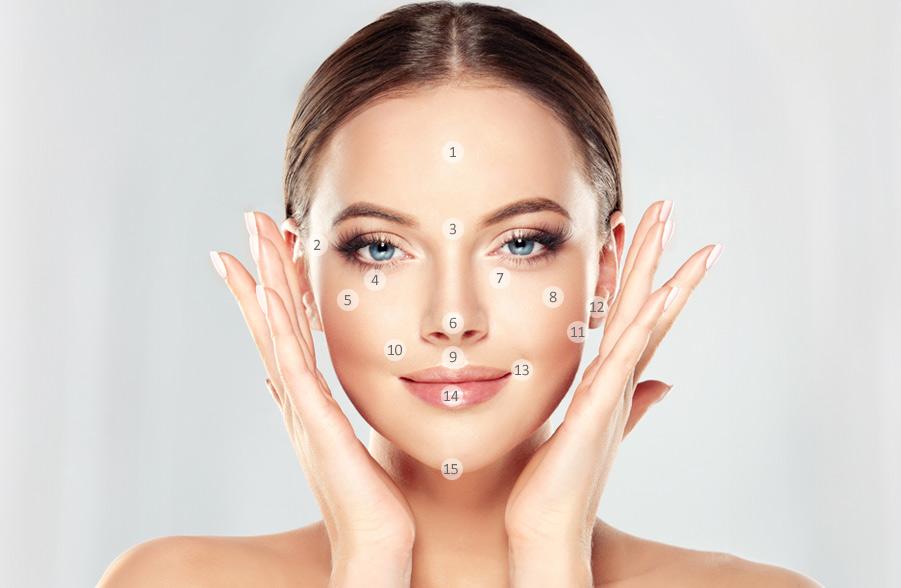
“Collagen filler” is a category, and clinics sometimes use the term for products that do not contain collagen. Confirm the brand, ingredients, absorbable versus permanent status, approved use, and planned injection plane before booking.
- Resorbable collagen filler — Purified collagen, including animal-derived, human-derived, or bioengineered material, provides relatively immediate correction and is gradually broken down. Allergy screening can be relevant, particularly for animal-derived formulations.
- Collagen-PMMA composite filler — This combines a collagen carrier with non-resorbable polymethylmethacrylate (PMMA) microspheres. The carrier provides early volume while PMMA remains as a scaffold; it cannot be dissolved like hyaluronic-acid filler and late nodules or granulomas are harder to manage.
- Collagen-stimulating injectable — Calcium hydroxylapatite, poly-L-lactic acid, PDLLA, PCL, and particulate PDO/PLLA products are often marketed as “collagen fillers,” but they are biostimulators rather than injectable collagen. Results are commonly more gradual, and their scheduling, reversibility, and complication treatment differ.
- Scar-focused placement — Selected rolling scars and some distensible boxcar scars can be elevated with filler. Tethered rolling scars often need subcision, while ice-pick scars usually respond poorly to simple volumization. Acne-scar morphology and combination-treatment evidence supports matching treatment to scar type.
Why Visit Korea for a Collagen Filler?
Korea recognizes cosmetic fillers as high-risk Class 4 medical devices, with collagen and hyaluronic acid listed among representative filler materials. That classification is useful, but it does not confirm that any particular brand is authorized for the proposed site or that it is suitable for an individual patient. No high-quality comparative evidence shows that collagen-filler results or complication rates in Korea are superior to those elsewhere.
- Regulatory verification — MFDS guidance identifies collagen as a representative cosmetic-filler material. Ask the clinic for the proposed product’s Korean regulatory status, official indication, manufacturer, and instructions for use rather than relying on a generic marketing term.
- Documented provider pathways — Korea’s official Medical Korea registered-provider system gives international patients a way to check registered institutions, though registration does not establish expertise with a specific filler or facial area.
- Meaningful product distinction — The principal advantage of a careful Korean consultation is the opportunity to distinguish true collagen, collagen-PMMA composite filler, and collagen biostimulators before injection. This distinction determines allergy testing, expected onset, durability, and whether enzymatic dissolution is an option.
Key Information for International Patients
- Minimum stay — Remain in Korea for at least 2–3 days after a straightforward facial injection so early swelling, asymmetry, allergic symptoms, or vascular warning signs can be assessed locally.
- Longer itinerary — Plan 7–14 days when bruising would disrupt travel, a review or top-up is planned, or the named animal-derived product requires pre-treatment allergy testing.
- Flight timing — No established evidence-based no-fly interval exists specifically for collagen filler, and available aftercare evidence does not show that normal cabin pressure displaces dermal filler. The practical concern is leaving before the treating clinician can assess an early complication, not filler movement during flight. Evidence limitations around flying after filler
- Itinerary impact — Expect redness, tenderness, swelling, bruising, itching, discoloration, or temporary lumpiness for several days; visible bruising and swelling can last 1–2 weeks. Avoid booking treatment immediately before photography, a wedding, or an important business event.
- Emergency planning — Obtain a 24-hour clinic contact, the clinic’s pathway for suspected vascular occlusion or visual symptoms, and the location of the nearest emergency service. Severe pain, pale or dusky skin, or any visual symptom needs immediate in-person emergency assessment.
- Records and remote review — Leave with English documentation of the brand, ingredients, lot number, injected volume, sites, date, clinician, consent, photographs, and aftercare plan. Arrange a remote review after returning home and identify a local clinician who can assess a delayed problem.
Travel note: A permanent or semi-permanent collagen-PMMA product deserves more conservative travel planning than an absorbable product because it is not readily dissolved if placement or a delayed inflammatory reaction becomes problematic.
Collagen Filler From Start to Finish
- Remote enquiry and product confirmation — Send neutral, unfiltered photographs and disclose the intended treatment area. Ask in writing whether the proposed injectable is true collagen, collagen-PMMA, or a collagen biostimulator; request the brand, manufacturer, full ingredients, intended site, and Korean regulatory status. English or virtual consultation availability depends on the clinic.
- Medical screening before travel — Provide all prescription and non-prescription medicines, vitamins, herbal supplements, allergies, previous filler brands/sites/dates, prior filler complications, cold-sore history, bleeding issues, autoimmune disease, immunosuppression, and abnormal scarring history. The clinician decides whether treatment is appropriate and whether other treatment should be staged instead.
- Allergy-test planning where required — Some animal-derived collagen products require product-specific skin testing before treatment. For the Bellafill collagen-PMMA example, labeling requires a skin test and excludes a positive result; a negative result does not guarantee that a later reaction cannot occur. Collagen-PMMA screening requirements cannot be assumed for every product.
- In-person examination and consent — The injector assesses facial anatomy, skin quality, prior filler, and, for acne scars, depth and tethering. Standardized photographs are taken, and the clinician confirms realistic goals, alternatives, material permanence, expected recovery, risks, and emergency management.
- Treatment preparation — The area is cleansed, marked, and photographed. Topical anesthetic or local anesthetic can be used; some fillers already contain lidocaine. Broad laboratory testing is not routinely needed for an uncomplicated facial filler unless medical history indicates it.
- Injection and shaping — Using a needle or blunt cannula, the clinician places small amounts at a product- and anatomy-specific dermal or subcutaneous depth, then molds only when appropriate. A collagen-PMMA product has product-specific placement instructions, so its injection plane must not be copied to another brand. Straightforward facial treatment is generally outpatient and same day.
- Immediate observation and discharge — The team checks the treated area and explains expected redness, swelling, bruising, tenderness, itching, and early unevenness. Receive written aftercare, emergency contact details, and complete product documentation before leaving.
- Local review and remote follow-up — Stay reachable in Korea for the first 2–3 days. Assess the settled appearance after early swelling improves, commonly around 1–2 weeks; further treatment depends on the named product, correction achieved, and risk profile. Continue scheduled remote follow-up after returning home, particularly for persistent products or new nodules.
Alternatives to a Collagen Filler
The central tradeoff is reversibility versus durability. A temporary hyaluronic-acid filler can generally be enzymatically degraded, whereas collagen-PMMA and other non-hyaluronic materials are not dissolved by hyaluronidase; surgical or scar-focused options can address structural problems but bring more downtime or a different risk profile.
Hyaluronic-Acid Filler
- Best for — Patients prioritizing temporary volume correction and a material that is generally degradable with hyaluronidase.
- Tradeoff — It still carries bruising, inflammatory, infection, and vascular-occlusion risks and needs repeat treatment as it resorbs.
- Related procedure — Facial filler
Biostimulator
- Best for — Selected diffuse volume-loss or collagen-stimulation goals where gradual change is acceptable.
- Tradeoff — Calcium hydroxylapatite and poly-L-lactic acid have different onset, repeat-session requirements, and management of nodules or complications; they are not injectable collagen.
- Related procedures — Radiesse filler and Sculptra
Autologous Fat Grafting
- Best for — Broader or longer-lasting volume restoration using a person’s own fat.
- Tradeoff — Requires fat harvesting, involves more recovery, and has variable graft survival.
- Related procedure — Face fat grafting
Scar-Focused Treatment
- Best for — Atrophic acne scars where tethering, scar edges, or scar depth—not simply volume loss—drives the visible depression.
- Tradeoff — Subcision, fractional resurfacing, RF microneedling, TCA CROSS, or punch techniques are selected by scar type and often used in combination; improvement is partial rather than scar erasure.
- Related procedure — Acne scar treatment
Which Are the Best Clinics in Korea for Collagen Filler?
Listed below are some of the best clinics in Korea for collagen filler.
1. PangPang Clinic
For a collagen-stimulating volume approach, you may consider PangPang Clinic’s PIM Injection, which combines Ultra Cell, thread-lifting components, and Botox to address fine lines, skin elasticity, complexion, and facial volume without surgery. Its practice is strongly centered on thread lifting, including absorbable thread components intended to support collagen production and firmness.
- URL: PangPang Clinic Website
- Location: Gangnam-gu, Seoul
- PIM Injection details:
- Treatment time is about 30 minutes, with local anesthesia, minimal pain, and no stated recovery period.
- The clinic states results may last about 6 months to 2 years.
- A monthly series of 3–5 treatments is recommended by the clinic for optimal effect.
- Thread-focused planning:
- The clinic uses 31 specialized functional threads and offers tailored treatment planning through its Thread Lifting Consultation Center.
- Its thread-lifting system includes ultrasonic visual checks and pre-procedure design, personalized doctor consultation, and customized thread selection.
- Volume threads are used for areas such as the under-eyes, cheeks, and eye bags.
- Research and related care:
- The clinic reports having established a Thread Lifting Research Institute and bases procedure development on research and clinical data.
- Its team participates in international beauty conferences through invited lectures and presentations.
- Additional options described include customized fillers, Botox, laser treatments, scar care, and thread-lifting revision care.
2. Haru Clinic
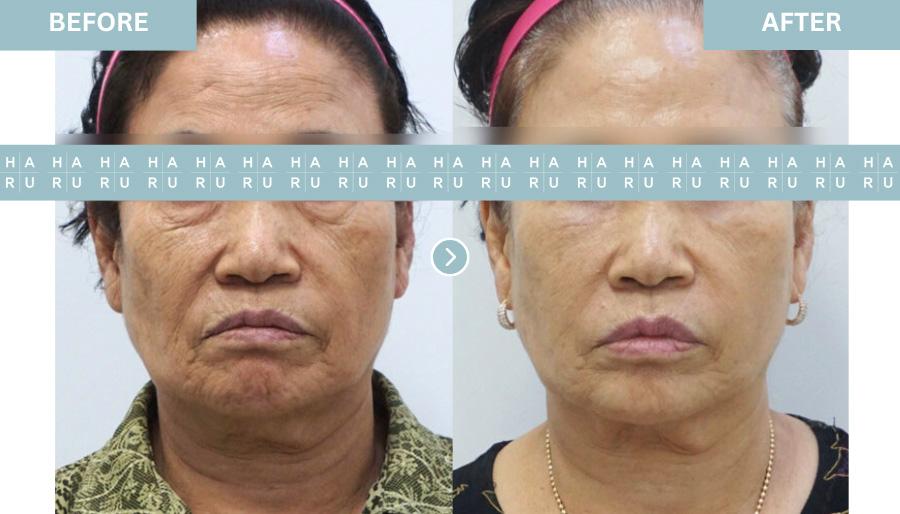
You may consider Haru Clinic if you want collagen-filler planning that balances volume and facial proportions: its filler options include hyaluronic acid and biostimulatory fillers for areas such as the cheeks, chin, jawline, lips, and tear troughs, while Dr. Jeong designs treatment around your individual facial harmony using non-invasive techniques.
- URL: Haru Clinic Website
- Location: Gangnam-gu, Seoul
- Filler approach:
- Hyaluronic acid or biostimulatory fillers are used to restore volume and definition, with immediate, adjustable contouring described by the clinic.
- Treatment areas include the lips, cheeks, chin, jawline, and tear troughs.
- Dr. Jeong is an official research physician at Merz, the company behind Belotero Filler, and teaches other doctors current filler techniques.
- Related collagen and contour options:
- Collagen-tightening treatment uses radiofrequency or ultrasound to heat the dermis, supporting tissue contraction and new collagen production without incisions.
- Thread lifting with dissolvable barbed threads can elevate the cheeks and jawline while stimulating collagen.
- For under-eye concerns, the clinic describes customized care using tear-trough filler, laser treatment, or PRP based on hollowness, pigmentation, and fine lines.
3. B.V Clinic
You may consider B.V Clinic if your volume concerns are accompanied by laxity or reduced elasticity, as its volume-lifting care is designed to restore depleted facial volume and support the skin’s natural structure, while its thread and energy-based treatments are intended to promote collagen and firmer contours.
- URL: B.V Clinic Website
- Location: Seoul
- Volume and lifting options:
- Volume Lifting is described as restoring volume and elasticity in depleted facial areas to support a more resilient-looking skin structure.
- 3D Thread Lifting uses strategically placed threads to lift and firm sagging skin, target the SMAS layer, and stimulate collagen production.
- Full Face Lifting is a non-surgical option intended to restore volume and balance while addressing concerns such as forehead wrinkles, nasolabial folds, and facial asymmetry.
- Collagen-supporting technologies:
- Shurink Lifting uses high-intensity focused ultrasound to tighten deeper skin layers and support elasticity and contour refinement.
- Potenza Lifting uses radiofrequency technology tailored to individual skin needs to improve collagen, elasticity, scars, and pore texture.
- Thor Lifting uses radiofrequency energy for skin tightening and body contouring.
- Aftercare:
- Post-treatment regeneration management includes nutritional skincare products and ultrasound-based treatments intended to minimize swelling, improve elasticity, and support collagen.
- Treatment planning is tailored to your aesthetic goals.
How Can I Prepare for a Collagen Filler?
- Confirm the exact product — Obtain the brand, manufacturer, ingredient list, Korean regulatory status, intended anatomical site, absorbable versus permanent status, lot-number plan, and written aftercare before paying a deposit.
- Disclose medicines and supplements — List anticoagulants, antiplatelets, NSAIDs, corticosteroids, vitamins, fish oil, and herbal supplements. Do not stop prescribed blood-thinning or anti-inflammatory medicine on your own; the prescribing clinician and injector must balance bruising risk against the danger of interruption.
- Report allergy and scar history — Declare collagen, bovine or other animal-product, lidocaine, latex, and drug allergies; previous anaphylaxis; keloids; and all prior filler reactions. Complete any required product-specific allergy test before scheduling injection.
- Clear active inflammation — Postpone treatment for acne cysts, dermatitis, rash, hives, cold sores, sunburn, or infection at or near the treatment area. Disclose recurrent facial herpes so the clinician can decide whether antiviral prevention is appropriate.
- Stage other facial procedures — Do not combine laser resurfacing, chemical peels, aggressive facials, or other inflammation-inducing treatments without a written staged plan from the injector.
- Plan around recovery — Avoid alcohol and smoking for 1–2 weeks when possible, and schedule no major social or professional event for at least 1–2 weeks after injection because bruising can remain visible.
- Arrange local support — Book nearby accommodation, save the clinic’s 24-hour contact route, and keep travel dates flexible enough for a review. Bring a companion if language barriers, anxiety, or a prior allergic-reaction history make independent travel difficult.
Travel note: Do not schedule a long-haul departure immediately after treatment. The reason to remain nearby is prompt access to the injector during the early recovery period.
Confirm the treating doctor’s product-specific instructions, testing requirements, and medicine plan; these take precedence over general guidance.
Aftercare Advice
Protect the injected area from pressure, heat, and unnecessary manipulation while early swelling settles, and treat vascular warning signs as an emergency.
- First 6 hours — Do not touch, press, or massage the area unless the injector specifically instructs otherwise. For the Bellafill example, labeling advises no touching for six hours and gentle washing afterward; follow the instructions for the actual product used. Product-specific aftercare guidance
- First 1–2 weeks — Avoid strenuous exercise, saunas, extreme heat or cold, direct sun/UV exposure, alcohol, smoking, forceful facial massage, facials, and facial devices until visible inflammation has resolved and the injector clears activity. MFDS patient guidance for filler aftercare similarly advises avoiding these exposures.
- Skincare and sun protection — Use gentle cleanser and bland skincare once the skin is intact. Apply broad-spectrum SPF 50 to exposed skin and avoid irritating exfoliants or procedures near injection sites until cleared.
- Expected recovery — Redness, swelling, bruising, tenderness, itching, discoloration, and temporary lumpiness usually improve over several days to 1–2 weeks. Judge symmetry and settled volume only after early swelling resolves.
- Emergency signs — Seek immediate emergency care for severe or escalating pain; white, gray, blue, dusky, mottled, or cold skin; blistering; visual change; eye pain; eyelid droop; severe headache; weakness; speech difficulty; confusion; or trouble walking. These symptoms can signal vascular compromise, including rare skin necrosis, blindness, or stroke. Documented filler vascular risks
- Prompt review — Contact the clinic urgently for fever, spreading redness, drainage, increasing tenderness, recurrent cold sores, persistent pain, or new or persistent nodules. Collagen-PMMA products can cause delayed redness, swelling, nodules, granulomas, or allergic reactions weeks to years later.
Follow the treating doctor’s individualized instructions and contact the clinic promptly when recovery appears abnormal.
Frequently Asked Questions
Related Blogs
Comparing Global Costs of Pico Fraxel: Why Korea is a Top Choice for Skin Rejuvenation Without Compromise
Discover the affordability of Pico Fraxel laser treatments in Korea, where cutting-edge technology meets competitive pricing. Explore why many are choosing Korea for their skincare journey and how it compares to global costs.
Updated: Oct 21, 2026
Optimize Your Wellness: See Why Vitamin Injections in Korea Offer Value Beyond Costs Compared to the USA & More
Discover the latest trends in the cost of vitamin injections in Korea, exploring factors affecting pricing and popular clinics. Learn how these wellness treatments can boost your energy and overall health.
Updated: Oct 21, 2026

Laser Tattoo Removal Costs: Is Korea Your Best Option Compared to the USA, Turkey, and Beyond?
Discover the factors influencing the cost of laser tattoo removal in Korea, from technology and expertise to session frequency. Explore why Korea is becoming a popular destination for this effective and advanced cosmetic procedure.
Updated: Oct 21, 2026

Unlock Radiant Skin: Comprehensive Cost Analysis of Steroid Injections for Scars in Korea vs USA, Turkey & More
Explore the cost of steroid injections for scars in Korea, a popular cosmetic procedure aimed at minimizing the appearance of scar tissue. This article breaks down the pricing, factors influencing cost, and potential savings compared to other countries.
Updated: Oct 21, 2026
Clinics offering Collagen Filler

Haru Clinic Korea | Fully-Customized Full-Face Non-Surgical Rejuvenation With Threads, Botox & Fillers
Sinsa
Hev Clinic Korea | Premium Sinsa Clinic for Skin, Laser & Injectables
Sinsa

PangPang Clinic: Korea's Premier Thread Lifting and Skin Rejuvenation Specialist in Gangnam, Seoul
Sinsa
Cellinique Clinic Korea: Advanced Stem Cell and Laser Treatments for Health, Beauty, and Rejuvenation in Gangnam
Apgujeong