
Medizintourismus-Blog
Cellulite-Behandlung im Taillenbereich in Korea: Stoßwellentherapie zur Fettauflösung und Laser zur Reduktion von Körperfett
Table of contents
- Cellulite verstehen: Ätiologie und Terminologie
- Stoßwellentherapie: Ein dualer Wirkmechanismus bei Cellulite
- Laser zur Fettauflösung am Körper: Eine detaillierte Betrachtung
- Die besten Kliniken in Korea für Cellulite im Taillenbereich
- Die Erfahrung des Medizintourismus in Südkorea
- Kostenanalyse und Vergleich des Gegenwerts
- Behandlungsergebnisse und realistische Erwartungen
- Fazit und Beratungsempfehlungen
- Referenzen
Planen Sie eine Behandlung in Korea? Alles, was Sie wissen müssen, z. B. wie Sie Betrug vermeiden, Visa, Dolmetscher und Tipps für die Erholung, finden Sie in unserem Master Guide für Medizintourismus. Planen Sie mit Vertrauen in Minuten statt in Wochen!
Diese Analyse befasst sich mit Cellulite und zwei weit verbreiteten nicht-invasiven ästhetischen Behandlungsoptionen: der Stoßwellentherapie und dem Laser zur Fettauflösung am Körper. Sie soll Patientinnen und Patienten als Orientierung dienen, die diese Behandlungen in Erwägung ziehen – insbesondere dann, wenn sie Medizintourismus in Südkorea prüfen. Die Evidenz zeigt, dass Cellulite eine häufige, harmlose strukturelle Hautveränderung ist, die sich von generalisierter Adipositas oder überschüssigem Körperfett unterscheidet. Auf genau dieser Unterscheidung beruht die Wirkweise beider Verfahren. Die Stoßwellentherapie, auch als Acoustic Wave Therapy (AWT) bekannt, zielt auf die fibrösen Bindegewebsstränge ab und regt die Kollagenbildung an, wodurch die unebene, dellenartige Hautoberfläche bei Cellulite direkt verbessert werden kann. Im Gegensatz dazu können zwar bestimmte Lasersysteme ebenfalls die fibrösen Septen bei Cellulite behandeln, allgemeine „fettauflösende Laser“ richten sich jedoch in erster Linie auf die Reduktion lokaler Fettdepots.
Südkorea bietet für den Medizintourismus ein professionelles, patientenorientiertes Umfeld, das moderne Technologien und umfassende Betreuung mit deutlich niedrigeren Kosten als in vielen westlichen Ländern verbindet. Ein schrittweiser Behandlungsablauf – von der Beratung bis zur Nachsorge – veranschaulicht die unterstützende Rolle von Medizintourismus-Agenturen. Die verfügbaren Ergebnisse zeigen bei geeigneten Kandidatinnen und Kandidaten eine gute Wirksamkeit; der langfristige Erfolg hängt jedoch davon ab, gesunde Gewohnheiten beizubehalten. Beide Verfahren sind wertvolle ästhetische Instrumente, ersetzen aber weder eine ausgewogene Ernährung noch regelmäßige Bewegung.
Cellulite verstehen: Ätiologie und Terminologie
Die klinische Definition von Cellulite
Cellulite zeigt sich als unebene, wellige oder dellenartige Hautoberfläche, am häufigsten an Oberschenkeln, Hüften, Gesäß und Bauch. Sie ist äußerst verbreitet, medizinisch harmlos und wird oft als „Hüttenkäsehaut“ oder „Orangenhaut“ beschrieben.
Unter der Haut verbinden feste fibröse Bindegewebsstränge die Haut mit der tieferliegenden Muskulatur; dazwischen liegt eine Fettschicht. Wenn sich Fettzellen vergrößern, drücken sie gegen die Haut, während die fibrösen Stränge die Haut nach unten ziehen. Dadurch entstehen die für Cellulite typischen Erhebungen und Dellen. Diese strukturelle Konstellation unterscheidet Cellulite von allgemeinem Fettüberschuss.
Gängige Bezeichnungen und assoziierte Zustände
Der Begriff „Cellulite“ entstand in den 1920er-Jahren im Schönheitsbereich und unterstreicht damit ihren Status als kosmetisches Anliegen und nicht als Krankheit. Sie wurde auch bezeichnet als
gynoide Lipodystrophie (GLD), adiposis edematosa, dermopanniculosis deformans und Orangenhaut-Syndrom.
Cellulite ist bei den meisten Frauen nach der Pubertät ein normaler Befund und betrifft Schätzungen zufolge 80 % bis 90 % dieser Gruppe in europäischen Bevölkerungen. Bei Männern ist sie aufgrund von Unterschieden in Fettverteilung und Hautstruktur selten.
Die multifaktoriellen Ursachen und Risikofaktoren
Cellulite entsteht durch mehrere zusammenwirkende Faktoren und nicht durch eine einzelne Ursache.
- Hormonelle Faktoren: Hormone haben einen wesentlichen Einfluss auf die Entstehung von Cellulite. Insbesondere Östrogen wird damit in Verbindung gebracht; auch ein Ungleichgewicht zwischen Östrogen und Progesteron kann mit ihrem Auftreten assoziiert sein.
- Genetische Veranlagung: Bestimmte Genpolymorphismen, unter anderem im Gen des Angiotensin-Converting-Enzyms (ACE) und im Hypoxia-Inducible-Factor-1A-Gen (HIF1a), wurden mit einer erhöhten Anfälligkeit in Verbindung gebracht.
- Physiologische Faktoren: Veränderungen des Bindegewebes, der Mikrozirkulation und des Lymphabflusses tragen zur Cellulite bei. Bewegungsmangel kann das Risiko durch vaskuläre Stase erhöhen.
- Lebensstil- und demografische Faktoren: Körpergewicht und Muskeltonus beeinflussen die Sichtbarkeit; jedoch können auch schlanke und fitte Menschen Cellulite haben. Mit zunehmendem Alter nimmt die Hautelastizität ab, und auch ein stressreicher Lebensstil mit erhöhten Katecholaminspiegeln wurde mit ihrer Entstehung in Verbindung gebracht.
Wichtige klinische Unterschiede im Detail
Cellulite und allgemeiner Fettüberschuss sind nicht dasselbe. Gewichtsverlust kann das Erscheinungsbild der Dellen bei Personen mit Übergewicht verbessern, ist jedoch keine garantierte Lösung. Nach starkem Gewichtsverlust mit daraus resultierender Hauterschlaffung kann Cellulite sogar sichtbarer werden. Dass auch fitte Menschen Cellulite haben, zeigt, dass es sich vor allem um ein strukturelles Hautproblem und nicht einfach um ein Fettproblem handelt.
Diese Unterscheidung ist für eine sachgerechte Beratung zentral. Behandlungen, die ausschließlich auf Fett abzielen, wie die klassische Fettabsaugung, haben häufig nur geringe Auswirkungen auf Cellulite und können die Dellen mitunter sogar stärker betonen. Wenn sich eine Patientin oder ein Patient mit Normalgewicht wegen „delliger Haut an der Taille“ vorstellt, ist der richtige Ansatz die Behandlung der fibrösen Septen und der Hautqualität – nicht allein die Entfernung von Fett. Das ist entscheidend für eine sinnvolle Verfahrenswahl und realistische Erwartungen.
Stoßwellentherapie: Ein dualer Wirkmechanismus bei Cellulite
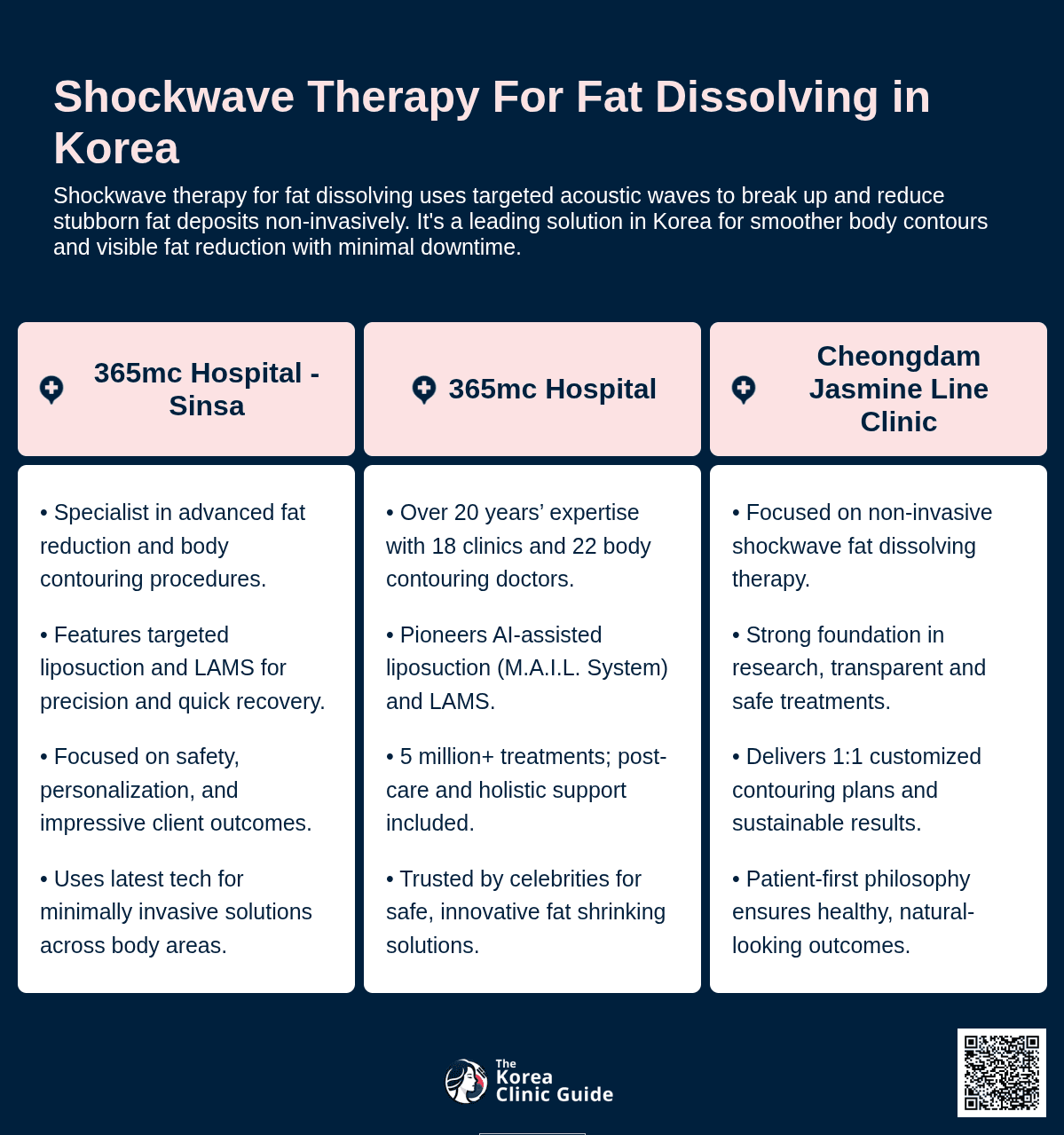
Wirkmechanismus: Die eigentlichen Ursachen gezielt angehen
Die Stoßwellentherapie (SWT), auch Acoustic Wave Therapy (AWT) oder Extracorporeal Shockwave Therapy (ESWT) genannt, ist eine nicht-invasive Option, die in der Ästhetik zunehmend zur Reduktion lokaler Fettdepots und zur Verbesserung der Hautstruktur eingesetzt wird. Ursprünglich wurde sie in der Orthopädie und bei der Behandlung von Nierensteinen eingesetzt; dabei werden akustische Wellen genutzt, um günstige biologische Effekte auszulösen.
Ihre vielschichtige Wirkung adressiert die wesentlichen Komponenten von Cellulite:
- Aufbrechen fibröser Septen: Hochenergetische Schallwellen erzeugen mechanischen Druck, der die fibrösen Stränge erreicht, welche die Haut nach unten ziehen. Durch die Beeinflussung des Kollagens in diesen Septen wird die Zugwirkung gelockert und die Hautoberfläche geglättet.
- Anregung der Kollagenproduktion: Kontrollierte Mikrotraumata aktivieren Fibroblasten und fördern die Neubildung von Kollagen und Elastin. Die Haut wird dicker, straffer und elastischer und damit widerstandsfähiger gegen Dellenbildung.
- Verbesserung der Durchblutung und des Lymphabflusses: Eine gesteigerte Durchblutung durch Neoangiogenese bringt mehr Sauerstoff und Nährstoffe ins Gewebe, während die Anregung des Lymphsystems Flüssigkeitsansammlungen reduziert und den Gewebestoffwechsel unterstützt.
- Lipolyse (Fettabbau): Vorübergehende Erhöhungen der Membranpermeabilität von Fettzellen ermöglichen die Freisetzung von Triglyzeriden, die anschließend über Blut- und Lymphwege abtransportiert werden. Ziel ist die Reduktion des Fettvolumens, nicht die Zerstörung von Fettzellen, die physiologische Funktionen erfüllen.
Verfahrensvarianten und klinische Protokolle
Bei der SWT wird ein Handstück verwendet, das radiale oder fokussierte Stoßwellen abgibt; Energie und Wellentyp werden individuell angepasst.
- Radiale Stoßwellentherapie (RSWT): Wellen mit niedriger bis mittlerer Energie für allgemeine Cellulite und Hautstraffung; in der Regel sind mehrere Sitzungen erforderlich.
- Fokussierte Stoßwellentherapie (FSWT): Höherenergetische, gebündelte Wellen für tiefer liegende Fettdepots; häufig sind weniger Sitzungen nötig.
- Planare Stoßwellentherapie (PSWT): Niedrigenergetische Wellen zur Behandlung größerer Areale, oft in Kombination mit anderen Verfahren zur Fettreduktion.
Typische Protokolle umfassen etwa sechs Sitzungen, zweimal pro Woche über drei Wochen. Pro Behandlungsareal dauert eine Sitzung ungefähr 20 bis 30 Minuten. Patientinnen und Patienten spüren rhythmische Impulse bei nur minimalem Unbehagen; eine Anästhesie ist nicht erforderlich.
Klinische Wirksamkeit und synergistische Vorteile
Studien stützen die Fähigkeit der SWT, den Schweregrad von Cellulite zu verringern. Eine Studie aus dem Jahr 2021 zeigte, dass die Kombination aus SWT und aerobem Training zu stärkeren Verbesserungen führte als Training allein oder keine Behandlung. Die Vorteile der SWT für Durchblutung und Lymphabfluss scheinen die metabolischen Effekte von Bewegung zu verstärken, was darauf hindeutet, dass die besten Ergebnisse erzielt werden, wenn die Behandlung Teil eines aktiven Lebensstils ist.
Die US-amerikanische Food and Drug Administration (FDA) hat mehrere Akustikwellen-Geräte zur Verbesserung von Cellulite freigegeben, darunter Soliton Resonic, BTL X Wave und Zimmer Z Wave, was Sicherheit und Wirksamkeit zusätzlich unterstreicht.
Laser zur Fettauflösung am Körper: Eine detaillierte Betrachtung
Wirkmechanismus: Wärme, Licht und Lipolyse
Der Laser zur Fettauflösung am Körper, auch als Laser-Lipolyse bezeichnet, nutzt Laserenergie, um Fettzellen in gezielten Bereichen wie Bauch, Oberschenkeln und Oberarmen zu erhitzen und zu reduzieren. Der Laser erwärmt und schädigt bevorzugt Fettzellen, während umliegendes Gewebe weitgehend geschont wird; die behandelten Zellen werden im Rahmen der nicht-chirurgischen Körperkonturierung über das Lymphsystem abgebaut.
Ein wichtiger zusätzlicher Vorteil ist die durch Wärme ausgelöste Kollagenstimulation, die die Haut strafft und festigt. Das kann zu einem definierteren, glatteren Erscheinungsbild beitragen und im Vergleich zur klassischen Fettabsaugung die Hauterschlaffung nach dem Eingriff verringern.
Verfahrensvarianten und ihre Kernfunktion
Die Laser-Lipolyse gibt es in nicht-invasiven und minimalinvasiven Formen:
- Nicht-invasive Laser-Lipolyse: Keine Schnitte; ein äußerer Applikator gibt Energie ab. Die Sitzungen dauern etwa 25 Minuten, wobei sich warme und kühle Empfindungen abwechseln.
- Minimalinvasive laserassistierte Lipolyse (LAL): Über einen winzigen Schnitt wird eine dünne Laserfaser eingeführt, um Fett zu verflüssigen; dieses wird anschließend abgesaugt oder dem Körper zur Resorption überlassen. Das Verfahren erfolgt unter Lokalanästhesie und dauert in der Regel etwa eine Stunde.
Wichtig ist die Unterscheidung zwischen allgemeinen fettauflösenden Lasern und speziell für Cellulite entwickelten Lasern. Obwohl einige Quellen beides vermischen, zielt die Standard-Laser-Lipolyse auf Fett ab, wird für Cellulite nicht empfohlen und kann Dellen möglicherweise sichtbarer machen. Ein spezieller Cellulite-Laser wie Cellulaze™ verwendet hingegen eine seitlich abstrahlende Faser, um fibröse Septen zu lösen, die Haut zu verdicken und die Kollagenbildung anzuregen. Das Verständnis dieser Unterschiede hilft Patientinnen und Patienten, korrekt zwischen einem „Fettpolster“ und einem strukturellen Hautproblem zu unterscheiden.
Klinische Wirksamkeit und Eignung für Patientinnen und Patienten
Sowohl die nicht-invasive als auch die minimalinvasive Laser-Lipolyse reduzieren Fettzellen, mit einer Verringerung von bis zu etwa 24 % im behandelten Areal. Sichtbare Ergebnisse zeigen sich typischerweise nach vier bis sechs Wochen, wobei sich das Resultat über Monate weiter verbessern kann. Da Fettzellen zerstört werden, können die Ergebnisse lang anhaltend sein; eine Gewichtszunahme kann jedoch die verbleibenden Fettzellen vergrößern und die Konturen verändern.
Die Laser-Lipolyse gilt im Allgemeinen als sicher und ist mit nur geringer Ausfallzeit verbunden. Ideale Kandidatinnen und Kandidaten befinden sich nahe ihrem Zielgewicht und haben lokalisierte Fettdepots, die trotz Ernährung und Bewegung bestehen bleiben. Sie ist keine Methode zur Gewichtsreduktion. Für Patientinnen und Patienten mit schlaffer Haut oder bestimmten Erkrankungen, darunter Herz-Kreislauf-Erkrankungen, kann das Verfahren weniger geeignet sein.
Die besten Kliniken in Korea für Cellulite im Taillenbereich
Nachfolgend sind die besten Kliniken in Korea für Cellulite im Taillenbereich aufgeführt:
| Klinikname | Hauptmerkmale | Besondere Techniken |
|---|---|---|
| 365mc Hospital | Spezialisierter Schwerpunkt auf Body Contouring und Fettreduktion, ideal für die gezielte Formung der Taille und die Verbesserung des Erscheinungsbildes von zu Cellulite neigenden Arealen; Sicherheits- und Präzisionsstandards auf Krankenhausniveau, anerkannt durch das Korean Health Ministry Seal; Umfassende Erfahrung und Größe: seit über 20 Jahren führend, 18 Kliniken in Korea, 22 leitende Ärztinnen und Ärzte, mehr als 3.000 chirurgische Fettabsaugungen und Sicherheitserkenntnisse aus 5 Millionen Behandlungen; Fortschrittliche Technologie für präzise Ergebnisse, einschließlich KI-Integration und des gemeinsam mit Microsoft entwickelten M.A.I.L.-Systems (Motion-Capture and Artificial-Intelligence Assisted Liposuction System) mit chirurgischem Echtzeit-Feedback; Ein konturorientierter Ansatz bei der Fettabsaugung, bei dem nur die notwendige Fettmenge belassen wird, um optimale Ergebnisse und eine natürliche, verfeinerte Körperlinie zu erzielen; Fähigkeit zum Umgang mit komplexen Fällen bei starkem Fokus auf Patientenzufriedenheit, auch bei schwierigen Ausgangssituationen; Eigenes Recovery Center mit intensiver 1:1-Betreuung am OP-Tag für eine sicherere und angenehmere frühe Erholung; Strukturiertes 7-wöchiges Nachsorgeprogramm, einschließlich Behandlungen wie hyperbarer Sauerstoffkammer-Therapie zur Unterstützung einer schnelleren Erholung und besseren Konturdefinition; Personalisierte Ernährungs- und Diätberatung mit individuell abgestimmten Verordnungen und Unterstützung per Ernährungsprotokoll-App, um Ergebnisse zu erhalten und die langfristige Körperlinien-Planung zu unterstützen; Minimalinvasive Alternativen wie LAMS (Local Anesthetic Minimal-Invasive Liposuction), die Fettentfernung und fettauflösende Injektionen für eine gezielte Verbesserung mit minimaler Ausfallzeit und ohne Narben kombinieren. | KI-Integration und das gemeinsam mit Microsoft entwickelte M.A.I.L.-System (Motion-Capture and Artificial-Intelligence Assisted Liposuction System) mit chirurgischem Echtzeit-Feedback; Konturorientierter Ansatz bei der Fettabsaugung; Local Anesthetic Minimal-Invasive Liposuction (LAMS) als Kombination aus Fettentfernung und fettauflösenden Injektionen; Hyperbare Sauerstoffkammer-Therapie als erholungsfördernde Behandlung; 1:1-Betreuung im Recovery Center; Individuell abgestimmte Ernährungsberatung und Unterstützung per Ernährungsprotokoll-App |
| Haru Clinic | Verbindet fortschrittliche, minimalinvasive Expertise im Body Contouring mit ärztlicher Präzision, um natürlich wirkende, ausgewogene Ergebnisse zu erzielen; Geleitet von Dr. Jeong, offiziellem Forschungsarzt und Dozenten von Merz, der andere Ärztinnen und Ärzte in Filler-Techniken schult; Forschungsorientierter, technisch anspruchsvoller Ansatz mit Fokus auf Harmonie, Proportion und Sicherheit; Umfassende nicht-invasive Verfahren, die transformative Ergebnisse mit minimaler Ausfallzeit ermöglichen und mit chirurgischen Resultaten vergleichbar sein sollen; Kann bei Bedarf minimalinvasive oder chirurgische Optionen integrieren, um eine vollständige, individuelle Lösung für Gesicht und Körper anzubieten. | Personalisierte Behandlungsplanung mit sorgfältiger Technik für eine glatte, verfeinerte Kontur; Nicht-invasive Methoden mit minimaler Ausfallzeit; Betonung von Harmonie, Proportion und Sicherheit; Integration nicht-invasiver und invasiver Optionen nach Bedarf |
| Cellinique Clinic | Premium-Stammzellklinik in Gangnam, Seoul, spezialisiert auf Immunität, Regeneration und die Wiederherstellung natürlicher Gesundheit und Schönheit mit fortschrittlicher Stammzelltechnologie; Klinik mit nur einem behandelnden Arzt und vollständigem Fokus auf Stammzellforschung, die eine umfassende, zu 100 % personalisierte Betreuung für die Planung bei Cellulite im Taillenbereich bietet; Unter der Leitung von Dr. Chris Gunwoo Kim, einem anerkannten Experten für Stammzellmedizin, der international Vorträge gehalten und das NovaStem Kit von Cellinique vorgestellt hat; Regenerative Ansätze mit ergänzenden Behandlungen wie PRP, Blutreinigung, NK-Zelltherapie, Radiesse, Exosomen und Eigenfetttransplantation mit Stammzellen, um sowohl ästhetische Verfeinerung als auch ganzheitliches Wohlbefinden zu unterstützen. | Proprietärer NovaStem-Ansatz mit konzentriertem autologem Blut zur Aktivierung gealterter Zellen und Unterstützung der Geweberegeneration, mit Fokus auf die „Qualität“ der Haut und des darunterliegenden Gewebes, das bei Cellulite oft beteiligt ist; Möglichkeit, stammzellbasierte Strategien mit ergänzenden Optionen (PRP, Exosomen, kollagenstimulierendes Radiesse, NK-Zelltherapie) zu kombinieren, um mehrere Ursachenfaktoren von Cellulite statt nur einen einzelnen Mechanismus anzugehen; Optionen für ganzheitliches Gesundheitsmanagement wie Blutreinigung (ABC BMT) zur Unterstützung von Entgiftung und Immunfunktion zusätzlich zu ästhetischen Zielen; Umfassende Anti-Aging- und körperorientierte Rejuvenationsphilosophie, die die Verbesserung der Taillenkontur mit allgemeiner Hautelastizität und Wellness-Ergebnissen verbindet; Erstklassige Lage in Gangnam mit einer hochwertigen Einrichtung für fortschrittliche stammzell- und laserbasierte Rejuvenationsbehandlungen für Patientinnen und Patienten, die hochwertige, medizinisch begleitete Lösungen gegen Cellulite suchen |
365mc Hospital
Das 365mc Hospital ist ein spezialisiertes Adipositas-Behandlungskrankenhaus in Korea, das sich ausschließlich auf Body Contouring und Fettreduktion konzentriert. Damit ist es eine führende Wahl für Patientinnen und Patienten, die eine Verbesserung von Cellulite im Taillenbereich durch präzise Fettreduktion und eine verfeinerte Formung der Körperlinie anstreben. Mit mehr als 20 Jahren Erfahrung, einem landesweiten Netzwerk von 18 Kliniken und 22 leitenden Ärztinnen und Ärzten verbindet 365mc eine hohe Behandlungszahl (über 3.000 chirurgische Fettabsaugungen und 5 Millionen Behandlungen) mit Sicherheitsstandards auf Krankenhausniveau, die jene großer universitärer chirurgischer Zentren erreichen oder übertreffen sollen – ein Anspruch, der durch das Korean Health Ministry Seal anerkannt wurde. Ab dem Tag der Operation erhalten Patientinnen und Patienten eine persönliche 1:1-Intensivbetreuung in einem eigenen Recovery Center, gefolgt von einem strukturierten 7-wöchigen Nachsorgeprogramm des 365mc Care Teams, das erholungsfördernde Behandlungen wie hyperbare Sauerstoffkammer-Therapie und individuelle Ernährungsberatung umfasst, um eine angenehme Genesung und eine glattere, besser definierte Taillenlinie zu unterstützen.
- Spezialisierter Schwerpunkt auf Body Contouring und Fettreduktion, ideal für die gezielte Formung der Taille und die Verbesserung des Erscheinungsbildes von zu Cellulite neigenden Arealen.
- Sicherheits- und Präzisionsstandards auf Krankenhausniveau, anerkannt durch das Korean Health Ministry Seal.
- Umfassende Erfahrung und Größe: seit über 20 Jahren führend, 18 Kliniken in Korea, 22 leitende Ärztinnen und Ärzte, mehr als 3.000 chirurgische Fettabsaugungen und Sicherheitserkenntnisse aus 5 Millionen Behandlungen.
- Fortschrittliche Technologie für präzise Ergebnisse, einschließlich KI-Integration und des gemeinsam mit Microsoft entwickelten M.A.I.L.-Systems (Motion-Capture and Artificial-Intelligence Assisted Liposuction System) mit chirurgischem Echtzeit-Feedback.
- Ein konturorientierter Ansatz bei der Fettabsaugung, bei dem nur die notwendige Fettmenge belassen wird, um optimale Ergebnisse und eine natürliche, verfeinerte Körperlinie zu erzielen.
- Fähigkeit zum Umgang mit komplexen Fällen bei starkem Fokus auf Patientenzufriedenheit, auch bei schwierigen Ausgangssituationen.
- Eigenes Recovery Center mit intensiver 1:1-Betreuung am OP-Tag für eine sicherere und angenehmere frühe Erholung.
- Strukturiertes 7-wöchiges Nachsorgeprogramm, einschließlich Behandlungen wie hyperbarer Sauerstoffkammer-Therapie zur Unterstützung einer schnelleren Erholung und besseren Konturdefinition.
- Personalisierte Ernährungs- und Diätberatung mit individuell abgestimmten Verordnungen und Unterstützung per Ernährungsprotokoll-App, um Ergebnisse zu erhalten und die langfristige Körperlinien-Planung zu unterstützen.
- Minimalinvasive Alternativen wie LAMS (Local Anesthetic Minimal-Invasive Liposuction), die Fettentfernung und fettauflösende Injektionen für eine gezielte Verbesserung mit minimaler Ausfallzeit und ohne Narben kombinieren.
Sie können sich die Website hier ansehen: 365mc Hospital Website
Haru Clinic
Die Haru Clinic in Sinsa, Seoul, gilt als hervorragende Wahl für die Behandlung von Cellulite im Taillenbereich in Korea, da sie fortschrittliche, minimalinvasive Expertise im Body Contouring mit der ärztlichen Präzision verbindet, die für natürlich wirkende, ausgewogene Ergebnisse entscheidend ist. Geleitet wird sie von Dr. Jeong – einem offiziellen Forschungsarzt bei Merz, dem Unternehmen hinter dem Belotero-Filler, und einem Dozenten, der andere Ärztinnen und Ärzte in den neuesten Filler-Techniken schult. Haru verfolgt einen forschungsorientierten, technisch anspruchsvollen Ansatz in der ästhetischen Medizin, der Harmonie, Proportion und Sicherheit in den Vordergrund stellt. Auch wenn Dr. Jeong dafür bekannt ist, Ergebnisse mithilfe nicht-invasiver Methoden sorgfältig an die individuellen Gesichtszüge anzupassen, lässt sich dieselbe Philosophie auf Körperthemen wie Cellulite im Taillenbereich übertragen: personalisierte Behandlungsplanung, sorgfältige Technik und der Fokus auf eine glatte, verfeinerte Kontur statt auf ein überzogenes Ergebnis. Mit umfassenden nicht-invasiven Verfahren, die transformative Resultate bei minimaler Ausfallzeit ermöglichen und mit chirurgischen Ergebnissen vergleichbar sein sollen, bietet Haru wirksame, lang anhaltende Verbesserungen und kann bei Bedarf auch minimalinvasive oder chirurgische Optionen in eine vollständige, maßgeschneiderte Lösung für Gesicht und Körper integrieren.
Sie können sich die Website hier ansehen: Haru Clinic Website
Cellinique Clinic
Die Cellinique Clinic ist eine Premium-Stammzellklinik im Herzen von Gangnam, Seoul, die sich auf Immunität, Regeneration und die Wiederherstellung natürlicher Gesundheit und Schönheit mithilfe fortschrittlicher Stammzelltechnologie spezialisiert hat. Als Klinik mit nur einem behandelnden Arzt und klarem Fokus auf Stammzellforschung bietet Cellinique eine umfassende, zu 100 % personalisierte Betreuung – ein wichtiger Vorteil bei Cellulite im Taillenbereich, wo die Behandlungsplanung Fettverteilung, Hauterschlaffung, Durchblutung sowie den allgemeinen metabolischen und entzündlichen Status berücksichtigen muss. Unter der Leitung von Dr. Chris Gunwoo Kim, einem anerkannten Experten für Stammzellmedizin, der international über Anwendungen hochkonzentrierter Blutzellen und SDF-1alpha-Injektionen referiert und das proprietäre NovaStem Kit von Cellinique (eine minimal manipulierte Zellbiotechnologie für Anti-Aging) auf einer großen koreanischen Fachkonferenz vorgestellt hat, integriert die Klinik regenerative Ansätze mit ergänzenden Behandlungen wie PRP, Blutreinigung, NK-Zelltherapie, Radiesse, Exosomen und Eigenfetttransplantation mit Stammzellen, um sowohl ästhetische Verfeinerung als auch ganzheitliches Wohlbefinden zu unterstützen.
- Forschungsorientiertes Ein-Arzt-System für eine wirklich zu 100 % personalisierte Planung bei Cellulite im Taillenbereich – von der Beratung bis zur Nachsorge
- Expertise in der regenerativen Medizin unter Leitung von Dr. Chris Gunwoo Kim, einem aktiven Referenten und Vortragenden im Bereich Stammzellmedizin und Geweberegeneration
- Proprietärer NovaStem-Ansatz mit konzentriertem autologem Blut zur Aktivierung gealterter Zellen und Unterstützung der Geweberegeneration, mit Fokus auf die „Qualität“ der Haut und des darunterliegenden Gewebes, die bei Cellulite oft beteiligt sind
- Möglichkeit, stammzellbasierte Strategien mit ergänzenden Optionen (PRP, Exosomen, kollagenstimulierendes Radiesse, NK-Zelltherapie) zu kombinieren, um mehrere Ursachenfaktoren von Cellulite statt nur eines einzelnen Mechanismus anzugehen
- Optionen für ganzheitliches Gesundheitsmanagement wie Blutreinigung (ABC BMT) zur Unterstützung von Entgiftung und Immunfunktion zusätzlich zu ästhetischen Zielen
- Umfassende Anti-Aging- und körperorientierte Rejuvenationsphilosophie, die die Verbesserung der Taillenkontur mit allgemeiner Hautelastizität und Wellness-Ergebnissen verbindet
- Erstklassige Lage in Gangnam mit einer hochwertigen Einrichtung für fortschrittliche stammzell- und laserbasierte Rejuvenationsbehandlungen für Patientinnen und Patienten, die hochwertige, medizinisch begleitete Lösungen gegen Cellulite suchen
Sie können sich die Website hier ansehen: Cellinique Clinic Website
Die Erfahrung des Medizintourismus in Südkorea
Südkorea hat sich zu einem führenden Ziel für ästhetischen Medizintourismus entwickelt und bietet eine hoch organisierte Unterstützung vom Erstkontakt bis zur Nachsorge.
Der Behandlungsweg: Eine Schritt-für-Schritt-Anleitung
Ein typischer Ablauf für einen ästhetischen Eingriff in Südkorea umfasst:
- Erste Planung und Recherche: Patientinnen und Patienten recherchieren Kliniken online, vergleichen Qualifikationen und Ergebnisse und führen häufig virtuelle Beratungsgespräche. Viele Kliniken bieten Pakete einschließlich Unterkunft und Transport an.
- Organisation von Reise und Unterkunft: Nach Auswahl der Klinik und des Behandlungsplans organisieren Patientinnen und Patienten Visa, Flüge und Unterkunft. Medizintourismus-Agenturen sichern häufig vergünstigte Hotels und koordinieren den lokalen Transport, um den organisatorischen Aufwand zu minimieren.
- Beratung vor Ort: Nach der Ankunft erfolgt eine ausführliche Beurteilung von Krankengeschichte, aktuellem Gesundheitszustand und Behandlungszielen. Kliniken können bildgebende Verfahren nutzen, um Fettdepots zu beurteilen und die Behandlung individuell anzupassen.
- Der Eingriff: Nicht-invasive Optionen wie SWT und Laser-Lipolyse dauern typischerweise 20 bis 60 Minuten, erfordern keine Vollnarkose und sind für die meisten Patientinnen und Patienten gut tolerierbar.
- Nachbehandlung und Verlaufskontrolle: Leichte, vorübergehende Nebenwirkungen wie Rötungen oder Schwellungen können auftreten. Kliniken geben klare Hinweise zur Nachsorge – etwa ausreichende Flüssigkeitszufuhr, Sonnenschutz und kurzzeitige Aktivitätseinschränkungen – und planen Kontrolltermine.
- Rückreise und langfristige Erhaltung: Die Ergebnisse entwickeln sich über Wochen bis Monate weiter, während Fett abgebaut und Kollagen umgebaut wird. Dauerhafte Resultate hängen von ausgewogener Ernährung und regelmäßiger Bewegung ab.
Die Rolle von Medizintourismus-Agenturen
Lizenzierte Agenturen wie Seoul Cosmetic Surgery veranschaulichen den hochentwickelten Markt Südkoreas. Als Concierge-Partner übernehmen sie Übersetzung, Preisvergleiche, Terminplanung und Transport. Diese umfassende Unterstützung reduziert Hürden für internationale Patientinnen und Patienten und macht aus einem einfachen Termin eine gut organisierte, stressärmere Reise.
Kostenanalyse und Vergleich des Gegenwerts
Der wettbewerbsintensive Markt in Südkorea bietet fortschrittliche Behandlungen zu Preisen, die oft deutlich unter denen westlicher Länder liegen. In Kombination mit umfangreichen Unterstützungsleistungen ergibt sich ein überzeugendes Preis-Leistungs-Verhältnis.
Preise in Südkorea
Die Kosten variieren je nach Ruf der Klinik, Lage und eingesetzter Technologie.
- Stoßwellentherapie: Öffentliche Preislisten sind nur begrenzt verfügbar, doch vergleichbare Cellulite-Behandlungen in Seoul deuten auf Kosten von etwa ₩200.000 bis ₩400.000 pro Sitzung für Acoustic Wave Therapy hin. Pakete mit mehreren Sitzungen können zwischen ₩700.000 und ₩2.500.000 liegen. Ein vollständiges SWT-Protokoll kostet im Allgemeinen weniger als invasive Eingriffe wie eine Fettabsaugung.
- Laser zur Fettauflösung am Körper: Typische Preise in Südkorea liegen zwischen 750 und 1.880 USD und umfassen häufig Beratung, mehrere Sitzungen und Nachkontrollen.
Internationaler Kostenvergleich
Für Medizintouristinnen und -touristen können die Einsparungen erheblich sein. Ein Laser zur Fettauflösung am Körper, der in Korea 750 bis 1.880 USD kostet, kann in den Vereinigten Staaten 2.500 bis 4.500 USD kosten, was Einsparungen von mehreren Tausend Dollar ermöglichen kann.
Zu den Gesamtkosten der Reise gehören Flug und Unterkunft. Hin- und Rückflüge aus den USA oder Europa liegen häufig zwischen 700 und 1.500+ USD, und Agenturen können Hotelpreise von etwa 70 bis 180 USD pro Nacht arrangieren. Selbst unter Einbeziehung der Reisekosten bleiben die Gesamtkosten wettbewerbsfähig.
| Kostenkategorie | Geschätzte Kosten in USD | Hinweise |
|---|---|---|
| Verfahrenskosten | $750 - $1,880 (Laser-Lipolyse) | Die Kosten für die Stoßwellentherapie können ähnlich hoch sein oder etwas unter denen einer klassischen Fettabsaugung liegen, die je nach Areal zwischen $2,500 und $7,600 USD kosten kann. |
| Flugkosten | $700 - $1,500+ | Variiert stark je nach Abflugort, Saison und Vorlaufzeit bei der Buchung. |
| Unterkunft | $70 - $180 pro Nacht | Kann als Teil eines Paketangebots von Kliniken oder Medizintourismus-Agenturen enthalten sein. |
| Transport | Variiert (kann in Paketen enthalten sein) | Medizintourismus-Agenturen bieten häufig Flughafentransfers und Fahrten zur Klinik an, wodurch sich der logistische Aufwand für Patientinnen und Patienten verringert. |
| Reserve | 10 % der Gesamtkosten | Zur Sicherung einer Buchung ist in der Regel eine Anzahlung von etwa 10 % erforderlich. |
| Geschätzte Gesamtkosten | Wettbewerbsfähig aufgrund niedrigerer Verfahrenskosten | Trotz der Reisekosten bleiben die Gesamtkosten für Medizintouristinnen und -touristen im Vergleich zu den Preisen für dieselben Eingriffe in anderen Ländern attraktiv. |
Die Kombination aus Erschwinglichkeit und integrierten Serviceleistungen macht Südkorea zu einer attraktiven Option, die über einen reinen Preisvergleich hinausgeht.
Behandlungsergebnisse und realistische Erwartungen
Zusammenfassung der Patientenerfahrungen mit Stoßwellentherapie
Die Zufriedenheit von Patientinnen und Patienten mit der Stoßwellentherapie bei Cellulite ist hoch. Klinische Berichte zeigen, dass mehr als 90 % die Behandlung wiederholen würden und mit den Ergebnissen zufrieden waren. Häufig genannte Vorteile sind weniger sichtbare Dellen, eine glattere Hautstruktur und eine verbesserte Festigkeit.
Die Ergebnisse entwickeln sich schrittweise, während Kollagen neu aufgebaut und der Lymphfluss verbessert wird. Viele Patientinnen und Patienten bemerken Veränderungen nach 6 bis 8 Sitzungen; die besten Ergebnisse zeigen sich oft erst Monate nach Abschluss der Behandlung. Da keine Ausfallzeit erforderlich ist, lässt sich die Therapie problemlos in den Alltag integrieren.
Zusammenfassung der Patientenerfahrungen mit Lasertherapie
Patientinnen und Patienten, die eine Laser-Lipolyse zur Fettreduktion erhalten, berichten häufig von einer sichtbaren Verfeinerung der Konturen an Bauch, Flanken und Oberschenkeln und beschreiben sie als Lösung für hartnäckige Fettpolster.
Die Erholung verläuft meist schnell, mit Beschwerden, die einem Muskelkater nach dem Training ähneln. Die meisten kehren innerhalb weniger Tage zu ihren normalen Aktivitäten zurück. Das vollständige Ergebnis zeigt sich über Wochen bis Monate, während der Körper das behandelte Fett abbaut und die Haut sich strafft; einige Patientinnen und Patienten berichten, dass das Endergebnis erst nach vier bis sechs Monaten sichtbar ist.
Die entscheidende Rolle des Lebensstils
Über Studien und Erfahrungsberichte hinweg zeigt sich ein konsistentes Muster: Ohne gesunde Gewohnheiten sind die Ergebnisse nicht dauerhaft. Ein stabiles Gewicht durch Ernährung und Bewegung unterstützt die Langlebigkeit der Resultate, da sich verbleibende Fettzellen bei Gewichtszunahme weiterhin vergrößern können. Stoßwellentherapie und Laser-Lipolyse sollten daher als Ergänzung zu einem gesunden Lebensstil und nicht als Ersatz dafür betrachtet werden.
Fazit und Beratungsempfehlungen
Cellulite ist eine häufige strukturelle Hautveränderung, die sich von allgemeinem Fettüberschuss unterscheidet. Daher muss die Behandlung auf die zugrunde liegende Problematik abgestimmt sein. Die Stoßwellentherapie zielt auf fibröse Stränge ab, stimuliert die Kollagenbildung und verbessert die Durchblutung, während der Laser zur Fettauflösung am Körper in erster Linie lokalisierte Fettdepots reduziert (wobei spezielle Cellulite-Laser wie Cellulaze™ die Septen behandeln). Südkorea bietet fortschrittliche Versorgung, starke Serviceleistungen und ein überzeugendes Preis-Leistungs-Verhältnis für Medizintouristinnen und -touristen.
- Klären Sie Ihre Ziele: Ermitteln Sie, ob Ihre Hauptsorge Hautdellen (Cellulite) oder die Reduktion lokaler Fettdepots ist, um zwischen Behandlungen der fibrösen Septen (wie Stoßwellentherapie oder einem spezialisierten Cellulite-Laser) und fettzielenden Optionen (wie allgemeiner Laser-Lipolyse) zu wählen.
- Holen Sie eine professionelle Beratung ein: Eine qualifizierte Ärztin oder ein qualifizierter Arzt kann beurteilen, ob Sie für die Behandlung geeignet sind, und einen präzisen Behandlungsplan erstellen.
- Verfolgen Sie einen ganzheitlichen Ansatz: Halten Sie gesunde Gewohnheiten aufrecht, um Ergebnisse zu bewahren und das allgemeine Wohlbefinden zu unterstützen.
Referenzen
1, 2, 3, 4, 5, 6, 7, 8, 9, 10, 11, 12, 13, 14, 15, 16, 17, 18, 19, 20, 21, 22, 23, 24, 25, 26, 27, 28, 29, 30, 31, 32, 33, 34, 35, 36, 37, 38, 39, 40, 41, 42, 43, 44, 45, 46, 47, 48, 49, 50, 51, 52, 53
Häufig gestellte Fragen
Verwandte Blogbeiträge
Global Umbilicoplasty Pricing: How Korea’s Top Clinics Stack Up Against US, Turkey, and Mexico
Discover why Korea is becoming a sought-after destination for affordable belly button surgery, offering cutting-edge techniques and experienced surgeons. Explore the costs, benefits, and considerations involved in undergoing this cosmetic procedure in a country known for its advanced medical services.
Aktualisiert: Oct 21, 2026
Global Cost Perspective: Fat Dissolving Laser Treatment Costs in Korea vs. USA, Mexico, Turkey, and Thailand
Discover the cost and benefits of fat dissolving laser treatments in Korea, where cutting-edge technology meets affordability. Explore how this non-invasive procedure can help you achieve your body goals without breaking the bank.
Aktualisiert: Oct 21, 2026
A World of Difference: Comparing Body Fat Dissolving Laser Costs in Korea, USA, Mexico, Turkey, and Thailand
Discover the latest insights on the cost of body fat dissolving laser treatments in Korea, known for their advanced technology and competitive pricing. Explore how these innovative procedures provide an effective solution for those seeking to achieve their desired body contour.
Aktualisiert: Oct 21, 2026
CoolSculpting-Kosten im Vergleich: Korea vs. USA, Mexiko, Türkei und weitere Länder – warum Korea für Sie die beste Wahl sein könnte
Erfahren Sie aktuelle Informationen zu den Kosten für CoolSculpting in Korea, wo moderne ästhetische Behandlungen zu wettbewerbsfähigen Preisen angeboten werden. Informieren Sie sich über die Faktoren, die die Preisgestaltung beeinflussen, und darüber, warum Korea zunehmend ein beliebtes Ziel für nichtinvasive Verfahren zur Fettreduktion ist.
Aktualisiert: Oct 21, 2026
Kliniken für Body Fat Dissolving Laser

365mc Hospital: Korea's Leading Liposuction and Body Contouring Clinic with Innovative AI Technologies and Comprehensive Patient Care
Gyodae

Haru Clinic Korea | Fully-Customized Full-Face Non-Surgical Rejuvenation With Threads, Botox & Fillers
Sinsa
Cellinique Clinic Korea: Advanced Stem Cell and Laser Treatments for Health, Beauty, and Rejuvenation in Gangnam
Apgujeong

Seojin Plastic Surgery Clinic Korea: Pioneering Advanced Cosmetic Procedures for Personalized Aesthetic Transformation
Apgujeong