
Medical Tourism Blog
Upper Lip Laser Hair Removal in Korea: Methods, Recovery, Risks, and Travel Planning
Table of contents
- Upper Lip Laser Hair Removal at a Glance
- What Is Upper Lip Laser Hair Removal?
- Who Is a Good Candidate for Upper Lip Laser Hair Removal?
- How Is Upper Lip Laser Hair Removal Performed?
- Why Visit Korea for Upper Lip Laser Hair Removal?
- Key Information for International Patients
- Which Are the Best Clinics in Korea for Upper Lip Laser Hair Removal?
- Upper Lip Laser Hair Removal From Start to Finish
- Alternatives to Upper Lip Laser Hair Removal
- How Can I Prepare for Upper Lip Laser Hair Removal?
- Aftercare Advice
Considering treatment in Korea? Everything you need to know e.g. — how to avoid scams, visas, interpreters, recovery tips — in our Medical Tourism Master Guide. Plan with confidence in minutes, not weeks!
Last updated: September 2026
Upper Lip Laser Hair Removal at a Glance
- What it does — Laser targets pigment in upper-lip follicles to produce long-term hair reduction—typically fewer, finer, slower-growing hairs—not guaranteed permanent removal of every hair.
- Best candidates — Dark, coarse terminal hairs respond best; white, grey, red, light-blonde, and very fine hairs usually lack enough pigment for reliable treatment, making electrolysis a better option.
- Treatment course — The upper-lip session takes only minutes, but most people need repeated treatments about every 4–6 weeks; hormonally influenced facial hair often needs maintenance later.
- Recovery — There is usually no formal downtime: mild redness, pinpoint swelling, warmth, and sensitivity commonly settle within 1–3 days, while normal non-irritating activities can usually resume the same day.
- Key facial risk — Paradoxical hypertrichosis—new or coarser hair growth around the treated area—is an uncommon but important facial risk; a review estimated a 3% pooled prevalence, with higher risk on the face and neck.
- Korea travel planning — Allow 1 day in Korea for an assessment, possible test spot, and one session, but a full course cannot fit into a short trip because sessions must be spaced 4–6 weeks apart; obtain device and wavelength records for safe follow-up at home.
- Korea-specific check — Confirm that the clinic is registered in the Medical Korea international-patient system, but do not treat registration or location in Korea as proof of better outcomes; skin-hair matching, settings, cooling, and clinician technique matter most.
What Is Upper Lip Laser Hair Removal?
Upper lip laser hair removal uses focused light to heat pigment in unwanted hairs and reduce follicle regrowth. It aims to leave fewer, finer, slower-growing upper-lip hairs over a series of treatments, rather than guarantee permanent removal of every hair. It is a non-surgical procedure.
Who Is a Good Candidate for Upper Lip Laser Hair Removal?
- Dark, coarse upper-lip hair — Best laser response is generally seen in pigment-rich terminal hairs, where the device can target melanin in the hair shaft and follicle.
- Cosmetic or hirsutism-related hair reduction — Suitable candidates want fewer, finer, and slower-growing visible hairs, with the understanding that laser provides long-term reduction rather than guaranteed lifelong removal.
- Stable, untanned skin — A treatment field without sunburn, recent tanning, substantial irritation, infection, or open skin is essential.
- Realistic course planning — Most people need repeated sessions about every 4–6 weeks, and facial or hormonally influenced growth often needs maintenance treatment.
Laser responds poorly to white, grey, red, light-blonde, and very fine vellus hairs because these hairs contain too little pigment; electrolysis is usually more useful for those hairs. Postpone treatment for an active cold sore, dermatitis flare, bacterial infection, wound, or an undiagnosed changing pigmented lesion on the upper lip. Elective cosmetic epilation is generally deferred during pregnancy because the direct evidence is sparse and largely drawn from medically necessary laser use rather than cosmetic hair removal; a review of cosmetic procedures recommends temporary methods instead during pregnancy because of this evidence gap. Rapid new facial-hair growth, irregular periods, acne with scalp-hair thinning, or virilizing changes require medical assessment for androgen excess rather than hair removal alone.
How Is Upper Lip Laser Hair Removal Performed?
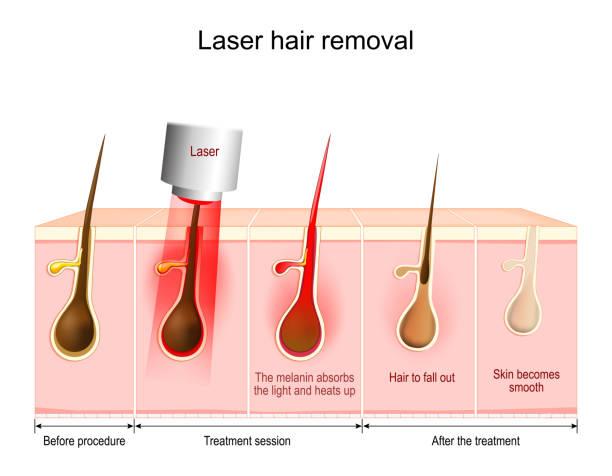
Device choice should follow skin tone, hair thickness and color, tanning history, prior pigment reactions, and response to a test spot—not a device name alone.
- Alexandrite laser (755 nm) — Often effective for dark terminal hair in lighter skin tones. Its stronger melanin absorption requires careful settings and often a test spot in darker or recently tanned skin.
- Diode laser (about 800–810 nm) — A longer-wavelength laser used for hair reduction across a broad range of skin tones when cooling and treatment parameters are appropriately selected.
- Long-pulsed Nd:YAG laser (1,064 nm) — Has lower epidermal melanin absorption and is often selected as a safety-oriented approach for Fitzpatrick IV–VI skin. It can be less efficient for fine hair and more uncomfortable.
- Cooling and endpoint-guided treatment — Contact cooling, cold air, or another cooling method reduces discomfort and protects the skin. The clinician adjusts treatment according to hair and skin response.
- Test spot — A conservative test area with delayed review is particularly valuable after recent tanning, in darker skin tones, or after a previous burn or pigment complication.
Why Visit Korea for Upper Lip Laser Hair Removal?
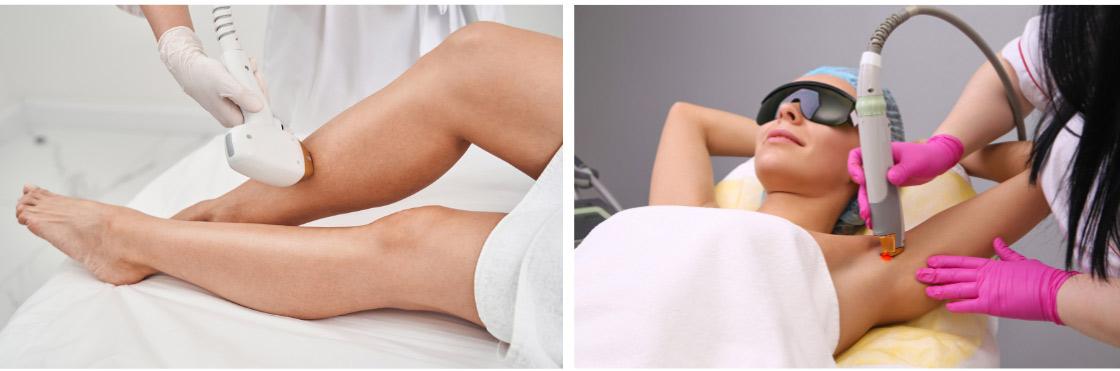
Korea can be practical for an in-person consultation, test spot, and single upper-lip session during a short visit. It is not a practical destination for completing a full multi-session course in one trip. Results depend on skin-hair matching, settings, cooling, and clinician technique—not on the country where treatment is performed.
- International-patient registration check — Confirm that the facility appears in the Medical Korea registered institution system before booking. Registration is an administrative safeguard for treating international patients, not evidence that a clinic or device produces superior hair-reduction results.
- Continuity documentation — Ask for the device name, wavelength, date, observed skin endpoint, and aftercare plan. This record helps a qualified clinician at home assess how to continue treatment safely.
- Individualized device selection — Ask specifically how the clinician selects between Alexandrite, diode, and Nd:YAG wavelengths for your skin tone, recent sun exposure, and upper-lip hair pattern.
- Evidence limitation — There is no credible evidence that Korea inherently provides better upper-lip laser outcomes. Studies vary substantially in device, skin type, hair phenotype, number of sessions, and outcome definitions.
Key Information for International Patients
- Minimum stay — Allow 1 day for an in-person assessment, possible test spot, and treatment. The upper-lip session itself generally takes only minutes and does not normally require an overnight medical stay.
- Course scheduling — Plan sessions about every 4–6 weeks. A full course cannot be compressed into a short Korea visit; arrange return visits or a documented hand-off to a qualified clinician at home.
- Flying and onward travel — There is no standard flight restriction after an uncomplicated session. Continue travel only when comfortable, and stop for urgent assessment if pain increases or blistering, marked swelling, spreading redness, eye symptoms, or a cold-sore outbreak develops.
- Itinerary impact — Ordinary non-irritating activity can usually resume the same day. Avoid direct sun, tanning, friction, intense heat, and irritating skincare while redness or swelling remains.
- Remote support — Obtain a written aftercare contact method before leaving Korea. Send clear photographs promptly if a reaction worsens after departure.
Travel note: Build flexibility into outdoor sightseeing plans. Freshly treated upper-lip skin is especially vulnerable to sun exposure, and a recent tan can require postponement.
Which Are the Best Clinics in Korea for Upper Lip Laser Hair Removal?
Listed below are some of the best clinics in Korea for upper lip laser hair removal.
1. Three Wishes Clinic - Myeongdong
For upper-lip laser hair removal, you can receive a laser treatment intended to target hair follicles for long-lasting reduction of unwanted hair. Three Wishes Clinic describes its care as personalized and offers laser hair removal for almost all body areas, allowing your treatment to be tailored to the area being addressed.
- URL: Three Wishes Clinic - Myeongdong Website
- Location: Jung-gu, Seoul
- Laser hair removal:
- Uses targeted laser energy to destroy hair follicles.
- Presented as suitable for almost all body areas and intended to provide long-lasting hair reduction.
- Related skin services:
- CO2 laser resurfacing for wrinkles, acne scars, and skin texture.
- Chemical peels and customized skin-care treatments are also offered.
2. VandS Clinic - Myeongdong
For upper-lip laser hair removal, VandS Clinic - Myeongdong offers laser-based hair removal that targets hair follicles to limit regrowth. You can discuss whether the upper-lip area suits this approach as part of the clinic’s personalized cosmetic and dermatological services.
- URL: VandS Clinic - Myeongdong Website
- Location: Jung-gu, Seoul
- Hair removal:
- Laser technology is used to target and destroy hair follicles.
- Hair removal is offered for various body areas.
- Skin-focused services:
- Acne and spot-removal treatments are available.
- Whitening, freckle, redness, and pigmentation treatments address uneven complexion concerns.
- Customized skincare may include facials, peels, and other texture-focused care.
3. Secretclinic
For upper-lip laser hair removal, Secretclinic offers laser hair removal intended to remove unwanted hair effectively with long-lasting results and minimal discomfort. Your care can be personalized through the clinic’s consultations, which are described as tailoring treatments to individual needs.
- URL: Secretclinic Website
- Location: Sujeong-gu, Seongnam-si, Gyeonggi
- Laser treatment:
- Laser hair removal is offered for unwanted hair.
- Clarity II is listed as a laser platform used for hair removal as well as skin elasticity, vascular-lesion, and skin-whitening concerns.
- Complementary skin care:
- Skin-barrier care focuses on strengthening skin resilience.
- Exfoliation and sebum care help manage excess oil and clear pores.
- Acne treatment addresses breakouts and acne scars.
Upper Lip Laser Hair Removal From Start to Finish
- Remote consultation and planning — Send daylight photographs and disclose hair-removal history, skin tone, recent tanning, medicines, supplements, allergies, pregnancy or lactation status, cold-sore history, and previous pigment or scarring problems. Confirm who will assess and perform the treatment, the proposed wavelength, test-spot policy, and overseas aftercare contact.
- In-person assessment — The clinician examines the upper lip and adjacent skin, assesses hair thickness and pigment, checks for active lesions or contraindications, discusses realistic reduction and maintenance expectations, and obtains consent.
- Test spot when indicated — For darker skin, recent tanning, uncertain reactivity, or a prior laser complication, a conservative test spot can be performed and reviewed before full treatment.
- Skin preparation — Makeup, sunscreen residue, perfume, and leave-on irritants are removed. The hair is trimmed or shaved when needed; waxed, threaded, tweezed, or epilated follicles are not suitable targets.
- Eye protection and treatment — Everyone in the laser room wears appropriate protective eyewear. The clinician cools and stretches the skin, then delivers pulses across the skin between the nose and upper vermilion border. Warmth, pinpricks, and a rubber-band-snap sensation are common. Treatment generally takes minutes.
- Immediate care and discharge — Cooling is applied if needed. Receive written instructions and a treatment summary recording the device, wavelength, date, and observed response.
- Shedding and repeat sessions — Treated hairs can appear to continue growing before shedding over days to weeks. Return at the agreed interval, commonly 4–6 weeks, rather than judging the outcome from the first days after treatment.
- Remote follow-up — Contact the clinic promptly for blistering, crusting, severe pigment change, persistent pain, or suspected paradoxical hypertrichosis. Share the treatment record with the clinician continuing your course at home.
Alternatives to Upper Lip Laser Hair Removal
Laser treats multiple pigmented hairs quickly but depends on hair color and requires a series of sessions. Alternatives are preferable when hairs are light or very fine, the skin is currently tanned or inflamed, pregnancy makes elective treatment inappropriate, or an endocrine cause needs treatment alongside hair removal.
Electrolysis
- Best use — Permanent follicle-by-follicle removal for white, grey, red, blonde, or residual fine hairs that do not respond reliably to laser.
- Tradeoff — It is slower than laser but practical for the relatively small upper-lip area.
IPL
- Best use — A light-based option for carefully selected patients seeking hair reduction.
- Tradeoff — IPL is broad-spectrum light rather than a laser. It still requires appropriate filters, conservative settings, skin-tone assessment, cooling, and strict eye protection. See IPL in Korea.
Temporary Hair Removal
- Best use — Shaving, trimming, depilatory creams, waxing, threading, and tweezing provide short-term removal during pregnancy, while assessing possible hormone-related hair growth, or while waiting for tanned or irritated skin to recover.
- Tradeoff — Waxing, threading, tweezing, and epilating remove the follicular hair target, so stop them before laser according to the treating clinician’s schedule.
Medical Management for Hirsutism
- Best use — PCOS or another androgen-excess disorder requires assessment and clinician-directed management alongside direct removal of existing hairs.
- Tradeoff — Hormonal or antiandrogen treatment can reduce new growth but does not remove existing hairs. Antiandrogens require appropriate pregnancy prevention because of fetal risk. The Endocrine Society’s hirsutism guidance supports evaluating the underlying hormonal context.
How Can I Prepare for Upper Lip Laser Hair Removal?
- Stop tanning — Avoid deliberate sun exposure, tanning beds, and sunless tanners before treatment. Use broad-spectrum SPF 30 or higher and physical shade; disclose any recent tan, even if it seems mild.
- Preserve the laser target — Do not wax, thread, tweeze, or epilate the upper lip before treatment unless the clinician gives a specific schedule. Shaving or trimming is often permitted, but avoid razor irritation and follow the clinic’s timing.
- Disclose every medicine and supplement — Report oral isotretinoin, topical tretinoin, adapalene, tazarotene, benzoyl peroxide, exfoliating acids, bleaching products, doxycycline, minocycline, St John’s wort, aspirin, anticoagulants, hormonal medicines, and all supplements. Do not independently stop prescribed medicines.
- Manage cold-sore history — Tell the clinician about recurrent herpes labialis. They will decide whether antiviral prophylaxis is appropriate.
- Arrive with clean skin — Attend without makeup, perfume, or leave-on products around the upper lip, or allow time for thorough cleansing at the clinic.
- Avoid unnecessary anesthetic risk — No fasting is usually needed. Use topical anesthetic only when clinician-directed; the FDA warns that excessive high-concentration lidocaine, especially under occlusion or over large areas, can cause dangerous systemic toxicity.
- Plan simple transport — A companion is not usually necessary for a routine session unless anxiety or medication affects alertness. Keep flights and outdoor plans flexible if a test spot or recent sun exposure changes the treatment plan.
Travel note: Bring photographs and previous laser records, especially the device and wavelength used. This information is more useful for safe continuity than a description such as “laser hair removal.”
Confirm the treating doctor’s clinic-specific medication, shaving, sun-avoidance, and test-spot requirements; individualized instructions take precedence over general guidance.
Aftercare Advice
Protect the upper lip from heat, friction, and ultraviolet exposure until the skin has fully settled.
- Cool discomfort safely — Use a cool compress for warmth, redness, or mild swelling. Pinpoint follicular redness and sensitivity resembling a mild sunburn are common and generally settle within 1–3 days.
- Avoid irritation for 1–3 days — Do not rub, scrub, pick, wax, thread, tweeze, or use exfoliating acids, retinoids, benzoyl peroxide, perfume, astringents, or other products that sting until the skin is comfortable.
- Use strict sun protection — Avoid direct sun and tanning throughout the course. Apply broad-spectrum SPF 50 and use a hat or physical shade once the skin tolerates sunscreen.
- Do not pull shedding hairs — Hairs can look as though they are growing before they shed over days to weeks. Shave or carefully trim only after the skin is comfortable; do not remove hairs by the root between sessions.
- Know the warning signs — Contact the clinic promptly for blistering, crusting, pus, worsening pain, spreading redness, a cold-sore outbreak, or marked pigment change. Seek urgent assessment for eye pain, light sensitivity, blurred vision, or other visual change.
- Watch for increased surrounding hair — Paradoxical hypertrichosis is an uncommon but important facial risk. A systematic review estimated pooled prevalence at 3% overall, with facial or neck treatment carrying greater risk than non-facial sites; evidence on prevention and best management remains heterogeneous and limited.
Follow the treating doctor’s instructions over this general guidance, and contact the clinic when anything appears wrong rather than treating a suspected complication independently.
Frequently Asked Questions
Related Blogs
Abdominal Laser Hair Removal in Korea: Methods, Recovery, Sessions and Travel Planning
Abdominal laser hair removal uses laser or IPL pulses with cooling to reduce dark, coarse abdominal hair over 4–8 sessions spaced several weeks apart. The article covers candidate screening, preparation, aftercare, travel planning for Korea, device options, and warning signs requiring clinical assessment.
Updated: Sep 22, 2026
Chest Laser Hair Removal in Korea: Methods, Recovery, Treatment Course, and Travel Planning
Chest laser hair removal uses targeted light pulses to reduce dark, coarse hair over 4–8 sessions spaced about 6–8 weeks apart, with device selection based on skin tone, hair characteristics, and prior reactions. International patients can plan 1–2 days for consultation and treatment, obtain an English treatment summary, and avoid sun, heat, heavy exercise, and friction while the skin recovers.
Updated: Sep 22, 2026
Arm Laser Hair Removal in Korea: Methods, Results, Travel Timing, and Aftercare
Arm laser hair removal uses selected laser wavelengths and cooling to reduce pigmented, coarse hair over spaced sessions, with maintenance sometimes needed. International patients can plan a 1–2 day stay, prepare by avoiding tanning and follicle-removing methods, and arrange follow-up and later sessions near home.
Updated: Sep 22, 2026
Leg Laser Hair Removal in Korea: Devices, Results, Recovery and Travel Planning
Leg laser hair removal uses laser or IPL with cooling to reduce dark, coarse hair over repeated sessions typically spaced 4–8 weeks apart. The article covers candidacy, preparation, aftercare, Korea travel planning, device records, and alternatives for light-colored hair.
Updated: Sep 22, 2026
Clinics offering Upper Lip Laser Hair Removal

Three Wishes Clinic - Myeongdong, Korea: Advanced Botox, Fillers, Laser, and Skin Treatments for Confidence and Care
Myeongdong

VandS Dermatology Clinic - Dongtan, Korea: Comprehensive Skin Care and Cosmetic Procedures for Youthful, Radiant Skin
Hwaseong
BLS Main Branch Korea (Cheongdam) – Signature Lifting, Skin Analysis & Event Facial Programs
Cheongdam
VandS Clinic - Pangyo: Leading Advanced Medical Procedures in Korea for Enhanced Beauty and Health
Pangyo