
Medical Tourism Blog
Effective CoolSculpting Treatments in Korea for Upper Abdominal Bulge Correction
Table of contents
- CoolSculpting (Cryolipolysis): A Detailed Medical Overview
- Best Clinics in Korea for Upper Abdominal Bulge
- Your CoolSculpting Journey in South Korea: A Medical Tourist's Guide
- Cost Analysis: CoolSculpting in South Korea vs. Global Benchmarks
- Real Patient Experiences: CoolSculpting for Upper Abdominal Bulge
- Conclusion: Making an Informed Decision for Your Body Contouring Journey
- References
Considering treatment in Korea? Everything you need to know e.g. — how to avoid scams, visas, interpreters, recovery tips — in our Medical Tourism Master Guide. Plan with confidence in minutes, not weeks!
Many patients search online about a noticeable bulge in their midsection, often calling it "upper belly fat." While this term suggests a simple cosmetic issue related to fat, the reality of an "upper abdominal bulge" is more complex. Its causes can vary widely and may involve more than just fat accumulation.
People often use terms like "beer belly," "stress belly," or "post-pregnancy belly" to describe this bulge, each implying different causes or traits. However, relying only on these casual descriptions can lead to misdiagnosis and inappropriate treatments. If the bulge results from a serious medical condition, cosmetic procedures might not only fail but also delay necessary medical care. That’s why understanding the possible medical causes is essential.
An "upper abdominal bulge" can arise from several medical conditions beyond fat buildup:
- Abdominal Wall Pseudohernia: A rare condition where the abdominal wall bulges without a true hernia defect, caused by nerve damage leading to muscle weakness. It often appears when standing and disappears when lying down.
- Epigastric Hernia: Fat or other tissues push through a weakness in the abdominal wall between the belly button and sternum, often causing a painful lump.
- Bloating: Caused by gas, constipation, IBS, gynecological issues, infections, or gastroparesis, leading to visible swelling and discomfort.
- Ascites: Fluid buildup in the abdomen due to liver disease, heart or kidney failure, infections, or cancer, which can be life-threatening if untreated.
- Ventral Hernia: Often develops after surgery, trauma, or repeated abdominal stress.
- Chronic Stress: Hormones like cortisol can cause bloating, slower digestion, constipation, and increased abdominal fat.
- Weight Gain: Excess calories, poor sleep, stress, medications, or health issues can cause a protruding belly.
- Menopause: Hormonal changes, insulin resistance, muscle loss, and sleep problems can increase belly fat.
- Food Intolerance: Sensitivities to lactose, gluten, or caffeine can cause bloating, gas, pain, and diarrhea.
Because of these varied causes, it’s crucial to see a healthcare professional for an accurate diagnosis. Self-diagnosing based on internet searches risks missing serious conditions that need specific treatment. For example, if ascites from heart failure or cancer causes the bulge, CoolSculpting won’t help and could delay vital care. The first step should always be a thorough medical evaluation to identify the true cause and guide treatment.
This also clarifies why CoolSculpting, which targets fat cells, won’t work for bulges caused by fluid, hernias, nerve issues, or gas. Using CoolSculpting in these cases wastes time and resources and leaves the real problem untreated. That’s why an initial medical consultation is so important to ensure any treatment is appropriate and effective.
The table below summarizes common patient terms for an upper abdominal bulge, their medical causes, and whether CoolSculpting is relevant:
Table 1: Common Causes and Pseudonyms of Upper Abdominal Bulge
| Patient Term/Pseudonym | Medical Term/Condition | Key Characteristics/Causes | Relevance to CoolSculpting |
|---|---|---|---|
| "Upper belly fat" | General Weight Gain | Excess calories, sleep deprivation, stress, medications | Potentially applicable (fat component) |
| Menopause | Hormonal changes, insulin resistance, muscle loss | Potentially applicable (fat component) | |
| "Beer belly" | General Weight Gain / Abdominal Fat | Visceral fat accumulation | Potentially applicable (fat component) |
| "Stress belly" | Chronic Stress | Cortisol release, bloating, slower digestion, increased fat | Potentially applicable (fat component; stress management primary) |
| "Post-pregnancy belly" | Weight Gain / Skin Laxity | Persistent fat and/or loose skin after childbirth | Potentially applicable (fat component) |
| "Upper abdominal bulge" | Abdominal Wall Pseudohernia | Nerve damage causing muscle weakness | Not applicable (neurological/muscular issue) |
| Epigastric Hernia | Fat/tissue pushing through abdominal wall weakness | Not applicable (requires surgical repair) | |
| Bloating | Gas, constipation, IBS, gynecological issues | Not applicable (digestive issue) | |
| Ascites | Fluid accumulation from liver, heart, kidney disease, cancer | Not applicable (serious medical condition) | |
| Ventral Hernia | Post-surgery, trauma, repeated stress | Not applicable (requires surgical repair) | |
| Food Intolerance | Difficulty digesting lactose, gluten, caffeine | Not applicable (dietary/digestive issue) |
This table helps clarify the many causes of an upper abdominal bulge and emphasizes the need for medical consultation rather than self-treatment. It also sets realistic expectations about when CoolSculpting is appropriate.
CoolSculpting (Cryolipolysis): A Detailed Medical Overview
CoolSculpting, or cryolipolysis, is a popular, non-invasive cosmetic procedure designed to reduce localized fat deposits. It’s FDA-cleared for use on various body parts, including the abdomen. Unlike liposuction, CoolSculpting requires no surgery, anesthesia, or incisions, making it a lower-risk option for targeting stubborn fat that resists diet and exercise. However, it’s not meant for significant weight loss.
The science behind cryolipolysis relies on fat cells’ sensitivity to cold. During treatment, controlled cooling targets fat cells, triggering apoptosis—programmed cell death. These damaged fat cells are then naturally processed and eliminated by the body’s lymphatic system over weeks to months, reducing fat volume without harming surrounding tissues.
A typical CoolSculpting session includes:
- Consultation and Assessment: A thorough evaluation to discuss goals, medical history, and suitability, followed by a personalized treatment plan outlining target areas and session numbers.
- Procedure Application: On treatment day, the area is marked, and a protective gel pad is applied to protect the skin.
- Cooling Process: An applicator matching the fat bulge’s shape is placed on the area, creating a gentle vacuum to draw in fat. Patients may feel pulling, pinching, cold, tingling, or cramping, which usually fade as numbness sets in.
- Duration: Each cycle lasts 35 to 60 minutes, depending on the applicator and area. Patients can relax, read, or use devices during treatment.
- Post-Cooling Massage: After cooling, the applicator is removed, and the area is massaged to help break up fat cells and improve results.
Results typically appear within three weeks, with the best effects visible after two to three months and full results by four to six months. Clinical studies show an average fat reduction of 20-25% per session.
CoolSculpting’s results are long-lasting because treated fat cells are permanently destroyed. However, it doesn’t stop new fat cells from forming or existing ones from growing if lifestyle habits don’t support weight management. Some studies suggest effects can last 6-9 years when combined with healthy habits.
Multiple treatment sessions can enhance results. While early studies showed modest effects from single cycles, newer data reveals that 1-3 sessions per area or up to four cycles across two sessions can reduce skinfold thickness by up to 40%. Clinics should discuss multi-session plans with patients to set realistic expectations and optimize outcomes, though this increases costs.
CoolSculpting is generally safe with minimal downtime. Common side effects include redness, swelling, bruising, firmness, tenderness, and numbness, usually resolving within two weeks. Some patients experience itching or tingling for several weeks. Mild soreness similar to post-exercise muscle ache is common.
Rare complications include late-onset pain (0.1% of cases), surface irregularities, asymmetry, and very rarely, Paradoxical Adipose Hyperplasia (PAH)—an unexpected fat increase in the treated area occurring 2-5 months post-treatment. PAH is more common in men and individuals of Hispanic or Latino descent and may require surgical correction.
It’s important to remember CoolSculpting is a fat reduction tool, not a weight loss solution. It works best for people near their ideal weight who want to target stubborn fat pockets resistant to diet and exercise. Maintaining a healthy lifestyle is essential to preserve results.
Best Clinics in Korea for Upper Abdominal Bulge
Listed below are the best clinics in Korea for upper abdominal bulge:
| Clinic Name | Key Features | Special Techniques |
|---|---|---|
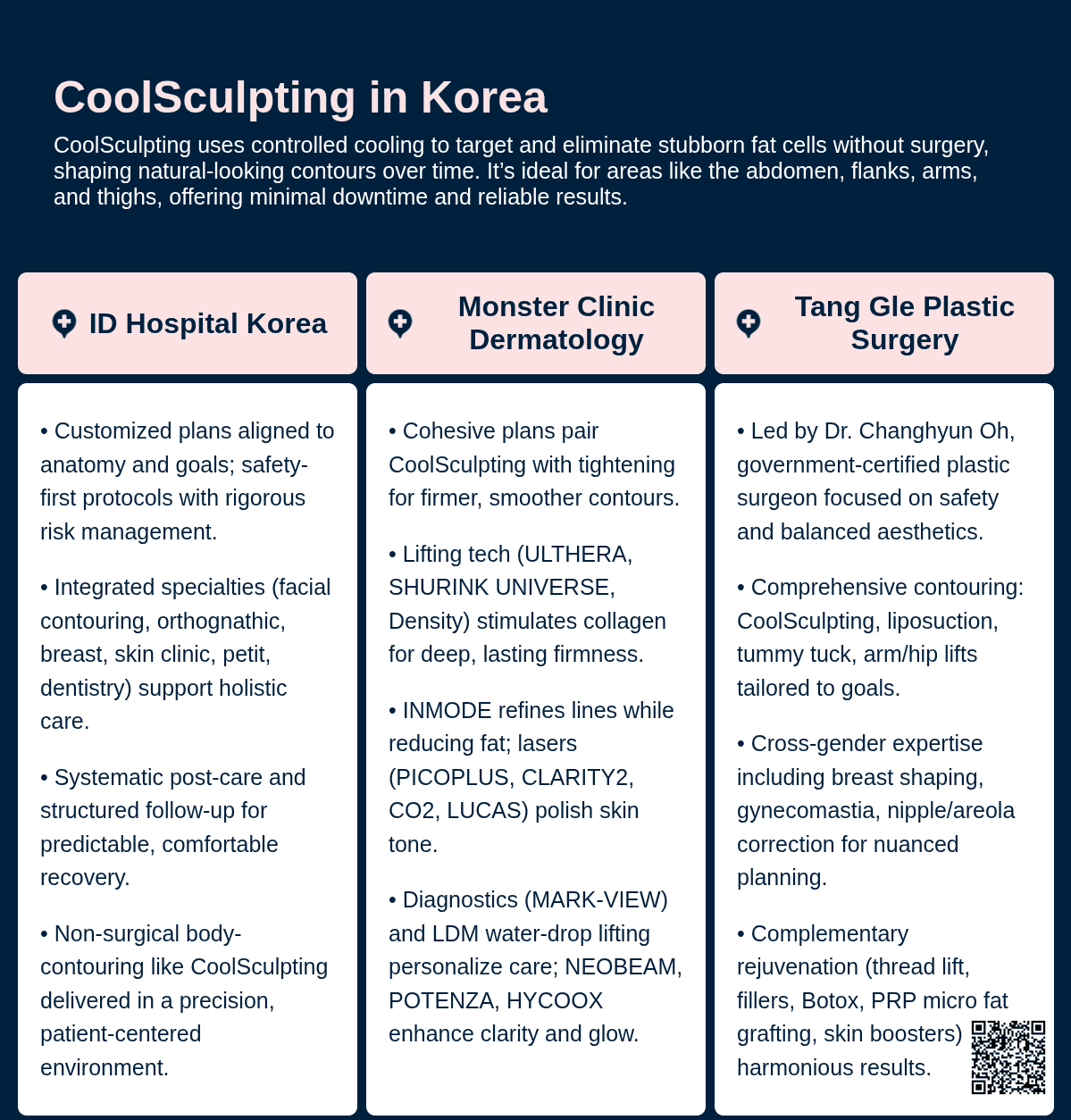
| id Hospital Korea | Leading plastic surgery center recognized for its focus on facial treatments and its philosophy of achieving safe, beautiful results through customized surgery, patient safety–oriented care, and systematic post-procedure follow-up; comprehensive services (orthognathic surgery, facial contouring, eye and nose plastic surgery, breast surgery, lifting, a skin clinic, petit plastic surgery, dentistry); holistic, harmony-first approach—an advantage for patients seeking refined solutions for concerns like an upper abdominal bulge, where careful planning, safety, and structured aftercare are essential. | Orthognathic surgery; facial contouring; eye and nose plastic surgery; breast surgery; lifting; skin clinic; petit plastic surgery; dentistry. |
| HaneulLine Clinic | Targeted care for upper abdominal bulge combining weight control and body shaping expertise with personalized planning; interventions can be paired with a customized Nutrition Diet program; Elasticity Management focuses on improving skin firmness; complementary facial contouring and skin-quality treatments (V-Line Diet, Skin Booster); grounded in up-to-date techniques and attentive, individualized care. | HaneulLine Injection; Lipolysis Injection; Nutrition Diet program; Elasticity Management; V-Line Diet; Skin Booster. |
| Tang Gle Plastic Surgery | Renowned clinic in Apgujeong, Seoul, led by Dr. Changhyun Oh, a plastic surgeon certified by the South Korean government; comprehensive range of body-contouring and aesthetic procedures; targeted, individualized solutions for upper abdominal bulge; skilled surgical judgment and streamlined patient access; full-spectrum body contouring and one-stop planning; easy access and booking (online, phone, Kakao Talk; 02-542-8427). | Abdominal liposuction; tummy tuck (abdominoplasty); CoolSculpting; combination procedures when appropriate (liposuction of the flanks, hip lift, arm lift). |
id Hospital Korea
ID Hospital Korea is a leading plastic surgery center recognized for its focus on facial treatments and its philosophy of achieving safe, beautiful results through customized surgery, patient safety–oriented care, and systematic post-procedure follow-up. With comprehensive services that include orthognathic surgery, facial contouring, eye and nose plastic surgery, breast surgery, lifting, a skin clinic, petit plastic surgery, and dentistry, ID Hospital brings a holistic, harmony-first approach to aesthetic care—an advantage for patients seeking refined solutions for concerns like an upper abdominal bulge, where careful planning, safety, and structured aftercare are essential.
- Why it stands out for upper abdominal bulge concerns:
- Customized treatment planning that prioritizes individual anatomy and goals, aligning abdominal contour improvements with overall body harmony.
- Patient safety–oriented protocols at every step, from consultation through recovery, for predictable and secure outcomes.
- Lifting and skin clinic offerings that support tightening, toning, and quality-of-skin improvements, forming a foundation for upper abdominal contour refinement.
- Systematic post-care programs designed to manage recovery, optimize results, and support long-term maintenance.
- Expertise honed in complex facial and contouring procedures, translating into meticulous planning and precision for aesthetic balance across the torso.
- A full spectrum of options—from petit plastic procedures to surgical lifting—allowing stepwise, tailored solutions rather than one-size-fits-all treatments.
Find more about this clinic here: id Hospital Korea Website
HaneulLine Clinic
Located in Seongsu, HaneulLine Clinic offers targeted care for patients concerned about an upper abdominal bulge, combining weight control and body shaping expertise with personalized planning. For localized fat that persists despite healthy habits, the clinic provides HaneulLine Injection to assist in breaking down fat cells and refining contours, as well as Lipolysis Injection for precise spot reduction. These interventions can be paired with a customized Nutrition Diet program to support progressive, sustainable changes and overall health.
To enhance tone and definition in the upper abdomen, HaneulLine’s Elasticity Management focuses on improving skin firmness—especially helpful after volume reduction or weight fluctuations. The clinic also offers complementary facial contouring and skin-quality treatments, including the V-Line Diet and Skin Booster, reflecting a comprehensive approach to aesthetics. Grounded in up-to-date techniques and attentive, individualized care, HaneulLine Clinic helps patients pursue balanced, natural-looking results.
Find more about this clinic here: HaneulLine Clinic Website
Tang Gle Plastic Surgery
Tang Gle Plastic Surgery in Apgujeong, Seoul, is a renowned clinic led by Dr. Changhyun Oh, a plastic surgeon certified by the South Korean government. With a comprehensive range of body-contouring and aesthetic procedures, the clinic offers targeted, individualized solutions for upper abdominal bulge—whether the concern is stubborn fat, skin laxity after weight change or pregnancy, or a desire for a more defined torso—delivered with skilled surgical judgment and streamlined patient access.
- Abdominal liposuction: Removes localized fat deposits from the upper abdomen to refine contour and proportion.
- Tummy tuck (abdominoplasty): Removes excess skin and tightens abdominal muscles for a firmer, smoother upper abdomen; often chosen after significant weight loss or post-pregnancy.
- CoolSculpting: A non-surgical, clinically proven option using controlled cooling to reduce stubborn upper-abdominal fat without incisions.
- Government-certified expertise: Care directed by Dr. Changhyun Oh, recognized by the South Korean government, offering confidence in safety and outcomes.
- Full-spectrum body contouring: Ability to harmonize the torso by combining procedures when appropriate, such as liposuction of the flanks, hip lift, or arm lift, for balanced overall shaping.
- One-stop planning: Surgical and non-surgical treatments available under one roof, enabling tailored plans based on goals, downtime, and recovery preferences.
- Easy access and booking: Consultations available online, by phone, and via Kakao Talk; to schedule, call 02-542-8427.
Find more about this clinic here: Tang Gle Plastic Surgery Website
Your CoolSculpting Journey in South Korea: A Medical Tourist's Guide
South Korea is a global leader in cosmetic procedures like CoolSculpting, attracting many medical tourists each year. Its reputation rests on several strengths:
- Advanced Medical Care: Clinics use cutting-edge cryolipolysis devices and modern facilities.
- Expertise and Innovation: Highly skilled professionals with extensive experience drive continuous improvements.
- Patient-Centered Approach: Many clinics cater to international patients with multilingual services and personalized care.
- Cultural and Medical Experience: Patients can combine advanced treatments with cultural immersion, enhancing their overall journey.
The typical process for medical tourists includes:
- Initial Consultation and Assessment: Often done remotely, this step evaluates goals, medical history, and suitability, creating a tailored treatment plan.
- Procedure Day: The area is marked, gel pads applied, and the applicator placed to deliver controlled cooling. Patients may feel sensations that fade as numbness develops. Sessions last 35-60 minutes, during which patients can relax or work.
- Post-Procedure and Recovery: After treatment, the area is massaged. CoolSculpting requires no downtime, allowing immediate return to daily activities. Temporary side effects like redness and tenderness resolve in days to weeks.
- Follow-up and Results Monitoring: Results appear over weeks to months, with follow-ups to assess progress and plan additional sessions if needed.
Beyond clinical care, South Korea offers cultural experiences and complementary treatments, such as skin health therapies at clinics like HaneulLine Clinic. Many clinics provide language support, accommodation help, and local tours, enriching the medical tourism experience.
Notable clinics include:
- Beautiful Clinic: Near Konkuk University, known for expertise and competitive pricing.
- HaneulLine Clinic: In Seongsu, focusing on weight control and skin elasticity.
- Tang Gle Plastic Surgery: In Apgujeong, led by Dr. Changhyun Oh, a certified plastic surgeon.
- Monster Clinic Dermatology: Also in Apgujeong, offering advanced CoolSculpting.
- JK Plastic Surgery Center: In Seoul, with latest devices and experienced staff.
- Others: BS The Body Plastic Surgery (Seomyeon), Gangnam RaHae Clinic (Nonhyeon), Nature Me Korean Medicine Clinic (Gwangalli).
Cost Analysis: CoolSculpting in South Korea vs. Global Benchmarks
CoolSculpting costs in South Korea are competitive globally, influenced by clinic location, reputation, number of applicators, and treatment cycles.
Typical Costs in South Korea:
- Per cycle: $600 to $1,200 USD (approx. 871,000 to 1,744,000 KRW)
- Some clinics offer fixed prices around $420 USD (~800,000 KRW)
Pricing factors include:
- Clinic Location: Urban or prestigious areas like Apgujeong or Gangnam may charge more.
- Number of Cycles/Sessions: More sessions increase total cost.
- Clinic Reputation and Technology: Top-tier clinics with advanced equipment may have higher fees.
Cost Comparison with Other Countries:
| Country | Estimated Cost Range (USD per cycle/session) | Key Considerations for Medical Tourists |
|---|---|---|
| South Korea | $600 - $1,720 (average $336 for cryolipolysis generally) | Advanced medicine, high expertise, cultural immersion, competitive pricing |
| USA | $2,500 (per cycle) | High cost, local convenience, established regulations |
| Turkey | $210 - $220 | Very low cost, growing sector, variable technology/expertise |
| Thailand | $550 - $600 | Competitive pricing, popular destination, good quality clinics |
| Malaysia | $1,500 | Moderate cost, developing infrastructure |
| Mexico | $900 - $2,700 | Variable costs, proximity for North Americans, diverse clinic quality |
| Colombia | $1,200 | Competitive pricing, emerging market |
| Costa Rica | $800 - $1,200 | Popular for medical tourism, often combined with vacation |
South Korea offers a strong balance of cost and quality, with prices lower than the USA but higher than some countries like Turkey. The slightly higher cost often reflects superior outcomes, safety, and comprehensive care.
Financial Planning for Medical Tourists:
Patients should budget beyond procedure fees, including travel, accommodation, meals, local transport, and follow-up visits. Clinics often require a deposit (~10% of total cost). Exchange rates and potential language or tour services add to expenses. Underestimating these can cause financial stress.
Promotions like Allergan Aesthetics’ "CoolMonth" and loyalty programs such as Allē can provide discounts and benefits.
Real Patient Experiences: CoolSculpting for Upper Abdominal Bulge
CoolSculpting is FDA-cleared for visible fat bulges in the abdomen, the most commonly treated area (43% of cycles). Patients seek it to reduce stubborn fat resistant to diet and exercise.
Patient testimonials highlight its effectiveness:
- Lindsay: Praised CoolSculpting for eliminating stubborn fat.
- Briana: Found it worked for her midsection fat, leading to high satisfaction.
- Roberto: Noticed a clear difference in abdominal appearance.
- Tracey: Used it to reduce post-pregnancy fat.
- Gabby: Reported better bikini fit and increased confidence.
- Andrea: Excited about swimsuit appearance post-treatment.
- Zizi: Enjoyed improved clothing fit and renewed self-confidence.
These stories show CoolSculpting not only reduces fat but also boosts body image and confidence, improving quality of life.
Clinical studies support these findings:
Table 3: CoolSculpting Patient Satisfaction and Efficacy Highlights
| Outcome Metric | Data/Percentage | Source/Context |
|---|---|---|
| Average Fat Reduction | 20-25% (up to 40% with multiple cycles) | Clinical Studies |
| Improvement Rate | 86% of treated subjects | Clinical Studies |
| Overall Patient Satisfaction | 84-88% | Patient Surveys |
| Willingness to Recommend | 92% | Patient Surveys |
| Discomfort Level (average/range) | Low (40% "not painful," 38% rated "2" on 1-5 scale) | Patient Surveys |
High satisfaction is linked to CoolSculpting’s non-invasive nature, minimal downtime, and short procedure time. Patients can fit treatments into busy schedules and avoid surgery risks. This convenience appeals especially to medical tourists, minimizing travel disruption and costs.
While CoolSculpting permanently removes fat cells in treated areas, it doesn’t stop new fat cells from forming elsewhere. Maintaining a healthy lifestyle is key to long-term results.
Conclusion: Making an Informed Decision for Your Body Contouring Journey
An "upper abdominal bulge" can have many causes beyond fat, including hernias, fluid buildup, nerve issues, or bloating. Accurate medical diagnosis is essential to avoid ineffective treatments and delays in addressing serious conditions.
CoolSculpting offers a safe, non-invasive way to reduce localized fat, with minimal discomfort and high patient satisfaction. It’s not a weight-loss solution but a tool for body contouring best suited for those near their ideal weight.
South Korea stands out as a top destination for CoolSculpting, combining advanced care, expert practitioners, and cultural experiences at competitive prices. Medical tourists should plan carefully, considering all costs and logistics.
Ultimately, consulting a qualified healthcare professional is the crucial first step to identify the bulge’s cause and develop a personalized treatment plan. Empowered with accurate information and expert guidance, patients can make informed decisions that prioritize safety and achieve satisfying body contouring results.
References
1, 2, 3, 4, 5, 6, 7, 8, 9, 10, 11, 12, 13, 14, 15, 16, 17, 18, 19
Frequently Asked Questions
Related Blogs
Face Liposuction in Korea: Candidacy, Techniques, Recovery, and Travel Planning
Face liposuction removes localized superficial submental or upper-neck fat through small incisions using a fine cannula, with conservative jowl treatment only for selected anatomy. In Korea, it is listed at ₩3,000,000–₩4,000,000 (about US$2,200–$3,000); international patients should allow at least 7–10 days after surgery for review before flying.
Updated: Sep 17, 2026
Experience Effective Removal of Excess Skin After Weight Loss in Korea: A Comprehensive Guide
Discover how Korea is leading the way in body-contouring procedures for removal of excess skin after drastic weight loss. Learn about the advanced surgical techniques and world-renowned medical expertise that deliver impressive results for patients.
Updated: Sep 17, 2026
Shockwave Therapy for Fat Dissolving in Korea: Methods, Results, Safety, and Travel Planning
Shockwave therapy uses focused or radial acoustic pulses over areas such as the buttocks and thighs to target cellulite appearance, typically through multiple sessions rather than proven fat-cell destruction or weight loss. The article covers candidate screening, treatment schedules, travel planning, device verification, preparation, aftercare, warning signs, and alternatives for localized fat or
Updated: Sep 16, 2026
Love Handle Liposuction in Korea: Methods, Recovery, Travel Planning, and Risks
Love handle liposuction removes localized flank fat through small incisions using cannula-based techniques, with candidacy based on stable weight, skin elasticity, health, and realistic contour goals. The article covers treatment options, Korea travel planning, a 7–10-day stay, recovery and flight precautions, aftercare, warning signs, and non-surgical or skin-removal alternatives.
Updated: Sep 15, 2026
Clinics offering CoolSculpting
ID Hospital - Main Branch in Korea: Specializing in Safe & Customized Facial Plastic Surgery and Post-Care Services
Sinsa
Atelier Plastic Surgery Clinic in Korea: Enhance Your Natural Beauty with Expert Breast, Body, and Facial Procedures

Beautiful Clinic in Korea: Comprehensive Aesthetic and Medical Procedures for Enhanced Beauty and Confidence
Konkuk University

Gangnam RaHae Clinic in Korea: Advanced Cosmetic Procedures for Personalized Beauty Enhancement
Nonhyeon