
Medical Tourism Blog
Thread Lifting - Post-Surgery Advice with Dr. Lim from PangPang Clinic
Table of contents
- Thread Lift Aftercare: Dr. Lim’s Realistic Guide
- Why does thread lift aftercare feel like too much?
- Should you wear a lifting band after a thread lift?
- How should you treat swelling after a thread lift?
- Can you wear makeup right after a thread lift?
- When can you drink alcohol after a thread lift?
- What activities should you avoid while healing?
- How should you take the prescribed medicine after a thread lift?
- Can you take herbal medicine or supplements after a thread lift?
- Is pain normal after a thread lift—and what if it hurts more than expected?
- What if swelling lasts longer than a week?
- What should you do if you feel a foreign-body sensation?
- What if you can see a thread—or a thread pokes out?
- What should you remember most after a thread lift?
- More about PangPang Clinic
Considering treatment in Korea? Everything you need to know e.g. — how to avoid scams, visas, interpreters, recovery tips — in our Medical Tourism Master Guide. Plan with confidence in minutes, not weeks!
Disclaimer: The following is a guest post. The information and opinions expressed are not of koreaclinicguide.com but of PangPang Clinic
Thread Lift Aftercare: Dr. Lim’s Realistic Guide
Why does thread lift aftercare feel like too much?
After a facial thread lift, it’s common to receive a long list of precautions that can feel overwhelming—ice packs, “egg massages,” lifting bands, medication schedules, and a handful of things you’re told to avoid. I understand why it can sound like you need to reorganize your entire life for a week. But in real life, most people do surprisingly well with very simple care.
In my experience performing thread lifts—and also as someone who has undergone the procedure myself—post-treatment instructions are often written to cover every possible situation, including rare ones. That doesn’t mean you’ll personally need every single step to recover well. Most patients return to normal routines quickly, with minimal swelling and minimal disruption.
Should you wear a lifting band after a thread lift?
A lifting band can be helpful, but it’s not something you need to stress over. The main benefit isn’t that it “makes the thread lift work better” in some magical way—it’s that gentle compression can help reduce swelling and can also make soreness feel more manageable.
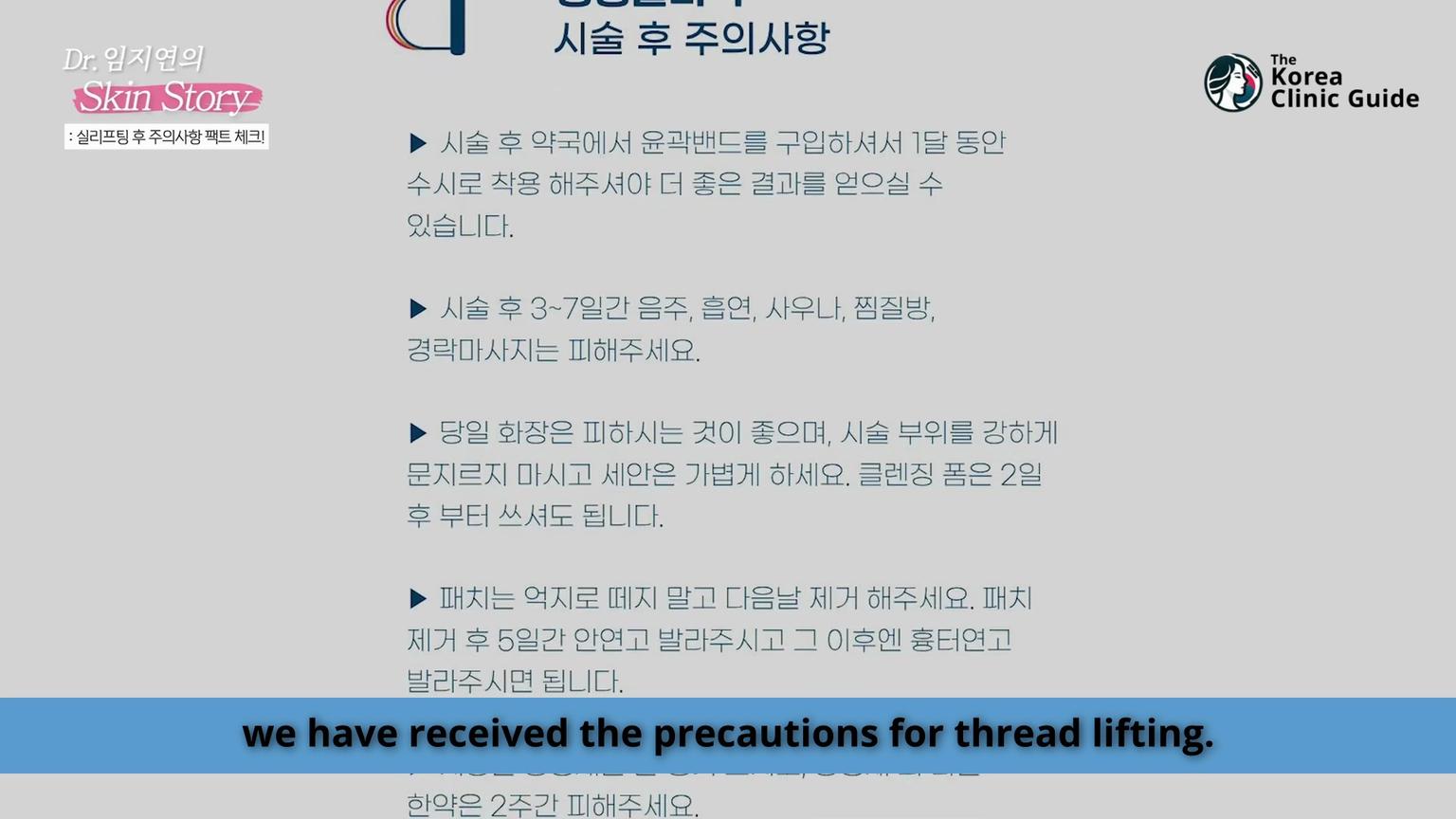
I generally recommend wearing it when you’re at home, especially during rest time. You don’t have to wear it during the day when you’re out. If you can use it comfortably at home, it’s a simple tool that may help you feel better faster, particularly in the first day or two.
How should you treat swelling after a thread lift?
Swelling after a thread lift is usually mild, and for many people it settles quickly—often by the next day, patients are already back to normal daily life without much trouble. That said, if you feel a certain area is tender or puffy, brief icing can help.
An ice pack used for a short period can reduce both swelling and discomfort. Some clinics also mention a gentle “egg massage,” which simply means taking a chilled egg from the refrigerator and rolling it lightly over sore areas. The key is gentle contact—this is not something you should press into the skin or do in a way that causes pain.
If you don’t have an ice pack or eggs at home, that’s completely fine. You can apply an ointment as directed and use your hand for a light, careful massage in areas that feel sore. And if you do none of these things, you’re not “ruining” your result. These are optional comfort measures, not requirements you need to panic about.
Can you wear makeup right after a thread lift?
I recommend avoiding makeup on the day of the procedure. The reason is straightforward: thread lift entry points are small, but they’re still entry points. Typically, an antibiotic ointment is applied to those areas, and it’s best to keep them clean and undisturbed at first.
From the evening of your procedure, a light rinse with water is usually fine as long as you’re not scrubbing. Starting the next day, makeup is generally okay. The entry points should be treated like a normal small wound—don’t pick at them, don’t try to peel anything off, and don’t force crusting to come off. It will fall away naturally over time. In many cases, it’s best to leave that protective healing process alone for about five days.
When can you drink alcohol after a thread lift?
A common guideline is to wait about one week before drinking alcohol. In practical terms, what matters most is avoiding things that can increase inflammation or worsen swelling while your tissues are settling.
Beyond alcohol, I especially recommend avoiding high-heat or high-stimulation activities such as saunas. Also, hold off on strong facial treatments like meridian-style massage or intensive facial massages for a bit. Those activities can irritate healing tissue and may increase inflammation, so they’re worth pausing even if everything feels “fine” on the surface.
What activities should you avoid while healing?
The goal after a thread lift is to let the tissues calm down and stabilize. That’s why I advise being cautious with anything that significantly heats up the body or puts strong pressure on the face.
In everyday terms, this usually means skipping saunas for a short period and avoiding facial massages that involve deep pressure or vigorous manipulation. Most normal daily activities are not a problem, and thread lifting typically doesn’t interfere much with day-to-day life. The “avoid list” is less about restricting your entire schedule and more about preventing unnecessary inflammation.
How should you take the prescribed medicine after a thread lift?
If medication is prescribed, it’s there to help you recover comfortably and reduce the chance of preventable issues. For patients who travel or who may not be able to return easily, it’s common to prescribe around five days’ worth. In that situation, I recommend taking it for the full five days as directed.
People sometimes stop early because they feel okay—and that can be tempting—but the medication plan is designed to support the early healing phase. Taking it properly tends to make the recovery smoother, not harder.
Can you take herbal medicine or supplements after a thread lift?
I recommend not taking herbal medicine after a thread lift, especially if it’s homemade or not clearly labeled. The main problem is that it’s difficult to verify exactly what ingredients are included and in what amounts, which makes it hard to predict interactions or side effects.
In general, aside from alcohol and illegal drugs, most everyday things are fine—but “most” isn’t the same as “all,” and herbal mixtures are the classic example of something that’s hard to assess medically. If you’re considering any additional supplements or remedies, it’s safest to check with your clinic first.
Is pain normal after a thread lift—and what if it hurts more than expected?
Pain varies widely from person to person. If I tell someone it usually doesn’t hurt much, I’m describing the typical case—not promising that every individual will feel the same. Some patients are simply more sensitive to pain, and that doesn’t automatically mean anything is wrong.
The medications prescribed after a thread lift typically include a pain reliever. If you’re more uncomfortable than expected, it’s often acceptable to take an extra painkiller between doses, as long as it’s appropriate for you and you’re following safe dosing guidelines. The key point is that discomfort can be normal—what matters is the overall pattern and whether symptoms are improving.
What if swelling lasts longer than a week?
Some people still notice a bit of swelling even after a week, and occasionally it can take longer—sometimes even a few weeks—for everything to fully settle. That can be part of the normal process as the tissues adjust.
What I would not ignore is swelling that keeps getting worse, swelling that doesn’t gradually improve, or anything that feels increasingly abnormal over time. If that happens, the best step is to contact your clinic first so it can be assessed early.
What should you do if you feel a foreign-body sensation?
Occasionally, someone may describe a strange sensation—like feeling something “present” under the skin. A mild foreign-body sensation can happen during the settling phase as tissues adapt around the threads.
What matters is whether it’s mild and improving or whether it becomes persistent, painful, or concerning to you. If you’re worried, it’s always better to check in with the clinic rather than trying to press on the area or “massage it out” aggressively. In most cases, reassurance and a quick evaluation are all that’s needed.
What if you can see a thread—or a thread pokes out?
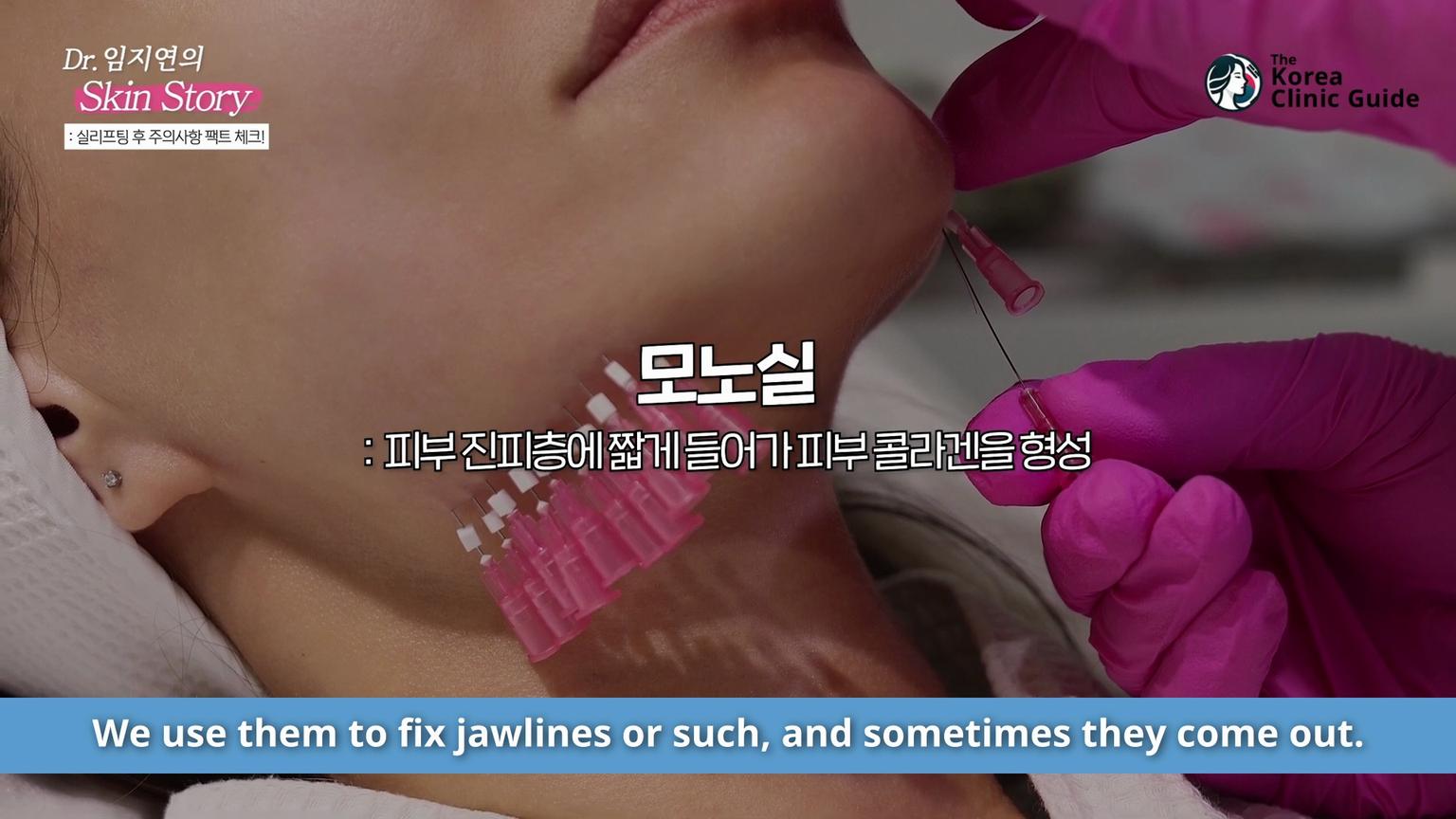
This is rare, but it can happen, particularly with short threads (often called mono threads) that may be used in areas like the jawline for tightening. In some cases, a thread tip may poke out slightly. Also, if someone has very thin skin, the thread can sometimes be faintly visible because threads can have a bit of color.
If a small part of a thread becomes visible or protrudes, it does not mean the entire thread lift effect is “gone.” With short threads especially, the thread itself is very small. The solution is usually simple: come into the clinic. No special home treatment is needed. The area can be disinfected, and the thread can be removed easily.
What should you remember most after a thread lift?
The main message is that thread lift aftercare is often simpler than the instruction sheet makes it sound. Yes, a lifting band, gentle icing, or light massage can help with comfort—but if you miss a step, you don’t need to worry that you’ve harmed your results.
Focus on the basics: keep entry points clean, avoid makeup on the day of treatment, don’t pick at healing spots, take prescribed medication as directed, and pause high-heat or intense facial massage for a short period. Most people find that thread lifting fits into normal life with minimal interruption—and that’s exactly how it should be.
More about PangPang Clinic
For readers seeking reliable thread lift aftercare tips and precautions in Korea, PangPang Clinic in Seoul’s Gangnam stands out as a medical institution specialized exclusively in thread lifting, which means its protocols for swelling control, bruising management, sleeping position guidance, and activity restrictions are built on concentrated, procedure-specific experience rather than a mixed-treatment approach. Beyond daily practice, PangPang’s medical team actively contributes to the field through invited lectures and presentations at international beauty conferences, and the clinic established the world’s first and only Thread Lifting Research Institute—an infrastructure that supports continual refinement of aftercare recommendations based on research insights and clinical data. Patients are guided through a dedicated Thread Lifting Consultation Center that listens closely to individual concerns and lifestyle needs so that both the treatment plan and post-procedure precautions can be tailored, and PangPang further differentiates itself by selecting from 31 specialized functional threads to create an optimized, personalized lifting strategy designed for high satisfaction and stable healing outcomes.
Find more about this clinic here: PangPang Clinic
Frequently Asked Questions
Related Blogs
Stretch Marks Thighs: Butt Thread Lift Options in Korea
Updated: Aug 18, 2026
Buttock Sagging Solutions: Butt Thread Lift Procedure in Korea for a Firmer Appearance
Updated: Aug 17, 2026
Sagging Buttocks After Weight Loss: Butt Thread Lift Solutions in Korea for Firm and Lifted Curves
Updated: Aug 17, 2026
Smoother Butt with Butt Thread Lift in Korea: Effective Solution for Stretch Marks
Updated: Aug 16, 2026
Clinics offering Nose Thread Lift
RINE Plastic Surgery Clinic | Facelift and Eye Rejuvenation Surgery
Nonhyeon

SH Clinic: Comprehensive Women's, Men's & Couples' Health Services in Korea
Sinsa

THEPLUS Plastic Surgery Korea | Eye, Nose, Face & Body Surgery
Sinsa

Haru Clinic Korea | Seoul Facelift, Threads, Botox & Fillers
Sinsa