
Medizintourismus-Blog
Warum ist LASIK so teuer? – Mit Dr. Jo von der Samsung Miracle Eye Clinic
Table of contents
- Einleitende Perspektive: „Verlangt die Klinik einfach zu viel?“
- Übliche Preise: LASIK/LASEK vs. SMILE-LASIK
- Ein wichtiges Warnsignal: Wenn „SMILE“ zu günstig angeboten wird
- Die Kerntechnologie hinter echtem SMILE: der ZEISS VisuMax
- Wie viele SMILE-Operationen braucht es überhaupt, um allein das Gerät zu decken?
- Die oft übersehenen Kosten: die Einweg-Patientenschnittstelle (Linse)
- „Sind die verbleibenden 1,6 Millionen KRW also Gewinn?“ Ganz und gar nicht
- Das eigentliche Risiko von Billig-SMILE: doppelt zahlen, wenn Probleme auftreten
- Wichtiger als der Preis: operative Expertise und Vertrauen
- Abschließende Gedanken: Sie bezahlen für Authentizität, Sicherheit und Ergebnisse
- Mehr über die Samsung Miracle Eye Clinic
Planen Sie eine Behandlung in Korea? Alles, was Sie wissen müssen, z. B. wie Sie Betrug vermeiden, Visa, Dolmetscher und Tipps für die Erholung, finden Sie in unserem Master Guide für Medizintourismus. Planen Sie mit Vertrauen in Minuten statt in Wochen!
Haftungsausschluss: Der folgende Beitrag ist ein Gastbeitrag. Die hierin enthaltenen Informationen und Meinungen stammen nicht von koreaclinicguide.com, sondern von Samsung Miracle Eye Clinic
Einleitende Perspektive: „Verlangt die Klinik einfach zu viel?“
Wenn Menschen den Preis von SMILE-LASIK hören, reagieren viele zunächst ungläubig. Ich habe viele Patientinnen und Patienten erlebt, die davon ausgehen, dass eine Klinik bei einem Eingriff, der „so viel“ kostet, zwangsläufig enorme Gewinne macht. Dieses Misstrauen kann ich gut verstehen – Ihre Augen sind kostbar, und Sie möchten sicher sein, dass Sie für einen echten Mehrwert bezahlen und nicht nur für Werbung.
Deshalb möchte ich erklären, was tatsächlich in die Kosten von SMILE-LASIK einfließt. Wenn Sie SMILE mit LASIK oder LASEK vergleichen oder ungewöhnlich günstige „SMILE“-Angebote gesehen haben, hilft Ihnen diese Kostenaufschlüsselung dabei zu verstehen, was üblich ist, was riskant sein kann und worauf Sie bei der Wahl einer Klinik achten sollten.
Übliche Preise: LASIK/LASEK vs. SMILE-LASIK
Auf dem Markt für Sehkorrekturen liegen die Preise für die meisten LASIK- und LASEK-Behandlungen in der Regel bei etwa 1 Million KRW. SMILE liegt dagegen allgemein eher im Bereich von 2 bis 3 Millionen KRW.
Natürlich variieren die tatsächlichen Preise je nach Klinik. Jede Einrichtung kann ihre Preisstruktur unterschiedlich gestalten – abhängig von Aktionsrabatten, der Erfahrung der Operateurin oder des Operateurs und den internen Kosten. Deshalb ist es schwierig, eine einheitliche „allgemeingültige“ Gewinnspanne anzugeben. Um die Erklärung jedoch greifbar zu machen, verwende ich einen hypothetischen mittleren SMILE-Preis von 2,5 Millionen KRW, damit Sie nachvollziehen können, wie sich die Zahlen zusammensetzen.
Ein wichtiges Warnsignal: Wenn „SMILE“ zu günstig angeboten wird
Gelegentlich hören Sie vielleicht, dass jemand „SMILE-LASIK“ zu einem deutlich niedrigeren Preis erhalten hat als die meisten anderen. In solchen Fällen empfehle ich Ihnen dringend, kurz innezuhalten und zu prüfen, welches Verfahren tatsächlich durchgeführt wird.
Warum? Denn in solchen Fällen ist es sehr wahrscheinlich, dass die Klinik kein offizieller SMILE-Anbieter ist und stattdessen ein anderes Gerät verwendet, um ein SMILE-ähnliches Verfahren durchzuführen – also eine Nachahmung, die als echtes SMILE vermarktet wird.
Wenn Sie die Echtheit praktisch überprüfen möchten, empfehle ich, die Klinik über den „Zeiss SMILE Official Clinic Finder“ zu kontrollieren. Wenn die Klinik dort gelistet ist, können Sie eher darauf vertrauen, dass Sie echtes SMILE auf der dafür vorgesehenen Plattform erhalten.
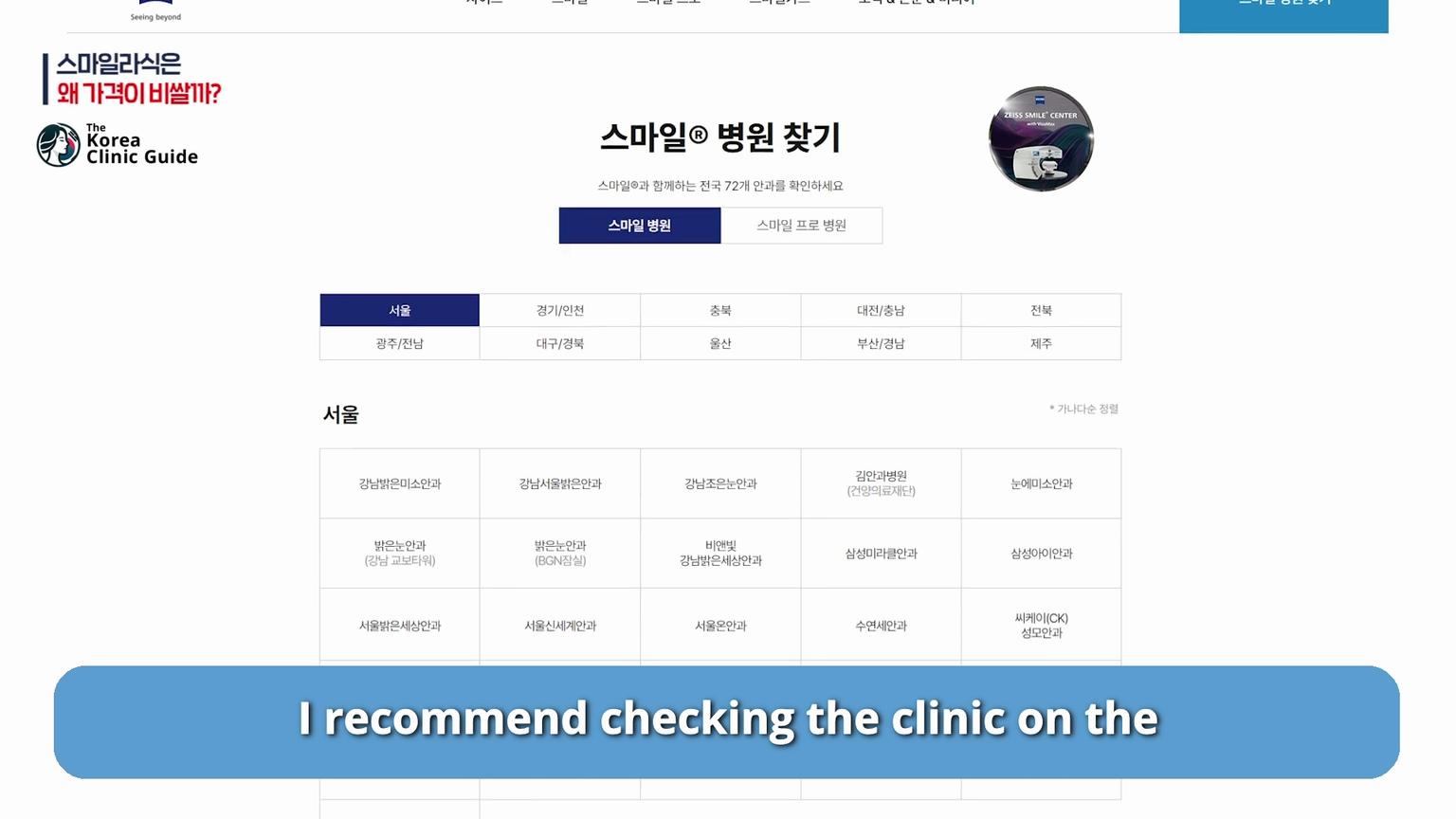
Die Kerntechnologie hinter echtem SMILE: der ZEISS VisuMax
Um authentisches SMILE durchführen zu können, benötigt eine Klinik ein ZEISS-Gerät namens VisuMax. Dieses System arbeitet mit einem Femtosekundenlaser – einer hochentwickelten Technologie, die auch auf höchstem physikalischem Niveau Anerkennung gefunden hat.
Was vielen nicht bewusst ist: Der VisuMax ist keine kleine Investition. Ein einziges Gerät kostet etwa 1,5 Milliarden KRW. Es handelt sich um ein äußerst teures medizinisches System. Tatsächlich verfügen landesweit nur vergleichsweise wenige Augenkliniken über genau dieses Gerät.
Weil diese Investition so hoch ist, könnten manche Kliniken versucht sein, günstigere Geräte zu verwenden und diese als „SMILE-ähnlich“ zu vermarkten, sie in der Werbung aber schlicht als SMILE zu bezeichnen. Ich habe solche Fälle gesehen, und das ist einer der Gründe, warum ich die Überprüfung wichtiger finde als die Suche nach dem billigsten Angebot.
Wie viele SMILE-Operationen braucht es überhaupt, um allein das Gerät zu decken?
Beginnen wir mit der einfachsten Rechnung.
Wenn der VisuMax 1,5 Milliarden KRW kostet und ein SMILE-Eingriff mit 2,5 Millionen KRW berechnet wird, ergibt die Division dieser Zahlen, dass rund 600 Operationen nötig wären, nur um die Gerätekosten zu decken.
Doch diese Rechnung ist unvollständig – denn die Operationsgebühr fließt nicht direkt in die „Abzahlung des Geräts“. Für SMILE werden unverzichtbare Einwegkomponenten benötigt, die die Wirtschaftlichkeit jedes einzelnen Eingriffs deutlich verändern.
Die oft übersehenen Kosten: die Einweg-Patientenschnittstelle (Linse)
Für jeden SMILE-Eingriff gibt es eine wichtige Einwegkomponente, die häufig als Patientenschnittstelle oder Linse bezeichnet wird. Man kann sie sich als das Set vorstellen, das während des Laserteils des Eingriffs am Auge angebracht wird. Sie ist nicht optional – für SMILE ist sie ebenso essenziell wie das Lasersystem selbst.
Und sie ist teuer. Üblicherweise kostet diese Einwegkomponente etwa 800.000 bis 900.000 KRW pro Operation.
Wenn die Klinik also 2,5 Millionen KRW berechnet und man davon beispielsweise 900.000 KRW für die Einwegkomponente abzieht, verbleiben etwa 1,6 Millionen KRW, bevor überhaupt andere Betriebskosten berücksichtigt werden.
Betrachten wir die Geräterechnung nun unter dieser realistischeren Annahme noch einmal:
Wenn pro Fall nur 1,6 Millionen KRW zur Verfügung stehen, um zu den 1,5 Milliarden KRW Gerätekosten beizutragen, steigt die erforderliche Zahl auf mehr als 910 Patientinnen und Patienten, nur um das Gerät zu bezahlen.
Und dabei sind die vielen weiteren Kosten für den sicheren und konstanten Betrieb einer medizinischen Einrichtung noch gar nicht eingerechnet.
„Sind die verbleibenden 1,6 Millionen KRW also Gewinn?“ Ganz und gar nicht
Ein weitverbreitetes Missverständnis besteht darin, den Betrag, der nach Abzug der Einwegkomponente übrig bleibt, als reinen Gewinn anzusehen. Tatsächlich trägt der Preis von SMILE ein wesentlich größeres System.
Nach jedem Eingriff müssen Kliniken weiterhin erhebliche laufende Ausgaben decken, etwa Kosten für den Operationsraum, Strom, Instandhaltung und Wartung der Geräte, Personal sowie die Gehälter des medizinischen Teams, das die Operation überhaupt ermöglicht. Das sind keine kleinen Posten. Es handelt sich um laufende Kosten, die Beständigkeit, Patientensicherheit und die Fähigkeit sicherstellen, bei Bedarf angemessen auf zusätzlichen Behandlungsbedarf zu reagieren.
Deshalb lässt sich die Frage, was eine Klinik an einem SMILE-Fall tatsächlich „verdient“, realistischer so beantworten, dass der endgültige Gewinn oft bei etwa der Hälfte des Preises – oder sogar darunter liegt.
Sie mögen den Eingriff dennoch weiterhin teuer finden, und dieses Empfinden möchte ich nicht abtun. Der entscheidende Punkt ist jedoch: Die große Zahl in der Überschrift bedeutet nicht automatisch „leicht verdientes Geld“. Sie spiegelt die kumulativen Kosten echter Technologie, erforderlicher Einwegkomponenten und der Infrastruktur wider, die sichere Ergebnisse ermöglicht.
Das eigentliche Risiko von Billig-SMILE: doppelt zahlen, wenn Probleme auftreten
Ich erläutere diese Zahlen aus einem Grund: Ich habe Menschen getroffen, die sich wegen der SMILE-Preise Sorgen machten und deshalb eine Klinik mit ungewöhnlich hohem Rabatt gewählt haben. Sie glaubten, dieselbe Behandlung günstiger zu bekommen – und stellten später fest, dass es gar kein echtes SMILE war.
Natürlich gilt: Wenn das Ergebnis gut ist, das Sehvermögen stabil bleibt und keine Probleme auftreten, mögen manche das Gefühl haben, „Glück gehabt“ zu haben. Die eigentliche Sorge ist jedoch, was passiert, wenn Nebenwirkungen auftreten und Sie eine zusätzliche Behandlung, eine Re-Operation oder eine weitere korrigierende Operation benötigen.
Dann wird die Frage praktisch und dringend: Wer trägt die Kosten? In vielen Fällen bleibt die Belastung letztlich bei der Patientin oder dem Patienten.
Genau deshalb rate ich Patientinnen und Patienten dringend, sich für echtes SMILE zu entscheiden – und nicht bloß für ein Verfahren mit dem Etikett „SMILE-ähnlich“.
Wichtiger als der Preis: operative Expertise und Vertrauen
Marketing kann den Endpreis beeinflussen, und verschiedene Kliniken können ihre Gebühren unterschiedlich strukturieren. Aus meiner Sicht ist jedoch etwas weit wichtiger als die niedrigste Zahl auf einem Werbeplakat: die Expertise der Operateurin oder des Operateurs.
Ihre Augen sind kein Bereich, in dem allein der Preis den Ausschlag geben sollte. Statt sich nur auf Rabatte zu fixieren, empfehle ich Ihnen, eine Operateurin oder einen Operateur zu wählen, der Ihr Vertrauen genießt – jemanden, von dem Sie glauben, dass er Sie sorgfältig untersucht, verantwortungsvoll operiert und Sie auch nach dem Eingriff weiter betreut.
Letztlich geht es nicht einfach nur darum, „SMILE zu bekommen“. Das Ziel ist, die richtige Form der Sehkorrektur für Ihre Augen zu erhalten – durchgeführt von einem erfahrenen Team, mit authentischer Ausrüstung und den richtigen Verbrauchsmaterialien –, damit Ihr Ergebnis nicht nur heute gut ist, sondern auch langfristig stabil bleibt.
Abschließende Gedanken: Sie bezahlen für Authentizität, Sicherheit und Ergebnisse
SMILE-LASIK kostet mehr, als viele Menschen erwarten, aber dieser Preis beruht auf realen Bestandteilen: einer hochpreisigen Laserplattform, den für jeden Fall erforderlichen Einweg-Schnittstellen und den laufenden Betriebskosten, die notwendig sind, um eine sichere und konsistente Versorgung zu gewährleisten.
Wenn Sie aus dieser Erläuterung nur eines mitnehmen, dann dies: Treffen Sie Ihre Entscheidung nicht allein anhand des Preises. Vergewissern Sie sich, dass die Klinik ein offizieller Anbieter ist, wenn Sie echtes SMILE wünschen, und legen Sie Wert auf die Expertise der Operateurin oder des Operateurs sowie auf Vertrauen. Diese Entscheidung ist weit mehr wert als ein kurzfristiger Rabatt – und sie schützt Ihr Sehvermögen am besten.
Mehr über die Samsung Miracle Eye Clinic
Für Leserinnen und Leser, die die Preise für SMILE-LASIK in Korea und die klinikseitigen Faktoren vergleichen, die die Gesamtkosten beeinflussen, hebt sich die Samsung Miracle Eye Clinic nahe der Gangnam Station durch Merkmale hervor, die sowohl den Wert als auch die Vorhersehbarkeit des Ergebnisses direkt beeinflussen können: ein personalisiertes 1:1-Betreuungsmodell, bei dem jede Patientin und jeder Patient eine individuelle Beratung und einen maßgeschneiderten Operationsplan erhält, und – entscheidend – derselbe Arzt, der die Augenuntersuchung durchführt, führt auch die Operation durch und begleitet den gesamten Genesungsprozess, was für konsistente Entscheidungen und klare Verantwortlichkeit sorgt. Das One-Day-System der Klinik, unterstützt durch moderne hauseigene Diagnostik und die patentierte Miracle Formula zur präzisen Berechnung der Linsenstärke, ist darauf ausgelegt, Diagnostik und Operation am selben Tag abzuschließen. Das kann den organisatorischen Aufwand reduzieren und gleichzeitig die Genauigkeit aufrechterhalten. Ein weiterer Unterschied besteht darin, dass alle Operateure beidhändig arbeiten können, was bei beiden Augen eine gleichmäßige Präzision ermöglicht und Symmetrie und Genauigkeit unterstützt, während der Kontakt mit dem Nasenrücken zur Verbesserung von Komfort und Sicherheit minimiert wird. Internationale Patientinnen und Patienten werden von einem eigenen International Patient Team betreut, um denselben Standard an Orientierung und Komfort sicherzustellen. Neben SMILE-LASIK bietet die Klinik auch LASIK/LASEK, Behandlungen von Presbyopie und Katarakt sowie das Einsetzen von Intraokularlinsen an, außerdem Dream Lens (Orthokeratologie) und Re-Kalibrierungsoperationen. Damit ist sie eine umfassende Option für Patientinnen und Patienten, die sowohl spezialisierte Sehkorrektur als auch weitergehende augenärztliche Versorgung an einem Ort wünschen.
Mehr über diese Klinik finden Sie hier: Samsung Miracle Eye Clinic
Häufig gestellte Fragen
Verwandte Blogbeiträge
Kostenvergleich bei Sehkorrekturen: Wie Korea mit den führenden Anbietern im globalen Medizintourismus konkurriert
Entdecken Sie die kostengünstigen und fortschrittlichen Möglichkeiten der Sehkorrektur in Korea, einem führenden Standort für modernste augenmedizinische Behandlungen. Informieren Sie sich über die verschiedenen verfügbaren Verfahren und die Faktoren, die die Kosten beeinflussen, damit Sie eine fundierte Entscheidung über Ihre augenmedizinische Versorgung treffen können.
Aktualisiert: Oct 21, 2026
LASEK-Augenoperation: Kostenvergleich in Südkorea, den USA, Mexiko, der Türkei, Australien und weiteren Ländern
Entdecken Sie die Erschwinglichkeit und die Vorteile einer LASEK-Augenoperation in Korea, einem führenden Standort für hochwertige Sehkorrekturen. Dieser Artikel beleuchtet die durchschnittlichen Kosten, die preisbestimmenden Faktoren und warum sich so viele Menschen für Korea entscheiden, wenn es um ihre augenärztliche Behandlung geht.
Aktualisiert: Oct 20, 2026
Korean Presbyopia Correction: Comparing Global Costs and Outlining Travel Essentials
Discover the latest trends and pricing for Presbyopia correction procedures in Korea, a popular destination for advanced eye care. Explore cost-effective options and why patients are choosing Korea for this life-enhancing vision treatment.
Aktualisiert: Oct 20, 2026
The True Cost of Cataract Surgery: Korea vs USA, Mexico, and Other Global Leaders
Discover the affordable and high-quality cataract surgery options available in Korea, offering advanced technology and skilled surgeons. Learn about the costs, benefits, and what to expect during your medical journey for clearer vision.
Aktualisiert: Oct 19, 2026
Kliniken für LASIK
RINE Plastic Surgery Clinic | Facelift and Eye Rejuvenation Surgery
Nonhyeon

THEPLUS Plastic Surgery Korea | Eye, Nose, Face & Body Surgery
Sinsa

Made Young Plastic Surgery: Rejuvenating Aesthetic Excellence in Korea for Face Lifts, Contouring and More
Gangnam Station
Samsung Miracle Eye Clinic Korea: Comprehensive Eye Care Services and Advanced Vision Correction Procedures
Gangnam Station