Medical Tourism Blog
Silicone penile implant in Korea: device types, recovery, risks and travel planning
Table of contents
- Silicone penile implant at a Glance
- What Is a Silicone Penile Implant?
- Who Is a Good Candidate for a Silicone Penile Implant?
- What Are the Different Types of Silicone penile implant?
- Why Visit Korea for a Silicone Penile Implant?
- Key Information for International Patients
- Which Are the Best Clinics in Korea for Silicone Penile Implant?
- Silicone penile implant From Start to Finish
- Alternatives to a Silicone Penile Implant
- How Can I Prepare for a Silicone Penile Implant?
- Aftercare Advice
Considering treatment in Korea? Everything you need to know e.g. — how to avoid scams, visas, interpreters, recovery tips — in our Medical Tourism Master Guide. Plan with confidence in minutes, not weeks!
Last updated: September 2026
Silicone penile implant at a Glance
- What it is — A silicone penile implant usually refers to a permanent malleable or semi-rigid prosthesis: two rods placed in the erectile bodies that are manually positioned for sex or concealment, with no pump or reservoir.
- Best candidates — It is a definitive option for adults with persistent organic erectile dysfunction that has not responded to, cannot be treated with, or no longer suits tablets, vacuum devices, alprostadil, or injections.
- Key trade-off — The implant provides mechanical rigidity for penetrative sex but does not restore spontaneous erections, libido, fertility, ejaculation, or penile length; unlike an inflatable implant, it remains firm at rest and may be less discreet.
- Recovery timeline — Discharge is commonly the same day or after one overnight stay; desk work may be possible in 1–2 weeks, while heavy lifting, cycling, strenuous exercise, and penetrative sex are usually deferred for about 4–6 weeks until the surgeon confirms healing.
- Important risks — Because this is permanent foreign-body surgery, infection can require antibiotics and implant removal or salvage; low-risk first-time cases at high-volume centers report infection rates around 2–3%, with higher individual risk in diabetes, spinal-cord injury, and revision surgery.
- Korea travel planning — International patients should plan a conservative 10–14 days in Korea for surgery, wound review, and surgeon-led flight clearance; a hospital’s foreign-patient registration helps with logistics but does not prove penile-implant expertise or superior outcomes.
- No routine repeat treatment — A successful implant does not need scheduled repeat sessions, but infection, pain, erosion, malposition, or device problems can require later revision or replacement; keep the implant card and operative report for future care.
What Is a Silicone Penile Implant?
A silicone penile implant usually refers to a malleable penile prosthesis: permanently implanted rods that provide firmness and can be positioned manually. It treats persistent erectile dysfunction by providing rigidity for penetrative sex when other treatments are unsuitable or ineffective. It is a surgical procedure performed under anesthesia.
Who Is a Good Candidate for a Silicone Penile Implant?
- Treatment-refractory organic ED — Adults with persistent, bothersome erectile dysfunction who have not responded to, cannot use, or do not want to continue tablets, vacuum devices, alprostadil, or injection therapy can consider a penile prosthesis as definitive treatment.
- Relevant medical causes — Diabetes and vascular disease, spinal-cord or neurologic disease, ED after prostate or pelvic surgery, pelvic radiation, priapism, and Peyronie’s disease with medication-refractory ED are common clinical settings for implant assessment.
- Preference for simple mechanics — A malleable implant is suited to patients who prefer manually positioning a constantly firm penis and do not want to operate an inflatable pump.
- Realistic surgical goals — Good candidates understand that the device supplies rigidity for penetrative sex; it does not restore spontaneous erections, libido, fertility, ejaculation, or penile length. The EAU advises against implants as penile-lengthening treatment.
This is permanent corporal surgery for adults, not cosmetic enlargement or silicone injection. Do not proceed with active systemic, skin, or urinary-tract infection: the AUA advises against prosthesis surgery in these circumstances. Elective surgery also needs postponement for unstable cardiovascular disease, uncontrolled bleeding risk, or modifiable wound-healing risks such as poorly controlled diabetes, active nicotine use, major nutritional compromise, or unmanaged immunosuppression. A urologist must assess penile length, curvature, sensation, urinary symptoms, prior pelvic surgery or radiation, cardiovascular fitness, psychological and relationship factors; predominantly situational or psychogenic ED requires an adequate diagnostic work-up and consideration of psychosexual care first.
What Are the Different Types of Silicone penile implant?
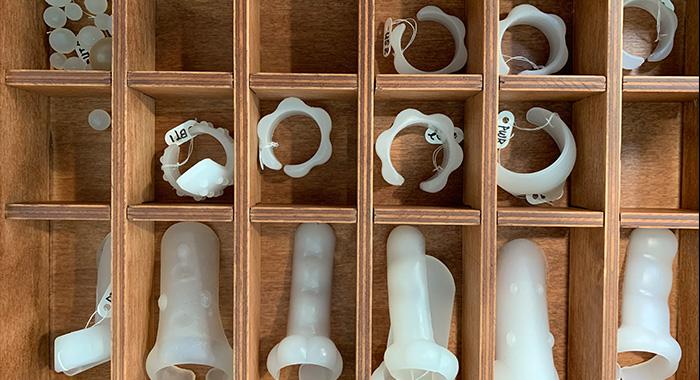
“Silicone penile implant” is imprecise terminology. Modern guidance separates inflatable and semi-rigid prostheses; ask for the manufacturer, exact model, material, and device class before signing consent.
- Malleable or semi-rigid implant — The usual meaning of this term. Two rods in the corpora cavernosa remain firm and are bent upward or outward for intercourse and downward or sideways for concealment. There is no pump or abdominal reservoir, but constant firmness is less discreet at rest than an inflatable device.
- Mechanical or soft-flexible semi-rigid device — These are recognized semi-rigid categories with model-specific differences in rigidity, durability, and availability. A clinic’s use of “silicone” does not identify the design.
- Two-piece inflatable prosthesis — Cylinders and a scrotal pump provide inflation without a separate abdominal reservoir. It can be considered when reservoir placement is undesirable after certain abdominal or pelvic operations.
- Three-piece inflatable prosthesis — Cylinders, a scrotal pump, and a reservoir create an inflatable erection and a more flaccid resting appearance. It adds components and requires pump handling. Current EAU guidance does not establish universal superiority of one implant class or manufacturer.
Why Visit Korea for a Silicone Penile Implant?
South Korea has a government registration framework for institutions that serve foreign patients. This can support international-care logistics, but it does not prove a hospital’s penile-prosthesis volume, device inventory, or outcomes. No high-quality comparative evidence shows penile-implant outcomes in Korea are superior to those in other destinations.
- International-patient registration — Use a hospital registered under Korea’s foreign-patient medical-institution registration system as one practical starting point for international services.
- Procedure-specific verification — Confirm in writing that the urology team performs penile-prosthesis surgery, can provide the requested malleable model, has an infection-prevention protocol, and will issue English consent, an operative report, implant details, and discharge instructions.
- Interpretation and continuity — Ensure interpretation covers informed consent and postoperative teaching, not only appointment booking. Establish a named cross-border contact before surgery for wound concerns after departure.
- Evidence limitation — A Korean retrospective single-center conference comparison of malleable and inflatable implants cannot predict an individual result or demonstrate a national advantage. Device-specific Korean public information on stocked models, inpatient practices, and formal overseas follow-up remains limited.
Key Information for International Patients
- Minimum stay — Plan a conservative 10–14 days in Korea for surgery, early recovery, catheter or drain management when used, wound review, and a surgeon-led fitness-to-fly decision.
- Hospital discharge — Discharge is commonly on the same day or after one overnight stay. Anesthesia type, medical conditions, pain control, urination, and whether this is primary or revision surgery determine the actual stay.
- Long-haul flights — There is no penile-prosthesis-specific interval that makes flying safe for everyone. Aviation-medicine guidance emphasizes individualized postoperative assessment, including mobility, bleeding, wound status, infection and thrombosis risk.
- Itinerary impact — Treat the stay as surgical recovery, not a sightseeing trip. Arrange accommodation with easy bathroom access, avoid carrying luggage, and keep the first postoperative days flexible.
- Activity restrictions — Gentle walking is generally encouraged. Desk work can be feasible at roughly 1–2 weeks when pain is controlled; defer strenuous exercise, cycling, heavy lifting, and penetrative sex for about 4–6 weeks until the operating urologist confirms healing.
- Remote follow-up — Obtain a written plan for secure wound photographs or video review, the clinic’s urgent-contact channel, your implant card and operative report, and referral instructions for a urologist at home.
Travel note: Do not book a non-refundable return flight close to surgery. The operating surgeon’s examination—not a fixed day count—determines whether long-haul travel is appropriate.
Which Are the Best Clinics in Korea for Silicone Penile Implant?
Listed below are some of the best clinics in Korea for silicone penile implant.
1. Yezak Urology
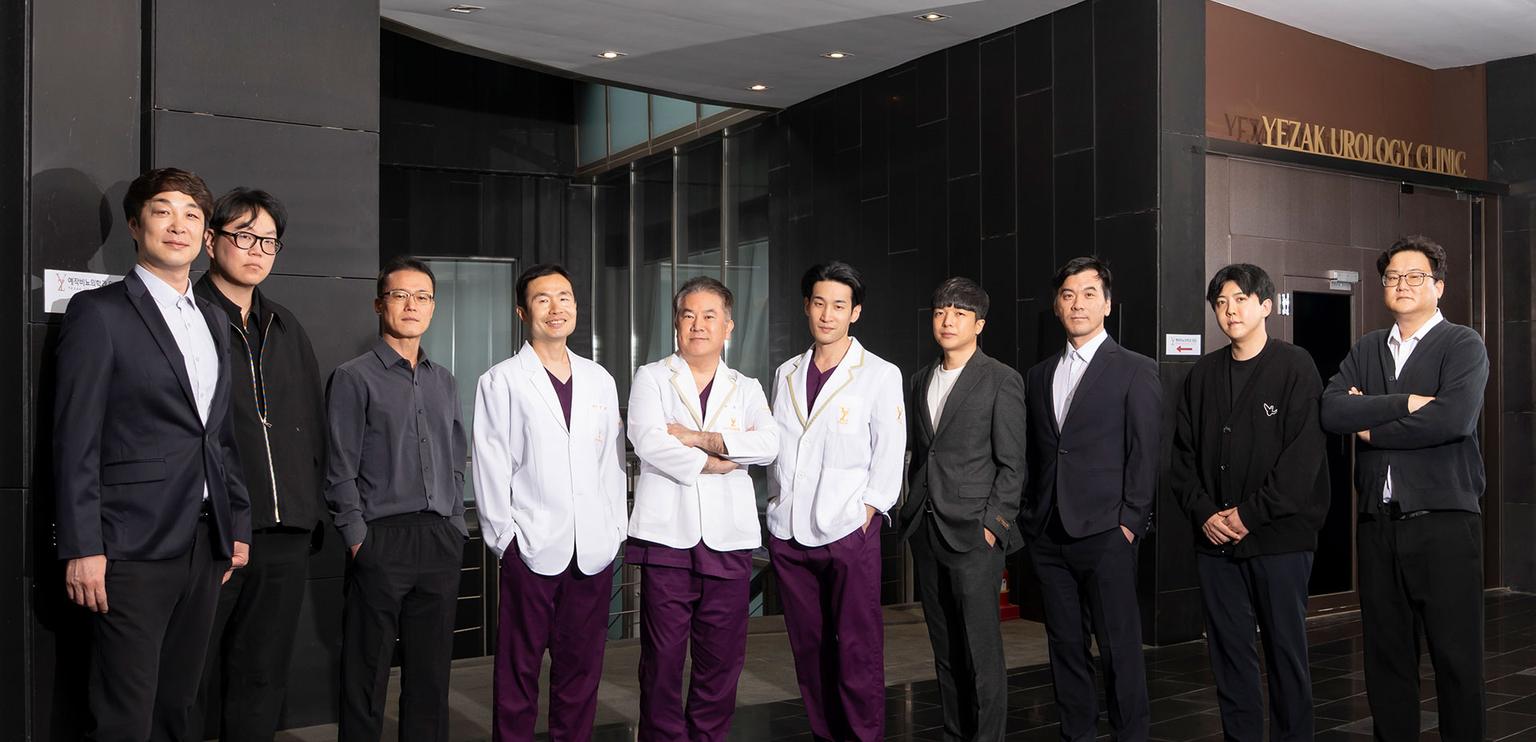
If you are exploring a silicone penile implant, Yezak Urology’s supplied information does not specifically confirm that it offers penile implant surgery. The clinic does describe extensive men’s-health care, including surgical penile enlargement and lengthening, so you can discuss whether its available procedures match your erectile-function or enhancement goals.
- URL: Yezak Urology Website
- Location: Seoul
- Men’s health procedures:
- Penile girth enhancement is offered with autologous fat grafting or biocompatible fillers.
- Penile lengthening involves suspensory-ligament release with skin advancement and postoperative traction protocols.
- Glans enlargement, premature-ejaculation care, and genital plastic procedures such as frenuloplasty, scrotoplasty, and scar revision are described.
- Erectile dysfunction care:
- Non-surgical options listed include PDE5 inhibitors, intracavernosal injections, vacuum devices, and shockwave therapy.
- Evaluation may also address cardiovascular and hormonal contributors to erectile dysfunction.
- Practice information:
- The clinic describes a multi-specialist team and advanced safety systems.
- Its source material states more than 20 years of male-enhancement specialization and identifies its urology specialist as the developer of a 5-Point Fixed Permanent Penile Lengthening Surgery technique.
2. Stantop Urology & Andrology
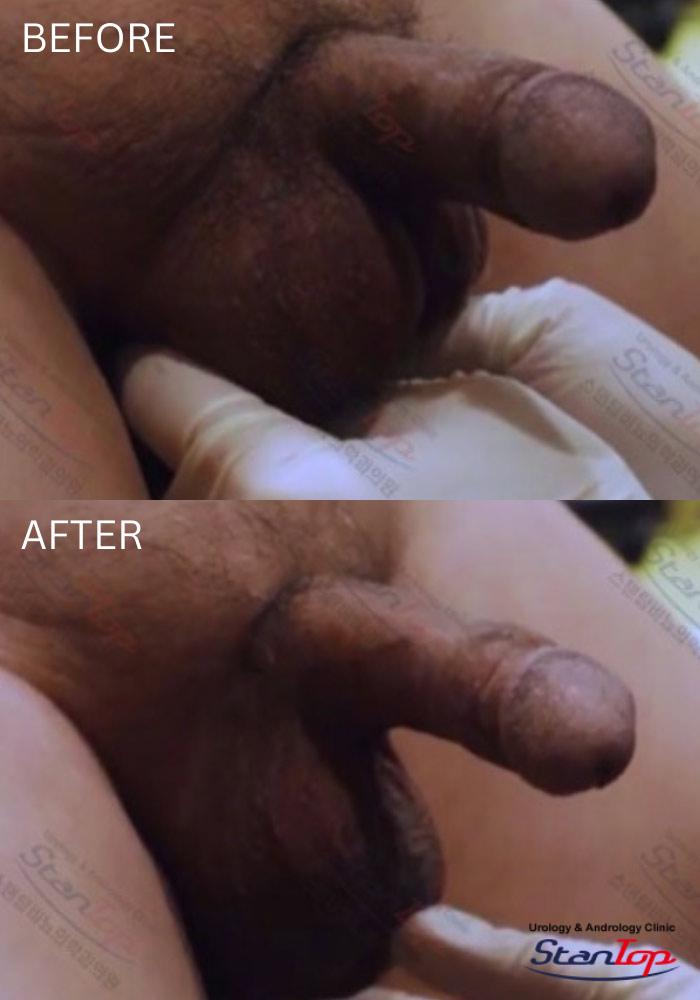
For erectile dysfunction requiring an implant, StanTop Urology & Andrology specifically lists a malleable implant—a semi-rigid device positioned as needed for intercourse—alongside a three-piece inflatable implant. The supplied information does not identify the material of its malleable device as silicone, so you should confirm the implant model, materials, and whether it is appropriate for your needs during consultation.
- URL: Stantop Urology & Andrology Website
- Location: Seoul
- Implant options:
- A malleable penile implant is listed as a semi-rigid device that can be positioned for sexual intercourse.
- A three-piece inflatable implant is also listed; it produces an erection by pumping fluid into surgically placed penile cylinders.
- Related sexual-health care:
- The clinic lists penile and glans enlargement, penile lengthening, and premature-ejaculation treatment.
- Other erectile-dysfunction options include stem cell therapy and shockwave therapy.
- Privacy and practice information:
- Separate consultation and treatment rooms for men and women are described to support comfort and privacy.
- The source material states that the clinic is KBS recognized and reports more than 100,000 consultations and 40,000 surgeries.
3. Blue Urology
If you are considering a silicone penile implant, Blue Urology’s supplied information does not confirm that it provides penile implant surgery. It does offer individualized erectile-dysfunction evaluation and treatment, which may help you assess causes of erection difficulty and review the non-implant options it lists.
- URL: Blue Urology Website
- Location: Seoul
- Erectile dysfunction evaluation:
- Testing and counseling are used to identify causes of erectile dysfunction and individualize care.
- Listed treatment options include medication, vacuum devices, and injections.
- Related men’s-health services:
- Premature-ejaculation care may combine behavioral strategies, topical anesthetics, medications, and counseling.
- Penile curvature correction is offered for curvature that interferes with function or causes pain related to Peyronie’s disease.
- The clinic also provides vasectomy and varicocele repair.
Silicone penile implant From Start to Finish
- Remote inquiry and consultation — Send a medical summary, prior ED treatments, medication list, diabetes status, previous pelvic or abdominal surgery, radiation history, and any curvature or implant records. Confirm English consultation or professional interpretation, the exact proposed device, expected stay, and overseas follow-up arrangements.
- Pre-travel surgical assessment — The urologist reviews erectile, medical, cardiovascular, psychological, and relationship factors. Discuss realistic goals, concealment with constant firmness, possible perceived shortening, glans softness, permanence, and whether partner-inclusive counseling would be helpful.
- In-person evaluation and testing — After arrival, expect examination of penile anatomy, curvature, sensation, and relevant urinary symptoms. Urinalysis or culture when indicated, blood count, metabolic and diabetes testing, anesthesia review, and cardiovascular assessment are selected according to clinical history.
- Consent and operative planning — Confirm the manufacturer, model, size plan, malleable versus inflatable class, incision, antibiotic plan, and medication instructions. Do not accept “silicone implant” as the full device description.
- Anesthesia and implantation — Surgery is performed under anesthesia. Through a penoscrotal or infrapubic incision, the surgeon opens and dilates the corpora cavernosa, measures the corporal spaces, inserts and positions the rods, checks placement, and closes the tissues. A malleable device requires no pump or reservoir; neither incision approach has an inherent overall advantage.
- Recovery and discharge — The team monitors pain, bleeding, urination, and anesthesia recovery. A catheter or drain is used only when clinically indicated. Leave with prescriptions, wound-care instructions, emergency contacts, and a scheduled wound review.
- In-Korea review and travel clearance — Attend the postoperative examination before departing. The surgeon assesses swelling, incision healing, urination, mobility, pain control, and travel readiness. Do not bend or routinely position the implant until specifically permitted.
- Remote follow-up at home — Continue scheduled video or secure-message review with the Korean team and establish local urology care for urgent or persistent concerns. Keep implant documentation permanently available for future clinicians.
Alternatives to a Silicone Penile Implant
Non-surgical options preserve native anatomy but often require repeated use and can be inadequate for severe ED. An inflatable implant is still surgery, but offers a deflatable resting state; a malleable implant trades that concealment for simpler mechanics.
PDE5 inhibitors
- Medicines — Sildenafil, tadalafil, vardenafil, and avanafil are first-line oral options when medically appropriate.
- Tradeoff — They require adequate sexual stimulation and do not work reliably for every cause of severe ED. Cardiovascular medicines and nitrate use need careful review.
Vacuum erection device
- How it works — A cylinder creates vacuum around the penis, followed by a constriction ring to maintain rigidity.
- Tradeoff — It avoids surgery and systemic drug effects but can feel mechanical and requires use before intercourse.
Alprostadil and injection therapy
- Options — Intraurethral or topical alprostadil, or intracavernosal injection therapy under urologic supervision, can create an erection without an implant.
- Tradeoff — Ongoing dosing and technique are required; pain, priapism, and fibrosis are relevant risks with injections.
Inflatable penile prosthesis
- Best fit — Consider this surgical alternative when a more flaccid appearance at rest and an on-demand erection are higher priorities.
- Tradeoff — It needs a scrotal pump and includes more components than a malleable device.
Peyronie’s disease treatment
- Combined problem — Significant curvature with ED can require condition-specific reconstruction or combined prosthesis planning.
- Next step — Review Peyronie’s disease treatment when curvature, pain, or deformity is a central concern; an implant alone does not address every anatomical problem.
How Can I Prepare for a Silicone Penile Implant?
- Medical records — Send translated records for ED treatments, prostate or pelvic surgery, radiation, diabetes, neurologic conditions, infections, allergies, and prior implants well before travel.
- Medication plan — Disclose warfarin, direct oral anticoagulants, aspirin, clopidogrel, insulin, diabetes medicines, testosterone, PDE5 inhibitors, herbal products, and supplements. Do not independently stop or change them; the prescribing clinician and surgical team must provide a written plan.
- Infection screening — Report urinary burning, fever, skin lesions, rashes, dental infections, or any new illness immediately. Active urinary, operative-field, or systemic infection requires deferral.
- Diabetes and nicotine — Optimize blood glucose with the treating team and stop smoking, vaping, nicotine replacement, and recreational nicotine as directed. These factors affect infection and wound-healing risk.
- Fasting and skin preparation — Follow the hospital’s exact fasting instructions. Do not shave the genital area unless specifically instructed; cuts and irritation can raise infection concerns.
- Travel logistics — Book accessible accommodation near the hospital, arrange a responsible adult for discharge and the first night when required, avoid public-transport transfers with heavy bags, and choose flexible return flights.
- Consent documents — Obtain the exact implant name, manufacturer, model, warranty information where applicable, anticipated incision, and a plan for English operative and discharge records.
Travel note: Purchase travel insurance only after checking whether it excludes planned surgery, postoperative complications, extension of stay, or medical evacuation.
Confirm the operating hospital’s medication, fasting, hygiene, companion, and arrival requirements; individualized surgical instructions take precedence over general guidance.
Aftercare Advice
Protect the incision, prevent infection and blood clots, and let the operating urologist—not a calendar alone—clear travel and sexual activity.
- Walking and rest — Walk gently and regularly as instructed, but avoid strenuous exercise, heavy lifting, straining, and cycling for approximately 4–6 weeks or until cleared. Desk work is often possible after 1–2 weeks when pain is controlled.
- Wound and support — Keep the incision clean and dry exactly as directed, take prescribed medicines on schedule, and wear supportive underwear if advised. Avoid baths, pools, hot tubs, and sea swimming until the wound is fully healed and the surgeon approves.
- Device handling and sex — A malleable implant has no pump cycling. Do not forcefully bend the rods or use the device for intercourse until the surgeon permits positioning and confirms healing, commonly around 4–6 weeks.
- Urgent warning signs — Contact the surgical team urgently for fever or chills, worsening pain, spreading redness or warmth, foul drainage, wound separation, heavy bleeding, rapidly enlarging scrotal swelling, inability to urinate, glans discoloration or coldness, visible device exposure, chest pain, shortness of breath, or one-sided calf swelling. Infection can require antibiotics and implant removal, although selected cases can undergo immediate salvage.
- Results and follow-up — Early bruising, swelling, soreness, and fatigue are expected. Comfort and appearance settle over subsequent weeks; no planned repeat session is needed after successful implantation, but infection, erosion, pain, malposition, or device problems can require revision. Low-risk primary cases in high-volume settings have reported infection rates around 2–3%, while diabetes, spinal-cord injury, revision surgery, and other comorbidities raise individual risk.
Follow the treating doctor’s instructions over general timelines, attend every remote or local review, and contact the clinic promptly when anything appears wrong.
Frequently Asked Questions
Related Blogs
Testosterone Injection in Korea: Eligibility, Monitoring, Travel Planning and Aftercare
Testosterone injections in Korea require confirmed indications, safety assessment, product verification, and a plan for home-country monitoring. Learn about SC and IM options, travel timing, documentation, customs rules, aftercare, and warning signs.
Updated: Sep 28, 2026
UroLift in Korea: Candidacy, Recovery, Travel Planning, and Alternatives
UroLift uses permanent implants placed through the urethra to retract obstructing BPH tissue without removing or thermally destroying the prostate. The article covers eligibility assessment, anesthesia and recovery planning, Korea travel considerations, aftercare, warning signs, follow-up records, and alternatives.
Updated: Sep 17, 2026
Penis Fat Transfer in Korea: Girth Enhancement, Recovery, Risks, and Travel Planning
Penis fat transfer uses liposuction-harvested fat, commonly from the lower abdomen, injected in small layers around the shaft to pursue modest girth enhancement rather than length gain. The article covers candidacy, Korea travel planning, recovery restrictions, follow-up, risks, and alternatives including hyaluronic-acid filler and traction.
Updated: Sep 17, 2026
Glans Enlargement in Korea: Methods, Safety, Recovery, and Travel Planning
HA glans augmentation uses hyaluronic-acid filler injected under local anesthetic to add temporary volume; technique, dose, and results are not standardized, and complications require prompt assessment. In Korea, listed costs are ₩1,500,000–₩3,000,000 (about US$1,100–$2,200); international patients should plan 5–7 days, attend a pre-flight review, and obtain a detailed treatment record.
Updated: Sep 13, 2026