
Medical Tourism Blog
Nerve Block Procedure in Korea: Types, Travel Planning, Recovery and Safety
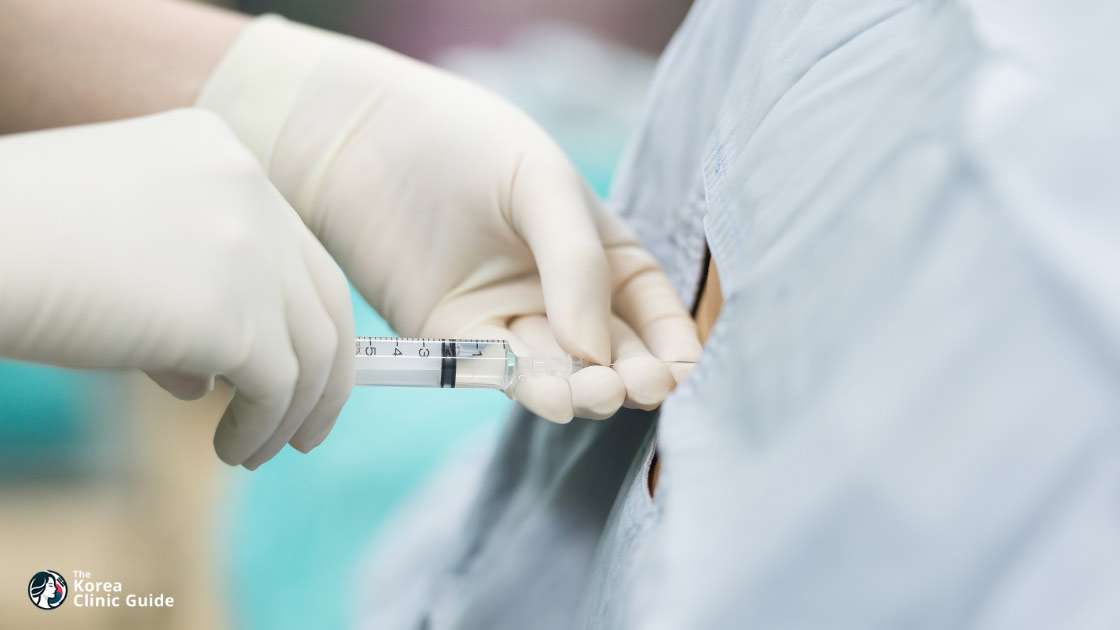
Table of contents
- Nerve Block Procedure at a Glance
- What Is a Nerve Block Procedure?
- Who Is a Good Candidate for a Nerve Block Procedure?
- What Are the Different Types of Nerve Block Procedure?
- Why Visit Korea for a Nerve Block Procedure?
- Key Information for International Patients
- Which Are the Best Clinics in Korea for Nerve Block Procedure?
- Nerve Block Procedure From Start to Finish
- Alternatives to a Nerve Block Procedure
- How Can I Prepare for a Nerve Block Procedure?
- Aftercare Advice
Considering treatment in Korea? Everything you need to know e.g. — how to avoid scams, visas, interpreters, recovery tips — in our Medical Tourism Master Guide. Plan with confidence in minutes, not weeks!
Last updated: September 2026
Nerve Block Procedure at a Glance
- What it does — A nerve block is an injection placed near a selected nerve, nerve root, plexus, or sympathetic pathway to temporarily interrupt pain signals, test a suspected pain source, or provide regional anesthesia for surgery.
- Results vary — Local-anesthetic effects usually last hours; if corticosteroid is used, benefit may be delayed and can range from no relief to days, weeks, months, or occasionally longer. The block does not correct structural problems such as fractures, disc herniation, or nerve compression.
- Outpatient recovery — Most uncomplicated single-shot blocks involve 15–30 minutes of monitored recovery and a quiet remainder of the day; numbness, heaviness, or weakness can last for hours, so driving and hazardous activity may be restricted.
- Travel planning — Allow 2–3 days in Korea for a straightforward outpatient diagnostic or therapeutic block, or about 5–7 days for deep spinal, cervical, sympathetic, celiac-plexus, catheter-based, neurolytic, or sedated procedures.
- Safety screening — Active infection at the injection site, unassessed bleeding risk or blood-thinner use, serious relevant allergies, or progressive neurologic symptoms may delay or rule out an elective block; blood thinners should never be stopped without clinician guidance.
- Korea care distinction — Korean hospital pain services can offer coordinated medications, nerve blocks, neurolytic procedures, and neuromodulation, but available evidence does not show that nerve-block outcomes in Korea are superior to other destinations.
What Is a Nerve Block Procedure?
A nerve block is an injection placed near a selected nerve pathway to temporarily interrupt pain signals or provide regional anesthesia. It can help identify a pain source, provide short-term pain relief, or support comfort during surgery, although it does not correct the underlying cause of pain. It is a minimally invasive procedure.
Who Is a Good Candidate for a Nerve Block Procedure?
- Targeted pain or a surgical need — Good candidates have pain that corresponds to a plausible nerve, nerve root, plexus, ganglion, or sympathetic pathway, or need regional anesthesia as part of surgery.
- A clear diagnostic question — A diagnostic block can help determine whether a suspected nerve pathway is contributing to pain when examination, imaging, and symptom pattern support that question.
- A defined treatment plan — Therapeutic blocks suit patients seeking temporary symptom control alongside treatment of the underlying condition, rehabilitation, medication adjustment, or another diagnosis-directed intervention.
- Prepared for a temporary and uncertain result — Relief can range from none to days, weeks, months, or occasionally longer; a nerve block does not itself correct a fracture, disc herniation, arthritis, tumor, or mechanical nerve compression.
A block is unsuitable when urgent assessment is needed for progressive weakness, new bowel or bladder dysfunction, fever or infection, fracture, vascular compromise, or suspected cancer-related neurologic compression. Do not proceed with an elective injection when there is infection at the needle-entry site, an unassessed bleeding disorder or antithrombotic regimen, a serious relevant drug or contrast allergy, inability to consent or cooperate safely, or unstable illness. Pregnancy, uncontrolled diabetes, immunosuppression, pre-existing neuropathy, and new neurologic symptoms require individualized assessment; corticosteroid can cause a short-term rise in blood glucose. There is no general age cutoff: the appropriate target, indication, ability to cooperate, and consent arrangements determine suitability.
What Are the Different Types of Nerve Block Procedure?
“Nerve block” describes several different injections. The exact target, purpose, medicines, imaging method, and risk profile must be confirmed before treatment.
- Diagnostic block — Usually uses a short-acting local anesthetic to test whether a selected nerve pathway is the pain source. Record pain and functional change during the expected anesthetic window.
- Therapeutic block — Uses local anesthetic with or without corticosteroid for temporary symptom control. Steroid use is target- and diagnosis-specific, not a routine addition to every block; multisociety guidance does not support steroid addition for several peripheral-block indications.
- Peripheral nerve or plexus block — Targets a nerve outside the spine, such as an occipital, intercostal, genicular, or limb nerve, or a larger nerve plexus. Temporary limb numbness, heaviness, or weakness is relevant when the arm or leg is treated.
- Spinal nerve-root or epidural-type injection — Reaches a nerve root or epidural space for selected spinal pain or regional analgesia. These deeper procedures require more specific bleeding-risk assessment than many superficial compressible blocks.
- Sympathetic or visceral plexus block — Targets autonomic pathways, such as a stellate ganglion or celiac plexus, for selected pain conditions. Effects and complications are target-specific; a stellate block can cause temporary hoarseness, swallowing difficulty, or eyelid droop.
- Perioperative single-shot or continuous catheter block — Provides regional analgesia around surgery. A continuous peripheral catheter infuses local anesthetic through a pump and requires catheter, mobility, emergency-contact, and travel planning.
- Neurolytic or ablative intervention — A distinctly different procedure that intentionally provides longer interruption of pain signaling in selected refractory cases. It requires a separate indication, consent discussion, and follow-up plan.
Why Visit Korea for a Nerve Block Procedure?
Korea has documented hospital-based acute and chronic pain services that include medications, nerve blocks, neurolytic procedures, and neuromodulation. This can support coordinated assessment when an injection is only one part of a pain-management plan. It does not establish that outcomes from nerve blocks in Korea are superior to those elsewhere.
- Documented multidisciplinary pain-service scope — Seoul National University Hospital’s anesthesiology pain service lists outpatient acute- and chronic-pain care, medicines, nerve blocks, nerve destruction procedures, and neuromodulation.
- Appropriate guidance is central, not optional marketing — Ultrasound, fluoroscopy/X-ray, CT, or another suitable modality can help define anatomy and needle position for the proposed target. Guidance recommendations recognize safety advantages for selected blocks, while also making clear that image guidance does not eliminate complications.
- Target-specific planning matters — A Korean proceduralist should confirm the diagnosis, laterality, injectates and doses, contrast use, sedation plan, and the target-specific evidence before accepting an overseas booking.
- Evidence limitation — No high-quality comparative evidence identified in the supplied research shows better nerve-block effectiveness, complication rates, or clinician expertise in Korea than in other countries. Choose on the basis of the proposed block and service capability, not a broad destination claim.
Key Information for International Patients
- Minimum stay — Allow 2–3 days for a straightforward outpatient diagnostic or therapeutic block: in-person review, procedure and observation, plus early reassessment if needed. Allow roughly 5–7 days for deep spinal, cervical, sympathetic, celiac-plexus, continuous-catheter, neurolytic, or sedated interventions, or when diagnostic work-up and medication changes are incomplete.
- Records before travel — Send a symptom history and pain diagram, imaging in DICOM format with reports, prior injection and operative notes, medication and allergy lists, relevant laboratory results, and anticoagulant prescriber contact details. The physician may conclude after examination that the requested block is not indicated.
- Flights — Do not book a same-day flight. There is no universal evidence-based post-block flying interval; clearance depends on sedation, target depth, walking and voiding status where relevant, and absence of evolving bleeding, allergic, toxic, respiratory, or neurologic symptoms.
- Transport and activity — Arrange a responsible adult and non-driving transport when sedation is used or when the block can impair balance, arm use, or leg strength. Keep the remainder of procedure day quiet after an uncomplicated outpatient injection.
- Repeat treatment — A diagnostic response does not guarantee durable benefit from a repeat injection, radiofrequency procedure, or other intervention. The need and timing for another procedure depend on the exact target, diagnosis, response, and steroid exposure.
- Remote follow-up — Obtain an English procedure record before departure stating the diagnosis, target and side, guidance modality, contrast, injectates and doses, sedation, immediate complications, discharge restrictions, and recommendations for the home clinician.
Travel note: Keep flights and physical sightseeing flexible until sensation, strength, balance, and—when relevant—urination have returned to normal and the treating clinician has cleared travel.
Which Are the Best Clinics in Korea for Nerve Block Procedure?
Listed below are some of the best clinics in Korea for nerve block procedure.
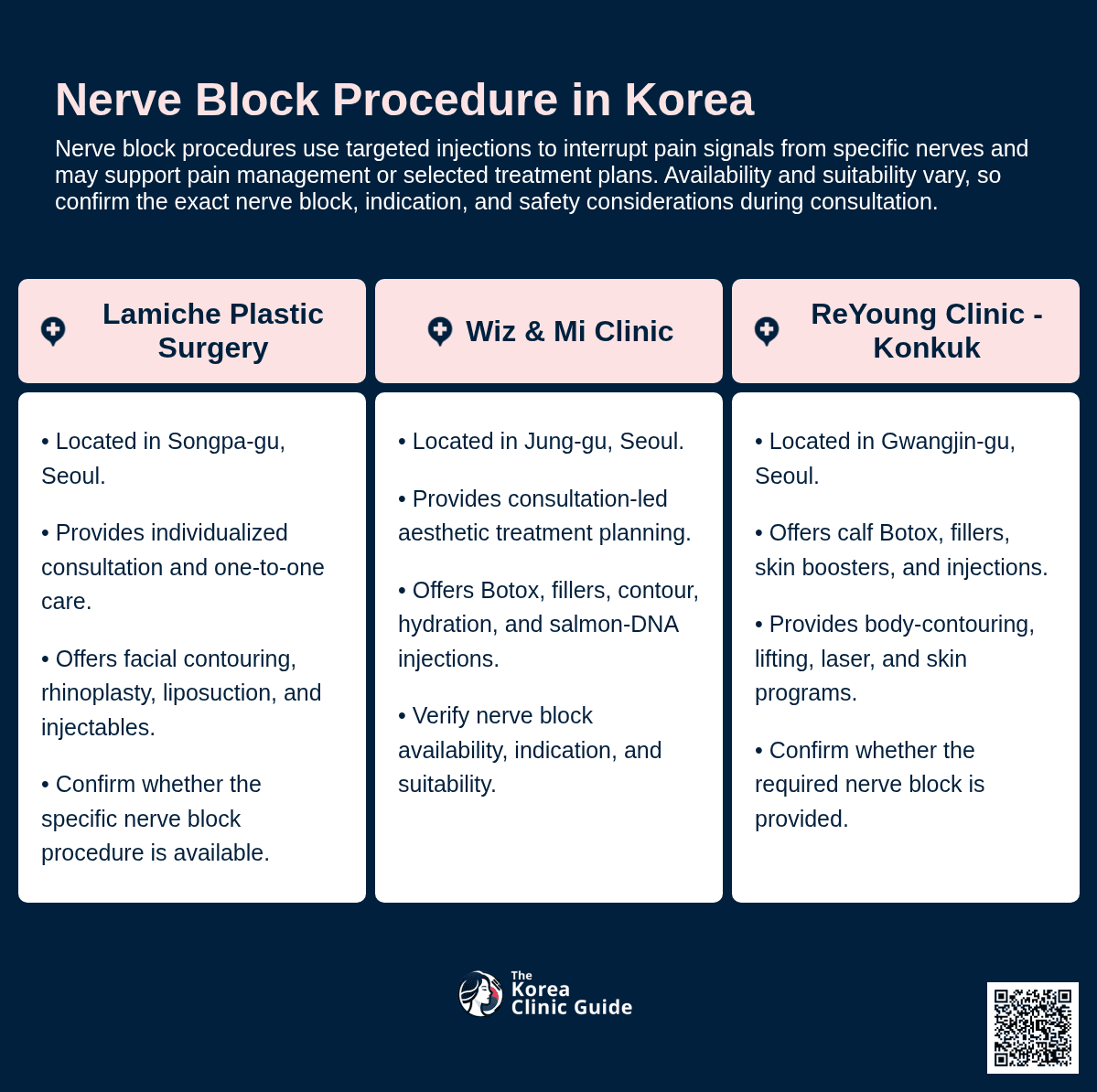
1. Lamiche Plastic Surgery
Lamiche Plastic Surgery may be worth considering if you want a clinic with individualized consultation, one-to-one care from consultation through post-treatment care, and a broad cosmetic-surgery focus; however, the available information does not specifically list nerve block procedures, so you should confirm whether your intended nerve block is offered and appropriate for you.
- URL: Lamiche Plastic Surgery Website
- Location: Songpa-gu, Seoul
- Care approach:
- One-to-one care is described from consultation through surgery and post-treatment care.
- The clinic describes post-care and safety systems alongside planning around your individual features and aesthetic goals.
- Available treatments:
- Facial-contouring surgery includes cheekbone reduction, square-jaw reduction, and V-line chin contouring.
- Services also include rhinoplasty, liposuction, fat grafting, facelift options, thread lifting, Ulthera, and injectable treatments.
2. Wiz & Mi Clinic
You may consider Wiz & Mi Clinic if you are seeking a consultation-led aesthetic clinic with injectable options such as Botox, fillers, contour injections, hydration injections, and salmon-DNA injections; the supplied information does not specifically confirm nerve block procedures, so you should verify availability, the intended indication, and treatment suitability during consultation.
- URL: Wiz & Mi Clinic Website
- Location: Jung-gu, Seoul
- Injectable options:
- Botox is offered for temporary reduction of wrinkles and fine lines through muscle relaxation.
- Filler treatments are available for volume, wrinkles, and facial contouring.
- Face contour, hydro, and salmon-DNA injections are listed among the non-surgical options.
- Consultation and services:
- Personalized counseling is offered to discuss your goals and treatment options.
- Additional listed services include liposuction, breast fat grafting and augmentation options, facial fat grafting, rhinoplasty, thread lifting, focused-ultrasound treatments, and laser-based skin programs.
3. ReYoung Clinic - Konkuk
You may consider ReYoung Clinic - Konkuk if you want to discuss an injection-based aesthetic plan alongside services such as calf Botox, fillers, skin boosters, and body-contouring treatments; the provided information does not specifically list nerve block procedures, so you should confirm whether the clinic provides the particular nerve block you need and whether it is suitable for you.
- URL: ReYoung Clinic - Konkuk Website
- Location: Gwangjin-gu, Seoul
- Injection and muscle-focused services:
- Calf Botox is listed for reducing calf-muscle size and may also address related discomfort.
- Fillers, skin boosters, and other injection therapies are offered for volume, texture, hydration, and specific aesthetic concerns.
- Additional aesthetic services:
- Body services include liposuction, fat grafting, radiofrequency-based tightening, and laser hair removal.
- Skin and rejuvenation options include ultrasound lifting, Aqua Peel, pigmentation laser treatment, CO2 laser resurfacing, and LED therapy.
Nerve Block Procedure From Start to Finish
- Remote inquiry and record review — Contact the pain service with the pain diagnosis or suspected target, symptom history, imaging, prior treatment records, medications, allergies, and anticoagulant details. Confirm whether English or virtual consultation is available and whether the team considers an in-person assessment necessary before accepting treatment.
- In-person assessment — The physician reviews the pain pattern, examination findings, imaging, neurologic baseline, treatment goals, and urgent warning signs. They identify the exact target and side and decide whether the block is diagnostic, therapeutic, or perioperative.
- Consent and safety planning — Confirm the injectates, local anesthetic dose, possible corticosteroid, contrast use, image guidance, expected numbness or weakness, sedation plan, risks, and post-procedure restrictions. Antithrombotic management is individualized according to the medicine, clotting risk, renal function, and whether the target is superficial, deep, neuraxial, or visceral.
- Arrival and preparation — Staff verify identity, procedure site, allergies, recent illness, medication changes, and transport arrangements. Change into appropriate clothing, position for the target, and receive monitoring; sedation requires clinic-directed fasting and a responsible escort.
- Image-guided injection — The clinician cleans the skin, uses local skin anesthetic when appropriate, and advances a needle under ultrasound, fluoroscopy/X-ray, CT, or another suitable method. Medication is injected incrementally near the selected nerve, root, plexus, ganglion, or sympathetic network.
- Observation and discharge — Most uncomplicated outpatient blocks involve about 15–30 minutes of monitored recovery, with longer observation after sedation, deep procedures, significant motor effect, or concerning symptoms. Before discharge, staff assess symptoms, mobility and other target-relevant functions, then provide written restrictions.
- Early recovery — Local-anesthetic numbness, heaviness, or weakness can last hours. Injection-site soreness or bruising can occur. Steroid-containing injections can cause an early pain flare before anti-inflammatory benefit is felt.
- Remote follow-up and home care — Report diagnostic pain scores and function during the expected anesthetic period, attend the arranged remote review, and share the English procedure record with the home clinician. Seek urgent evaluation for severe or progressive neurologic, respiratory, allergic, or bleeding symptoms.
Alternatives to a Nerve Block Procedure
The right alternative depends on the cause of pain. Non-surgical approaches can avoid injection-related bleeding, infection, and temporary numbness but may not answer a diagnostic question or provide regional anesthesia; surgery addresses selected structural causes but has a substantially greater recovery burden.
Diagnosis-Directed Medical or Surgical Care
- Structural disease treatment — Fracture, tumor, infection, severe compression, vascular problems, and progressive neurologic deficit need urgent diagnosis-directed care rather than a pain block that could delay treatment.
- Rehabilitation and medicines — Physical or occupational therapy, non-opioid analgesics, neuropathic-pain medicines, topical therapy, sleep support, and pain psychology are selected according to diagnosis and function.
Radiofrequency or Neuromodulation
- Longer-term interventional options — Radiofrequency procedures or neuromodulation can be considered for selected refractory pain conditions after appropriate diagnostic confirmation.
- Tradeoff — These interventions are not interchangeable with a one-time injection and require separate evidence, candidacy review, procedural planning, and follow-up.
Acupuncture
- Adjunctive approach — Some patients consider acupuncture alongside conventional pain care for symptom management.
- Limitation — It does not replace urgent investigation or treatment for neurologic deficit, infection, cancer, fracture, or structural compression.
Korean Medicine
- Broader traditional-care option — Korean medicine can be an adjunctive preference for some patients seeking non-surgical symptom support.
- Travel consideration — Discuss all herbal products and treatments with the pain physician, particularly when taking anticoagulants, diabetes medicines, or sedatives.
How Can I Prepare for a Nerve Block Procedure?
- Send complete records early — Provide imaging in DICOM format and reports, prior procedure notes, a pain diagram, medication and allergy lists, relevant laboratory results, and a concise summary from the home clinician.
- Disclose medicines and supplements — Report aspirin, clopidogrel, warfarin, apixaban, rivaroxaban, dabigatran, enoxaparin, other antithrombotics, diabetes medicines, pain medicines, herbal products, and supplements. Do not independently stop blood thinners; antithrombotic guidance requires risk assessment specific to the drug and target.
- Report allergies and health changes — Tell the clinic about prior reactions to local anesthetics, corticosteroids, contrast, antiseptics, adhesives, or sedatives. Report fever, systemic illness, skin rash or breakdown near the entry site, pregnancy, new weakness or numbness, and recent surgery or injections.
- Follow fasting instructions exactly — Fasting is generally unnecessary for a local-anesthetic-only injection, but sedation changes the plan. When sedation is planned, follow the facility’s instructions; Cleveland Clinic notes that a 6–8-hour fast may be required.
- Arrange safe transport and accommodation — Book a responsible adult and non-driving transport after sedation or any block likely to affect leg strength, balance, or arm use. Stay close enough to return promptly if symptoms develop.
- Keep travel flexible — Avoid same-day arrival-and-treatment and same-day flying. Build in the stated 2–3 days for a straightforward block and longer planning for deep, sedated, or catheter-based interventions.
- Avoid preventable disruptions — Do not attend with an active infection or damaged skin at the planned injection area. Avoid alcohol when the clinic instructs, especially around sedation; smoking cessation and sun precautions are not standard requirements for every nerve block unless another planned treatment makes them relevant.
Travel note: Bring original medication containers and enough supply for the full trip. Do not make medication changes because of travel without the prescribing clinician and proceduralist agreeing on the plan.
Confirm the treating doctor’s clinic-specific instructions, which take precedence over general guidance.
Aftercare Advice
Protect the treated area and any numb limb until normal sensation, strength, balance, and coordination have returned.
- Rest and transport — Plan a quiet remainder of the day after an uncomplicated single-shot block. Do not drive, cycle, operate machinery, drink alcohol after sedation, or make important decisions until the clinic’s restrictions have ended.
- Activity and fall prevention — Avoid strenuous exercise and hazardous activity for the period directed by the proceduralist. Guard a numb arm or leg from heat, pressure, cuts, falls, and overuse; use the arranged escort after sedation or a lower-limb block.
- Injection-site care — Keep the site clean and follow written instructions on bathing, dressings, and medicines. Brief soreness or bruising can occur; contact the clinic for increasing redness, warmth, drainage, fever, or rapidly expanding swelling.
- Pain and glucose monitoring — A steroid-containing injection can cause an early pain flare and temporary blood-glucose rise. People with diabetes should use the clinician’s monitoring plan and contact the care team for concerning readings or symptoms.
- Record the response — For a diagnostic block, document pain scores and functional changes during the expected anesthetic window. Temporary relief is useful information but does not prove that a later injection or ablation will provide lasting benefit.
- Emergency symptoms — Seek urgent assessment for trouble breathing; facial, lip, or tongue swelling; fainting; seizure; palpitations; confusion; severe or worsening weakness; new bowel or bladder symptoms; severe progressive numbness; or rapidly enlarging bruising. Contact the procedural team promptly for unexpected burning pain, tingling, weakness, or infection signs.
- Results and follow-up — Local-anesthetic effects last hours. When corticosteroid is used, anti-inflammatory benefit can be delayed, and the duration of relief varies from no benefit to days, weeks, months, or occasionally longer depending on the target and condition.
Follow the treating doctor’s instructions over general advice and contact the clinic promptly when anything appears wrong.
Frequently Asked Questions
Related Blogs
Discover What You'll Spend on an Arm Lift in Korea vs. Other Countries: A Comprehensive Cost Analysis
Discover the affordability and advanced techniques of arm lift surgery in Korea, a leading destination for cosmetic procedures. Explore the factors influencing the cost and what to expect during your transformative journey to more toned and youthful arms.
Updated: Sep 25, 2026
Explore Global Costs: Why a Thigh Lift in Korea Offers Unique Value Compared to the USA, Mexico, and More
Discover the cost of a thigh lift in Korea, where high-quality surgical procedures are offered at competitive prices. Learn why many are choosing Korea for affordable and effective cosmetic solutions.
Updated: Sep 25, 2026
Discover the Global Pricing Landscape: Knee Liposuction Costs in Korea vs. Major Medical Tourism Destinations
Discover the latest insights on knee liposuction in Korea, exploring the cost-effective options and high-quality services available. Learn how Korea has become a top destination for this cosmetic procedure, combining advanced technology with competitive pricing.
Updated: Sep 25, 2026
Exploring Buccal Fat Removal Costs: Korea vs Global Destinations
Discover the latest trends and costs of buccal fat removal in Korea, a popular cosmetic procedure for achieving a leaner facial appearance. Learn about the factors influencing the price and what to expect when considering this transformative treatment.
Updated: Sep 25, 2026
Clinics offering Nerve Block Procedure

Volume Plastic Surgery: Premier Cosmetic Procedures in Korea for Natural-Looking Beauty Enhancement
Hakdong

ReYoung Clinic - Konkuk: Comprehensive Beauty Procedures in Korea for Body Contouring, Anti-Aging, and More
Konkuk University

Lamiche Plastic Surgery in Korea: Enhancing Natural Beauty with Advanced Cosmetic Procedures and Personalized Care
Jamsil

StarBe Plastic Surgery: Leading Korean Clinic for Customized Beauty Enhancements and Patient Safety
Seomyeon