
Medical Tourism Blog
Clitoroplasty with Laser in Korea: Methods, Recovery, Risks and Travel Planning
Table of contents
- Clitoroplasty with Laser at a Glance
- What Is Laser Clitoroplasty?
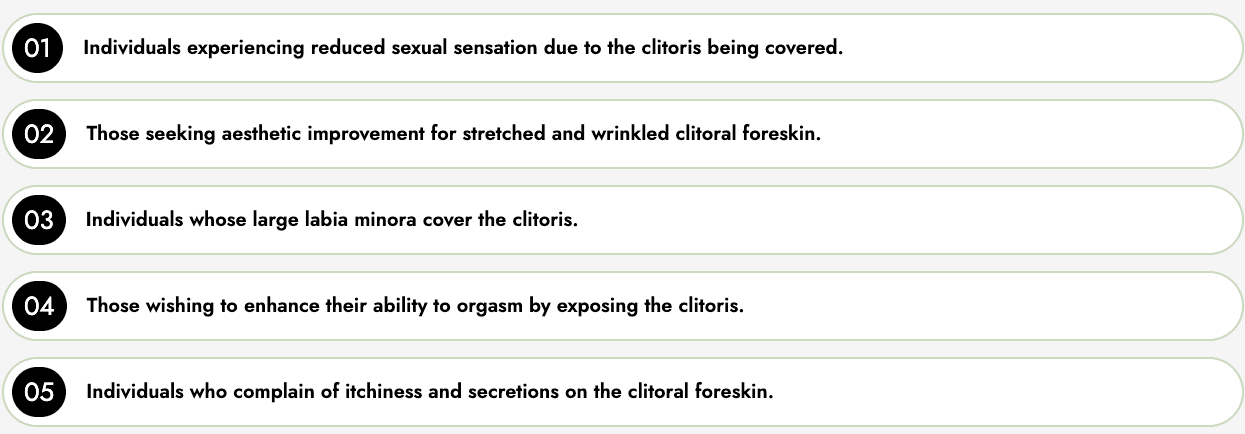
- Who Is a Good Candidate for Laser Clitoroplasty?
- How Is Laser Clitoroplasty Performed?
- Why Visit Korea for Laser Clitoroplasty?
- Key Information for International Patients
- Which Are the Best Clinics in Korea for Clitoroplasty With Laser?
- Clitoroplasty with Laser From Start to Finish
- Alternatives to Laser Clitoroplasty
- How Can I Prepare for Laser Clitoroplasty?
- Aftercare Advice
Considering treatment in Korea? Everything you need to know e.g. — how to avoid scams, visas, interpreters, recovery tips — in our Medical Tourism Master Guide. Plan with confidence in minutes, not weeks!
Last updated: September 2026
Clitoroplasty with Laser at a Glance
- What it is — Laser clitoroplasty is not one standardized operation; a laser may assist with cutting and coagulation during clitoral reduction, recession, repositioning, or reconstruction.
- Confirm the target tissue — Get a written plan confirming whether surgery affects only clitoral hood skin or directly alters the clitoris, glans, erectile tissue, or scar tissue; these procedures have materially different risks.
- Best candidates — Appropriate candidates are adults with a defined medical, reconstructive, or functional concern—such as clitoromegaly or scar-related distortion—who have had an in-person diagnostic examination and can give unpressured informed consent.
- Recovery timeline — Initial wound healing commonly takes 1–2 weeks; swelling and bruising often improve by about 6 weeks but can last up to 3 months, while scar and sensory changes may take longer to settle.
- Activity restrictions — Avoid sexual activity or genital stimulation, tampons and other vaginal insertion, cycling, swimming, baths, hot tubs, sauna, and strenuous exercise until cleared—commonly at least 6 weeks.
- Korea travel planning — International patients should plan to remain in Korea for at least 10–14 days after an uncomplicated outpatient procedure for assessment, surgery, and an early wound check; fly only with the surgeon’s clearance.
- Key limitation — No high-quality evidence shows laser-assisted direct clitoral surgery is safer, less painful, faster-healing, less scarring, or better for sensation or orgasm than scalpel or electrosurgical techniques; Korea has no procedure-specific national outcomes registry.
What Is Laser Clitoroplasty?
Laser clitoroplasty is a term for clitoral surgery in which a laser may be used to cut tissue and control bleeding. It addresses defined anatomical, reconstructive, or functional concerns, such as clitoral enlargement or scar-related distortion, while aiming to preserve comfort and sexual function. It is a surgical procedure, not a non-surgical laser treatment.
Who Is a Good Candidate for Laser Clitoroplasty?
- Adults with a defined indication — Suitable candidates have a stable, specific concern such as clinically significant clitoromegaly, scar-related distortion after trauma or female genital mutilation/cutting (FGM/C), or a reconstructive or gender-affirming indication.
- Patients seeking an anatomical diagnosis first — An in-person examination should establish whether the concern involves clitoral tissue, clitoral hood skin, labia, scar adhesions, infection, vulvar skin disease, pelvic-floor pain, or an endocrine condition.
- People able to make an informed, unpressured decision — Direct surgery on the clitoris can change sensation, arousal, orgasm, pain, and appearance. The exact operation, tissue involved, and realistic risks need to be clear before consent.
- Patients medically fit for surgery — Controlled medical conditions, a coordinated anesthesia plan, and the ability to stop nicotine under the surgeon’s protocol are important for healing.
Laser clitoroplasty is not appropriate when the request is chiefly driven by a partner, pornography, social-media comparison, or distress about normal anatomical variation; professional guidance on elective genital cosmetic surgery calls for assessment of sexual concerns and relevant mental-health conditions. Defer elective surgery during pregnancy, with active vulvar, vaginal, urinary, or sexually transmitted infection, unexplained bleeding or lesions, or unmanaged pelvic/vulvar pain. Uncontrolled diabetes, bleeding disorders, significant heart or lung disease, poorly controlled hypertension, and anticoagulant or antiplatelet treatment require clearance and an individualized plan. Clitoromegaly associated with congenital adrenal hyperplasia (CAH) or another endocrine disorder needs diagnostic and endocrine care first; surgery, if selected, should involve an experienced multidisciplinary team. Irreversible direct clitoral surgery in minors requires an individualized medical indication and specialist assessment, as long-term adult sexual-function outcomes remain uncertain.
How Is Laser Clitoroplasty Performed?
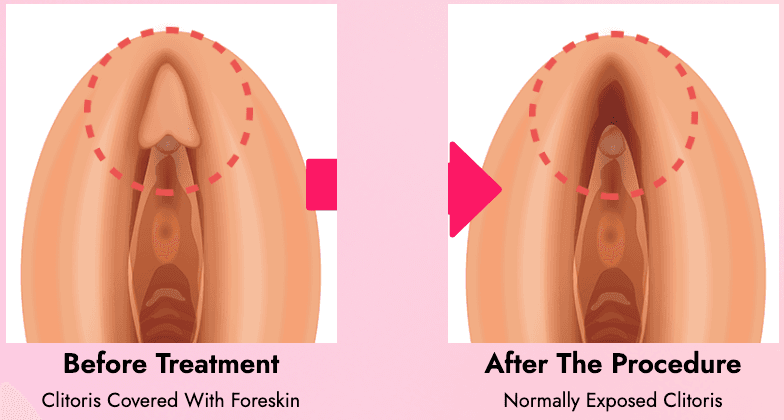
“Laser clitoroplasty” describes an instrument choice, not one standardized operation. Ask for the exact operative name, a written description or diagram of the tissue to be altered, the laser type, and why it is being used in this case.
- Laser-assisted incision and hemostasis — A laser can cut tissue and coagulate small blood vessels during surgery. It does not make direct clitoral surgery scar-free, painless, or proven to heal faster, and it does not replace meticulous protection of nerves and blood supply.
- Neurovascular-sparing reduction clitoroplasty — Used in selected clitoromegaly cases, this approach reduces erectile tissue while attempting to preserve the glans and dorsal neurovascular bundle. Ventral approaches are intended to limit dissection near dorsal neurovascular structures. Evidence remains limited to small series; a 2023 adult report included three patients rather than a comparative trial.
- Clitoral recession or repositioning — The surgeon recesses or repositions clitoral tissue instead of, or alongside, reduction. This changes deeper anatomy and has a different risk profile from a skin-only procedure.
- Reconstructive clitoroplasty — Reconstruction can address scar tissue or altered anatomy after FGM/C, trauma, or prior surgery. A systematic review of reconstruction studies found reported improvements in pleasure, orgasm, and self-image, but also high risk of bias, loss to follow-up, and limited validated outcome measures.
- Gender-affirming clitoroplasty — Creation of a neoclitoris is part of some feminizing genital operations and is not equivalent to cosmetic clitoral reduction. Outcomes from neoclitoral construction cannot establish outcomes for laser-assisted direct clitoral surgery.
- Clitoral hood reduction — This removes or repositions preputial skin around the clitoris rather than altering the clitoral organ itself. See clitoral hood reduction for this distinct procedure.
Why Visit Korea for Laser Clitoroplasty?
Korea has an established framework for receiving international patients, but it does not have a published national outcome registry for laser clitoroplasty. Laser marketing and international-patient registration do not demonstrate better sensory, sexual-function, scarring, or revision outcomes. Select a surgeon on relevant direct clitoral-surgery experience and a documented safety pathway, not on the word “laser.”
- International-patient registration — Confirm that the actual institution is listed through Korea’s registered medical-institution system for foreign patients, then verify the named surgeon’s specialty, credentials, and role in the operation.
- Need for procedure-specific disclosure — Because “laser clitoroplasty” is not standardized, Korea is a setting where written English documentation is especially important: obtain the operative plan, anesthesia plan, laser/device information, expected follow-up, and emergency referral pathway before travel.
- Evidence limitation — No procedure-specific South Korean complication, revision, or validated patient-reported sexual-function dataset was identified. Nor were high-quality studies found showing laser-assisted clitoroplasty is superior to scalpel or electrosurgical approaches for sensation, orgasm, pain, scars, healing, or revision risk.
- Appropriate specialist matching — The relevant expertise differs by indication: gynecologic or reconstructive surgery for acquired anatomy or scarring, endocrine and reconstructive care for CAH-related clitoromegaly, and a specialized gender-affirming program for neoclitoral construction.
Key Information for International Patients
- Minimum stay — Plan at least 10–14 days in Korea after an uncomplicated outpatient operation. This allows an in-person assessment, surgery, an early wound review, and treatment of early bleeding, infection, urinary, or wound-healing problems before a long-haul flight; it is a cautious planning interval, not a laser-specific fit-to-fly rule.
- Arrival and preoperative timing — Arrive early enough for examination and required testing. Do not schedule surgery immediately after a long-haul flight.
- Flight clearance — Fly only after the operating surgeon confirms that the wound is stable and travel is appropriate. General anesthesia, combined surgery, complications, and individual venous-thromboembolism risk can require a longer stay.
- Long-haul clot planning — Discuss recent surgery, prolonged sitting, previous blood clots, obesity, cancer, pregnancy or postpartum status, and estrogen-containing medicines or hormone therapy. The CDC notes that long-distance travel and other risk factors can combine to raise clot risk.
- Escort and accommodation — Arrange lodging close to the facility, private transport after anesthesia, and a responsible adult to stay for at least the first 24 hours after sedation or general anesthesia.
- Itinerary restrictions — Treat recovery as recovery, not sightseeing. Avoid strenuous walking, cycling, swimming, sauna, hot tubs, alcohol, and sexual activity when these conflict with postoperative instructions.
- Remote follow-up — Before departure, secure an English operative report, discharge summary, medication list, pathology report if tissue was submitted, laser/device details, wound-care instructions, emergency contact details, and a video or photo follow-up schedule.
Travel note: A long-haul return flight should remain flexible. Rebooking costs are safer to plan for than leaving Korea with increasing pain, bleeding, swelling, inability to urinate, or a wound problem.
Which Are the Best Clinics in Korea for Clitoroplasty With Laser?
Listed below are some of the best clinics in Korea for clitoroplasty with laser.
1. SH Clinic
For clitoroplasty with laser, you may consider SH Clinic if you value care within a women’s-health setting led by an experienced, board-certified gynecologist. The clinic offers gynecologic surgery and vaginal rejuvenation options, including labiaplasty and laser-based vaginal HIFU, so you can discuss whether a laser-based clitoral procedure is appropriate for your individual concerns and goals.
- URL: SH Clinic Website
- Location: Seocho-gu, Seoul
- Clinical care:
- Surgeries and procedures are performed directly by the clinic’s board-certified gynecologist, who has received a commendation from the Minister of Health and Welfare.
- The clinic focuses on women’s health and gynecology, with an emphasis on a comfortable care setting for women.
- Related gynecologic options:
- Labiaplasty is available for reshaping elongated or asymmetrical labia minora.
- Vaginal HIFU uses focused ultrasound for vaginal tissue remodeling; it is distinct from a clitoral procedure.
- Other listed services include vaginal fillers, stem-cell injections, vaginal tightening, implant surgery, urinary-incontinence care, and cervical and ovarian cancer screening.
2. Okay Plastic Surgery Clinic
You may consider Okay Plastic Surgery Clinic for an individualized aesthetic consultation, particularly if you want to discuss your goals with a team that includes a female plastic surgeon with extensive experience. Its provided service information does not specifically list clitoroplasty or laser clitoral treatment, so you should clarify whether it offers the exact procedure you are seeking and how it would be planned.
- URL: Okay Plastic Surgery Clinic Website
- Location: Gangnam-gu, Seoul
- Consultation considerations:
- The clinic describes an individualized approach intended to tailor treatment to your needs and goals.
- A female plastic surgeon is included among the clinic’s specialized professionals.
- Laser lifting is listed for facial skin tightening, but this does not establish use of laser technology for clitoroplasty.
- Other listed services:
- Aesthetic services include body contouring, breast surgery, facial lifting, eye surgery, rhinoplasty, scar and keloid care, and medical skincare.
- The supplied information does not identify a gynecology service or a specific clitoroplasty technique.
3. Gangnam Podo Woman Clinic
For clitoroplasty with laser, Gangnam Podo Woman Clinic is a relevant option to explore because it specifically lists laser clitoris rejuvenation within its vulvoplasty services. You can discuss whether this laser-focused treatment addresses your goals for clitoral appearance or sensitivity, alongside the clinic’s broader gynecologic and intimate-health consultation services.
- URL: Gangnam Podo Woman Clinic Website
- Location: Gangnam-gu, Seoul
- Laser-focused intimate care:
- Laser clitoris rejuvenation is listed as a vulvoplasty service intended to address clitoral appearance or sensitivity.
- Laser Sculpture Labioplasty is also listed for reshaping or resizing the labia minora and/or labia majora.
- Laser vaginal tightening and several laser vaginal rejuvenation options are available.
- Related services:
- Listed vaginal-rejuvenation options include filler vaginal injection, stem-cell vaginal rejuvenation, G-spot augmentation, and M-sling implant rejuvenation.
- Anti-incontinence laser rejuvenation is listed for urinary-control concerns.
- The medical team is described as including gynecologists, dermatologists, and plastic surgeons, with customized consultations for gynecologic and beauty-health needs.
Clitoroplasty with Laser From Start to Finish
- Remote inquiry and consultation — Send the clinic a concise medical history, prior operative reports where relevant, medication and allergy list, and a description of the functional or anatomical concern. Request an English or interpreter-supported video consultation, but do not treat remote photographs as a substitute for an in-person genital examination.
- Written procedure definition — Before booking, obtain confirmation of whether surgery is skin-only hood reduction or direct clitoral surgery. Ask which tissue will be removed, recessed, repositioned, or reconstructed; whether the glans or corporal tissue will be involved; and what nerve- and blood-supply preservation steps are planned.
- In-person assessment and testing — The surgeon examines the anatomy and screens for infection, skin conditions, scar adhesions, pain disorders, endocrine causes of clitoromegaly, and medical or anesthesia risks. Pregnancy testing, laboratory work, or other evaluation depends on history and the planned anesthesia.
- Anesthesia planning and consent — Depending on extent, anesthesia can be local with or without sedation, regional, or general. Review bleeding, infection, wound separation, scarring, adhesions, altered sensation, hypersensitivity, chronic pain, orgasmic change, urinary symptoms, dissatisfaction, and revision risk before signing consent.
- Operation — The surgeon performs the defined reduction, recession, repositioning, or reconstruction. A laser, if used, serves for incision and/or coagulation; its use does not establish a particular operation or outcome advantage. Procedure length is not standardized and should be supplied by the operating team for the planned technique.
- Recovery and discharge — Direct clitoroplasty is often outpatient surgery. Expect tenderness, bruising, swelling, and discomfort. After sedation or general anesthesia, leave with a responsible adult and follow the prescribed plan for pain control, antibiotics if prescribed, cleansing, urination, and wound care.
- Early local review — Attend the scheduled wound check before leaving Korea. Report bleeding, worsening swelling, fever, discharge, increasing pain, difficulty urinating, or wound separation promptly.
- Overseas follow-up — Continue photo or video review as arranged and retain all English medical documents. Obtain local medical care urgently for serious symptoms while also notifying the Korean operating team.
Alternatives to Laser Clitoroplasty
The key tradeoff is between a less extensive skin-only operation and direct surgery on highly innervated clitoral tissue. For a functional, endocrine, pain-related, or scar-related concern, the best alternative depends on the underlying diagnosis rather than on a preference for laser technology.
Clitoral Hood Reduction
For excess or asymmetrical hood skin with no need to alter clitoral tissue, clitoral hood reduction is the more anatomically limited surgical option.
- Primary difference — It targets preputial skin around the clitoris rather than the glans, erectile tissue, or clitoral position.
- Tradeoff — It still carries surgical risks, but it is not interchangeable with direct reduction, recession, or reconstruction.
Conventional or Revision Clitoroplasty
A non-laser approach can use scalpel or electrosurgical instruments for the same broad surgical goals, while clitoroplasty and revision clitoroplasty address distinct primary and corrective scenarios.
- Primary difference — The technique and extent of tissue alteration matter more than the cutting instrument.
- Evidence limitation — There is no high-quality comparative evidence that laser use improves direct clitoral-surgery outcomes.
Labiaplasty
Labiaplasty addresses labia minora or majora anatomy, not clitoral tissue.
- Suitable goal — Consider it only when the concern is labial size, shape, rubbing, or asymmetry confirmed on examination.
- Tradeoff — It will not treat clitoromegaly, clitoral scar adhesions, or a direct clitoral anatomical concern.
Gender-Affirming Genital Surgery
For gender incongruence, MTF surgery can include discussion of neoclitoral construction within a broader genital reconstruction plan.
- Primary difference — Neoclitoral construction has different anatomy, goals, accompanying procedures, and risks from cosmetic clitoral reduction.
- Planning need — Use a specialized gender-affirming surgical program rather than treating “laser clitoroplasty” as a stand-alone substitute.
How Can I Prepare for Laser Clitoroplasty?
- Written surgical plan — Confirm the exact operation, target tissue, laser type and role, anesthesia, expected local follow-up, surgeon’s complication and revision experience for the same procedure, and emergency contact route before purchasing flights.
- Medical disclosure — Provide all medical conditions, allergies, prior genital surgery, endocrine records, clotting history, anesthesia problems, urinary symptoms, chronic pelvic pain, trauma history, and current medicines and supplements.
- Blood-thinning medicines and supplements — Do not independently stop anticoagulants, antiplatelet drugs, hormone therapy, or prescribed medication. The surgeon, anesthesiologist, and prescribing clinician must set the plan. Ask specifically about aspirin, NSAIDs, vitamin E, fish oil, herbal products, and other supplements that can affect bleeding.
- Nicotine — Stop cigarettes, vaping, nicotine pouches, and any nicotine product according to the surgeon’s protocol; many surgical protocols require at least 4 weeks of abstinence before surgery and throughout recovery because nicotine impairs wound healing.
- Infection and pregnancy screening — Report discharge, sores, urinary burning, fever, new bleeding, possible sexually transmitted infection exposure, or possible pregnancy before travel. Elective surgery should be deferred until active infection or unexplained symptoms have been assessed and treated.
- Fasting and hygiene — Follow the clinic’s fasting, showering, hair-removal, and genital-area preparation instructions exactly. Do not apply unapproved creams, powders, fragrances, or topical products to the vulva before surgery.
- Alcohol and sun — Avoid alcohol as instructed before anesthesia and during early recovery, especially while taking sedating pain medicine. Avoid treatment-area irritation rather than attempting aggressive grooming or cosmetic treatments before surgery.
- Travel logistics — Book flexible flights, stay near the facility, arrange a companion and private transport after anesthesia, and pack loose breathable underwear and clothing. Keep the first 10–14 days free of demanding tours.
Travel note: Bring printed and digital copies of prescriptions and medical records, plus enough time and funds to extend the stay if the surgeon does not clear travel as planned.
Confirm clinic-specific requirements with the treating surgeon and anesthesiology team; their individualized instructions take precedence over general guidance.
Aftercare Advice
Protect the healing vulvar tissue from pressure, friction, heat, moisture, and sexual contact until the operating surgeon documents adequate healing.
- Wound care and hygiene — Take prescribed medicines exactly as directed and follow the clinic’s instructions for cleansing, topical treatment, pads, and urination. Do not place ice directly on vulvar tissue; use a wrapped cold pack over underwear only if the surgeon permits it.
- Clothing and activity — Wear loose, breathable clothing and minimize rubbing and prolonged pressure. Avoid heavy lifting, vigorous exercise, cycling, horseback riding, swimming, baths, hot tubs, and sauna until cleared.
- No insertion or stimulation — Avoid penetrative sex, masturbation or direct genital stimulation, tampons, and any vaginal insertion until the surgeon confirms healing. This is commonly at least 6 weeks and can be longer after extensive reduction or reconstruction.
- Recovery timeline — Initial wound recovery commonly takes about 1–2 weeks. Swelling and bruising often improve substantially by around 6 weeks but can persist for up to 3 months; scar maturation and sensory adaptation can take longer. A small adult neurovascular-sparing series reported transient partial sensory loss in one patient that resolved by month 3, which does not predict an individual outcome.
- Urgent warning signs — Contact the operating team urgently or seek emergency care for fever of 38°C/100.4°F or higher, chills, rapidly increasing pain, expanding swelling, heavy or persistent bleeding, pus or foul-smelling discharge, spreading redness, wound opening, inability to urinate, fainting, chest pain, shortness of breath, or new one-sided leg pain or swelling.
- Follow-up and final assessment — Attend scheduled wound checks and remote reviews. Do not plan revision as a routine “session”; consider it only after adequate healing and assessment of a defined problem such as adhesion, persistent scar pain, asymmetry, excess tissue, or functional difficulty.
Follow the treating doctor’s instructions over general timelines, and contact the clinic promptly when healing appears abnormal or symptoms worsen.
Frequently Asked Questions
Related Blogs
G-spot Filler in Korea: Evidence, Safety, Recovery, and Travel Planning
G-spot filler involves nonstandardized anterior vaginal-wall injections, most often temporary hyaluronic acid, with uncertain sexual-function benefits and potential risks. International patients should plan 2–3 days in Korea for assessment and review, obtain treatment records, and arrange follow-up care.
Updated: Sep 28, 2026
PRP Vaginal Rejuvenation in Korea: Evidence, Procedure Steps, Recovery and Travel Planning
PRP vaginal rejuvenation uses a patient’s processed blood plasma for targeted vaginal, vulvar, clitoral, or periurethral injections after pelvic-health assessment, but protocols and evidence of benefit are not standardized. The article covers candidate screening, Korea travel planning, preparation, recovery, warning signs, follow-up, and diagnosis-specific alternatives for dryness, pain, incontine
Updated: Sep 28, 2026
G-spot Amplification in Korea: Evidence, Safety, Recovery and Travel Planning
G-spot amplification involves injecting filler into a patient-identified area of the anterior vaginal wall near the urethra, but no standardized target or proven sexual-function benefit exists. The article covers candidacy, product and clinic verification in Korea, travel planning, aftercare, warning signs, and alternatives such as sexual-health evaluation and pelvic-floor therapy.
Updated: Sep 28, 2026
Viveve Laser in Korea: RF Treatment, Safety, Evidence and Travel Planning
Viveve is a non-incisional, cryogen-cooled monopolar RF treatment—not a laser—used in selected patients after gynecologic assessment, with limited evidence for vaginal-laxity symptoms and no established cure for incontinence. International patients considering treatment in Korea can review candidate criteria, MFDS device verification, outpatient recovery, 10-day intercourse and tampon restrictions
Updated: Sep 22, 2026
Clinics offering Clitoroplasty with Laser

SH Clinic: Comprehensive Women's, Men's & Couples' Health Services in Korea
Sinsa

Okay Plastic Surgery Clinic in Korea: Comprehensive Aesthetic Procedures with Sincerity and Care
Cheongdam

Apgujeong Richmoa Clinic: Premier Cosmetic Treatments and Surgical Procedures in Korea
Apgujeong

Gangnam Podo Woman Clinic - Korea's Premier Destination for Comprehensive Women's Health & Beauty Services, including Specialized Vaginoplasty and Vulvoplasty Procedures
Gangnam Station