
Medical Tourism Blog
Cheekbone Reduction in Korea: Methods, Recovery, Risks, and Travel Planning
Table of contents
- Cheekbone Reduction at a Glance
- What Is Cheekbone Reduction?
- Who Is a Good Candidate for Cheekbone Reduction?
- How Is Cheekbone Reduction Performed?
- Why Visit Korea for Cheekbone Reduction?
- Key Information for International Patients
- Which Are the Best Clinics in Korea for Cheekbone Reduction Surgery In?
- How Much Does Cheekbone Reduction Cost in Korea?
- Cheekbone Reduction From Start to Finish
- Alternatives to Cheekbone Reduction
- How Can I Prepare for Cheekbone Reduction?
- Aftercare Advice
Considering treatment in Korea? Everything you need to know e.g. — how to avoid scams, visas, interpreters, recovery tips — in our Medical Tourism Master Guide. Plan with confidence in minutes, not weeks!
Last updated: September 2026
Cheekbone Reduction at a Glance
- What it does — Cheekbone reduction is permanent facial bone surgery that narrows or repositions a prominent zygomatic body, lateral arch, or both; it does not remove cheek fat or treat lower-jaw width.
- Korea cost — Typical quoted pricing is ₩5,500,000–₩18,000,000 (about US$4,100–$13,300), with cost influenced by osteotomy extent, fixation plates and screws, imaging, anesthesia, and admission needs.
- Best candidates — Suitable candidates are medically fit adults with completed facial growth whose width is primarily bony and who accept permanent change, residual asymmetry, in-person CT-based planning, and general anesthesia.
- Recovery timeline — The first 1–2 weeks commonly involve marked swelling, bruising, numbness, tightness, and limited chewing; public-facing activities often feel more comfortable after 2–4 weeks, while contour assessment is more reliable at 3–6 months.
- Korea stay and flights — International patients should plan to remain in Korea about 10–14 days for local postoperative review and keep return flights flexible; facial-procedure flight guidance is 7–10 days, but surgeon clearance determines timing after this invasive bone operation.
- Key limitation and risks — Results are irreversible and cannot guarantee symmetry or a specific face shape; possible complications include sensory changes, asymmetry, cheek soft-tissue descent, mouth-opening restriction, bleeding, infection, bone-healing problems, and revision surgery.
- Korea-specific planning — Korea has an official registration system for institutions treating international patients and substantial regional malarplasty experience, but neither establishes superior outcomes; verify registration and confirm imaging, interpreter access, urgent-care escalation, and records transfer.
What Is Cheekbone Reduction?
Cheekbone reduction is a permanent operation that reshapes and narrows prominent cheekbone areas by repositioning or reducing facial bone. It addresses facial width caused by prominent cheekbones or arches, aiming for a slimmer, more balanced midface contour. It is a surgical procedure performed under general anesthesia.
Who Is a Good Candidate for Cheekbone Reduction?
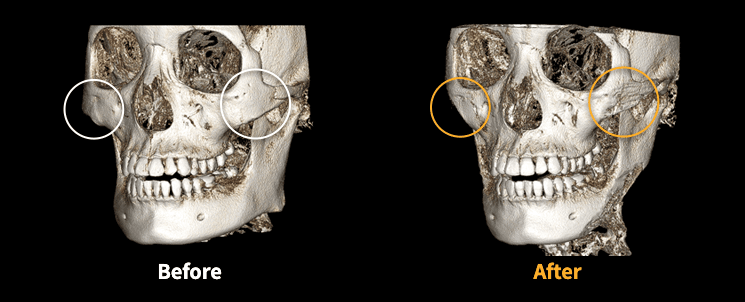
- Stable skeletal anatomy — Good candidates are medically fit adults whose facial growth is complete and whose width is caused primarily by a prominent zygomatic body, zygomatic arch, or both.
- Specific skeletal goal — Suitable patients want permanent narrowing or repositioning of the cheekbone contour, not cheek-fat reduction or treatment for a broad lower jaw.
- Realistic expectations — Candidates understand that reduction malarplasty changes bone permanently, cannot produce perfect symmetry, and can alter midface fullness as swelling resolves.
- Informed planning — A suitable patient can complete an in-person examination, CT or cone-beam CT review, anesthesia assessment, and local postoperative follow-up before international travel.
Cheekbone reduction is not appropriate with active facial, dental, sinus, or systemic infection; elective surgery should wait until the condition is assessed and treated. Pregnancy, inability to safely undergo general anesthesia, uncontrolled hypertension or diabetes, bleeding disorders, serious cardiopulmonary disease, immunosuppression, and conditions that impair wound or bone healing require deferral, optimization, or specialist clearance. Anticoagulants and antiplatelet drugs—including warfarin, apixaban, rivaroxaban, clopidogrel, and aspirin—need a plan agreed by the prescribing clinician and surgeon; never stop them independently. Nicotine exposure, untreated body-image concerns, poor acceptance of pre-existing asymmetry, cheek width caused mainly by soft tissue, and a bite or jaw-position problem requiring orthognathic assessment can also make isolated zygoma reduction unsuitable.
How Is Cheekbone Reduction Performed?
The operative plan depends on whether prominence lies in the front zygomatic body, the lateral arch, or both. CT-based planning helps define asymmetry and the direction and amount of intended movement.
- Bone shaving or burring — Removes limited focal thickness but does not substantially move a laterally projecting zygomatic arch. It suits selected, localized bony prominence.
- Greenstick or infracture reduction — Uses partial bone cuts to bend the bone inward. It can be appropriate for selected anatomy, but movement and control can be more limited than with complete mobilization.
- L-shaped osteotomy with repositioning — Controlled cuts mobilize the zygomatic body and arch for inward and/or posterior repositioning. The segment is commonly stabilized with plates and screws.
- L-shaped osteotomy with bone-strip resection — Removes a planned bone strip or wedge as part of repositioning when greater reduction is indicated. The surgeon must balance reduction with segment stability and soft-tissue support.
- Extended exposure — A scalp or coronal approach is reserved for selected complex or revision cases because it involves a larger incision and broader dissection.
- Computer-assisted planning — Virtual planning and patient-specific guides can assist with complex asymmetry or osteotomy design, but they do not guarantee symmetry, safety, or satisfaction.
A 2023 systematic review and meta-analysis found that L-shaped techniques can be useful where both the body and arch protrude, but rated the evidence Level III. Technique comparisons therefore support an individualized discussion rather than a claim that one approach is universally safest.
Why Visit Korea for Cheekbone Reduction?
Korea has established infrastructure for overseas patients seeking elective care, including a government registration system for institutions that treat international patients. Cheekbone reduction also has a substantial regional clinical literature because zygomatic contouring is commonly discussed within East Asian facial bone contouring practice. Neither fact proves a better outcome at a particular clinic or from a particular surgeon.
- International-patient verification — Use the official registered medical-institution system to verify whether an institution is registered to receive foreign patients.
- Relevant clinical literature — A large share of reduction-malarplasty studies comes from East Asian centers; however, the available evidence is largely retrospective and technique definitions differ across studies. The systematic review of 29 studies and 6,611 patients explicitly identified Level III evidence.
- Preoperative imaging and planning — Ask whether the surgical recommendation follows in-person examination and CT or cone-beam CT review, particularly when there is asymmetry, past facial trauma, prior implants, fillers, or threads.
- Documented care pathway — Confirm who performs each operative step, the planned osteotomy and fixation method, expected admission, interpreter access, emergency escalation, and how records will be transferred to clinicians at home.
Key Information for International Patients
- Minimum stay — Plan to remain in Korea for about 10–14 days after surgery, with flexibility to extend the trip for swelling, wound, sensory, bite, or other healing concerns. This is a conservative logistical interval, not a zygoma-specific evidence-based minimum.
- Flight timing — The CDC notes American Society of Plastic Surgeons guidance to wait 7–10 days after facial cosmetic procedures before flying. Because this is invasive bone surgery and many return trips are long-haul, surgeon clearance should determine the flight date, based on examination, surgical extent, mobility, complications, and clot-prevention planning.
- Early itinerary impact — Expect marked swelling, bruising, tightness, fatigue, numbness, and limited chewing during the first 1–2 weeks. Schedule only local follow-up and quiet recovery; do not plan strenuous sightseeing, nightlife, hiking, swimming, or spa visits.
- Repeat visits — Attend the in-person postoperative review before departure. Further review is often needed remotely as swelling settles, while urgent symptoms require in-person assessment where you are.
- Remote follow-up — Arrange a direct postoperative contact route before surgery and identify a clinician at home who can assess urgent concerns. Take translated copies of the operative report, anesthesia record, CT images, hardware details, medication list, discharge instructions, and follow-up plan.
Travel note: Air travel and recent surgery both increase venous-thromboembolism risk. Keep flights flexible, walk regularly when cleared, and follow the operating team's individualized compression, hydration, and medication plan.
Which Are the Best Clinics in Korea for Cheekbone Reduction Surgery In?
Listed below are some of the best clinics in Korea for cheekbone reduction surgery in.
1. THEPLUS Plastic Surgery
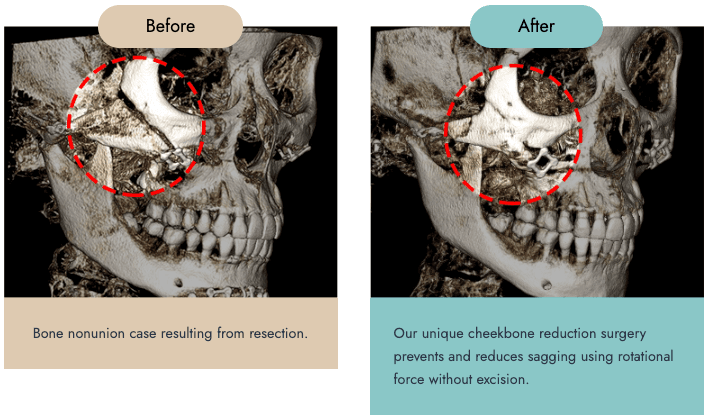
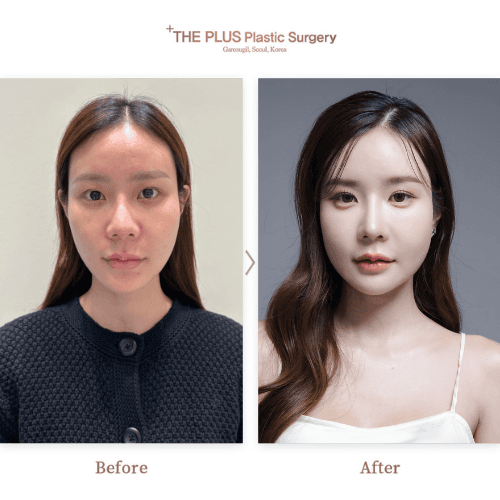
You may consider THEPLUS Plastic Surgery for cheekbone reduction if you are seeking a bone-preserving approach that repositions and rotates the cheekbone slightly forward rather than relying on aggressive bone removal. The clinic describes this technique as intended to create a slimmer, balanced midface while helping maintain soft-tissue firmness; the approach can be tailored when you have a larger bone structure.
- URL: THEPLUS Plastic Surgery Website
- Location: Gangnam-gu, Seoul
- Procedure approach:
- Cheekbone reduction is described as precise rotation and repositioning of the cheekbone rather than cutting out bone.
- The intended contour change is a slimmer facial outline and more balanced midface, with attention to the risk of cheek drooping associated with bone removal.
- Full face contouring, square jaw surgery, chin surgery, and facial implants are also listed for assessment of overall facial proportions.
- Relevant surgical expertise:
- Dr. Kim is described as a board-certified plastic surgeon with a focus on facial contouring and rhinoplasty.
- Dr. Kim has received research awards related to 3D implants and conducts annual educational sessions for other plastic surgeons.
2. Made Young Plastic Surgery
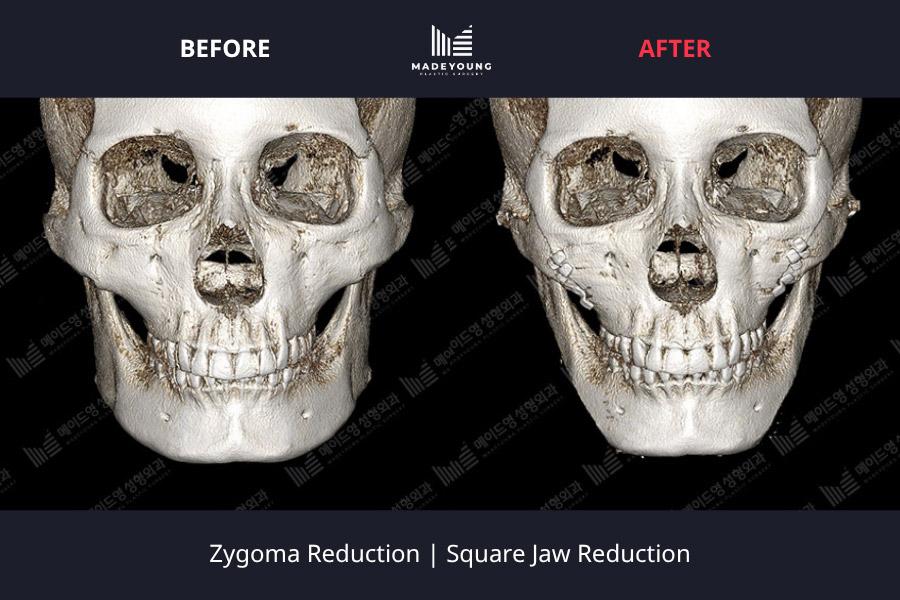
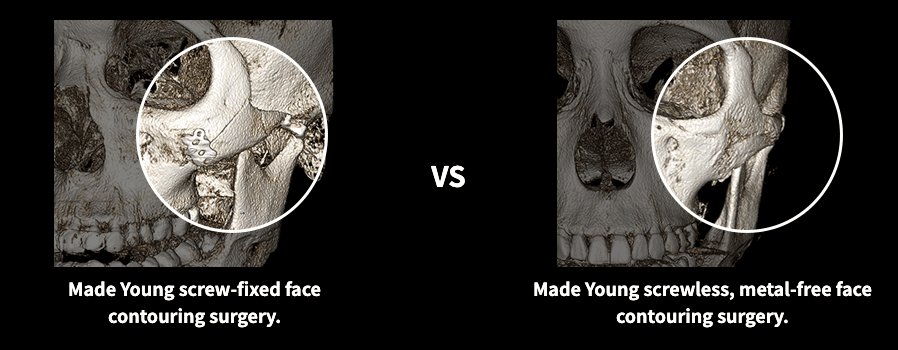
You may consider Made Young Plastic Surgery for cheekbone reduction if you want a plan based on 3D-CT analysis of your cheekbone prominence, facial proportions, and soft-tissue structure. Its Ultra-Close Contact technique is designed to minimize gaps between bone sections for precise osteotomy and stable fixation, with screw-fixation and metal-free options described as available according to your needs.
- URL: Made Young Plastic Surgery Website
- Location: Seocho-gu, Seoul
- Procedure planning and fixation:
- 3D-CT diagnostics are used to develop a customized surgical plan based on bone prominence, facial proportions, and soft tissue.
- The clinic emphasizes accurate osteotomy and stable fixation to address concerns such as nonunion, sagging, and bone resorption.
- Both screw-fixation and metal-free cheekbone reduction options are listed.
- Anesthesia and monitoring:
- Full-time board-certified anesthesiologists are stated to be on site.
- A one-to-one monitoring model assigns one anesthesiologist to continuous monitoring of one person during procedures.
- The clinic describes a cross-check emergency system involving multiple anesthesiologists and CCTV coverage of procedures.
- Aftercare and related contouring:
- A separate dedicated aftercare center is listed for systematic post-procedure care.
- Related facial-contouring options include V-line surgery, jaw reduction, and genioplasty.
3. Mind Plastic Surgery
You may consider Mind Plastic Surgery for cheekbone reduction if you want to discuss prominent cheekbones as part of a broader facial-proportion plan. The clinic lists cheekbone reduction to soften facial contours and create a more harmonious appearance, alongside jaw, chin, and V-line procedures that may be relevant when evaluating your overall facial balance.
- URL: Mind Plastic Surgery Website
- Location: Seocho-gu, Seoul
- Facial contouring options:
- Cheekbone reduction is listed for prominent cheekbones and softer facial contours.
- Square jaw reduction, chin surgery, weak-chin correction, and V-line surgery are also offered.
- Full-face fat grafting and forehead reduction are listed among additional facial-contouring procedures.
- Additional surgical services:
- The clinic also lists customized and revision rhinoplasty, eye surgery, breast surgery, anti-aging procedures, and skin treatments.
- Its medical team is described as providing personalized care in a safe and comfortable environment.
How Much Does Cheekbone Reduction Cost in Korea?
Cheekbone Reduction is supplied at ₩5,500,000–₩18,000,000 (approximately US$4,100–US$13,300). Individual quotes vary because the planned bone movement, surgical access, fixation, and perioperative requirements differ by anatomy and operative plan.
| Procedure Price | Korean Won (₩) | USD ($) |
|---|---|---|
| Low Price | ₩5,500,000 | $4,100 |
| High Price | ₩18,000,000 | $13,300 |
Exchange rate as of 2026-09-06: 1 KRW = 0.000741 USD.
What Affects the Price?
- Reduction method and extent — Limited bone shaving or burring for focal thickness generally requires less bony mobilization than an L-shaped osteotomy that repositions the zygomatic body and arch. A plan that includes bone-strip resection for greater reduction adds osteotomy, contouring, and stabilization work, increasing operating time and surgical complexity.
- Areas treated and surgical exposure — Treating both the zygomatic body and lateral arch requires more extensive access and bone work than addressing one localized prominence. A more extensive scalp or coronal exposure for selected complex or revision cases involves a larger incision and broader dissection, increasing operative resources.
- Fixation and planning requirements — Repositioned zygomatic segments may require plates and screws for stabilization, adding implant consumables and fixation steps. CT or cone-beam CT review and computer-assisted planning or patient-specific guides for asymmetric or complex anatomy add imaging and planning resources.
- Anesthesia and postoperative observation — Cheekbone reduction is performed under general anesthesia, so anesthesia time tracks the extent of osteotomy and repositioning. The need for admission or additional local postoperative reviews for swelling, wound, sensory, bite, or healing concerns also requires more facility and follow-up resources.
Cost tip: Request an itemized quote that clearly states what is included, particularly the planned technique, imaging and planning, general anesthesia, operating-room or facility use, plates and screws, admission if expected, medications, and postoperative reviews.
The USD figures are approximate conversions using the 2026-09-06 exchange rate of 0.000741 KRW per USD; check the exchange rate again when budgeting.
Cheekbone Reduction From Start to Finish
- Remote inquiry and preliminary consultation — Send standardized facial photographs and relevant medical history. Confirm English-language or interpreter arrangements, but treat a remote recommendation as preliminary rather than a final surgical plan.
- In-person assessment in Korea — The surgeon evaluates facial proportions from frontal, oblique, and profile views; pre-existing asymmetry; skin and cheek soft-tissue volume; dental occlusion; temporomandibular-joint symptoms; sinus history; past trauma; and prior fillers, threads, or implants.
- Imaging and surgical plan — CT or cone-beam CT defines the zygomatic body and arch anatomy, asymmetry, and osteotomy plan. Discuss the intended direction of movement, bone removal if any, fixation with plates and screws, incision locations, expected admission, and revision limits.
- Medical and anesthesia clearance — Provide a complete medication, supplement, allergy, nicotine, anesthesia, and medical-history list. The team performs required tests and confirms whether general anesthesia is appropriate.
- Day of surgery — After fasting as instructed, the operation proceeds under general anesthesia. The surgeon commonly uses an incision inside the upper mouth and, when needed for arch access, a small temporal or preauricular incision.
- Osteotomy and fixation — Controlled bone cuts mobilize the planned zygomatic segment. The surgeon moves it inward and/or backward, sometimes removes a limited bone strip or wedge, then stabilizes the segment when indicated. Operative duration depends on anatomy, technique, revision status, and combined procedures.
- Recovery and discharge — Staff monitor airway comfort, bleeding, nausea, pain control, and early swelling. Discharge timing depends on surgical extent, anesthesia recovery, and whether admission is planned; leave only with a responsible adult and written medication, diet, oral-hygiene, and emergency instructions.
- Local review and overseas follow-up — Attend the scheduled Korean review before travel. Send requested photographs during remote follow-up, retain all records, and seek local urgent care rather than waiting for an online response if serious symptoms develop.
Alternatives to Cheekbone Reduction
Non-surgical options can camouflage or address soft-tissue and muscle-related width, but they cannot narrow zygomatic bone. Surgical alternatives are relevant when overall jaw proportion, malocclusion, or soft-tissue descent—not cheekbone projection alone—is the main concern.
Masseter Reduction
- Best for — Lower-face width caused by enlarged masseter muscles rather than zygomatic bone.
- Tradeoff — Masseter reduction does not reduce a prominent cheekbone or arch and has a different treatment target.
Buccal Fat Removal
- Best for — Selected patients whose concern is cheek soft-tissue fullness rather than skeletal width.
- Tradeoff — Buccal fat removal does not narrow bone and can be unsuitable in patients with facial hollowing or anticipated age-related volume loss.
Jaw or Orthognathic Surgery
- Best for — Facial disproportion driven by mandibular angle width, chin shape, jaw position, or malocclusion.
- Tradeoff — Square jaw surgery targets lower-jaw contour, while double-jaw surgery addresses functional skeletal jaw discrepancies and is substantially more extensive than isolated zygoma surgery.
Facial Contouring or Feminization Surgery
- Best for — Patients seeking a coordinated change across multiple facial skeletal regions.
- Tradeoff — Facial contouring and facial feminization surgery can combine procedures but increase operative planning, recovery burden, and risk exposure.
How Can I Prepare for Cheekbone Reduction?
- Medical disclosure — Provide all diagnoses, prior facial trauma, dental or sinus infection, bite or TMJ symptoms, allergies, prior surgery, fillers, threads, implants, anesthesia problems, and pregnancy status. Obtain medical or specialist clearance when requested.
- Blood-thinning medicines — Tell the surgeon and prescribing clinician about warfarin, apixaban, rivaroxaban, clopidogrel, aspirin, NSAIDs, and supplements such as fish oil, vitamin E, ginkgo, garlic, ginseng, and St. John's wort. Do not stop prescribed anticoagulant or antiplatelet treatment without a jointly approved perioperative plan.
- Nicotine and alcohol — Stop cigarettes, vaping, nicotine pouches, and nicotine-replacement products for the period set by the surgeon because nicotine can impair wound and bone healing. Avoid alcohol for the clinic's specified preoperative interval.
- Infection and dental care — Report tooth pain, gum swelling, sinus symptoms, fever, cold sores, or facial skin infection immediately. Do not proceed with elective surgery until the operating team has assessed active infection.
- Fasting — Follow the anesthesia team's exact food and drink cut-off times. Preoperative fasting guidance supports different intervals for clear liquids and solid food; your anesthesia instructions control.
- Skin and facial treatments — Avoid unapproved injections, threads, laser treatments, peels, massage, and dental procedures close to surgery. Ask the surgeon how prior filler or implants affect imaging and dissection.
- Travel logistics — Arrive early enough for in-person assessment and testing, book accommodation near the surgical facility, arrange an adult companion for discharge, and choose changeable return flights.
Travel note: Do not schedule a long-haul flight around a fixed calendar date. Postoperative clearance after an in-person review takes priority over airline plans.
Confirm all clinic-specific medication stops, fasting rules, nicotine requirements, testing, admission, companion, and follow-up requirements with the treating doctor; these instructions take precedence over general guidance.
Aftercare Advice
Protect the healing bone and soft tissue: early swelling can hide the true contour, and forceful activity or facial pressure can complicate recovery.
- Swelling and rest — Keep the head elevated as instructed, use cold therapy only if prescribed, take pain and nausea medicines exactly as directed, and expect the greatest swelling, bruising, tightness, and chewing limitation in the first 1–2 weeks.
- Diet and oral hygiene — Follow the prescribed liquid or soft-food progression and do not resume firm chewing until cleared. Keep intraoral incisions clean using the surgeon's specified rinsing and tooth-brushing routine.
- Activity and contact — Avoid strenuous exercise, heavy lifting, facial impact, contact sports, swimming, saunas, hot baths, smoking, nicotine, and unapproved facial massage or aesthetic treatments until the surgeon clears them.
- Sun and incisions — Protect any external incision from sun exposure. Once the incision is fully closed and the surgeon approves, use broad-spectrum SPF 50 on exposed scars and follow the prescribed scar-care plan.
- Warning signs — Seek urgent medical care for rapidly expanding one-sided swelling, uncontrolled bleeding, fever with worsening pain, foul drainage or pus, breathing or swallowing difficulty, vision changes, chest pain, shortness of breath, calf pain or swelling, a new bite change, severe mouth-opening limitation, facial weakness, or severe, spreading, or worsening numbness.
- Follow-up and final contour — Attend local review before leaving Korea and complete remote reviews as requested. Many people are more comfortable with public-facing activity after 2–4 weeks, but residual swelling and sensory change can last longer; assess the contour more reliably at about 3–6 months.
Follow the treating doctor's written instructions over this general guidance, and contact the clinic promptly when anything appears wrong.
Frequently Asked Questions
Related Blogs

Discover South Korea's Competitive Edge: Double Chin Tightening Cost Comparison Across Leading Countries
Discover the latest on double chin tightening procedures in Korea, exploring various techniques and their costs. Learn how these advanced treatments can help you achieve a more contoured facial profile while considering your budget.
Updated: Sep 25, 2026
Discover the Global Cost Breakdown for Chin Implants: Is Korea Your Best Bet?
Discover the affordability and quality of chin implants in Korea, a popular destination for cosmetic surgery. This article explores the average costs, factors influencing prices, and why Korea is a top choice for enhancing facial aesthetics.
Updated: Sep 25, 2026
Masseter Reduction in Korea: Candidacy, Surgery, Recovery, Risks, and Travel Planning
Masseter reduction removes a planned portion of deep chewing muscle through an intraoral incision after confirming muscle-driven lower-face width and assessing dental, bite, jaw, and anesthesia factors. International patients can review Korea provider registration, plan at least 10–14 days after isolated surgery, attend follow-ups, arrange flexible flights, and obtain operative records and emergen
Updated: Sep 19, 2026
Paranasal Implant in Korea: Materials, Recovery, Risks, and Travel Planning
Paranasal implant surgery places a silicone, ePTFE, or porous polyethylene implant over the premaxillary bone to improve localized nasal-base support, with assessment of facial anatomy, dental occlusion, and alternatives such as filler, fat grafting, rhinoplasty, or jaw treatment. International patients should plan 10–14 days in Korea for review and travel clearance, follow infection-prevention an
Updated: Sep 18, 2026
Clinics offering Cheekbone Reduction

THEPLUS Plastic Surgery Korea | Eye, Nose, Face & Body Surgery
Sinsa

Made Young Plastic Surgery: Rejuvenating Aesthetic Excellence in Korea for Face Lifts, Contouring and More
Gangnam Station

Mind Plastic Surgery: Excellence in Cosmetic & Reconstructive Procedures in Korea
Sinnonhyeon Station
ID Hospital - Main Branch in Korea: Specializing in Safe & Customized Facial Plastic Surgery and Post-Care Services
Sinsa