Medical Tourism Blog
Myopia Solutions in Korea: ICL Lens Implant, Vision Correction, LASIK, SMILE, and LASEK Procedures
Table of contents
- Understanding Myopia: The Condition and Its Nuances
- Advanced Vision Correction Procedures: A Detailed Overview
- Best Clinics in Korea for Myopia
- The Process of Getting Vision Correction in South Korea for Medical Tourists
- Costs Associated with Vision Correction in South Korea and International Comparison
- Patient Experiences and Outcomes
- Conclusions
- References
Considering treatment in Korea? Everything you need to know e.g. — how to avoid scams, visas, interpreters, recovery tips — in our Medical Tourism Master Guide. Plan with confidence in minutes, not weeks!
Myopia, or nearsightedness, is a frequent vision concern resulting in blurry distance vision. This guide explores myopia and the advanced surgical treatments now available, focusing especially on why South Korea is a leading destination for medical tourists seeking eye procedures. We’ll cover the key surgery types: Laser-Assisted In Situ Keratomileusis (LASIK), Small Incision Lenticule Extraction (SMILE), Laser Epithelial Keratomileusis (LASEK), and Implantable Collamer Lens (ICL) implants—each tailored for different eye needs.
South Korea’s leadership stems from its combination of advanced medical technology, experienced surgeons, and affordable pricing. These factors attract international patients seeking high standards at lower costs. That said, anyone considering vision correction surgery should be realistic about recovery times and possible temporary side effects.
Understanding Myopia: The Condition and Its Nuances
Definition and Causes
Myopia, also termed nearsightedness, is a refractive error where close objects appear clear but distant items look fuzzy. This happens when the eye’s lens causes light rays to focus in front of the retina instead of directly on it—often because the eyeball is too long (axial myopia) or the cornea is too steep (refractive myopia). Myopia usually develops in childhood, getting worse in teenage years and stabilizing in adulthood, though it can progress further for some. Early eye exams are essential, as early intervention can slow its worsening before surgery is considered. Diagnosis relies on comprehensive eye exams, and for those who aren’t ready for surgery, glasses or contacts are standard, non-invasive corrections.
Common Pseudonyms and Related Conditions
Ordinarily, myopia is called “nearsightedness.” It’s important to distinguish structural myopia from pseudomyopia, or false nearsightedness—where blurred distance vision happens due to a ciliary muscle spasm, often caused by eye strain. Pseudomyopia is reversible with rest, changes in habits, or exercises. Diagnosis uses cycloplegic refraction, temporarily paralyzing the muscles for accurate assessment. Confirming structural (true) myopia before surgery is crucial for safe and effective treatment.
Symptoms and Impact on Quality of Life
Adults with myopia often notice blurry distance vision, frequent squinting, headaches, and difficulty reading signs, especially at night (night myopia). Kids may not report symptoms, but might squint, blink often, or sit close to screens. Undiagnosed or untreated myopia impacts school, work, safety, and self-esteem. Early screening and attentive observation are key, especially in children.
Risk Factors and Associated Complications
Genetics and environment both matter: myopia tends to run in families and is more likely with lots of close-up work, screen time, or limited time outdoors. Ongoing awareness of healthy visual habits is recommended since severe myopia can increase risk for retinal detachment, glaucoma, and cataracts. Even after surgery, these structural eye risks persist, meaning regular checkups are essential.
Advanced Vision Correction Procedures: A Detailed Overview
Introduction to Refractive Surgery
Refractive surgery offers several advanced methods to fix vision issues like myopia, hyperopia, and astigmatism. These procedures either reshape the cornea or place corrective lenses inside the eye, providing the opportunity to ditch glasses or contacts. Every technology, especially in the US, must pass rigorous safety evaluations.
LASIK (Laser-Assisted In Situ Keratomileusis)
Mechanism and Technology
LASIK is the most familiar form of corrective eye surgery, using an excimer laser to reshape the cornea. Recently, surgeries more often use femtosecond lasers to create the corneal flap, allowing for bladeless, highly customized procedures. Technologies like Wavefront-Optimized LASIK and Contoura® Vision give surgeons incredible precision via three-dimensional eye mapping. Eye tracking during surgery boosts safety, and artificial intelligence is expected to refine results further in the near future.
Procedure Steps
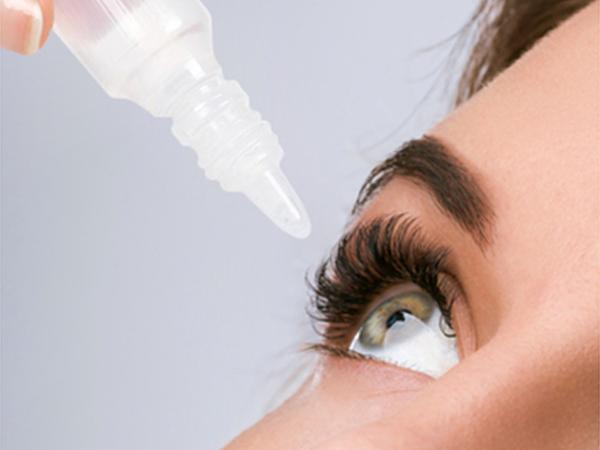
After a thorough eye exam and at least a year of stable vision, patients are evaluated for candidacy—ruling out risks such as thin corneas or certain eye diseases. The procedure involves creating a corneal flap, reshaping the cornea with the laser, then repositioning the flap. Aftercare includes antibiotic and anti-inflammatory drops, rest, and avoiding eye rubbing. Most people recover quickly, returning to normal life within days.
Advantages and Disadvantages
LASIK recovers vision rapidly with little discomfort, thanks to advanced technologies—but it may cause dry eyes and carries risks like flap complications, glare, and halos. It’s not reversible.
Potential Complications and Recovery Profile
Mild discomfort and blurry vision are common initially but usually improve quickly. Serious complications are rare but possible.
SMILE (Small Incision Lenticule Extraction)
Mechanism and Technology
SMILE is the newest major laser procedure for myopia, using a femtosecond laser to create and remove a thin lens-shaped tissue (lenticule) through a tiny corneal incision. This flapless approach preserves eye strength and may reduce dry eye risk. Over 2 million SMILE procedures have been performed globally.
Procedure Steps
Precise preoperative prep and careful patient positioning are critical, with post-surgical lenticule extraction being the most delicate part—requiring experience. Quick and minimally invasive, SMILE is often completed in under 10 minutes.
Suitability Criteria
SMILE is best for those with moderate to severe nearsightedness.
Advantages and Disadvantages
Quicker recovery, fewer dry eyes, and less corneal disturbance are clear benefits. However, the technical challenge for less experienced surgeons and its current unsuitability for hyperopia are downsides.
Potential Complications and Recovery Profile
Immediate blurry vision, possible lingering dry eyes, and initial halos may occur but typically subside within weeks or months.
LASEK (Laser Epithelial Keratomileusis) / PRK (Photorefractive Keratectomy)
Mechanism and Technology
Both surgeries reshape the cornea but don’t create a corneal flap. LASEK preserves the epithelium; PRK removes it and lets it regrow. Use of Mitomycin C in PRK prevents postoperative haze. These surface techniques avoid some LASIK risks but require longer recovery.
Procedure Steps
After numbing, the corneal surface is treated with alcohol or removed, then the cornea is reshaped with a laser. Recovery lens and drops are used to aid healing and minimize discomfort.
Differences from LASIK and Suitability Criteria
LASEK and PRK are go-to options for those with thin corneas, higher prescriptions, or those at risk for trauma.
Advantages and Disadvantages
No flap issues and fewer dry eyes, but expect several days of blurry vision and discomfort, and a longer path to crisp vision.
Potential Complications and Recovery Profile
Slower vision return and possible haze, but risks have been greatly reduced with modern care.
ICL Lens Implant (Implantable Collamer Lens)
Mechanism and Technology
ICL involves inserting a thin collamer lens between the natural lens and iris, providing permanent correction without altering the cornea’s shape. The lens is invisible and well-tolerated.
Procedure Steps
After a suitability assessment and special imaging, the lens is precisely implanted—taking only around 30 minutes. Most patients see better within a day, with very rapid routine recovery.
Suitability Criteria
ICL is especially for patients with severe myopia or thin corneas who can’t have laser eye surgery.
Advantages and Disadvantages
ICL’s big plus is its reversibility—lenses can be removed or replaced in the future. However, because it’s intraocular surgery, it carries different (though rare) risks.
Potential Complications and Recovery Profile
Potential side effects include glaucoma, cataract, or corneal complications. Temporary discomfort and dry eyes may occur. There’s also a psychological aspect: while quality of life often improves, some patients may need longer to adjust emotionally post-surgery.
Best Clinics in Korea for Myopia
Listed below are the best clinics in Korea for myopia:
| Samsung Miracle Eye Clinic Website{data-slug="samsung-miracle-eye-clinic" data-position: "1"} | - 1:1 personalized care with individualized testing, counseling, and surgical planning
- One doctor, start to finish: the examining doctor performs the surgery and oversees recovery
- One-day diagnosis and surgery system for convenience, supported by advanced in-house diagnostics
- Patented Miracle Formula for precise lens power calculation to support accurate outcomes
- Ambidextrous surgeons to enhance symmetry and precision between both eyes, with improved comfort and safety
- Dedicated International Patient Team for coordinated support and consistent care standards
- Myopia-related services and procedures available, including SMILE LASIK, LASIK/LASEK, Dream Lens (orthokeratology), Re-calibration surgery, Intraocular lens insertion, Presbyopia cataract treatment | - 1:1 personalized care with individualized testing, counseling, and surgical planning
- One doctor, start to finish: the examining doctor performs the surgery and oversees recovery
- One-day diagnosis and surgery system for convenience, supported by advanced in-house diagnostics
- Patented Miracle Formula for precise lens power calculation to support accurate outcomes
- Ambidextrous surgeons to enhance symmetry and precision between both eyes, with improved comfort and safety
- Dedicated International Patient Team for coordinated support and consistent care standards |
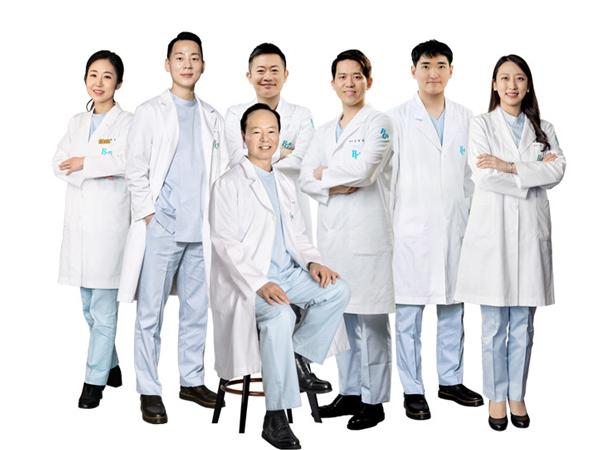
| BnVIIT Eye Clinic Website{data-slug="bnviit-eye-clinic" data-position: "2"} | - Premier ophthalmology clinic in Gangnam, Korea, specializing in myopia care and vision correction
- With over 30 years of experience and 550,000 successful eye surgeries, the clinic is known for combining extensive clinical expertise with advanced technology, including its cutting-edge A.I. Vision Correction Prediction System to help guide personalized treatment planning
- Patients can choose from a comprehensive range of vision correction options, including refractive surgeries such as SMILE, all-laser LASIK, and all-laser LASEK (PRK), as well as implantable solutions like PIOL (phakic intraocular lenses) for higher refractive errors
- The clinic also provides cataract surgery with intraocular lens replacement and non-surgical myopia management through Ortho-K (Dream Lens) worn overnight, with customizing options tailored to each patient’s visual needs and lifestyle goals | - A.I. Vision Correction Prediction System
- Ortho-K (Dream Lens) worn overnight
- PIOL (phakic intraocular lenses) implantable solutions |
| Bright Eye Clinic Website{data-slug="bright-eye-clinic" data-position: "3"} | - Advanced myopia correction options tailored to different eyes and lifestyles, including SMILE Pro, SMILE LASIK, LASIK, and LASEK
- SMILE Pro using VisuMax 800, creating a lenticule in under 10 seconds for highly precise, minimally invasive correction
- Small-incision approaches (SMILE Pro and SMILE LASIK) designed for minimal discomfort and faster recovery for many patients
- LASEK available for candidates with thin corneas who may not be ideal for standard LASIK
- Comprehensive pre-surgery exams to confirm candidacy, reduce risk, and optimize visual outcomes
- Ongoing general eye health checkups to monitor eye condition and detect issues early
- Full-service expertise beyond myopia, including cataract removal with the Lumera 700 microscope and premium IOL implantation options when needed
- Experienced professionals and modern equipment focused on delivering safe procedures and reliable results, helping explain its reputation as a top choice for myopia care in Korea | - SMILE Pro using VisuMax 800
- Small-incision approaches (SMILE Pro and SMILE LASIK)
- LASEK for thin corneas
- Lumera 700 microscope for cataract removal and premium IOL implantation options |
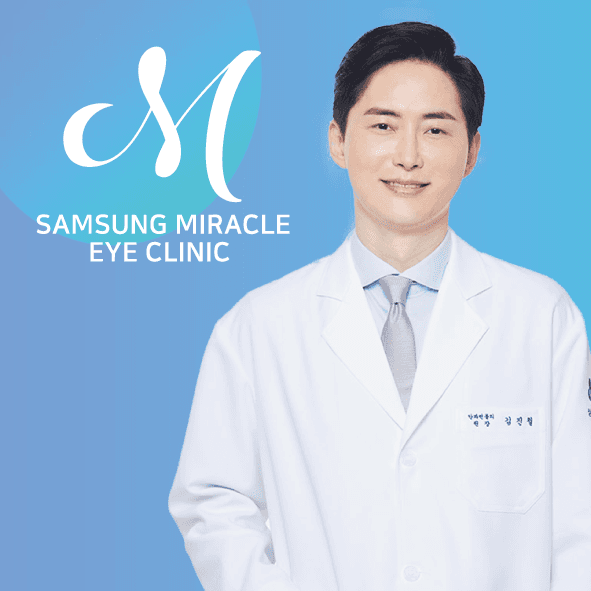
Samsung Miracle Eye Clinic
Samsung Miracle Eye Clinic is a leading myopia and vision correction clinic in Seoul, conveniently located at Gangnam Station, known for combining advanced technology with a truly patient-centered approach. The clinic stands out for its 1:1 personalized care, where each patient receives a tailored consultation and a customized surgical plan, and—unlike many other clinics—the same doctor who conducts the eye examination also performs the surgery and manages the full recovery process for consistent, accountable care. With a streamlined one-day system powered by an in-house diagnostic platform and a patented Miracle Formula for precise lens power calculation, patients can often complete diagnosis and surgery on the same day without sacrificing accuracy. Adding to its reputation for precision, all surgeons are ambidextrous, helping ensure symmetrical outcomes between both eyes while minimizing contact with the nasal bridge for improved comfort and safety; international patients are also supported by a dedicated International Patient Team to ensure a smooth, high-quality experience from start to finish.
Key reasons it’s a top choice for myopia correction
- 1:1 personalized care with individualized testing, counseling, and surgical planning
- One doctor, start to finish: the examining doctor performs the surgery and oversees recovery
- One-day diagnosis and surgery system for convenience, supported by advanced in-house diagnostics
- Patented Miracle Formula for precise lens power calculation to support accurate outcomes
- Ambidextrous surgeons to enhance symmetry and precision between both eyes, with improved comfort and safety
- Dedicated International Patient Team for coordinated support and consistent care standards
Myopia-related services and procedures available
- SMILE LASIK
- LASIK/LASEK
- Dream Lens (orthokeratology)
- Re-calibration surgery (enhancement after prior vision correction)
- Intraocular lens insertion (for severe refractive errors and/or cataract-related needs)
- Presbyopia cataract treatment (for patients with both presbyopia and cataracts)
You can check out their website here: Samsung Miracle Eye Clinic Website
BnVIIT Eye Clinic
BnVIIT Eye Clinic (B&VIIT Eye Center) is a premier ophthalmology clinic in Gangnam, Korea, specializing in myopia care and vision correction. With over 30 years of experience and 550,000 successful eye surgeries, the clinic is known for combining extensive clinical expertise with advanced technology, including its cutting-edge A.I. Vision Correction Prediction System to help guide personalized treatment planning.
Patients can choose from a comprehensive range of vision correction options, including refractive surgeries such as SMILE, all-laser LASIK, and all-laser LASEK (PRK), as well as implantable solutions like PIOL (phakic intraocular lenses) for higher refractive errors. The clinic also provides cataract surgery with intraocular lens replacement and non-surgical myopia management through Ortho-K (Dream Lens) worn overnight, with customizing options tailored to each patient’s visual needs and lifestyle goals.
Find more about this clinic here: BnVIIT Eye Clinic Website
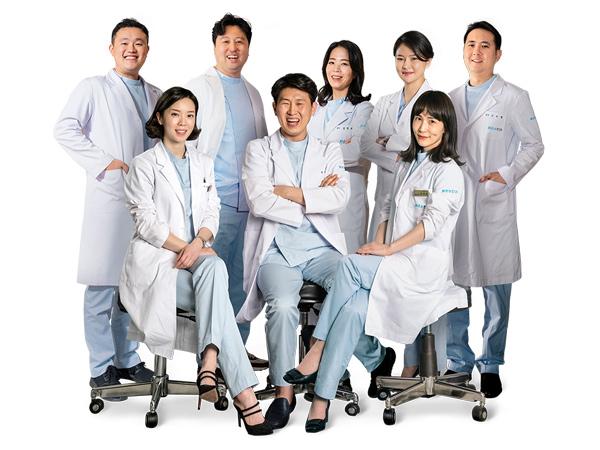
Bright Eye Clinic
Bright Eye Clinic in Gangnam is a leading destination for myopia correction in Korea, known for combining world-class surgical expertise with advanced technology that attracts patients from around the globe. The clinic provides a full spectrum of refractive solutions—from minimally invasive SMILE options to LASIK and LASEK—supported by thorough pre-surgery diagnostics and comprehensive eye health evaluations. With state-of-the-art systems such as the VisuMax 800 for ultra-precise lenticule creation and the Lumera 700 microscope for high-clarity cataract procedures, Bright Eye Clinic delivers individualized treatment planning, strong safety standards, and consistently high-quality outcomes for patients seeking clearer vision.
- Advanced myopia correction options tailored to different eyes and lifestyles, including SMILE Pro, SMILE LASIK, LASIK, and LASEK
- SMILE Pro using VisuMax 800, creating a lenticule in under 10 seconds for highly precise, minimally invasive correction
- Small-incision approaches (SMILE Pro and SMILE LASIK) designed for minimal discomfort and faster recovery for many patients
- LASEK available for candidates with thin corneas who may not be ideal for standard LASIK
- Comprehensive pre-surgery exams to confirm candidacy, reduce risk, and optimize visual outcomes
- Ongoing general eye health checkups to monitor eye condition and detect issues early
- Full-service expertise beyond myopia, including cataract removal with the Lumera 700 microscope and premium IOL implantation options when needed
- Experienced professionals and modern equipment focused on delivering safe procedures and reliable results, helping explain its reputation as a top choice for myopia care in Korea
Find more about this clinic here: Bright Eye Clinic Website
The Process of Getting Vision Correction in South Korea for Medical Tourists
South Korea streamlines every step for international patients seeking eye surgery.
Initial Consultation and Planning
Start by booking a consultation (often through agencies like Shin Medical) and arrange travel and accommodation.
Comprehensive Eye Examination
On arrival, clinics conduct detailed eye tests—mapping, thickness measurement, and OCT imaging—plus a review of medical history to verify surgical appropriateness.
Discussion of Medications and Expectations
Patients must inform their surgeon about all medications and supplements. Surgeons set realistic expectations based on each person’s unique case.
Pre-Surgery Instructions
Plan to stop wearing contacts (soft: 1–2 weeks, hard: 4 weeks), skip eye makeup for at least 24 hours pre-op, and arrange post-surgery transportation.
Day of Surgery Guidelines
Eat light, wear comfortable clothes, and avoid strongly scented products.
Post-Surgery Recovery Preparation
Stock up on medicines and prepare a relaxing, dimly lit space for initial recovery.
Post-Surgery Follow-up
Plan to stay in Korea for at least a few days post-surgery for follow-up appointments to monitor healing and handle any issues.
Costs Associated with Vision Correction in South Korea and International Comparison
Vision correction is both affordable and high-tech in South Korea.
Costs in South Korea
Procedures range from around ₩3,000,000 to ₩5,000,000 KRW ($2,064–$3,440 USD) for both eyes. Sample starting prices (total for both eyes) include:
- LASIK, LASEK: ₩1,900,000 ($1,300)
- SMILE: ₩2,300,000 ($1,580)
- SMILE PRO: ₩4,200,000 ($2,890)
- ICL (Non-Toric): ₩4,800,000 ($3,300)
- Toric ICL: ₩5,800,000 ($3,990)
Other common expenses are exam fees (often free), DNA testing (sometimes waived), eye drops (₩80,000–₩90,000), and required check-ups (₩20,000–₩30,000 per visit).
Comparison with Other Countries from a Medical Tourist's Perspective
Korea offers big savings compared to most Western countries. Here’s how per-eye costs stack up:
| Procedure | South Korea | United States | Canada | United Kingdom | Australia |
|---|---|---|---|---|---|
| LASIK | $800–$1,200 | $2,000–$3,000 | $1,500–$2,500 | $2,000–$3,300 | $1,700–$2,400 |
| SMILE | $960–$2,000 | $2,000–$3,500 | $2,000–$3,000 | $2,600–$4,200 | $2,000–$2,700 |
| ICL | $1,600–$2,800 | $3,500–$5,000 | $3,000–$4,500 | $4,000–$6,000 | $2,700–$3,700 |
| LASEK | $800–$1,200 | $1,500–$2,500 | $1,200–$2,000 | $1,600–$2,600 | $1,350–$1,900 |
These prices illustrate why many medical tourists choose Korea: the procedures are less expensive, yet the quality matches or beats Western standards.
Patient Experiences and Outcomes
Broadly, refractive surgeries like LASIK, SMILE, LASEK, and ICL reliably improve distance vision—often eliminating the need for corrective lenses. But outcomes and satisfaction can vary; some people may still need glasses for select tasks or as they age.
General Outcomes and Considerations
Most achieve 20/20 vision or better, but it’s possible to experience side effects like dryness, halos, or glare—especially early in recovery. Because these are permanent changes, any complications can be long-lasting.
Patient Testimonials: SMILE Surgery in South Korea
Consider Laura, a medical tourist who chose SMILE in Korea due to price and reputation. The quick, efficient process—from pre-op instructions to fast, low-discomfort surgery—left her with “dramatically improved” vision and the ability to enjoy activities she’d previously avoided. While she dealt with some anxiety, dry eye, and halos early on, these issues largely resolved within months.
Patient Psychological Impacts: ICL Implantation
ICL surgery can provide major psychological relief and satisfaction. Still, some patients experience ongoing anxiety, usually tied to concerns about results, side effects like night vision problems, or adjustment to being glasses-free. Attention to psychological well-being pre- and post-surgery is essential.
Conclusions
Modern vision correction surgeries can bring life-changing improvement to those with myopia—and South Korea is a standout destination for these treatments thanks to its balance of technology, expertise, and affordability. The choice between LASIK, SMILE, LASEK/PRK, and ICL depends on each person’s unique eye health and lifestyle. For anyone considering these options, thorough evaluation, realistic expectations, and lifelong eye health monitoring are key to success.
References
1, 2, 3, 4, 5, 6, 7, 8, 9, 10, 11, 12, 13, 14, 15, 16, 17, 18, 19, 20, 21, 22, 23