Medical Tourism Blog
Dr. An Q&A Liposuction scars - Lydian
Table of contents
- Introduction: Why Liposuction Scars Matter
- The Reality: Any Liposuction Incision Can Leave a Scar
- Skin Type and Melanin: Why Scars Fade Differently
- Common Liposuction Incision Sites by Treatment Area
- My Philosophy: Fewer, Better-Hidden Incisions
- Protecting the Skin During Liposuction: Preventing “Extra” Scar Damage
- Incision Closure: Why Meticulous Suturing Changes Outcomes
- Aftercare Once the Wound Has Healed: Moisture and Silicone
- When a Scar Thickens: Early Treatment Makes a Difference
- Conclusion: The Best Scar Is the One You Can’t Find
- More about Lydian Plastic Surgery Clinic
Considering treatment in Korea? Everything you need to know e.g. — how to avoid scams, visas, interpreters, recovery tips — in our Medical Tourism Master Guide. Plan with confidence in minutes, not weeks!
Disclaimer: The following is a guest post. The information and opinions expressed are not of koreaclinicguide.com but of Lydian Plastic Surgery Clinic
Introduction: Why Liposuction Scars Matter
Liposuction is often talked about as a body-contouring procedure—and it is—but in real consultations, one of the most common topics patients bring up is scarring. After two decades of seeing people before and after surgery, I’ve learned something important: even patients who say they “don’t care about scars” frequently start noticing them later. Once healing is over and everyday life resumes, scars can affect clothing choices, confidence, and stress levels in a very real way.

Because liposuction requires small incisions, scarring is unavoidable in the strictest sense. The real question is how visible those scars will be and how well they mature over time. For me, making scars as inconspicuous as possible is not a small detail—it’s a key goal of every procedure. A beautiful contour means less if the result is interrupted by obvious marks.
The Reality: Any Liposuction Incision Can Leave a Scar
Every surgery leaves a scar because it involves cutting the skin. Even when incisions are small, the skin still has to heal, and that healing process can produce a line, pigment change, or thickening depending on the patient and the technique used.
What surprises many people is how “small” doesn’t always equal “invisible.” A tiny incision that’s placed in a more noticeable location, closed without enough care, or irritated during healing can end up drawing attention. The opposite is also true: a well-placed, well-protected, meticulously closed incision can become extremely difficult to find later.
Skin Type and Melanin: Why Scars Fade Differently
Before talking about incision sites, I always like to start with skin type, because it strongly influences how scars mature. Some people truly are blessed in this area. In my experience, many Western patients tend to have scars that fade more easily than many Asian patients, including Koreans, Chinese, and Japanese patients.
A pattern I’ve often observed is that Germanic types—such as Northern Europeans and Russians—frequently develop less noticeable scars, even when incisions are made in multiple areas of the body. One main reason is melanin. Skin with more melanin often has a higher tendency toward visible pigmentation changes during healing, which can make scars appear darker for longer.
This doesn’t mean any one person can be predicted perfectly based on background alone—individual healing varies widely—but it does mean that I take skin characteristics seriously when planning incision placement, closure strategy, and aftercare. If someone tells me they’ve been self-conscious about scars for years, that changes how carefully we plan every detail.
Common Liposuction Incision Sites by Treatment Area
Patients often ask where scars will be, and the honest answer is: it depends on the area being treated and the surgeon’s preferred technique. Traditional approaches can involve multiple incisions to access different zones and angles.
For standard arm liposuction, common incisions include one inside the armpit, one near the elbow, and sometimes one at the front of the armpit. That usually totals two or three incisions.
For standard thigh liposuction on the front, it’s common to use one or two incisions in each groin plus another below the knee, typically resulting in two or three incisions on the front. For the back of the thigh during full thigh liposuction, common incision locations include under the flank and along the panty line, adding about two more. When you add everything together, thigh liposuction can involve up to around ten incisions depending on how comprehensive the treatment is.
For abdominal liposuction, many surgeons place one incision in or near the belly button and two in the groin. Depending on preference, there may also be an incision under the breast for upper abdominal areas and another in the pelvic region to reach the love handles.
For full upper-body liposuction, it’s not unusual to see around nine incisions total in more traditional plans. Back liposuction often includes two incisions in the armpits and one in the center of the back, while lower back work may include additional access through the upper buttocks and flanks. Seven incisions is a common number for full back liposuction.
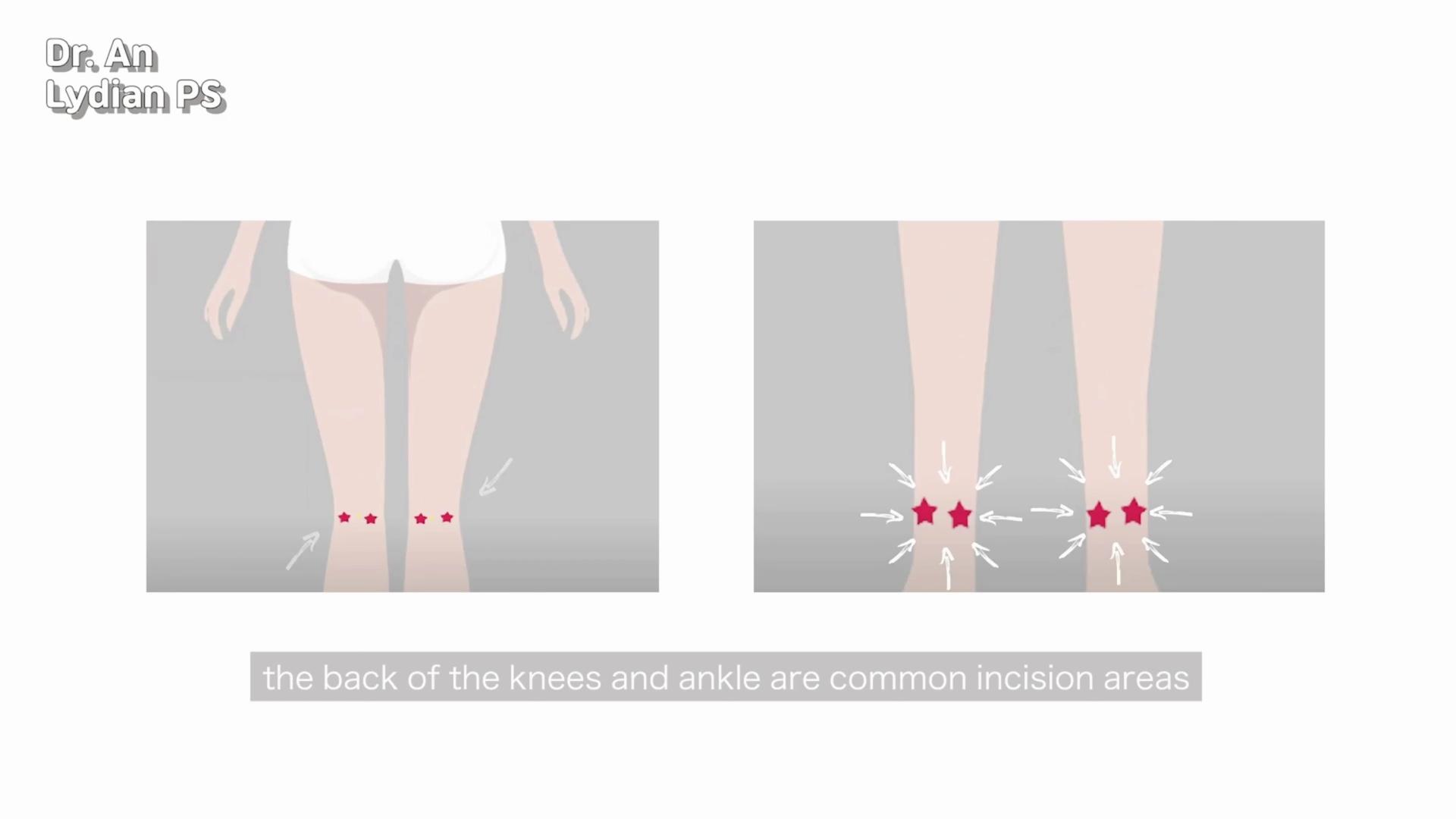
For calf liposuction, incision sites are often behind the knees and at the ankles, typically totaling two or three incisions.
My Philosophy: Fewer, Better-Hidden Incisions
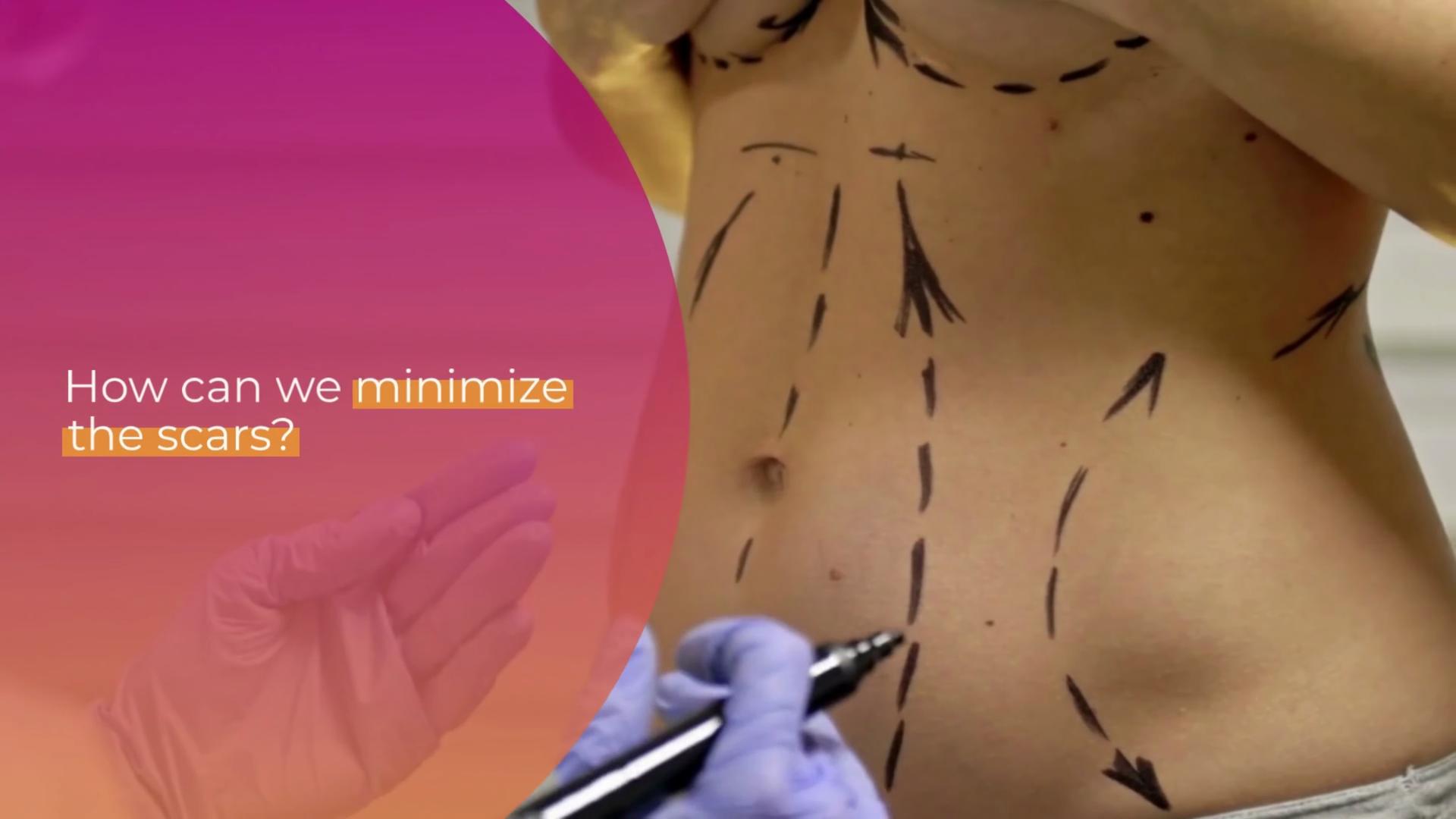
Personally, I dislike making a lot of incisions. One of the biggest differences a surgeon can make—before any ointment, tape, or laser is even discussed—is minimizing the number of skin openings and placing them where they naturally hide.
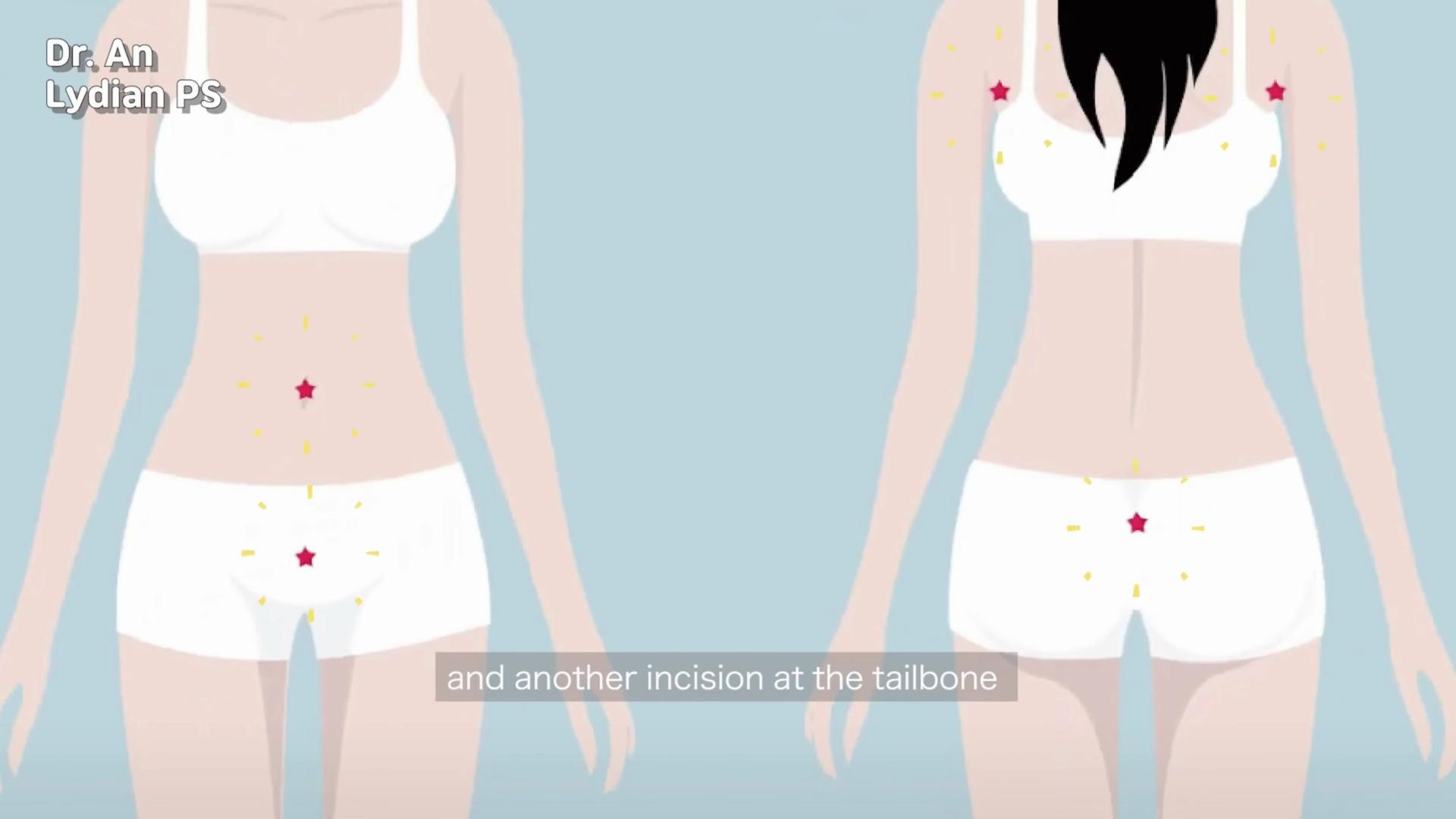
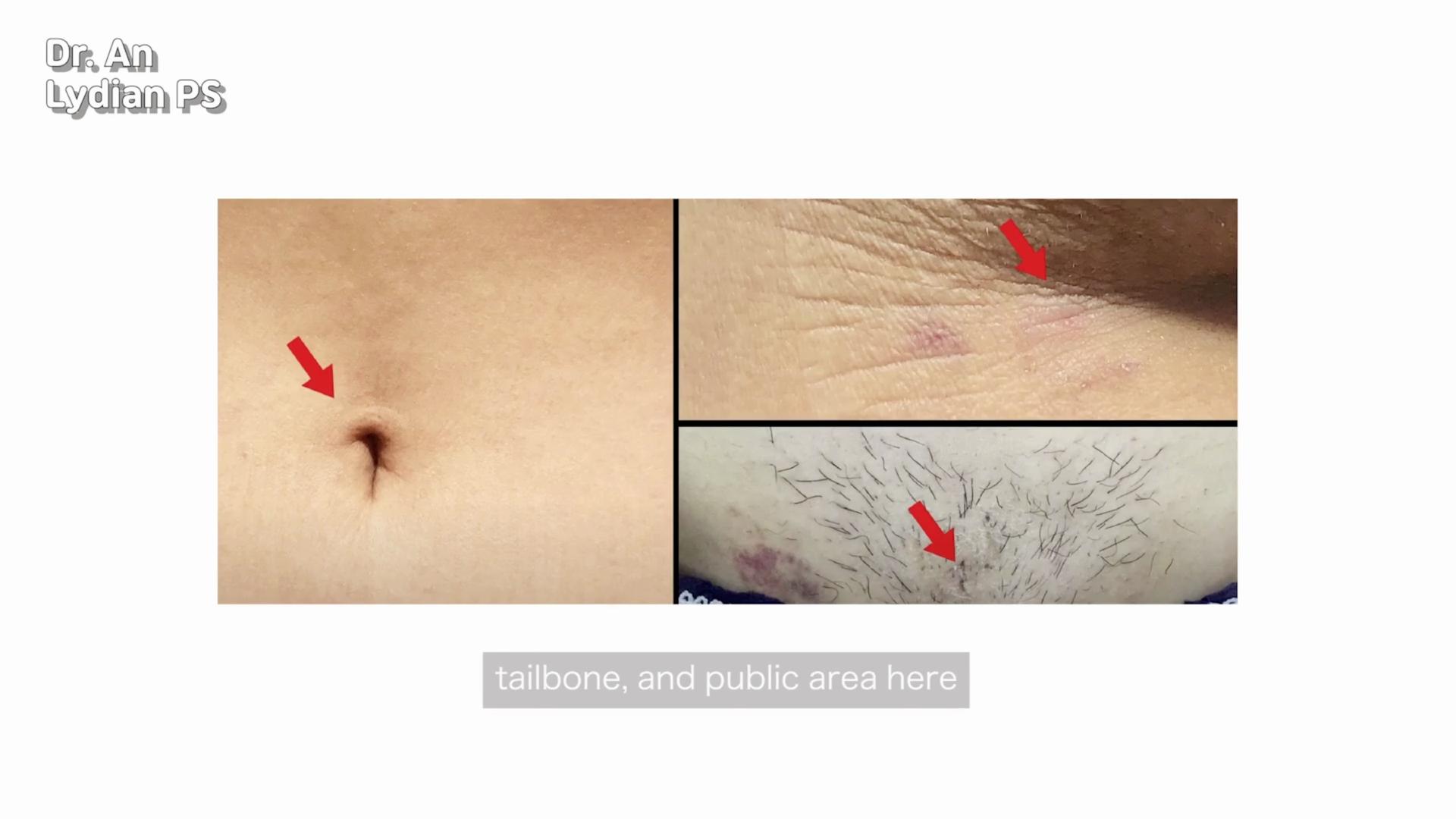
For abdominal liposuction, I aim for three incisions that are well concealed: one placed inside the belly button (not outside), one in the pubic area, and one at the tailbone. With thoughtful cannula pathways, these access points can cover the needed zones while keeping scars in locations most people will never notice.
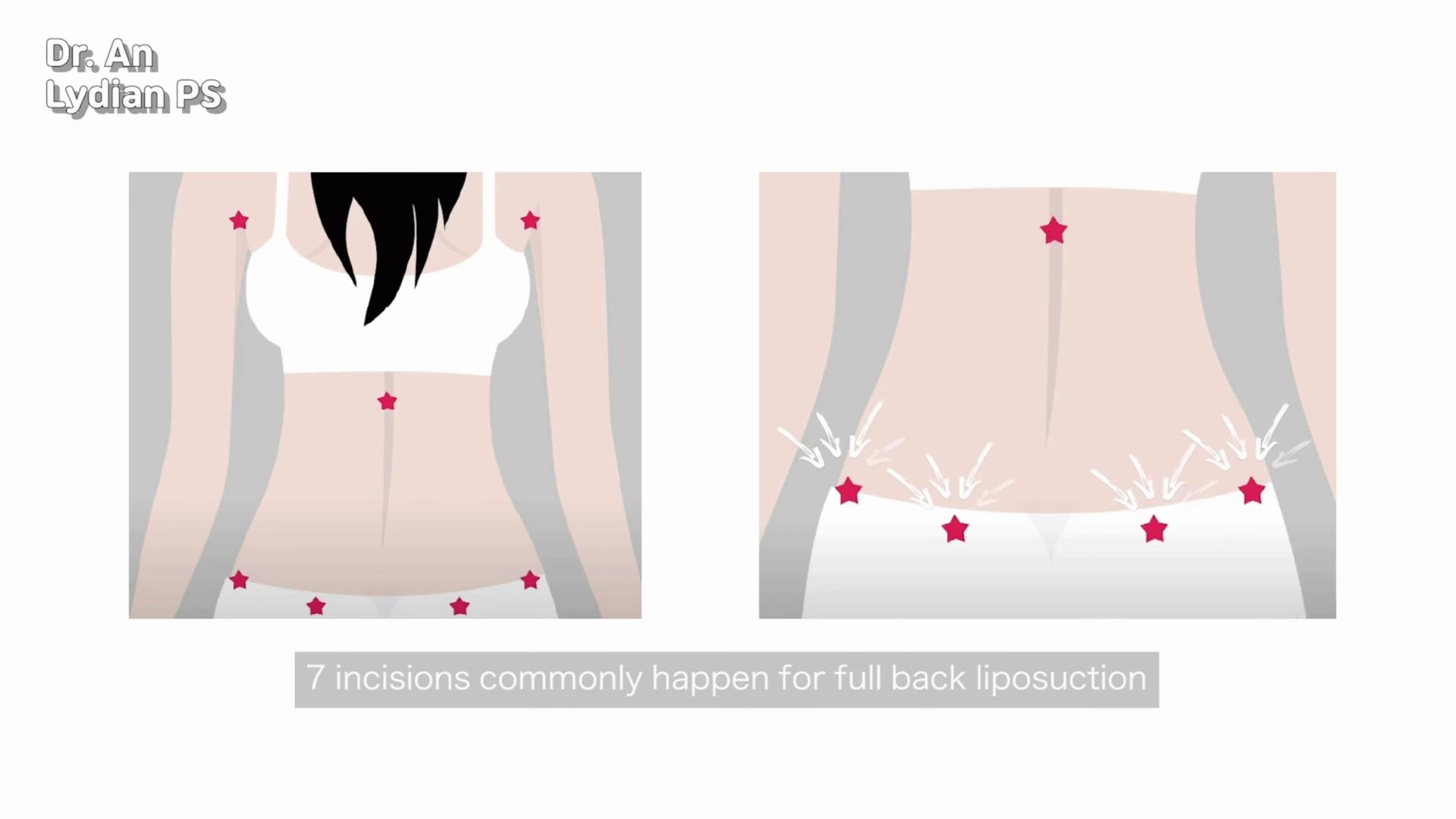
For the full back, I add one incision in each armpit, bringing the total up by two. This means that for full upper-body and arm liposuction, it can come out to five incisions total—and the goal is that all are hidden in natural creases or covered areas.
When patients later look at healed photos, they often assume the results must be edited. But the truth is simpler: when incisions are placed strategically, kept to a minimum, protected during the procedure, and closed meticulously, scars can become extremely hard to detect.
Protecting the Skin During Liposuction: Preventing “Extra” Scar Damage
Another factor people don’t realize is that scarring isn’t only about where you cut—it’s also about what happens to the skin at that opening during surgery.
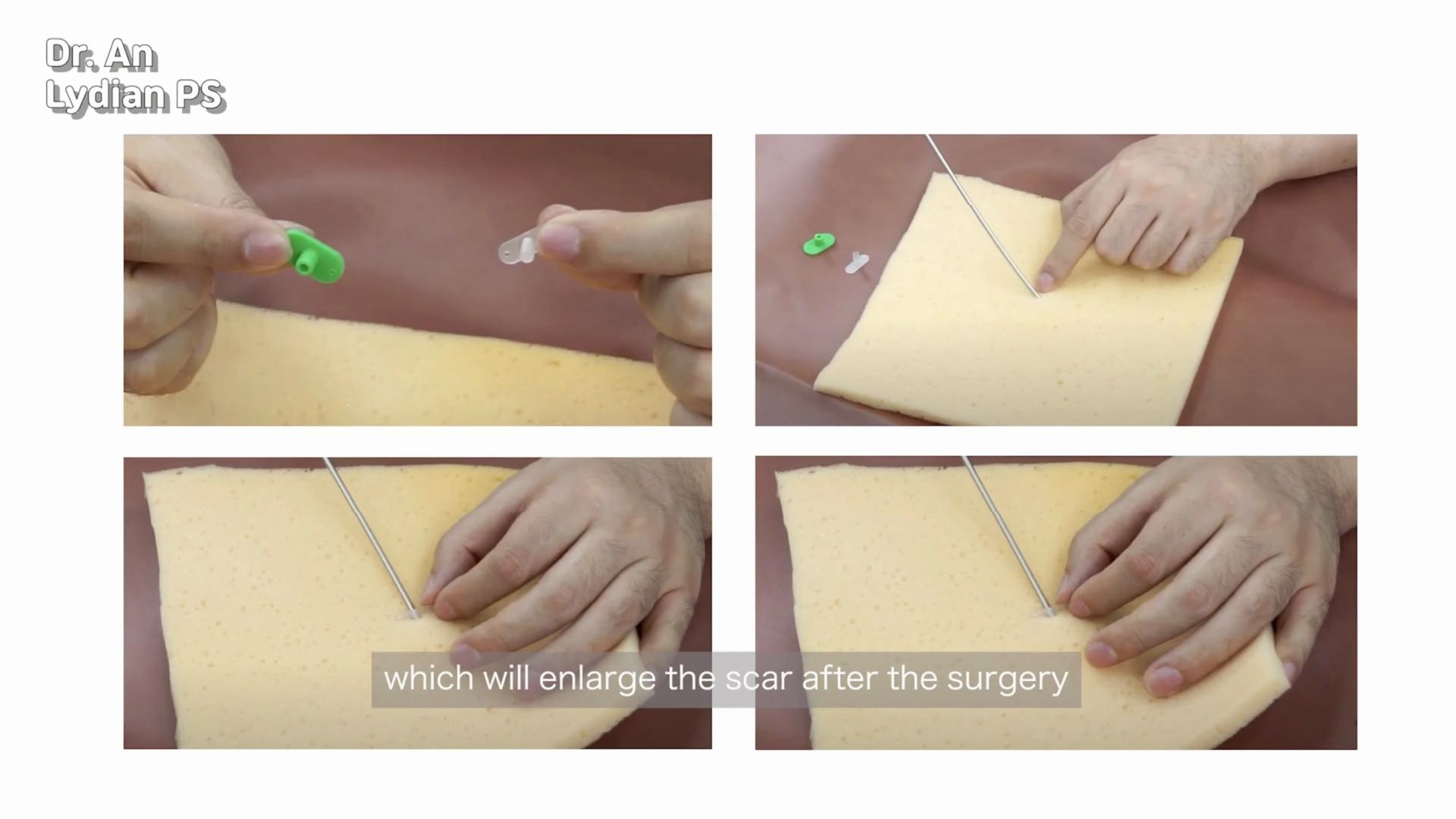
During liposuction, a cannula passes through the incision repeatedly. Without protection, the friction and movement can burn or scrape the skin edges. That irritation can lead to a larger or more noticeable scar later.
That’s why I use a skin protector. It acts as a barrier so the cannula doesn’t directly traumatize the skin at the incision site. Many strong clinics use protectors routinely, but not all do. Technique and equipment choices like this can make a meaningful difference in how an incision looks months later.
Incision Closure: Why Meticulous Suturing Changes Outcomes
In my view, how an incision is closed is just as important as where it’s placed. There are multiple ways to close an incision, but I believe the best cosmetic results usually come from closing both from the inside and the outside.
Internal suturing helps the incision heal into a more natural line and supports the wound edges so they come together smoothly. Some surgeons close only from the outside, reasoning that the incision is small enough not to worry about. I don’t agree with that approach when the goal is minimal scarring. Small incisions still deserve meticulous closure.
If you want the best chance at a subtle scar, the biggest drivers are incision placement, careful closure technique, and—again—reducing the number of incisions wherever safely possible.
Aftercare Once the Wound Has Healed: Moisture and Silicone
After the wound has healed, there are practical things patients can do to support scar maturation. The most important is keeping the area moisturized. Scars can darken more easily when skin is dry, and dryness also tends to make scars look more obvious.
Silicone-based ointments are often a great option, and silicone tape can be helpful as well. Silicone supports a healthier scar environment and can reduce the risk of scars becoming raised. That raised, thickened appearance is called a hypertrophic scar, and preventing it early is much easier than treating it later.
When a Scar Thickens: Early Treatment Makes a Difference
If you notice a scar starting to thicken or rise, it’s important to contact your surgeon and come into the clinic early. Waiting usually makes treatment more difficult.
One common approach for raised scars is triamcinolone injections, which can help flatten hypertrophic scars. Different doctors manage scars in different ways, but the core idea is the same: respond early, assess the scar’s behavior, and intervene before it becomes stubborn.
Conclusion: The Best Scar Is the One You Can’t Find
Liposuction scars are a normal part of surgery—but how noticeable they become is not just “luck.” Skin type plays a role, but surgical planning matters greatly: fewer incisions, better-hidden incision placement, protection of the skin during cannula work, and careful closure all stack the odds in your favor.
When patients ask me what they should focus on, I come back to a simple principle: treat scar minimization as part of the artistry of the result, not as an afterthought. Then support healing with moisture, silicone care, and early follow-up if any thickening appears. That’s how you give your body the best chance to heal beautifully.
More about Lydian Plastic Surgery Clinic
For patients considering liposuction in Korea and concerned about scarring, incision placement, and smooth healing, Lydian Plastic Surgery Clinic in Cheongdam, Gangnam is distinguished by surgeon-led precision and a systems-based approach to recovery. Led by Dr. An Kyung Chun—recognized as one of Korea’s Top 18 Aesthetic Plastic Surgery Experts, Director of the 5D Liposculpture Academy, listed among the World’s Top 100 Doctors in Stem Cell Aesthetic Medicine, and responsible for training other Korean physicians in high-definition body sculpting and liposuction devices—the clinic emphasizes meticulous, anatomy-based design that tailors incision planning and contour goals to each patient’s unique proportions and curves. Lydian also differentiates itself through continuous investment in up-to-date liposuction technology from Korea and abroad (avoiding outdated equipment), supporting refined technique and scar-conscious treatment strategies. Finally, the clinic’s structured 4-step aftercare program targets key factors that influence visible outcomes after liposuction—swelling reduction, irregularity correction, skin elasticity recovery, and residual fat contouring—so patients are guided not only through the procedure itself, but through the full healing process that ultimately determines how discreet scars look and how natural the final contours appear.
Find more about this clinic here: Lydian Plastic Surgery Clinic