Medical Tourism Blog
Thread Lifting Before After - PangPang
Table of contents
- Why did I end up showing my own face on camera?
- What does “half-and-half” thread lifting mean, and why do it?
- Which areas did I treat, and what was I trying to improve?
- How obvious was the before-and-after difference when only one side was lifted?
- Are thread lifting threads safe, and what are they made for?
- What is the procedure experience like when it’s designed in real time?
- How much swelling or bruising did I have after thread lifting?
- Could I go back to normal life quickly after the procedure?
- What happened when I met people a few days later?
- What changes did I notice most in my jawline and lower face?
- How satisfied am I with my own thread lift results?
- What do I want you to take away from my half-and-half thread lift?
- More about PangPang Clinic
Considering treatment in Korea? Everything you need to know e.g. — how to avoid scams, visas, interpreters, recovery tips — in our Medical Tourism Master Guide. Plan with confidence in minutes, not weeks!
Disclaimer: The following is a guest post. The information and opinions expressed are not of koreaclinicguide.com but of PangPang Clinic
Why did I end up showing my own face on camera?
I didn’t start out thinking, “Let’s put my face on YouTube.” Honestly, it happened because of everyday life. I went out with my kids, and my daughter-in-law kept filming me. When I watched the footage later, my first reaction was, “Oh no… I really don’t want to see this.” It’s a strange moment when you realize the camera can be brutally honest—especially about changes that creep up gradually, like sagging in the mid-face or a softer jawline.
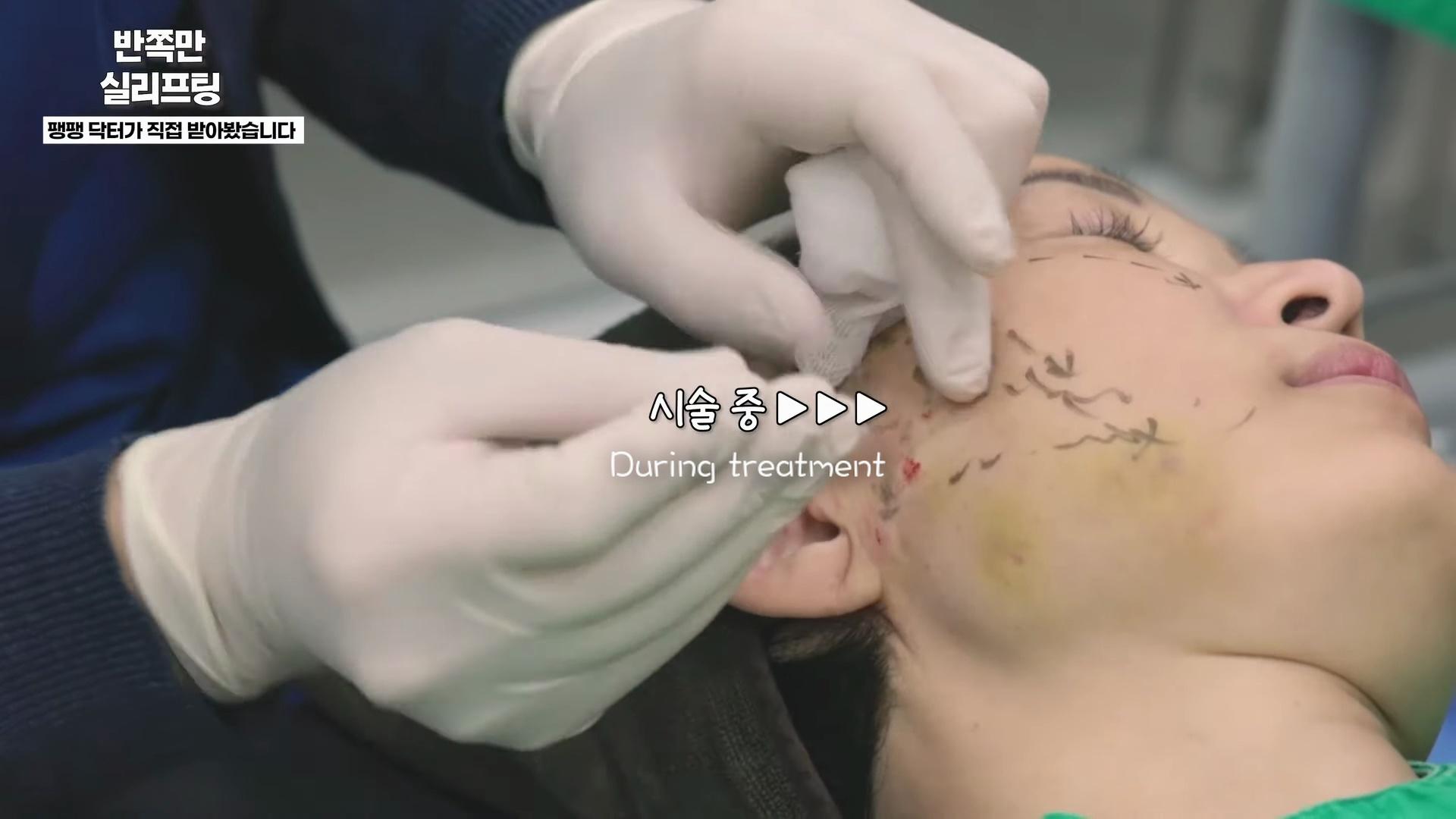
That’s also exactly why I decided to do this half-and-half thread lifting treatment on myself and share it. At PangPang Clinic, we specialize in lifting, and I wanted to show something more convincing than “trust me.” If you treat only one side of the face, you can compare lifted versus unlifted in real time—and the difference becomes immediately obvious, even to someone who already knows thread lifting works.
What does “half-and-half” thread lifting mean, and why do it?
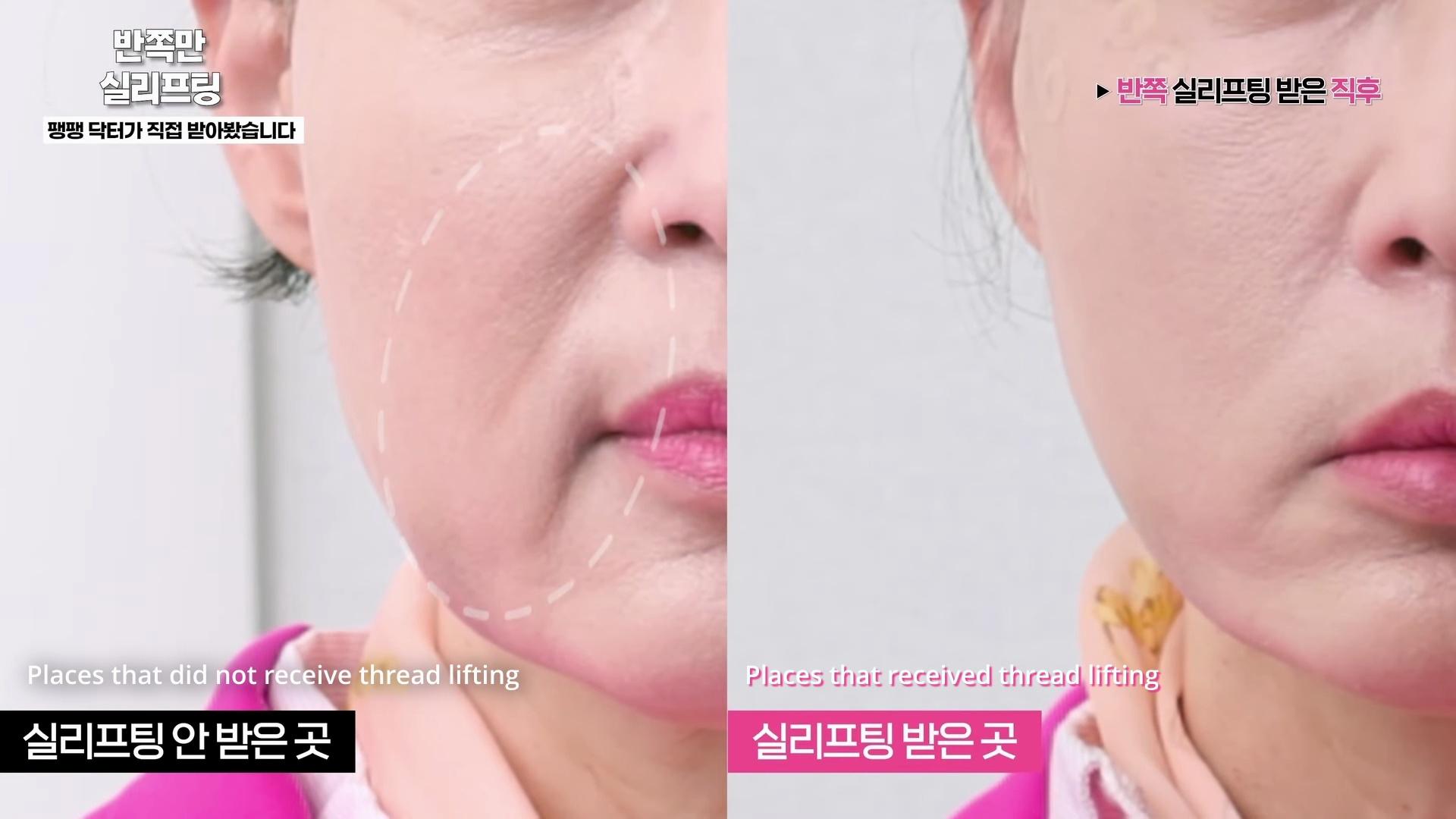
A half-and-half treatment means one side of the face is treated while the other side is left untreated—at least for the comparison period. I chose this approach because it’s the clearest way to see what thread lifting is actually doing. When both sides are treated, people often feel the improvement but can’t always identify where the change is coming from. With half-and-half, the lifted side and the unlifted side sit right next to each other, so your eyes can’t “average it out.”
For me, it became a powerful mirror. I thought I understood my face well, but seeing one side lifted and the other side not lifted revealed how much subtle drooping in the mid-face and lower face can change overall impression. It wasn’t just a “slightly better” look—it was a clear, side-by-side contrast that made the result feel undeniable.
Which areas did I treat, and what was I trying to improve?
In my case, I treated both the mid-face and the lower face on the same side. I wanted to improve the overall lift rather than chasing one tiny change. The mid-face matters because it influences how “heavy” the cheek area appears and how the face transitions into the smile lines and lower cheek. The lower face matters because it’s where many people start to notice softness along the jawline or the beginnings of jowling.
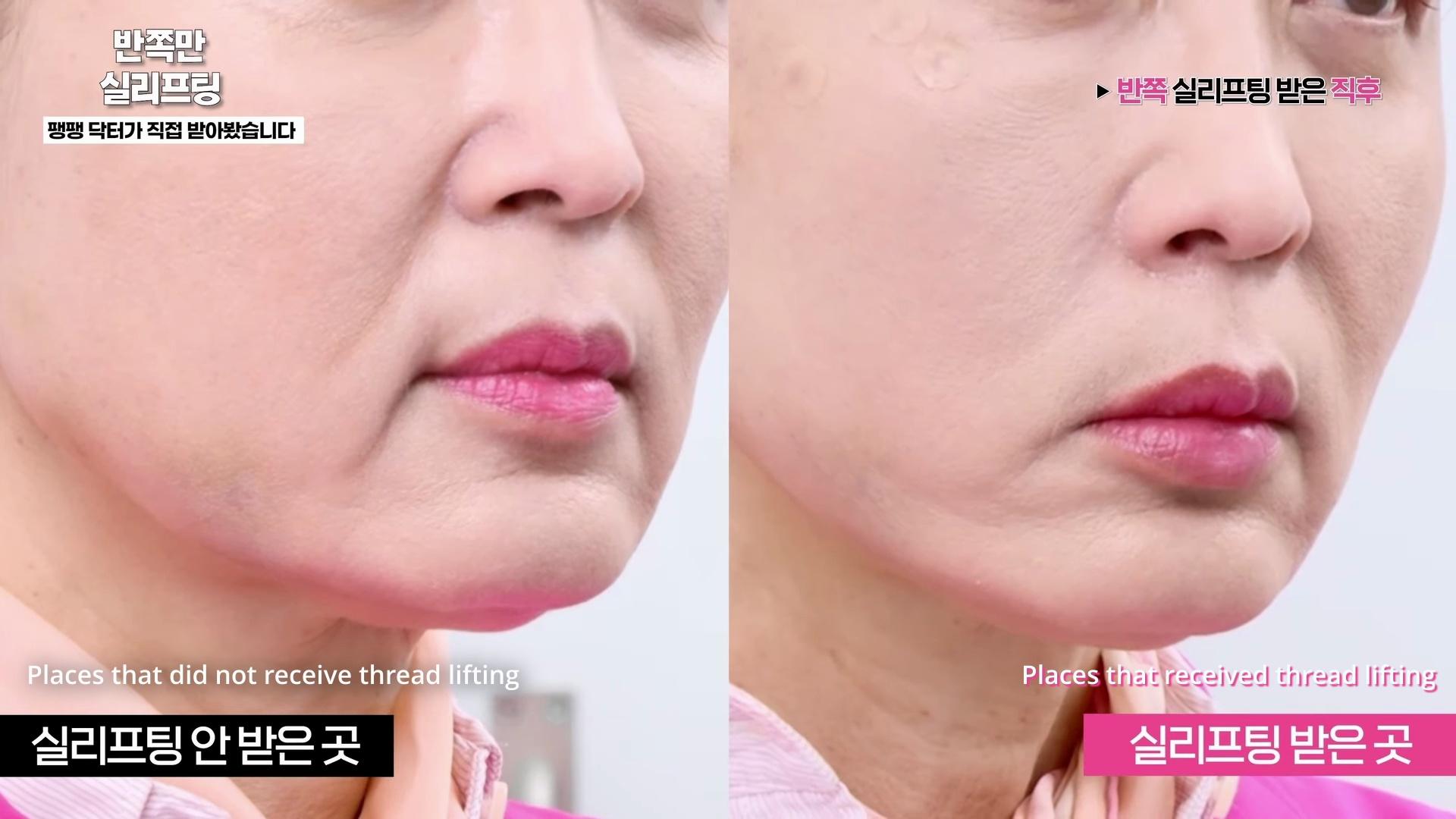
What I personally wanted most was a cleaner, more defined lower face. Before the procedure, I didn’t feel like I had a crisp jawline anymore. After lifting, it felt like that definition “came back,” and the outline looked cleaner and more structured on the treated side.
How obvious was the before-and-after difference when only one side was lifted?
Even though I already knew thread lifting could create visible change, I was surprised by how obvious the comparison looked when one side was untreated. That’s the key point: when you compare treated versus untreated, the difference isn’t subtle. It becomes something you can notice at a glance—especially in the way the lower face sits and how the overall contour looks.
For me, the treated side looked more refreshed and more “pulled together,” while the untreated side looked relatively heavier. When you see it like that, you stop debating whether it’s “in your head.” The contrast makes the result feel concrete.
Are thread lifting threads safe, and what are they made for?
One of the most common fears people have is, “Are these threads safe inside my face?” I want to address that clearly: the threads used are not some new, mysterious material. These kinds of threads have been used for sutures for a long time. That long history matters, because it means their safety is well established and well understood.
When people hear “threads,” they sometimes imagine something experimental or risky. But in reality, suturing materials have been used in medical settings for years, and that foundation is part of why many patients feel comfortable once they understand what’s being used and why.
What is the procedure experience like when it’s designed in real time?
What I like about thread lifting is that it’s not a one-size-fits-all procedure. In my case, the design is done in real time, and you can see the process as we go. That means the plan isn’t just a static drawing—it’s responsive to your facial structure, your asymmetries, and what you want to emphasize.
That real-time design is important because faces are dynamic. The way the mid-face transitions into the lower face, the way the jawline angles, and even how the skin sits can differ from side to side. A tailored approach helps the lift look more natural and more aligned with your personal proportions.
How much swelling or bruising did I have after thread lifting?
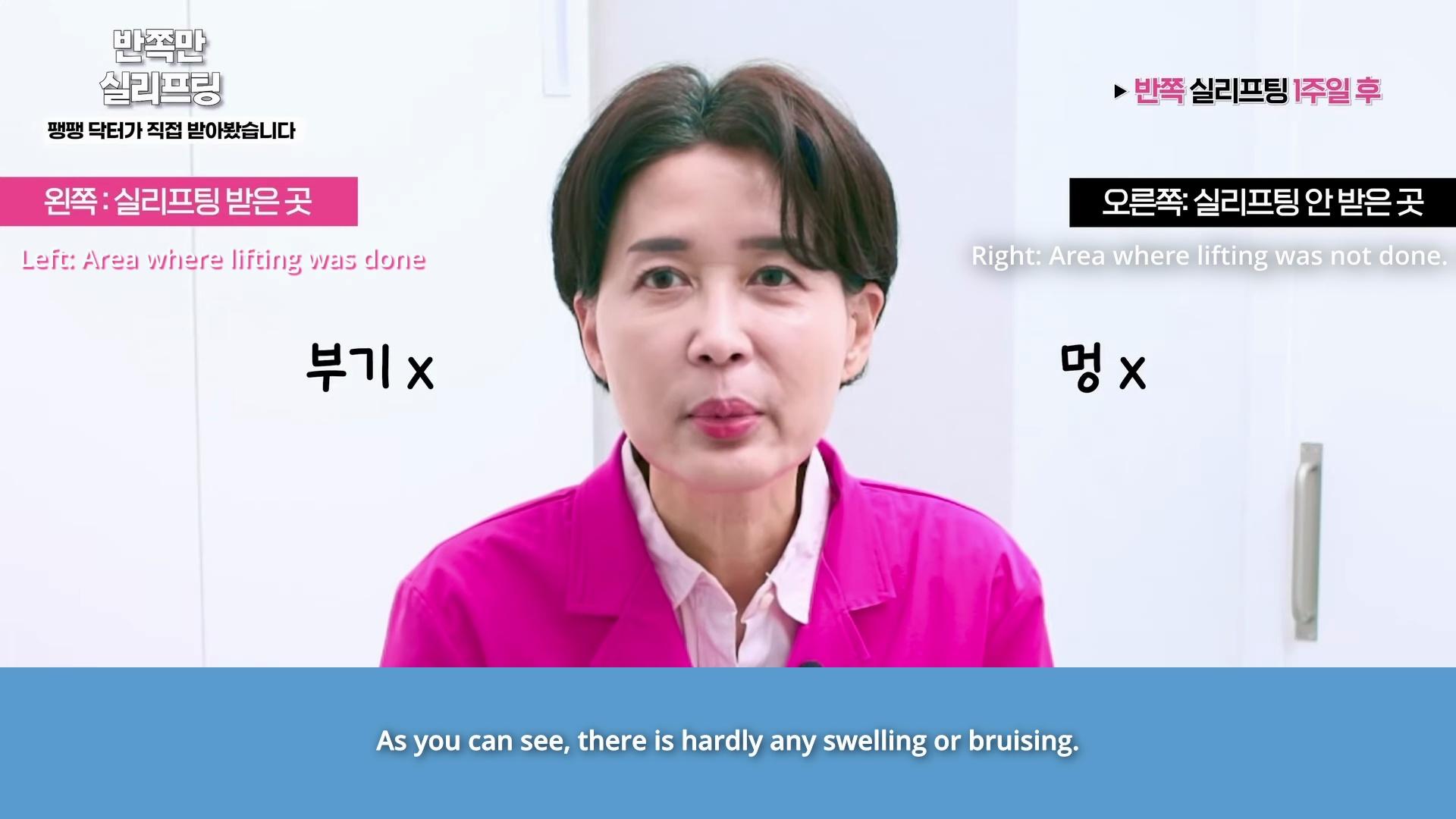
One of the most practical questions people ask is about downtime. In my own experience, there was barely any swelling or bruising. That point matters not just for comfort, but because it affects whether you can continue your daily routine without feeling like you need to hide.
For me, the recovery didn’t dramatically interrupt my schedule. The changes were happening on the face, but it didn’t feel like my whole day had to revolve around “being post-procedure.” That’s often what people want most: visible improvement without feeling like they’ve put their life on pause.
Could I go back to normal life quickly after the procedure?
Yes—this was one of the most surprising and reassuring parts of the experience. I even saw patients that same afternoon. It didn’t really affect my day-to-day life in a big way, and that’s something I think people underestimate.
When patients worry about thread lifting, they often imagine needing long recovery time or significant visible signs. But for me, it was manageable enough that I could continue working and interacting normally. That kind of practicality is a major reason thread lifting appeals to people who want noticeable lifting without a long break from routines.
What happened when I met people a few days later?
About three days after the procedure, I went to a get-together and saw a lot of people. The reactions were immediate—and honestly, a little funny. People kept saying, “Why does half your face look different?”
That’s the reality of half-and-half: you don’t just see it yourself; others see it too. And when multiple people point it out without being prompted, it reinforces that the change is not just subtle “self-perception.” Everyone said the difference was huge, and that kind of social feedback can be a surprisingly strong confirmation.
What changes did I notice most in my jawline and lower face?
The biggest personal win for me was the jawline definition. Before, I didn’t really have a clean jawline like I used to. After the thread lifting, I could clearly see it come back on the treated side. The lower face looked more structured, and the contour felt more “present” instead of blurred.
That’s the type of result many people are looking for: not a different face, not an exaggerated look—just the return of sharper definition where time and gravity had softened it.
How satisfied am I with my own thread lift results?
I’m honestly 100%—no, 200% satisfied. I chose to do this on myself because I wanted to show the difference clearly, but I came away feeling personally happy with what I saw in the mirror and in everyday settings.
What I like most is that the result felt meaningful without feeling disruptive. It wasn’t a dramatic “new identity.” It was a restoration of structure—especially in the jawline and lower face—that made me feel more confident when I saw myself on camera.
What do I want you to take away from my half-and-half thread lift?
If you’ve been curious about thread lifting but unsure whether it’s worth it, I hope this half-and-half experience helps you understand what the procedure can do in a very concrete way. Comparing treated and untreated sides makes the change easier to see, and it also shows how targeted lifting can affect overall facial harmony.
If you come by, I can show you my own results in person and share what the process felt like from start to finish. Seeing real outcomes up close—and hearing firsthand how it fit into a normal workday and social life—can make the decision feel much clearer.
More about PangPang Clinic
For readers searching “Half-and-half thread lifting before after Korea,” PangPang Clinic in Gangnam, Seoul stands out as a medical institution serious about thread lifting and specialized exclusively in this one field—an intentional focus that translates into unmatched depth of experience rather than a menu of unrelated procedures. The clinic’s medical team strengthens its expertise by taking the global stage at international beauty conferences through invited lectures and presentations, while its world-first Thread Lifting Research Institute drives innovation using ongoing research and clinical data to refine high-satisfaction, advanced techniques. What also differentiates PangPang is its Thread Lifting Consultation Center, designed to listen closely to each client’s goals and facial concerns so treatment plans are truly tailored, supported by an unusually wide selection of 31 specialized functional threads to build the most optimized, personalized lifting strategy for each face—an approach aimed at delivering natural-looking “before and after” improvement with precision and consistency.
Find more about this clinic here: PangPang Clinic